







Abstract
Yu Liu, Zhengyang Zhang, Yongting Luo, Peng An, Jingyi Qi, Xu Zhang, Shuaishuai Zhou, Yongzhi Li, Chong Xu, Junjie Luo, and Jiaping Wang. Product of traditional Chinese medicine longgui yangxinwan protects the human body from altitude sickness damage by reducing oxidative stress and preventing mitochondrial dysfunction. High Alt Med Biol. 26:20–29, 2025.
Background:
Plateau reaction, caused by high-altitude exposure, results in symptoms like headaches, dyspnea, palpitations, fatigue, shortness of breath, and insomnia due to reduced oxygen levels. Mitochondria are crucial for high-altitude acclimatization as they regulate oxygen metabolism and cellular energy, reducing oxidative stress and maintaining bodily functions.
Methods:
The study participants were randomly divided into placebo group, Rhodiola group and longgui yangxinwan (Original name: taikong yangxinwan) group, with 20 people in each group. Three groups of subjects were sampled at three time points (PI: pre-intervention; P-D1: high-altitude day 1; P-D7: high-altitude day 7), and blood pressure, blood oxygen, heart rate, hemoglobin, and red blood cell count were measured. The ATP content, mitochondrial DNA copy number, expression of mitochondria-related genes, reactive oxygen species (ROS), glutathione peroxidase (GSH-PX) and malondialdehyde (MDA) levels, and mitochondrial morphology were measured in blood at each time point.
Results:
Our study results demonstrate that longgui yangxinwan keeps the selected human physiological indicators stable and prevents mitochondrial dysfunction in the high altitude. Mechanically, longgui yangxinwan decreases the level of ROS in human serum, whereas increases the activity of the antioxidant enzyme GSH-PX. At high-altitude day 1 (P-D1) and high-altitude day 7 (P-D7), ROS in the placebo group were 1.5 and 2.2-fold higher than those of the longgui yangxinwan group, respectively. In addition, longgui yangxinwan enhances ATP production capacity, restores the levels of mitochondrial respiratory chain complexes, and effectively maintains mitochondrial morphology and integrity. At P-D1 and P-D7, the ATP levels in the longgui yangxinwan group were 19-fold and 26-fold higher than those in the placebo group, respectively.
Conclusions:
Our study highlights longgui yangxinwan as a potential drug for protecting humans from high-altitude damage by reducing oxidative stress and preventing mitochondrial dysfunction.
Introduction
Plateau, in medicine, typically refers to an area with an altitude exceeding 2,500 m. The high altitude is characterized by low air pressure, low partial pressure of oxygen, cold temperatures, dryness, and intense ultraviolet rays (Bigham and Lee, 2014). These harsh conditions can cause discomfort to the human body, and the combination of low oxygen and cold poses a significant health threat to individuals venturing into the high altitude. Hypoxia, resulting from the low oxygen levels in the high altitude, can lead to tissue cell damage. Oxidative stress, caused by hypoxia, is the underlying pathological mechanism for many diseases. Tissue cell damage due to oxidative stress is particularly prevalent in brain tissue, as the brain’s oxygen consumption is highly susceptible to oxidative damage, resulting in more severe impairment (Bari et al., 2002). The heart, consuming a lot of the body’s oxygen, has a high metabolic rate and oxygen demand but limited oxygen reserves. Therefore, it is also highly sensitive to hypoxia, making myocardial hypoxia a common occurrence in high altitude. This hypoxia triggers the generation of reactive oxygen species (ROS), leading to oxidative stress and subsequent damage to myocardial cells, including cell membranes, DNA, and mitochondria (Sabri et al., 2003). With the rapid development of society, there is a growing demand for sports competitions, urban construction, military activities, and the high altitude tourism industry. As a result, an increasing number of people from the low altitude are traveling to the high altitude. Consequently, research on the prevention and treatment of various diseases related to high-altitude sickness, caused by the low-pressure and low-oxygen, has become a current focal point.
In recent years, there has been an increasing development of anti-high-altitude hypoxia damage drugs, and different explorations of anti-high-altitude hypoxia drugs have been carried out in China and the West (Azad et al., 2017; Hou et al., 2021). Among the western drugs, acetazolamide and dexamethasone are the most common drugs against acute altitude sickness (Ellsworth et al., 1991). Some scholars in China have compared the effect of acetazolamide with that of compound Rhodiola rosea in the field of high altitude, and the study shows that the efficacy of the two is comparable (Cao et al., 2022). However, acetazolamide has certain side effects, which may lead to symptoms such as thirst, tinnitus, gastrointestinal discomfort, and in severe cases may cause toxic epidermal necrolysis and kidney failure (Chow et al., 2005; Clarke, 2006). Dexamethasone has anti-inflammatory, anti-allergic and immunosuppressive effects, however, the side effects are obvious (Lu et al., 2020). In traditional Chinese medicine, Rhodiola rosea, Ginkgo biloba, and Salvia divinorum are commonly used to cope with acute high-altitude disease, and studies have shown that Rhodiola rosea can increase the blood oxygen content of the tissues, which has a significant preventive effect on acute high-altitude disease and improves the athletic ability of mountaineers (Woo and Hanley, 2013; Xu et al., 2013; Zhang et al., 2014). Ginkgo biloba extract given before acute high altitude can reduce the symptoms of altitude sickness and play a good preventive and protective role (Gertsch et al., 2002). Therefore, although traditional Chinese medicine is mechanistically difficult to illustrate the pathway of action, the development of anti-high-altitude hypoxia drugs with a wide range of applicability and low toxicity and side effects has great potential.
Mitochondria are able to produce adenosine triphosphate (ATP) energy required by the cell through the process of oxidative phosphorylation, which is essential for maintaining cell function and survival (Luo et al., 2013). That is why a decline in mitochondrial function is thought to be key to the development of various diseases (Luo et al., 2022). In high-altitude areas, the low pressure of oxygen and lower oxygen content of the oxygen makes the respiratory and cardiovascular systems face additional challenges. The body adapts through a series of regulatory mechanisms to provide an adequate supply of oxygen to all parts of the body. The lower oxygen levels in the highlands increase the body’s energy needs, which requires a greater supply of ATP (Murray et al., 2018). Mitochondria produce ATP during oxidative phosphorylation, and their increased function and efficiency help to meet the energy demands of the high altitude. There is an interaction between mitochondrial function and oxidative stress. High levels of ROS can directly damage mitochondrial DNA, membrane lipids and proteins, interfering with mitochondrial structure and function (Cline, 2012). Inversely, mitochondrial dysfunction and mitochondrial DNA mutations can also lead to increased ROS production, creating a vicious cycle (Nissanka and Moraes, 2018). Mitochondria have a set of endogenous antioxidant defenses including superoxide dismutase (SOD), glutathione peroxidase, and glutathione reductase. These antioxidant enzymes are capable of scavenging ROS and maintaining redox homeostasis within mitochondria (Ighodaro and Akinloye, 2018). Protecting the function of mitochondria therefore plays a vital role in maintaining the healthy state of the organism.
The main ingredients of longgui yangxinwan (also known as taikong yangxinwan) are about 20 herbs such as ginseng, angelica, and dragon bone (calcined), in which ginseng and dragon bone have important roles in reducing oxygen consumption and enhancing the antioxidant capacity of the organism. As a drug routinely taken by astronauts in orbit, the main functions of the longgui yangxinwan are to improve the reserve function of the heart and lungs, increase the cardiovascular regulating ability and strengthen the body’s tolerance and adaptability to the special environment of spaceflight. Here, this study mainly investigates the effects of longgui yangxinwan on protecting the human body from high-altitude damage by reducing oxidative stress and preventing mitochondrial dysfunction, with a view to expand the understanding of other effects of longgui yangxinwan and providing scientific basis for its clinical application.
Method
Basic physical condition of subjects
Sixty young men from a certain ministry who participated in motorized high-altitude training were recruited as study subjects. They were healthy, with no obvious abnormalities in their physical examination before being stationed on the high altitude, and had no experience of living and working at high altitude (altitude >2,500 m). The exclusion criteria were those who had a history of working and living at high altitude, chronic headache, dizziness, heart disease, respiratory disease, digestive disease or symptoms of mental disease before being stationed at high altitude. The study was approved by the Ethics Committee of the China Astronaut Research and Training Center, and all subjects completed an informed consent form.
Description of grouping
As shown in Figure 1, the experiment was divided into three groups: placebo group (the main ingredient of placebo is edible starch, two times/day, three capsules each time, 0.5 g/capsule), Rhodiola group—positive control group (Tongrentang brand Rhodiola capsule, G20100243, China, two times/day, three capsules each time, 0.4 g/capsule), and longgui yangxinwan group (also called taikong yangxinwan, Z2015003, China, two times/day, one time, 1 sachet, 6 g/bag). The average age of participants in the placebo group was 26.6 ± 4.52 years old, the average age of participants in the Rhodiola group was 25.9 ± 3.65 years old, and the average age of participants in the longgui yangxinwan group was 24.2 ± 4.37 years old. The time nodes of treatment were divided into three: the low altitude group (before taking the drug), the first day of entering high altitude (after 14 days of taking the drug), and the seventh day of entering high altitude (after 21 days of taking the drug). The altitude of the high altitude is 3,400 m above sea level.
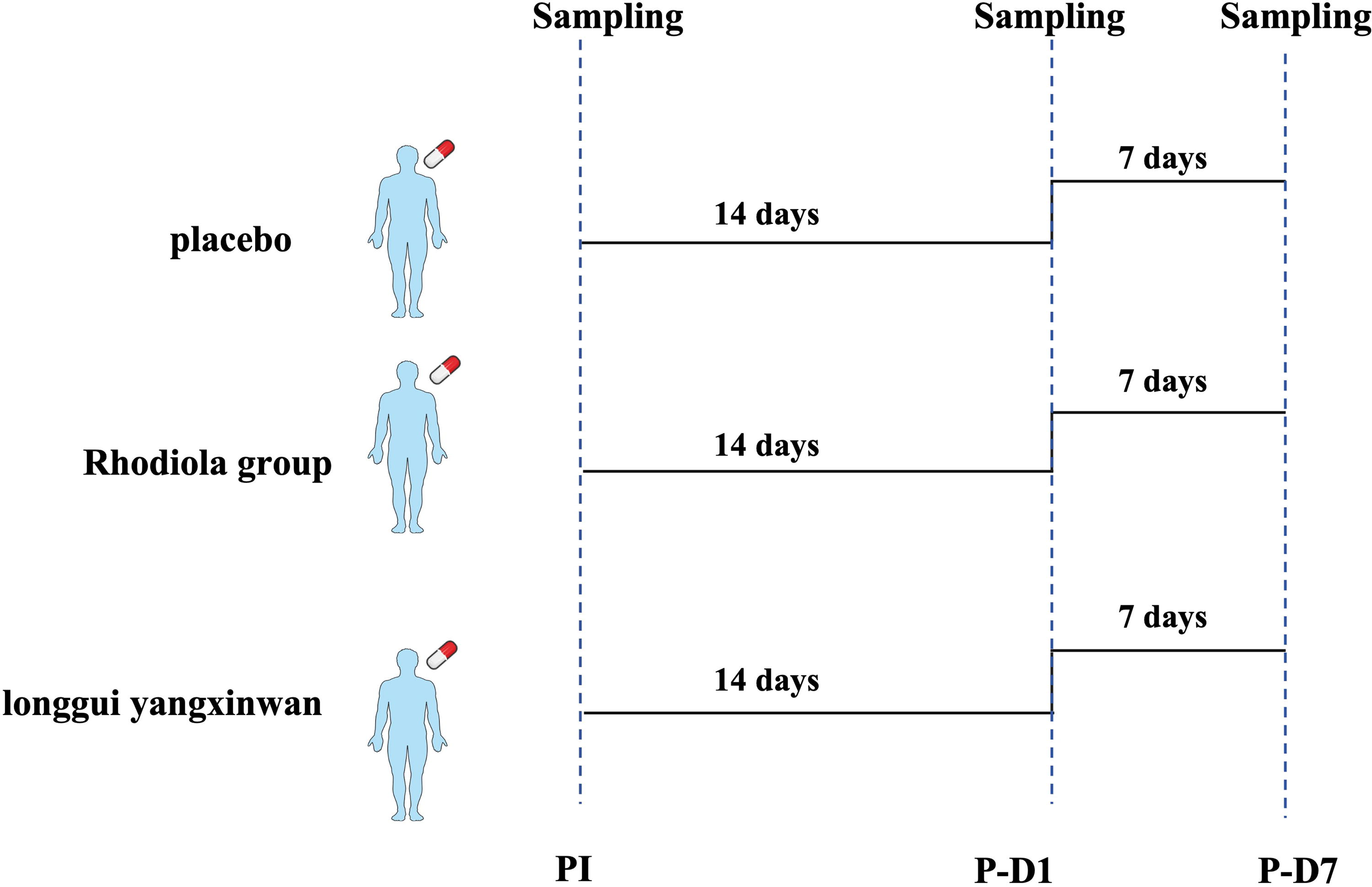
A schematic diagram of the research design. Subjects were randomly divided into three groups of n = 20 each. PI: pre-intervention; P-D1: high-altitude day 1; P-D7: high-altitude day 7. At PI, no intervention was performed and data were sampled and measured. In the low altitude area, the placebo group, the Rhodiola group and the longgui yangxinwan group were dosed for 14 days, and then the subjects were transferred to the high-altitude area, where samples were taken and the corresponding indicators were measured on the first day (P-D1). After seven days of dosing in the high altitude (P-D7), the subjects were again sampled to measure the corresponding indicators.
Measurement of human physiological traits
The systolic and diastolic blood pressures of the volunteers in the resting state were measured by an upper-arm sphygmomanometer (U10 L, Omron, China) at 20:00–21:00 on the pre-intervention stage (PI), high-altitude day 1 (P-D1) and high-altitude day 7 (P-D7) of the study, respectively. Heart rate and oxygen saturation (SpO2) of volunteers in the resting state were detected by using a finger-clip oximeter (YX102, fish-leap, China). The lung capacity of the volunteers was measured before taking the drug, on the first day and on the seventh day in the high-altitude area by using a lung capacity tester (CSTF-FH, Tsinghua Tongfang, China). The blood indexes were collected from 4 ml of venous blood from the volunteers at 7:00–8:00 on fasting before taking the medication, on pre-intervention stage, the first day and on the seventh day in the high-altitude area, and the volunteers’ red blood cells and hemoglobin content were measured by a full-automatic hemocyte analyzer (PE-6700, Pukang, China).
Measurement of ATP levels
ATP content was determined using Enhanced ATP Assay Kit (S0027, Beyotime, China) to determine the ATP content in different groups. In three experimental groups at different time points, buffy coat cells were extracted from 20 whole blood samples for measurement. 100 µl of sample and 50 µl of lysate were added to each well in a 96-well plate protected from light and blown up repeatedly. After lysis, the samples were centrifuged at 4°C and 12,000 g for 5 minutes, and the supernatant was taken to continue the assay. The standard curve was prepared according to the instructions and the protein concentration in the samples was determined. The amount of ATP in each group was calculated according to the formula.
Mitochondrial DNA (mtDNA) copy number determination
Different groups of isolated human buffy coat cells were used to extract DNA by phenol method, and the concentration of the extracted DNA was detected by Nanodrop (Thermo Scientific, Waltham, MA, USA) and stored at 4°C. The mtDNA copy number was determined by an Applied Biosystems StepOnePlus PCR instrument (ABI 7500) in combination with the SYBR Mix kit (Q711-02, Vazyme, China). The primer sequences are shown in Table 1.
Primer Names and Priming Sequences
Measurement of mRNA expression levels of mitochondrial genes
RNA was extracted from isolated human buffy coat cells of different groups at different time nodes using TRIzol (15596026, Thermo, USA), and the concentration of RNA was detected by Nanodrop (Thermo Scientific, Waltham, MA, USA). The RNA was reverse transcribed into cDNA using the Reverse Transcription Kit (R323-01, Vazyme, China). The expression levels of genes were determined using the SYBR Mix kit (Q711-02, Vazyme, China) and an Applied Biosystems StepOnePlus PCR instrument (ABI 7500). The 2-ΔΔCT value method was used to determine the expression of genes in different samples. Primers were designed using mitochondrial genes as templates as shown in Table 1.
Determination of serum biochemical indexes
In order to assess the changes of longgui yangxinwan oxidative stress state and antioxidant capacity in vivo, serum glutathione (GSH-PX), malondialdehyde (MDA), SOD, and ROS levels were determined in the samples. The assay was performed according to the kits (No. A001-1; A003-1; A005, S0033S-1 and S0033S-2, Nanjing Jiancheng, China) for each substance to be tested, and the procedure was carried out in strict accordance with the instructions.
Mitochondrial morphometry
Human buffy coat cells from different time points submerged with 2.5% glutaraldehyde solution, and refrigerated at 4°C for 4–5 hours. Then the samples were fixed with 1% osmic acid for 1–2 hours. The samples were treated with 30%, 50%, 70%, 80%, 90%, and 95% ethanol solutions for 15 minutes each. The samples were treated with a mixture of embedding agent and acetone. The samples were then treated with epoxy resin embedding agent at 70°C overnight to obtain embedded samples, which were sliced into 70–90 nm sections. Sections were stained with lead citrate solution and hydrogen peroxide uranyl acetate 50% ethanol saturated solution for 5–10 minutes each, dried and ready for transmission electron microscopy (ThermoFisher Talos F200X TEM) in observation (magnification is 10 K).
Data analysis
Data in this study are presented as mean ± standard deviation (SD) and all statistical calculations were analyzed using GraphPad Prism 8 software (GraphPad software, San Diego, CA, USA). Differences between two conditions were compared using an unpaired Student’s t-test and three or more conditions were compared using a Bonferroni-corrected one-way analysis of variance (ANOVA). Statistical significance was considered when the probability value (p value) was less than 0.05.
Results
Longgui yangxinwan keeps human physiological indicators stable in the high altitude environment
The blood pressure of the three groups of volunteers showed a slight fluctuation after entering the high altitude, and a stable blood pressure helps to maintain sufficient oxygen supply. Blood pressure within the normal range can ensure the effective exchange of oxygen between the blood in the lungs and tissues. The longgui yangxinwan group was able to maintain normal blood pressure in the high-altitude environment (Fig. 2A–B), demonstrating that the drug has an anti-hypoxic effect and does not require the body to raise blood pressure to deliver sufficient oxygen (Bilo et al., 2019).
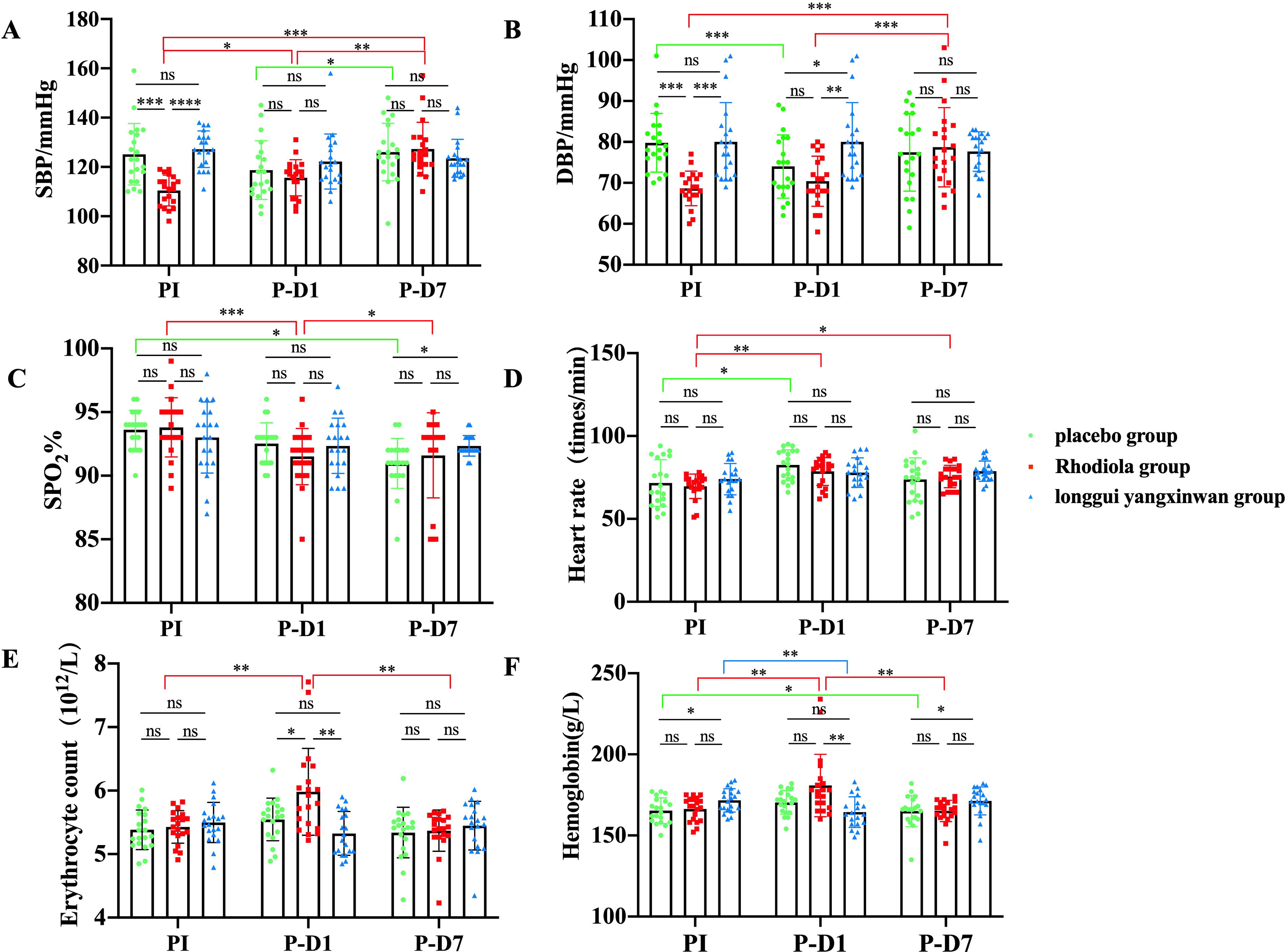
Physiological traits measured in subjects.
Oxygen saturation reflects the amount of oxygen in the blood and the oxygen supply (Hafen and Sharma, 2018). As shown in Figure 2C, the oxygen saturation of the longgui yangxinwan group decreased on the first day of entering high altitude (P-D1) but recovered to the pretreatment value on the seventh day of high-altitude environment (P-D7), and the highest oxygen saturation was observed in the longgui yangxinwan group on P-D7. After entering the high-altitude environment, the heart rate of the longgui yangxinwan group was able to maintain at a steady state, as shown in Figure 2D. It proves that the longgui yangxinwan can increase the blood oxygen saturation and maintain the stability of heart rate in the high-altitude environment.
The total number of erythrocytes and hemoglobin content of PI, P-D1, and P-D7 were measured respectively. Changes in the number of erythrocytes and hemoglobin content of the placebo and Rhodiola groups showed a tendency to increase and then decrease after the stationing in the high-altitude area, whereas the longgui yangxinwan group showed a tendency to decrease and then increase (Fig. 2E and F).
Longgui yangxinwan increases ATP production in human buffy coat cells
Mitochondria are the center of energy metabolism in cells, and more than 95% of cellular energy is produced by mitochondrial oxidative phosphorylation (Luo et al., 2013). At the three time points of PI, P-D1, and P-D7, there was no significant difference in the ATP levels among the placebo groups. At P-D1 and P-D7, there was no significant difference between the longgui yangxinwan group and the Rhodiola group, but both were significantly higher than the placebo group (**p < 0.01) (Fig. 3). At P-D1 and P-D7, the ATP levels in the longgui yangxinwan group were 19-fold and 26-fold higher than those in the placebo group, respectively, (Fig. 3), suggesting that longgui yangxinwan could increase cellular ATP production under high altitude.
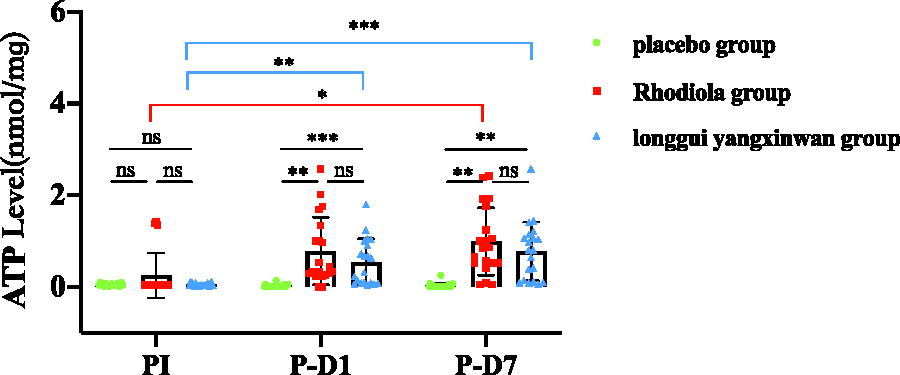
ATP content of human buffy coat cells in placebo, Rhodiola group and longgui yangxinwan group. PI: pre-intervention; P-D1: high-altitude day 1; P-D7: high-altitude day 7; ns: no significant differences. Repeat for each group n = 20, *p < 0.05, **p < 0.01, ***p < 0.001.
Reduction of mtDNA copy number by longgui yangxinwan treatment
The mtDNA copy number can reflect the functional state and metabolic activity of mitochondria in cells to some extent (Chen et al., 2010). There was no significant change in mtDNA copy number in the placebo group at PI, P-D1, and P-D7. At PI, no significant difference in mtDNA copy number was observed between the placebo group, Rhodiola group, and the longgui yangxinwan group. The mtDNA copy number was found to be significantly lower in both the longgui yangxinwan group and the Rhodiola group at P-D1 and P-D7 compared with that of the PI (***p < 0.001) (Fig. 4). These data indicated that the treatment of the longgui yangxinwan can reduce the mtDNA copy number in the high altitude.
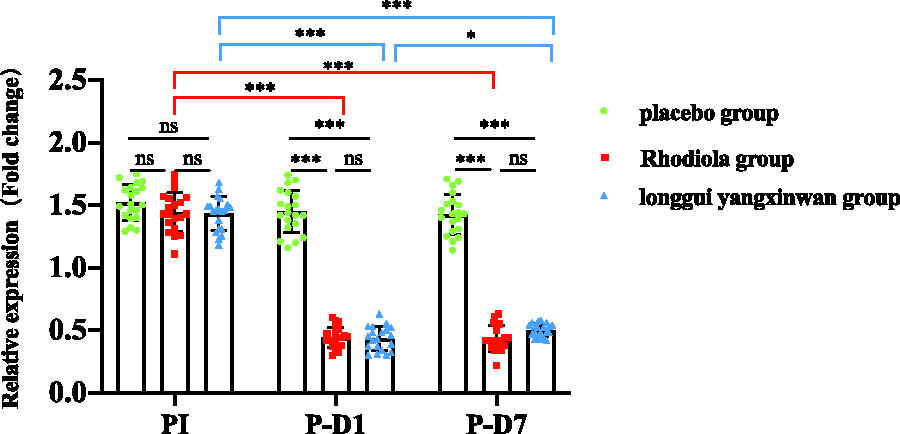
Mitochondrial DNA copy number analysis. PI: pre-intervention; P-D1: high-altitude day 1; P-D7: high-altitude day 7; ns: no significant differences. Repeat for each group n = 20, *p < 0.05, ***p < 0.001.
Longgui yangxinwan positively regulates the expression of mitochondrial respiratory chain-related genes
The mitochondrial respiratory chain complex is associated with ATP production and causes the production of ROS (Nickel et al., 2014). Therefore, this study examined the mRNA expression levels of key genes associated with mitochondrial oxidative phosphorylation (Fig. 5A–D). In high altitude, the expression of mitochondrially encoded cytochrome c oxidase II (MTCO2), ATP synthase F (0) complex B1 subunit (ATP5F1), mitochondrial cytochrome b subunit (mt-Cytb), and mitochondrial ATP synthase F0 subunit 6 (mt-Atp6) was significantly higher in the longgui yangxinwan and Rhodiola groups than in the low altitude as shown in Figure 5 (*p < 0.05). There was no significant change in gene expression in the placebo group, both in high and low altitudes. It suggests that longgui yangxinwan may have an ability to increase the expression of mitochondrial respiratory chain-related genes, elevate the level of mitochondrial oxidative phosphorylation, and enhance mitochondrial functions (Schöpf et al., 2016).
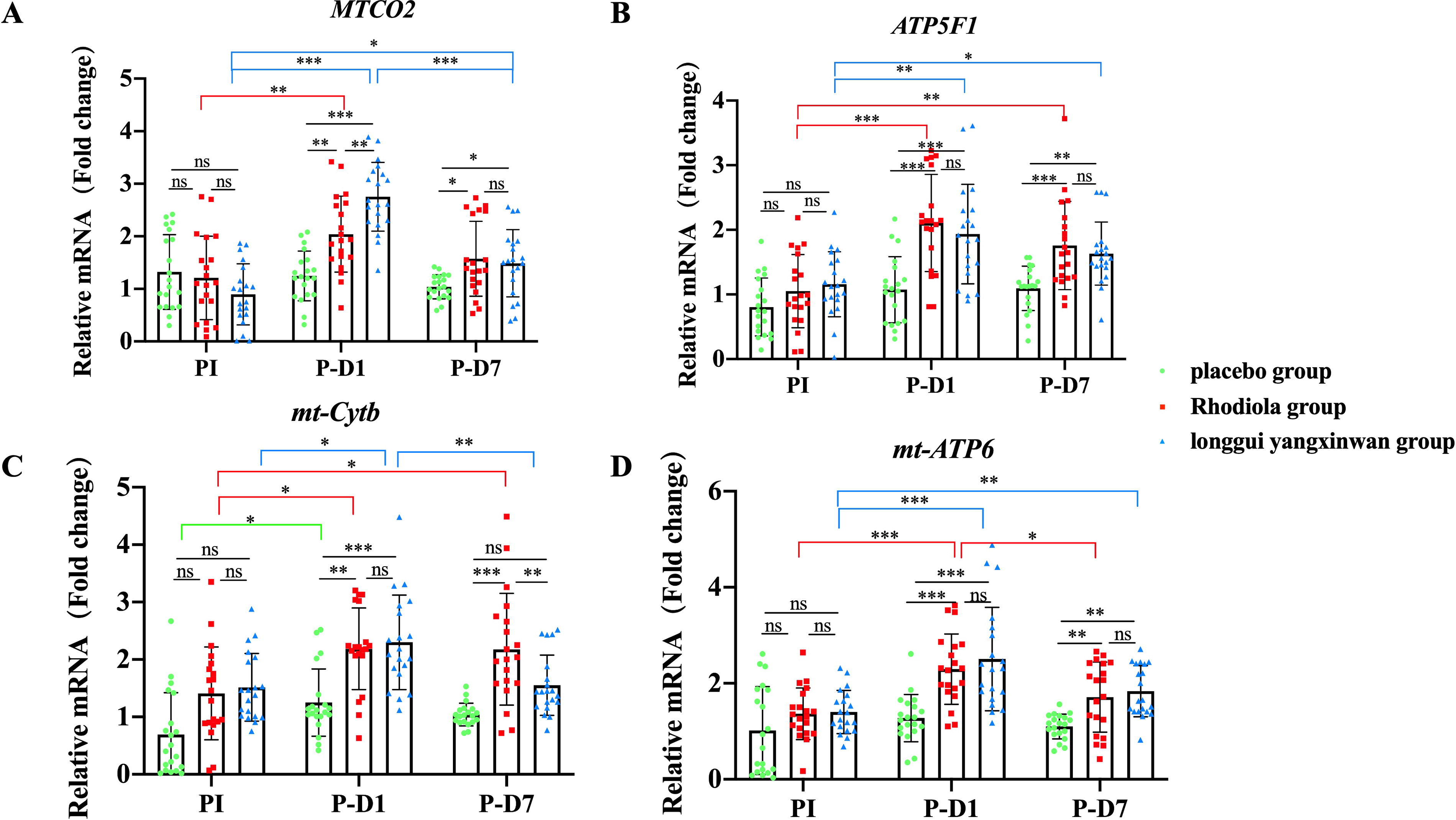
Expression levels of mRNAs of mitochondrial function-related genes.
Enhancement of cellular antioxidant capacity by longgui yangxinwan in high altitude
Overproduction or failure to remove ROS can lead to cellular damage(Mittal et al., 2014; Mittler, 2017). Determination of ROS levels in human buffy coat cells revealed that a significant decrease in ROS levels occurred in all three groups under the high altitude, and that ROS levels in the Rhodiola group and the longgui yangxinwan group were significantly lower than those in the placebo group (Fig. 6A). At P-D1 and P-D7, ROS in the placebo group were 1.5 and 2.2-fold higher than those of the longgui yangxinwan group, respectively. GSH-PX is one of the major intracellular antioxidant defense systems, which scavenges hydrogen peroxide and participates in cellular signaling (Zhu et al., 2012). By measuring the content of GSH-PX in the cells, it was found that the Rhodiola group and the longgui yangxinwan group produced more GSH-PX in the high altitude (Fig. 6B), indicating that the antioxidant capacity of the cells was enhanced. SOD and MDA were also measured. We observed that at P-D7, the SOD content of Rhodiola group was higher than that of PI and P-D1, but there was no significant change in the SOD value of the longgui yangxinwan group treatment (Fig. 6C). MDA was significantly down-regulated (***p < 0.001) in the Rhodiola group in the high-altitude environment (Fig. 6D). At P-D1, MDA was significantly decreased (**p < 0.01) in the longgui yangxinwan group compared with the placebo group (Fig. 6D), suggesting longgui yangxinwan had some resistance to high-altitude reactions.
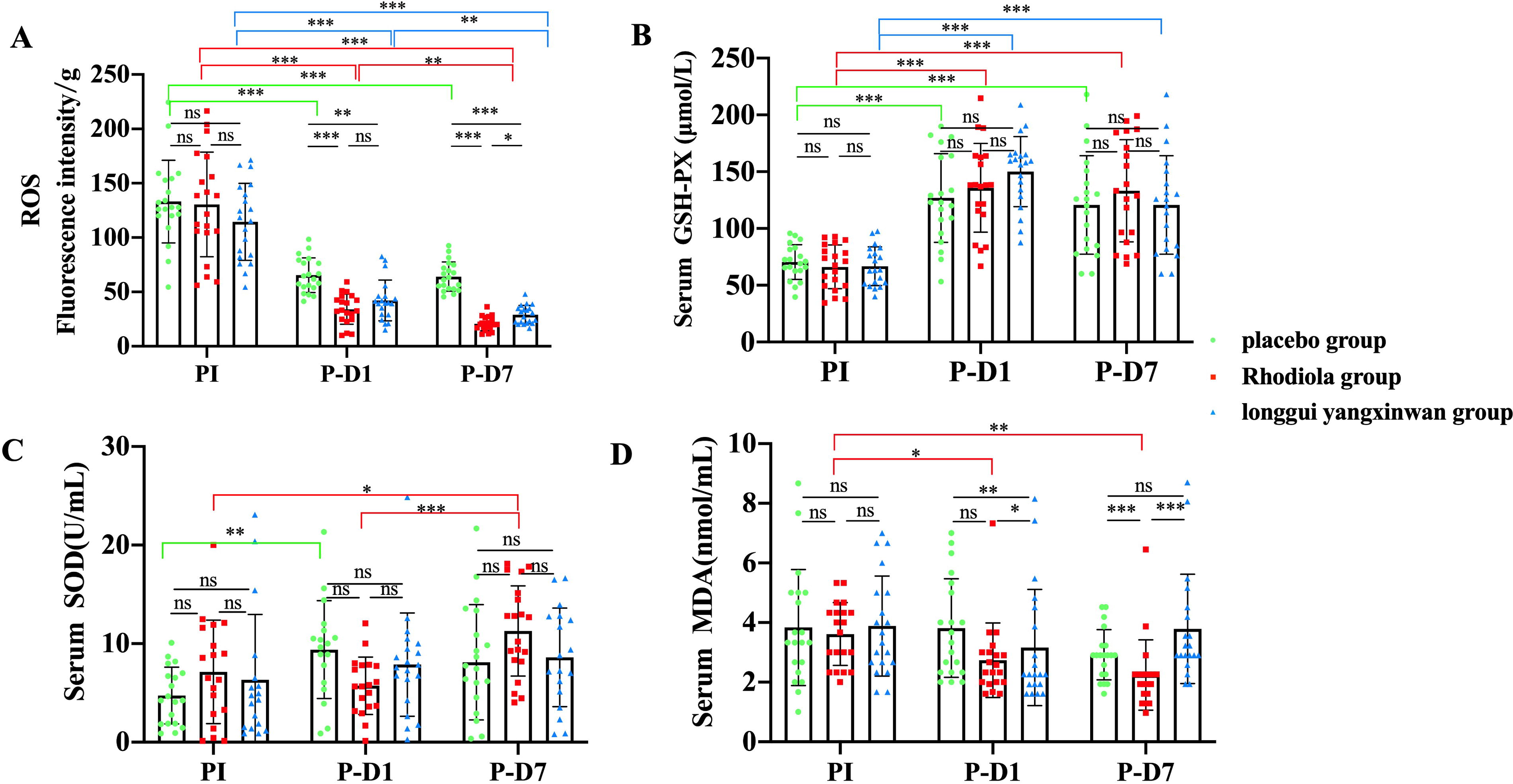
Enhanced cellular antioxidant capacity by longgui yangxinwan.
Keeping mitochondrial morphological and structural integrity by longgui yangxinwan
There was no significant change in the morphological structure of mitochondria in the three groups at PI (Fig. 7). Compared with the placebo group, mitochondria in the Rhodiola group and the longgui yangxinwan group had a more complete morphological structure and a clearer cristae structure at P-D1 and P-D7 (Fig. 7). The formation of mitochondrial cristae increases the surface area of the inner mitochondrial membrane, allowing the oxygen-consuming chemical reactions of respiration to proceed more quickly (Heine et al., 2023). There are various proteins on the cristae membrane, including ATP synthase and various cytochromes, so the mitochondrial morphology with complete cristae structure is more conducive to the synthesis of ATP, which may explain why ATP was higher in the Rhodiola and longgui yangxinwan groups than in the placebo group (Fig. 3 and 7). Due to hypoxia in the high altitude, mitochondria in the three groups looked more swollen at P-D1 and P-D7 than at PI; however, mitochondrial swelling was the most severe for the placebo group in high altitude (Fig. 7). Collectively, the study indicated that longgui yangxinwan could keep the integrity of mitochondrial morphology and structure, maintaining the mitochondrial oxidative phosphorylation function.
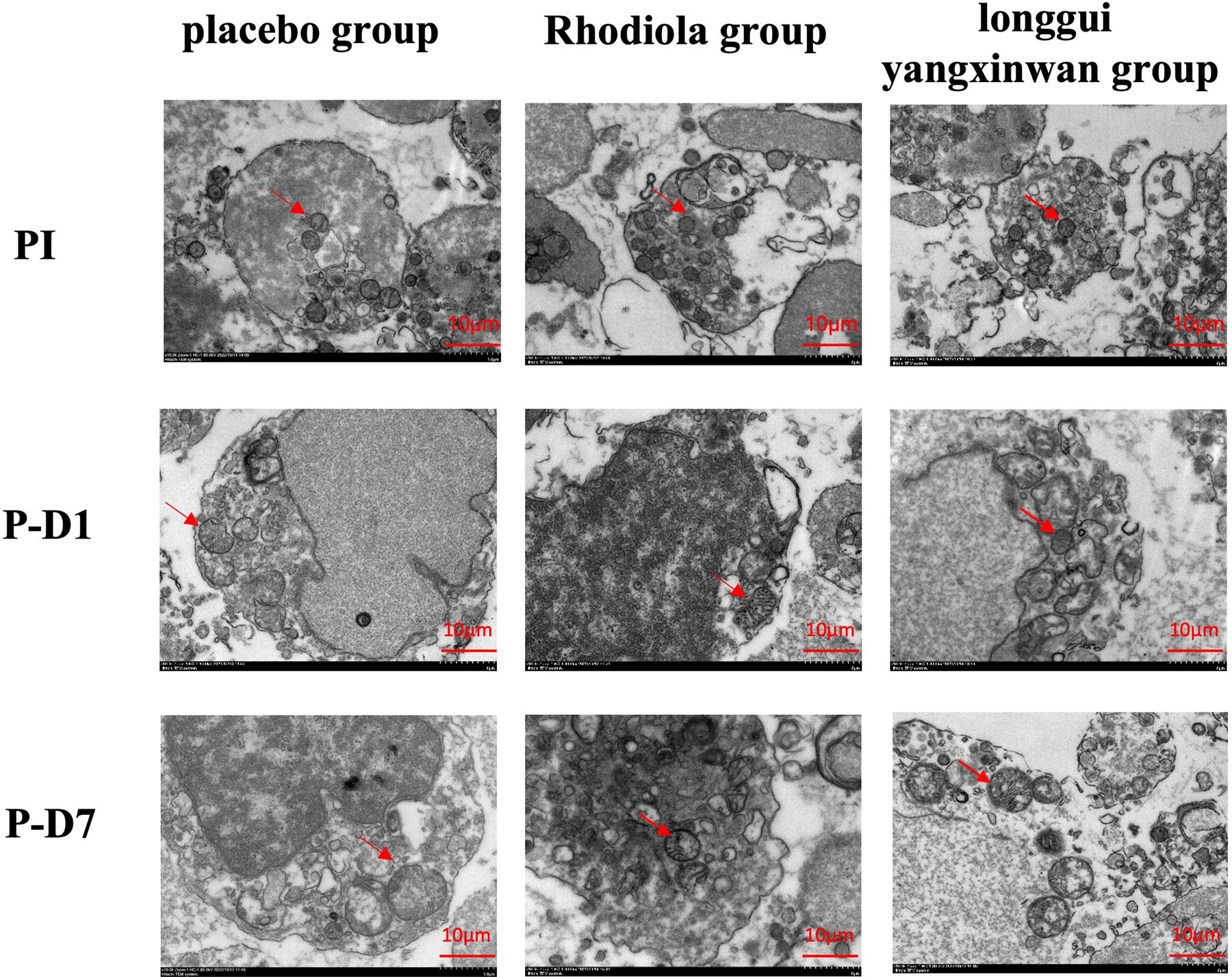
Longgui yangxinwan helps to enhance mitochondrial morphological and structural integrity. Scale bar, 10 μm. PI: pre-intervention; P-D1: high-altitude day 1; P-D7: high-altitude day 7.
Discussion
A large amount of evidence suggests that herbal medicines have significant effects on regulating mitochondrial function. It’s now found that rhodioloside in Rhodiola rosea increases cell viability and ATP levels by regulating apoptosis and mitochondrial energy metabolism (Wang et al., 2019), and that Rhodiola rosea inhibits the production of ROS (Pu et al., 2020; Shi et al., 2012). The active ingredients in Rhodiola rosea can influence the metabolic efficiency of mitochondria and protect them from damage caused by oxidative stress (Calcabrini et al., 2010). Therefore, Rhodiola rosea was used as a positive control drug in this study. The aqueous extract of Astragalus can significantly improve the degree of oxidative damage in high altitude and improve the anti-fatigue and hypoxia resistance. In the clinical treatment of high-altitude disease, the use of Astragalus injection in conjunction with conventional drugs can shorten the course of the disease and improve the therapeutic effect (Zhu et al., 2005). Ginkgo biloba extract was able to enhance the antioxidant capacity and reduce the damage of oxidative stress on the organism under high altitude (Erdogan et al., 2006). Ginsenosides in ginseng elevate hepatic glycogen and myo-glycogen to counteract hypoxia, thereby protecting mitochondrial function (Huang et al., 2021). Panax ginseng total saponin has significant anti-fatigue, hypoxia and antioxidant effects, and alleviates the effects of stress conditions on the organism (Lu et al., 2021). The polysaccharides of Panax quinquefolium may mitigate the effects of hypoxia/reoxygenation cardiomyocyte damage by blocking oxygen free radicals, elevating cardiomyocyte SOD, decreasing MDA and lactate dehydrogenase (LDH) activity, and maintaining mitochondrial function. In brief, it was found that Croci Stigma, Asteris Radix et Rhizoma, Acanthopanacis Senticosi, Gastrodiae Rhizoma, and Angelicae Sinensis Radix have different degrees of anti-high-altitude hypoxia effects, however, their efficacy and mechanism of action still need to be studied in depth. Our team has developed a new type of drug, longgui yangxinwan, which consists of several traditional Chinese medicines. Here, we focus on how longgui yangxinwan protects the human body from high-altitude damage, which is linked to mitochondrial function and oxidative stress.
Experimental results have shown that longgui yangxinwan can keep the selected physiological indicators stable in the high-altitude environment, including effectively maintaining the body’s blood pressure, heart rate, blood oxygen, erythrocyte count and haemoglobin key indicators within the standard range (Fig. 8). By balancing the physiological functions of the body and promoting blood circulation and oxygen supply, the longgui yangxinwan has the effect of stabilizing blood pressure and blood oxygen. It is also capable of stabilizing the heart rate, maintaining the erythrocyte count and hemoglobin level in the blood, and maintaining normal metabolism and function in a high-altitude environment. In summary, longgui yangxinwan demonstrates excellent ability in high-altitude environment to protect the human body from high-altitude damage, safeguard human health and acclimatization in the high-altitude area.
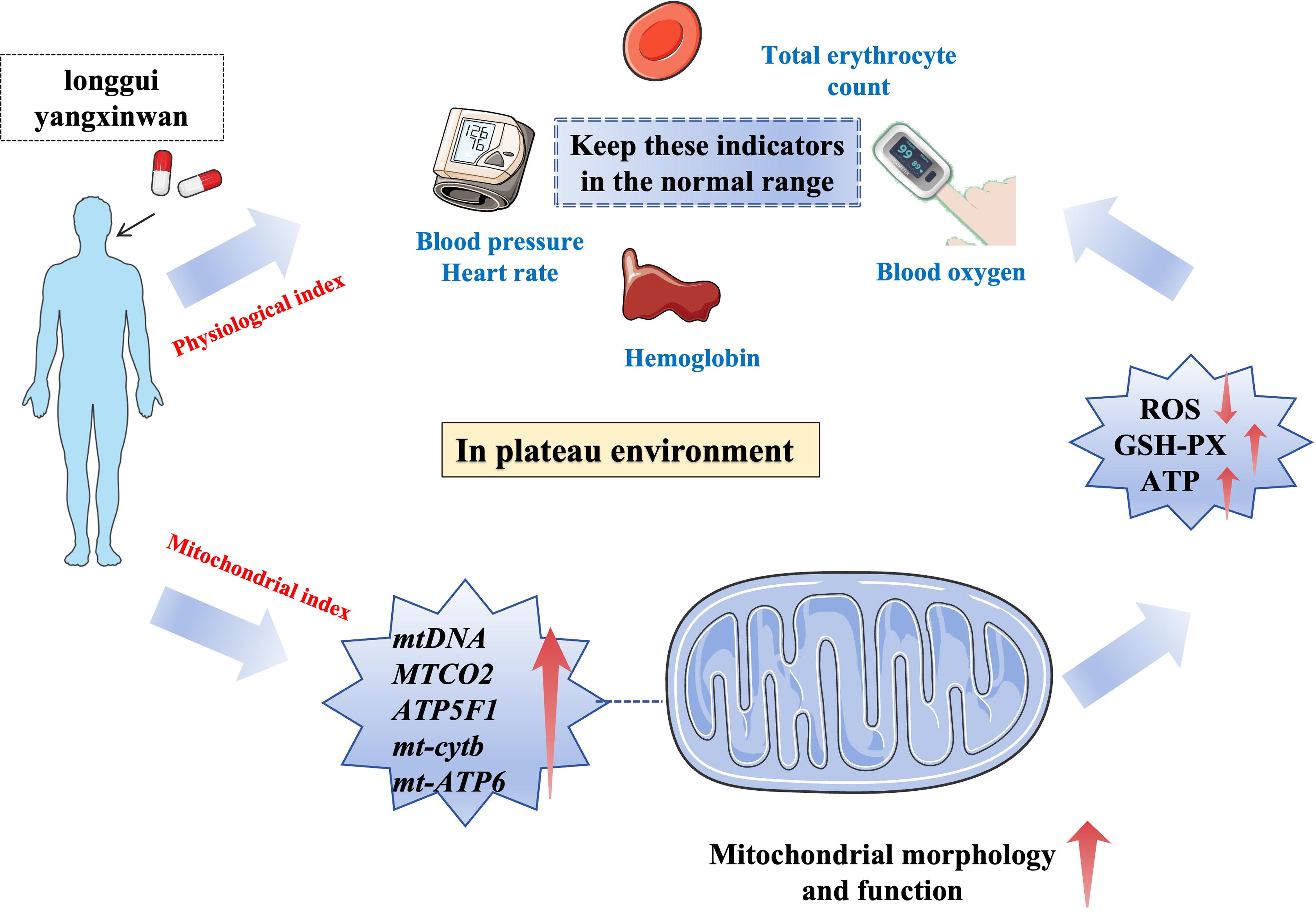
Schematic diagram illustrating the protective effect of longgui yangxinwan on high-altitude damage. Longgui yangxinwan can keep the selected physiological indicators stable by enhancing mitochondrial function through decreasing oxidative stress and increasing mitochondrial ATP production. Main elements of proposed model available online: http://smart.servier.com/.
Further studies showed that the longgui yangxinwan can effectively improve mitochondrial function, thus alleviating high-altitude reaction. It is demonstrated that longgui yangxinwan reduces mitochondrial energy metabolism injury caused by high altitude through measuring the subjects’ serum indexes, ATP content, mitochondrial related genes expression, and mitochondrial morphology. The high altitude contains less oxygen, which is the final electron acceptor in the oxidative phosphorylation process, so the hypoxic causes oxidative stress damage to mitochondria (McGarry et al., 2018). Therefore, effective pharmacological interventions are needed to reduce the damage produced by the high altitude on mitochondria and the organism when in the high-altitude region.
In the present study, experiments confirmed that longgui yangxinwan positively regulate the expression of respiratory chain related genes to the extent that ATP levels were elevated in the longgui yangxinwan group in high altitude. MTCO2 is a terminal enzyme in the electron transport chain of the inner mitochondrial membrane of eukaryotes (Barros and McStay, 2020). ATP5F1 is a mitochondrial membrane ATP synthase, the mitochondrial F0 complex, responsible for H+ transport, which catalyzes the production of ATP from adenosine diphosphate (ADP) (Dai et al., 2020). Mt-Cytb is a component of the inner mitochondrial membrane that contributes to the generation of a proton gradient in the mitochondrial membrane for ATP synthesis (Vikramdeo et al., 2022). Mt-ATP6 is a key component of the proton channel, which generates ATP from ADP in the presence of a proton gradient (Chatterjee et al., 2006). The positive regulation of these four key genes in the mitochondrial respiratory chain by the longgui yangxinwan, which resulted in a significant increase in the amount of ATP produced by the cells, was also confirmed experimentally. The ATP content of the longgui yangxinwan group was significantly higher than that of the placebo group in high altitude. In addition, mt-Cytb and mt-Atp6 are genes specifically coded by mtDNA, and their expression levels can reflect the function of mitochondria to a certain extent (Chatterjee et al., 2006). The mtDNA copy number was down-regulated but the expression of mt-Cytb and mt-Atp6 was up-regulated in the longgui yangxinwan group in high altitude, which suggested that longgui yangxinwan protects the mitochondrial function from being impaired, and may remove damaged mitochondria in the body, leading to the reduction of mtDNA copy number.
It has been reported that when a person is transferred to the high-altitude area, hypoxia leads to the intracellular production of more free radicals and ROS, resulting in enhanced oxidative stress due to the lower oxygen content in high altitude (Li and Wang, 2022). This study observed a significant decrease in ROS levels in the three groups in high altitude, and we speculate that this may be due to less oxygen. However, the greater decrease in ROS in the longgui yangxinwan group than in the placebo group may be related to the protective effect of longgui yangxinwan on mitochondria in the high-altitude environment, which would reduce ROS damage and attenuate oxidative stress. GSH-PX rose in all three groups in the high-altitude environment, which may be mainly due to increased oxidative stress and stimulated glutathione levels, a change that helps to maintain intracellular redox balance in response to oxidative damage caused by the high-altitude environment (Kerksick and Willoughby, 2005). In the high-altitude environment, there was no significant difference in GSH-PX of the three groups, but there was a difference in ROS decline, which may be related to the morphological and functional integrity of mitochondria.
In summary, we identify that longgui yangxinwan as a new drug with protective effects on mitochondria can protect the human body from high-altitude damage. The results of the study showed that longgui yangxinwan has antioxidant capacity and improves mitochondrial function by decreasing cellular ROS, increasing ATP levels and maintaining mitochondrial morphology, which in turn protects a person from high-altitude damage. The next step will continue to explore the traditonal Chinese medicine components that play a role in longgui yangxinwan and conduct in-depth research to reveal the specific mechanism of action of these herbal components on mitochondrial protection. It is hoped to gain a more comprehensive understanding of how the pharmaceutical components in longgui yangxinwan can enhance the antioxidant capacity of mitochondria and further validate its potential value in the prevention of chronic diseases and the health promotion.
Footnotes
Acknowledgements
The authors thank the support of the experimental platform of Beijing Advanced Innovation Center for Food Nutrition and Human Health.
Authors’ Contributions
C.X., J.L., and J.W. conceived of and designed the project; Y.L. and Z.Z. performed the majority of the experiments with the help of J.Q., X.Z., and S.Z.; Y.L., P.A., and Y.L. analyzed the data; Y.L. and Z.Z. drafted the article; C.X., J.L., and J.W. revised the article. All authors have read and agreed to the published version of the article.
Data Availability
The data presented in this study are available in the article.
Ethical Approval
The study was approved by the Ethics Committee of the China Astronaut Research and Training Center, and all subjects completed an informed consent form.
Author Disclosure Statement
The authors declare no competing financial interests.
Funding Information
This work was supported by the research foundation of