







Abstract
A new strain of alkaline protease-producing bacteria was isolated from soil and identified via 16s rRNA sequencing. The bacteria was identified as a novel strain of Bacillus paramycoides. Optimized substrate concentrations were used while varying one factor at a time to determine optimal process conditions. The bacterium isolated from slaughterhouse soil was found to show maximum enzymatic activity. Among the various substrates, potato peel (3%) and mustard oil cake (2%) were shown to be effective carbon and nitrogen sources, respectively. Alkaline protease production activities for potato peel and mustard oil cake were determined to be 1436.7 U/mL and 1425 U/mL, respectively. Maximum enzymatic activity (2752.5 U/mL) was observed at pH 9, temperature 40°C, inoculum age 12 h, inoculum size 2%, and production time 72 h. The low cost of enzyme with high activity at mild conditions suggests its potential use in the food industry. To the best of our knowledge, this is the first study on isolation, identification and process optimization of novel strain B. paramycoides from food waste.
Introduction
In recent years, there has been a tremendous increase in demand for eco-friendly processes that replace the use of chemicals with enzymes. Alkaline proteases are one of the most important industrial enzymes, accounting for 89% of the total sales of proteases. 1 These enzymes have versatile applications in many industries, including leather, detergent, photography, textile, food, and feed. Traditionally, alkaline protease is used in the detergent and leather industries, but today, demand for alkaline protease is increasing in in the food industry, peptide synthesis, extraction of silver from X-ray films, pharmaceuticals, production of soy protein hydrolysates with high therapeutic value, and many more. 2 Thus, there is a need to explore additional sources for the production of alkaline protease with high stability to meet current and growing industrial demand.
Alkaline proteases can be produced by various sources like plants, animals, and microorganisms, but microorganisms are the best candidates for enzyme production, ensuring continuous and abundant supply. At present, most commercially available alkaline protease is produced using Bacillus sp. 3 The alkaline protease produced by this microorganism can withstand the harsh environmental conditions and thus expands its industrial applications.
In view of the high demand for alkaline protease across various industries, new sources of production are explored in the current research. Bacillus is abundantly present in soil and man-made environments such as manure, meat industry, tannery, textile industry, and waste from food processing industries. 4 Therefore, in the present study, soil from various food processing units, fields, and slaughterhouses was collected for screening of alkaline protease-producing microorganism.
Moreover, the cost of producing alkaline protease is very high due to costly substrate. Market demand for protease is also increasing. To meet current demand and decrease overall cost, screening for newer strains is necessary, as is the development of new methods to improve yield. 5 Cost of production can be decreased by optimizing production parameters, which maximizes enzyme production and decreases substrate cost. Taking all this into consideration, this study explores the use of agro-industrial waste to decrease the overall cost of production. The utilization of agro-industrial waste as a substrate has an added advantage from an economic and environmental point of view, particularly in countries like India, where a large portion of the economy is based on agriculture.
Moreover, the isolated strain in this study is novel. The identified Bacillus strain belongs to nine novel species of the Bacillus cereus group, as proposed by Liu. 6 To the best of our knowledge, no literature is available on the exploitation of the Bacillus paramycoides for its production, purification, characterization or application. Hence, there is a great opportunity to work on all these aspects for the newly isolated.
Materials and Methods
MATERIALS
All chemicals and media components were of analytical grade and purchased from Hi-Media Ltd (Mumbai, India). Hammerstein-grade casein was procured from CDH [Central Drug House P Ltd.] Chemicals (Delhi, India). Agricultural waste, such as chickpea husk, mosambi peel, pineapple peel, sugarcane peel, potato peel, wheat bran, rice bran, and oilseed cakes were procured from local market of Jalandhar. The agro-industrial waste was washed thoroughly with water, oven-dried at 60°C, crushed, passed through a sieve (mesh size 450 μm), and stored in airtight pouches until further use.
ISOLATION AND SCREENING OF MAXMIMUM ALKALINE PROTEASE-PRODUCING MICROORGANISM
For screening of alkaline protease-producing bacteria, soil samples were collected from different parts of Jalandhar and nearby places: rice mill, leather industry, slaughterhouse, Punjab bone mills, Jalandhar, different fields of Lovely Professional University [LF1 (Field 1), LF 2 (Field 2)], and various food courts of Lovely Professional University (FC1, FC2 and FC3).
0.5 g of soil sample was suspended in 5 mL of sterile water and mixed thoroughly by vortexing. An appropriately diluted sample was streaked on nutrient agar plates containing 1% casein. After 48 h of incubation at 37°C, colonies showing a prominent clear zone were selected for protease production. To ensure the production of a single strain, repeated streaking was done on nutrient agar plate. 7
BIOCHEMICAL IDENTIFICATION AND 16s rRNA SEQUENCING OF MICROORGANISM
The bacteria showing maximum activity an maximum zone of proteolysis on casein agar plates were selected for further study. Preliminary identification of bacteria was done biochemically by the methods suggested in Bergey's Manual of Determinative Bacteriology and further confirmation was performed using 16s rRNA sequencing. For 16srRNA sequencing, pure culture of bacteria was grown on nutrient broth overnight. The DNA was isolated from the bacteria by EXpure Microbial DNA isolation kit developed by Bogar Bio Bee Stores Pvt Ltd and amplification of 16srDNA was done by thermocycler using forward primer 27F (5' AGAGTTTGATCTGGCTCAG 3’) and backward primer and reverse primer 1492R (5' TACGGTACCTTGTTACGACTT 3'). The 16s rRNA sequence was blast using NCBI blast similarity search tool.
PHYLOGENETIC ANALYSIS
Phylogenetic analysis of query sequence with the closely related sequence of blast results was performed and followed by multiple sequence alignment using program MUSCLE 3.7. 8 The resulting aligned sequences were cured using the program Gblocks 0.91b, which eliminates poorly aligned positions and divergent regions (removes alignment noise). 9 Finally, the program PhyML 3.0 aLRT was used for phylogeny analysis, with HKY85 used as substitution model. PhyML was shown to be at least as accurate as other existing phylogeny programs using simulated data and was one order of magnitude faster. The program Tree Dyn 198.3 was used for tree rendering. 10
PRODUCTION OF ENZYME
Enzyme was produced using standard media, as suggested by Joshi et al., 11 and was incubated at 37°C for 48 h at 120 rpm. After 48 h, culture medium was centrifuged at 10,000 rpm for 15 min, and cell-free supernatant was used as crude enzyme source. The physical factors and media components were further optimized for the isolated microorganism to enhance enzyme production.
DETERMINATION OF PROTEOLYTIC ACTIVITY
The proteolytic activity of enzyme was assayed using hammerstein casein as a substrate, per the method of Mohan et al. 12
STANDARDIZATION OF MEDIA COMPONENTS FOR PROTEASE PRODUCTION
Enzyme production can be enhanced by selecting the appropriate carbon and nitrogen source at a particular concentration for the growth of microorganisms. Various agro-industrial wastes (wheat bran, orange peel, papaya peel, potato peel, pineapple peel, and beetroot peel) were screened to optimize carbon source. For nitrogen source optimization, oilseed cakes (chickpea husk, toor dal husk, wheat bran, rice bran, mustard oil cake, sunflower oil cake, and soybean oil cake) were used.
For optimization, the carbon and nitrogen source were replaced by agro waste, one at a time, in the standard media 11 and incubated at 37°C for 48 h at 120 rpm. Concentration of carbon and nitrogen source was varied from 0.5–5% to determine optimal concentration for enhancing enzyme production. The inoculum was varied in different concentrations—0.5%, 1%, 3%, 5% and 7%—corresponding to optical density of 0.8–1.0 and viable cell count of approximately 6.5 x 10⁹ CFU.
OPTIMIZATION OF FERMENTATION PARAMETERS FOR PROTEASE PRODUCTION
The effects of various fermentation parameters, namely, pH (7–11), temperature (20°C–60°C), inoculum age (4–24 h), inoculum size (0.5–5%) and production time (24–120 h), were investigated. The independent parameters were evaluated keeping other parameters constant, and the selected parameter incorporated in the next experiment, while optimizing the next parameter.
Results and Discussion
ISOLATION AND SCREENING OF MAXIMUM ALKALINE PROTEASE PRODUCING MICROORGANISM
Soil from various places, including field and various food courts of Lovely Professional University, rice mill, leather industry, slaughterhouse, Punjab bone mills, and Jalandhar, was collected and screened for isolation of maximum alkaline protease-producing bacteria. Proteolytic activity was confirmed in all the samples by the zone of proteolysis on casein agar plates and activity in nutrient broth containing casein. The maximum zone of proteolysis was shown in soil from the slaughterhouse; with a proteolysis zone size of 3.1 mm (Fig. 1), this soil was selected for further analysis. Chandramohan 13 also reported the maximum activity of protease from the soil of slaughterhouse with an activity of 79.83 U/mL. Raju and Divakar 14 isolated five microorganisms—Bacillus cereus, Bacillus circulans, Pseudomonas aeruginosa, Pseudomonas fluorescens and E. coli—with proteolytic activity from the soil of a Bangalore slaughterhouse.
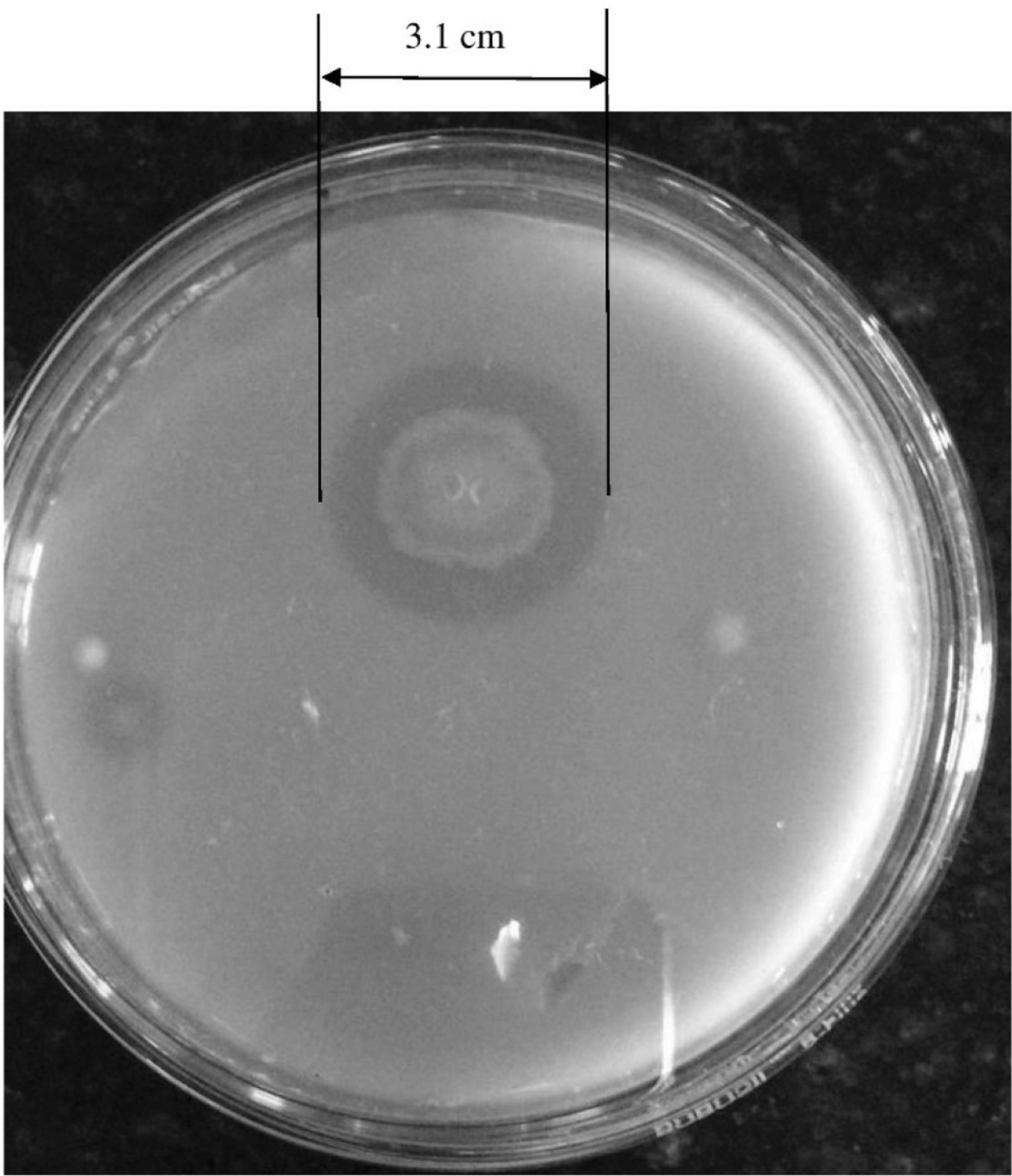
Zone of clearance as shown by micro-organism of slaughterhouse soil.
BIOCHEMICAL IDENTIFICATION OF MICROORGANISM
Microscopic analysis identified the strain to be Gram-positive, motile, and rod-shaped. Further positive results from sugar fermentation tests, catalase tests, and growth at various temperatures (Table 1 ) showed the bacteria belonging to genus Bacillus, per Bergey's Manual of Determinative Bacteriology.
Biochemical Tests of Isolate Microorganism and Growth Performance
16s rRNA SEQUENCING OF MICROORGANISM
The 16s rRNA sequence was blast using NCBI BLAST similarity search tool. The following sequence was found for the newly isolated strain:
GGGCTAATACCGGATAACATTTTGAACCGCATGGTTCGAAATTGAAAGGCGGCTTCGGCTGTCACTTATGGATGGACCCGCGTCGCATTAGCTAGTTGGTGAGGTAACGGCTCACCAAGGCAACGATGCGTAGCCGACCTGAGAGGGTGATCGGCCACACTGGGACTGAGACACGGCCCAGACTCCTACGGGAGGCAGCAGTAGGGAATCTTCCGCAATGGACGAAAGTCTGACGGAGCAACGCCGCGTGAGTGATGAAGGCTTTCGGGTCGTAAAACTCTGTTGTTAGGGAAGAACAAGTGCTAGTTGAATAAGCTGGCACCTTGACGGTACCTAACCAGAAAGCCACGGCTAACTACGTGCCAGCAGCCGCGGTAATACGTAGGTGGCAAGCGTTATCCGGAATTATTGGGCGTAAAGCGCGCGCAGGTGGTTTCTTAAGTCTGATGTGAAAGCCCACGGCTCAACCGTGGAGGGTCATTGGAAACTGGGAGACTTGAGTGCAGAAGAGGAAAGTGGAATTCCATGTGTAGCGGTGAAATGCGTAGAGATATGGAGGAACACCAGTGGCGAAGGCGACTTTCTGGTCTGTAACTGACACTGAGGCGCGAAAGCGTGGGGAGCAAACAGGATTAGATACCCTGGTAGTCCACGCCGTAAACGATGAGTGCTAAGTGTTAGAGGGTTTCCGCCCTTTAGTGCTGAAGTTAACGCATTAAGCACTCCGCCTGGGGAGTACGGCCGCAAGGCTGAAACTCAAAGGAATTGACGGGGGCCCGCACAAGCGGTGGAGCATGTGGTTTAATTCGAAGCAACGCGAAGAACCTTACCAGGTCTTGACATCCTCTGACAACCCTAGAGATAGGGCTTCTCCTTCGGGAGCAGAGTGACAGGTGGTGCATGGTTGTCGTCAGCTCGTGTCGTGAGATGTTGGGTTAAGTCCCGCAACGAGCGCAACCCTTGATCTTAGTTGCCATCATTTAGTTGGGCACTCTAAGGTGACTGCCGGTGACAAACCGGAGGAAGGTGGGGATGACGTCAAATCATCATGCCCCTTATGACCTGGGCTACACACGTGCTACAATGGACGGTACAAAGAGCTGCAAGACCGCGAGGTGGAGCTAATCTCATAAAACCGTTCTCAGTTCGGATTGTAGGCTGCAACTCGCCTACATGAAGCTGGAATCGCTAGTAATCGCGGATCAGCATGCCGCGGTGAATACGTTCCCGGGCCTTGTACACACCGCCCGTCACACCACGAGAGTTTGTAACACCCGAAGTCGGTGGAGGTAACCTTTTTGAGAGCCAGCCGCCTAAGGGGAC
PHYLOGENETIC ANALYSIS OF Bacillus paramycoides
A phylogenetic tree was constructed using a sequence of 16s rRNA and the related sequencing, as shown in Fig. 2. Phylogenetic analysis of the above-mentioned nucleotide sequence based on 16srRNA by NCBI BLAST suggested the isolate was Bacillus paramycoides. This identified strain of Bacillus belongs to nine novel species of the Bacillus cereus group, according to Liu. 6 To the best of our knowledge, no literature is available on the exploitation of Bacillus paramycoides. Hence, there is an opportunity to evaluate various aspects of production and purification of the newly isolated strain.
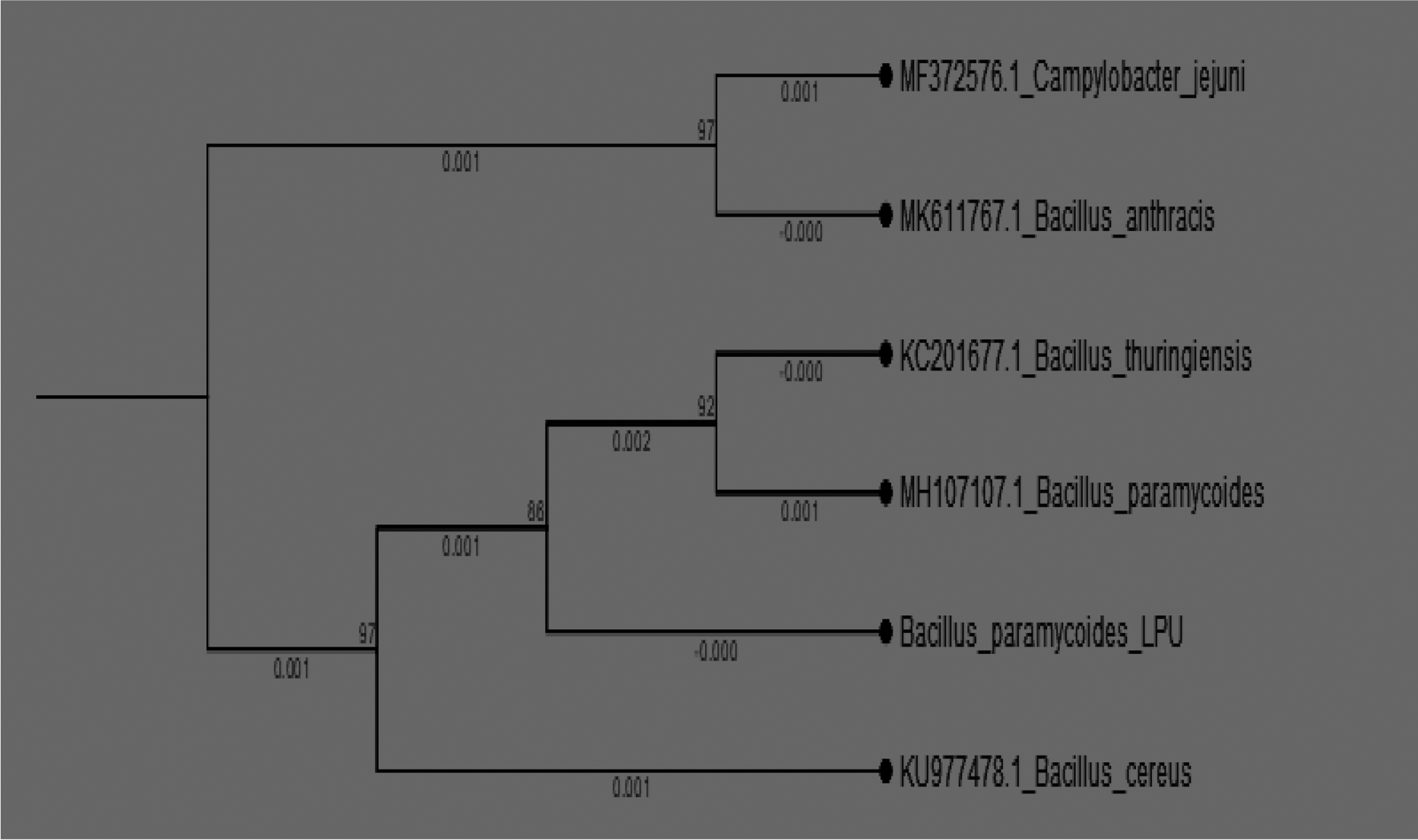
Phylogenetic tree of Bacillus paramycoides and related bacterial species.
EFFECT OF MEDIA COMPONENTS AND FERMENTATION CONDITIONS ON PROTEASE PRODUCTION
The effect of various media components and fermentation conditions was evaluated one factor at a time, and the best conditions were chosen based on maximum proteolytic activity, per Ul-Qadar et al. 15
Utilization of agro-waste as a carbon source
Various, locally available agro-wastes (wheat bran, orange peel, papaya peel, potato peel, pineapple peel, and beetroot peel) were screened for maximum alkaline protease production. Maximum activity was shown in potato peel, with an activity of 1436.7
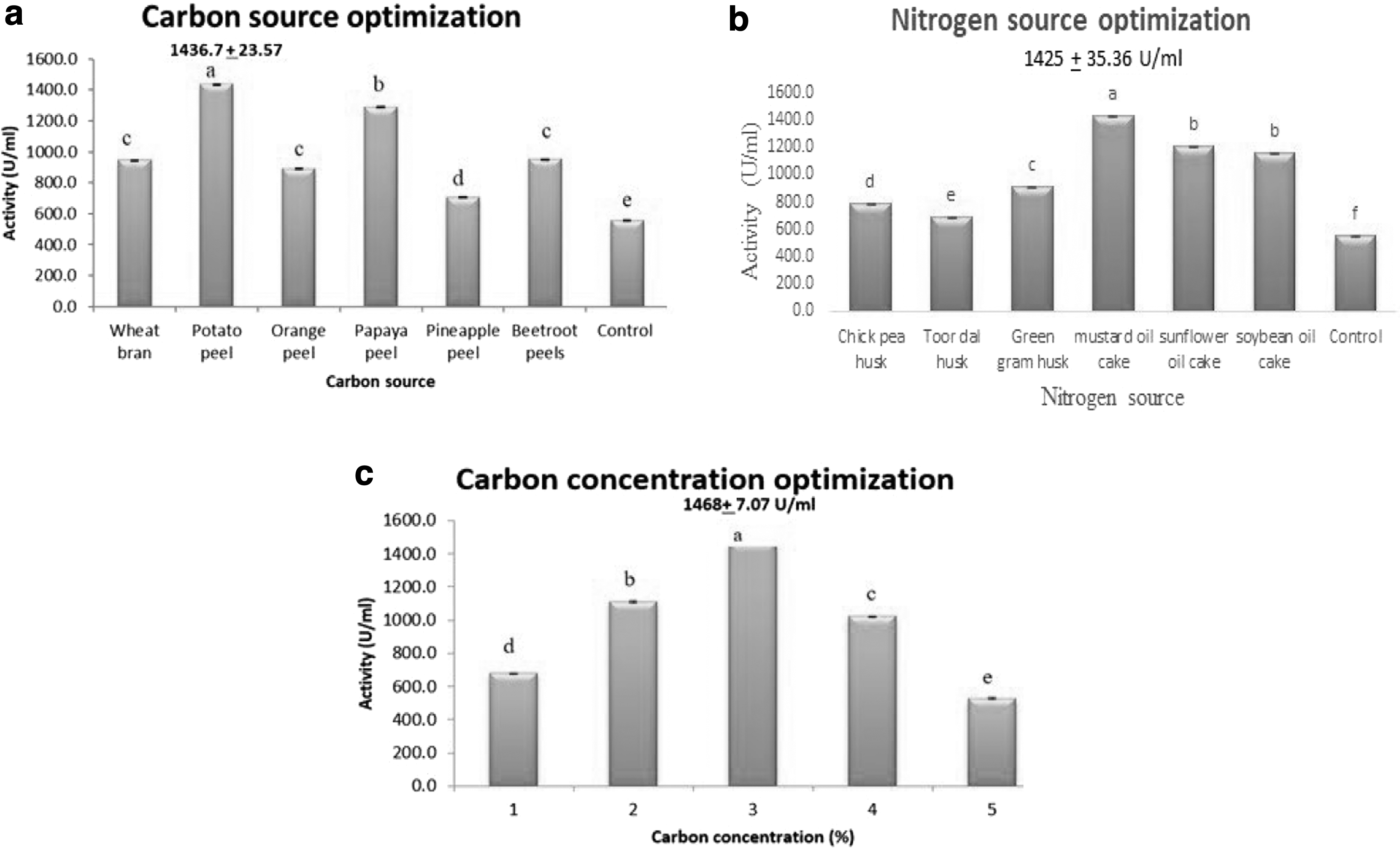
Effect of
Utilization of agro-waste as a nitrogen source
Various nitrogen-rich sources, such as pulses husk (chickpea husk, toor dal husk, and green gram husk) and oilseed cakes (mustard oil cake, sunflower oil cake, and soybean oil cake) were screened for maximum alkaline protease production. Although all substrates showed higher enzyme production than the chemically defined media, maximum production was observed in mustard oil cake, with an activity of 1425
Many industries are now opting for oil cakes as a cost-effective substrate for producing industrial enzymes through fermentation. The maximum production in mustard oil cake can be attributed to its high protein content (38.5%). Moreover, mustard oil cake is also rich in important amino acids, namely glycine, phenylalanine, leucine, and arginine. Therefore, mustard oil cake not only provides nutrients but also anchors the microbial cells.
Effect of carbon and nitrogen concentration on enzyme production
To evaluate the effect of carbon and nitrogen concentration on alkaline protease, the concentrations of both potato peel and mustard oil cake were varied from 1–5%. As shown in Fig. 3c and 4a, potato peel at a concentration of 3% and mustard oil cake at a concentration of 2% showed maximum enzyme production with activities of 1468
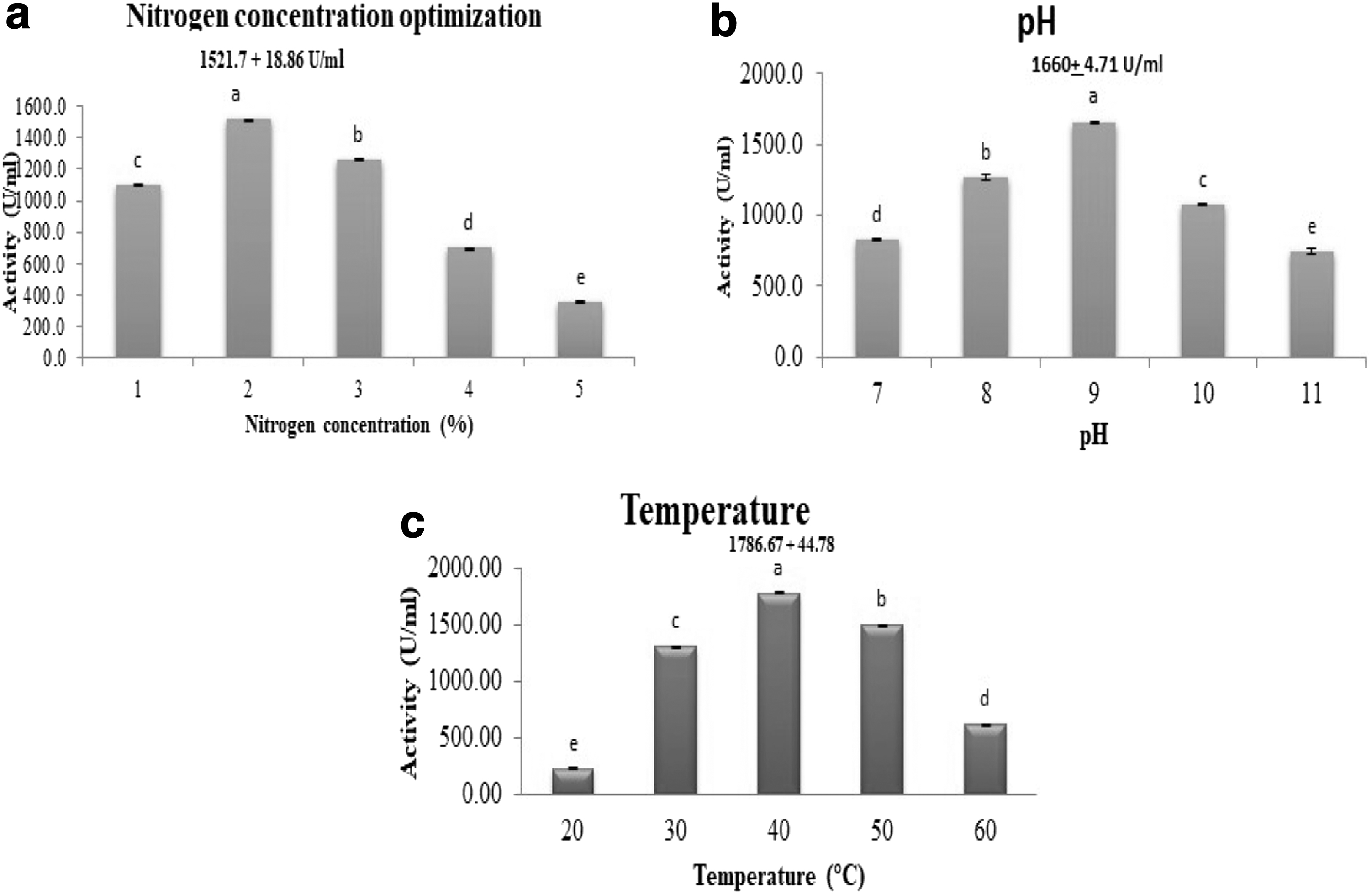
Effect of
Effect of pH on alkaline protease production
Fermentation conditions such as pH, production time, and inoculum size have a significant effect on the production of alkaline protease. The ionization state of the medium changes with change in pH and hence accessibility to nutrients also changes. As shown in Fig. 4b, the maximum enzyme production was observed at pH 9 with a maximum activity of 1575.8
Effect of temperature on alkaline protease production
Production temperature is a critical parameter that affects cell growth and enzyme production. The temperature requirement for alkaline protease production varies from a very low temperature of 30°C to a higher range of even 80°C, depending upon the microorganism. As shown in Fig. 4c, maximum enzyme production was found at 40°C, with an activity of 1786.67
Effect of inoculum age on alkaline protease production
To study the effect of inoculum age on alkaline protease production, production media was inoculated with seed media of different ages. Culture time of 12 h supported the maximum alkaline protease production, with an activity of 1916.67
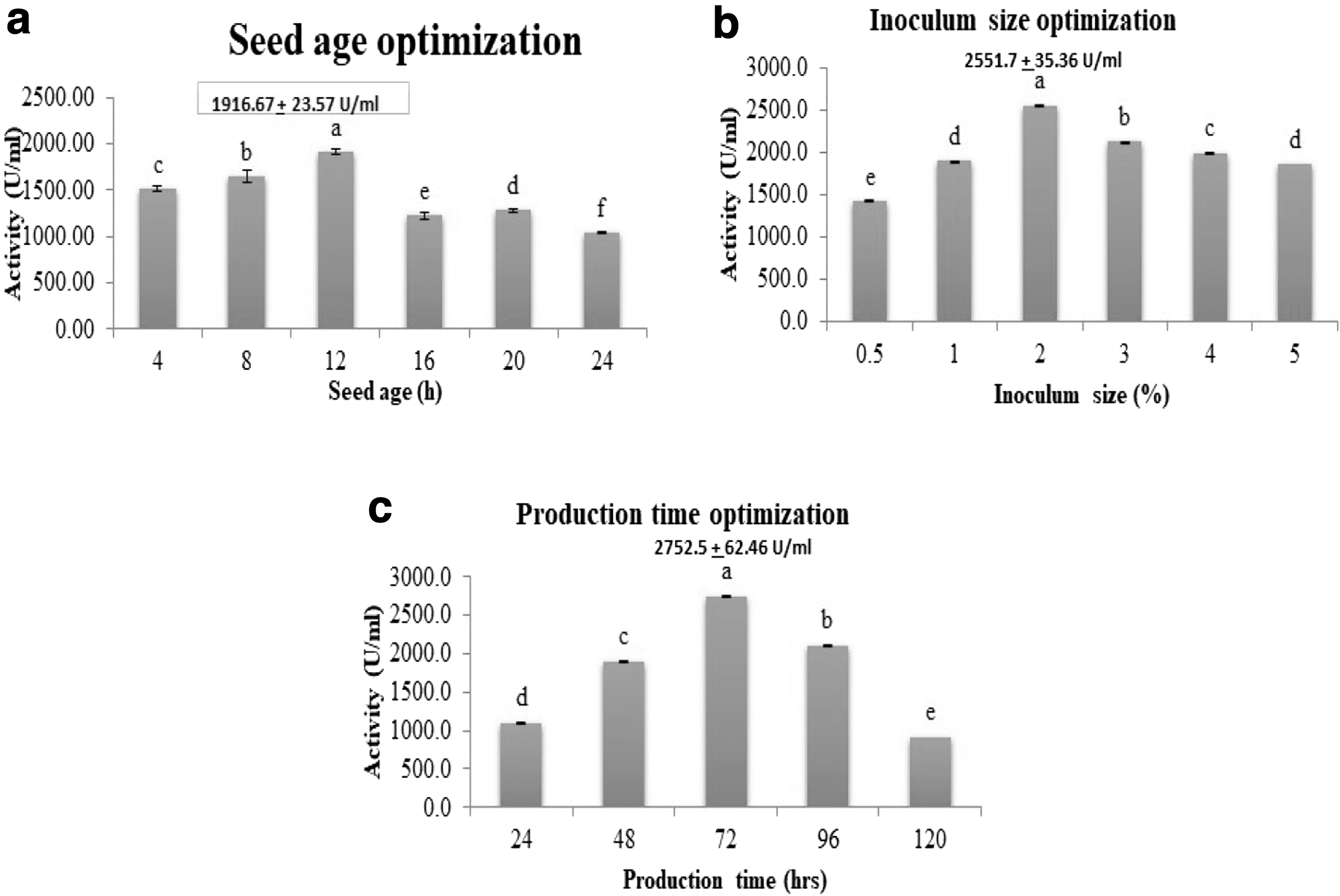
Effect of
The relation between the phase of seed culture (seed age) and lag time, and the growth rate of production media is highly significant. The seed age has a major impact on the growth of cells and the production of secondary metabolites and enzymes by microbial cultures. Generally, seed age has more influence on enzyme production than seed size. There is an increase in cell density only with an increase in density of inoculum, but the production of enzymes and secondary metabolites is greatly influenced by the seed age. It was found by many researchers that inoculum age proved to be an essential factor in determining enzyme productivity.
Effect of inoculum size on alkaline protease production
The organism density, also termed inoculum size, plays an important role in alkaline protease production. It was found that the production of alkaline protease was highest (2551.7 ± 35.36 U/mL) when an inoculum size of 2% was used (Fig. 5b). Beyond this, the activity of enzyme continuously decreased. This result is supported by many other authors who found maximum alkaline protease production at the above-mentioned inoculum size. 28
Effect of production time on alkaline protease production
Time of incubation plays a significant role in alkaline protease production. After an incubation period of 72 h, production of alkaline protease was highest with enzyme activity of 2752.5 ± 62.46U/mL (Fig. 5c). Similar results were recorded by Gupta 29 for V. pantothenticus, Kumar 30 for B. subtilis and B. Licheniformis, and Pavitra et al. 31 for Pediococcus pentosaceus.
Conclusion
This work identified new sources of alkaline protease production and demonstrated optimized production conditions. The enzyme showed maximum activity of 2752.5 U/mL, demonstrating that the newly isolated microorganism Bacillus paramycoides can be used successfully in various industrial applications. Further, the growth of microorganisms at a mild condition of pH 9 and temperature 40°C shows it to be a potential candidate for the food industry. Moreover, mesophilic microorganisms are also the prerequisite to develop eco-friendly technologies.
The enzyme was produced using the potato peel and mustard oil cake as media components, which are cheap agro-industry by-products. This decreases the cost of production and will further enhance the use of enzymes in industrial applications. There was an overall 4.94-fold increase in the activity of alkaline protease by one variable at a time (2752.5 U/mL:557.2 U/mL) over the basal medium. Therefore, the enzyme with lowest cost of production was isolated and produced.
Footnotes
Author Disclosure Statement
No competing financial interests exist.
Funding Information
The authors thank the Department of Food Nutrition and Technology, Lovely Professional University (LPU) for financial support.