







Abstract
The production of biopesticides is challenged by the high costs of production and formulation. For this reason, the concentration of biological broth through advanced technologies such as the membrane separation process (MSP) is an attractive alternative for enhancing the control action of biopesticides. The purpose of this study was to perform the MSP in 40 fermented broths of bioagents obtained by a bioscreening to evaluate the potential control of Chrysodeixis includens, Spodoptera frugiperda, and Euschistus heros. The collected biomaterials were surface sterilized, placed in Petri dishes with Potato Dextrose Agar (PDA), and underwent a submerged fermentation process at 28°C and 120 rpm for seven days. Afterward, the broth was centrifuged at 4,000 rpm and 10°C for 10 min and filtered in a vacuum pump. Finally, the assays were submitted to MSP with a 0.45-μm nylon membrane. The control rate varied up to 100% in the broths after MSP for C. includens and E. heros. The control rate for S. frugiperda was up to 40%. Appropriately, the MSP indicated promising results as an advanced technology for the biopesticide formulation process, based on the optimization and improvement of the control potential of injurious pests.
Introduction
Frequent application of synthetic pesticides has perpetuated chemical contamination in the environment with serious impacts on human and animal health. 1 However, because efficacy in inhibiting pests, synthetics still represent the majority of pest control product applications and a significant share of pesticide production, with trade flows exceeding US$40 billion annually. 2,3 In addition to environmental contamination, persistent use of synthetic pesticides has increased resistance of a series of pest species and reduced the population of natural enemies—amplifying the proliferation of secondary pest outbreaks. 4 As a result, significant reforms and global initiatives are necessary for agriculture to transition to predominantly sustainable production systems with ecological and environmentally friendly practices. 5
Contextually, microbial biopesticides are products based on live bioagents (fungi, bacteria, viruses, nematodes, protozoa, etc.) that destroy a harmful organism. 6 The use of biopesticides has several advantages, including ecologically friendliness compared to synthetics and host specificity. 7 According to the United States Environmental Protection Agency (EPA), in 2020, there were approximately 390 active ingredients registered and more than 1,700 registered bioproducts. 8 Considering just fungi, approximately 700 species from about 90 different genera have been explored as potential insect pathogens. 9 Moreover, recent literature reports a range of studies that use various bioagents in pest control. 10 –12
The modern scientific community and companies focused on sustainability require bioprocesses that produce biological formulations with high potential for bioactivity, longer permanence in the environment, and that do not result in toxicity to natural resources and human health. 13,14 Contextually, the use of bioactive secondary metabolites (SMs) produced by entomopathogenic fungi is an interesting strategy in this regard, mainly due to the efficient phytotoxic activity of these compounds. 15
SMs are based on phytotoxic chemical compounds originating from biosynthetic routes, and their environmental persistence is a performance benefit. 16,17 Since SMs are valuable sources of multiple biocompounds with high control activity, researchers are interested in strategies focused on the action potential of these compounds, mainly increasing the insecticidal action mechanisms of bioformulations to promote higher control of injurious pests. 18 These insights support the action of microbial agents in pest management as promoters of sustainable production balance, which in turn boosts interest by the industrial and academic/scientific communities in enhancing understanding of behavior and dynamism for future research. 19 Moreover, the concentration of phytotoxins in crude-fermented broth is reduced, mainly due to the dilution of metabolites in large volumes of the product. 20 Consequently, the concentration of biomolecules is an attractive strategy to preserve the potential of the formulation as a biopesticide. Contextually, the membrane separation process (MSP) has emerged as an interesting approach to increase the concentration of SMs and improve the action potential of these biocompounds.
The basic mechanism of MSP technology consists of a sieving effect, in which the separation process occurs due to distinction of particle size, in addition to other characteristics, such as shape, charge, and interactions between the membrane and the particles of the filtered biomaterial. 21 Moreover, the MSP procedure comprises distinct primordial mechanisms: size exclusion, repulsion/attraction, and hydrophobic/hydrophilic interactions retaining coarser molecules, and isolating smaller-sized molecules. 20 Also, MSP has been an appropriate strategy in industrial processes, essentially due to its high separation performance, reduced environmental impact, and decline in destructive damage to microbial biomolecules caused by adverse weathering in the separation process. 22
Interestingly, the success of MSP often dictates the economy, shelf life after formulation, ease of application, and field effectiveness of a bioproduct. 23 Furthermore, MSP enhances mass transfer mechanisms in shorter adsorption/retention time, making it an encouraging approach for large-scale applications. 24 Nonetheless, even if the functionalities of the separation/purification process are advanced and comprehended, there are knowledge gaps related because studies have essentially focused on the application of MSP in bioformulations with the purpose of improving the potential for action in pest control. The gaps include membrane cost-effectiveness, potential for fouling during applications, contribution to product shelf life, limitations caused by the specific microorganism during the bioformulation production process, the requirement to adopt more steps for the complete purification of the bioproduct, etc. Consequently, this scenario has encouraged the application of MSP technology to overcome these adversities and promote high purification potential with minimal intervention in the membrane integrity. 23
The purpose of this study was to concentrate the fermented broth of 40 bioagents isolated after bioscreening using MSP and, subsequently, to formulate bioproducts with high biopesticide potential. Additionally, this research is part of a larger project with the objective of obtaining one or more fermented broths for potential action against a diversity of pests of high importance in the modern agricultural chain. This study, particularly, proposed to investigate the phytotoxic effect in the control of Chrysodeixis includens, Spodoptera frugiperda, and Euschistus heros.
Materials and Methods
MATERIALS
Soybean and cotton pests S. frugiperda, C. includens, and E. heros were obtained from Pragas.com® (Piracicaba, SP, Brazil). Insect diet was standardized, and the food diets were sterilized in a laminar flow chamber (Marconi®, Piracicaba, Brazil) for approximately 30 min. 25
METHODS
Figure 1A-G provides a schematic view of the procedures used for this study.
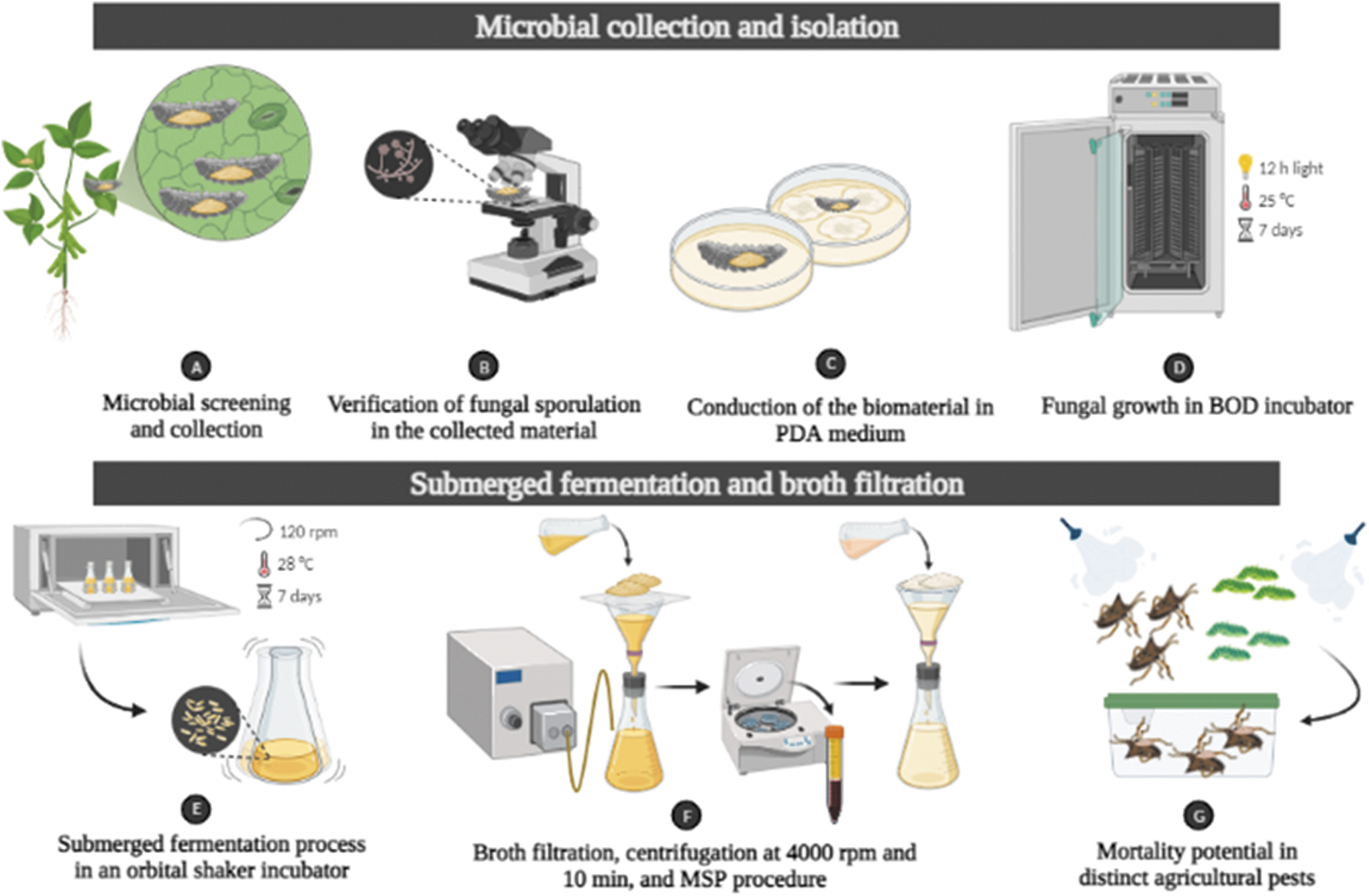
Schematic overview of the distinct steps used in this study.
Monitoring and collection of microbial agents
The monitoring and collection of microbial agents were performed in areas of agricultural cultivation in different zones of the Northwest and central region of Rio Grande do Sul and Goiás, Brazil (Fig. 2). Pest insects, naturally killed, were obtained from areas with considerable pest populations and that have not been subjected to the application of pesticides prior to collection. Collection of individual pests was performed based on scanning in the cultivation area. The microorganisms that caused the insects' deaths were likely still present. The insects were kept in previously sterilized Falcon flasks.
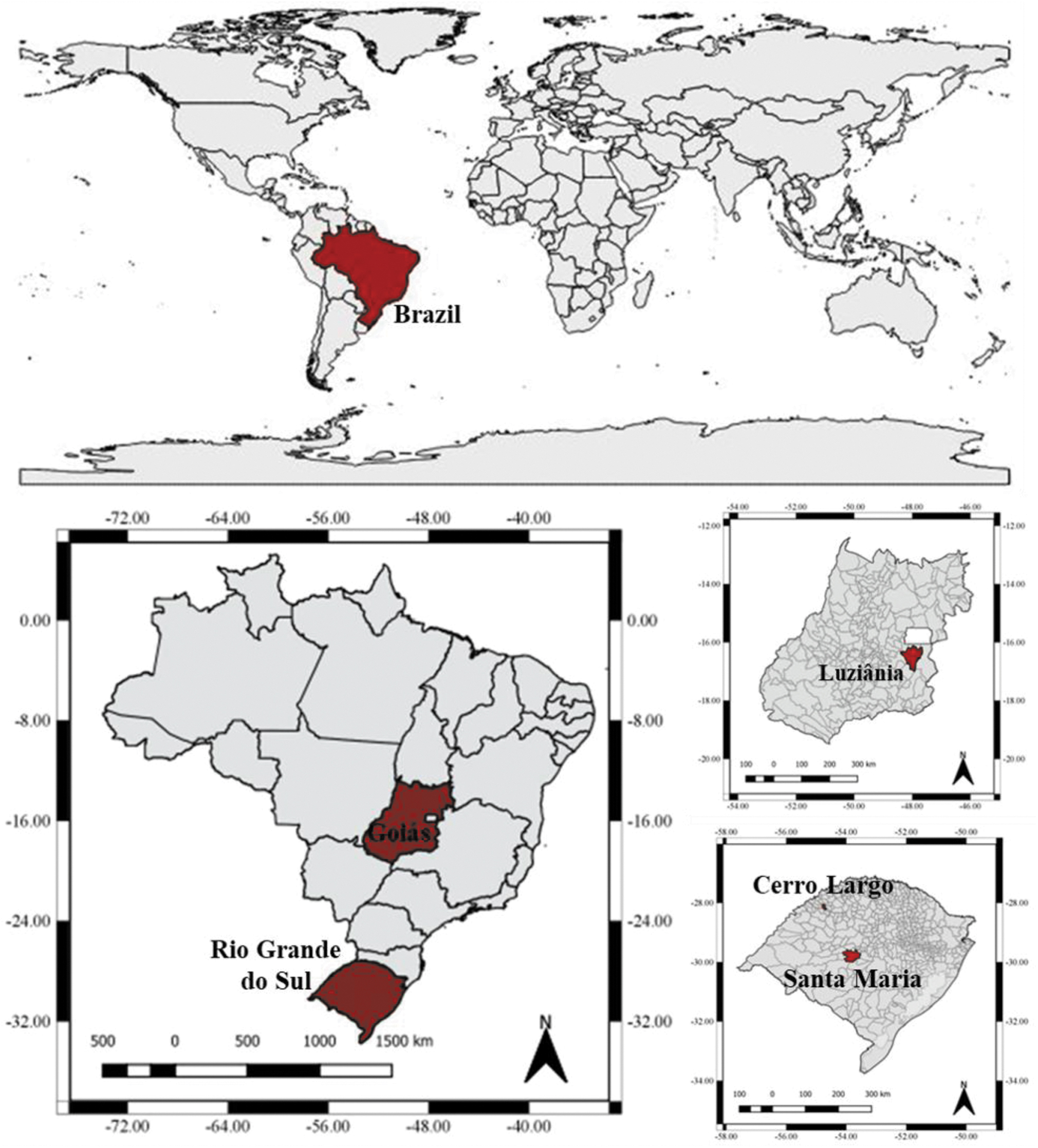
Geographic overview of the collection areas and quantification of isolated microorganisms for this study.
Isolation of microbial agents
The collected insects were directed to the Biotec Factory® Laboratory at Federal University of Santa Maria (UFSM), Santa Maria, Rio Grande do Sul, Brazil. The first step consisted of isolating the microbial agents present in the dead insects. The following methodology was undertaken: (a) insect corpses were directed to the laboratory as separate entities in sterile tubes; (b) the insects were observed under a microscope binocular biological (40–1,600x Ilum.) (TIM-107, Zeiss-Opton®, Germany), under a resolution 40 × for checking the level of damage and the potential for spreading the fungus; (c) in places with easily visible damage, the insects were sterilized on the surface using 70 wt.% ethanol an a 0.5 wt.% NaOCl (>99.0%, Sigma- Aldrich®, Germany) solution for 3 min, with three subsequent washes with 100 mL of sterilized water, and then the sporulated fungus from the insect corpse was quickly added to Petri dishes with the culture medium; (d) dead insects with fungal presence were placed in a culture medium in a Biochemical Oxygen Demand incubator (BOD), at 25°C, for one week.
In cases of non-germination, the dead insects were arranged in Petri dishes containing the selective (fermentative) medium; (e) the fungi obtained were cultivated in PDA (Potato, Dextrose, and Agar) (Sigma-Aldrich®, Germany) and/or SDA (Sabouraud, Dextrose and Agar) (Sigma-Aldrich®, Germany), in concentrations of 39 g PDA/ L distilled water and 65 g SDA/ L water distilled, respectively, until the pure culture was obtained. 26 The medium was previously autoclaved at 121 ± 1°C for 30 minutes and, subsequently placed in Petri dishes. To maintain a sizable population of each bioagent, constant subcultures were performed, transferring the inoculated plates into a sterilization and drying oven at a temperature of 25°C, with frequent observation, until it is noticeable the filling of the surface of the culture medium of the Petri dish. 27
Submerged fermentation process
The fermentation process in a submerged state (SF) was performed using a 250-mL Erlenmeyer filled with 125 mL of Potato Dextrose (BD) culture medium and sterilized in an autoclave at 121 ± 1°C for 30 min. 20 Fungi and bacteria were visually identified based on the morphological characterization of the bioagent and its arrangement in the Petri dish. The fungal fermentation process consisted of (g L−1): glucose (≥99.5%, Sigma-Aldrich®, Germany), 10.0; yeast extract (Titan Biotech Ltd®, India), 7.5; peptone (Titan Biotech Ltd®, India), 10.0; (NH4)2SO4 (>99.0%, Labsynth®, Brazil), 2.0; FeSO4·7H2O (99.0%, Labsynth®, Brazil), 1.0; MnSO4·H2O (98.0%-101.0%, ACS® Científica, Brazil), 1.0; and MgSO4 (98.0%, Sigma-Aldrich®, Germany), 0.5. Initial pH was adjusted to 6.0. 28
For bacterial fermentations, the methodology corresponded to (g L−1): meat extract (Titan Biotech Ltd®, India), 1; bacteriological peptone (Titan Biotech Ltd®, India), 5; yeast extract (Titan Biotech Ltd®, India), 2; and NaCl (99.0%, Dinâmica – Química Contemporânea LTDA®, Brazil), 5. The initial pH was adjusted to 7.4. 29 The conditions of the submerged fermentation process were 28°C and 120 rpm for seven days in an orbital shaker-incubator (New BrunswickTM Innova® 44, USA). For the analysis of the selected fermented solutions, the treatments were determined considering the different microorganisms so that each treatment refers to a microorganism.
After the fermentation process, the cells were separated by vacuum filtration in a vacuum pump (SL-61, Solab®, Brazil), with 12.5 cm filters (Qualy®, Jacareí, Brazil), and by centrifugation at 4,000 rpm and 10°C for 10 min (Eppendorf, model 5804R). Finally, the assays were submitted to the MSP with a membrane filtration (Merck Millipore), with a pore size of 0.45 μm and a diameter of 47 mm in an MSP system coupled to the vacuum pump with a pump power of 300 W, as observed in Fig. 3.
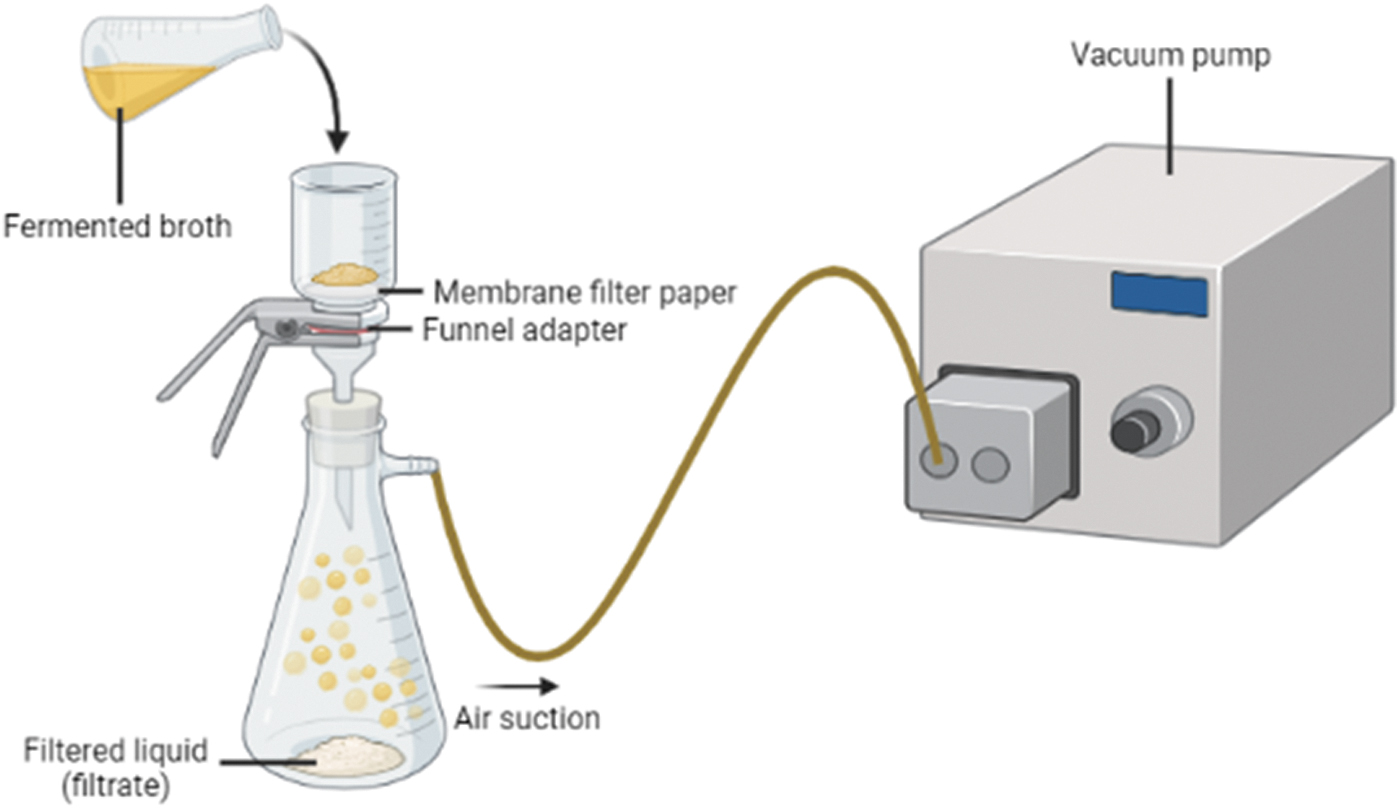
Membrane filtration process (MSP)/vacuum pump apparatus used to filter 40 fermented broths to observe the effects in the control of Chrysodeixis includens (Walker, [1858]) (Lepidoptera: Noctuidae: lusiinae), Spodoptera frugiperda (J.E. Smith, [1797]) (Lepidoptera: Noctuidae), and Euschistus heros (Fabricius, [1798]) (Hemiptera: Pentatomidae).
Fermented broth application
The application of fermented solutions was conducted by DeVries Generation III automatic spray chamber medium (DeVries Manufacturing, Hollandale, United States). The system and equipment verification process started with the verification of whether the connections were properly established. Subsequently, the equipment was turned on and the CO2 cylinder and the system pressure regulator handle were opened. Furthermore, the height of the shelf was positioned approximately 70 cm from the lower portion of the apparatus. The tip of the application was adjusted and a bottle (carbonated water) with sterilized water was positioned on the support for system calibration. Moreover, among the applications, the system was sanitized with sterilized water and depressurized by adjusting the handle connecting the CO2 cylinder to the chamber. Additionally, the spray nozzle was sanitized by purging 500 mL of sterile water.
After coupling the bottle to the system, a test verification was performed, collecting water pressurized by the nozzle of the sprayer with a test tube for 20 seconds. The system calibration for the applications of fermented solutions was, approximately 200 L ha−1 at a working speed of 2.7 km h−1. Finally, after the application, the tip was cleaned with sterilized water. For the process, a water source was attached to the chamber cleaning system, sanitizing the internal portion of the chamber walls. After draining the waste into the external disposal box, the waste collection mesh originating from the applications was sanitized. Afterward, the CO2 cylinder was closed and the systems were completely emptied through the depressurization valve.
For S. frugiperda and C. includens species, the applications occurred at the L1/L2 larval stage.
30
Considering E. heros, the method of application was via topical contact, supported by the Resistance Action Committee of Insecticides (IRAC), corresponding to the direct application of 2 μL of solution on the back (in the region between the pronotum and the scutellum) of the insect. In sequence, the insects that received the application were added to Petri dishes (100 × 15 mm). As a standardization mechanism, five insects were used for each treatment. Finally, mortality assessments were investigated from 24 h to 240 h after the applications. Abbott's universal equation was applied to indicate the corrected control mortality and calculate the total effect of each fermented broth, based on the formula:
31
Statistical procedure
The data obtained was subjected to analysis of normality and homogeneity, and when significant, analysis of variance comparison via Tukey test, at a significance level of 95% (p < 0.05), was performed. Accordingly, the statistical analysis was performed using the statistical software Sisvar® 5.6.
Results and Discussion
Based on the preliminary investigation of collected microbial agents for this study, 40 microorganisms were isolated from dead insects. Figure 4 indicates the mortality rates, %, obtained in the bioassays for the control of C. includens. For C. includens, only MI2.2.1 presented no effect under MSP conditions and on the membrane. All other 39 bioagents showed phytotoxic effects, with 10 microorganisms showing effects of up to 100%.

Abbott mortality rate (%) of 40 bioagents isolated from bioscreening for the potential control of Chrysodeixis includens (Walker, [1858]) (Lepidoptera: Noctuidae: lusiinae) in L1/L2 larval stage.
Bioagents MI3F2 and MI2.1 B indicated 100% mortality with and without MSP application. 32 bioagents reported more significant effects with the use of MSP. The application of MSP indicated a considerable increase in the mortality rate of up to 100% for the fermented broths of MI3 A (0% no membrane – 100% MSP), MI5 C (0% – 100%), A3 (25% – 100 %), A8 (50% – 100%), OL7 (72.1% – 100%), OL6 (44.1% – 100%), and BR3.1 (0% – 100%). The control treatments were 20% and 28.1% for MSP and no membrane conditions, respectively.
For C. includens, the bioagents MI7 2, MI3F1, CL2.1, MI2, MI3 A, MI5, MI5 C, MI5 F1, MID B, MI3.1 A, MI5F2, MI1 D, MI1.1 BR, MI3.1 B, MI6 F, MI4, MI8, MIF, A3, S4, SH, A8, P1, OL7, OL5, B7, C2, 2.1.1 2, OL6, A6.1, B6, MI5.1, BR3.1, BR2, X1, MA6, and BR4; and the control treatment, presented statistical difference between the MSP and no membrane conditions. Finally, fewer promising results were reported for a few bioagents based on a higher mortality rate in membrane treatments compared to MSP. MI5F2, MI1.1BR, and S4 indicated mortality of 72%, 44.1, and 100% for the no membrane condition, respectively. These results were significantly superior to the rates of 25%, 25%, and 50%, respectively, in the MSP condition. Furthermore, a less promising scenario was observed for bioassays involving S. frugiperda (Fig. 5).
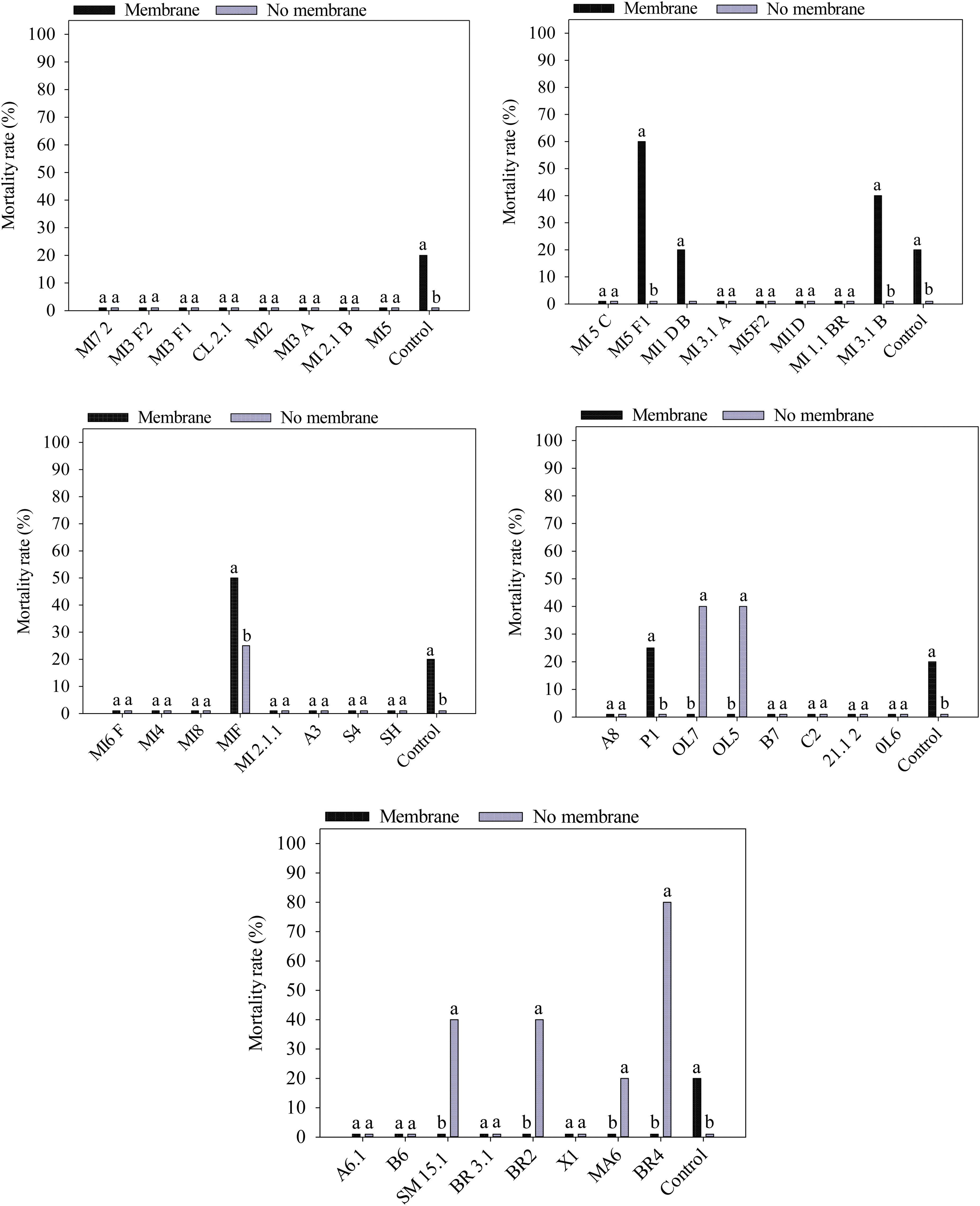
Abbott mortality rate (%) of 40 bioagents isolated from bioscreening for the potential control of Spodoptera frugiperda (J.E. Smith, [1797]) (Lepidoptera: Noctuidae) in L1/L2 larval stage.
Considering S. frugiperda, the bioagents MI5F1, MI1D B, MI3.1 B, MIF, P1, OL7, and 0L5, and the control treatment demonstrated statistical difference between the MSP and no membrane conditions. Considering this species, only 5 bioagents reported higher mortality effects for MSP: MI5F1, MI1D B, MI3.1 B, MIF, and P1 microorganisms showed mortality rates of 60%, 20%, 40%, 50%, and 25% for MSP, respectively. These microorganisms did not express control potential under no membrane conditions, with the exception of MIF, which indicated a mortality rate of only 25%. The control treatments were 20% and 0% for MSP and no membrane conditions, respectively. Finally, treatments based on a higher mortality rate in membrane treatments compared to MSP were indicated as six bioagents (OL7, OL5, SM 15.1, BR2, and BR4). The results expressed in this study suggested mortality rates of 40%, 40%, 40%, 20% and 80% in the no membrane condition, respectively. These results were superior to the null control rate in the MSP condition. Accordingly, this dimension details that the use of MSP was advantageous for a reduced number of bioagents isolated in this study, and the most significant portion did not express action potential for the control of S. frugiperda. Nevertheless, it is appropriate to highlight the importance of exploring the microorganisms that proposed higher control in the MSP condition, since the MSP treatment expressed zero mortality rate.
For E. heros, 31 isolated microorganisms reported 100% mortality effects (Fig. 6). Moreover, all microorganisms indicated a statistical difference between MSP and no membrane treatment, which presented the strategy as an encouraging alternative for E. heros control actions. The control treatments were 42.1% and 0% for MSP and no membrane conditions, respectively. Considering this species, only 10 bioagents reported higher mortality effects than the control in the no membrane condition. MI5F1, MI1D B, MI3.1 B, MIF, OL7, and OL5 microorganisms showed mortality rates of 60%, 20%, 40%, 50%, 40%, and 40% for no membrane treatment, respectively. These microorganisms expressed 100% of control potential. Finally, there were no treatments based on a higher mortality rate in the treatments on the membrane contrasted with the MSP, indicating that the results expressed in this study were superior to the control of E. heros. The alternative was extremely appropriate for MSP and for the fermented broths that promoted a higher mortality rate than the control even for the no membrane treatments.
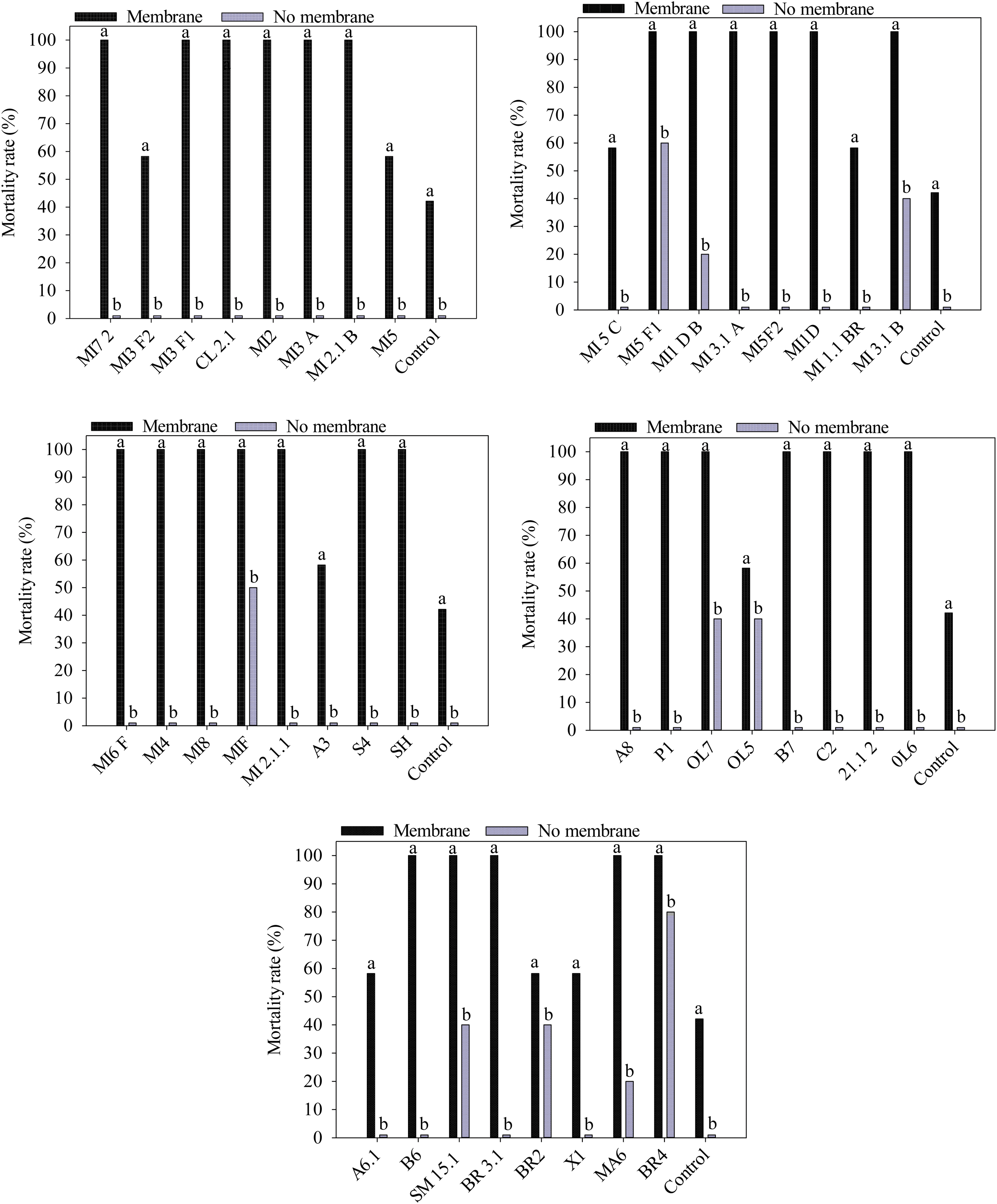
Abbott mortality rate (%) of 40 bioagents isolated from bioscreening for the potential control of Euschistus heros (Fabricius, [1798]) (Hemiptera: Pentatomidae) in L1/L2 larval stage.
According to this study, MSP was an effective alternative for the control of C. includens and E. heros, based on the significant increase in mortality rate after the procedure. This study motivated the application of MSP as an interesting strategy for the control of agricultural pests. One of the main approaches reports the MSP as an interesting strategy for the separation of coarser cells from the fermented broth. Accordingly, the fermented broth after the MSP has a higher concentration of SMs, small compounds that are not retained in the filtration and purification processes. SMs are biocompounds originating from metabolic pathways and primary metabolites, with acyl-CoA fueling the synthesis of SMs from polyketides, terpenes, and aminoacids. 32
SMs are not essential mechanisms that regulate the growth of microorganisms but promote intensification of the interaction with other organisms, since these compounds are synthesized to defend the fungus habitat by inhibiting the growth of competing organisms. 33 Basically, it is the SMs that dictate the potential to control another phytopathogenic organism or fungus in the environment. 34 Nonetheless, increasing the performance of the action potential of a microbial agent requires metabolite extraction and purification techniques, such as the application of MSP as a viable alternative that does not affect the microbial action potential. 35
Appropriately, many studies have promoted SMs as highly potential bioactive compounds in the control of agricultural pests. Among the main species exploited in the field of agriculture are Beauveria bassiana, 36 Metarhizium flavoviride, 37 Metarhizium anisopliae, 38 Paecilomyces variotii, 39 Metarhizium flavoviride, 37 Trichoderma spp., 34 Pochonia chlamydosporia, 40 and Isaria fumosorosea, 41 among others. Since the intensification of agriculture, more than 200 species of invasive pests have been totally or partially eradicated by the action of microbial agents. 42 Scientific research has significantly accelerated the discovery of microbial agents, enabling the performance of a significant population of microorganisms in complex interactions in agricultural systems. 3
Recently, a series of studies promoted the research, development, and commercial launch of a variety of pesticides of microbial origin. 43 Such efforts are closely associated with the notable increase in the current market for biological products. Currently, there are more than 1,700 biopesticides available on the market, representing approximately 1,000 active ingredients. 44 Nevertheless, the number of works involving MSP in bioformulations for species control is still limited, indicating a significant gap to be filled.
Conclusions
This study aimed to parameterize bioassays involving microbial applications directed for pest control. This study reported the application of 40 microbial agents to three insect pest species (Chrysodeixis includens, Spodoptera frugiperda, and Euschistus heros). For E. heros and C. includens, all 40 bioagents indicated phytotoxic effects, with 31 microorganisms for E. heros and 6 microorganisms for C. includens showing 100% effects. A less promising scenario was observed for the bioassays involving S. frugiperda. Considering this species, 3 bioagents were shown to produce mortality effects of 40%. Other bioagents indicated effects of at least 20%. The control rate ranged from 80% to 100% for E. heros, 20% to 100% for C. includens, and up to 40% for S. frugiperda. This study indicated a high control of E. heros and C. includens through bioformulations processed after the use of membrane technologies. This indicates that the purity and concentration of isolated microbial agents affected the control of harmful pests to agriculture.
Considering the intense gap in the use of technologies that indicate an increase in the concentration and purity of bioformulations developed by microbial bioscreening, this study has been one of the pioneers, with results that corroborate the use of MSP as an alternative for pest control. Contextually, the introduction of microbial agents as potential alternatives for biocontrol has been successfully implemented, with promising results against the main agricultural pests with limited environmental and social risks. Furthermore, the exploitation of bioagents was shown to be extremely positive and provided relevant results for the scientific community and companies working in agriculture.
Footnotes
Author Contributions
Author Disclosure Statement
No competing financial interests exist.
Funding Information
This work was supported by Coordination for the Improvement of Higher Education Personnel (CAPES), National Council of Technological and Scientific Development (CNPq), and the Research Support Foundation of the State of Rio Grande do Sul (FAPERGS). G. L. Zabot and M. V. Tres thank CNPq for the productivity grants.