






Abstract

The Rosalind Franklin Society (RFS), in partnership with Mary Ann Liebert, Inc., publishers, enthusiastically congratulate our distinguished recipient of the 2023 annual
Avery McNair and Nadine Ijaz, “‘The Old Ways Are the Old Ways’: A Qualitative Study of Chinese Medicine Care in Indigenous Communities in Canada,” Journal of Integrative and Complementary Medicine 29, no. 6–7 (June/July 2023): 380–385, https://doi.org/10.1089/jicm.2022.0646.
Abstract
Objectives: Owing to colonization’s impacts, Indigenous Peoples in Canada face a disproportionate share of health challenges and suffer inequitable access to health care today. In recent years, an increasing number of Indigenous-led health services have emerged, which—informed by decolonial principles, including “culture-as-cure”—holistically center local Indigenous cultural, spiritual, and healing knowledges and practices. Aligned with decolonial principles, this work examines the delivery of Chinese Medicine (CM) care—an East Asian Indigenous therapeutic approach—in Indigenous communities in British Columbia, Canada.
Design: Informed by qualitative interviews with three licensed CM practitioners and one biomedical clinician working in such clinics, the work provides a descriptive account of clinical operations, and thematically explores operational successes and challenges.
Results: Four CM clinical programs were identified, all operating on First Nations reserves, including settings at multidisciplinary community health centers, a First Nation Band Council office, and a school gymnasium. Most CM care was delivered free of charge, funded variously by nonprofit agency donations and provincial government reimbursement. Three central themes emerged across the study interviews. The first, transculturalism, emphasizes the conceptual overlap between CM and Indigenous belief systems in the Canadian context, which participants described as a source of strength in building trust for CM care as a nonlocal Indigenous therapeutic approach. The second theme, Cultural Humility, characterizes non-Indigenous practitioners’ respectful outlook as guests on Indigenous land, taking community members’ lead as to how they might best serve. The final theme, Multidimensional Healing, explores the physical, mental, and emotional healing that practitioners witnessed across their work.
Conclusions: Despite economic and logistical challenges, study respondents expressed optimism about the potential for similar traditional medicine clinics to provide culturally resonant primary care in other underserved communities. Further research to learn about the experiences of First Nations community members receiving CM care is warranted.
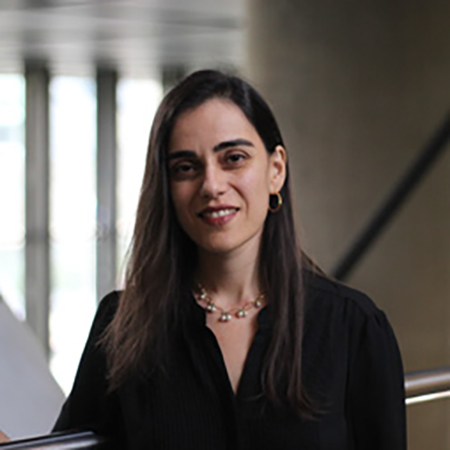
Biosketch
Nadine Ijaz, PhD is an Assistant Professor in the Department of Law and Legal Studies at Carleton University (Canada), where she is the founder and director of the Traditional, Complementary and Integrative Medicine (TCIM) Lab. She is also President of ISCMR (International Society for Traditional, Complementary & Integrative Medicine Research) and an Assistant Professor (Status-Only) with the University of Toronto’s Faculty of Pharmacy. Professor Ijaz’s interdisciplinary research program in the TCIM field critically interrogates the epistemic, socio-cultural, economic, evidentiary and justice-related complexities associated with governing therapeutic pluralism. She is currently leading multiple studies of TCIM policies, practitioners and practices in Canada and the United States (funded by the Canadian Institutes of Health Research); co-leading an evidence review of paradigmatically aligned research approaches in TCIM (commissioned by the World Health Organization); and, leading a pilot study of TCIM governance in sub-Saharan Africa in collaboration with international partners. Prior to her academic career, Professor Ijaz worked for fifteen years as a qualified medical herbalist and shiatsu therapist, taught at multiple TCIM professional schools, and was a staff clinician at Canada’s only government-funded integrative oncology center.