







Abstract

The 12th annual meeting of the International Cytokine and Interferon Society (ICIS) was held jointly with the Korean Association of Immunologists (KAI) at the COEX Convention & Exhibition Center in Seoul, Korea from October 20 to October 24, 2024. This was the first ICIS conference since the beginning of the COVID-19 pandemic to be held entirely in person, bringing together early-career and senior scientists across academia and industry. The meeting was attended by over 1700 registrants from a total of 35 countries. The program included 2 keynote talks, 47 invited speakers, and 615 poster presentations, making for a diverse group of attendees offering a wealth of data and knowledge on cytokines.
Attending Cytokines 2024 with the help of an ICIS travel award provided me the opportunity to present a piece of my PhD research just 2 weeks after defending my thesis. Sharing my work with the incredible scientists in attendance provided a valuable opportunity to make new connections while also reconnecting with people I met last year at Cytokines 2023 in Athens.
The meeting began in the afternoon of Sunday, October 20, with the Opening Session and Award Ceremony (Fig. 1). The Opening Session included presentations by award winners Yanick Joseph Crow (University of Edinburgh) and Stefan Rose-John (Christian Albrecht University, Kiel Institute of Biochemistry). Crow, recipient of the ICIS-Pfizer Award for Excellence in Interferon and Cytokine Research, presented, “An overview of the field of monogenic diseases associated with enhanced type I interferon signalling, with an emphasis on more recent points of interest.” Rose-John, recipient of the ICIS-BioLegend William E. Paul Award, closed the session, presenting, “The complex biology of interleukin-6: therapeutic concepts.”
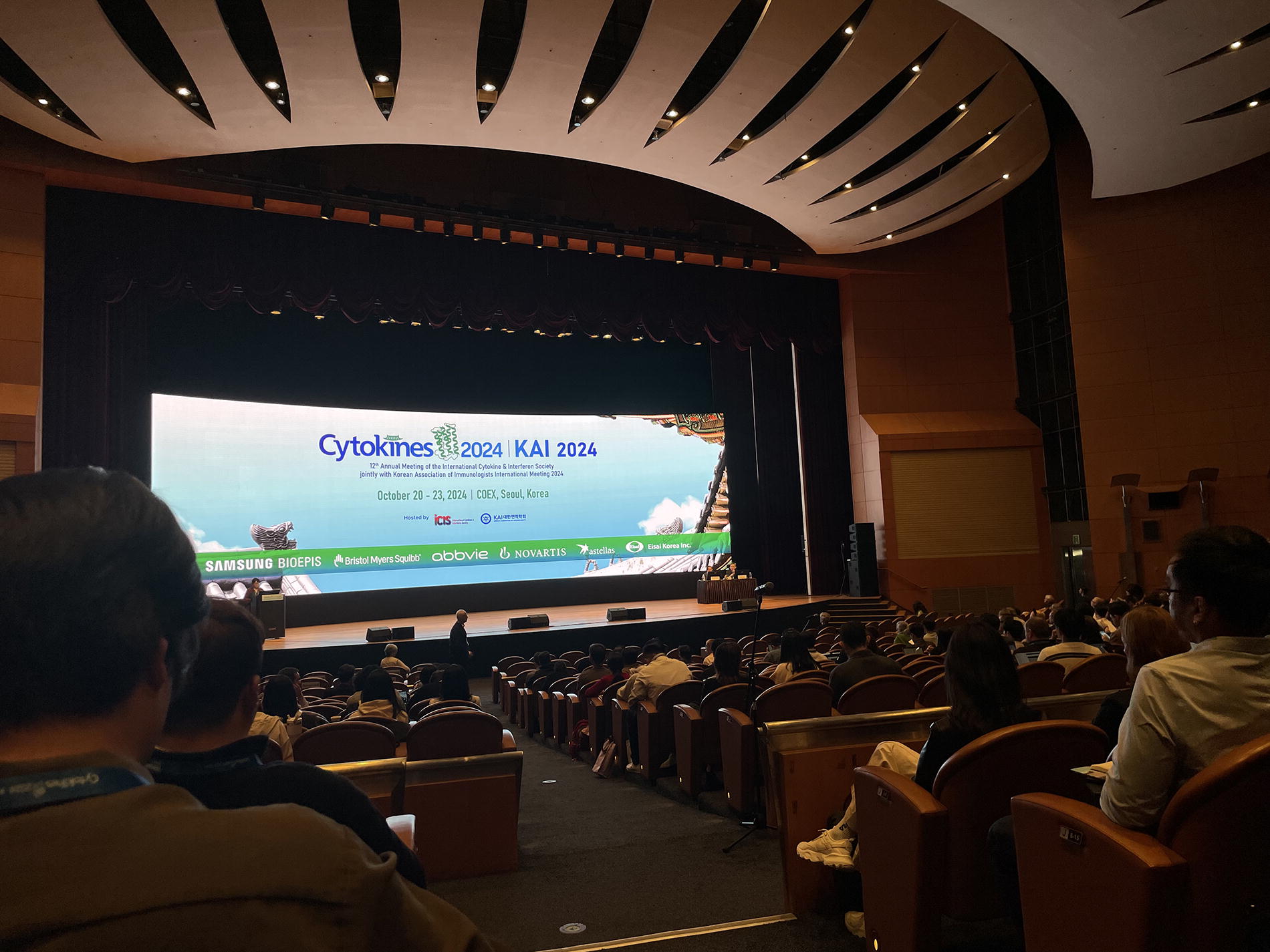
The 12th Annual Meeting of International Cytokine and Interferon Society (ICIS) took place at the COEX Convention Center in Seoul, Korea. The opening ceremony on day 1 was held in a grand conference room.
The Opening Session was followed by three concurrent symposia. The Jürg Tschopp Memorial Symposium 1 focused on Interferons (IFNs) and Inflammation. The symposium featured invited speaker Curt Horvath (Northwestern University), whose presentation was titled, “Positive and negative regulation of interferon antiviral signaling.” Invited speaker Thirumala-Devi Kanneganti (St. Jude Children’s Hospital) then presented, “Molecular mechanisms of innate immunity and inflammation in health and disease.” The final invited speaker of Symposium 1, David G. Brooks (University of Toronto), presented, “Interferon-mediated regulation of cancer immunity and immunotherapy.” ICIS award winner Alexandar Gitlin (Memorial Sloan Kettering Cancer Center) also presented in this symposium, with work titled, “N4BP1 coordinates IKK family crosstalk to limit inflammation.”
mRNA Vaccine and Immunity was the topic of Symposium 2, which was cohosted by the IBS Korea Virus Research Institute Center for Viral Immunology. The first invited speaker of the symposium was David Alvarez (Moderna), presenting, “Engineering immune responses through mRNA vaccination.” Next, invited speakers Ali Ellebedy (Washington University) and Annette Vogel (BioNTech SE) presented, “B cell responses to vaccination: lessons from the SARS-CoV-2 pandemic” and “COVID-19 vaccine—the journey of the mRNA technology in the global pandemic,” respectively. ICIS-Pfizer Trainee Awardee Benjamin Broomfield (The Walter and Eliza Hall Institute) also presented his work: “Transient inhibition of type I interferon enhances CD8+ T cell stemness and vaccine protection.”
Symposium 3, cohosted by the Infection Control Convergence Medical Research Center, was on Cytokine Signaling & Immune Modulation. I particularly enjoyed the presentation, “Temporally resolved prediction of phosphosites directing cytokine specificity,” by Rachel Gottschalk (University of Pittsburgh). The interdisciplinary work uses machine learning and RNA sequencing to predict and validate cytokine-specific gene expression.
After the symposia, Judith Allen (The University of Manchester) delivered the first keynote address of the conference, with her presentation titled, “Type 2 cytokines: a story of macrophages, matrix & metazoan parasites.” Her talk was particularly memorable for both her data on macrophage interaction with parasites and her emphasis on the importance of asking good questions.
Day 2 of the conference began with symposia 4 through 9. The Philip I. Marcus Memorial Symposium 4, partly sponsored by Journal of Interferon & Cytokine Research and Mary Ann Liebert, Inc., included talks on host–microbiota interaction. Invited speaker Barbara Rehermann, from the National Institutes of Health (NIH) delivered the Philip I. Marcus Lecture, titled, “Wild-derived microbiota regulate host immune responses and disease outcome in preclinical models.”
Symposium 5 focused on B cell and cytokines, featuring invited speakers Marion Pepper (University of Washington) and Kim Good-Jacobson (Monash University). Pepper’s presentation was titled, “Heterogeneous populations of allergen-specific CD4+ Trm in the lungs,” while Good-Jacobson’s was titled, “The impact of type I interferon dynamics on memory B cell subsets during infection.”
The KAI-AKIA Joint Session, Symposium 6, featured presentations on T-cell subsets and functions in tissue immunity. Invited speaker Jun Huh (Harvard University) presented, “Unexpected role of Interleukin-17,” followed by Jung-Hyun Park (NIH and National Cancer Institute) presenting, “CD103 preconditions naïve CD8 T cells for their acquisition of effector phenotype and function.” KAI Grand Achievement Award recipient Su-Hyung Park from Korea Advanced Institute of Science & Technology (KAIST) then presented, “The pathogenic and protective roles of virtual memory CD8 T cells.” The session closed with a presentation from KAI-Seegene Medical Foundation Excellence Award recipient Sejin Im (Sungkyunkwan University School of Medicine), whose work has laid a foundation for my own research. He presented his work, titled, “CD8 T cell differentiation during persistent antigenic stimulation: Implications for immunotherapy.”
The title of symposium 7 was, “Trained Immunity and Immunometabolism.” George Hajishengallis (University of Pennsylvania) and Przemyslaw Sapieha (Centre de recherche HMR) were invited speakers, and they presented work titled, “Central trained immunity and chronic inflammation,” and “Targeting innate immune memory in diseases of the aging eye,” respectively.
Mucosal immunity was the topic of symposium 8. “Neutrophil heterogeneity at steady state and stress conditions” was presented by invited speaker Lai Guan Ng (Shanghai Immune Therapy Institute). Following Ng, invited speaker Naoko Satoh-Takayama (RIKEN) presented, “The first mucosal barrier: stomach immunity as a key regulator.”
The Charles D. Surh Memorial Session, symposium 9, included talks on T cell homeostasis and cytokines. Jonathan Sprent (Garvan Institute of Medical Research) provided the introduction to this special memorial session and was followed by a particularly salient presentation by Juan Carlos Zuniga-Pflucker (University of Toronto): “Fixing to generate new T cells (lessons learned from Charlie Surh, about golf, wine & cytokines).” Jae Ho Cho (Chonnam University) was also invited to present work titled, “Subsetting and shaping naïve CD8 T cell pools with complex effector codes.”
Between the morning and evening symposia, the second poster session was held, along with lightning talks and industry sessions. The lightning talks provided the opportunity for 18 speakers to provide quick research presentations on the topics of infection and immunity, mucosal immunity and microbiota, and inflammation and cell signaling. The concurrent industry sessions were sponsored by Samsung Bioepis and Novartis, focused on quality-based development of biosimilars and the role of Interleuken-1b (IL-1b) in autoinflammatory disease, respectively.
Then commenced the final symposia of the day. Tumor immunology and immunotherapy were the focus of symposium 10, with invited speaker Yuki Kagoya (Keio University) presenting, “Modulating cytokine signaling to enhance efficacy and safety of CAR-T cell therapy.” Stephen Schoenberger (La Jolla Institute for Immunology), also invited to speak, presented, “HLA- agnostic functional identification and therapeutic targeting of cancer neoantigens.” ICIS-Regeneron New Investigator Award recipient Tuoqi Wu (University of Texas Southwestern Medical Center) also presented work on aging, with a talk titled, “Understand age-associated decline in antiviral T cell immunity.”
Symposium 11, “Infection and Inflammation,” was cohosted by the Institute for Immunology and Immunological Diseases, Yonsei University College of Medicine. Karen Mossman (McMaster University) was invited to deliver her talk: “Differential innate antiviral signaling in human and bat cells.” Next was Eui-Cheol Shin’s (KAIST) invited presentation, “Regulation of IL-15-induced NK-like activation of CD8+ T cells in viral infection,” followed by the invited presentation by Si Ming Man (Australia National University): “Inflammasome sensing in inflammation and cancer.” ICIS-Christina Fleishmann Award recipient Carolina Lucas (Yale University) presented, “Immunological misfiring in severe COVID-19.” The symposium was closed by the Sidney & Joan Pestka Post-Graduate Award recipient, Samuel Philip Nobs (Weizmann Institute of Science), with his talk: “Lung dendritic cell metabolism underlies susceptibility to viral infection in diabetes.”
Guest symposium 1 was held concurrently with symposia 10 and 11, focused on predicting virus-associated inflammatory disease severity in children with laboratory diagnostics and artificial intelligence in the context of SARS-CoV-2 infection syndrome. This symposium featured a variety of guest speakers, including Ananth Annapragada (Texas Children’s Hospital), Jane Burns (University of California, San Diego), Charles Chiu (University of California, San Francisco), Maria Gennaro (Rutgers University), Cedric Manlhiot (Johns Hopkins University), and Juan Salazar (Connecticut Children’s Hospital).
The second day of the conference concluded with the Early Career Research (ECR) Networking event. Early career researchers like me and senior researchers were able to connect over delicious Korean finger foods and nametags listing our favorite cytokine or chemokine. The event was a fantastic way to connect with both peers and established scientists. New friends and mentorships were certainly established during this lovely event.
Day 3 of the conference started with symposium 12, symposium 13, and guest symposium 2 running concurrently. Symposium 12 focused on engineered cytokines and immunotherapies. Onur Boyman (University of Zurich) presented the first invited talk, “Molecular modulation of interleukin-2 for next generation immunotherapy.” He was followed by Juan Mendoza (University of Chicago), whose talked was titled, “Unraveling the mystery of IFN-ℓ4 and its signaling complex utilizing computation, protein engineering and cryoEM.” The last invited speaker, Yang-Xin Fu (Tsinghua University), presented his work on “New strategies of antibody based fusion proteins for tumor immunity.” In this symposium, I was grateful to have the opportunity to present my work on STAT rebalancing with engineered cytokines. The feedback on my presentation and thoughtful questions that I received were incredibly valuable, and it was an honor to present in front of such amazing scientists.
Symposium 13 on Immune Regulation of Inflammatory Diseases was partly sponsored by Elsevier’s Journal Cytokine. Wan-Uk Kim (Catholic University) presented the first invited talk, “Transcription factor NFAT5 is essential to rheumatoid arthritis,” followed by the second invited talk by Cornelia M. Weyand (Mayo Clinic), titled, “Metabolic checkpoints in autoimmune tissue inflammation.” The final invited presentation, “Mechanistic insights into glucocorticoid regulation of immune responsiveness at the MIF locus,” was presented by Richard J. Bucala (Yale University). Chaoran Li (Emory University), the ICIS-Regeneron New Investigator Award recipient, presented, “Cytokine and metabolic regulation of tissue Tregs at homeostasis and during obesity-associated inflammatory and metabolic disease.”
The Japanese Cytokines Society hosted guest symposium 2: Stress Immune Responses and Homeostasis. Within this topic, presentations represented a variety of specialties, including central nervous system disease, liver immune function, and mechanisms of colitis prevention. The talks were presented by guest speakers Minako Ito (Medical Institute of Bioregulation, Kyushu University), Masashi Kanayama (Medical Research Institute, Tokyo Medical and Dental University), Ruka Setoguchi (The University of Tokyo), Yu Miyamoto (Osaka University Immunology Frontier Research Center), and Kazuyo Moro (Osaka University, RIKEN).
Next were symposia 14, 15, and 16. Partly sponsored by Trutino Biosciences, symposium 14 was on Cytokines and CD8 T Cell Immunity and full of invited speakers. First was Laura Mackay (University of Melbourne), the ICIS-Luminex John R Kettman Award recipient, who presented “Retinoic acid and TGF-β orchestrate organ-specific programs of tissue residency.” Next was Alice Kamphorst (Mount Sinai), presenting, “Costimulation modulates exhausted PD-1+ CD8 T cells beyond priming.” In closing, Axel Kallies (University of Melbourne) delivered a talk on “T cell differentiation and function in chronic infection and cancer.”
Symposium 15 focused on Cytokines and Myeloid Cells and began with the talk, “Spatial and molecular control of tumor-associated macrophages,” by invited speaker Renato Ostuni (University Vita-Salute San Raffaele). Jorge Henao-Mejia (University of Pennsylvania) was also invited to give a talk: “Microbiota-regulation of tumor-associated macrophages.” The symposium closed with a talk titled, “Cancer Neutrophil Encyclopedia: A deep Dive into Antigen-Presenting Warriors,” by Ying Cheng Wu (Zhongshan Hospital Fudan University), the Sidney & Joan Pestka Graduate Award recipient.
Immune Regulation of Tissue Repair was the topic of symposium 16, cohosted by the Innate Immune-Mediated Chronic Inflammatory Disease Medical Research Center. Tien Peng (University of California, San Francisco) began the symposium with the first invited talk, “Fibroblast orchestration of tissue resident lymphocytes in disease and aging.” The second was delivered by Shruti Naik (New York University), titled, “Unique mechanisms of early life inflammation.” The symposium was closed by Eugenio Contreras Castillo (National Autonomous University of Mexico), the ICIS-Pfizer Trainee Award winner, speaking on “Tif1g regulates stability of regulatory T cells during inflammation.”
The second round of lightning talks began on Wednesday afternoon, covering a breadth of topics: Tumor Immunology and Immunotherapy (partly sponsored by Regeneron), Innate Immunity in Health and Diseases, and Immune Regulation of Inflammatory Diseases. Afterward, two industries sessions were held: “Emerging Therapeutics in Autoimmune Diseases” by Abbvie and Tacrolimus and “Autoimmune: From Mechanism to Clinical Practice” by Astellas.
Symposium 17, symposium 18, and guest symposium 3 were the last of the day. Symposium 17 was partly sponsored by the Society of Mucosal Immunology and featured talks on type 2 immunity and airway diseases. Stephanie Eisenbarth (Northwestern University) was invited to present her talk, “Tfh cells and the antibody response to food allergens.” Next was invited speaker Hye-Young Kim (Seoul National University), presenting, “ILCs at the crossroads: understanding their influence in type 2 immunity and airway disorders.” Invited speaker James Harker (Imperial College London) presented his talk: “The regulation and role lung resident and lymphoid T follicular helper cells in allergic airways disease.” Amanda Ridley (The University of Manchester), recipient of the Pfizer-Amanda Proudfoot Tribute Award, presented, “Myeloid derived CXCL4 is required for optimal neutrophil recruitment into the lung during pulmonary allergic inflammation.” The ECR networking event introduced me to Jazmyne Jackson (Temple University), who presented the final presentation of the symposium: “Th2 Cytokines Contribute to EoE Pathogenesis by Initiating STAT3/6-Mediated Mitochondria-Immune Signaling Axis.”
Clinical Immunology of Autoimmune Diseases was the topic of symposium 18. Invited speaker Yoshiya Tanaka (University of Occupational and Environmental Health) presented, “Mechanism-based cytokine-targeting therapies and precision medicine in rheumatic diseases.” Next, Insoo Kang (Yale University) presented the invited talk, “The role of cytokine receptors in identifying T cell subsets in health and disease.” The final invited talk of the symposium was delivered by Nan Shen (Shanghai Jiao Tong University): “Integrative functional genomics reveals the determinants of Age/autoimmune-associated B Cells (ABCs).”
Guest symposium 3 was entirely on Lambda IFN. Guest speakers Achille Broggi (Centre d'immunologie de Marseille-Luminy), Megan Stanifer (University of Florida), Rune Hartmann (Aarhus University), Sanghyun Lee (Brown University), and Timothy Nice (Oregon Health & Science University) delivered talks on the involvement of lambda IFNs across an array of diseases, including Irritable Bowel Disease and viral infection.
After the end of official conference activities on day 3, many of the attendees were fortunate to attend a free night tour program organized by the Korea Tourism Organization (Fig. 2). Our tour guides provided us with historical and cultural information on our bus ride to the beautiful Changgyeonggung Palace. After learning about the palace, we then rode the Namsan cable car to the N Seoul Tower. Learning more about Korea from our tour guides was certainly a highlight of the conference.
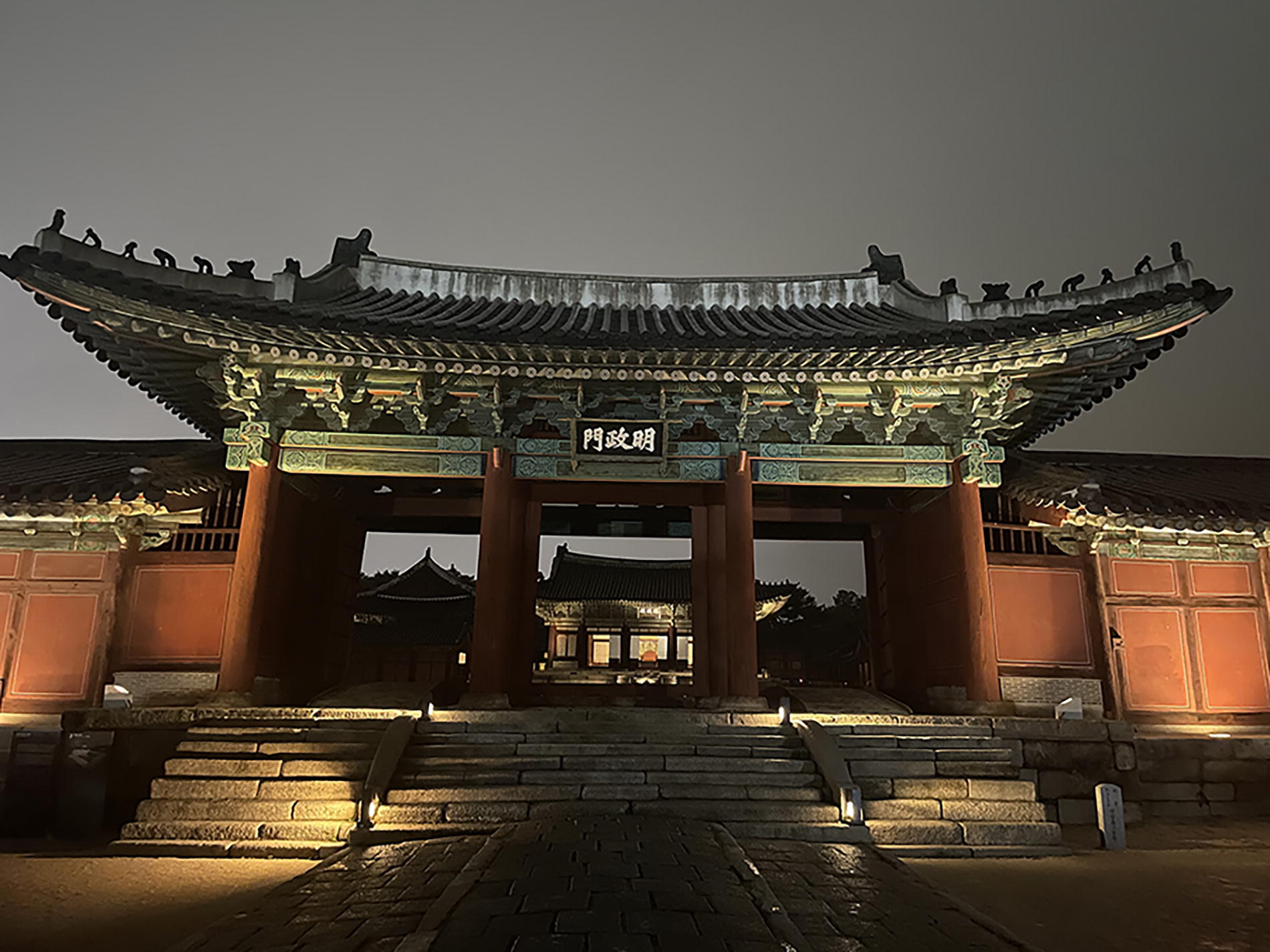
The Korea Tourism Organization offered free night tour programming to registrants. The tour included Changgyeonggung Palace (pictured) and N Seoul Tower.
The final day of the conference opened with the last set of concurrent symposia. Symposium 19, on Cytokine Dynamics in T Helper Cell Immune Regulation, began with the invited talk, “Cytokines reorganize the 3D genome interactions in T cells,” by Golnaz Vahedi (University of Pennsylvania). Daniel Kaplan (University of Pittsburgh) presented the next invited talk: “Scratching exaggerates allergic inflammation and augments host defense via neurogenic mast cell activation.” Invited speaker Di Yu (The University of Queensland) then presented, “Non-canonical regulation of IL-21 bioavailability and activity.” Daniella M. Schwartz (University of Pittsburgh), the ICIS-Regeneron New Investigator Award recipient, also presented: “A Th9-endothelial activation loop promotes inflammatory cardiovascular disease.”
Symposium 20 focused on Cytokine-mediated Translational Approaches of Human Diseases and featured two invited speakers. The first was Ian Adcock (Imperial College London), presenting, “Anti-T2 biologics in severe asthma,” and the second was Kenji Kabashima (Kyoto University), presenting, “Role of CXCR6+CD4+ tissue-resident memory T cells in chronic allergic skin inflammation.”
Partly sponsored by Coherus, symposium 21 focused on Cytokine Drug Development. This symposium was a personal favorite of mine, and it included industry speakers from four different countries. Represented companies included Gilead; Human Technopole; Bristol Myers Squibb (BMS); Synthekine; NeoImmuneTech Co., Ltd.; Trutino Biosciences; and Shanghai Novamab Biopharmaceuticals Co., Ltd.
After the final symposia, industry sessions and lightning talks were held. BMS sponsored an industry session on “Inflammasome-activate Cytokines in Human Diseases,” and Eisai Korea hosted a session on “Filgotinib in the Treatment Algorithm of Rheumatoid Arthritis.” The last lightning talks of the conference were under the topics of Cytokines and Human Diseases, Cytokine Modulation of Adaptive Immunity, and Cytokine Signaling and Regulation.
The second keynote address was delivered after lunch. ICIS president Sarah Gaffen (University of Pittsburgh) introduced Drew Weissman (University of Pennsylvania), corecipient of the 2023 Nobel Prize in Physiology or Medicine. It was an honor to hear the talk, “Nucleoside modified mRNA-LNP therapeutics,” from a key contributor to the technology behind mRNA-based COVID-19 vaccines.
After the closing session was the gala dinner, held at the Some Gavit floating convention center (Fig. 3). Located on the Han River, the convention center offered a beautiful waterfront view during a pre-dinner happy hour full of making new connections. The dinner featured delicious fusion Korean food and traditional Korean entertainment, including a bamboo flute performance and Samulnori percussion performance. I could not have hoped for a more scientifically and culturally enriching experience from Cytokines 2024 in Seoul, and I hope to attend my third ICIS meeting in Seattle, November 2–5, 2025!
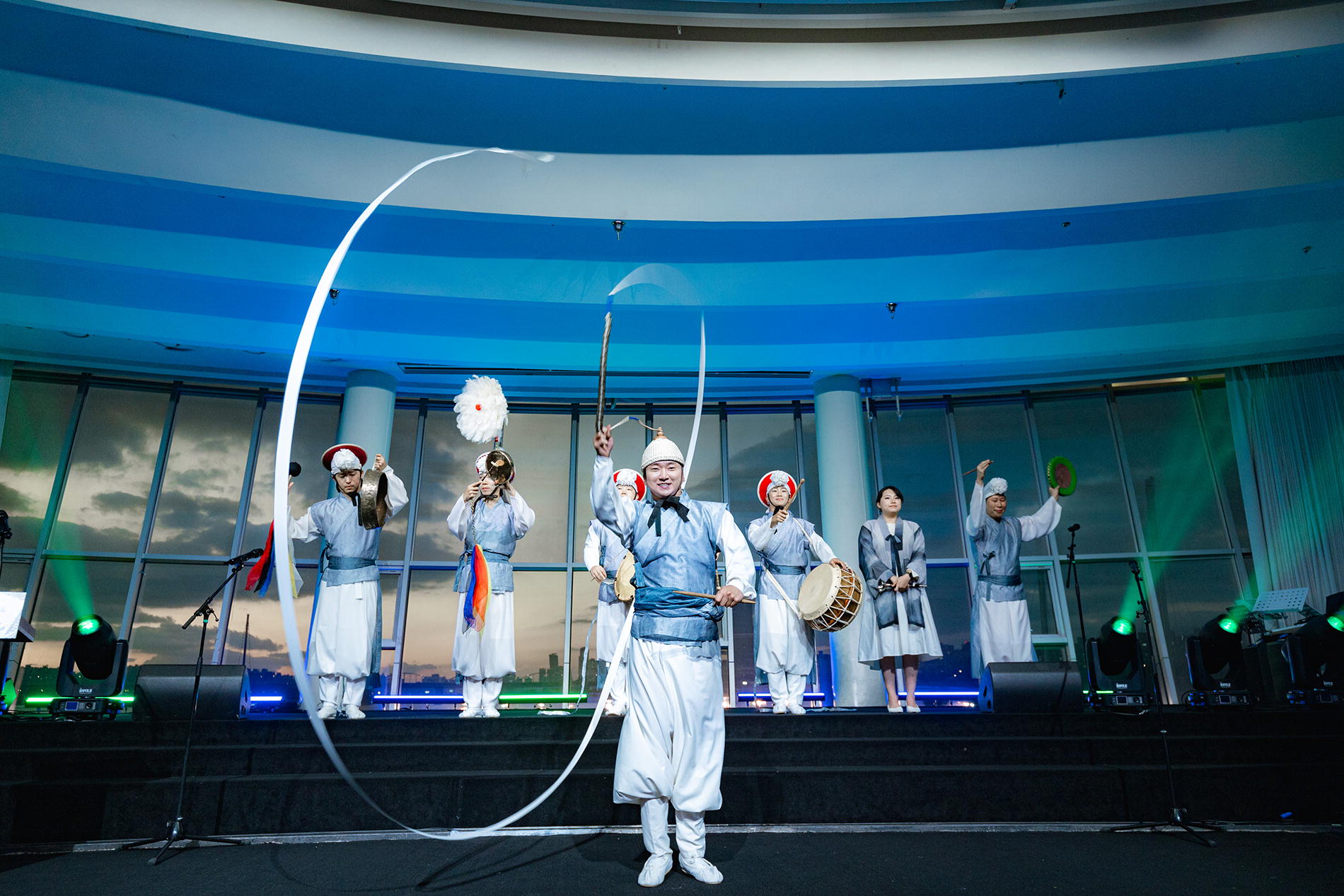
Cytokines 2024 was ended with a delightful gala dinner at Some Gavit floating convention center.
Footnotes
Author Disclosure Statement
No competing financial interests exist.
Funding Information
No funding was received for this article.