







Abstract
Soybean is known to have an anti-obesity effect. We compared the anti-obesity effect of doenjang, a fermented soybean paste, with that of nonfermented soybeans in rats. Steamed soybeans and doenjang (steamed soybeans fermented and aged for 10 months) were sampled and freeze-dried. Male Sprague–Dawley rats were fed basal (BA) (5% fat), high fat (HF) (30% fat), HF+steamed soybeans (SOY), or HF+doenjang (DJ) diet ad libitum for 8 weeks. HF significantly increased body weight gain, liver weight, hepatic triglyceride (TG) and cholesterol levels, and epididymal fat pad weight compared with BA. Compared with HF, body weight gain and hepatic TG and cholesterol levels were significantly lower in SOY and DJ groups, but they were not significantly different from each other. DJ significantly reduced visceral fat weight and epididymal adipocyte size compared with HF, whereas SOY resulted in a mild reduction without significance. This was possibly because DJ showed lowered fatty acid synthase (FAS) activity and elevated carnitine palmitoyltransferase (CPT)-1 activity in liver tissue more than SOY. SOY and DJ did not affect serum total and high-density lipoprotein-cholesterol levels compared with HF; however, DJ significantly lowered the atherogenic index and serum leptin level. In conclusion, doenjang, a fermented soybean product, was more effective than soybeans for preventing diet-induced visceral fat accumulation, possibly because of its greater effects on CPT-1 activity stimulation and FAS activity suppression. These effects may be due in part to the higher content of aglycone isoflavones in doenjang.
Introduction
T
Obesity increases the risk of various health problems, including cardiovascular disease, diabetes, hypertension, hyperlipidemia, fatty liver, and some cancers, leading to premature death. 2 Internationally, most efforts to reduce the prevalence of obesity have been unsuccessful. White adipose tissue is a major site of energy storage and is important for energy homeostasis, but excessive fat storage is very closely linked to various health problems. Many studies have reported that soy protein or soy foods reduce body weight, body fat, and serum cholesterol and insulin levels in obese individuals, in contrast to animal protein. 3 –5 The underlying mechanisms for these differences are not clear.
Recently, it was reported that adipocyte circumference was significantly reduced in rats fed a fermented soy product supplement 6 and that the Korean traditional soybean fermented foods reduced body weight and serum and liver lipids in rats fed a high fat (HF) diet. 7 In addition, reports that fermented soybean foods have antimicrobial, 8 antimutagenic, 9 fibrinolytic, 10,11 blood pressure–lowering, 12,13 and antioxidant 14,15 activities have drawn attention to the potential preventive role of fermented soybean foods against many chronic diseases. Fermentation is an excellent processing method for improving nutritional properties of soybeans because of the increased content of small bioactive compounds.
Doenjang is a unique Korean soybean paste fermented by diverse microorganisms, and it has been manufactured every year for centuries at homes by traditional methods, which use Bacillus subtilis and molds such as Rhizopus, Mucor, and Aspergillus oryzae from rice straw and local environments instead of inoculation. 16,17 Doenjang is usually consumed as an ingredient in various sauces, soups, or stews with vegetables. It is considered to be a good source of essential amino acids and fatty acids, especially for the people on a grain- and vegetable-based diet.
In this study, we investigated whether the process of fermentation contributes to the anti-obesity property of doenjang. We compared the effects of supplementing HF diet with nonfermented steamed soybeans and a fermented soybean product, doenjang, on body weight gain, visceral fat accumulation, and adipocyte size with some lipid metabolism-related parameters in male rats fed HF diet.
Materials And Methods
Materials and reagents
Steamed soybeans and doenjang were obtained from a traditional manufacturer in the village of Sunchang, Korea, which is famous for producing high-quality traditional fermented soy products. The other materials used in this study were obtained from the following sources: vitamin and mineral mixtures from MP Biomedicals (Illkirch, France); cellulose, choline chloride, and
Steamed soybeans and doenjang preparation
Traditional methods were used to prepare the doenjang used in this study. In brief, the soybeans were cleaned, soaked in water overnight, and steamed for 3.5 hours at 120°C. The steamed soybeans were then crushed, shaped into brick-size blocks, dried for 2 days outdoors in the shade, and then dried for another 2 days in warm incubators. The surface-dried blocks were tied up with rice straw and hung outdoors under a roof for 2 months in winter (first fermentation). The hardened fermented soybean blocks (called Meju) were then washed with water, soaked in a 28% salt solution in a large ceramic pot with a few pieces of charcoal and whole dried red peppers, and then placed outside in the sunshine. The solution darkened after 2 months. The softened Meju blocks were separated from the liquid (soy sauce), transferred to another ceramic pot, crushed, and stored outdoors in the sun for 6 months (second fermentation and aging). Generally, the final product, called doenjang, contains approximately 9–10% salt. Steamed soybeans and doenjang samples were freeze-dried and powdered at the Biology Industry Development Institute (Chonju, Korea) and stored at −20°C. Their basic compositions were determined at the Korea Health Industry Development Institute (Seoul).
Animals and diet
Four-week-old male Sprague–Dawley rats were purchased from Samtako Co. (Osan, Korea) and maintained under standard conditions (20–25°C, 12-hour light/dark cycle) in accordance with the Policy and Regulation for the Care and Use of Laboratory Animals of Seoul National University. The animals were provided with regular rat chow (Purina Korea Inc., Pyongtack, Korea) for 1 week during adaptation. They were then randomly divided into six groups of eight rats each and fed ad libitum with one of the following diets and water for 8 weeks: basal (BA) (5% [wt/wt] fat), HF (30% [wt/wt] fat), soybean-supplemented HF (SOY) (HF+16.2% dried steamed soybeans), and doenjang-supplemented HF (DJ) (HF+20% dried doenjang) diets. The SOY and DJ diets were adjusted such that they contained the same amount of protein, from either the steamed soybeans or the doenjang powder. Total protein, carbohydrate, lipid, and dietary fiber contents were adjusted to the same levels in all the HF diets (Table 1). Fresh diets were supplied every 1 or 2 days, and diet consumption, weight, and energy intake were calculated daily for each rat. Body weight was checked weekly. From these data, the food efficiency ratio (FER) over 8 weeks was calculated in two different ways: body weight gain divided by weight of food consumed and body weight gain divided by energy intake (FER2).
BA, basal diet; DJ, doenjang-supplemented high fat diet; HF, high fat diet; SOY, soybean-supplemented HF diet.
Obtained from Nutritional Biochemicals, ICN Science Group, Cleveland, OH, USA.
Protein content derived from the supplemented steamed soybeans or doenjang powder.
Sampling and preparation
After 8 weeks of feeding, the rats were fasted overnight, and blood was collected from the abdominal artery of the animal under ether anesthesia. Livers and epididymal and perirenal fat pads were dissected, rinsed in cold saline, and weighed. Two slices of the livers and epididymal tissues were fixed in 10% formalin solution, and the others were quick-frozen in liquid N2 and stored at −70°C. Serum was separated after standing by centrifugation at 1,500 g for 20 minute. Aliquots of the serum samples stored at −70°C. The livers were homogenized in 9 volumes of ice-cold 50 mM Tris-HCl (pH 7.4) with 0.1 mM EDTA in a Potter–Elvehjem homogenizer (Tri-R Instruments, Rockville Center, NY, USA) and centrifuged at 800 g for 10 minutes at 4°C (model 5810R centrifuge, Eppendorf, Hamburg, Germany) to remove cell debris and nuclei, and the supernatants (S1) were centrifuged at 13,000 g for 20 minutes. The supernatant (S2) and the suspended pellet with the buffer (mitochondrial fraction [M]) were stored at −70°C in aliquots, respectively.
Serum analysis
Serum albumin, glucose, triglyceride (TG), total cholesterol, high-density lipoprotein (HDL)-cholesterol, aspartate aminotransferase (AST), and alanine aminotransferase (ALT) were measured using a blood autoanalyzer (model Toshiba-200FR, Toshiba, Tokyo, Japan). Serum leptin concentration was measured by enzyme-linked immunosorbent assay using a commercial kit (BioVender Lab Med, Brno, Czech). The atherogenic index (AI) was calculated by the equation: AI=(total cholesterol – HDL-cholesterol)/HDL-cholesterol.
Liver analysis
Total lipids were extracted using the method described by Folch et al. 18 In brief, a section of frozen liver was homogenized in methanol/chloroform (1:2 vol/vol) with a Potter–Elvehjem homogenizer at 4°C, 0.88% KCl was added, and the mixture was centrifuged at 1,000 g for 20 minutes. After the supernatant was removed, 1 mL of the lower layer was transferred into another tube, dried under N2 gas, and dissolved in 1 mL of methanol. Total TG and cholesterol levels in this solution were measured by the enzymatic colorimetric method using commercial kits (Yeongdong Pharmaceutical, Seoul).
Fatty acid synthase (FAS) activity was determined spectrophotometrically in S2 fractions of liver according to the method of Nepokroeff et al. 19 In brief, the reaction mixture containing 500 μmol of potassium phosphate buffer (pH 7.0), 33 nmol of acetyl-CoA, 100 nmol of malonyl-CoA, 100 nmol of NADPH, 1 μmol of EDTA, and 1 μmol of β-mercaptoethanol was incubated in a water bath at 30°C for 5 minutes, and the reaction was initiated by addition of 40 μL of the liver sample. The oxidation of NADPH was followed at 340 nm for 2 minutes at 30°C. The enzyme activity was expressed as nanomoles of NADPH per minute per miiligram of protein. Protein level in the liver sample was determined by the bicinchoninic acid method 20 using commercial reagents (Pierce, Rockford, IL, USA) and bovine serum albumin as standards.
Carnitine palmitoyltransferase (CPT)-1 activity was determined in the liver mitochondrial fraction, using the method of Bieber et al.
21
based on measuring the initial rate of total CoA-SH formed by the 5,5′-dithiobis-2-nitrobenzoic acid (DTNB) reaction from palmitoyl-CoA by mitochondria with carnitine by spectrometry. The reaction mixture contained 58 mM Tris-HCl (pH 8.0), 1.25 mM EDTA, 0.1% Triton-X 100, 0.25 mM DTNB, 37.5 μM palmitoyl-CoA, 1.25 mM
Adipocyte size and morphology of liver tissue
Fixed pieces of liver and epididymal adipose tissues in 10% formalin were processed routinely for paraffin embedding, and 4-μm-thick sections were prepared and stained with hematoxylin-eosin. The morphology was observed under an optical microscope, and the images captured using the Optimus version 6.2 program. Images of the adipocyte were printed out, and the fat cell areas were measured in 30–40 fat cells each by an Aera-curvimeter (model X-plan 360 dll, Ushikata, Tokyo).
Statistical analysis
Data are expressed as mean±SD values. The statistical significance of differences between groups was determined by analysis of variance and Duncan's multiple range tests using SAS version 9.1 (SAS Institute, Cary, NC, USA).
Results
Basic composition of dried steamed soybeans and doenjang
The freeze-drying yields of steamed soybeans and doenjang were 40.7% and 45.3%, respectively. The protein, fat, carbohydrate, dietary fiber, and moisture contents of the dried samples are shown in Table 2. Protein, fat, and carbohydrate contents of doenjang powder were a little lower than those in dried soybean powder, possibly because of addition of salt for doenjang preparation.
Body weight gain and liver weight
Figure 1 shows the trend of body weight in the animals in the BA, HF, SOY, and DJ groups during the 8 weeks of the experiment. The body weight of the HF group increased more rapidly compared with the other groups; the average body weight of the HF group was significantly higher than those of the BA, SOY, and DJ groups after 4 weeks.
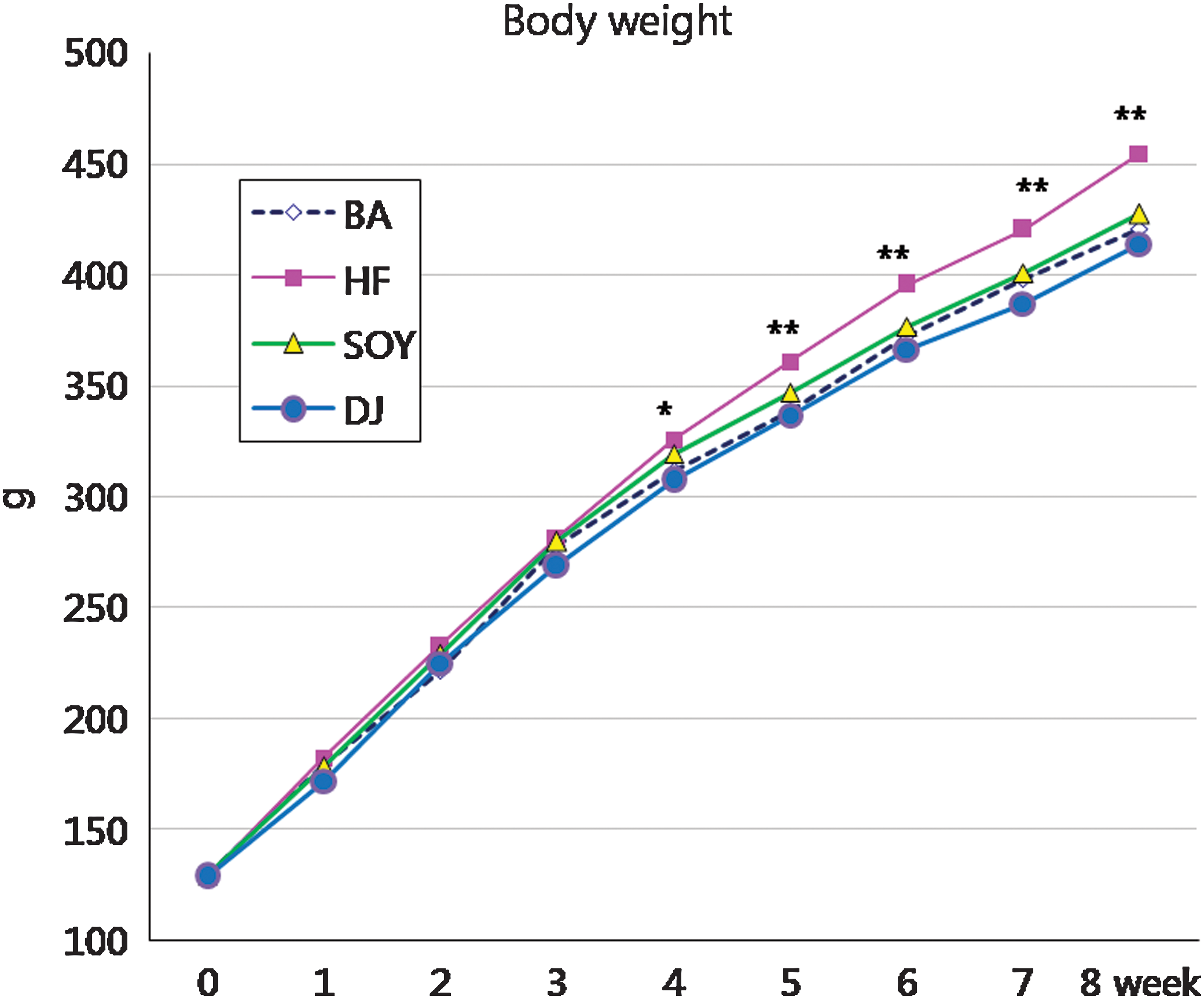
Body weight changes. Data are averages for eight rats per group. Significantly different compared with HF, determined by t test: *P<.05, **P<.01. Color images available online at
The average body weight gain and the relative liver weight to body weight after the 8 weeks were, respectively, 11.6% and 26.7% higher in the HF group compared with the BA group. The average body weight gain (P<.05) and relative liver weight to body weight (P<.001) in the SOY and DJ groups were significantly lower than those in the HF group (Table 3). Slightly greater reductions of body weight gain and liver weight were observed in the DJ group, although there was no significant difference between the DJ and SOY groups.
Data are mean±SD values for eight rats.
Means with different superscript letters are significantly different from each other as determined by analysis of variance/Duncan's multiple range test: * P<.05, ** P<.01, *** P<.001.
FER, body weight gain (in g)/diet intake (in g)×100; FER2, body weight gain (in g)/calorie intake (in kcal)×100; NS, not significant.
Food intake and FER of animals
The daily average food and calorie intake per rat over 8 weeks were compared among the four groups (Table 3). The BA group consumed the most amount of food, and the HF group consumed 33.3% less in weight and 11.5% less in calories compared with the BA group. Soybean supplementation increased both food intake and energy intake compared with no supplementation, but doenjang supplementation did not.
The HF group showed the highest FER and FER2 of the four groups, and soybean or doenjang supplementation of HF diet significantly reduced both FER (P<.001) and FER2 (P<.01). FER in the SOY and DJ groups was still higher than in the BA group; however, FER2 values in the SOY and DJ groups were not different from that of the BA group (Table 3).
Visceral fat content and fat cell size
The weights of epididymal fat, perirenal fat, and total visceral fat and their relative weights to body weight at sacrifice are shown in Table 4. HF significantly increased the average epididymal fat weight by 20.8% (P<.05) compared with the BA group and increased perirenal fat weight by 18.3% and total visceral fat weight by 17.2% without significance. The relative weights of those fat pads to body weight, however, were not significantly different between the BA and HF groups.
Data are mean±SD values for eight rats.
Means with different letter superscripts are significantly different from each other (P<.05) as determined by analysis of variance/Duncan's multiple range test.
DJ significantly reduced (P<.05) the epididymal fat weight by 26.0%, perirenal fat weight by 46.1%, and total visceral fat weight by 35.3% compared with the HF group; in the SOY group they tended to be lower, but without reaching significance, by 13.3%, 13.4%, and 13.4%, respectively. Similar patterns were observed in their relative weights to body weight.
Adipocyte size and morphology of the epididymal fat were compared. The morphology observed under the optical microscope is shown in Figure 2, and the calculated average areas of the fat cells are shown in Figure 3. There was no significant difference in adipocyte size between the BA and HF groups or between the SOY and HF groups. However, adipocyte size in the DJ group was about 25% smaller (P<.01) than that in the HF group. Adipocyte size was positively correlated with total visceral fat weight (r=0.5774, P<.0001) and serum leptin level (r=0.5942, P<.0001) but not with body weight gain, which was positively correlated with total visceral fat weight (r=0.6556, P<.0001).
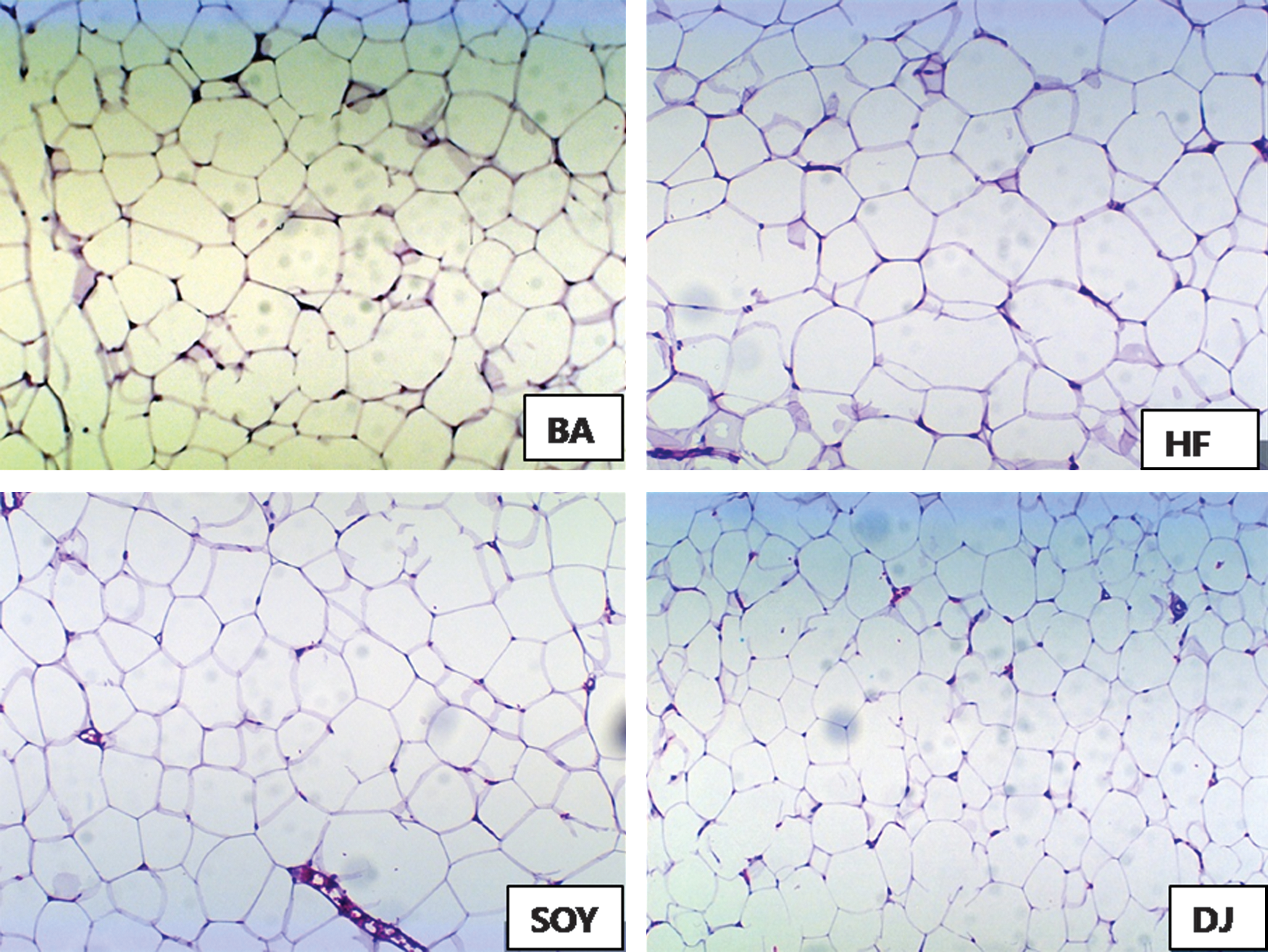
Light microscopy of the epididymal adipocytes in rats. Magnification ×200. Color images available online at
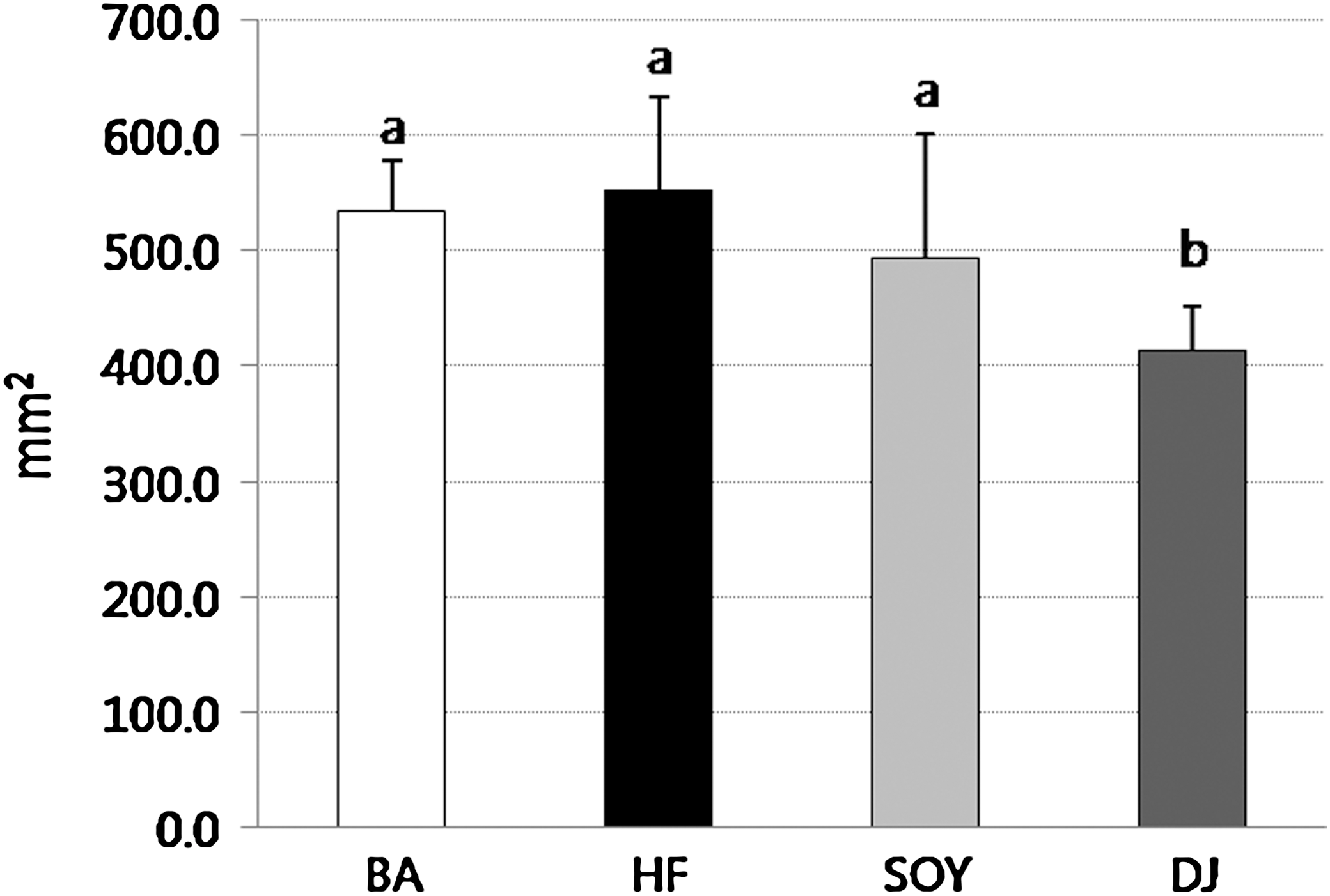
Average adipocyte areas in epididymal fat pads measured by optical microscopy. Data are mean±SD values for eight rats. abMeans with different superscript letters are significantly different as determined by analysis of variance/Duncan's multiple range test: P<.01.
Serum biochemical parameters and lipid profile
As shown in Table 5, TG level was significantly lower (P<.05) in rats fed HF diet (HF, SOY, and DJ groups) compared with the BA group. Serum total cholesterol and HDL-cholesterol levels did not differ significantly among the four groups, even though the diet for the HF, SOY, and DJ groups had 0.5% cholesterol and the BA diet did not. The AI in the HF group was more than twofold higher than that in the BA group. However, AI was 41.7% lower (P<.0001) in the DJ group than in the HF group, whereas it was not changed significantly in the SOY group.
Data are mean±SD values for eight rats.
Means with different superscript letters are significantly different from each other as determined by analysis of variance/Duncan's multiple range test: * P<.05, ** P<.01, *** P<.001.
AI, atherogenic index ([TC – HDL-C]/HDL-C); ALT, alanine aminotransferase; AST, aspartate aminotransferase; HDL-C, high-density lipoprotein-cholesterol; TC, total cholesterol; TG, triglyceride.
No significant differences were observed in serum albumin, glucose, and AST levels across the four groups. Serum ALT levels in the SOY and DJ groups were significantly higher (P<.01) than those in the BA group but slightly higher than that in the HF group without statistical significance (Table 5).
Serum leptin levels did not differ significantly between the BA and HF groups; however, it was significantly lower (P<.05) by 49.8% in the DJ group than in the HF group, whereas there was a mild reduction (24.1%) without significance in the SOY group (Table 5). Serum leptin levels were positively correlated with body weight gain over 8 weeks (r=0.4835, P<.001), total visceral fat weight (r=0.8595, P<.0001), and adipocyte size (r=0.5942, P<.0001).
Lipid accumulation and FAS and CPT-1 activities in liver
We observed numerous microscopic and macroscopic fat droplets histochemically in liver tissue from the HF group, with fewer in the SOY group, and occasional microscopic droplets in the BA or DJ group (Fig. 4).
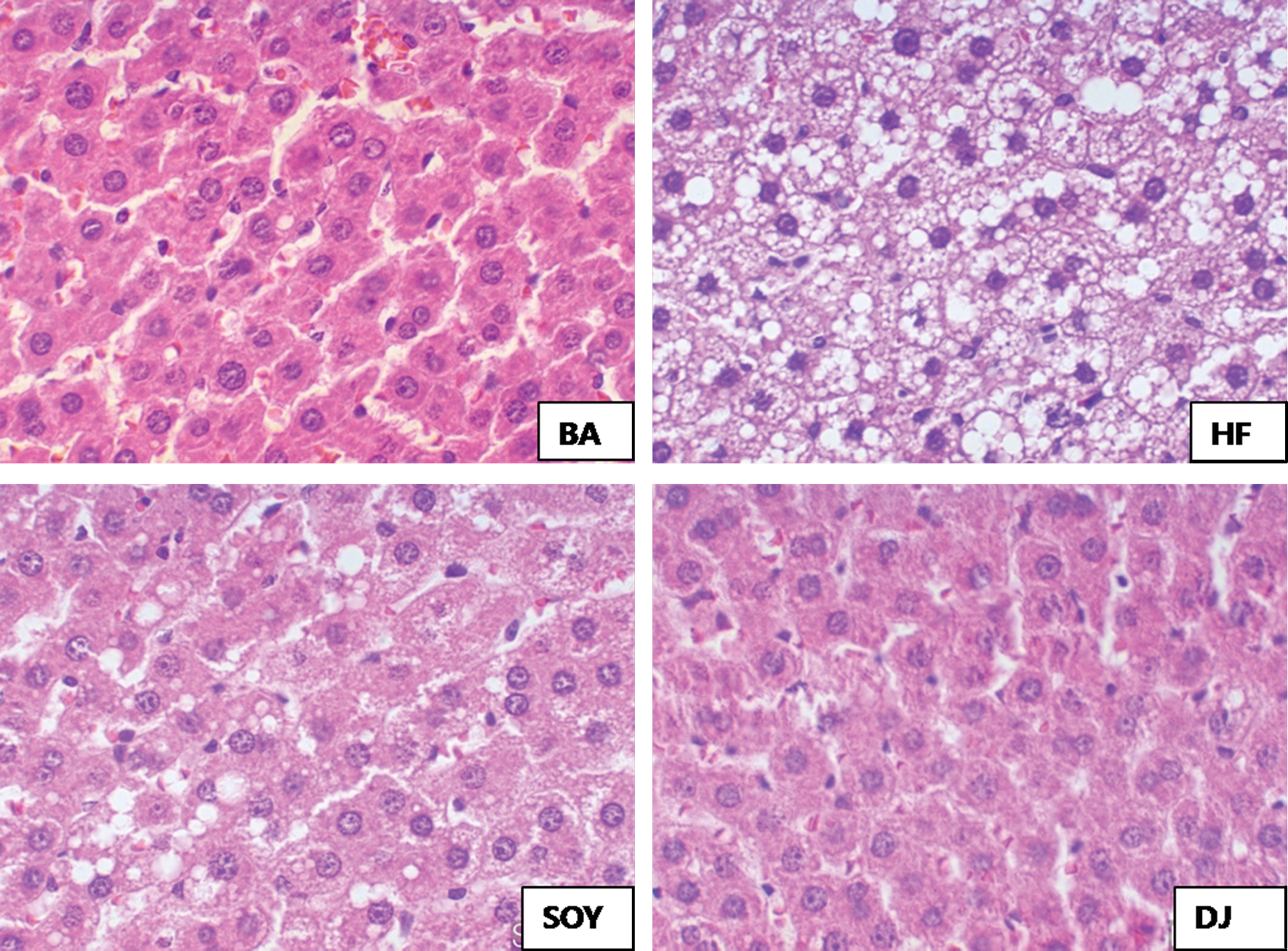
Light microscopic observation of fat accumulation in hematoxylin and eosin–stained liver tissue. Magnification ×100. Color images available online at
In contrast to serum lipid profiles, hepatic TG and cholesterol levels were markedly higher in the HF group than in the BA group but were significantly lower in the SOY and DJ groups than in the HF group (Table 6).
Data are mean±SD values for eight rats.
Means with different superscript letters are significantly different from each other as determined by analysis of variance/Duncan's multiple range test: * P<.05, *** P<.001.
CDNB, 1-chloro-2,4-dinitrobenzene; CPT-1, carnitine palmitoyltransferase-1; FAS, fatty acid synthase.
There were no significant differences between the BA and HF groups in hepatic FAS and CPT-1 activities. The DJ group showed significantly lower FAS activity (P<.05) than the HF or the BA group, whereas the SOY group showed only a tendency toward reduction without reaching significance. In terms of CPT-1 activity, the DJ group showed a significant (P<.05) increase compared with the HF group, whereas the SOY group exhibited a mild increase without significance (Table 6). In addition, a significantly negative correlation was observed between CPT-1 and serum TG levels (r=–0.4187, P<.01) or total visceral fat weight (r=–0.3436, P<.05), whereas there were no significant correlations between FAS activity and serum TG level or total visceral fat weight.
Discussion
In our study, it seems probable that the rats given a basal diet (12% kcal fat, 70% kcal carbohydrate) consumed much more than those given HF diet (54% kcal fat, 32% kcal carbohydrate) because the basal diet had a lower energy density (3.78 kcal/g) compared with the high fat diet (5.01 kcal/g). Stucchi et al. 22 reported that cumulative food intake was lower in animals consuming HF diet (45% kcal fat, 35% kcal carbohydrate) compared with those consuming BA (10% kcal fat, 70% kcal carbohydrate) during 43 days of feeding; however, the HF group gained more weight than the BA group because of the higher caloric efficiency in the HF group.
The other components of body fat, except visceral fat, were not measured in our study; however, it is assumed that intramuscular fat and subcutaneous fat weights as well as visceral fat weight would be higher in the HF group than in the BA group. Therefore, the higher total body fat weight in the HF group may due to an overall increase body weight gain. It was reported that HF diet increased muscle TG concentration compared with a high carbohydrate diet in healthy subjects 23 and that switching from a low fat to HF diet increased intramuscular TG concentration. 24
The common effect of SOY and DJ in the reductions of body weight gain, liver weight, and hepatic TG and cholesterol concentration in our study may be an inherent property of soybeans. It is known that soy protein, soyasaponin, phospholipids, and isoflavones present in soybean appear to have complementary actions on fatty acid and cholesterol metabolism, which may contribute to the overall beneficial effects of soybeans in obesity and associated lipid abnormalities. 25 However, which component or components in soy protein are responsible for its hypolipidemic and anti-obesity effects is not entirely clear. In a few studies, β-conglycinin was reported to reduce blood TG level and liver weight by suppressing liver fatty acid synthesis, promoting liver mitochondrial β-oxidation of fatty acids, and stimulating fecal fatty acid excretion. 26,27 Postmenopausal women with relatively high isoflavone consumption in their normal diet had a body mass index more than 9% lower than similar women not consuming appreciable quantities of isoflavones. 28 Manzoni et al. 29 suggested that the beneficial effects of a fermented soy product (a kind of yogurt) supplemented with isoflavones on epididymal and retroperirenal fat pads were due to the isoflavones and that the probiotic microorganism accentuated the antilipogenic effect of isoflavones on retroperirenal fat. Peluso et al. 30 reported that soy protein and isoflavones cooperatively reduced the development of an enlarged fatty liver in young male obese Zucker rats.
The striking finding in our study is the more significant reduction of fat depots and adipocyte size in the DJ group than in the SOY group, with no significant difference in body weight gain between the two groups. Doenjang supplementation resulted in a 35.3% decrease in total visceral fat weight, including 46.1% in perirenal fat pad weight, and a 25.4% reduction in adipocyte size with a 13% reduction of body weight gain compared with no supplementation, whereas soybean supplementation resulted in a 13.4% reduction of total visceral fat weight and 10.9% reduction of adipocyte size, with a 9% of reduction of body weight gain. In particular, the remarkable reduction of perirenal fat pad weight by doenjang is in agreement with observations by Kown et al. 7
It is assumed that such a great reduction of visceral fat accumulation in the DJ group should be associated with significantly increased CPT-1 activity and decreased FAS activity in liver tissue, at least in part. However, the data suggest that stimulated β-oxidation of fatty acid via increased CPT-1 activity had a stronger influence than reduced fatty acid synthesis via decreased FAS activity in this study because CPT-1 activity was negatively correlated with total visceral fat weight (P<.05), whereas FAS activity was not. CPT-1 is a rate-limiting enzyme in the β-oxidation pathway in cells, 21 and lipogenic capacities of both liver and adipose tissue are controlled by FAS, a multiunit enzyme complex that catalyzes the synthesis of long-chain fatty acids from acetyl-CoA and malonyl-CoA. Agheli et al. 31 reported that a causal relationship seemed to exist between hepatic FAS activity and plasma TG concentration. However, in our study, no relationship between hepatic FAS activity and serum TG concentration was found.
The stronger effect of doenjang than soybeans on FAS and CPT-1 activities is probably caused by special substances produced during the fermentation. It is well known that isoflavones in soybeans, mainly existing in the glycoside form, are hydrolyzed by β-glucosidase produced by microorganisms, thereby increasing levels of aglycone isoflavones, including genistein, daidzein, and glycetin, during the fermentation process for doenjang, miso, tempeh, and other fermented soy foods. 32 –35 It was reported that genistein produced a dose-responsive decrease in adipocyte size and fat pad weight in adult and juvenile mice 36 and that daidzein significantly decreased body and white adipose tissue weight of obese mice and ameliorated the hyperlipidemia induced by the HF diet. 37 Several studies have reported that soy isoflavone aglycone may exert a beneficial effect on lipid metabolism in rats because they are more active and more readily absorbed than their β-glucosides, 38 –40 although these observations remain contradictory. 41,42
In addition to aglycone isoflavone, it could not be excluded that the other phytochemicals, peptides, Maillard reaction products, and probiotics produced during fermentation might act on the biochemical processes associated with lipid or energy metabolism. More studies are needed to investigate the compositional changes during fermentation of soybeans and the biological functions of those constituents.
Footnotes
Acknowledgment
This work was supported by a grant from the National Research Foundation of Korea (2008-0057302) through the Aging and Apoptosis Research Center at Seoul National University and Korea Institute of Planning & Evaluation for Technology in Food, Agriculture, Forestry & Fisheries (2011).
Author Disclosure Statement
No competing financial interests exist.