







Abstract
Pereskia aculeata is a Cactaceae plant with valuable nutritional properties, including terrific amounts of protein, minerals, vitamins, and fiber. However, P. aculeata is reported to contain antinutrients and alkaloids in its leaves. In addition, in a study on growth and development, Wistar rats fed with P. aculeata and casein as protein source grew less than the control group (fed with casein only). Therefore, in this study, we evaluated, for the first time, the oral acute toxicity of P. aculeata in rats and also the cytotoxicity behavior of the plant on lettuce seeds. The acute toxicity research was carried out using dried P. aculeata ethanolic extract, in three different doses, administered by gavage to 24 female Wistar rats. The rats were then examined for signs of toxicity, food intake, body weight, and fecal excretion fluctuations, as well as histopathological alterations, using eight different body tissues. The acute toxicity study did not show any difference among the groups in either clinical evaluation or histopathological analyses. For the cytotoxicity study, dried P. aculeata ethanolic extract was applied on lettuce seeds in five different concentrations. These seeds were evaluated for germination, root and shoot length, and mitotic index. The results show that P. aculeata extract affects lettuce root and shoot growth, but not germination or mitotic index. In conclusion, the acute toxicity on rats and the cytogenotoxicity on lettuce of P. aculeata are neglectable, validating the potential of this plant to be used as a functional food.
Introduction
T
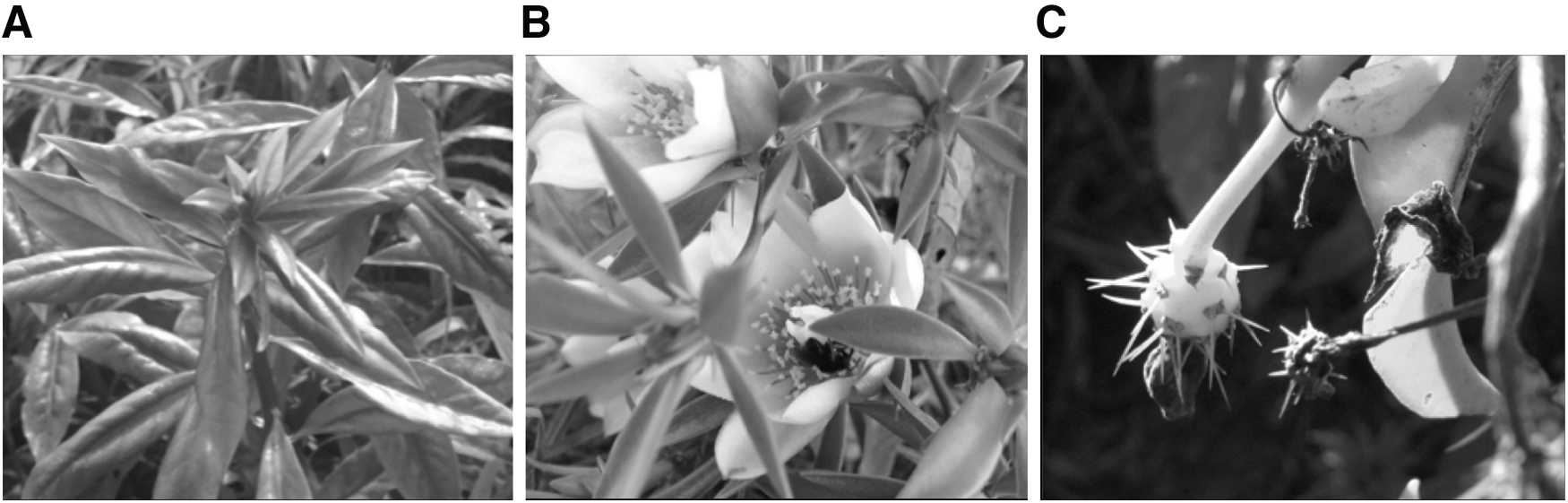
Pictures of the plant Pereskia aculeata Miller
Cactaceae exhibit strange shapes, spines, and showy flowers, therefore appearing as an unusual choice of cuisine. However, P. aculeata does not look exactly alike and is a great source of many minerals (Table 1). In 100 g of P. aculeata, the calcium content is equivalent to three-fold the daily requirement and is 20-fold higher than in the nondairy source kale; the iron content is equivalent to 1.09-fold the daily requirement and is 5.7-fold higher than in the nonheme source spinach; the zinc content is equivalent to 2.6-fold the daily requirement and 3.3-fold higher than in the pumpkin seed, which is valued as a source of this mineral. 10,14 –17
Takeiti et al. 10
Oliveira et al. 14
U.S. Department of Agriculture.
16
However, despite the potential of P. aculeata as a functional food, the plant is reported to contain antinutrients and alkaloids in its leaves. 18,19 The antinutrients identified were oxalic acid (41.8 mg.100 g−1), nitrate (16.2 mg.100 g−1), saponin (0.29 mg.100 g−1), and trypsin inhibitor (1.82 trypsin inhibitor units/mg). 18 As well the alkaloids reported in P. aculeata leaves are tryptamine, mescaline, and hordenine. 19 In addition, in a study on growth and development, Wistar rats fed with P. aculeata and casein as protein source grew less than the control group (fed with casein only). 20
Therefore, in this study, we investigated the oral acute toxicity of P. aculeata on rats and also the cytotoxicity behavior of the plant on lettuce seeds. To our knowledge, this is the first investigation of oral acute toxicity on rats and cytotoxicity on lettuce of P. aculeata.
Materials and Methods
Ethanolic extract of Pereskia aculeata leaves
The leaves of Pereskia aculeata Miller were harvested from the experimental fields of Federal University of Pelotas-Agronomy School, located in Capão do Leão, RS, Brazil (31° 80′ 23″ S latitude and 52° 41′ 40″ W longitude). Immediately after harvest, the fresh leaves were weighed to approximately 1.5 kg, frozen in liquid nitrogen, and stored at −80°C. The samples were ground to a fine powder in a ball mill (Marconi MA350) in liquid nitrogen. Ethanol (99.5%) was added (2 mL per g of fresh leaves) and kept at 60°C under vigorous stirring for 3 h. The extract was filtered using qualitative filter paper (Whatman, grade 1) and kept on ice. The extraction process was repeated two more times and the filtrates of each extraction were combined. The ethanolic extract was concentrated using a rotary evaporator (Heidolph, Laborota 400). Furthermore, the extract was freeze-dried and the resulting powder (21.39 g in total) was stored at −20°C. The freeze-dried extract was completely soluble in water.
Ethics statement
The protocol was approved by the Institutional Animal Care and Use Committee of University of California Davis (approval #17873). The study was conducted according to the Institute for Laboratory Animal Research and the Organization for Economic Co-operation and Development guidelines. 21 The rats were humanely euthanized by CO2 asphyxiation, followed by cardiac exsanguination, and all efforts were made to minimize suffering.
Acute toxicity in rats
Twenty-four female Wistar rats weighing from 160 g to 180 g were kept under controlled housing conditions: 25°C ± 2°C, 50% ± 15% relative humidity, and photoperiod of 12 h. The rats were acclimated to the housing conditions for 5 days before commencement of the experiment. Conventional rat diets and drinking water were available ad libitum, except during the fasting period. The rats were randomly assigned into four groups (G1, G2, G3, and G4). The rats were fasted for 12 h, with free access to drinking water, before a single administration of 0 mg (G1), 1250 mg (G2), 2500 mg (G3), and 5000 mg (G4) of P. aculeata dry extract per kg of body weight. The P. aculeata extracts were suspended in water and administrated by gavage. G1 received only water by gavage.
After the single administration of plant extract, the animals were observed for signs of toxicity at 1 h, 2 h, 4 h, and 8 h and then once a day for 14 days. Signs of toxicity were evaluated analyzing changes in the skin, fur, eyes, mucous membranes, respiratory system, locomotion, and occurrence of convulsion, diarrhea, excess salivation, lethargy, and mortality. All animal weights and food intake were recorded weekly. All animal feces were collected and weighed daily.
Histopathology analysis
Gross morphometric weight was recorded for the whole animal, spleen, liver, kidneys, and brain and used to calculate the organ-to-body weight ratio. Liver, lung, brain, heart, mammary gland, gastrointestinal tract, spleen, and kidney were sampled for histopathology. Tissue samples were submersion fixed in 10% neutral buffered formalin, routinely processed, embedded in paraffin, sectioned 5–10 μm thick, and stained with hematoxylin and eosin. 22 The stained tissue sections, from a subset of rats (16), were blindly evaluated by a board-certified veterinary anatomic pathologist.
Cytotoxic bioassays
Lettuce (Lactuca sativa cv. Baba de Verão) seeds were sown on Germitest® paper, placed onto the bottom of a plastic germination box (Gerbox®), and dampened with 8 mL of water containing P. aculeata dry extract at different concentrations: 13.00 mg/mL (100%), 6.50 mg/mL (50%), 3.25 mg/mL (25%), 1.30 mg/mL (10%), and 0.13 mg/mL (1%). For the control treatment, 8 mL of distilled water was used. The Gerbox was placed into a growth cabinet for seed germination at 25°C. 23
The physiologic effects of P. aculeata on lettuce seeds were evaluated by (a) seed germination (%) on the fourth day (n = 5) (b) and on the seventh day (n = 5), (c) root length (mm) on the seventh day (n = 40), and (d) shoot length (mm) on the seventh day (n = 40). 23,24 The experimental unit consisted of 100 seeds for the variable seed germination and 40 plantlets for the variables root length and shoot length.
Cytogenetic bioassay
The cytogenetic effects were evaluated by the mitotic index and by the presence of chromosome abnormality, following the method described by Guerra, 25 with some modification. We collected the rootlets of the lettuce at 4 days of treatment and kept them in ethanol and acetic acid (3:1), with the dye acetic orcein (2%). To determine the mitotic index and chromosomal abnormalities, 100 cells were analyzed per slide, with four slides for each treatment, totalizing 2400 cells analyzed on an optical microscope (400 × ).
Statistical analysis
In this acute toxicity study, the experiment was performed in a completely randomized manner, with six replicates (n = 6). One-way analysis of variance was used for body weight, food intake, and fecal excretion, at 5% significance (P ≤ .05). The cytotoxic bioassays were analyzed by confidence interval (95% CI). The Statistical Analysis Software (SAS/STAT) 26 was used to analyze the data.
Results
Acute toxicity
The administration of P. aculeata did not cause toxicity symptoms in any of the treatment groups. All rats in the acute toxicity study showed similar visual characteristics to that of the control group. There were no changes in the skin, fur, eyes, mucous membranes, respiration, locomotion, convulsion, salivation, lethargy, or mortality in any of the rats throughout the study.
Furthermore, the groups of rats not treated or treated with different doses of P. aculeata did not differ (F test, P ≤ .05) from each other for the variables food intake, body weight, and fecal excretion. The average for these variables was 14.56 ± 0.16 g, 171.19 ± 1.35 g, and 1.88 ± 0.09 g, respectively.
Organ-to-body weight ratio for spleen (0.26 ± 0.01), liver (3.97 ± 0.20), kidneys (0.83 ± 0.04), and brain (1.02 ± 0.05) was not different from the control group for any of the treatment groups, suggesting that there was no inflammation of any organs after administration of P. aculeata. Furthermore, results for histopathology in the tissues liver, lung, brain, heart, mammary gland, gastrointestinal tract, spleen, and kidney also did not present any difference between the four groups. Representative histopathological data from liver and kidney are shown in Figure 2.
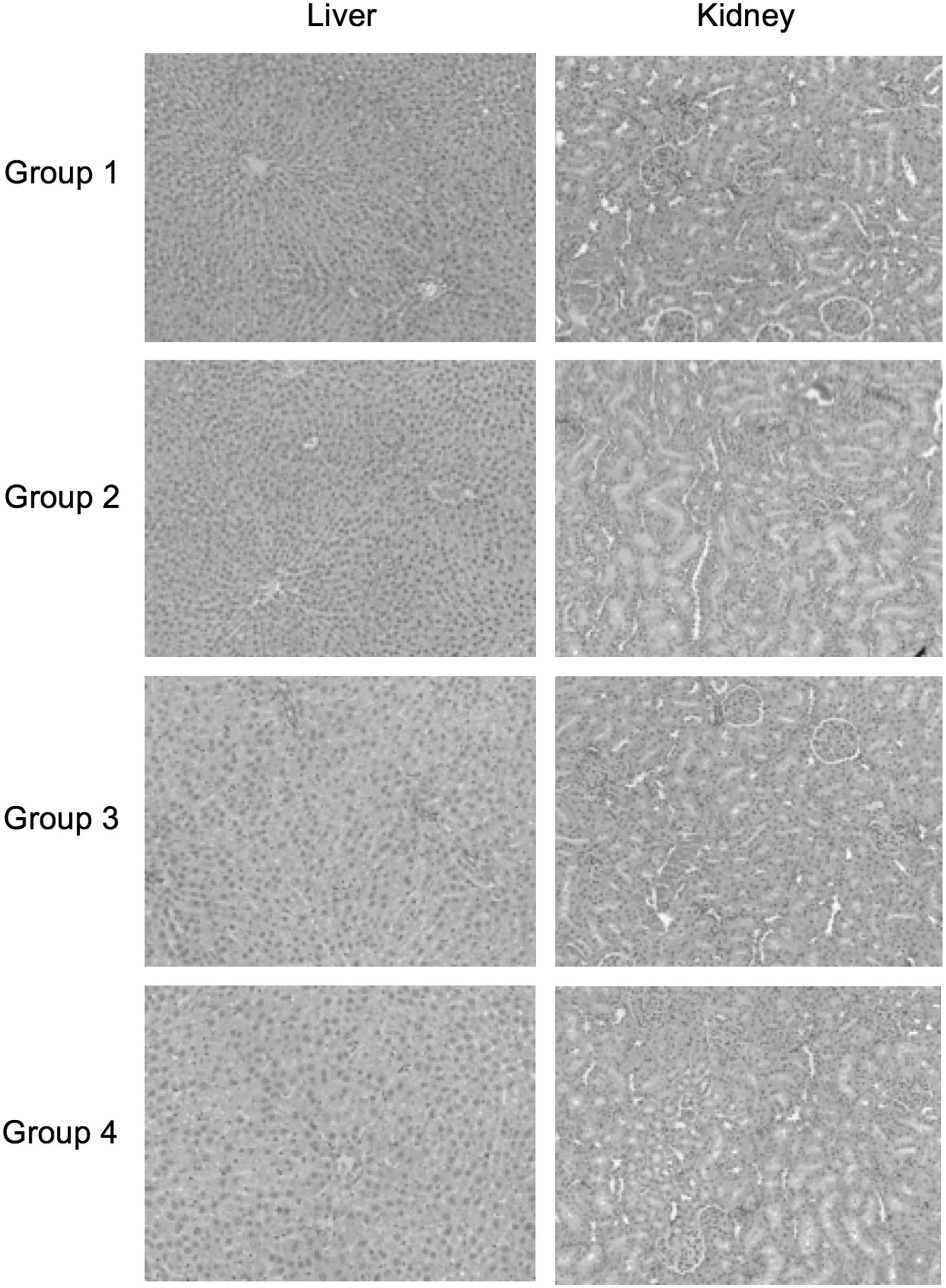
Representative histopathology analysis of liver and kidney (10 × magnification) in rats treated with Pereskia aculeata for acute toxicity study. The groups (G) of rats received, by gavage, a single dose of 0 mg (G1), 1250 mg (G2), 2500 mg (G3), and 5000 mg (G4) of P. aculeata dry extract per kg of body weight.
Cytotoxic bioassays
The results from the seed germination, root and shoot length, and mitotic index of P. aculeata extract effect on lettuce are presented in Figure 3.
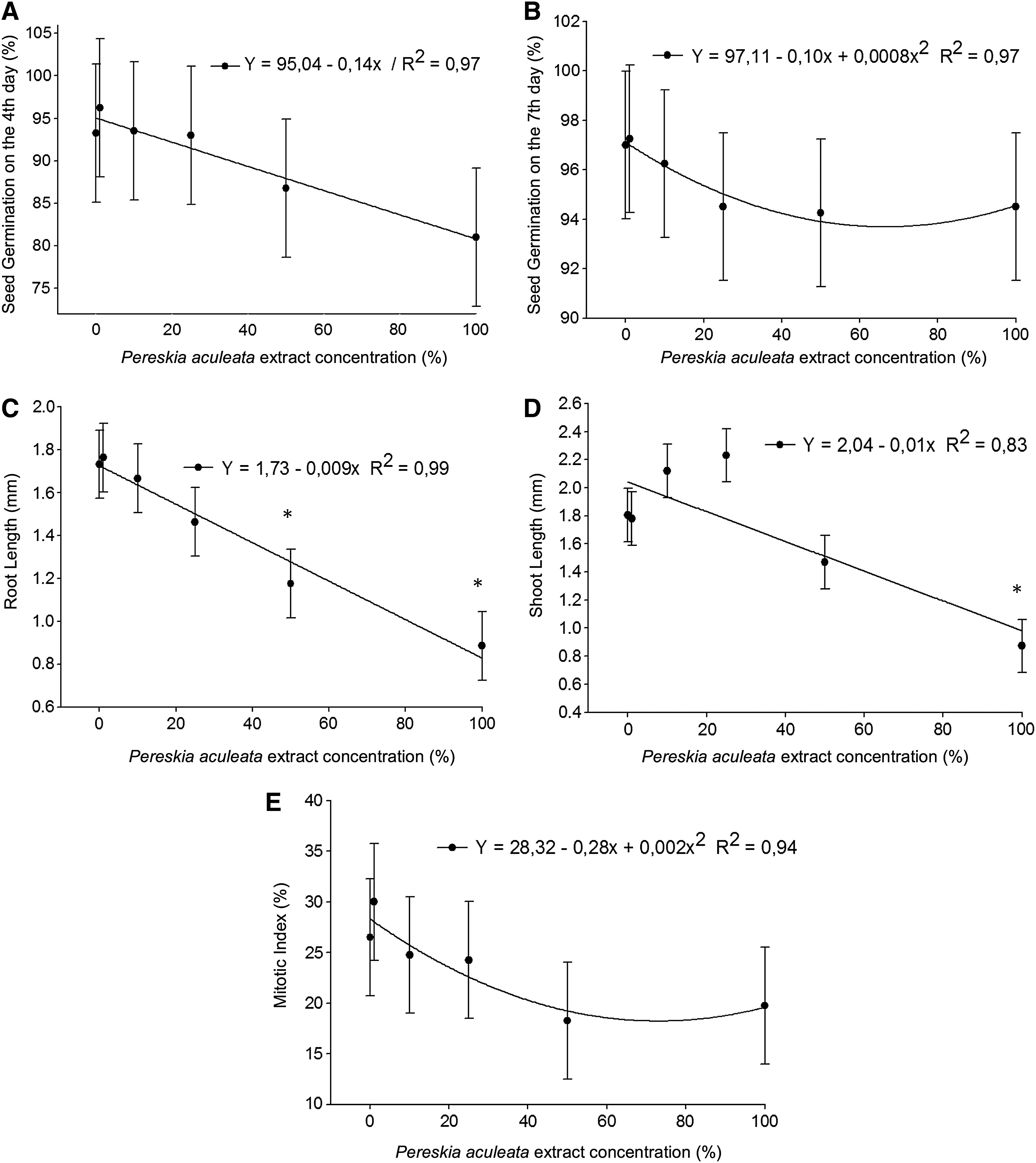
Cytotoxic effects of Pereskia aculeata extract on lettuce (Lactuca sativa cv. Baba de Verão) seeds, with different concentrations: 13.00 mg/mL (100%), 6.50 mg/mL (50%), 3.25 mg/mL (25%), 1.30 mg/mL (10%), 0.13 mg/mL (1%), and 0.00 mg/mL (0%). The variables analyzed were
Polynomial equation models, linear (seed germination on the fourth day, shoot length, and root length) and quadratic (seed germination on the seventh day and mitotic index), best represented the relationship between different doses of P. aculeata and the variables analyzed on lettuce.
Our results show that P. aculeata extract had no significant physiological effect on seed germination on the fourth or seventh day at any concentration when compared with the controls (Fig. 3A, B).
However, P. aculeata had an effect on lettuce root and shoot length. P. aculeata significantly decreased lettuce root length at 6.5 mg/mL (dose 50%) and 13 mg/mL (dose 100%) compared with the controls (Fig. 3C). Lettuce shoot length increased at 3.3 mg/mL (dose 25%) extract, but then decreased at 13 mg/mL (dose 100%) extract significantly when compared with the control (Fig. 3D).
The mitotic index showed that P. aculeata extract did not present any cytogenetic effect on the lettuce (Fig. 3E). Furthermore, microscopic analysis of the lettuce cells did not show any chromosomal alteration, suggesting that P. aculeata is not genotoxic to lettuce.
Discussion
Acute toxicity studies allow for a first look at potential toxicity of a plant on an organism. 27 The traditional aim of the acute oral toxicity study is the estimation of LD50, the median lethal oral dose, derived from a single dose of a substance that can be expected to cause death in 50% of animals when administered by the oral route. 28,29 As no deaths were reported in our study, the LD50 values of Pereskia aculeata extracts are >5000 mg/kg. The concentration of 5000 mg/kg of body weight is equivalent to 385 g of fresh leaves per kg of body weight. Considering these results and the standard established by the Organization for Economic Co-operation and Development, P. aculeata is a class 5, which is the lowest toxicity class. 29,30
Our results are congruent with previous reports of Cactaceae, in the same botanical family as P. aculeata, to be safe for oral consumption in animals. 31,32 A study evaluating oral toxicity of P. grandifolia and Pereskia bleo in mice found no signs of toxicity at the top dose of 2500 mg/kg of body weight. 31 Another one, studying the topical anti-inflammatory activity of P. aculeata leaves in models of acute and chronic ear dermatitis in mice, did not find signs of toxicity or acute dermal irritation. 33 In addition, a research analyzed the acute toxicity of red cabbage, in mice, using ethanolic extract and having 5000 mg/kg of body weight as top concentration and the results showed no signs of toxicity at single dose administration. 34 To our knowledge, there are no published reports on the oral toxicity of P. aculeata. According to our results, the single maximum oral dose (5000 mg of P. aculeata dry extract per kg of body weight) does not cause adverse effects in rats. Therefore, the potential of P. aculeata, a resilient plant for cultivation under low soil–water availability, remains to be used as a remarkable source of minerals, Ca, Zn, Fe, Mg, P, and K (Table 1), proteins, vitamins, antioxidants, and fibers in the food industry and to mitigate undernutrition in the world. 10,14 Pereskia aculeata can be as safe as the conventional vegetable red cabbage, but with a superior nutritional content than that. 16
The cytogenetic bioassays are an important tool to investigate toxicity because they can identify the effects of substances on the chromosome level and in the cell cycle; also, plant cytotoxic bioassays have a good correlation with mammalian test systems. 35,36 We chose lettuce cultivation to study the cytotoxic effect because it is a sensitive species and a widely used plant in toxicity research. 24,37
Our results demonstrate that P. aculeata extract does not contain metabolites that affect germination or cause a cytogenotoxic effect on lettuce seeds, suggesting that membranes, transcription, or translation were not affected in the cells. 24 However, our study indicates that P. aculeata has a potential physiological effect on root and shoot growth of lettuce. Plants can influence the growth and development of another plant, increasing or decreasing growth and/or seed germination. 38 This interaction between plants happens through the release of chemical compounds (allelochemicals) in the environment. 39
In conclusion, our results demonstrate that the acute toxicity on rats and the cytogenotoxicity on lettuce of P. aculeata are neglectable, therefore validating the potential of this nutritious Cactaceae plant to be used as a functional food.
Footnotes
Acknowledgments
The authors acknowledge CAPES, CNPq, and FAPERGS from the Brazilian Government, for financial support and a PhD grant to Debora Olivera. This work was supported by NIFA, USDA grant # CA-D-NTR-2104-H to Nilesh W. Gaikwad.
Author Disclosure Statement
No competing financial interests exist.