







Abstract
To compare the effects of turmeric tablets and turmeric-containing herbal combination tablets versus placebo on skin barrier function and sebum production by measuring facial sebum and transepidermal water loss (TEWL) in healthy subjects. This study was a prospective, double-blinded, rater-blinded, randomized pilot study. Thirty-three generally healthy participants were recruited from the UC Davis Department of Dermatology clinic and the surrounding community from 2016 to 2017, 30 participants were enrolled, and 28 participants completed the study. Thirty individuals were recruited and randomized to the placebo, turmeric, or herbal combination tablet groups. The participants were instructed to take the intervention tablets by mouth twice daily for 4 weeks. Facial sebum production and TEWL were assessed at baseline and 4 weeks. Twenty-eight participants completed the study and there were no adverse events. There were no significant changes in sebum excretion rate in any group after 4 weeks compared with baseline. In the herbal combination tablet group, there was a significant decrease in TEWL (P = .003). No significant changes in TEWL were detected in the turmeric or placebo groups. Turmeric-containing herbal combination tablets significantly decreased TEWL after 4 weeks of twice-daily supplementation. There were no adverse events in any of the three intervention arms. Overall, our findings spark future interest in determining how oral supplementation with herbal formulations may improve skin barrier function and skin appearance, and potentially offer alternative or complementary treatment options.
Introduction
T
Turmeric extracts have been shown to be safe, even at high doses without significant side effects. 7 Several published human studies have used orally ingested turmeric, and no studies reported significant adverse events even at doses of turmeric as high as 8000 mg per day. 8 However, few studies have evaluated the effects of oral turmeric on the physical properties of the skin.
A noticeably increasing number of patients are asking for naturally based extracts and ingredients as supplementary dermatologic remedies. 9 Patients are seeking natural and cost-effective skin care alternatives in place of prescription medications and procedures. 10 The goal of this study was to compare the effect of turmeric tablets and turmeric-containing herbal combination tablets versus placebo on skin barrier function and sebum production by measuring facial sebum and transepidermal water loss (TEWL) in healthy subjects.
Materials and Methods
Study population
The University of California, Davis Institutional Review Board approved this study (
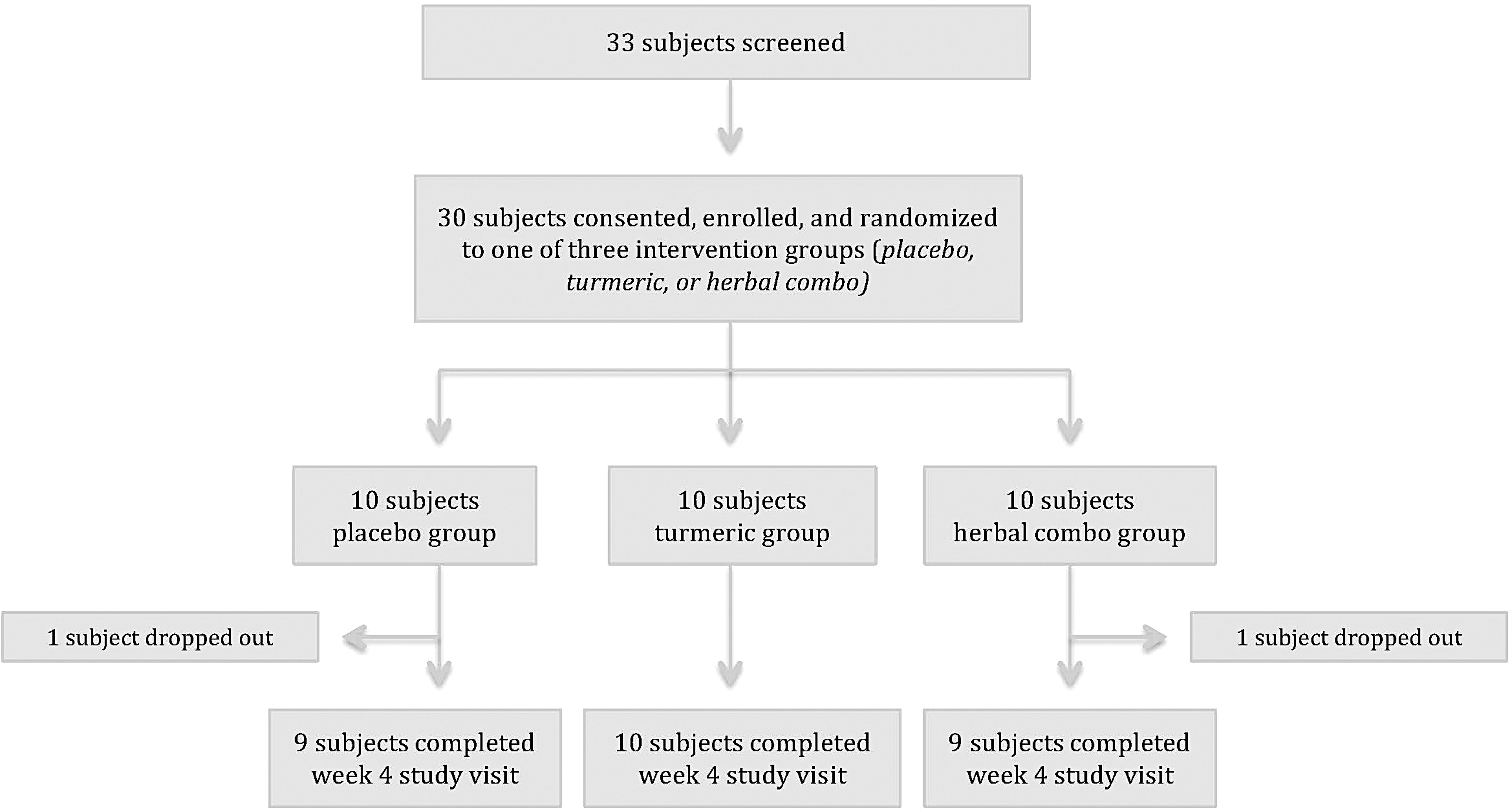
Consort flow diagram.
Study interventions
Turmeric tablets, Healthy Skin™ (herbal combination) tablets, and placebo tablets (Banyan Botanicals, Albuquerque, NM, USA). The turmeric tablets contained 500 mg certified organic turmeric root (C. longa). The herbal combination tablets contained a 500 mg proprietary blend of certified organic herbs: Hemidesmus indicus root, Indian madder root, neem leaf, gotu kola leaf, Indian Tinospora stem, turmeric root, amla fruit, licorice root, and Phyllanthus amarus. The placebo tablets were similar in size, shape, and color to the other two groups. Subjects were each given a bottle of 500 mg tablets and were instructed to take four tablets by mouth with food, twice a day, for a total of 8 tablets daily (4000 mg).
Study design
We conducted this prospective, single-center, evaluator-blinded randomized pilot study between August 2016 and July 2017. Healthy subjects were each given one bottle (240 tablets) of placebo, turmeric, or turmeric-containing herbal combination tablets at the baseline visit (visit 1). They were advised to not consume any other turmeric-containing foods or supplements for the duration of the study period. Subjects were seen at a screening visit, followed by a baseline visit, and at week 4 for safety and response evaluations. The entire study was performed at the Department of Dermatology, University of California–Davis in Sacramento, CA.
Power analysis and randomization
A priori power analysis showed that for greater than 95% power to show a 10% change in TEWL with an alpha of 0.05 after 4 weeks of supplementation, we need at least 7 subjects in each group.
Patients were randomized using a World Wide Web-based service based on a list of random numbers. The randomization list was made by the UC Davis Investigational Drug Services pharmacist before study subject recruitment and kept off-site by a pharmacist not involved in the study. After recruitment and assigning subject numbers in sequential order of study visits, the research team member would dispense the pill bottle labeled with the corresponding subject number. Study investigators and participants remained blinded to which study tablets they received (placebo, turmeric, or turmeric-containing herbal combination tablets) for the duration of the study. The codes were not disclosed to the study investigators until the study was complete.
Study procedures and measures
Subjects were evaluated at baseline and at 4 weeks by the study investigators. The primary endpoints of the study were a change from baseline in TEWL and sebum production. Secondary endpoints included facial analysis of wrinkles and pigmentation using a research camera system and software analysis with combined 2D and 3D capability.
The investigators assessed skin barrier function by measuring TEWL (VapoMeter; Delfin Technologies, Stamford, CT, USA) and sebum production (Sebumeter® SM 815; Courage and Khazaka, Cologne, Germany). Testing was conducted on the subjects’ foreheads and cheeks. TEWL and sebum were measured at baseline and after 4 weeks of taking the study tablets. None of the subjects bathed or applied topical medications or moisturizers for 12 h before each study visit. Photographs were taken at the baseline and 4-week visits using the Clarity™ Research 3D System (BrighTex Bio-Photonics, San Jose, CA, USA).
Subjects were asked to report any adverse effects throughout the study.
Statistical analysis
The investigators performed an intention-to-treat analysis by including all subjects who were enrolled in the trial and received any study intervention. Intragroup evaluations were performed with a paired t-test when comparing changes from baseline. Differences were considered statistically significant when P-value was less than .05.
Results
Of the 33 subjects who were screened, 30 met the entry criteria and were randomized to receive one of the three interventions: placebo, turmeric, or turmeric-containing herbal combination tablets. Of these patients, two dropped out as a result of nonattendance at scheduled visits. Because an intention-to-treat analysis was performed, all 30 subjects were included in the analysis (mean age 45 years, range 25–59 years). The demographic characteristics and baseline measurements are detailed in Table 1. There were no adverse events reported.
Baseline Characteristics and Measurements of the Study Subjects
M/F, male/female; SD, standard deviation; TEWL, transepidermal water loss
Sebum excretion rate
Outcome measurements are displayed in Table 2 and Figure 2. Changes in sebum excretion rate after 4 weeks were not statistically significant when compared with baseline. Participants in the turmeric-containing herbal combination tablet group had the smallest increase in sebum excretion rate after 4 weeks compared with the other intervention groups, although the difference was not statistically significant. When data were separated based on baseline sebum excretion rate (all subjects vs. those with sebum excretion rate greater than 100 μg/cm2), there were also no significant changes from baseline in any of the intervention groups.
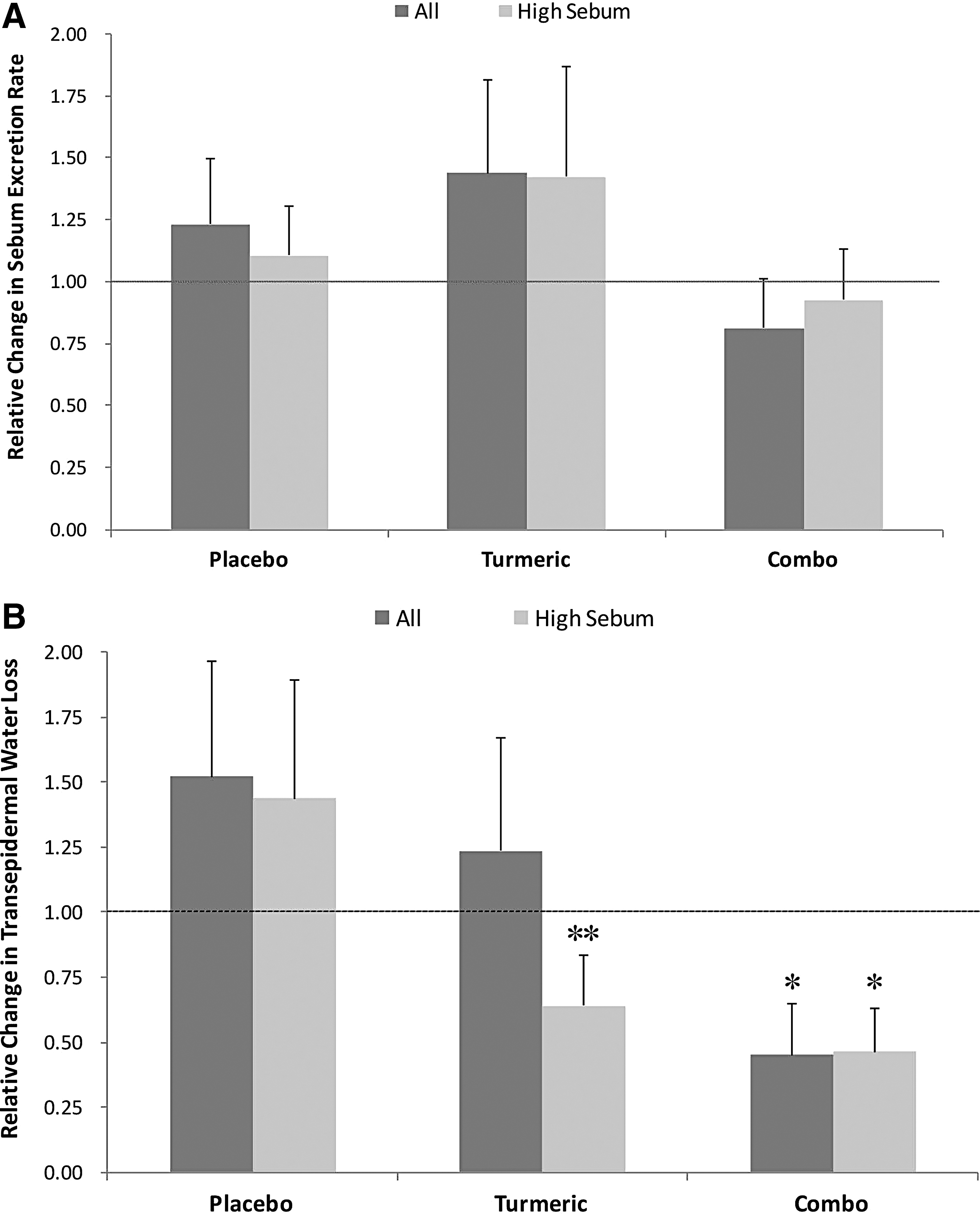
Sebum and TEWL outcome measurements compared with baseline. Changes in sebum
Changes from Baseline in Sebum Excretion and Transepidermal Water Loss
Transepidermal water loss
Changes in TEWL from baseline were only significantly decreased in the herbal combination group for both groups (P = .003) and after stratification for those that have higher sebum production (P = .006). Although there was no statistically significant change in TEWL overall for those taking turmeric, there was a trend toward a decrease in the turmeric supplementation group among those with higher sebum excretion (P = .09). No significant changes were detected in TEWL in the placebo groups.
Facial analysis
Facial analysis using a research camera system and software analysis was used to assess changes in facial pigment and wrinkles. Outcome measurements are displayed in Table 3 and Figure 3.
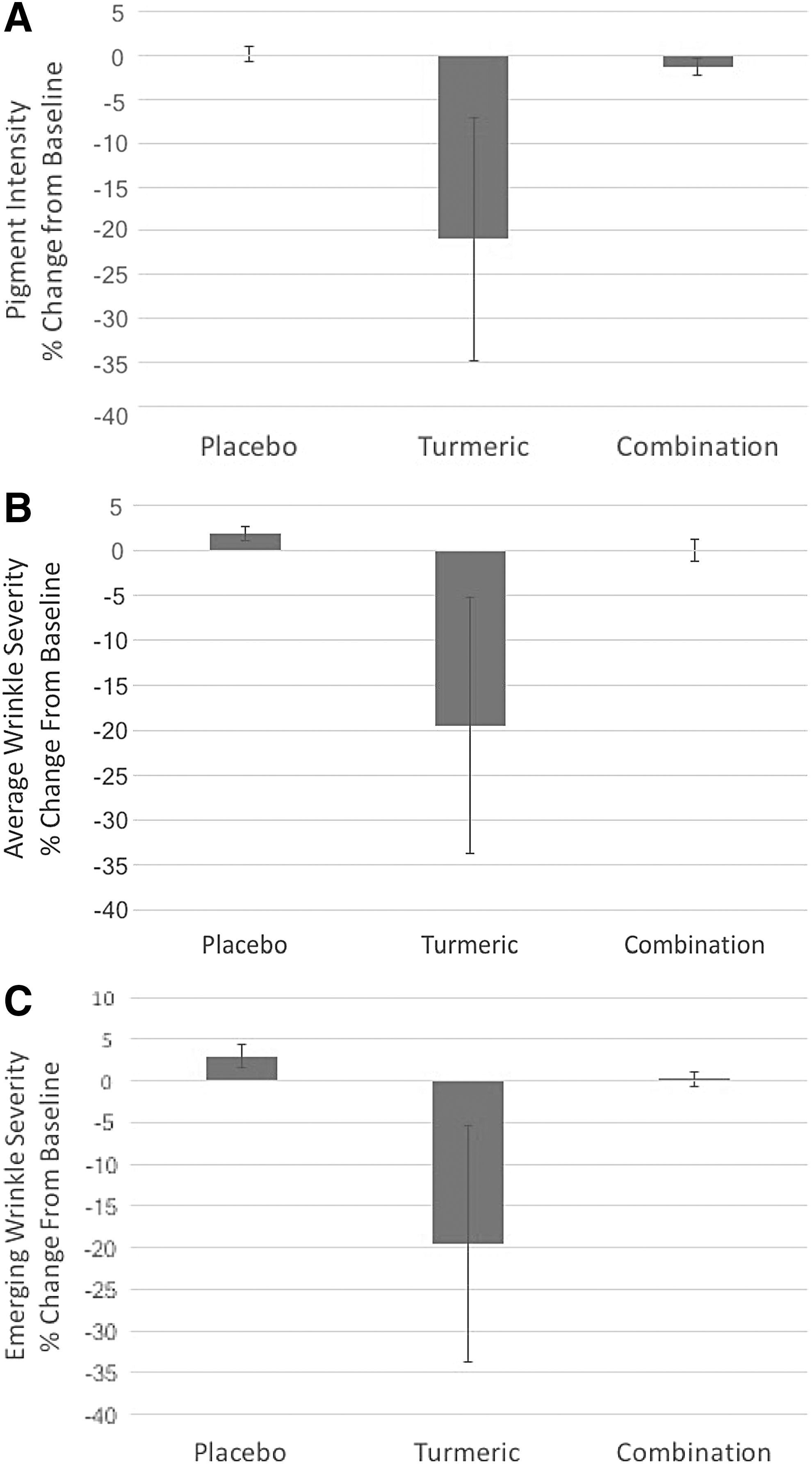
Facial analysis measurements compared with baseline. Percent change from baseline in pigment intensity
Facial Analysis
Compared with baseline, the average overall facial pigment intensity trended toward a decrease by ∼20% in the turmeric group (P = .07), while there was a trend for a decrease by 1% in the herbal combination group (P = .08). There was no change in the placebo-treated group (P = .41).
Wrinkles were analyzed by overall severity and by the severity of the shallower wrinkles (known as emerging wrinkles). The turmeric supplementation group participants had a trend toward an average decrease in wrinkle severity and emerging wrinkle severity by 19.5% (P = .07) and 19.6% (P = .09), respectively. The placebo had a worsening of the overall wrinkle severity and the emerging wrinkle severity by 1.9% (P = .02) and 2.9% (P = .03), respectively. There were not changes in the wrinkle severity in the herbal combination groups. Overall, wrinkles slightly worsened in the placebo group, remained unchanged in the herbal combination group, and improved in the turmeric group.
Discussion
This pilot study demonstrates that turmeric and herbal supplementation may affect the skin's biophysical properties. Our findings show that TEWL improved with the use of herbal combination. Previous studies have evaluated how TEWL changes in response to various herbs. One study found that 24-h topical application of a cream containing gotu kola leaf (Centella asiatica) resulted in a significant reduction in TEWL at all time points (1, 8, and 24 h) compared with baseline (P = .049), while there were no changes in the placebo group. 11 A similar study also found that the topical C. asiatica extract significantly reduced TEWL after 4 weeks of twice-daily application. 12 Licorice root, another component in the herbal combination tablets, was studied in children with atopic dermatitis and was shown to reduce TEWL and improve severity of pruritus after 1 week of topical use. 13 Although these studies did not utilize herbal oral supplementation, the results nonetheless highlight the potential ability of these herbs to restore skin barrier function and further studies will help explain their systemic effects on the skin.
In vitro studies have shown strong anti-inflammatory and antioxidative effects of many herbs, including turmeric, neem, gotu kola, and amla. 14 –18 Researchers looking at the effects of turmeric and neem on sebocytes in an in vitro study suggested their ability to reduce sebum production through inhibition of Propionibacterium acnes-induced sebum production. 19 Unfortunately, clinical studies assessing how supplementation with herbs alone and in combination affects sebum production, TEWL, and other clinical endpoints are lacking, making it difficult to draw conclusions or possible connections for their utility in inflammatory conditions such as acne.
Although we could not detect any effect on facial sebum production with turmeric and herbal combination tablet supplementation at the doses tested, this study nonetheless shows the potential for turmeric-containing herbal combination tablets to decrease TEWL of the facial skin and potentially improve skin barrier function.
Facial analysis using a research camera system and software analysis demonstrated the potential use of turmeric supplementation to clinically improve pigmentation and wrinkles. Several researchers have conducted in vitro studies to assess the role of turmeric and its constituents (i.e., curcuminoids) on tyrosinase activity and melanogenesis. There are promising results suggesting turmeric decreases melanogenesis and pigmentation through suppression of melanocyte stimulating hormone. 20 A separate study also demonstrated the ability of turmeric extract to suppress ultraviolet A (UVA)-induced melanogenesis and oxidant formation in a dose-dependent manner, hinting at the correlation between turmeric's antioxidant and antityrosinase properties. 21 While our study did not assess mechanisms, it is interesting that there may be biochemical pathways that would be useful to assess in future studies.
The participants recruited for this study were generally healthy and did not have overt skin diseases. In this setting, changes in pigmentation would be harder to detect. Our results support the pursuit of future studies where participants with worse baseline pigmentation alterations may be more easily tracked for improvement over time.
One interesting observation was that the wrinkles worsened slightly in the placebo group, while there was no change in the herbal combination group and improvement in the turmeric supplementation group. While the placebo group worsened statistically, clinically, the worsening is likely not perceptible. This study was performed over 1 month and it is more likely that any subtle changes are more likely to be discernable on facial analysis, but not by clinical analysis. Nevertheless, the improvement in the turmeric group is notable. The mechanism for this improvement remains unclear. Future studies should assess how turmeric changes the skin's antioxidant status and if turmeric has a role in altering skin hydration.
The quest for naturally based ingredients and skin care products has recently grown dramatically among many patients and consumers worldwide. 9 This study shows the potential for oral supplementation with herbs such as turmeric and neem to positively influence the skin barrier function.
Limitations
Our study has several limitations. Our study was only performed over 4 weeks. However, we included measures that can be detected at an earlier stage than clinical changes, allowing for us to discern subtler changes within 4 weeks. A longer study would help better ascertain how the supplements affect the skin. Skin barrier function involves cumulative intrinsic and extrinsic environmental factors, and our pilot results warrant a longer supplementation period with the oral tablets that would provide greater understanding of their potential to alter TEWL, sebum production, pigmentation, and wrinkles. The study participants were instructed to avoid all foods and supplements containing turmeric, but it is difficult to monitor for intake of other herbs present in the diets of participants, which could have modified the measured effects of the interventions. A third limitation of this study is that the participants were generally healthy and did not have a skin disease. As such, the results noted here cannot be extended to other skin diseases without a future prospective study.
In conclusion, this pilot study found that a herbal combination tablet can improve TEWL and slightly improve the appearance of wrinkles. Moreover, turmeric supplementation has a trend toward improvement of pigmentation and wrinkles at 4000 mg daily. This study clearly showed that supplementation with doses of turmeric and herbal combination tablets as high as 4000 mg per day is well tolerated and safe. Overall, our findings are promising for determining how oral supplementation with herbal formulations may improve skin barrier function and appearance, and potentially offer alternative or complementary treatment options for skin conditions. Our studies support the development of future studies to further evaluate how herbal supplementation affects the skin.
Footnotes
Acknowledgment
ARV received research grant support from Banyan Botanicals. The funding source had no role in the data analysis or the decision to publish.
Author Disclosure Statement
R.K.S. serves as a scientific advisor to Dermveda and consultant for Burt's Bees and Dermala. A.R.V., M.N., and A.K.C. have no other conflicts of interest to report.