







Abstract
The aim of this study was to evaluate the effects of ethanol extracts of Vaccinium corymbosum (VCE) on exercise-induced fatigue in mice. Mice were randomly divided into three groups; nonexercise control group (CON), exercise control group (Ex-CON), and exercise and VCE supplementation group (Ex-VCE). Compared with Ex-CON, Ex-VCE showed increased endurance exercise capacity on day 21. In Ex-VCE mice, the accumulation of lactate was inhibited and the consumption of fatty acids was enhanced, indicating the delay of muscle fatigue. In addition, VCE supplementation elevated mRNA expression levels of mitochondrial biogenesis-associated genes such as peroxisome proliferator-activated receptor-1γ coactivator 1α (PGC-1α), nuclear respiratory factor (NRF), and mitochondrial transcription factor A (Tfam) and fatty acid β-oxidation-associated genes such as carnitine palmitoyltransferase-1 (CPT-1), β-hydroxyacyl coenzyme A dehydrogenase (β-HAD), and peroxisome proliferator-activated receptor-δ (PPAR-δ). These results suggest that VCE can potentially prevent muscle fatigue by enhancing mitochondrial biogenesis and fatty acid β-oxidation.
Exercise is important for maintaining good health. Lack of exercise is one the causes of obesity and metabolic disease. 1 Exercise and the length of time taken for exercise are important, especially in the context of obesity. If the exercise time is short, weight loss will not occur. Therefore, it is important to delay muscle fatigue during exercise, and there are many ways to achieve this. 2 The first method inhibiting muscle fatigue is to suppress the production of fatigue components, leading to an increase in the exercise time. 3 Moreover, increasing the consumption of fat can suppress the supply of glucose to the muscles. To increase fat consumption, gene expression in muscles must also be altered. 4 Fatty acid β-oxidation is controlled by carnitine palmitoyltransferase-1 (CPT-1), β-hydroxyacyl coenzyme A dehydrogenase (β-HAD), and peroxisome proliferator-activated receptor-δ (PPAR-δ). In addition, increased mitochondrial biogenesis in muscle inhibits muscle fatigue. 5 Mitochondrial biogenesis is controlled by peroxisome proliferator-activated receptor-1γ coactivator 1α (PGC-1α), nuclear respiratory factor-1 (NRF-1), and mitochondrial transcription factor A (Tfam). 6
Vaccinium corymbosum, also known as blueberry, is an important crop in the United States, Mexico, France, Germany, and Spain. Several studies show the well-described antioxidant, anti-obesity, and anticancer activities of V. crymbosum. 7 –9 However, data supporting the effect of V. crymbosum on muscle fatigue and its underlying mechanisms are lacking. Therefore, this study aimed to investigate the anti-fatigue properties of V. corymbosum ethanol extract (VCE) on endurance exercise capacity in mice.
Vaccinium corymbosum fruit (50 g) powder was refluxed for 3 h at 250°C with 70% ethanol. The VCE was concentrated with a decompression rotary evaporator. The extract was then frozen, and dried into powder (30.5 g). All animal studies were approved by the Chonnam National University Institutional Animal Care and Use Committee (CNU IACUC-YB-2016-45). Four-week-old male ICR mice were obtained from Orient Bio (Seongnam, Korea). Mice were maintained under controlled environmental conditions (temperature 23 ± 2°C; humidity 50 ± 5%; and 12/12 h light/dark cycle). The mice were divided into three groups after an adaptation period of 1 week based on their mean body weights and exhaustive swimming times. Mice were then divided into the nonexercise control group (CON), the exercise control group (Ex-CON), and the exercise and VCE supplementation group (Ex-VCE). The CON and Ex-CON groups were given distilled water, and the Ex-VCE group was given 1 g/kg body weight/day of VCE. Mice were subjected to swimming exercise to evaluate exhaustive swimming exercise capacity. The swimming exercise was carried out in a transparent acrylic water tank (90 × 45 × 45 cm) filled with water up to a height of 35 cm, with the water temperature was maintained at 34°C, and equipped with a pump and flow meter of 8 L/min. 10
We selected an exhaustive swimming test to assess the degree of physical fatigue, wherein the exhaustive swimming time indicated the degree of fatigue. 11 There was no difference between the Ex-CON and Ex-VCE groups in swimming time when VCE was not administered (0 day), but there was a significant difference in swimming time when VCE was administered for 21 days (Fig. 1). These results indicated that orally administered VCE increased the endurance exercise capacity of the mice. According to previous studies, phytochemicals and plant extracts can induce performance-enhancing capability. 3,12
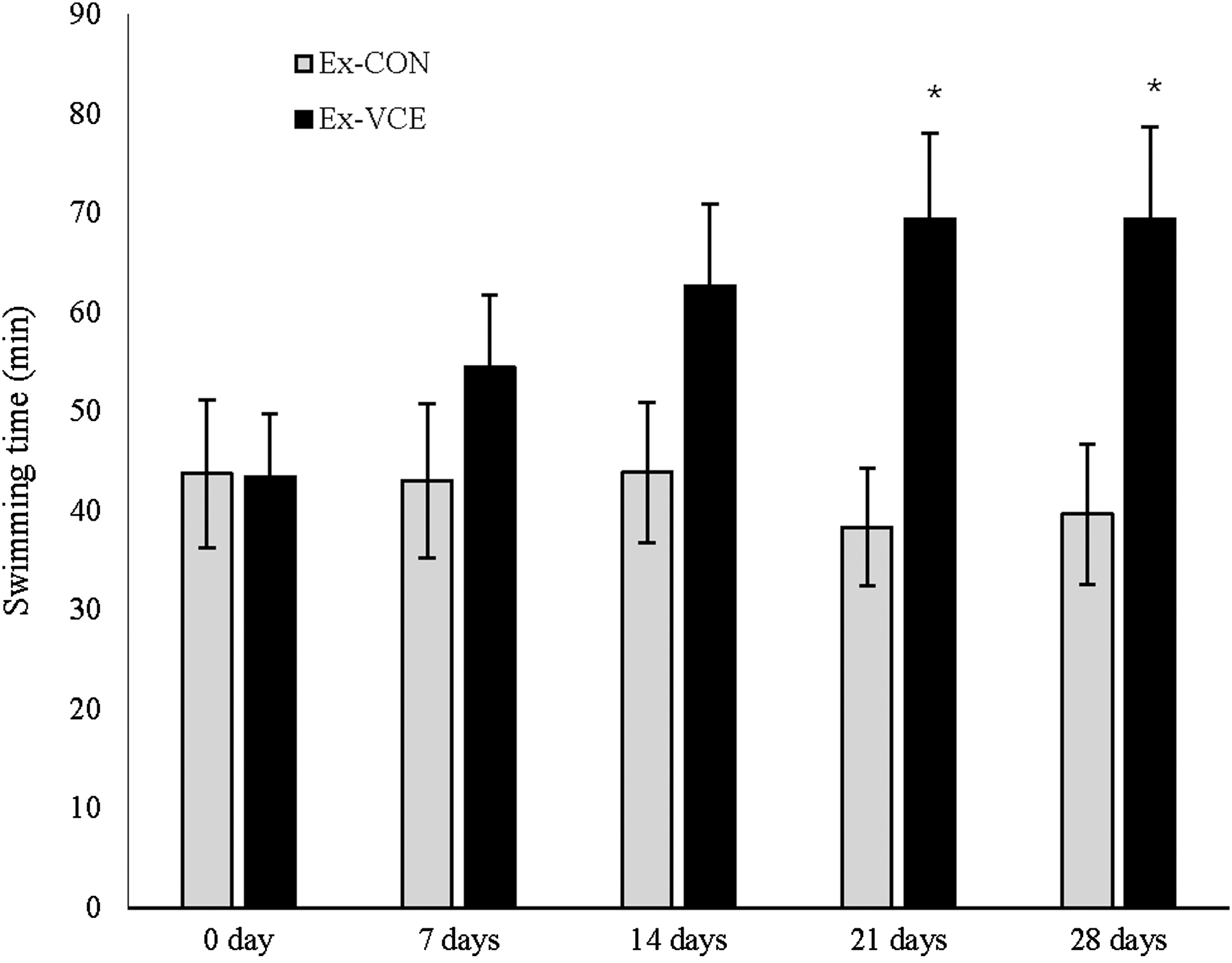
Effect of VCE on endurance exercise capacity in mice. The Ex-CON group received water, whereas the Ex-VCE received VCE (1 g/kg body weight/day). The exhaustive swimming time was tested in a swimming pool at a flow rate of 8 L/min. Values are expressed as mean ± SE. * P < .05 compared with Ex-CON. Ex-CON, exercise control group; Ex-VCE, exercise and VCE supplementation group; SE, standard error; VCE, ethanol extract from Vaccinium corymbosum.
Lactate, a metabolite of glucose, is produced during anaerobic exercise in muscles. Accumulation of lactate induces muscle fatigue. 13 Nonesterified fatty acid (NEFA) is a fatty acid that is degraded by lipoprotein lipase in adipocytes. When NEFA is used as an energy source, the consumption of glucose is reduced, and NEFA can produce a large amount of energy. 14 Blood lactate and NEFA levels were measured before and after exercise by collecting blood from the mice. Blood lactate levels were measured using a commercial test strip. NEFA levels were measured using a commercial kit. On day 21 of the test, each group performed 25% of the exhaustive swimming time to check the accumulation of lactate. Lactate levels were increased in both Ex-CON and Ex-VCE groups after exercise, but were significantly lower in the Ex-VCE group than in the Ex-CON group (Fig. 2a). Skeletal muscle helps remove lactate from blood. However, when strenuous exercise is performed, muscle fatigue occurs owing to the elevated lactate production to a point that exceeds the rate of lactate removal. 15 Our observations suggest that reduced lactate accumulation in the blood during exercise by the administration of VCE to mice leads to the alleviation of muscle fatigue, which results in the prolonged swimming time.

Effect of VCE on
NEFA levels were found to be significantly higher in the Ex-VCE group than those in the Ex-CON group (Fig. 2b), indicating the increased the consumption of free fatty acids by VCE supplementation. During intense exercise, efficient supply of an energy source postpones the appearance of fatigue. The increased availability of NEFA plays an important role in skeletal muscle metabolism, thereby delaying muscle fatigue. 16
Glycogen depletion is also an indicator for determining muscle fatigue. 17 To measure glycogen levels, muscle tissue was obtained by dissecting mice 4 h after the last exhaustive swimming training session. After homogenization of the tissue with liquid nitrogen, glycogen levels were measured by the anthrone method. 15 Muscular glycogen is consumed during exercise; however, in the Ex-VCE group, glycogen levels were significantly higher than those in the Ex-CON group (Fig. 3). Ex-VCE mice was delayed the utilization of glycogen during exercise. Combined with our result of fatty acid availability as an energy source during the exercise, this finding suggests that VCE supplementation can effectively inhibit muscle fatigue in mice by facilitating fatty acid utilization with a reduced rate of muscle glycogen breakdown.
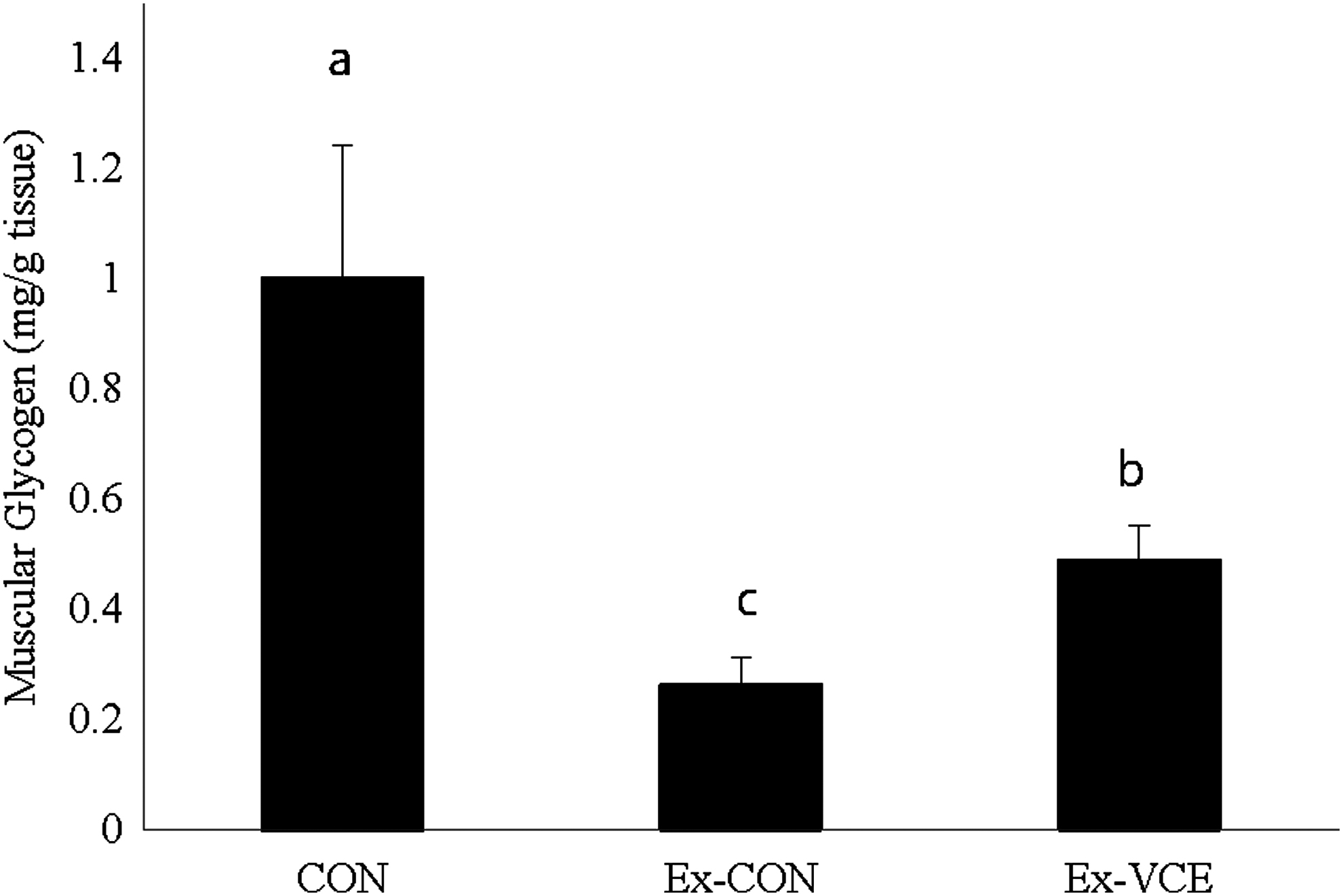
Effect of VCE on muscular glycogen levels in mice. The Ex-CON group received water, whereas the Ex-VCE group received VCE (1 g/kg body weight/day). Values are expressed as mean ± SE. Different letters indicate significant difference (P < .05) compared to CON.
Muscular mRNA expression levels of genes related to mitochondrial biogenesis and fatty acid β-oxidation were also measured. The mRNA of the target gene was reverse transcribed using total RNA (INtRON Biotechnology, Seongnam, Korea), and cDNA was synthesized. The gene involved in mitochondrial biogenesis and fatty acid β-oxidation was detected by qPCR using SYBR Green PCR Master Mix (Qiagen, Hilden, Germany). The primer sequences used in this experiment are given in Table 1. The factors involved in mitochondrial biogenesis include PGC-1α, NRF-1, and Tfam. Mitochondria play an essential role in generating energy, and are abundantly present in muscle cells. There are higher numbers of mitochondria in the muscle cell of marathon runners than those in the general population. 18 An increase in mitochondrial biogenesis allows the generation of energy for a longer period of time. 19 PGC-1α, a key regulator of mitochondrial biogenesis, activates NRF-1 expression. 20 NRF-1 is involved in cellular growth and mitochondrial DNA transcription and activates the expression of Tfam, which is a key activator of mitochondrial transcription and gene replication. 21 The mRNA levels of mitochondrial biogenesis-related factors were found to be increased after VCE supplementation. As given in Figure 4a, the mRNA levels of factors associated with mitochondrial biogenesis were higher in the Ex-VCE group than that in the other groups. These results imply that VCE may lead to prolonged exercise and delay in muscle fatigue.
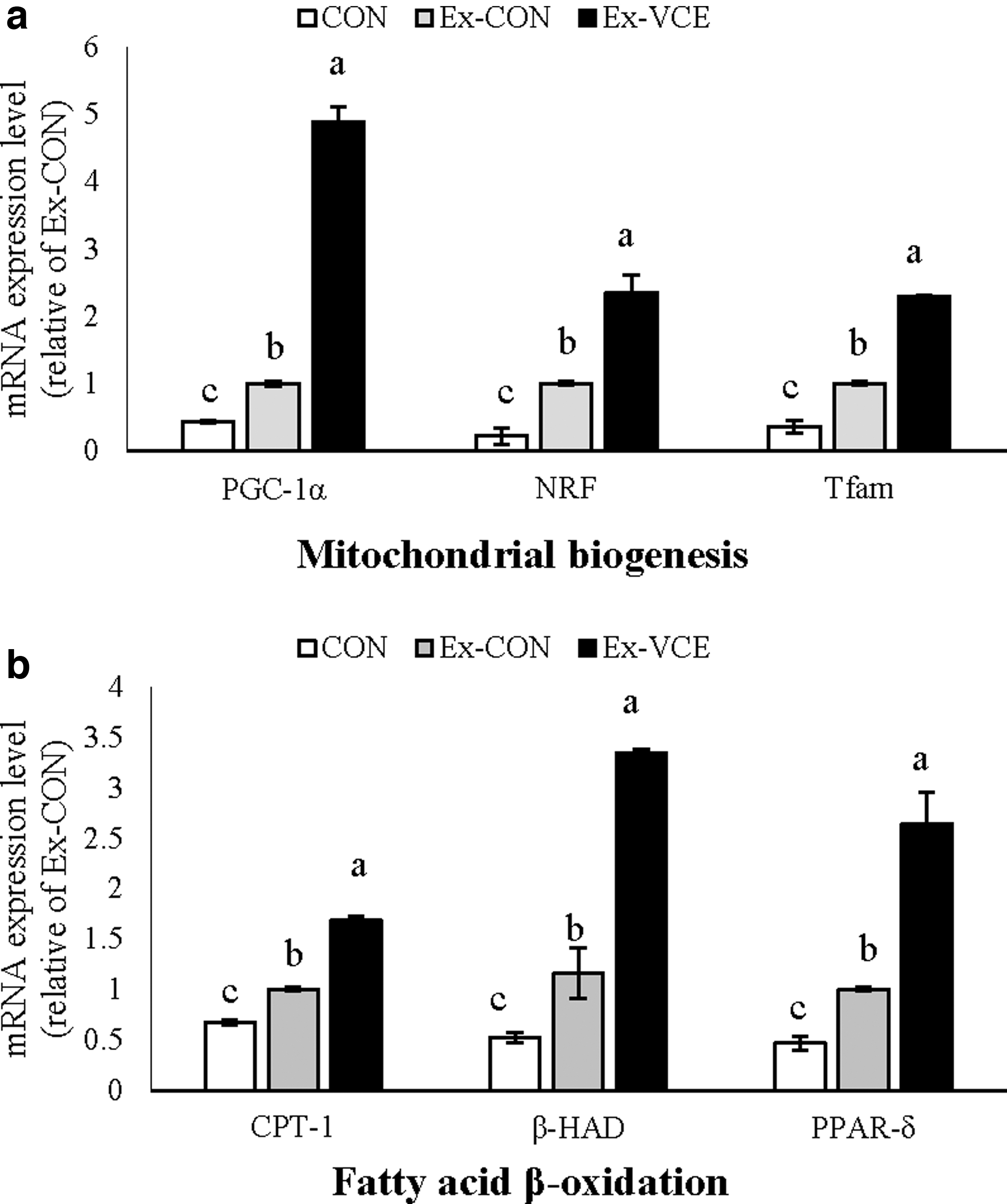
Effect of VCE on mRNA expression levels of
Real-Time Polymerase Chain Reaction Primer Sequences
CPT-1, carnitine palmitoyltransferase 1; β-HAD, β-hydroxyacyl coenzymes A dehydrogenase; NRF-1, nuclear respiratory factor-1; PGC-1α, peroxisome proliferator-activated receptor-γ coactivator-1α; PPAR-δ, peroxisome proliferator-activated receptor-δ; Tfam, mitochondrial transcription factor A.
Fatty acid β-oxidation is one of the energy-generating metabolic pathways and utilizes fatty acids as energy source. The factors involved in fatty acid β-oxidation include CPT-1, β-HAD, and PPAR-δ. CPT-1 is an enzyme present in the outer mitochondrial membrane, which allows fatty acids to enter the mitochondria. 22 Fatty acids that enter the mitochondria are used as energy sources. β-HAD, is an oxidoreductase, catalyzes the third step of fatty acid β-oxidation that is involved in the oxidation of L-3-hydroxyacyl CoA by NAD+. 23 The levels of muscle PPAR-δ, a nuclear hormone receptor, increased in response to exercise, which in turn increases fatty acid β-oxidation. 24 Compared with the expressions in Ex-CON mice, EX-VCE mice had significantly upregulated mRNA expressions of CPT-1, β-HAD, and PPAR-δ (Fig. 4b). The mRNA expressions of factors associated with fatty acid β-oxidation showed expression profiles similar to those shown by the mitochondrial biogenesis-related genes. From these observations, we speculated that VCE improves metabolic efficiency, and related molecules may alleviate muscle fatigue.
In conclusion, our results indicated that VCE supplementation to mice significantly increased exercise endurance capacity by inhibiting muscle fatigue. It is presumed that the mechanism of antimuscle fatigue may be to enhance the utilization of energy substrates and activate energy-generating metabolic pathways by VCE. The knowledge gained from this study could aid in the development of effective therapeutics to suppress the development of muscle fatigue.
Footnotes
Author Disclosure Statement
No competing financial interests exist.
Funding Information
This study was financially supported by Chonnam National University (grant no. 2016-2797).