







Abstract
Cancer is one of the leading causes of increasing global mortality with uprising health concerns and threats. Unfortunately, conventional chemotherapy has substantial side effects, limiting its relevance and prompting a quest for safe and efficient alternatives. For thousands of years, plants have provided a rich reservoir for curing a variety of ailments, including cancer. According to the World Health Organization, medicinal plants would be the best source of medications. However, only 25% of drugs in the present pharmacopoeia are derived from plants. Hence, further research into different plants is required to better understand their efficacy. Twenty extracts of widely distributed Middle Eastern plants were screened for the cytotoxic effect against lung cancer cell lines (A549). Eleven plants showed IC50 below 25 μg/mL, consequently, the bioactive extracts were further fractionated by graded precipitation using absolute ethanol. All fraction A (FA; crude polysaccharides precipitate) showed potent IC50, 0.2–5.5 μg/mL except the FA of Brassica juncea, Silybum marianum, and Phaseolus vulgaris, whereas FB fractions (filtrate) of Anastatica hierochuntica, Plantago ovate, Tussilago farfara, and Cucurbita moschata had lower efficacy than other fractions with IC50 values in the range of 0.1–7.7 μg/mL. The fractions of FA Taraxacum officinale and FB Ziziphus spina possess the most potent cytotoxic activity with IC50, 0.2 and 0.1 μg/mL, respectively. Moreover, cell cycle analysis of both fractions revealed an arrest at G1/S-phase and activation of apoptosis rather than necrosis as the mode of cell death. Therefore, T. officinale and Z. spina fractions may pave the way to manage lung carcinoma as an alternative and complementary food regimen.
INTRODUCTION
The Middle East is home to different types of plants; there are ∼13,500 species that provide an array of different compounds with a greater variety of bioactivities. 1 Despite continuous and progressive advances in the medical field, cancer is still an impending threat that must not be overlooked. 2 Over the next two decades, the number of new cases is expected to increase by about 70%. 3 To date, the majority of antineoplastic agents that are currently used in oncology clinical trials have been derived from natural sources, such as anthracyclines, taxoids, teniposide, vinca alkaloids, flavopiridol, and camptothecin analogs. 4 –6 Paclitaxel (Taxol®) is probably the most well-known plant-derived anticancer drug that was first reported by Wani et al. 7 Later, other Taxus species were discovered to produce the taxol molecule at low levels by Taxus’ endophytic fungus Taxomyces andreanae and by other endophytic fungi. 8
The discovery and identification of new low-cost antitumor drugs with minimum side effects and potent efficacy to combat this dreaded disease have become a critical strategy in cancer management, and plants are a promising source for such entities. 9 –11 Over the last few decades, screening has played an important role in the development of new drugs for the medical armamentarium and has been an integral part of the drug discovery effort. 12,13 Hence, many research organizations are conducting natural drug discovery programs that employ simple, rapid, and reproducible biological screening tests to facilitate the transition from a screening hit to a drug candidate. 14,15 However, only 1–10% out of 250,000–500,000 plant species have been thoroughly studied for their potential medicinal value. 16,17 Furthermore, the plant kingdom's anticancer potential is largely untapped. 18 The basic and clinical research into the cytotoxic activity of Middle East medicinal plants is still very limited. 19
Lung cancer is one of the most common cancer sites among men and the leading cause of cancer deaths worldwide. 20,21 Therefore, considering our interest in conducting a random selection for some widely distributed plants in the Middle East for screening their potential cytotoxic effect. In this study, conceivably for the first time, an attempt was made to evaluate 20 plant extracts and 40 fractions thereof against human lung nonsmall adenocarcinoma cells (A549 cell line).
MATERIALS AND METHODS
Plant material
The plant samples were collected from the Egyptian market. A voucher specimen was identified by a botanist senior researcher at the flora and taxonomy research department, Agricultural Museum, Giza, Egypt. The specimens have been deposited at the Herbarium of the Pharmacognosy Department, Faculty of Pharmacy, October 6th University. The plants under investigation, including common names, plant parts, families, and reported biological activity are detailed in Table 1.
Plant Under Investigations
Extraction of crude extracts
The samples (0.5 kg) were grinded into powder and boiled in distilled water (2 L) at 100°C for 3 h. The aqueous extracts were further filtered and concentrated by using rotary evaporation and reserved for fractionation by absolute ethanol precipitation.
Cell viability assay (MTT assay)
The assay to determine cell survival/toxicity was conducted after the method of Mosmann with some modifications
51
Plant extracts and purified fractions were prepared in the range of 20–100 μg/mL from the stock solution by serial dilution using dimethyl sulphoxide (DMSO). Cisplatin is a wide-range anticancer drug that was used as the standard (0.1 g/mL). The lung cancer cell line (A549) was trypsinized, and the cells were counted using a hemocytometer following a standard procedure: 100 μL of the lung cancer cell line at 1 × 10⁴ cells/mL was added to poly
Thirty microliters of 0.5% v/v MTT was added and incubated at room temperature for 4 h. After incubation, 50 μL of acid—isopropanol—was added to dissolve the formazan formed and incubated at room temperature for 30 min. Absorbance was detected at 554 nm using a Bio-Rad microtiter plate reader. The assay was performed in triplicates for each concentration.
Fractionation by graded precipitation method
Extracts with a high cytotoxic effect were subjected to graded precipitation by absolute ethanol. According to Shi, large molecular weight crude polysaccharides (MW) have less solubility than smaller MW components in ethanol, so the concentrated extracts solution was precipitated with six times the volume of 95% ethanol to obtain deposition at 4°C overnight. 52 The precipitate was collected by centrifugation at 3500 g for 20 min, giving the crude polysaccharides (Fraction A). On the other hand, the supernatants were filtrated and concentrated and subsequently concentrated by rotavapor to obtain fraction B.
Cell cycle analysis by flow cytometry
To assess the distribution of cell populations in the different phases of the cell cycle, A549 cells were treated with the purified fractions of Taraxacum officinale and Ziziphus spina using the IC50 concentrations. After incubation, cells were collected and stained with 40 mg/mL propidium iodide (PI) from Abcam, United Kingdom (ab139418), then the DNA content of the cells was analyzed using flow cytometry.
Apoptosis assay by flow cytometry
The annexin V fluorescein isothiocyanate (FITC)/PI apoptosis detection kit (Cat. No.: K101-25; Bio-Vision, USA) was used in accordance with the manufacturer's instructions to assess the apoptotic activity of the purified fractions of T. officinale and Z. spina against A549 cells using flow cytometry.
Statistical evaluation
Data are expressed as the mean ± standard deviation, and statistical analysis was performed by one-way analysis of variance (ANOVA) followed by the Tukey multiple comparisons test to determine the significance of the difference between treatments. A P-value of <.05 was considered significant. All statistical analyses were performed, and graphs were generated using GraphPad Prism (ISI, USA) software (version 9). The number of asterisks (“*”) attached to the columns denotes the degree of significance.
RESULTS AND DISCUSSION
Extraction and fractionation of tested samples
Plants are a source of novel natural products that are required for the development of new pharmaceutical drugs. 11 They have been widely used since ancient times and are still very popular in the management of various diseases and disorders. 53 The plants are explored medically in the form of crude extracts, fractions, and specific isolated compounds, which have the potential to be used in the synthesis of allopathic drugs. 54 The quantity, quality, and biological activities of these phytochemicals are all affected by plant parts, plant developmental stage, and the solvents used for the extraction. 55
Moreover, the use of plants that possess a large extracted production mass could be important for sustainable production. 56 Therefore, the yield of decoction extract for each plant was determined as gram percentage from total material weight and results revealed the following: the yield of Silybum marianum, Andropogon schoenanthus, Hydrastis canadensis, Anastatica hierochuntica, Plantago ovata, Tussilago farfara, and Ephedra foeminea extracts were in the range 0.5–1 g%. While 2–3 g were the weight percentage of Nigella sativa, Punica granatum, Brassica juncea, and Nelumba nucifera extracts, Cucurbita moschata, Salix aegyptiaca, and Phaseolus vulgaris extracts yield were 4–5 g%. The Zi. spina, A. herba, T. officinale, and Annona muricata had 7, 8, 9, and 10 g%, respectively. The high yield was estimated for Tamarindus indica extract by 32% extract from the total weight of plant material (Fig. 1).
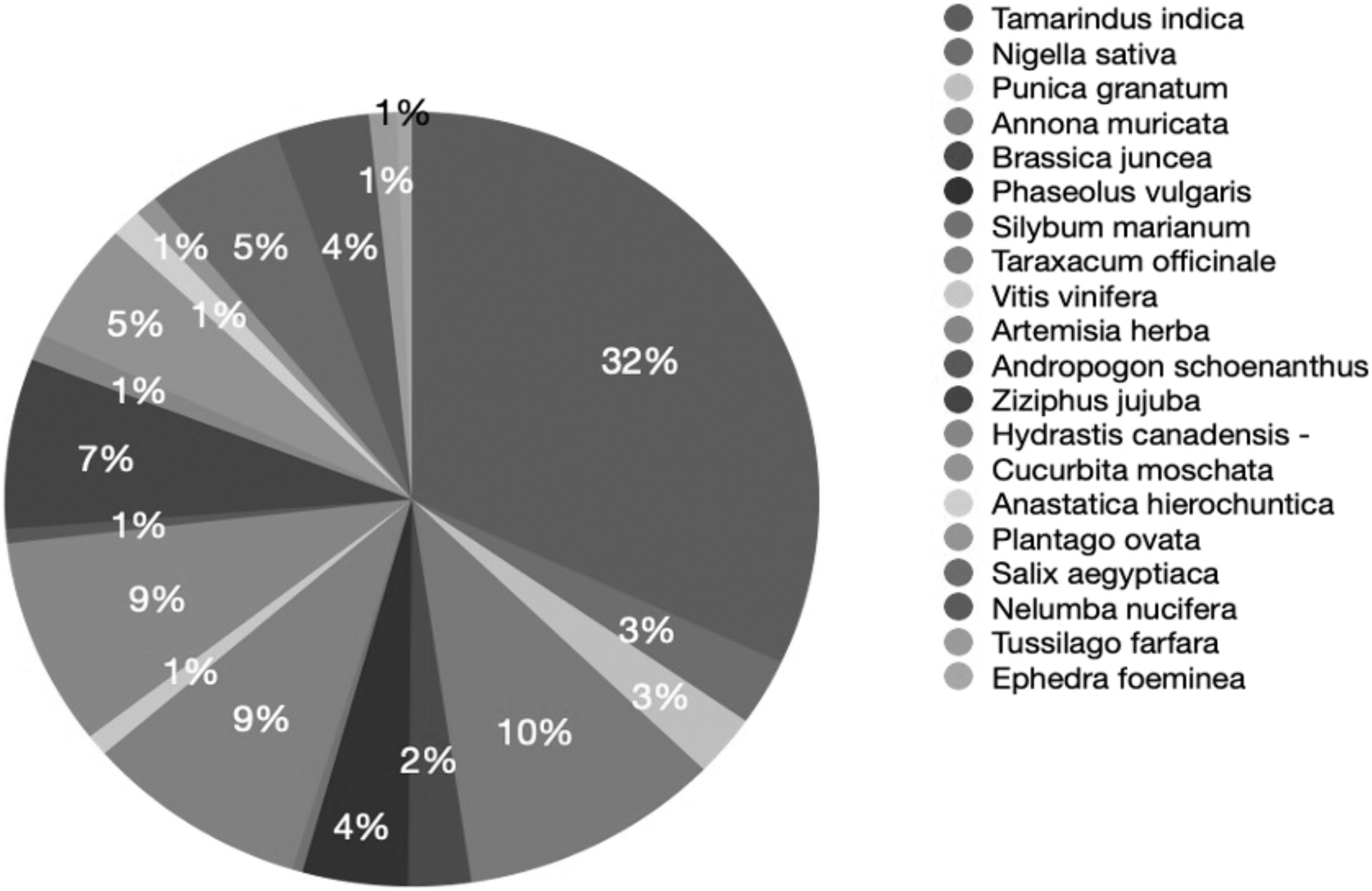
Total extract content of water (500 g powder) and corresponding weight of fraction content.
The most bioactive extracts (11 plants) were subjected to ethanol precipitation and fractionation into two fractions: FA represents the high molecular weight components that precipitated, and FB represents the remaining aqueous fraction that could be rich with small molecular weight components. The yield of different fractions was estimated in relation to the weight of the total extract by gram percentage. The high molecular weight precipitated fraction of P. vulgaris and the low molecular weight fractions of A. muricata, B. juncea, S. marianum, and Z. spina had the higher mass weight in the range of 75 g% from the total extract. While almost both fractions F1 and F2 had the same weight (50 g%) of T. officinale, A. herba, C. moschata, and A. hierochuntica (Fig. 2).
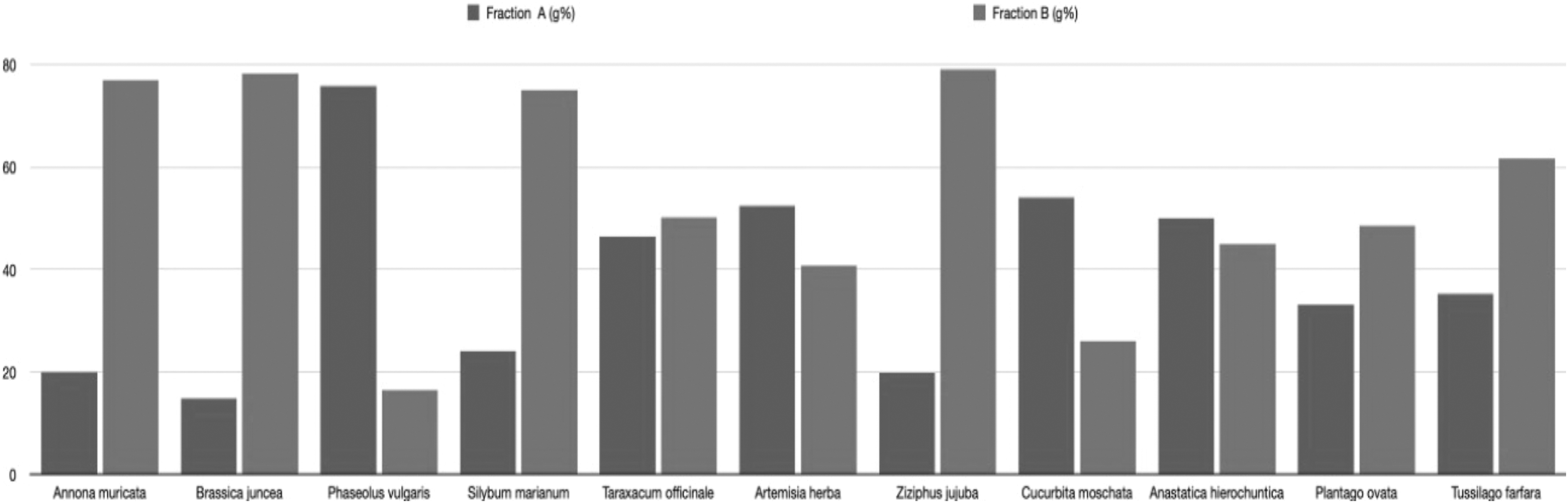
Weight yield of most bioactive plant fractions (g%).
Cytotoxicity of plant extracts and fractions
To discover new bioactive compounds from plant sources that could become new leads or new drugs, extracts should be biologically evaluated. Thus, the time-consuming isolation of the known compounds can be avoided in favor of the targeted isolation of bioactive extracts and fractions. 57 The plant extracts used in this study were divided into three groups according to their cytotoxic effects (Fig. 3). The highest activities were assumed for those that gave below 25 μg/mL for T. officinale, A. herba, and A. hierochuntica, moderate activity for cytotoxicity ranging between 25 and 70 μg/mL for Graviola, B. juncea, P. vulgaris, S. marianum, Z. spina, C. moschata, P. ovata, and T. farfara, and the least activity was above 70 μg/mL for T. indica, N. sativa, P. granatum, Vitis vinifera, A. schoenanthus, H. canadensis, S. aegyptiaca, N. nucifera, and E. foeminea (Fig. 4).
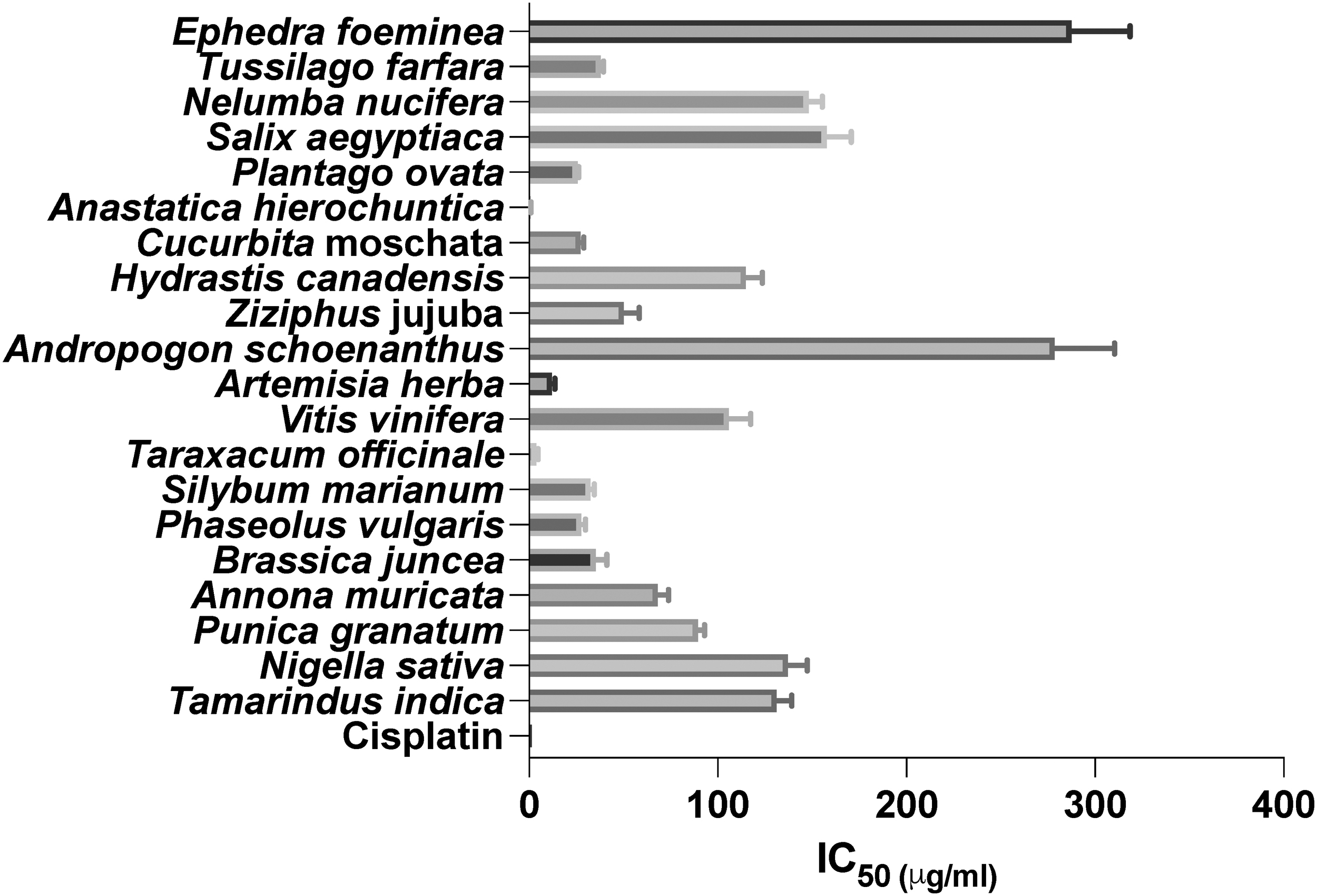
IC50 values of plant extracts against human lung nonsmall cell carcinoma A549.
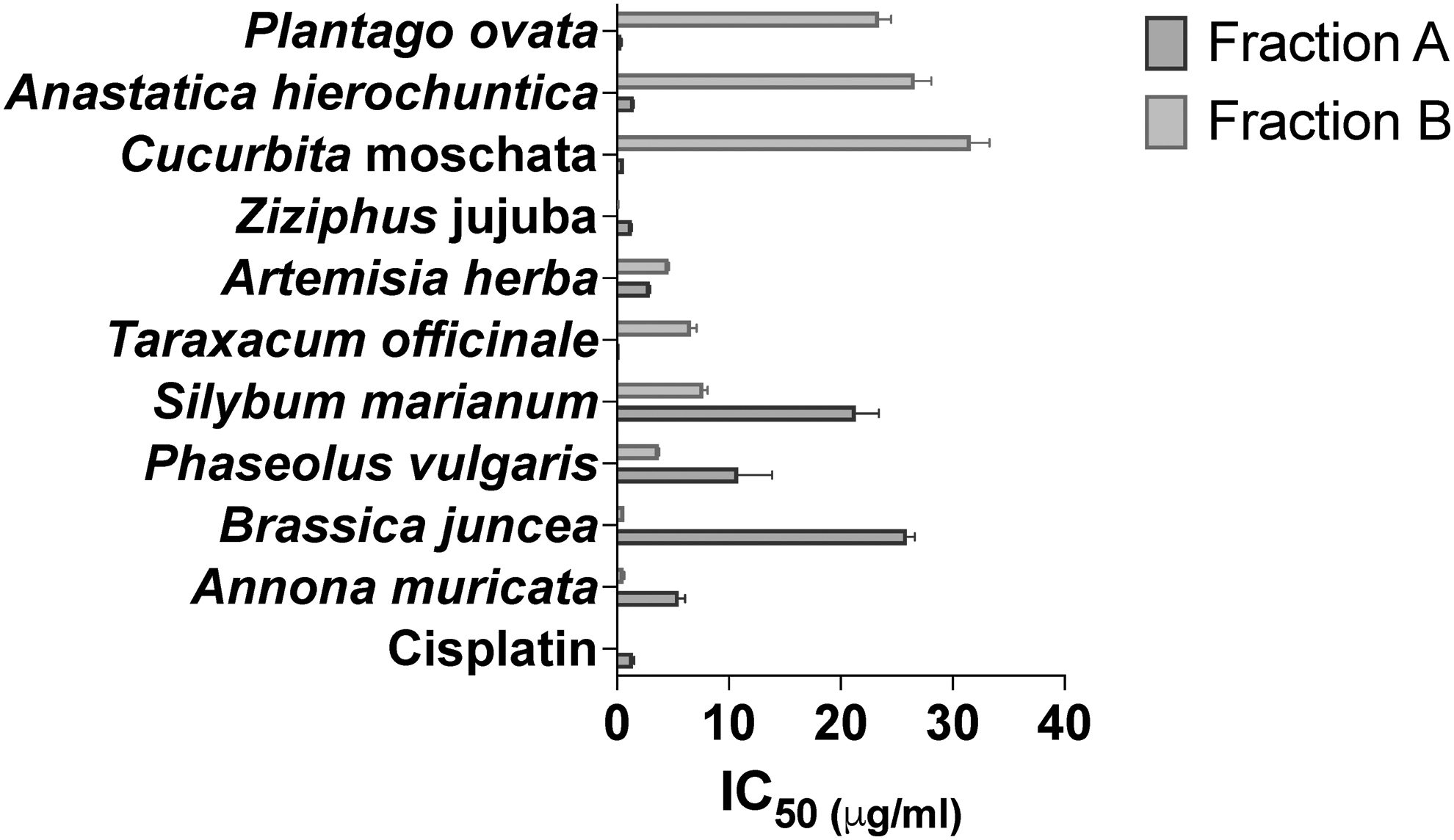
IC50 values of plant fractions against human lung nonsmall cell carcinoma A549.
Eleven extracts that possess moderate-to-high activity against lung cell lines were subjected to bioassay-guided fractionation into small and large molecular weight fractions by absolute ethanol. 58 For high molecular weight fraction, F1 of B. juncea and S. marianum possessed the weakest activity with IC50 above 20 μg/mL, while Graviola, P. vulgaris, T. farfara, and A. herba have cytotoxic potential with IC50 range of 3–10 μg/mL. Around 1 μg/mL was the IC50 for Z. spina and A. hierochuntica. Notably, the most potent fractions were from T. officinale, Pumpkin, P. ovata at a concentration in the range 0.2–0.6 μg/mL.
On the other hand, regarding the remaining aqueous fraction, the most potent fractions were from Z. spina, Graviola, and B. juncea (0.1–0.6 μg/mL), followed by lower active fractions of P. vulgaris, S. marianum, T. officinale, and A. herba (3–6 μg/mL), and the lowest efficacy were recorded for A. hierochuntica, Pumpkin, P. ovate, and T. farfara that possess IC50 in the range 20–37 μg/mL.
Cell cycle analysis and cell death pattern
Cancer is a condition characterized by insufficient apoptosis, allowing malignant cells to survive without undergoing programmed cell death. 59 Therefore, induction of apoptosis is one of the main strategies in cancer therapy. 60 The cell cycle is the mechanism behind cell division; therefore, halting the cell cycle at any point suppresses cell proliferation. 61,62
Recently, many reports have shown that the Z. spina extracts have antiproliferative activity against Hela, MAD-MB-468 cells, 63 MCF7 cells as 70% ethanolic extract dramatically boosted the expression of the Bax and Bcl-2 genes. 64 Moreover, Farmani et al. reported that the ethanolic fraction induced apoptosis and cell cycle arrest at the G1/S phase after 48 h of treatment on MCF7 cells. 65 In vivo methanolic extract showed a significant effect against diethylnitrosamine-induced hepatocellular cancer by focusing on oncogenes and oxidative stress. 66,67 In this study, the aqueous low molecular weight fraction of Z. spina were shown to inhibit the proliferation of lung cancer cell for the first time through apoptosis and arresting cell cycle at the S-phase (Figs. 5 and 6). This arrest is attributable to a decrease in the production of regulatory proteins, specifically cyclin-dependent kinases (CDK2) and cyclin E. CDKs, which play a crucial role, as regulatory enzymes in the process of cell proliferation by controlling cell-cycle checkpoints and transcriptional processes in response to both extracellular and intracellular cues. 68 Consequently, this process results in the activation of P53, a nuclear transcription factor responsible for regulating the expression of several genes associated with apoptosis. 69
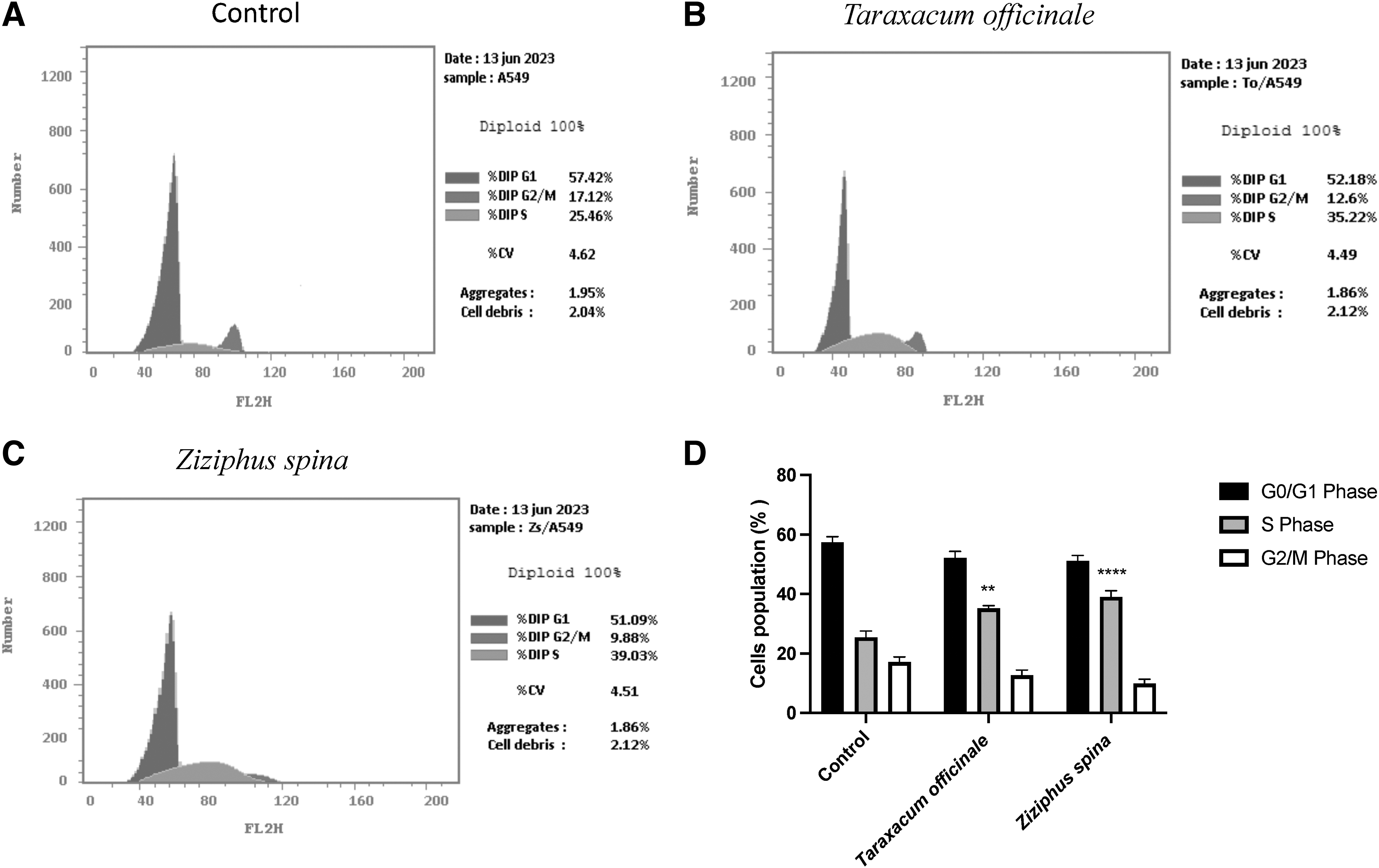
Histograms of cell cycle analysis by flow cytometry of
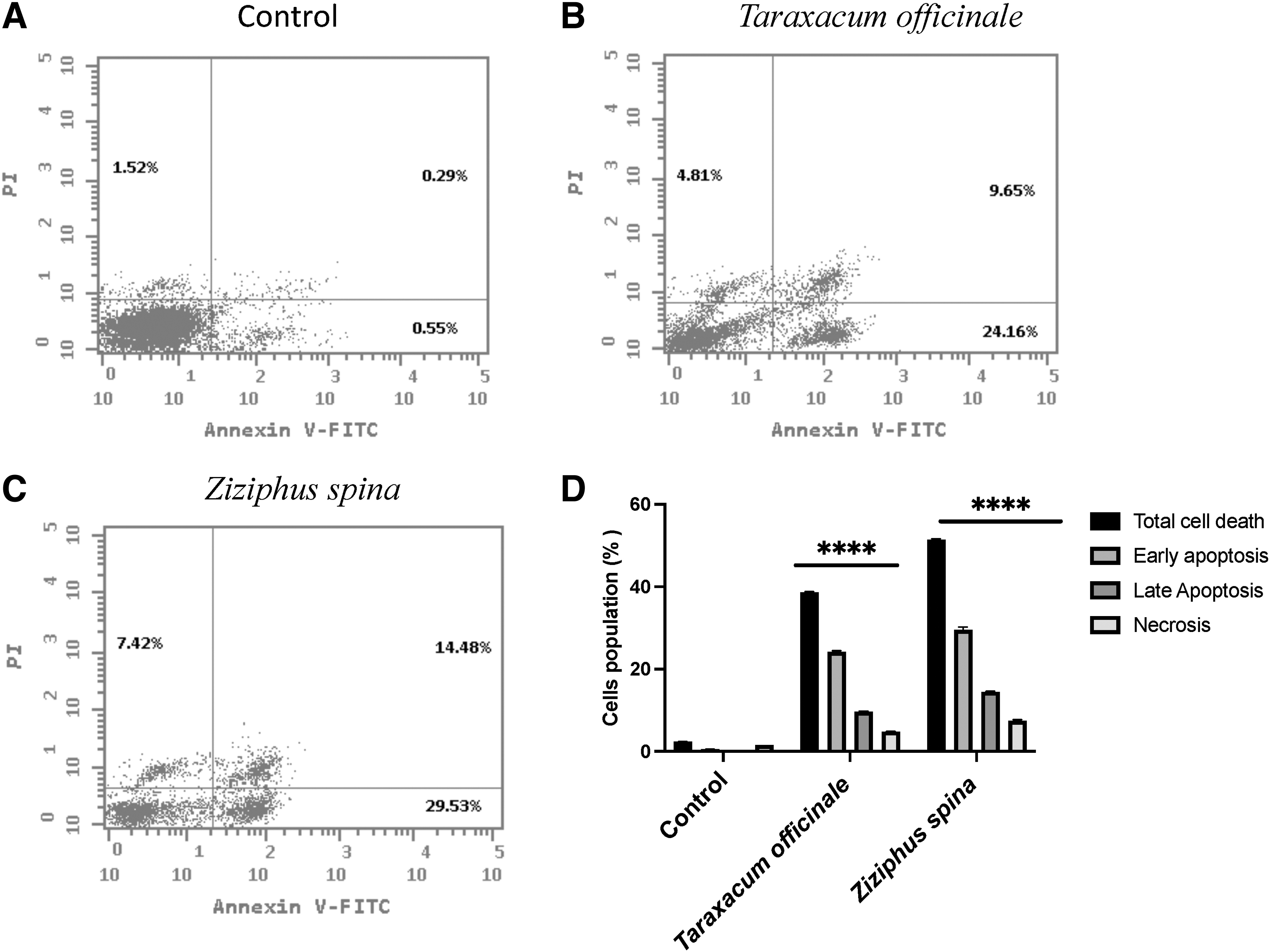
Histograms of apoptosis analysis by flow cytometry using an annexin-V/PI stain,
While several T. officinale plant extracts possess in vitro anticancer effects against liver, breast, colon, gastric, leukemia, melanoma, prostate, and cervical, 70 the pharmacological effects and the related bioactive compound have not been systematically examined. The finding revealed that T. officinale polysaccharide fraction increased the total cell death in A549 cells as compared with untreated cells, with early and late apoptosis being the dominant mode of cell death (P < .05). Moreover, S-phase cell cycle arrest was observed, and the anticancer effect of the fraction was postulated through targeting the signaling pathways that regulate apoptosis. These results are in accordance with our previous finding for the molecular mechanism of nanofunctional polysaccharide particle of T. officinale. 71
In conclusion, this data strongly indicated that the aqueous extracts of T. officinale, A. herba, and A. hierochuntica are good therapeutic candidates against lung carcinoma. The precipitated crude polysaccharide fraction of T. officinale and filtrate aqueous fraction of Z. spina showed a most potent cytotoxic effect against lung cancer cell lines with induction of apoptosis and cell cycle arrest at S-phase as the main cell death pattern. Utilizing new chemical screening technologies using hyphenated techniques such as liquid chromatography with mass spectrometry, ultraviolet and, more recently, the liquid chromatography that coupled with nuclear magnetic resonance quickly provides ample structural information and allows to lead structure discovery. Moreover, future molecular biology research is required to reveal the mode of action and relevant molecular targets.
Footnotes
AUTHORs' CONTRIBUTIONS
J.A.N. and S.Z.E.: review and editing; J.A.N.: conceptualization; J.A.N. and S.Z.E.: equal: writing—original draft, review and editing, formal analysis; S.Z.E.: software; J.A.N.: methodology.
AUTHOR DISCLOSURE STATEMENT
No competing financial interests exist.
FUNDING INFORMATION
No funding was received for this article.