







Abstract
Mastic Chios is a natural treasure of Greece that offers many potential benefits in various disorders due its antioxidant and anti-inflammatory properties. This systematic review aimed to investigate the effect of Mastic Chios supplementation in inflammatory bowel disease (IBD). A systematic search was conducted following PRISMA (Preferred Reporting Items for Systematic Reviews and Meta-Analyses) guidelines across PubMed/Medline and EBSCO databases until February 2023. Clinical studies that examined individuals of any age being diagnosed with IBD as well as preclinical studies using animals with experimental colitis were considered eligible for inclusion. Studies included were assessed for methodological quality. Eight articles were eligible for inclusion, with seven conducted in Greece and one study in Iran. Most of the studies were randomized controlled trials (RCTs) and one was a pilot study. The intervention period varied between 3 and 7 days for animal studies and 4 weeks to 6 months for human studies. Mastic Chios supplementation varied between 2.2 and 2.8 g/day for clinical studies. The majority of studies concluded that Mastic Chios has significant antioxidant and inflammatory effects in IBD. This systematic review suggests that Mastic Chios may have a positive effect on the regulation and management of IBD. However, more high-quality clinical trials are needed to provide reliable and concrete conclusions about the effectiveness of Mastic Chios in this population. Such studies will further support the use of Mastic Chios as a reliable therapeutic option for IBD.
INTRODUCTION
Inflammatory bowel disease (IBD) is a chronic relapsing inflammatory gastrointestinal (GI) disorder including ulcerative colitis (UC) and Crohn's disease (CD). 1 Although the etiology of IBD remains unknown, recent findings have shown that environmental factors, genetic susceptibility, microbial flora of the gut, and immune system abnormalities are involved and functionally integrated into the pathogenesis of IBD. 2 –4 About 25% of people with IBD are diagnosed in their first 20 years of life. The incidence and prevalence of IBD have significantly increased over the decades, whereas IBD has been considered to be one of the most prevalent GI diseases with an accelerating incidence especially in newly industrialized countries, where lifestyle is becoming more Westernized. 5,6
Oxidative stress has been proposed as one of the main causing factors for IBD playing a critical role in the pathogenesis, progression, and severity of the disease. 7,8 Moreover, chronic inflammation of the intestinal mucosa stimulates excessive reactive oxygen species/reactive nitrogen species (RNS) production leading to oxidative stress. Changes in RNS levels recruit phagocytes and nitric oxide synthases, which affect the nitric oxide levels of the intestinal mucosa, increase cytotoxic reactive oxygen metabolites synthesis, and inhibit the antioxidative system. Thus, agents with antioxidant and anti-inflammatory properties are recommended in patients with IBD. 9,10
Today, there is continuing research for innovative natural and nonpharmacological products to treat gut and intestinal diseases. The dried resinous secretion of Pistacia lentiscus, an evergreen shrub in the Anacardiaceae family that is widely cultivated throughout the Mediterranean countries, is known as Mastic Chios. 11 The plant produces resin when longitudinal incisions are made at regular intervals from the base of the trunk up to the thicker branches and the sap is allowed to fall into the specially prepared ground below. 12 It is described as a valuable treasure of nature for its therapeutic action and its potential use in pharmacology and cosmetology. 13 The European Medicines Agency (EMA) has recommended Mastic Chios as a herbal medical product since 2015 for the symptomatic treatment of minor skin inflammations, the treatment of moderate dyspeptic diseases, and healing of minor wounds. 14
Mastic Chios is a complex mixture of different bioactive compounds such as essential oils, triterpenes and phenolics, where its health effects are mainly attributed to its triterpenes content. 15,16 Oleanolic, oleanonic, and gallic acids are a few of them that are thought to serve as peroxisome proliferator-activated receptor (PPAR) modulators. PPARs are transcription factors engaged in crucial metabolic processes, such as the metabolism of fatty acids, which possibly may account for the biological features of Mastic gum's antioxidant and anti-inflammatory activities. 17
Several researchers have investigated Mastic's anti-inflammatory, antibacterial, antioxidant, hypolipidemic, and cytotoxic effects on GI health. A recent review examined the antioxidant and anti-inflammatory effects of Mastic including preclinical and clinical studies. It was shown that there are more preclinical data than clinical data available. In regard to anti-inflammatory properties of Mastic, 12 preclinical studies indicated the potent anti-atheromatic and hypolipidemic activities of Mastic through the decreased levels of malonaldehyde (index of lipid peroxidation), whereas 7 clinical studies showed that Mastic exhibits its antioxidant activity through the protein kinase C pathway.
Regarding Mastic's anti-inflammatory properties, preclinical studies showed significant decrease in inflammatory indexes such as the C-reactive protein (CRP) and interleukin (IL)-6 levels, whereas clinical studies also showed significant anti-inflammatory effect of Mastic mainly due to the inhibition of NF-B activation. 16 However, it is unknown whether both antioxidant and anti-inflammatory properties of Mastic Chios are also applied in with IBD. Currently, there is no systematic review examining the effect of Mastic Chios supplementation in IBD.
As there is an increasing consumer's interest for natural products that could potentially affect chronic inflammatory diseases without side effects, the research interest regarding Mastic has increased. Therefore, as this will be the first review in this area, we aimed to examine the effect of Mastic Chios supplementation in inflammation, oxidative stress, and protein catabolism in IBD through clinical and preclinical studies.
METHODS
The recommended Preferred Reporting Items for Systematic Reviews and Meta-Analyses (PRISMA) criteria were followed. 18
Literature search
Two researchers (A.M. and S.C.) independently searched PubMed and EBSCO databases until February 2023 for studies that assessed the association between Mastic Chios supplementation and IBD disorders. The search strategy included the following keywords: (Mastic OR “Mastic Chios” OR “pistacia lentiscus” OR pistacia OR lentiscus OR “Mastic gum”) AND (“Inflammatory Bowel Disease” OR IBD OR “Crohn's Disease” OR “Ulcerative Colitis” OR CD OR UC) AND (Randomized Controlled Trials OR RCTs OR “Non-Randomized Controlled Trials” OR “Controlled before and after studies” OR CBAs OR clinical trial). The search strategy used is presented in Table 1. Moreover, the reference lists of the selected articles were searched to identify other eligible studies.
Summary of the Search Strategy
All RCTs and non-RCTs, and clinical studies, with individuals of any age being diagnosed with IBD were deemed eligible for inclusion, as well as preclinical studies. There was no date restriction on the studies included. Supplementation of Mastic Chios was considered as intervention. Moreover, only studies published in English and Greek languages were included in the current study. Published conference abstracts, dissertations, narrative reviews, and case reports were also excluded.
Study selection and data extraction
Titles and abstracts of the articles were independently examined by three reviewers (A.M., E.H., and S.C.). Additionally, articles of every reference citation that was likely to match the predetermined selection criteria were acquired. Following evaluation of the entire texts of all relevant articles, choices regarding an article's inclusion or exclusion were taken based on investigation. The flowchart of selection studies regarding the systematic review is presented in Figure 1.
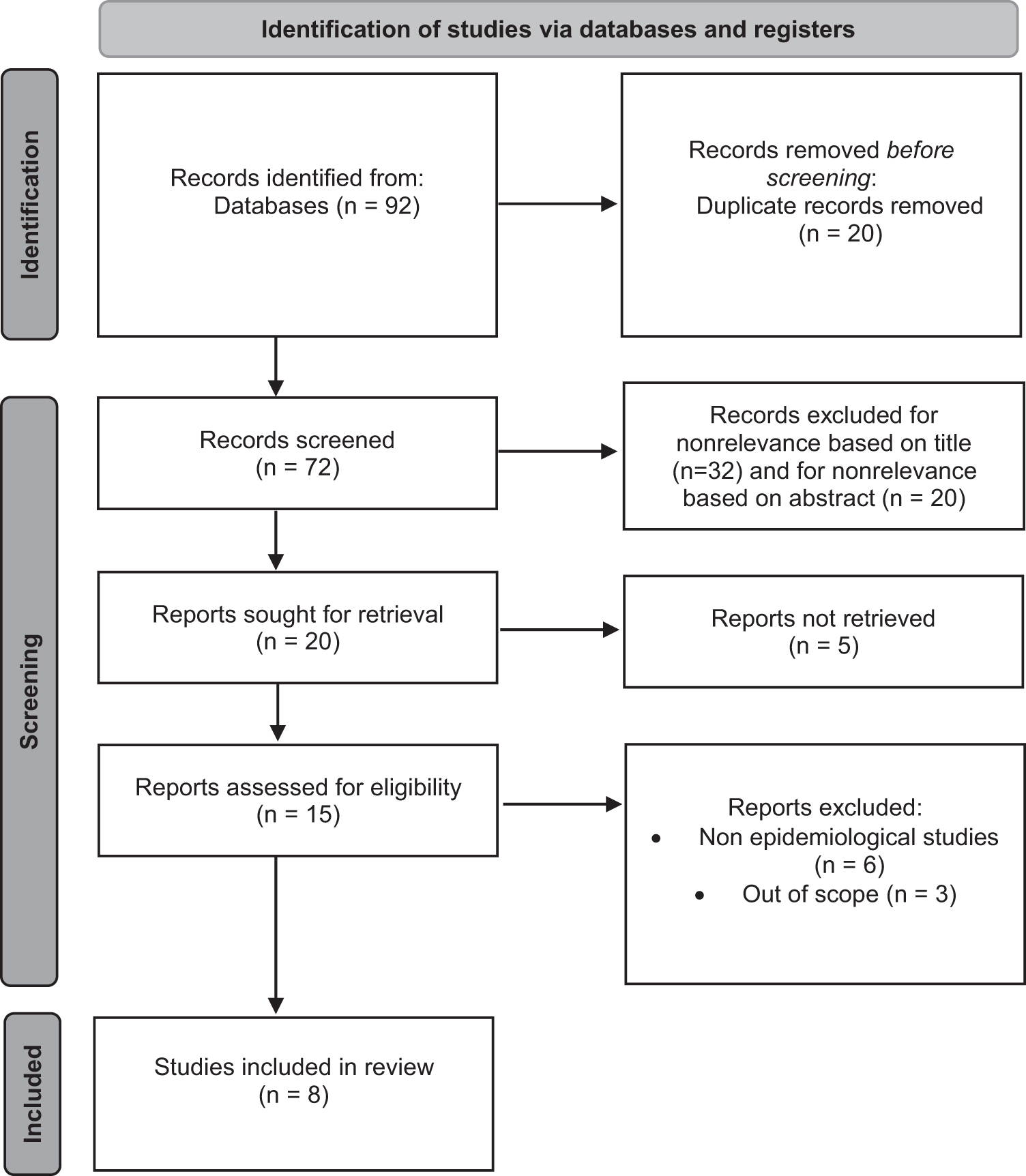
PRISMA flowchart depicting the identification of inclusion, and exclusion assessment. PRISMA, Preferred Reporting Items for Systematic Reviews and Meta-Analyses.
Regarding data extraction, the following information was extracted from each article: first author, year of publication, country, study design, number of participants, intervention type and duration of intervention, and main outcome measures. Data extraction was carried out by three of the reviewers (A.M., E.H., and S.C.). Every dispute was settled through dialogue with a fourth reviewer (K.G.).
Assessment of methodological quality
The assessment of the methodological quality of the included studies was performed by two independent reviewers (A.M. and S.C.). The Jadad score was used for assessing the RCTs based on the randomization, the blinding, and the participants' dropout. 19 The SYRCLE tool was used for the quality assessment of the animal studies. 20 The tool used is based on 10 criteria, related to 6 types of bias in research using animal models, bias in selection, performance, detection, loss of animals, bias in data reporting, and “other” biases that do not fall into any of the above criteria.
RESULTS
Figure 1 presents the flowchart for the literature search. Overall, seven RCTs (four clinical and three preclinical studies) and one pilot clinical study were eligible for inclusion. In total, 427 participants were included in the current analysis (215 patients and 212 animals). Studies included were published between 2007 and 2021. The duration of the studies ranged between 4 weeks and 6 months for the clinical studies and between 3 and 7 days for the preclinical studies. Seven studies have been conducted in Greece 21 –27 and one study in Iran. 28 The main characteristics of the included studies, for clinical and preclinical studies, are presented in Tables 2 and 3, respectively. Regarding the methodological quality of the included studies, four studies were deemed of high methodological quality (Table 4). Moreover, all preclinical studies were characterized with high risk of bias and of low quality (Table 5).
Main Characteristics and Results of the Human Studies
NRI >100 denotes the absence of nutritional risk. NRI values between 97.5 and 99.9 correspond to a mild nutritional risk, NRI values from 83.5 to 97.5 correspond to moderate nutritional risk, and NRI values <83.5 correspond to severe nutritional risk. Fibrinogen (mg/dL), iron (μg/dL).
AAs, amino acids (nmol/mL); CD, Crohn's disease; CDAI, Crohn's Disease Activity Index; CRP, C-reactive protein (mg/mL); FFQ, Food Frequency Questionnaire; IL-6, interleukin-6 (pg/mL); MCP-1, monocyte chemotactic protein-1; NRI, Nutritional Risk Index; TAP, total antioxidant potential; TNF-α, tumor necrosis factor-alpha (pg/mL); PL, Pistacia lentiscus; UC, ulcerative colitis.
Main Characteristics and Findings of the Animal Studies
AF, acidic fraction; CM, Chios mastic; IL-8, interleukin 8 (ng/mL); LDH, lactate dehydrogenase release; LPS-treated Mo/MF, lipopolysaccharide-treated monocytes/macrophages; MDA, malonaldehyde; MPO, myeloperoxidase; NF, neutral fraction.
Results of the Assessment of the Methodological Quality of the Human Studies
Results of the Assessment of the Methodological Quality of the Animal Studies
DK, don't know; N, No; Y, Yes.
Mastic Chios and IBD—Human studies
One of the included studies showed that supplementation of 2.2 g/day Mastic Chios for 4 weeks in patients with active CD caused a significant decrease in the Crohn's Disease Activity Index (CDAI; P = .05), IL-6 (P = .03), and CRP levels (P = .03). Also, total antioxidant potential (TAP) was significantly increased (P = .04) in patients with active CD, and Nutritional Risk Index (NRI) was increased but not significantly (P = .06). 21 In addition, in a randomized, double-blind placebo-controlled clinical trial, a supplementation of 2.8 g/day of Mastic Chios in active IBD patients showed a significant decrease in oxidative stress biomarkers such as oxidized low density lipoprotein (oxLDL) (P = .03), oxLDL/high density lipoprotein (HDL) (P = .02), and oxLDL/low density lipoprotein (LDL) (P = .01). In the same study, mastic ameliorated a decrease in plasma-free amino acids (AAs) in patients with UC taking placebo. 22
Moreover, in the same research group examining other outcomes, supplementation of 2.8 g/day of Mastic Chios significantly improved Inflammatory Bowel Questionnaire (IBDQ) score (P = .00), decreased fecal lysozyme (P = .02), decreased fibrinogen (P = .01), and increased iron (P = .03). Moreover, fecal lactoferrin (P = .00) and fecal calprotectin (P = .03) increased in the placebo group. 23 In a different study, fecal lactoferrin, free AAs (alanine, valine, proline, glutamine, and tyrosine), total cholesterol, and LDL cholesterol were increased only in the placebo group (P < .05), but there is not any significant change in the Mastic Chios group (P > .05). Also, serum albumin increased significantly in the Mastic Chios group (P = .00). 27 Moreover, another RCT showed that supplementation of 2.8 g/day of Mastic Chios significantly increased serum IL-17A (P = .01), and the mean change was significantly different between the two groups (P = .00). Additionally, in the Mastic Chios group, IBD patients in remission showed decreased lysine, leucine, isoleucine, and valine levels (P < .05). 24 All the above findings are presented in Table 2.
Mastic Chios and IBD—Animal studies
In the study by Gioxari et al., 25 different doses of Mastic powder were supplemented orally to trinitrobenzene sulfonic acid-induced colitic rats. Eighty-four rats were randomly assigned to seven groups. It was found that daily supplementation with 100 mg/kg of P. lentiscus powder for 3 days decreased all inflammatory cytokines, whereas only ICAM-1 was reduced by cortisone treatment and 50 mg of P. lentiscus powder per kilogram (P < .05 and P < .01, respectively). All groups experienced a significant reduction in malonaldehyde (MDA; P < .05). 25 The study by Papalois et al. 26 showed that Mastic supplementation reduced both IL-8 and NF-κB p65 (P = .00) in 80 colitic rats after 3 days of treatment and in co-cultured human epithelial HT29 cells. 26 Also, the study by Ostovan et al. showed that oral supplementation of Mastic oil (400 mg/kg) for 7 days in 48 rats reduced the total colitis index (P = .05). 28 All the above findings are presented in Table 3.
DISCUSSION
To the best of our knowledge, this is the first systematic review that examined the effect of Mastic Chios supplementation in IBD. In contrast to other clinical conditions, the current systematic review showed that there are more clinical studies available compared to preclinical studies. However, all our studies showed a potential effect of Mastic Chios treatment in IBD. In particular, the current systematic review included 5 clinical studies involving 215 participants, of which 4 of them were of high methodological quality. Clinical studies indicated that supplementation of 2.2–2.8 g/day for 1–6 months beneficially affects patients with CD and UC improving oxidative, inflammation status, and protein metabolism. However, all three animal studies involving 212 colitic rats were assessed at high risk of bias and of low methodological quality. All animal studies demonstrated a beneficial antioxidant and anti-inflammatory effect after daily supplementation with 100–400 mg/kg/day of Mastic powder for 3–7 days.
Our findings suggest that Mastic Chios supplementation may potentially affect the regulation of quality of life evaluated by IBDQ score, 23 the regulation of inflammation, evaluated by CDAI, IL-6 and CRP, fecal biomarkers, and IL-17 in patients with IBD, 21,22,24,27 and by IL6, IL8, IL10, TNF-α, ICAM, NF-κΒ in animal studies. 26,28 Also, Mastic Chios supplementation seems to effectively regulate oxidative stress as shown through oxLDL, oxLDL/HDL, and oxLDL/LDL and improved MDA in human and animal studies, respectively. 22,25 In addition, a secondary effect to a prebiotic potency was suggested 23 due to the phenolic compounds and arabinogalactans of Mastic Chios known for their prebiotic activities. 29,30
Our findings are consistent with previous studies that have shown the antioxidant and anti-inflammatory effects of Mastic Chios, both in vivo and in vitro. It appears that the terpenes and phenolic compounds found in Mastic Chios could regulate inflammatory mediators of IBD and scavenge free radicals. 27 In particular, a previous in vitro study demonstrated that Mastic Chios was the most effective protector against LDL oxidation. 31 Another study found that Mastic Chios supplementation decreased superoxide production and downregulated NADPH oxidase activity, indicating the direct involvement of Mastic Chios in antioxidant activity. 32 These findings are consistent with the results of other in vivo studies.
For instance, a clinical study in patients with duodenal ulcer showed that daily supplementation with 1 g of Mastic Chios for 2 weeks improved symptomatic relief compared with placebo, and 70% of patients on Mastic Chios experienced endoscopically proven healing. 33 In preclinical studies, Mastic Chios supplementation of 500 mg/kg significantly reduced the intensity of gastric mucosal damage and free acidity in rats with duodenal ulcers 34 and decreased CRP and IL-6 levels in hypertensive rats. 35 Although there are major differences between the animal and human intestine in terms of micronutrients utilization, Mastic Chios has been shown to exert the same anti-inflammatory and antioxidant effects in humans and animals with various clinical conditions.
Our findings indicate that Mastic Chios supplementation may positively affect IBD through the modulation of immune response and the amelioration of the antioxidant status. In the study by Papada et al., 23 Mastic Chios supplementation increased lysozyme expression that modulated the innate immune response, whereas in the study by Kaliora et al. (2007), Mastic Chios supplementation upregulated plasma TAP in 10 patients with active Crohn's disease. Moreover, the animal study by Gioxari et al. 25 concluded that the phenolic structure of Mastic Chios contributed to the antioxidant effect. Inflammatory reactions are intimately tied to oxidative stress, which is defined as an imbalance between prooxidants and antioxidants. Oxidative stress has been linked to the progression and worsening of IBD. Indeed, it has recently been observed that oxidative stress may also be implicated as being associated in the pathogenesis of IBD. 36 Notably, some of the included studies indicated a potential effect of Mastic Chios supplementation on oxidative indexes, 21,27 verifying the association between oxidative stress and inflammation in these patients.
Moreover, our results demonstrate a beneficial effect of Mastic Chios supplementation on protein catabolism though a decrease in plasma AA mainly including isoleucine, tryptophan, and cysteine. 22 The fact that plasma AA levels generally tend to rise in UC patients receiving a placebo may be an indication of enhanced AA production in inflammation. Therefore, the presence of AA changes in most of the UC patients may indicate that Mastic Chios has a more favorable effect in patients with active UC. 22 One of the studies included in the current review (Kalliora et al.) found that the mean NRI value of CD patients has not significantly increased at the end of treatment, probably due to the limited number of subjects. 21
NRI is a useful nutritional index in patients with CD, and it is calculated using serum albumin levels and body weight. 37 Body weight gain was the main element of NRI showing improvement, and although total caloric intake remained unchanged during the trial, increases in body weight and NRI are probably due to the improvement in nutrient absorption caused by mastic treatment. 21 Therefore, it seems that the anti-inflammatory effect of Mastic Chios may also eliminate protein catabolism leading to improved nutritional status.
In this systematic review, Mastic Chios supplementation led to attenuating the increase of valine, proline, glutamine, and tyrosine, 27 indicating a protective role in relapse onset, although no significant differences were detected for alanine. Notably, the nutritional and inflammatory status of IBD patients as well as the disease activity have been reported to be reflected by a number of AA. For instance, valine has been reported to be greatly enhanced in treated mice, 38 whereas proline has been upregulated in IBD patients. 39 Also, Papada et al. found a significant increase in albumin levels in the Mastic Chios group indicating a protective role of Mastic Chios supplementation on nutritional status. 27,40,41
Notably, in the study by Papada et al., 27 cholesterol levels were significantly increased in the placebo group compared with the Mastic Chios group. 27 The above finding is in line with a previous study where Mastic Chios supplementation decreased total cholesterol levels in the treatment group. 42 Therefore, it could be assumed that Mastic Chios exerts hypolipidemic properties. 43 However, more studies are required to further explore more reliable conclusions regarding the effect of Mastic Chios supplementation on nutritional status and secondary on lipid profile.
To the best of our knowledge, this is the first systematic review examining the effect of Mastic Chios supplementation in IBD patients. Yet, our review has some limitations. One limitation is the small number of studies included in the current analysis, while most of the studies have been conducted in the same country (Greece) and only one study has been conducted in a different country (Iran). Also, three of the included studies have been conducted in the same research group applying the same research protocol but different outcomes. However, since the number of eligible studies was very limited, the authors decided to include them all in the current analysis. Another limitation is the diversity of the outcome measures used by the studies included. In addition, human studies included more CD patients compared with UC patients, whereas all animal studies focused on UC. Also, all animal studies were at high risk of bias, which reduces the reliability of our findings.
CONCLUSIONS
The evidence coming out from the present systematic review is that Mastic Chios might serve well in the regulation of immunity and oxidative stress in IBD. Moreover, some findings demonstrated that Mastic Chios could attenuate the protein catabolism as commonly observed in IBD. However, the current findings are well promising and delightful. Therefore, more RCTs involving more participants are required to exert more reliable and concrete conclusions regarding the effect of Mastic Chios in the regulation and the management of IBD.
Footnotes
AUTHORs' CONTRIBUTIONS
A.M.: Conceptualization, methodology, writing—original draft preparation, writing—reviewing and editing. E.H.: Visualization, supervision, writing—reviewing and editing. K.G.: Visualization, methodology, writing—original draft preparation, writing—reviewing and editing, supervision. S.C.: Methodology, writing—original draft preparation, writing—reviewing and editing, visualization, supervision.
AUTHOR DISCLOSURE STATEMENT
No competing financial interests exist.
FUNDING INFORMATION
No funding was received for this article.