







Abstract
This study evaluates the effects of supplementation of murici (Byrsonima crassifolia) and taperebá (Spondias mombin) pulp extracts on dietary intake, body composition, biochemical parameters, and markers of oxidative stress. Two experiments were conducted with a total of 80 healthy male Wistar rats and a 30-day supplementation. In the first experiment, animals were divided into control (C) group, murici group 50 mg/(kg⸱day) (50Mu), murici group 100 mg/(kg⸱day) (100Mu), and murici group 200 mg/(kg⸱day) (200Mu). In the second experiment, animals were divided into C group, taperebá group 50 mg/(kg⸱day) (50Tap), taperebá group 100 mg/(kg⸱day) (100Tap), and taperebá group 200 mg/(kg⸱day) (200Tap). Results showed lower feed intake in 50Mu, 100Mu, and 100Tap groups (13%, 12%, and 10%, respectively, P < .05) and lower body fat in 200Mu, 100Tap, and 200Tap groups (16.0%, 29.1%, and 27.1%, respectively, P < .05). Only the 100Tap group showed reduced adipose tissue content (30.4%; P < .05). Increased plasma antioxidant capacity was observed at all doses for both fruits. Taperebá supplementation reduced ferrous oxidation–xylenol orange levels (50Tap: 8.4%, 100Tap: 16.1%, 200Tap: 24.3%; P < .05) and increased thiol levels (50Tap: 39%, 100Tap: 31%; P < .05). Serum thiobarbituric acid reactive substances levels were reduced in all groups receiving taperebá (50Tap: 77.7%, 100Tap: 73.1%, 200Tap: 73.8%; P < .05) and murici (50Mu: 44.5%, 100Mu: 34%, 200Mu: 43%; P < .05). Therefore, it is suggested that the inclusion of these fruits in the diet can contribute to health maintenance and disease prevention, through their effects on controlling food intake, improving body composition, and in combating oxidative stress.
INTRODUCTION
The growth in the prevalence of chronic noncommunicable diseases (NCDs) has been alarming, resulting in an increase in death attributable to these diseases from ∼60% in 2000 to ∼74% in 2019. 1,2 According to the World Health Organization, NCDs are responsible for 41 million deaths each year worldwide, of which ∼70% correspond to individuals aged between 30 and 70 years. 3 A large part of this worldwide scenario is attributed to a sedentary lifestyle, high alcohol consumption, smoking, and inadequate diet, considered the main causes for the development of NCDs and their complications. 4
Some clinical worsening related to NCDs has been associated with poor eating habits, as well as low fruit consumption, leading to obesity, dyslipidemia, increased proinflammatory cytokines, and the development of different diseases related to oxidative stress, such as production of free radicals in larger quantities, changes in endothelial physiological functions, in addition to atherosclerotic lesions, hypertension, hyperglycemia, and increased proliferation of tumor cells. Thus, encouraging fruit consumption is essential to improve this scenario. 5 –7
The Amazon region presents a great biodiversity, which stands out for variety of fruits, providing an important perspective of valorization of the region, besides presenting different aromas and exotic flavors. 8 Among these fruits, murici and taperebá are relevant sources of nutrients and bioactive compounds, especially vitamin C, carotenoids, and phenolic compounds, and also present a great antioxidant activity, which can help reduce oxidative stress and prevent the development of diseases. 9,10
Although there is scarce data on the health effects of murici and taperebá, the results observed for in vitro and in vivo experiments are very promising. Perez-Gutierrez et al. found hypoglycemic, hypolipemic, and oxidative stress amelioration effects from murici pulp and seeds in vivo. 11 Mariutti et al. observed reduced lipid peroxidation, reactive oxygen species (ROS) and reactive nitrogen species (RNS), and also increased antioxidant enzymes in vitro. 12
Furthermore, Malta et al., Malta et al., Souza et al., and Souza et al. verified antioxidant activity, besides antimutagenic, antitumor, antigenotoxic, anti-inflammatory, hypoglycemic, and hypolipemic effects associated with freeze-dried murici pulp in both in vitro and in vivo models. 9,13 –15 Regarding taperebá, Brito et al. reported a gastroprotective effect in animals that consumed the respective juice. 16 Souza et al. observed antioxidant activity and anticancer effects of taperebá pulp in vitro, whereas Lourenço et al. found that animals supplemented with this fruit showed increased antioxidant enzymes catalase (CAT), superoxide dismutase (SOD), and glutathione peroxidase (GPx). 9,17
Pereira et al., Lucena et al., and Souza et al. observed that animals supplemented with taperebá pulp showed antioxidant, anti-inflammatory, hypoglycemic, and hypolipidemic effects, with increased antioxidant enzymes and reduced lipid peroxidation. 15,18,19
Considering the nutritional and bioactive potential of Amazonian fruits and the limited knowledge about them, the aim of this study is to evaluate the effects of supplementation with different doses of murici and taperebá pulp extracts on dietary intake, body composition, biochemical parameters, and oxidative stress markers in healthy rats.
MATERIALS AND METHODS
Fruit samples and extraction
Frozen and pasteurized murici and taperebá fruit pulps were supplied by a company in the state of Pará (Castanhal, PA, Brazil), packaged and sealed in plastic bags, labeled, within the same lot, and expiration date. The pulps were transported in containers containing dry ice to the Functional Foods Laboratory of the Federal University of the State of Rio de Janeiro. The samples were kept in their original packaging and under refrigeration at −18°C until preparation of the aqueous extracts.
For the aqueous extraction, ∼250 g of the pulp of each fruit was weighed into a beaker and then 80 mL of distilled water was added and stirred for 2 h. After the maceration period, the extracts of murici and taperebá were filtered using filter paper (Whatman #1). The extracts were frozen in an ultrafreezer at −80°C (Indrel® Ultrafreezer) and freeze dried (LD300 Terroni®) for 24 h. After this process, the freeze-dried samples were stored and frozen in falcon tubes in the freezer at −20°C until use in the experiments. 9
Experimental model
The study was carried out at the Laboratory of Experimental Nutrition at the Emília de Jesus Ferreiro College of Nutrition, Fluminense Federal University (UFF). The animals used were 90-day-old male rats of the Rattus novergicus species, albinus variety, Wistar strain, provided by the Laboratory Animal Center at UFF. Throughout the experiment, the animals were kept in an environment with controlled temperature (23°C ± 2°C), humidity (60% ± 10%), and a 12/12 h light–dark cycle. All experimental procedures were approved by the ethics committee on animal use of UFF (CEUA/UFF), filed under CEUA No. 9501060121, as well as the guidelines adopted by the National Council for the Control of Animal Experimentation.
The study was conducted in two experiments using a total of 80 healthy male Wistar rats. All animals received commercial feed (Nuvilab® brand), water ad libitum throughout the experiment, and gavaged for 30 days with saline or their respective doses of fruit pulp extracts.
In the first experiment (murici pulp extract), the 40 animals were divided into control group (C), gavage with saline (n = 10); murici group 50 (50Mu), gavage with 50 mg murici pulp extract per kilogram body mass per day (n = 10); murici group 100 (100Mu), gavage with 100 mg murici pulp extract per kilogram body mass per day (n = 10); and murici group 200 (200Mu), gavage with 200 mg murici pulp extract per kilogram body mass per day (n = 10). These doses of murici supplementations were determined according to Perez-Gutierrez et al. and Malta et al. 11,13
In the second experiment (taperebá pulp extract), the 40 animals were divided into C group, gavage with saline (n = 10); taperebá group 50 (50Tap), gavage with 50 mg taperebá pulp extract per kilogram body mass per day (n = 10); taperebá group 100 (100Tap), gavage with 100 mg taperebá pulp extract per kilogram body mass per day (n = 10); and taperebá group 200 (200Tap), gavage with 200 mg taperebá pulp extract per kilogram body mass per day (n = 10). These doses of taperebá supplementations were determined according to Lourenço et al. and Pereira et al. 17,18
Aliquots of the extracts were weighed in an analytical balance (Bosch S2000), calculated according to the dose defined for each group and measurement of individual body mass, and separated in microtubes for the gavage of each animal. The extract was diluted in 1 mL of mineral water and homogenized in vortex. Group C received 1 mL of saline.
Food intake, body mass, and body composition
Food intake was evaluated weekly throughout the experiment by weighing the feed offered and consumed, with the aid of a digital scale (Filizola MF-3, Brazil). Daily feed intake was determined by subtracting the weight of feed remaining in the cage from the amount of feed initially placed.
Body mass was measured twice a week on the same days and times, using digital electronic scales (Filizola®). Body composition was evaluated in the Laboratory of Nutritional and Functional Assessment of UFF by dual energy X-ray absorptiometry at 120 days of age. The animals were anesthetized with intraperitoneal injection of xylazine hydrochloride (10 mg/kg) associated with ketamine (90 mg/kg). The technique was performed with a LUNAR IDXA 200368 GE (Lunar, Wisconsin, USA) densitometer, using specific software for small animals (Encore 2008 Version 12.20; GE Healthcare). Fat mass (g), lean mass (g), and body fat percentage (%) were evaluated, besides the following bone parameters: bone mineral content (g), bone mineral density (g/cm2), and bone area (cm2).
Linear length, Lee index, and body mass index
Linear length was measured at 120 days of age, in which the nose–anal distance was measured using a tape measure in centimeters (cm). Lee index and body mass index were calculated according to Novelli's formula. 20
Blood and tissue collection
Euthanasia was performed after the supplementation period, with a previous fasting period of 12 h. The animals were anesthetized with intraperitoneal injection of xylazine hydrochloride (10 mg/kg) associated with ketamine (90 mg/kg) for blood collection through cardiac puncture and tissue collection.
The collected blood was transferred to vacutainer tubes without anticoagulant. The blood was centrifuged (Sigma Centrifuge) at 150 g at 4°C for 15 min to separate the phases and obtain serum/plasma, aliquots were separated in microtubes and stored at −80°C for further analysis. Tissue samples of liver, brown adipose tissue, and white adipose tissue compartments were collected, frozen in liquid nitrogen, and then stored in a freezer at −80°C.
Weighing tissue and visceral fat mass
The collected samples of liver, brown adipose tissue, and white adipose tissue compartments (retroperitoneal, perimesenteric, and periepididymal) were weighed on analytical scales (Bosch S2000). The weight of liver and adipose tissue was corrected from the ratio with body weight following the formula: ([liver/adipose tissue weight (g)/body weight (g)] × 100). The visceral fat mass was calculated by summing the adipose tissue compartments and the result is presented in grams per body weight.
Biochemical analysis
Fasting glucose was evaluated through blood from the tail circulation and measured by glucometer (ACCU-CHEK® Advantage). Hematocrit (%), total proteins (g/dL), albumin (g/dL), aspartate aminotransferase (U/L), alanine aminotransferase (U/L), total cholesterol (mg/dL), triglycerides (mg/dL), and high-density lipoprotein (HDL) (mg/dL) were measured by colorimetric methods with reading in automated spectrophotometer (BioClin® BS-120 Chemistry Analizer®), using BioClin commercial kits and specific wavelengths for each biochemical indicator. In addition, low-density lipoprotein (LDL) (mg/dL) was calculated according to Friedewald's formula 21 and very LDL (mg/dL) was obtained by Norbet's formula. 22
Antioxidant activity and oxidative stress in plasma
The evaluation of the reaction with 2,2-diphenyl-1-picrylhydrazyl (DPPH) was performed according to the corresponding methodology adapted to Janaszewska's and Bartosz and Magalhães et al. 23,24 The results are expressed as mMol DPPH per milligram sample protein.
The ferric reductive antioxidant potential (FRAP) method was performed following corresponding methodology adapted to Benzie's and Strain and Thaipong et al. 25,26 The results are expressed as μM ferrous sulfate per milligram sample protein.
Oxygen radical absorbance capacity (ORAC) was performed in agreement with the corresponding methodology. 27,28 Excitation at 485 nm and emission at 520 nm were considered. The ORAC value (μM Trolox equivalents/L) was calculated by the area under the fluorescence emission curve, simultaneously using the time intensity information.
In the ferrous oxidation–xylenol orange (FOX) analysis, lipid hydroperoxides, intermediate products of lipid peroxidation, were quantified according to the corresponding method of iron oxidation with xylenol orange. 29 The results are expressed in μM/L.
Thiobarbituric acid reactive substances (TBARSs) analysis was also performed according to the methodology in the literature, corresponding to the quantification of malondialdehyde (MDA), an end product of lipid oxidation. 30,31 The results are expressed in μmol 1,1,3,3 tetraethoxypropane/mL.
Thiol analysis was also performed according to the methodology in the literature, corresponding to compounds containing the sulfhydryl (−SH) group, such as glutathione (GSH). 32 The results are expressed as reduced nmol DTNB/mg sample protein.
CAT activity was measured in terms of the rate of decrease in hydrogen peroxide. 33 The results are expressed in U/mg sample protein.
Statistical analysis
Data were analyzed using GraphPad Prism statistical software (version 9.0.0[121]; GraphPad Software, San Diego, CA, USA) and expressed as mean ± standard deviation. One-way analysis of variance (ANOVA) and Tukey post-test were used. The results were considered statistically significant when P < .05.
RESULTS
In the first experiment, with murici pulp extract supplementation, the animals in 50Mu and 100Mu groups showed a reduction in food intake when compared with the animals in the C group (−13% and −12%, respectively, P < .05) and the 200Mu group (−14% and −13%, respectively, P < .05, Table 1). The 200Mu group showed no significant difference compared with the C group (Table 1).
Effects of Murici Pulp Extract Supplementation on Initial Body Mass, Final Body Mass, Body Mass Gain, Nose–Anal Length, Body Mass Index, and Lee Index of the Control and Experimental Groups
C = control group (gavage with saline, n = 10); 50Mu = group gavage with 50 mg murici pulp extract/kg body mass/day (n = 10); 100Mu = group gavage with 100 mg murici pulp extract/kg body mass/day (n = 10); 200Mu = group gavage with 200 mg murici pulp extract/kg body mass/day (n = 10). Different letters represent statistical difference between groups. Statistical significance was determined by one-way ANOVA, followed by Tukey's post hoc multiple mean comparison test (P < .05). The results are expressed as mean and standard deviation.
ANOVA, analysis of variance.
Regarding body parameters, there were no significant differences in body mass, body mass gain, nose–anal length, body mass index, and Lee index among the groups in the first experiment (Table 1). Likewise, there were no relevant changes in the animals' body composition in adipose tissue content and lean mass content when comparing all groups. However, the animals in the 200Mu group showed a reduction in body fat percentage (−16%, P < .05) when compared with animals in the C group (Fig. 1D).
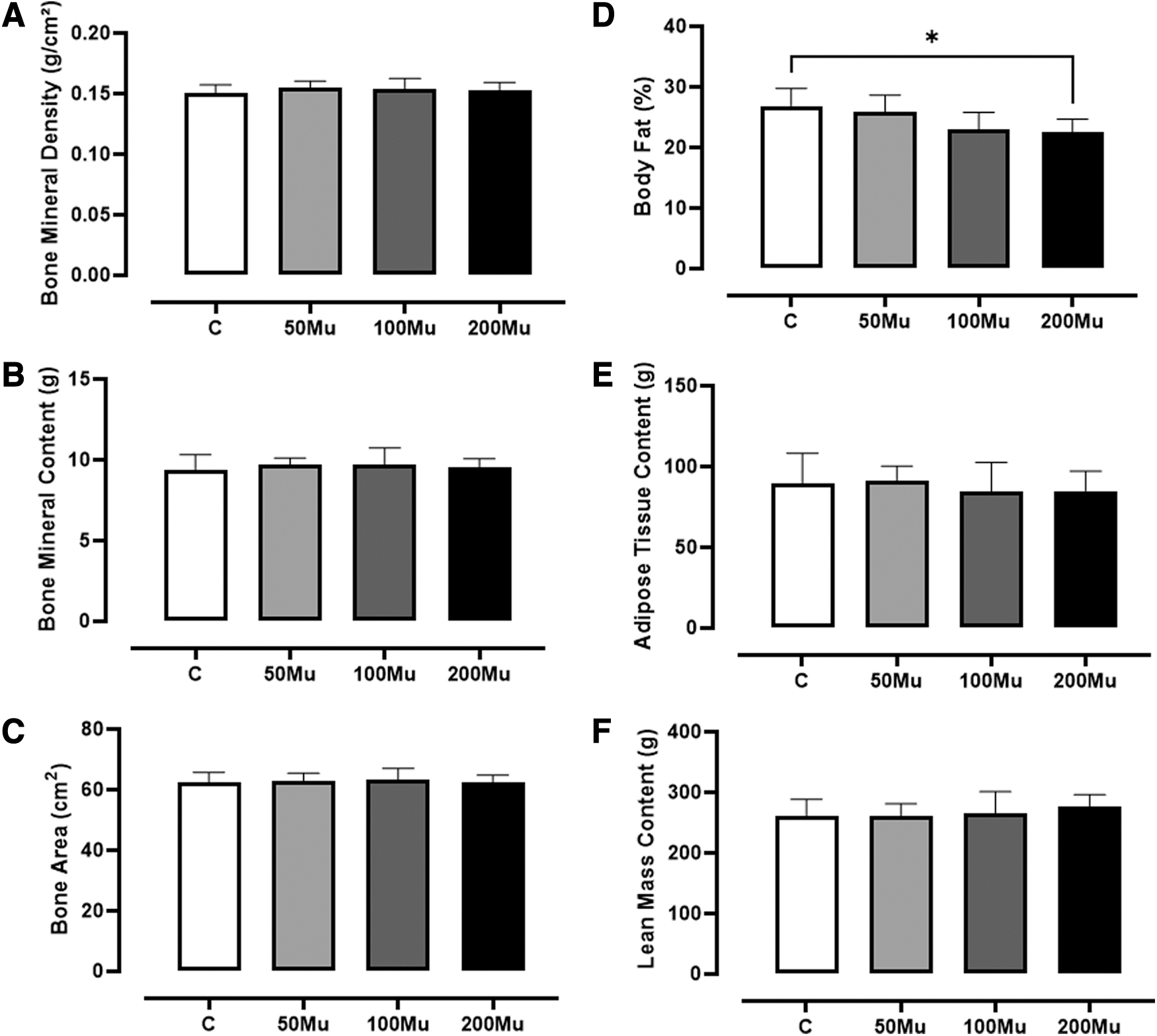
Effects of murici pulp extract supplementation on body and bone parameters by DXA. C (control group, gavage with saline, n = 10); 50Mu (group gavage with 50 mg murici pulp extract/kg body mass/day, n = 10); 100Mu (group gavage with 100 mg murici pulp extract/kg body mass/day, n = 10); 200Mu (group gavage with 200 mg murici pulp extract/kg body mass/day, n = 10). Statistical significance was determined by one-way ANOVA, followed by Tukey's post hoc multiple mean comparison test. The results are expressed as mean and standard deviation. *P < .05. ANOVA, analysis of variance; DXA, dual energy X-ray absorptiometry.
For bone parameters, no changes were found in bone mineral density, bone mineral content, and bone area among the animal groups (Fig. 1). After 30 days of supplementation, no significant differences were observed on retroperitoneal, mesenteric, epididymal and brown adipose tissue, liver, and visceral fat mass among C group and supplemented with murici extract (P > .05, Table 2).
Effects of Murici Pulp Extract Supplementation on Retroperitoneal, Mesenteric, Epididymal, Brown Adipose Tissue, Liver, and Visceral Fat Mass of Control and Experimental Groups
C = control group (gavage with saline, n = 10); 50Mu = group gavage with 50 mg murici pulp extract/kg body mass/day (n = 10); 100Mu = group gavage with 100 mg murici pulp extract/kg body mass/day (n = 10); 200Mu = group gavage with 200 mg murici pulp extract/kg body mass/day (n = 10). Different letters represent statistical difference between groups. Statistical significance was determined by one-way ANOVA, followed by Tukey's post hoc multiple mean comparison test (P < .05). The results are expressed as mean and standard deviation.
Concerning the biochemical parameters, the 50Mu group showed a 33% (P < .05) reduction in LDL cholesterol when compared with the 200Mu group (Table 3). In contrast, no significant differences were observed in the other biochemical parameters among the groups (Table 3).
Effects of Murici Pulp Extract Supplementation on Biochemical Parameters of Control and Experimental Groups
C = control group (gavage with saline, n = 10); 50Mu = group gavage with 50 mg murici pulp extract/kg body mass/day (n = 10); 100Mu = group gavage with 100 mg murici pulp extract/kg body mass/day (n = 10); 200Mu = group gavage with 200 mg murici pulp extract/kg body mass/day (n = 10). Different letters represent statistical difference between groups. Statistical significance was determined by one-way ANOVA, followed by Tukey's post hoc multiple mean comparison test (P < .05). The results are expressed as mean and standard deviation.
Significant in relation to the 200Mu group (P < .05).
HDL, high-density lipoprotein; LDL, low-density lipoprotein; VLDL, very low-density lipoprotein.
The 50Mu, 100Mu, and 200Mu groups showed a significant increase in total antioxidant capacity in plasma (+31%, +32%, and +23%, respectively, P < .0001) when compared with C group (Fig. 2A). In contrast, no differences were found for the FRAP and ORAC methods among these groups (P > .05, Fig. 2). Regarding oxidative stress biomarkers, there were no significant results for the levels of hydroperoxides quantified by FOX and thiols analyses from the animals supplemented with the murici extract to the C group (P > .05, Fig. 2).
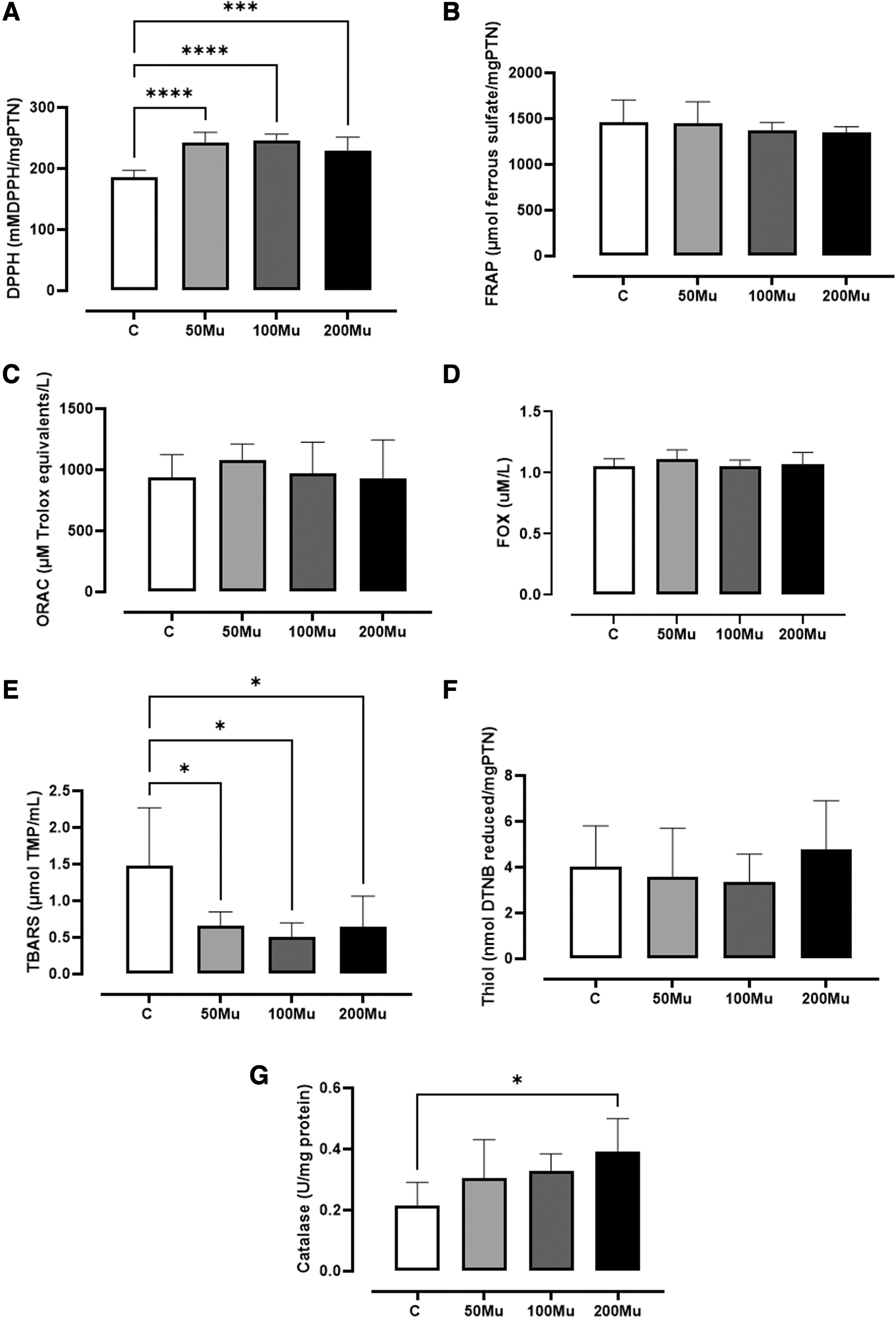
Effects of murici pulp extract supplementation on total antioxidant capacity in plasma and biomarkers of oxidative stress (
In contrast, 50Mu, 100Mu, and 200Mu groups reduced TBARS serum levels (−44.5%, −34%, and −43%, respectively, P < .05) compared with the C group (Fig. 2E). The 200Mu group increased CAT serum levels (+182%, P < .05) compared with the C group (Fig. 2G).
According to the results in rats supplemented with taperebá pulp extract, 100Tap group showed lower total food intake than C, 50Tap, and 200Tap groups (−10%, −7%, and −10.6%, respectively, P < .05). For the 50Tap and 200Tap groups, no relevant differences were noted when compared with the C group (Table 4).
Effects of Taperebá Pulp Extract Supplementation on Initial Body Mass, Final Body Mass, Body Mass Gain, Nose–Anal Length, Body Mass Index, and Lee Index of the Control and Experimental Groups
C = control group (gavage with saline, n = 10); 50Tap = group gavage with 50 mg taperebá pulp extract/kg body mass/day (n = 10); 100Tap = group gavage with 100 mg taperebá pulp extract/kg body mass/day (n = 10); 200Tap = group gavage with 200 mg taperebá pulp extract/kg body mass/day (n = 10). Different letters represent statistical difference between groups. Statistical significance was determined by one-way ANOVA, followed by Tukey's post hoc multiple mean comparison test (P < .05). The results are expressed as mean and standard deviation.
There was no alteration among all animals in experiment 2 for body mass, body mass gain, nose–anal length, body mass index, and Lee index (Table 4). In contrast, 200Tap group presented a reduction in body fat percentage (−27.5%, P < .05) when compared with the C group. The 100Tap group presented a reduction in body fat percentage when compared with the C group and 50Tap group (−29.1% and −25.6%, respectively, P < .05, Fig. 3D). The 100Tap group showed lower adipose tissue content (−30.4%, P < .05) than the C group (Fig. 3E), although no changes were observed in bone parameters such as bone mineral density, bone mineral content, and bone area among the groups (Fig. 3).
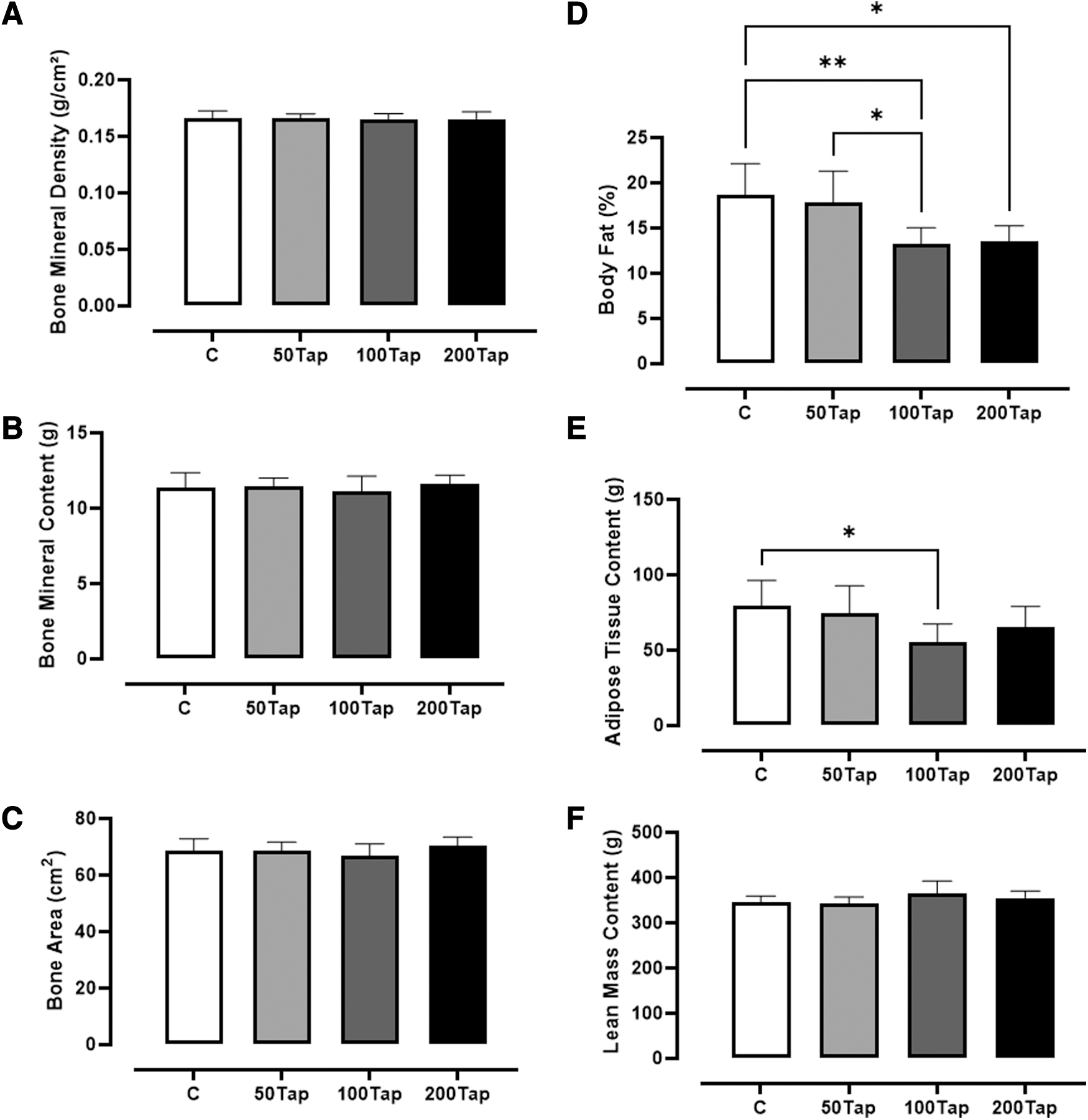
Effects of taperebá pulp extract supplementation on body and bone parameters by DXA (
For the second experiment, no changes were observed in retroperitoneal, perimesenteric, periepididymal, brown adipose tissues, liver, and visceral fat mass among all the groups (Table 5). In biochemical parameters, no changes were observed in fasting glucose, hematocrit, total protein, albumin, ALT, and AST among the groups (Table 6). However, the 100Tap group showed higher HDL cholesterol than the 50Tap and 200Tap groups (18.6% and 19.1%, respectively, P < .05, Table 6), without changes in other lipid profiles among the groups (Table 6).
Effects of Taperebá Pulp Extract Supplementation on Retroperitoneal, Mesenteric, Epididymal, Brown Adipose Tissue, Liver, and Visceral Fat Mass of Control and Experimental Groups
C = control group (gavage with saline, n = 10); 50Tap = group gavage with 50 mg taperebá pulp extract/kg body mass/day (n = 10); 100Tap = group gavage with 100 mg taperebá pulp extract/kg body mass/day (n = 10); 200Tap = group gavage with 200 mg taperebá pulp extract/kg body mass/day (n = 10). Different letters represent statistical difference between groups. Statistical significance was determined by one-way ANOVA, followed by Tukey's post hoc multiple mean comparison test (P < .05). The results are expressed as mean and standard deviation.
Effects of Taperebá Pulp Extract Supplementation on Biochemical Parameters of Control and Experimental Groups
C = control group (gavage with saline, n = 10); 50Tap = group gavage with 50 mg taperebá pulp extract/kg body mass/day (n = 10); 100Tap = group gavage with 100 mg taperebá pulp extract/kg body mass/day (n = 10); 200Tap = group gavage with 200 mg taperebá pulp extract/kg body mass/day (n = 10). Different letters represent statistical difference between groups. Statistical significance was determined by one-way ANOVA, followed by Tukey's post hoc multiple mean comparison test (P < .05). The results are expressed as mean and standard deviation.
Significant in relation to the 50Tap group (P < .05).
Significant in relation to the 200Tap group (P < .05).
Supplementation with taperebá pulp extract at all doses showed higher total serum antioxidant capacity than the C group by the DPPH method (50Tap: +29.2%, 100Tap: +26.5% and 200Tap: +24.3%, P < .0001, Fig. 4A). By the FRAP method, only 100Tap group and 200Tap group showed higher total serum antioxidant capacity than the C group (+19% and +27%, respectively, P < .01, Fig. 4B). Using ORAC method, 200Tap group presented higher antioxidant capacity than C, 50Tap, and 100Tap groups (+81%, +127%, and +73%, respectively, P < .0001, Fig. 4C).
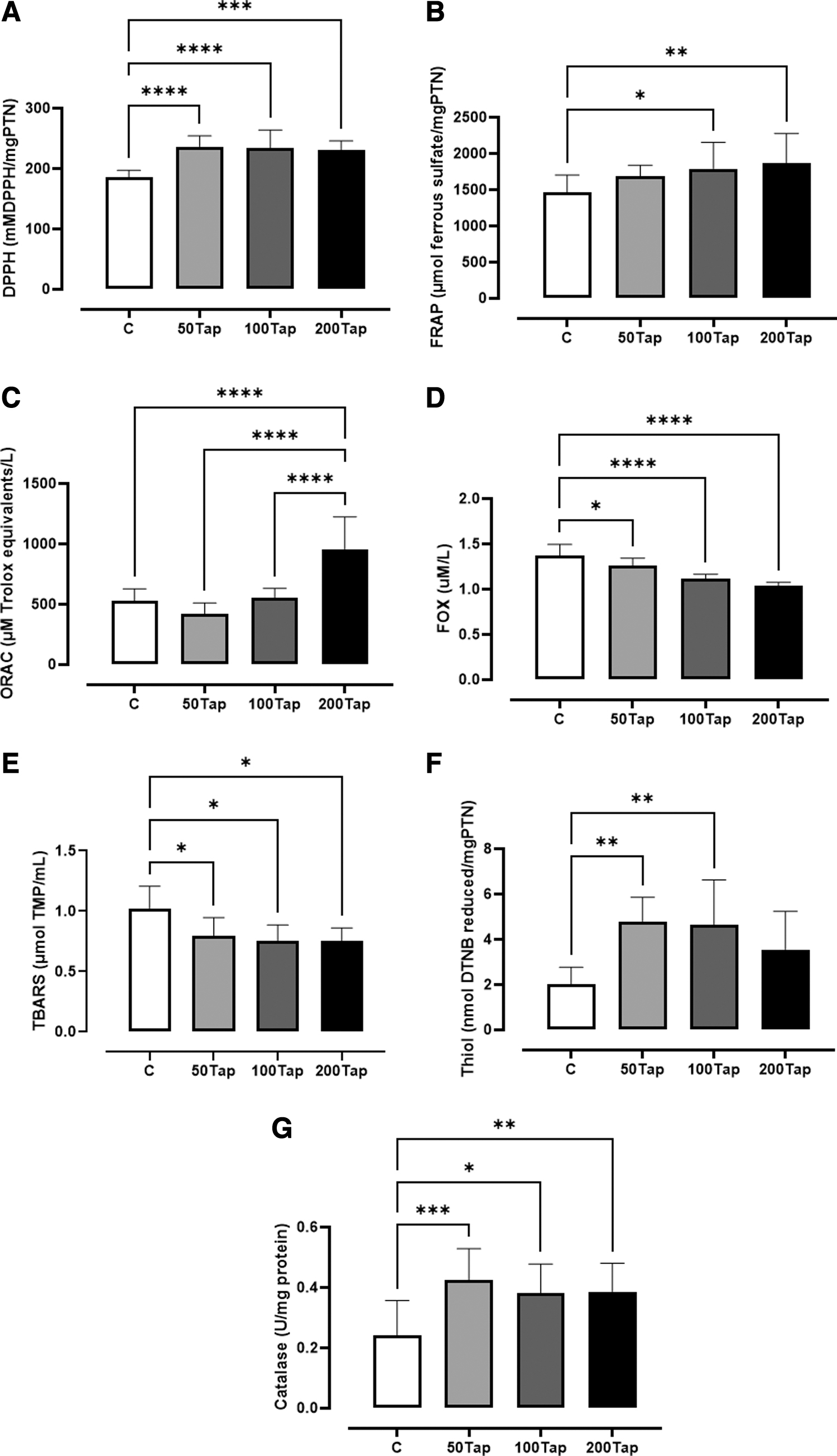
Effects of taperebá pulp extract supplementation on total antioxidant capacity in plasma and biomarkers of oxidative stress (
In the same direction, 50Tap, 100Tap, and 200Tap groups presented higher protection against oxidative damage than C group by reducing the levels of hydroperoxides (FOX analyses; −8.4%, −16.1%, and −24.3%, respectively, P < .0001, Fig. 4D). The 50Tap, 100Tap, and 200Tap groups reduced TBARS serum levels (−77.7%, −73.1%, and −73.8%, respectively, P < .05) compared with the C group (Fig. 4E).
In addition, 50Tap and 100Tap groups showed increased thiol serum levels (+39% and +31%, respectively, P < .01) compared with the C group (Fig. 4F). The 50Tap, 100Tap, and 200Tap groups showed increased CAT serum levels (+175.9%, +158.7% and 160.4%, P < .05) compared with the C group (Fig. 4G).
DISCUSSION
Food intake and appetite regulation are two important mechanisms involved in the regulation of body mass. These mechanisms are complex and involve neuropeptides, neurotransmitters, and hormones that are produced and secreted mainly by the central nervous system, peripheral nerves, and gastrointestinal tract. 34 In this study, extracts of murici (50 and 100 mg/[kg⸱day]) and taperebá (100 mg/[kg⸱day]) pulp were found to help control food intake in rats.
Gutierrez and Flores investigated the in vivo antidiabetic potentials of the seeds of murici extract at doses 200 mg and 400 mg/kg for 28 days. The administration of the extract significantly reduced the food intake of diabetic animals that received the supplementation compared with diabetic control mice. 35 Gutierrez and Ramirez evaluated the extract of murici seeds in diabetic male mice at doses 15 to 30 mg/kg for 30 days and observed control of food intake of diabetic animals that were supplemented with the extract compared with animals that did not receive the supplementation. 36 Brito et al. investigated the extract of taperebá leaves in vivo at a dose of 2000 mg/kg for 14 days. Administration of the extract showed no evidence of toxicity, death, or reduced food intake in the rats. 16
Studies on murici and taperebá pulp are quite scarce and this study is the first to evaluate the supplementation of the pulp of these fruits in healthy animals. The bioactive compounds present in murici and taperebá, such as polyphenols, may be related to the results found. These compounds have been associated with the control of food intake and the modulation of appetite through the regulation of the leptin signaling pathway in the brain and peripheral tissues, such as neurons expressing agouti-related protein (AgRP)/neuropeptide Y (NPY) and pro-opiomelanocortin (POMC) gene.
In addition, a second proposed mechanism is regulation of the cholecystokinin (CCK) signaling pathway, inducing secretion of α-melanocyte-stimulating hormone, which activates melanocortin receptor 4, suppressing AgRP/NPY signals and transmitting satiety signals to POMC neurons. 37
Polyphenol-rich fruit and vegetable extracts such as spinach, avocado, and apple showed positive effects for appetite reduction and food intake control through increased CCK release, 38 regulation of leptin levels, 39 and glucagon-like-peptide transcription and secretion. They also increased the expression of the intestinal anorexigenic hormone free fatty acids receptors 2 and 3 (FFAR 2 and 3) peptides in the colon and the expression of the anorexigenic neuropeptide gene POMC, amphetamine- and cocaine-regulated transcript, and melanocortin 4 receptor in the hypothalamus, increasing satiety. 40
In this study, no significant effects were observed on weight gain. In contrast, Lucena et al. observed after the 4-week period that supplementation with taperebá extract (pulp and peel) showed lower body and liver weight, body mass index, and adiposity when compared with the high-fat group. 19 However, in this study, it was found that animals in the murici group at a dose of 200 mg/(kg⸱day) and taperebá group at doses of 50 and 100 mg/(kg⸱day) showed lower body fat percentage and lower adipose tissue content. Such results may be related to carotenoids, which may contribute to the improvement of obesity and associated pathophysiological disorders, including inflammation, insulin resistance, and hepatic steatosis. 41
Murici presents in its composition especially lutein, zeaxanthin, and β-carotene, whereas in taperebá, the α-carotene and β-carotene, β-cryptoxanthin and lutein stand out. 10,42,43 Some mechanisms of action of these compounds occur on gene expression and cell function through interaction with peroxisome proliferator-activated receptors (PPARs) and retinoic acid receptors transcription factors, modulation of nuclear factor κ B, and nuclear factor erythroid factor-related factor 2 (Nrf2) pathways, and elimination of reactive species. 44 In addition, it has been seen that β-carotene can assist in fatty acid oxidation in adipocytes. 45
Murici and taperebá pulps are sources of polyphenols, especially flavonoids. 10 Mechanisms suggested for obesity amelioration include appetite suppression; stimulation of energy expenditure by increasing expression of uncoupling protein 1, sirtuin 1 (SIRT1), proliferator-activated receptor-γ kinase 1-α (PGC-1α), and adenosine monophosphate-activated protein kinase (AMPK); stimulating thermogenesis; suppression of adipogenesis, through inhibition of fatty acid synthase and modulation of PPARs; regulation of lipid metabolism, through increased AMPK and PPARα, inhibition of acetyl-CoA carboxylase and sterol regulatory element-binding protein-1; and modulation of the gut microbiota, by increasing production of short-chain fatty acids, reducing firmicutes, and increasing bacteroidetes, resulting in a lower firmicutes/bacteroidetes ratio. 37,46,47
No statistically significant difference was found for adipose tissue weight and liver and visceral fat mass reduction in the animals supplemented with murici and taperebá extracts. Such findings may be justified by the experimental model, because the animals were healthy. However, the potential of fruits from the Amazon biome in an animal model induced obesity and improvement of these body compartments has already been observed in the literature. Anhê et al. used camu-camu extract as a treatment in mice with obesity.
The animals showed reduced weight gain and visceral and liver fat accumulation, improved glucose tolerance and insulin sensitivity. 48 Nascimento et al. used 25 mL of camu-camu pulp as a treatment for mice with obesity, resulting in reduced weight of white adipose tissue fats and improved lipid profile. 49
Supplementation with murici and taperebá extracts showed no statistically significant effects on the biochemical parameters of the animals studied, only reduction of LDL (supplementation with murici) and increased levels of HDL (supplementation with taperebá). Lucena et al. assessed the effects of taperebá extract (pulp and peel) supplementation in rats fed with a high-fat diet. After the 4-week period, the treated group showed reduced COL and LDL and increased HDL. 19 The scarcity of studies on the pulp of these fruits limits the discussion about the potential effect on these aspects. Other animal studies have been performed using the leaves or seeds of these fruits, showing potential effects on glycemia, lipid profile, and liver. 35,36,50 –52
The effect on lipid profile is attributed to dietary fiber, vitamin C, and bioactive compounds (especially flavonoids and carotenoids) present in these fruits, because of their ability to reduce or control cholesterol and triglyceride levels in the blood. The effect of polyphenols (particularly flavonoids) on lipid metabolism has not yet been fully elucidated, but a diet rich in bioactive compounds has been found to lead to an increase in plasma HDL and a reduction in LDL. In addition, the presence of vitamin C and antioxidant compounds acts as protective agents against oxidative stress, as well as lipid peroxidation and reduction in LDL oxidation. 19,53
The increase in plasma antioxidant capacity and positive action against oxidative damage were observed in this study, especially in animals supplemented with taperebá extract. The rich composition in bioactive compounds of each fruit demonstrated antioxidant capacity to neutralize free radicals and increased antioxidant enzymes. 9,54 Other authors have verified similar results in these aspects. Perez-Gutierrez et al. evaluated the effects of supplementation of murici seed extract and pulp in rats at doses of 100, 200, and 300 mg/kg.
After 28 days of supplementation, they observed improvement in oxidative stress, through the activity of the enzymes SOD, CAT, GPx, GSH, and oxidized glutathione (GSSG). 11 Mariutti et al. verified the phenolic composition and antioxidant potential in vitro against some ROS and RNS. Murici showed high phenolic compounds content, especially quercetin and gallic acid. The authors suggest that the phenolic compounds present in the extract may be responsible for the high efficiency in eliminating ROS and RNS, especially hypochlorous acid.
Moreover, the extract was able to inhibit peroxyl radical (ROO−)-induced oxidative damage in human erythrocytes in different biomarkers, lipid peroxidation (MDA), hemoglobin oxidation, and GSH/GSSG ratio balance. 12 Lourenço et al. investigated the influence of taperebá pulp extract supplementation on the cardiac remodeling process induced by tobacco smoke exposure in vivo at doses 100 and 250 mg/kg. It was observed that the treatment attenuated the morphological changes of the heart and increased the activity of the enzymes SOD, CAT, and GPx and reduced the levels of lipid hydroperoxides. 17
Lucena et al. observed after the 4-week period that the treatment with taperebá extract (pulp and peel) supplementation showed reduced lipid peroxidation (MDA) in plasma, and also increased antioxidant capacity (SOD and GPx) in the liver. 19
Vitamin C and bioactive compounds have been associated with improvements in markers of oxidative stress. Vitamin C confers protection to DNA and oxidative damage, as it is an effective neutralizer of free radicals, scavenger of ROS and RNS, and it eliminates peroxyl radicals in the early part of lipid peroxidation. 53 Carotenoids can inhibit lipid oxidation, reducing lipid peroxidation, thus reducing the formation of MDA and other markers of lipid peroxidation and also removing singlet oxygen. 55 Polyphenols have antioxidant activity that consists of increasing the activity and expression of antioxidant enzymes as well as inhibiting ROS-producing enzymes.
Moreover, among the polyphenols, flavonoids stand out as a strong antioxidant, acting against ROS that participate in the initiation of lipid peroxidation. This indicates that these fruits can be considered a promising source of bioactive compounds by inhibiting oxidative damage, which may be interesting considering that they can mitigate the development of oxidative stress-related diseases. 56
The inclusion of murici and taperebá in a healthy diet can contribute to health maintenance and prevention of NCDs, due to their therapeutic effects in controlling food intake, body parameters, and against oxidative stress. However, clinical trials with humans should be conducted to better elucidate the mechanisms of the compounds involved and their action for a better nutritional approach for the prevention and treatment of diseases.
Footnotes
ACKNOWLEDGMENTS
Portions of results and discussion of this paper were previously submitted in the dissertation/thesis of Carolina de Oliveira Ramos Petra de Almeida in PPGAN program.
AUTHOR DISCLOSURE STATEMENT
No competing financial interests exist.
FUNDING INFORMATION
This research was supported by the Carlos Chagas Filho Foundation for Research Support of Rio de Janeiro State (211.039/2019, 202.910/2019, 200.382/2023, 210.141/2023). This study was supported by coordination for the improvement of higher education personnel for scholarship.