







Abstract

Women's health remains very understudied in many areas and across different types of science. However, in the United States and in other countries as well, there is a burgeoning interest in sex and gender medicine in biomedical research. 1,2 Recognition is growing that this focus is much needed so that both sexes are studied appropriately and so that medical science provides evidence-based diagnoses, treatments, and cures optimally for both sexes. In this special section of the Journal of Women's Health, we focus on meeting two goals: (1) elucidating the rationale for developing curriculum materials focused on sex as a biological variable (SABV), which include methods and approaches to determine sex and gender differences, and (2) assessing the current status of SABV curricular resources, development, implementation, and dissemination among the peer-review academic community, trainees and mentors at academic institutions, and the Office of Research in Women's Health (ORWH) of the National Institutes of Health (NIH).
Basic science lays the groundwork for critically important clinical discovery. Unfortunately, to date, basic scientists have often failed to examine sex differences overall. 3,4 Beery and Zucker conducted a survey of ∼2,000 studies using an animal model that was published in 2009. 3 They found that there was a bias toward using only male animals in 8 out of 10 biological disciplines. Potluri et al. systematically reviewed 2,928 primary research articles published in six primary research American Society of Microbiology. 4 They reported that very few studies included both male and female animals, and for studies using primary cells from different animal species (i.e., humans and nonhuman vertebrates), almost all studies failed to report the sex of donors from which the cells were isolated. Without this basic level of reporting, biologically significant sex and gender differences in fundamental processes and mechanisms remain underdetected and opportunities to advance discoveries and treatments for both sexes are minimized. Figure 1 shows their reported sex differences in basic science publications (in microbiology and immunology) for 50 years. 4
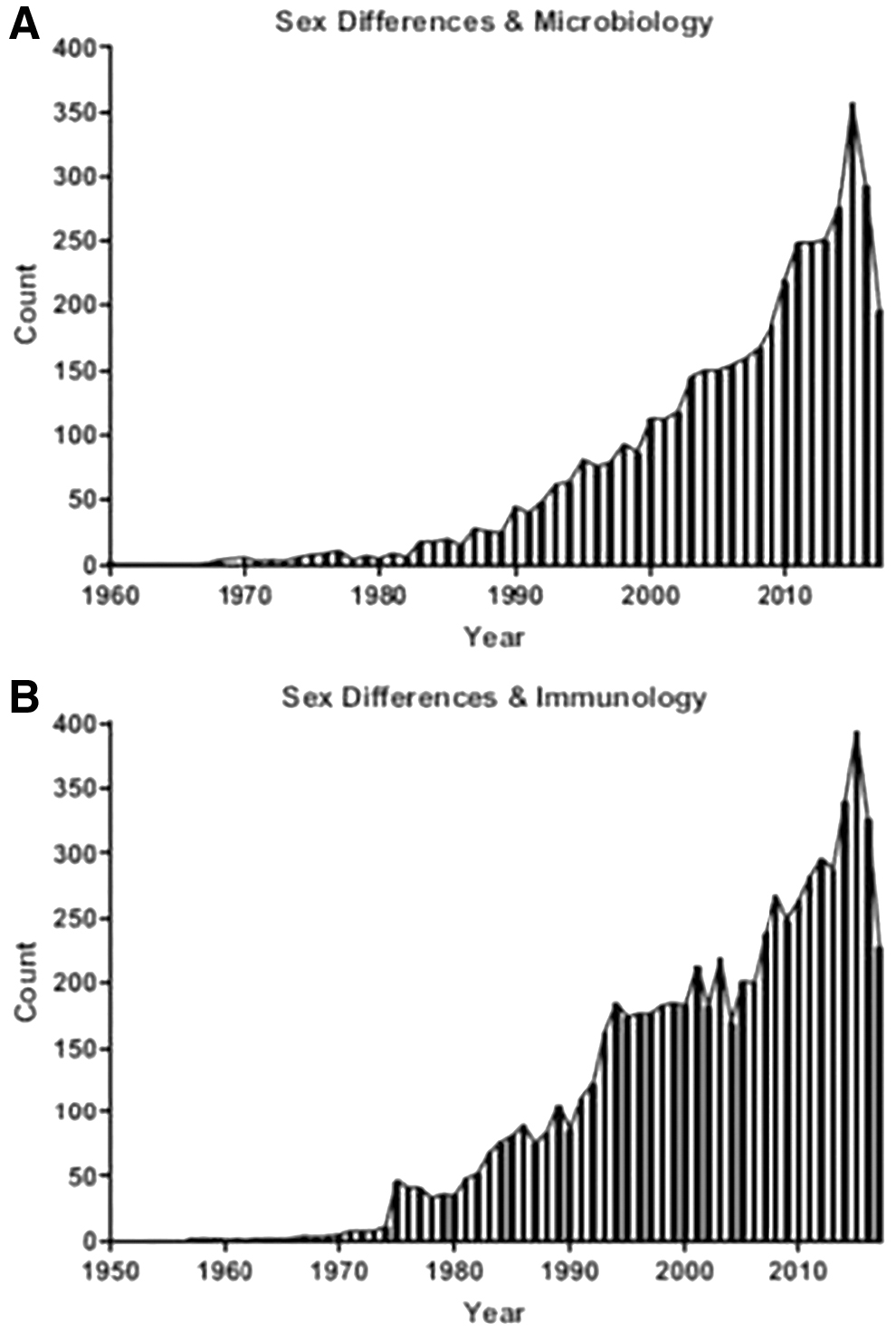
The number of published papers listed in PubMed pertaining to sex differences in microbiology and immunology. On September 26, 2017, PubMed search results for “sex differences” and “microbiology” yielded a total of 4,456 papers published between 1960 and 2017
Likewise, Potluri reported on sex differences research among preclinical animal studies. Figure 2 illustrates studies that report sex of animals as not mentioned, only one sex, or male and female animals included in the studies; nearly half of these publications did not mention the animals' sex. 4
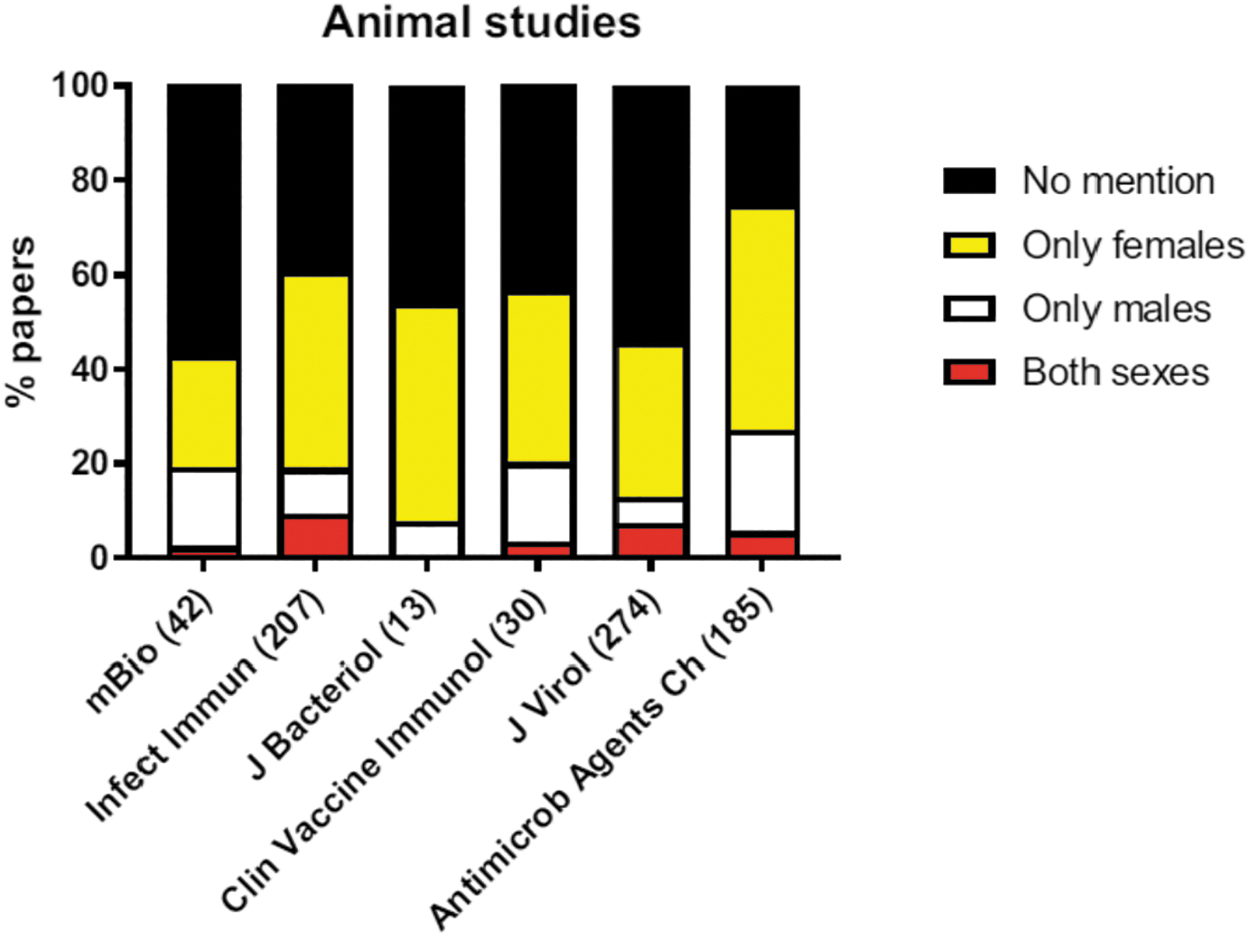
Reported sex of animals in published preclinical studies (reproduced from Potluri et al. 4 ).
With regard to clinical research, currently women are included more often in clinical studies than was formerly the case, but in some areas of medicine, this still need development. 2 For instance, although there is recognition today that women must be included in drug development trials, many drugs were approved in the past without data on enough women to know whether they are equally effective in women and men. 5 Unfortunately, at least in one well-publicized case as was seen with zolpidem, it was found that not having sex-specific dosing can actually lead to harm. 6 This is because women were found to metabolize the same dose of zolpidem slower than men, resulting in much higher serum levels. Although women are now included more appropriately in randomized clinical trials, it is still not universally the case, so that more work is needed in this area. 5,7
Gaps in the clinical research literature may translate into serious health issues. Some very concerning sex differences have been reported in recent years. For instance, from 1985 to 2010, gains in life expectancy occurred in fewer women in U.S. counties than men for reasons that are not completely understood (Fig. 3). 8
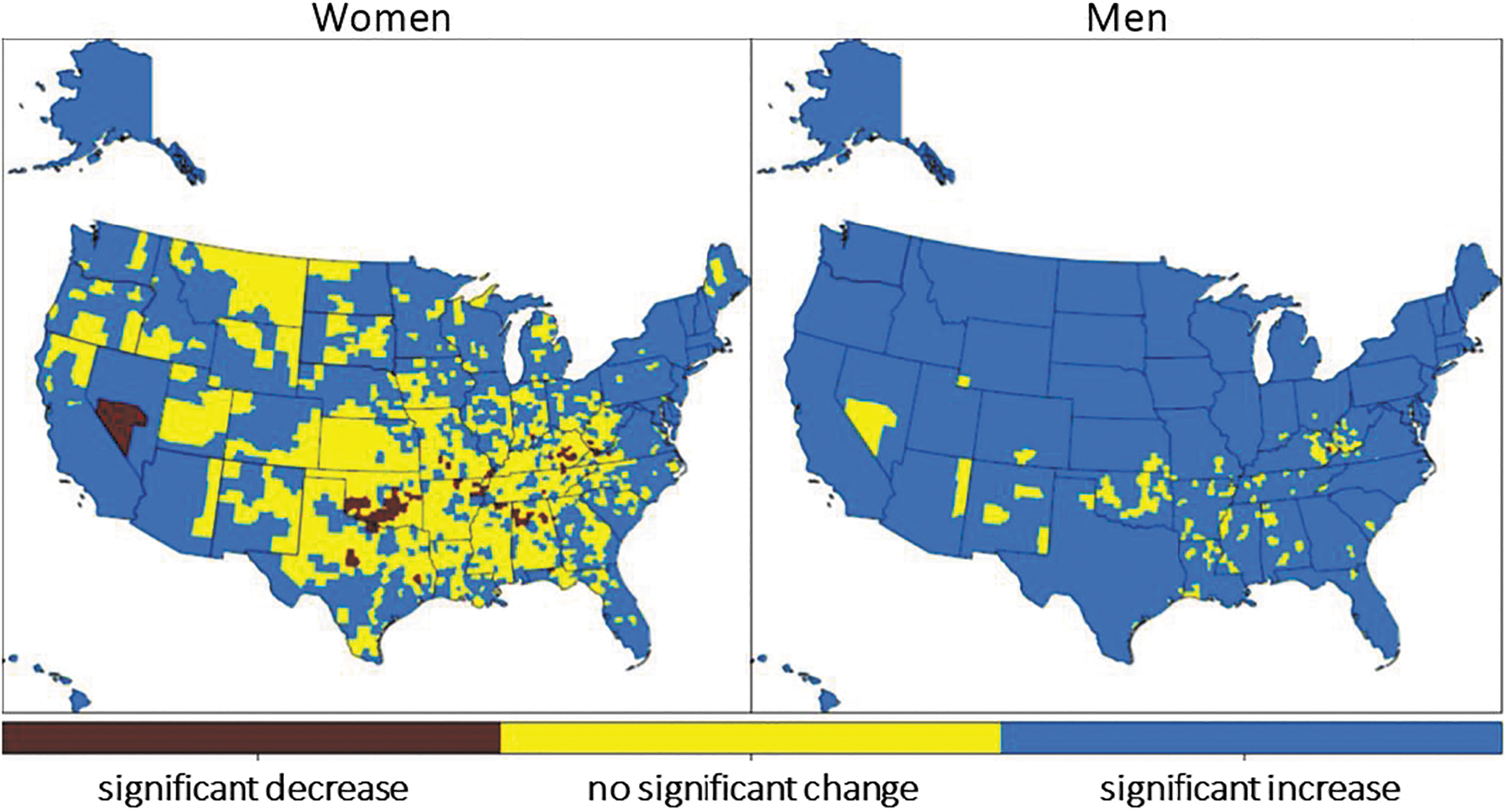
Gains in life expectancy in U.S. counties, comparing women and men 1985–2010 (reproduced from Wang et al. 8 ).
Another example is that from 1993/94 to 2010, risk of stroke declined for men but not for women. 9 Another alarming finding is that trends in alcohol consumption were steeper for women than for men between 1997 and 2014. 10 In these striking examples, the reason for the disparities is not known. These are only a few examples of the sex differences that are reported, where the reasons are not understood, underscoring the significant gaps in our knowledge about sex differences across different types of science and in many areas of health.
Thus, there are significant gaps in our knowledge about sex differences across different types of science and in many areas of health, with key questions remaining concerning sex differences.
In response to these gaps, in 2014, Janine Clayton and Francis Collins published their landmark article in Nature: “Policy: NIH to balance sex in cell and animal studies.” 11 NIH announced that on or after January 2016, grant proposals would be evaluated on how they account for SABV in research studies with vertebrate animals and humans. 12 Figure 4 illustrates how sex and gender differences can be incorporated into research across the clinical translational spectrum.
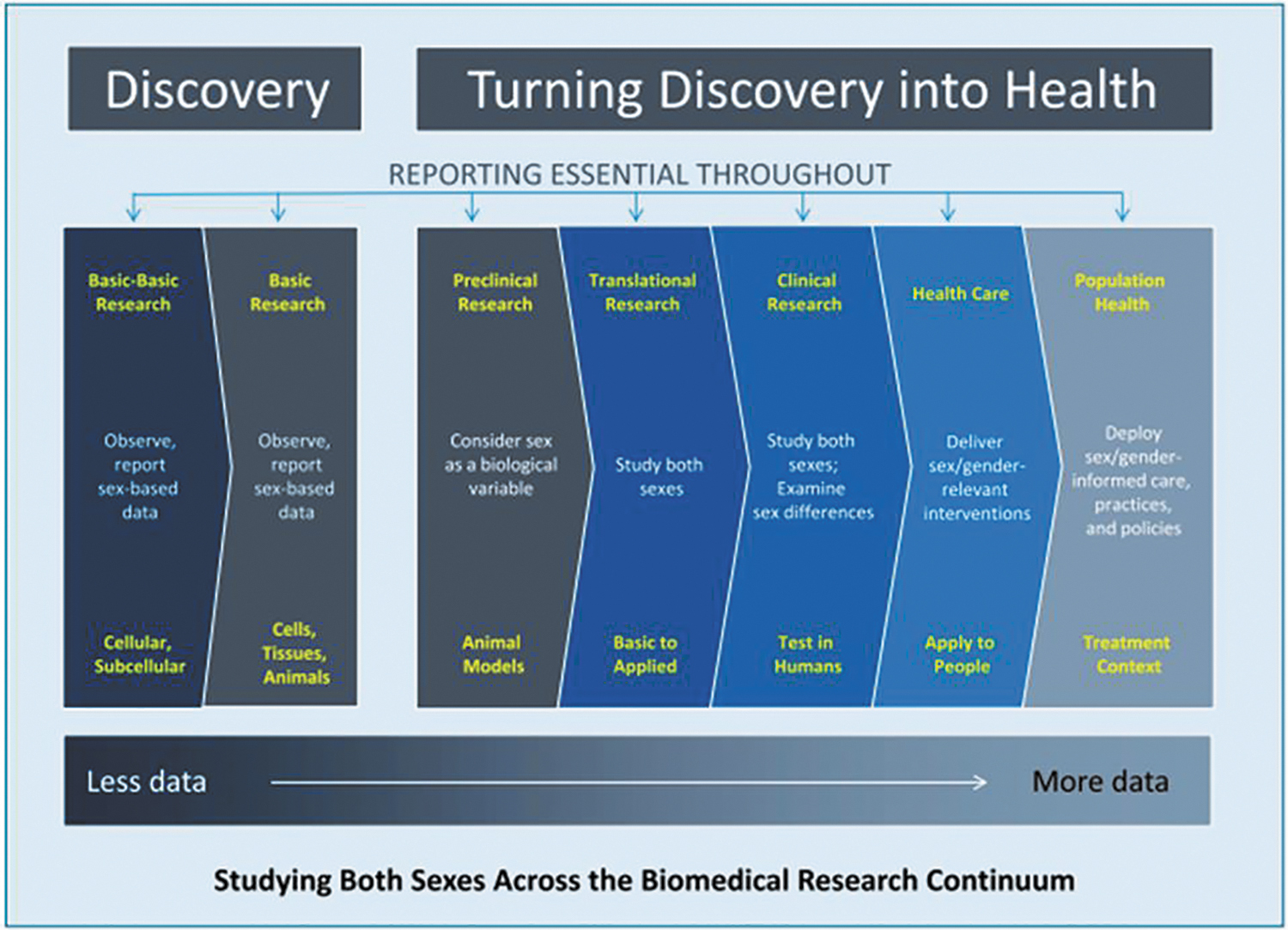
Sex differences research across biomedical research continuum (reproduced from Clayton 12 ).
The consideration of SABV is now required as part of the rigor and reproducibility portion of all NIH grants. In this special section, we include articles presented at a panel held at the 2018 Annual Building Interdisciplining Resend Careers in Women's Health (BIRCWH) meeting focusing on educating the scientific workforce on women's health and sex and gender differences in medical research. As already noted, gaps in knowledge remain in different areas of science. Gaps are also present in how sex and gender differences are addressed in every aspect of the scientific enterprise, ranging from research design and methodology, grant writing and grant funding decisions to article writing by scientists and evaluation by journals. The gaps thus touch all who are connected with science ranging from the individual junior and senior researchers to the academic institution to journal publishers and editors as well as grant reviewers.
To fully accomplish the goal of integrating and emphasizing sex and gender constructs and to ensure that they are entrenched throughout scientific inquiry and endeavor, curriculum materials are needed that will allow scientists to incorporate SABV principles as well as an understanding of gender into their scientific thinking as well as their articles and grants. Standardized educational curricula that provide understanding and tools for incorporating sex and gender into medical research design, analysis, and publications must be accepted and integrated. Currently, accessible open education resources (free online training modules) include the modules created by the NIH ORWH and by the Canadian Institutes of Health Research on topics of sex and gender. Although these materials constitute a very good beginning, much more work is required to make these ideas universally accepted and adopted.
Of note, although the United States, Canada, and other countries have now developed guidelines, widespread dissemination and implementation of these guidelines has been slow; therefore, integration into medicine and science as currently practiced, published, and taught has been incomplete. 1 This must change going forward to create the optimal therapeutic approaches for both women and men. For young scientists, this shift in thinking will inform and change their whole careers; for senior scientists, it will change how they mentor as well as how they carry out their scientific endeavors and overall, incorporating SABV principles will change health outcomes for women and men.
This Journal of Women's Health special section introduces some important approaches to SABV and gender scientific thinking at institutions around the country and provides food for thought. The call to action is to begin at every institution, to work on incorporating SABV as well as gender into scientific thinking, design, analysis, and publication.
Footnotes
Author Disclosure Statement
No competing financial interests exist.
Funding Information
No funding was received for this article.