







Abstract
Background:
Around the world, carbapenemase-producing Escherichia coli is becoming more prevalent. The purpose of this research was to analyze the whole plasmid sequences from YL03 isolates of the E. coli strain that produce both KPC-2 and NDM-5 carbapenemases.
Materials and Methods:
Whole-genome sequencing (WGS) and analysis of E. coli strain YL03, which was isolated from a wound sample, was performed by Illumina Novaseq 6000 and Pacific Biosciences Sequel (PacBio, Menlo Park, CA) sequencers. Following that, the WGS results were used to predict and analyze the YL03 genome composition and function. A complete gene sequence for YL03 with the accession number CP093551 has been uploaded to GenBank.
Results:
The results showed that YL03 co-carried five resistance genes, which included blaKPC-2, blaNDM-5, blaTEM-1B, blaCTX-M-14, and mdf(A). Furthermore, three resistance plasmids were found in YL03: pYL03-KPC, pYL03-NDM, and pYL03-CTX. Among them, the 53 kb-long pYL03-KPC plasmid belonging to the IncP, carried the replicase gene (repA) and the carbapenemase gene (blaKPC-2). The blaKPC-2 gene was flanked by a composite transposon-like element (Tn3-[Tn3] tnpR-ISKpn27 blaKPC--ISKpn6).
Conclusions:
The YL03 strain co-carried blaKPC-2 and blaNDM-5 and had a unique multidrug resistance plasmid containing blaKPC-2.
Introduction
E
According to the Ambler classification system, the carbapenemase that CRE produces belongs to Ambler classes A, B, and D of β-lactamases primarily. 4 Klebsiella pneumoniae carbapenemase (KPC), a common and important β-lactamases that belongs to class A, is extensively distributed around the world. The KPC enzyme has had more than 30 different variations described so far, with KPC-2 and KPC-3 being the most prevalent. 5 New Delhi metallo-β-lactamase (NDM), which belongs to class B β-lactamase, has at least 21 variants worldwide, 6 with the NDM-5 enzyme being frequently detected in E. coli. 7 However, blaKPC-2 and blaNDM-5 coexist in the same strain, making it extremely resistant to practically all antibiotics and posing a serious clinical treatment challenge. To date, random reports of strains of Enterobacteriaceae, including K. pneumoniae, 8 E. coli, 9 and Enterobacter hormaechei, 10 co-producing KPC and NDM have been reported. The transfer of mobile genetic elements has been reported as one of the major mechanisms of KPC transmission. 11
Plasmids, as mobile genetic elements, are one of the crucial contributors to the widespread resistance genes in bacteria. 12 According to the report, the plasmids carried the blaKPC gene as IncFII,13,14 IncFIA, 15 IncN,13,14 IncR, 16 and IncP, 17 and so on. The plasmid types IncX3 and IncFII were the most frequently discovered among blaNDM-5-carrying plasmids. 18
In this study, a carbapenem-resistant E. coli strain, YL03, coproducing blaKPC-2, blaNDM-5 from a clinical sample was discovered. Compared with other strains coproducing blaKPC-2 and blaNDM-5, the blaKPC-2 of YL03 was localized in a new genetic environment. We used whole-genome sequencing (WGS) to analyze the genetic features of one E. coli strain YL03, which harbored a novel plasmid carrying blaKPC-2. The study of the antibiotic resistance genes of YL03 and their accompanying genetic environment can provide epidemiology with new resistance data to aid in its investigations of multidrug-resistant bacteria.
Materials and Methods
Bacterial strain isolation and antimicrobial susceptibility testing
E. coli isolate YL03 was obtained from a wound sample of a 59-year-old woman, admitted to the intensive care unit of a teaching hospital in Guangzhou, China, in December 2020. After sampling, it was inoculated directly on blood agar and incubated at 35℃ with 5% carbon dioxide for 18–24 h. Bacterial identification and antimicrobial susceptibility testing were carried out by using the Vitek2 Automated System (BioMérieux, France). Tigecycline breakpoints were tested for EUCAST 19 for E. coli. The rest of the breakpoints were interpreted according to CLSI 20 for E. coli.
WGS and analysis
WGS and analysis of E. coli strain YL03 was performed by Illumina Novaseq 6000 and Pacific Biosciences Sequel (PacBio) sequencers.
Total DNA was extracted using a Steady Pure Bacterial Genomic DNA Extraction Kit (Accurate Biotechnology, Hunan, China). DNA quality tests were performed using Qubit (Thermo Fisher Scientific, Waltham, MA) and Nanodrop (Thermo Fisher Scientific). Qualified genomic DNA was fragmented with G-tubes (Covaris, Woburn, MA) and end-repaired to prepare SMRTbell DNA template libraries (with fragment sizes of >10 Kb selected by the Blue Pippin System) according to the manufacturer's specification (PacBio). Continuous long reads were attained from single-molecule real-time sequencing runs, and Falcon was utilized for de novo assembly. 21 Raw data were filtered using FASTP (version 0.20.0) by the following standards: (i) removing reads with ≥10% unidentified nucleotides (N), (ii) removing reads with ≥50% bases having phred quality scores ≤20, and (iii) removing reads aligned to the barcode adapter. After filtering, resulted clean reads were used to correct the genome sequences to improve the quality of the assembly and determine the final genome sequences using Pilon (version 1.23). 22
Genome component prediction and analysis
The whole nucleotide sequence of E. coli strain YL03 was predicted and annotated using the RAST server * to confirm the annotation of open reading frames (ORFs). The resistance genes of E. coli strain YL03 were predicted using the ResFinder † server. Plasmid classification was identified using PlasmidFinder 2.1 ‡ . The sequence of the E. coli strain was imported into MLST 2.0 § , for multilocus sequence typing (MLST) determination.
Plasmid sequences were compared using Blast ‖ , and BRIG created genomic maps representing the comparison of plasmid sequences. In addition, 27 E. coli strains were selected from NCBI Blast for the phylogenetic analysis of E. coli strain YL03, and MGEA 11.0 23 was used to align and construct the neighbor-joining tree.
Nucleotide sequence accession numbers
The whole sequence was uploaded into the GenBank database of nucleotide sequences under the accession number CP093551.
Conjugation experiments
With E. coli strain YL03 as the donor strain and rifampicin-resistant E. coli C600 (EC600) as the recipient strain, conjugation was carried out. Individual colonies of donor and recipient strains were selected and inoculated in the fresh Luria–Bertani broth at 37℃ and 180 rpm until approximately OD600 1.0. Both donor and recipient strains were mixed at a rate of 1:1, then 12–24 hours of cultivation on brain–heart infusion (BHI) agar plates at 37°C. Using imipenem (4 μg/mL) and rifampicin (2.5 mg/mL)-added BHI agar plates, transconjugants were chosen.
Polymerase chain reaction amplification and DNA agarose gel electrophoresis
The transconjugants (YL03-EC600) were chosen for polymerase chain reaction (PCR) amplification, the primers used in the PCR analysis were KPC (5′-GTATCGCCGTCTAGTTCTGC-3′, 5′-GGTCGTGTTTCCCTTTAGCC-3′) and NDM (5′-GGTTTGGCGATCTGGTTTTC-3′, 5′-CGGAATGGCTCATCACGATC-3′).
Electrophoresis was performed with a PowerPac HC System (Bio-Rad, Hercules) using 1% agarose in 0.5 Tris-borate–ethylenediaminetetraacetic acid (TBE) at 100 V. The pulsed field gel electrophoresis profiles were analyzed using SmartGel 7000 (Sinsage, Beijing, China).
Results
Antimicrobial susceptibility
The antimicrobial susceptibility testing has revealed that the E. coli strain YL03 shows high resistance to almost all tested antibiotics, including third-generation cephalosporins, imipenem, ertapenem, and levofloxacin, but remained susceptible to the antibiotics amikacin, tigecycline, and trimethoprim/sulfamethoxazole. Therefore, the E. coli strain YL03 belongs to the CRE. The results of the antibiotic susceptibility testing are given in Table 1.
Antimicrobial Susceptibility of Escherichia coli Strain YL03
Tigecycline breakpoints were based on EUCAST standards. 19 The rest of the breakpoints were interpreted according to CLSI. 20
R, resistant; S, susceptible; I, intermediate.
General features of E. coli strain YL03 gene sequences
The total length of YL03 gene sequences was 5,349,338 bp, with an average G + C content of 51%. E. coli strain YL03 contained a 5,110,834 bp chromosome and 6 plasmids. The preliminary analysis in E. coli YL03 of plasmid typing by using PlasmidFinder 2.1 was shown as follows: six plasmids (Col [BS512], Col [MG828], IncP plasmid [named pYL03-KPC], IncX3 plasmid [named pYL03-NDM], IncFII plasmid [named pYL03-CTX], IncI1-I plasmid). In addition, YL03 was categorized as ST44 using MLST 2.0, which is based on the genetic variation of seven housekeeping genes in E. coli.
Phylogenomics of E. coli strain YL03
The 27 E. coli strains with an E-value close to zero were chosen for phylogenetic tree analysis based on the Blast results after the E. coli strain YL03 (CP093551) was submitted to NCBI. According to a phylogenetic study, YL03 was most similar to the E. coli strain (CP107181) isolated from a Swedish patient with a urinary tract infection. However, the results showed that it was significantly distant from the E. coli strain LA172 (OP242290) isolated from PDR Laos and the E. coli strain B16EC1050 (CP088736) isolated from South Korea (Fig. 1).
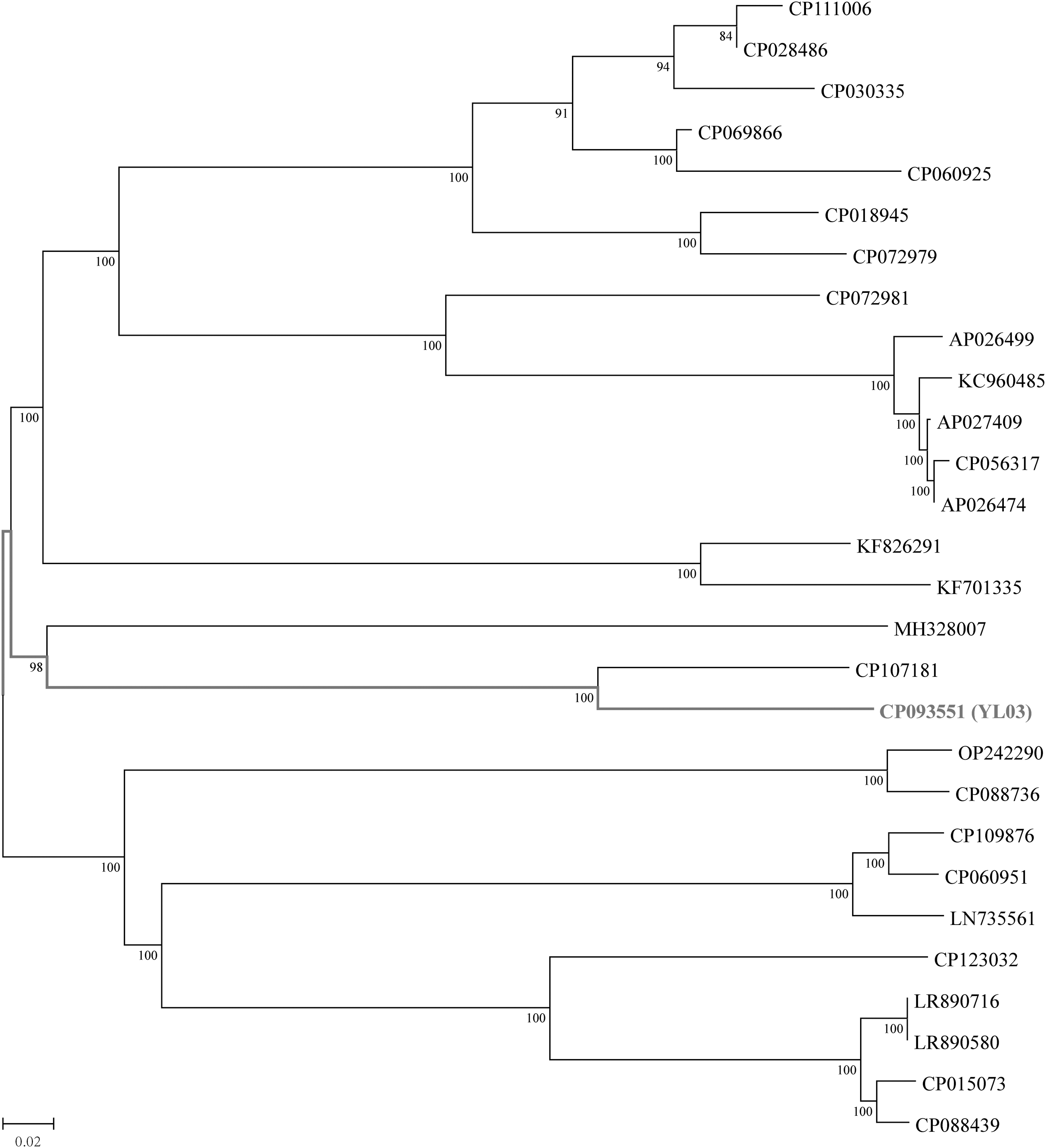
Phylogenetic tree of available YL03 strain genomes. The YL03 strain was compared with the whole genomes of 28 Escherichia coli strains. The bold type indicated that YL03 (Genbank Accession No. CP093551) was present.
Resistance genes of E. coli strain YL03
Using the ResFinder server, five acquired antimicrobial resistance genes were predicted, including blaKPC-2, blaNDM-5, blaTEM-1B, blaCTX-M-14, and mdf(A) (Table 2). Resistance gene mdf(A) was localized on the chromosome, and blaKPC-2, blaNDM-5, blaTEM-1B, and blaCTX-M-14 were localized on the plasmid.
Resistance Genes in the Escherichia coli Strain YL03
Plasmid pYL03-KPC carrying blaKPC-2
The plasmid pYL03-KPC carrying blaKPC-2 had a nucleotide sequence that was 53,307 bp in size, with an overall G + C content of 58.1% belonging to the IncP. The novel plasmid pYL03-KPC harbors resistance genes (blaKPC-2, blaTEM-1B), replication (RepA), stability (topA), propagation (danJ, virB4), plasmid transfer (Tra and Trb gene cluster), and adaptation (Tn3-tnpR-ISKpn27–blaKPC-2-ISKpn6-blaTEM).
Using the pYL03-KPC sequence as a reference, plasmids with >97% nucleotide identity and >68% coverage (CP015073, CP077998, and LC542923) were chosen for analysis and found to be lacking in blaKPC-2 compared with pYL03-KPC. Nevertheless, MN891680 was most similar to the blaKPC-2 genetic environment section of YL03; however, it contained plasmids different from pYL03-KPC (Fig. 2).
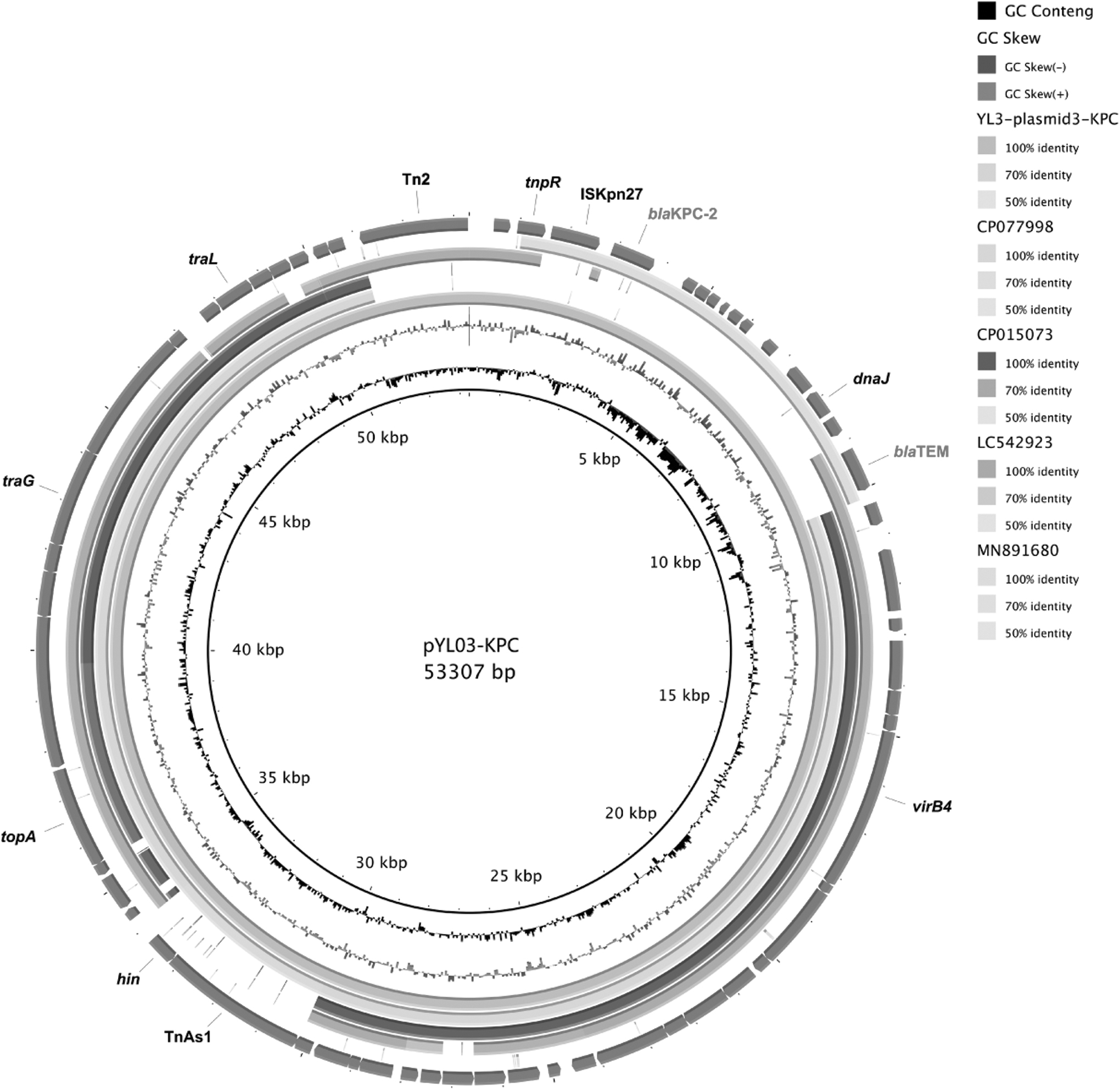
Genomic map of plasmid pYL03-KPC containing blaKPC-2. GC content and GC skew were represented on the distance scale (in kbp) on the inner map. The fourth circle indicates the plasmid pYL03-KPC. The fifth circle indicates CP077998. The sixth circle indicates CP015073. The seventh circle indicates LC542923. The eighth circle indicates MN891680. The outermost circle shows ORFs. CP077998 from the Pseudomonas aeruginosa strain, LC542923 from the Serratia marcescens strain, CP015073 from the E. coli strain, and MN891680 from the Klebsiella pneumoniae strain. ORFs, open reading frames.
Further analysis showed that the upstream of the blaTEM region was similar to the genetic background of p516602-KPC (MN310367), which belonged to IncF from Morganella morganii. The downstream of blaTEM was similar to the genetic background of pEC743_4 (CP015073), which belonged to IncP from E. coli (Fig. 3).
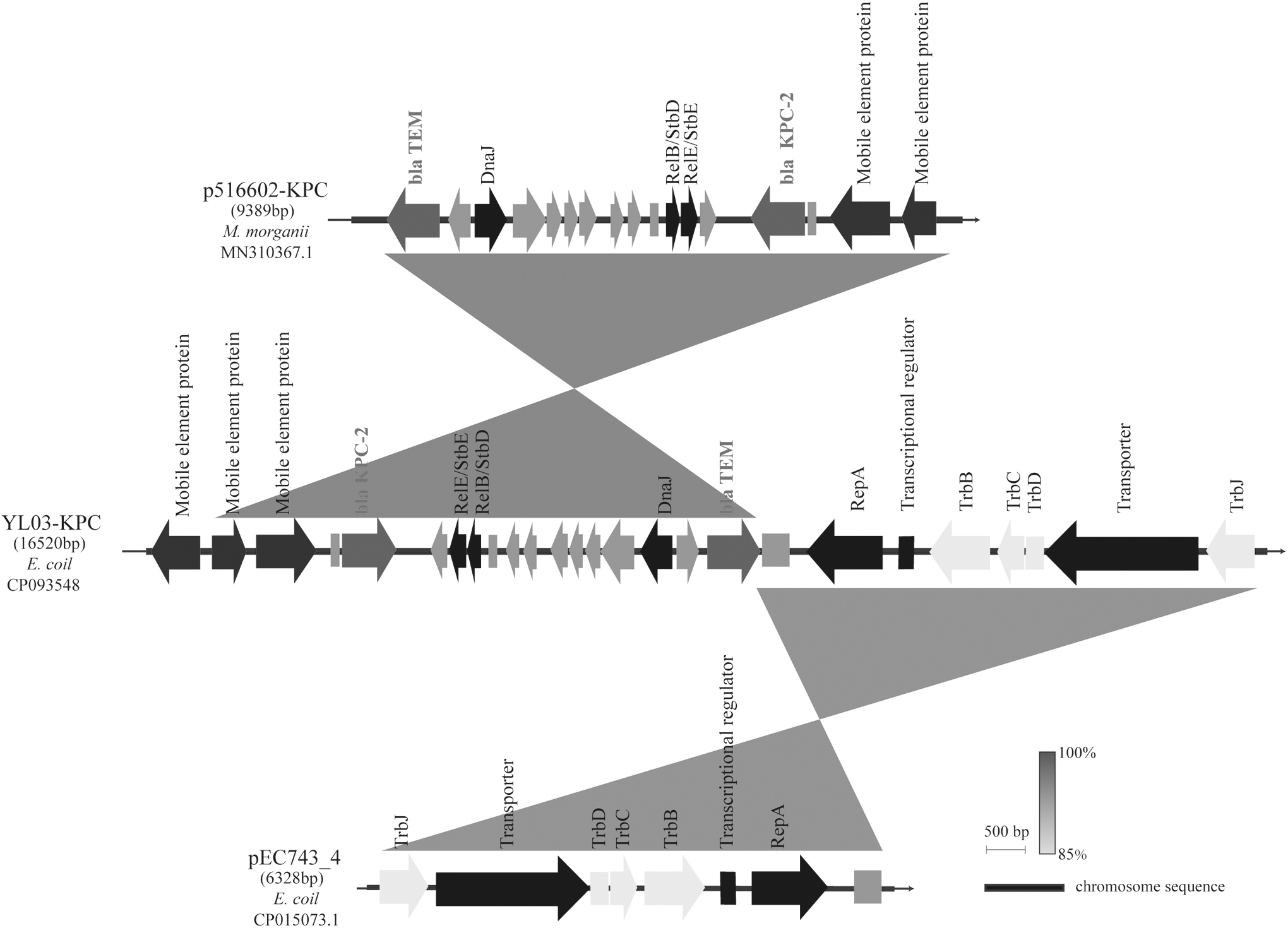
Comparison of the resistance region of the plasmid pYL03-KPC among the related plasmids. Gray shading indicates regions of shared homology by BLASTn, ranging from 85% to 100%. Colored arrows and rectangles represent ORFs.
A study of the genetic context of the blaKPC-2 genes revealed that ISKpn6 and Tn3-(Tn3) tnpR-ISKpn27 were located downstream and upstream, respectively, of the blaKPC-2 gene. Furthermore, compared with Tn4401 (CP094994.1), the blaKPC-2 gene (pYL03-KPC) was located in ISKpn27, not ISKpn7. Different from Tn1722 (MF168406.1), which carried Tn1722 and ISKpn27blaKPC-2-ISKpn6 core structure, pYL03-KPC did not carry Tn1722 (Fig. 4).
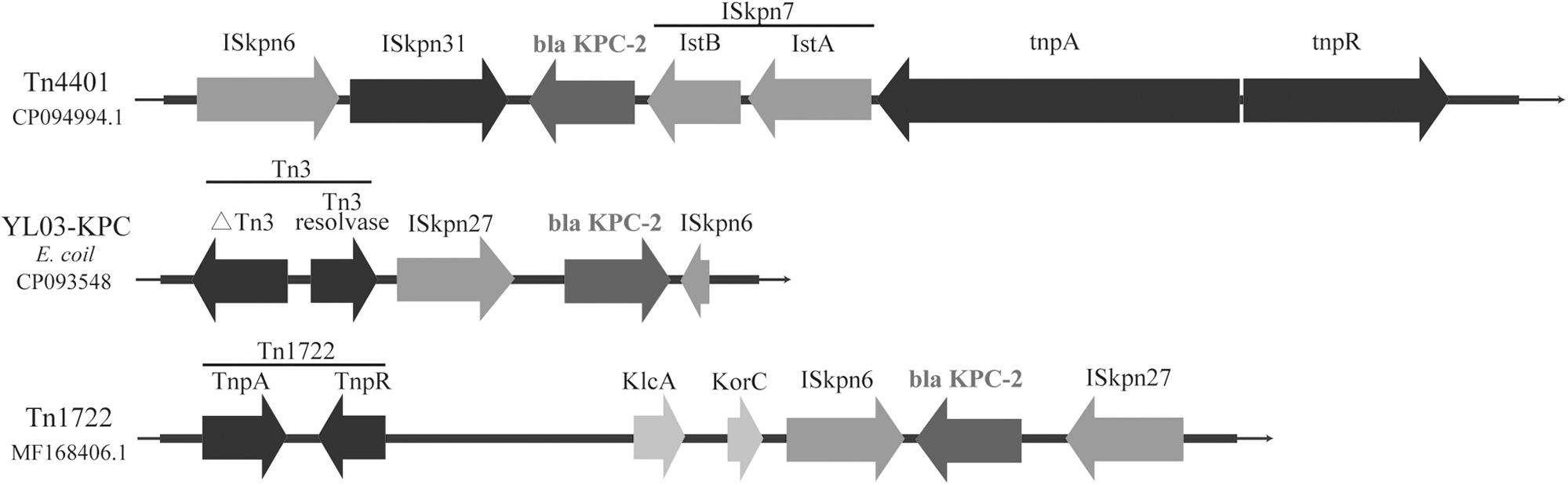
Comparison of the surrounding environment of blaKPC-2.
Genetic environment of blaNDM-5
In addition, blaNDM-5 was the only antibiotic-resistant gene on the plasmid pYL03-NDM belonging to the IncX3. The pYL03-NDM, 15,672 bp in length with an average G + C content of 48%, showed 100% sequence identity to MK317995, CP50157, AP023210, and MN064714. The genetic environment of blaNDM-5 was revealed with a gene arrangement of ISKox3-umuD-IS26-nagA-trpF blaNDM-5-IS5-IS30-IS3000-Tn3 (Fig. 5).
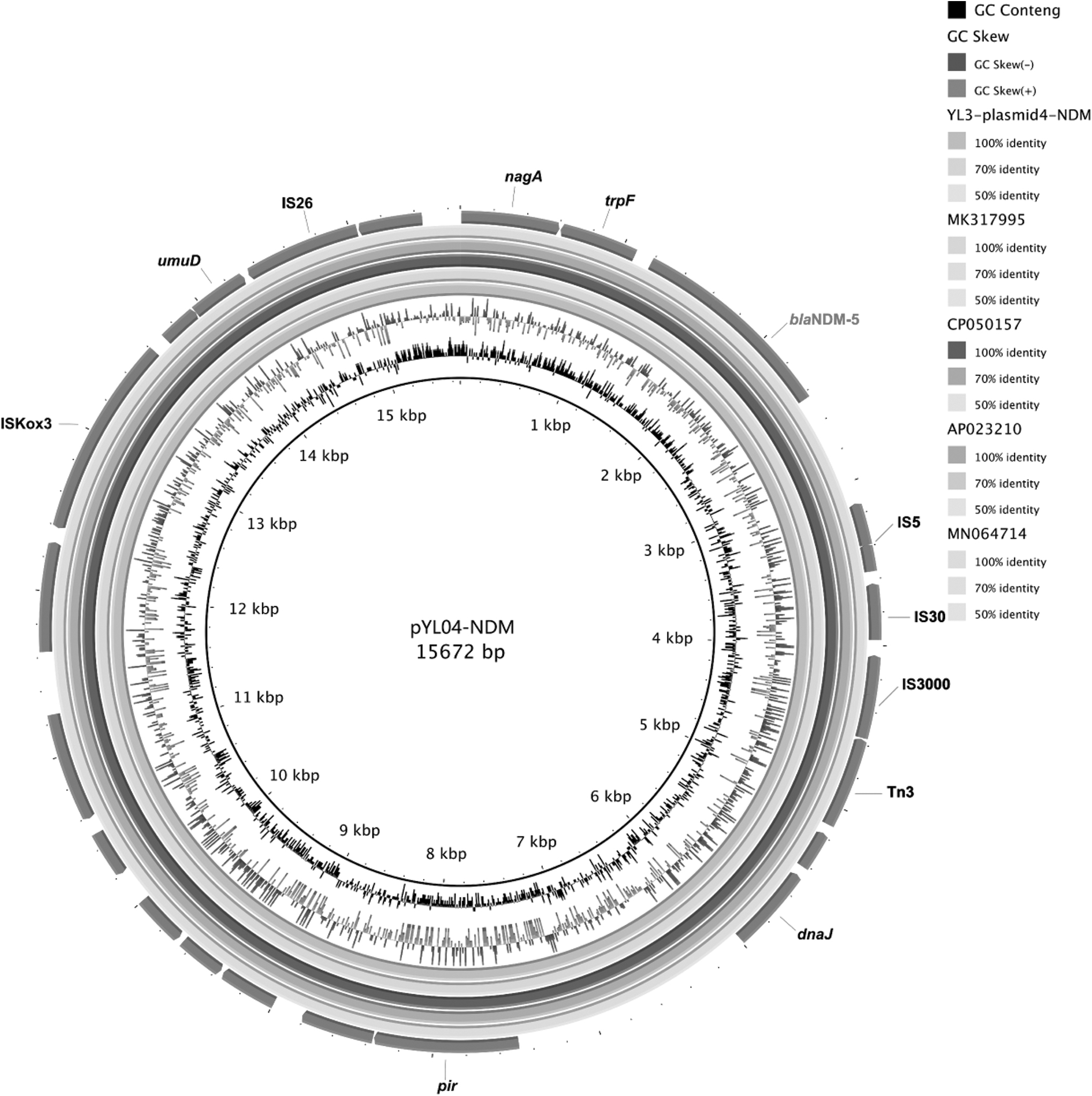
Genomic map of plasmid pYL03-NDM containing blaNDM-5. From the inside circle to the outside circle, the fourth circle denotes plasmid pYL03-NDM. A comparison of the pYL03-NDM with similarly related plasmids using BLASTn (GenBank Accession Nos. MK317995 (the fifth circle), CP050157 (the sixth circle), AP023210 (the seventh circle), and MN064714) (the eighth circle).
Genetic environment of blaCTX-M-14
The blaCTX-M-14 was the only antibiotic-resistant gene on the plasmid pYL03-CTX belonging to the IncFII. The pYL03-CTX, 79,537 bp in length and an average G + C content of 52%, showed 100% sequence identity to CP18973, CP088382, CP090197, and FJ494913. In the genetic environment, the insertion sequence IS1380-like element (ISEcp1) was found upstream of blaCTX-M-14 (Fig. 6).
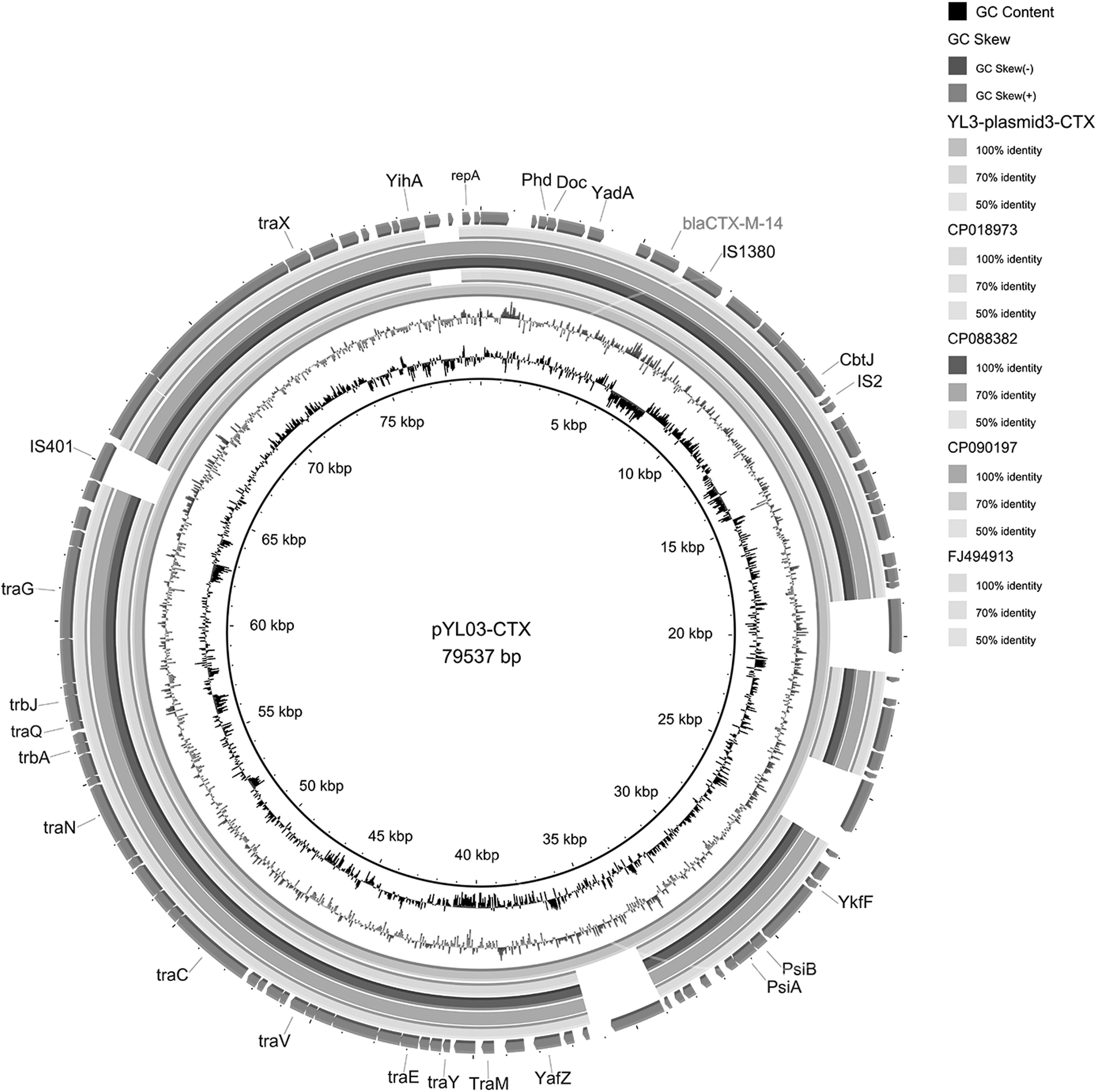
Genetic map of pYL03-CTX in E. coli strain YL03. From the inside circle to the outside circle, the fourth circle denotes plasmid pYL03-CTX. A comparison of the pYL03-CTX with similarly related plasmids using BLASTn (GenBank Accession Nos. CP018973 (the fifth circle), CP088382 (the sixth circle), CP090197 (the seventh circle), and FJ494913) (the eighth circle).
Analysis of conjugation experiments
Conjugation was performed using strain YL03 and EC600. Transconjugants (YL03-EC600) carrying the blaNDM and blaKPC were selected on imipenem (4 μg/mL) and rifampicin (2.5 mg/mL)-added BHI agar. Using PCR amplification and DNA agarose gel electrophoresis, the presence of blaKPC and blaNDM in the transconjugants (YL03-EC600) was identified (Fig. 7).
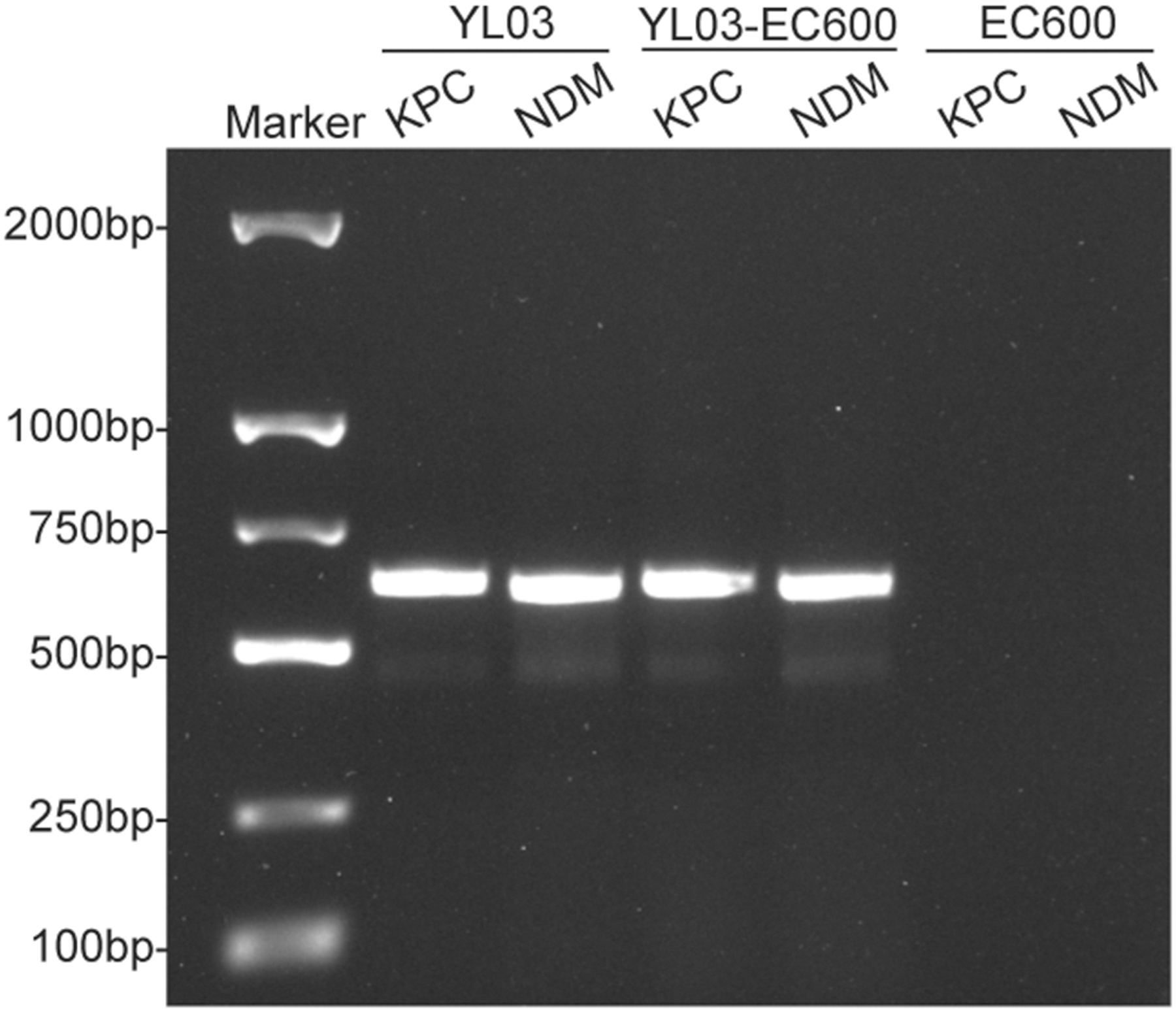
Results of blaKPC and blaNDM amplifications of E. coli strain YL03 and transconjugant (YL03-EC600).
Discussion
Owing to the CRE showing strong resistance to medicines and susceptibility to merely several antibiotics such as colistin, aminoglycosides, and tigecycline, clinical anti-infective therapy faces the challenge of no medication being available. This conclusion was supported by our antimicrobial susceptibility testing, which revealed that E. coli strain YL03 was highly resistant to most antibiotics.
For the purpose of better understanding the resistance determinants of YL03 isolates, WGS data were used. We discovered that YL03 isolates co-carried blaKPC-2 and blaNDM-5 using PlasmidFinder 2.1. Previously described strains that harbored both blaKPC-2 and blaNDM-517,24 were genetically distinct from YL03 isolates owing to their genetic environment, such as mobile genetic elements surrounding resistance genes, being different. These findings demonstrated that, despite the diverse genetic environments, strains with the coexistence of the blaNDM-5 and blaKPC-2 plasmids could stably exist in bacteria. The conjugation results also indicated the transferability of blaKPC and blaNDM in strain YL03, which may lead to the spread of such resistance genes.
KPC-2 and NDM-5 both hydrolyze a variety of β-lactams, particularly carbapenems. Although KPC-2 may also hydrolyze monobactams such as aztreonam, the majority of infections caused by KPC can be treated with ceftazidime–avibactam. Nevertheless, ceftazidime–avibactam has no inhibitory impact on NDM-5. 25 Thus, CRE that both carries KPC-2 and NDM-5 may become more resistant to carbapenems and other antimicrobials. Aztreonam–avibactam, 26 polymyxin B combined with meropenem, or amikacin and gentamicin 27 may be effective treatments for this strain of infection.
Insertion sequences and transposons, as common mobile genetic elements, enable bacteria to acquire antibiotic resistance determinants by migrating inside or across DNA molecules. 28 To date, the blaKPC-2 is generally embedded in the Tn4401 isoform, which belongs to the broader Tn3 family. The Tn4401 isoform includes the Tn3-tnpA, Tn3-tnpR, ISKpn7, blaKPC, and ISKpn6. 29 Nonetheless, the Tn1722 transposon, which belongs to the Tn3 family was also described as the blaKPC platform. 30 In our study, the genetic context of blaKPC-2 as observed in YL03 differs from the domestic and worldwide pandemic structures. YL03 contains a linear structure that is similar to the Tn1722-blaKPC-2 transposon, consisting of ISKpn27-blaKPC-2-ISKpn6.
However, YL03 did not contain Tn1722, and the original 1,540 bp ISKpn6, which is a member of the IS1182 family, was shortened to 239 bp. This phenomenon indicates that variations in insertion sequence result in a certain diversity of the blaKPC-2 gene environment, which may lead to the increasing prevalence of blaKPC-2 and differing epidemic status in various geographical areas. ISKpn6 and ISKpn27/ISKpn7-dnaA, as well as transposon Tn3 (tnpR), were frequently detected in the blaKPC-2 gene. ISKpn6 is generally located at the 3′ end of the blaKPC-2 gene, and ISKpn27/ISKpn7-dnaA is often located at the blaKPC-2 gene's 5′ end. It was noted that through ISKpn27-blaKPC-2-ISKpn6 or ISKpn6-blaKPC-2-ISKpn7-dnaA, blaKPC-2 may be transmitted worldwide. 31
For the gene environment of blaNDM-5, IncX3 is the most prevalent kind of plasmid carrying blaNDM and has only been observed in Enterobacteriaceae thus far. The blaNDM-5 was chiefly linked to the IS5 and IS30 family. In addition, IS26 or IS3000 transposons are typically seen around blaNDM. 32 In our study, pYL03-NDM containing blaNDM-5 belonged to the IncX3. This phenomenon suggested that IncX3, a common plasmid harboring blaNDM-5, had been widely disseminated and that the surrounding environment of blaNDM-5 had stable genetic structures under various bacteria.
In conclusion, the clinical isolate YL03, whose MLST type was characterized as ST44, showed resistance to most antibiotics but was sensitive to amikacin, tigecycline, and trimethoprim/sulfamethoxazole. Three plasmids that contained the majority of the YL03's resistance determinants were identified: an IncP-type plasmid carrying blaKPC-2, an IncX3-type plasmid carrying blaNDM-5, and an IncFII-type plasmid carrying blaCTX-M-14. In addition, the genetic structure of the pYL03-KPC plasmid that carried blaKPC-2 in the YL03 isolates was different from other strains. Because YL03 contained NDM-5 carbapenemase, it was not susceptible to ceftazidime–avibactam, which was used against KPC carbapenemase. All in all, because Enterobacteriaceae may simultaneously contain several carbapenemases that lead to no effective antibiotics for treatment, a more detailed study needs to be carried out on this group. At the same time, hospitals and relevant authorities should monitor these resistant strains closely and actively search for solutions.
Footnotes
Authors' Contributions
Q.X.: Writing—original draft (lead); writing—review and editing (lead); conceptualization (equal). H.L.: Conceptualization (lead); formal analysis and visualization (lead); writing—review and editing (equal). W.L.: Software (lead); formal analysis (equal); methodology (equal); writing—review and editing (equal). Y.Z.: Methodology (lead); visualization (equal); writing—review and editing (supporting). Y.Z.: Investigation (lead); software (equal); writing—original draft (supporting). Z.X.: Validation (lead); writing—review and editing (equal); writing—original draft (supporting). D.C.: Supervision (lead); writing—review and editing (equal); writing—original draft (supporting).
Availability of Data and Materials

Disclosure Statement
No competing financial interests exist.
Ethical Approval
Ethical approval was not applicable to this article.
Funding Information
This work was supported by grants from the National Natural Science Foundation of China (Grant No. 81974318) and the China Primary Health Care Foundation (Grant No. MTP2022D027).