






Abstract

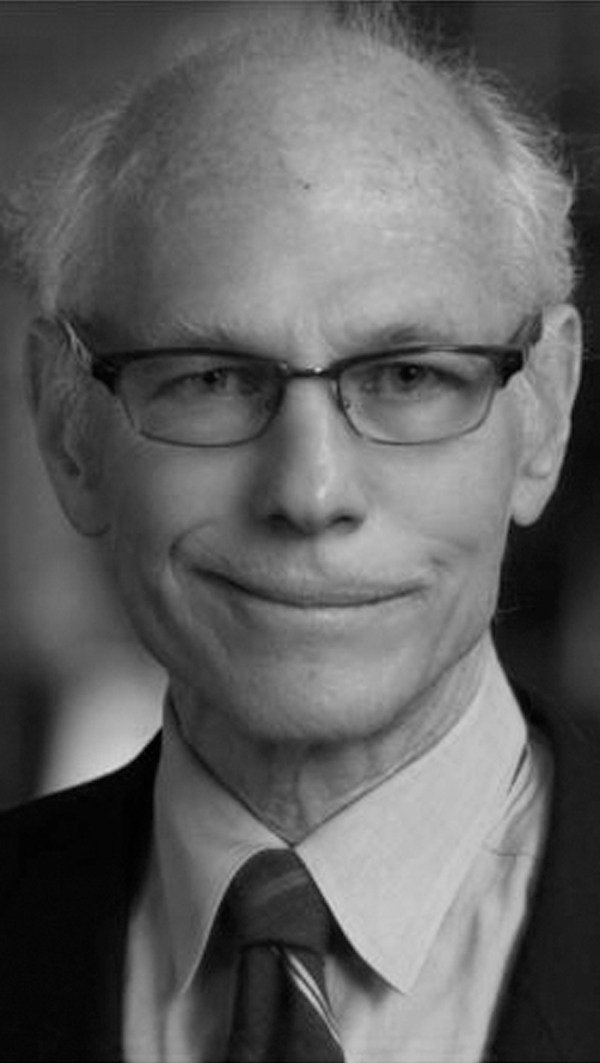
We learned last week that our friend and colleague Dr. Harvey Levin died peacefully in his home after a quiet struggle with motor neuron disease. Dr. Levin was a true gentleman and scholar in the field of traumatic brain injury. He will be sorely missed by his many friends and colleagues.
Since we heard the sad and mournful news, there has been an outpouring of warmth and appreciation of his personal and professional contributions from the community.
Dr. Geoff Manley said, “Harvey's contribution to our field, and to TRACK-TBI specifically, lives on in his enormous body of work and the tremendous insights we have gained from his relentless inquiry. This research will be a lasting legacy for those of us who were privileged to know him, collaborate with him, and benefit from his wisdom, creativity, and passion for the field of traumatic brain injury. From his early days with the Traumatic Coma Data Bank, his seminal work and ways of thinking through the critical questions of TBI natural history will continue to guide us and the next generation of TBI researchers.”
“Personally, Harvey was a source of inspiration, vitality, and great joy for all of us. Who will forget Harvey walking briskly from hotel to meeting site and back—never the shuttle bus—inviting whoever wanted to stride along with that wide and welcoming smile?”
Dr. Alex Valadka said, “My first impression of Harvey: I was a very new junior faculty member, and I couldn't believe that this senior and highly respected researcher was treating me with such kindness and patience. Over the decades that we worked together, his demeanor never changed. As we all know, his gentle manner belied his tremendous energy and passion for his work. This diminutive man was a giant in research, mentoring, and raising the standard of what it means to be an academician.”
Dr. Dalton Dietrich said, “Harvey taught me the importance of critically evaluating neuropsychological and cognitive deficits in patients living with TBI. His seminal publications helped guide research questions in many laboratories investigating injury mechanisms and the testing of therapeutic interventions for improving behavioral outcomes.”
Dr. Patrick Kochanek said, “Harvey Levin's work had special importance to the field of pediatric TBI. One of his early reports, published 30 years ago, was a groundbreaking article from the Traumatic Coma Data Bank that introduced the concept of discontinuity between age and outcome in severe pediatric TBI. That article identified infants and children less than four years old as a particularly high-risk group—a finding that has served as an enduring contribution. He went on to publish well over 60 articles specifically focused on pediatric TBI outcomes within his many broader contributions across the entire field of TBI.”
Dr. David Hovda said, “This is sad news. Harvey was such a great scientist, friend, and mentor. His work had such a great impact on our field of neurotrauma, and his findings helped so many children with TBI.”
Dr. Mike McCrea said, “Harvey was the truest form of ‘a gentlemen and scholar.’ It was an honor and joy to get to know him over the years, and he will be dearly missed.”
Dr. David Menon said, “I collaborated with Harvey over the last few years, most closely in a joint analysis across CENTER-TBI and TRACK-TBI data. Before that, I (of course) knew of him, but had not met or worked with him. I am immensely grateful that I did get the chance to do so. He was a wonderful person, with an enthusiasm for research that might be expected in a young post-doc, alongside methodological rigor, both of which were coupled with wisdom that came from years of working in the field. He was a wonderful collaborator, a distinguished clinical scientist, and a real gentleman. We will miss him, but should remain grateful for the contributions he made to science and clinical care in traumatic brain injury.”
Dr. Kevin Wang said, “I will miss Harvey as a friend and as an always helpful and supportive colleague. But his enormous contributions to neurotrauma science and impacts on improving patient care will live on.”
As for me, I remember fondly the time that Harvey and I went for a run together in Bethesda before a National Institutes of Health event. He even bought me a bagel at Bethesda Bagels. Harvey was incredibly welcoming to me when I was a new researcher in the field. He made me feel like part of a scientific family—a feeling that I still have, and treasure.