







Abstract

After an initial reading of the contemporary molecular biology textbooks, an alien visitor to planet earth might think that life and cell biology are primarily governed by two omnipresent biomolecules: nucleic acids and proteins, known as the first and second alphabet of biology, respectively. Biology involves molecular actors well beyond nucleic acids and proteins, however.
Carbohydrates, glycans in particular, are the underappreciated building blocks of life. Glycans are polymers of simple sugars (monosaccharides) that conjugate with proteins and lipids to form, respectively, glycoproteins and glycolipids. These conjugated molecules are ubiquitous in nature and hold broad significance in health and disease, impacting on human, animal, and plant life across ecosystems.
A growing body of literature is now pointing toward the important role glycans play in a wide range of diseases such as type 2 diabetes and cardiovascular health, as discussed in the December 2019 special issue of OMICS. Yet, the conceivable applications of glycan and glycobiology science are much broader than disease biomarkers and diagnostics.
In the early 20th century, the field of biochemical genetics has paved the way for certain types of “variability science” that subsequently began to examine the mechanisms of intra- and interindividual differences in outcomes of health interventions such as drugs (e.g., pharmacogenomics), nutrition (e.g., nutrigenomics), and vaccines (e.g., vaccinomics). In this context, theranostics refers to the increasing overlap and fusion of therapeutics and diagnostics scholarships, especially for the past two decades (Fig. 1). Rethinking glycobiology scholarship through the conceptual lens of theranostics might offer new vistas to diversify the scope of applications related to glycan variation across individuals and world populations.
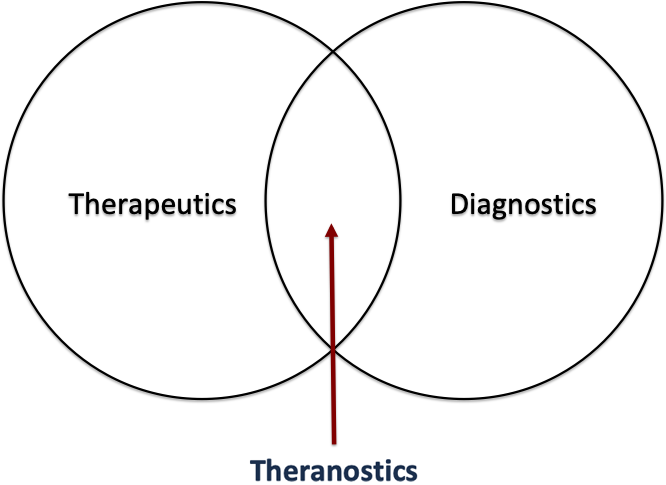
Theranostics: the overlap/fusion of therapeutics and diagnostics.
This editorial introduces the term glyco-theranostics and defines it as an emerging scholarship on clinical, ecological, and planetary health diagnostics and therapeutics informed by carbohydrates, glycan variation in particular, which offers mechanistic explanations for intra- and interindividual variations in outcomes of health interventions such as drugs, food, vaccines, and medical devices, among others. Glyco-theranostics might also include diagnostics on disease susceptibility and progression that, in some cases, overlap with theranostic markers on health intervention outcomes.
Because the scope of glyco-theranostics encompasses diverse health interventions, it encourages us, the researchers, to keep our eye on the ball, that is, on clinical relevance and biological plausibility of biomarker data. This is very much needed in a time of Big Data so as to make sense of numerous biomarker—phenotype association claims in the literature.
It is noteworthy that theranostics does not rely on a singular technology. By virtue of its conceptual foundation in theranostics, rather than a single technology platform, glyco-theranostics is well poised to productively engage the glycan-based biomarkers with multiomics data streams, thus helping triangulate biomarker evidence across genomics, proteomics, metabolomics, glycomics, and other omics-es, before considerations for clinical implementation.
Furthermore, I would like to suggest that glyco-theranostics might be, arguably, a low-hanging fruit to individualize drug and other health intervention outcomes, compared with disease-related glycan diagnostics. A key reason has to do with an often-overlooked interdisciplinary asymmetry between disease phenotypes and theranostic phenotypes.
Consider, for example, human genetic studies that aim to establish the mechanistic linkages between genetic variation and clinical disease phenotypes. To this end, human genetics is largely an observational science. Most common complex diseases develop over a long time frame, in the order of years and decades, before disease phenotypes are clinically discernible and measurable. A corollary of this nuance is that for most clinical phenotypes on human diseases, environmental contributions and confounding are incalculable or difficult to account for. By contrast, an investigator in clinical pharmacology can actively choose and control the drug dose and exposure. In a theranostic drug biomarker study, one can also measure the baseline predrug phenotypes and subtract that value from the postdrug phenotype, thus being able to calculate the net-drug-related phenotype. In the case of such theranostic phenotypes, rechallenge/challenge with the intervention and repeated measure study designs are also feasible for phenotype ascertainment and enrichment.
Glycomics and glycobiology scholarship would be well served by broadening the scope of disease diagnostics focused applications to glyco-theranostics as well. This would help explain, predict, and individually tailor heath intervention outcomes using glycomic biomarkers, thus contributing to personalized medicine. The future looks bright for personalized glycomedicine and its applications toward both disease diagnostics and glyco-theranostics. I welcome your articles on these emerging hot topics in 2020.
Disclaimer
The views expressed reflect the personal opinions of the author only.
Footnotes
Author Disclosure Statement
The author declares there are no conflicting financial interests.
Funding Information
No funding was received for this article.