







Abstract
COVID-19 is a systemic disease affecting multiple organ systems and caused by infection with the SARS-CoV-2 virus. Two years into the COVID-19 pandemic and after the introduction of several vaccines, the pandemic continues to evolve in part owing to global inequities in access to preventive and therapeutic measures. We are also witnessing the introduction of antivirals against COVID-19. Against this current background, we review the progress made with nanotechnology-based approaches such as nanoformulations to combat the multiorgan effects of SARS-CoV-2 infection from a systems medicine lens. While nanotechnology has previously been widely utilized in the antiviral research domain, it has not yet received the commensurate interest in the case of COVID-19 pandemic response strategies. Notably, SARS-CoV-2 and nanomaterials are similar in size ranging from 50 to 200 nm. Nanomaterials offer the promise to reduce the side effects of antiviral drugs, codeliver multiple drugs while maintaining stability in the biological milieu, and sustain the release of entrapped drug(s) for a predetermined time period, to name but a few conceivable scenarios, wherein nanotechnology can enable and empower preventive medicine and therapeutic innovations against SARS-CoV-2. We conclude the article by underlining that nanotechnology-based interventions warrant further consideration to enable precision planetary health responses against the COVID-19 pandemic.
Introduction
Innovations in vaccines and most recently, antiviral drugs against the COVID-19 pandemic caused by the SARS-CoV-2 infection have played a prominent role in planetary health over the past 2 years since the beginning of the pandemic. As new preventive, diagnostic, and therapeutic approaches continue to emerge against COVID-19, and in particular, antiviral drugs (Jayk Bernal et al, 2022), there is still no end in sight for the pandemic as of the third quarter of 2022, and in part due to global inequities in access to vaccines and other public health measures against the virus.
Health care and public health professionals worldwide are facing new challenges on how best to choose among the available pandemic interventions, be they vaccines, antivirals, or preventive public health measures. While new antivirals are being introduced, there is also a parallel need for new technologies and concepts to better forecast the interindividual and population variability in antiviral drug responses and side effects, not to mention in drug formulations (Al-Taie et al, 2022). If COVID-19 will evolve into an endemic disease in the near future, modern therapeutics and precision medicine-related technologies and concepts are much needed.
In this context, it is noteworthy that nanotechnology has found broad applications in antiviral research and development in the past. Yet, nanotechnology has not received the commensurate interest in the case of COVID-19 pandemic response strategies. For example, SARS-CoV-2 and nanomaterials are similar in size ranging from 50 to 200 nm. Nanomaterials offer the prospects to reduce the side effects of antiviral drugs, codeliver multiple drugs while maintaining stability in the biological milieu, and sustain the release of entrapped drug(s) for a predetermined time period, to name but a few conceivable scenarios, wherein nanotechnology can enable and empower preventive medicine and therapeutic innovations against SARS-CoV-2.
This article reviews the progress made at the intersection of nanotechnology-enabled approaches to COVID-19 prevention and treatment, and what can be achieved (and the challenges therein) in the near future with the anticipated convergence of COVID-19 and nanotechnology.
Advancement of Nanotechnology in the Fight Against COVID-19
Nanotechnology is a broad and transdisciplinary concept that encompasses all branches of science, technology, engineering, and related fields, which functions at the nanometric size range (1–1000 nm) to analyze and manipulate material properties (Khuroo et al, 2014). Many nanocarriers have been established in the context of nanomedicine, including polymeric nanoparticles (NPs), nanoemulsions, lipid-based nanoparticles (LNPs), dendrimers, metallic NPs, and quantum dots, among others (Hassan et al, 2021; Patnaik et al, 2021). The various nanocarriers along with their unique attributes are presented in Table 1.
Specific Attributes of Nanotools
CNT, carbon nanotube.
The advantages of nanocarriers, which are a result of their small size and large surface area, include improved aqueous solubility and cellular internalization rate, enhanced drug biodegradability, and biocompatibility, sustained-release behavior, greater coentrapment capability, enhanced therapeutic efficacy with reduced off-target side effects (Behera and Padhi, 2020). Furthermore, target ligands can be integrated on the surface of NPs to prevent quick clearance and aggregation, increasing their stability in vivo and allowing for targeted drug delivery and controlled release (Padhi et al, 2018). By limiting untimely drug release and degradation, as well as evading renal and hepatic clearance, nanocarrier-based delivery systems improve the half-life of the encased drugs (Luo et al, 2014).
Furthermore, surface-engineered nanocarriers have stealth properties that allow them to avoid immune identification and achieve higher cellular absorption. Targeted nanocarriers have a higher endocytic rate, ensuring that an intended dose reaches the target cell at an appropriate concentration. The ability to provide a greater drug load requires fewer NPs to be administered, as well as a controlled drug release within the cells, culminating in minimum side effects.
The COVID-19 pandemic calls for a thorough examination of all existing nanotechnology tools. While nanomedicine approaches are currently harnessed to build vaccine carriers, other nanoapproaches need to be systematically explored to combat the current outbreak (Chauhan et al, 2020). Furthermore, because the drug development process is a time-sensitive and complex procedure demanding economic investments, it requires the emergence of novel and more efficacious therapeutic alternatives. Nanotechnology, in this aspect, can be a valuable ally in the fight against COVID-19, as it opens up new avenues for disease diagnosis, prevention, and treatment.
Nanotechnology offers considerable potential for identifying, treating, and preventing COVID-19. It might aid in the fight against COVID-19 in a variety of ways, including
developing personal protective equipment (PPE) for medical workers, and developing efficient antiviral disinfectants and surface coatings that can inactivate the virus and prevent it from spreading;
developing effective antiviral disinfectants and surface composites that can neutralize the virus and stop it from spreading;
developing nanocarriers for entrapping numerous drugs with enhanced therapeutic efficacy and reduced side effects; and
developing nanovaccines that can enhance cellular and humoral responses (Campos et al, 2020), as shown in Figure 1.
The sections below entail an overview of the application of nanotechnology in these contexts.
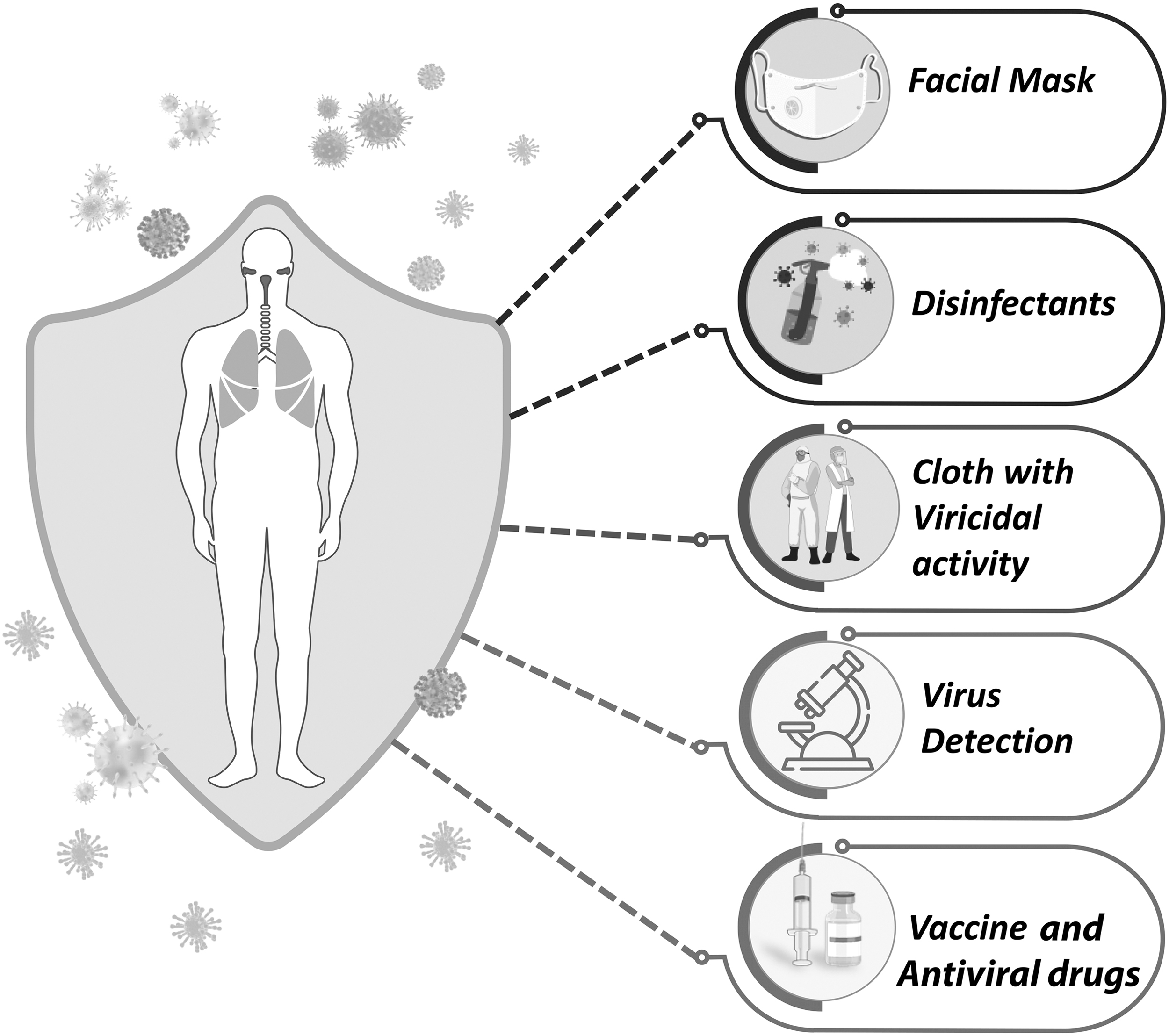
Schematic representation of possible strategies to tackle coronavirus 2019 using nanotechnology tools. Nano-based materials could (1) help suppress transmission through nanofiber-based facial mask and respirators; (2) help in the surface decontamination through nanotechnology-based antimicrobial and antiviral formulations; (3) improve the safety of health care workers through the development of nano-based PPE; (4) enhance the speed and sensitivity of virus detection; and (5) help in the development of more efficient and safer treatment and vaccines. PPE, personal protective equipment.
Nanotechnology for SARS-CoV-2 Prevention
COVID-19 is an infectious disease that spreads from person to person through microdroplets generated during sneezing and coughing, as well as by encountering contaminated materials. SARS-CoV-2 has been found to survive in aerosolized form for a time period of 3 h and >9 days at temperatures of ∼30°C and higher (Kampf, 2020). In such a prevailing scenario, WHO advocated wearing masks, maintaining personal hygiene, disinfecting surfaces, and employing the routine usage of disinfectants such as alcohol, soap, sodium hypochlorite, and hydrogen peroxide.
Nanomaterials for masks and air purifiers
Nanotechnology has led to the development of advanced materials for biological and chemical risk protection that are more flexible, robust, and safer (Yetisen et al, 2016). Products such as facemasks, laboratory or medical aprons, and other materials have been fabricated to enable novel functionalities such as hydrophobicity and antibacterial activity without compromising the structure or flexibility of the material (Spagnol et al, 2018). The hydrophobic property of PPE materials can operate as a self-contained barrier against airborne droplet nuclei produced by coughing or sneezing. Nanoscale three-dimensional (3D) surfaces, material patterning, and additional coating with hydrophobic NPs are usually the optimal technologies used to create such composites (Mansi et al, 2019).
One of the most striking examples of how nanotechnology might strengthen personal protection during these trying times is the production of facemasks. Typical facemasks have a spacing between the knitted fibers of ∼10–30 μm, which is insufficient for preventing viral contact, and further narrowing this gap leads to a fall in the breath as well as elevations in temperature and pressure, rendering the user irritable.
The constant usage of facemasks has resulted in skin deterioration in many frontline health care personnel as well (Elston, 2020). Metal NPs of various metals such as silver, gold, and copper are reported to attenuate the infectivity of malignant viruses such as HIV, HSV, and HINI, and exhibit superiority over conventional antiviral therapies (Patoo et al, 2022). Copper and copper NPs exhibit antibacterial activity against Staphylococcus aureus, Escherichia coli, Listeria, and antiviral activity against SARS-like and SARS-CoV-2, influenza virus 5, and H1N1 by inhibiting their replicative potential.
Recent innovation of an antibacterial protective mask NANOHACK 2.0 using Copper3D PLACTIVE® antibacterial filament developed by Copper3D and manufactured on demand by CD3D using 3D printing technology exploits this unique property of copper and copper NPs. It is based on a patented and highly effective additive based on copper NPs, which transforms polylactic acid (PLA) thermoplastic completely into antibacterial nanocomposites.
A recent addition to innovations in the field of respiratory protective equipment is ReSpimask VK, wherein the RESPILON® nanofiber filter with a 99.9% filtration efficiency is enriched by accelerated copper oxide NPs that not only mechanically intercept viruses and bacteria, but it actively kills them as well (Singh et al, 2021). Furthermore, coating graphene layers on an unwoven mask may lead to the development of a reusable and recyclable mask. Graphene's outstanding hydrophobic and photothermal characteristics aid to reject approaching aqueous droplets while also allowing sunlight sterilization (Zhong et al, 2020).
N95/FFP2 facemasks can only guard against particulates with a diameter of 100–300 nm (Herron et al, 2020). Alteration of the fabric surface is another approach utilized to improve the self-protection of facemasks. In such a pursuit, copper and silver nanoparticles (AgNPs) exhibiting antibacterial properties can be used in a variety of fibers and materials, including cotton, polyalkene, polyester, polyamide, polyaramide, and cellulose-based polymers (El-Nahhal et al, 2020). Fudzhimori et al. (https://patents.google.com/patent/RU2550922C2/en) have presented technology for antibacterial textile products designed employing copper and iodide NPs. The fabricated system offered the ability to inactivate influenza viruses, and hence it can be anticipated to inactivate other viruses such as SARS-CoV-2 (Campos et al, 2020).
In addition to its use in cleaning products and PPE, nanotechnology has been investigated in the building of air purifiers to restrict the airborne transmission of the SARS-CoV-2 virus. A French company has released the TeqAir 200 air ionizer for sale. SARS-CoV-2 is close to the particle sizes for which air purifiers are efficient, hence it is expected that SARS-CoV-2 concentrations in the air will be reduced.
Despite the numerous advantages conferred by NPs for usage in PPE items, they need to be tested for any possible side effects, such as skin irritation, allergies, or any appended toxic consequences. NPs, on the contrary, can be shed from clothing during the cleaning process, and finally end up piling up in the environment as waste material. They must be carefully recycled to avoid adverse environmental implications as they may be a source of contamination.
Nanomaterials for surface decontamination
Nanotechnology has considerable promise in this domain for the development of more effective and appealing disinfection solutions. Surfaces with self-cleaning characteristics are now possible, owing to nanotechnology-based research for the development of innovative materials. These systems could contain antibacterial capabilities or the ability to deliver chemical disinfectants in a gentle manner, extending the duration of their activity. It can also aid in the introduction of novel qualities such as responsive systems, which provide active chemicals in reaction to diverse stimuli such as photothermal, electrothermal, and photocatalytic stimuli (Dalawai et al, 2020).
AgNPs, according to reported research studies, have significant antibacterial properties, and are one of the highly effective metal disinfectants against an array of microbes such as viruses, bacteria, and other microorganisms (Marassi et al, 2018). AgNPs are more effective antibacterial agents than their macrocounterparts due to the higher surface-to-volume ratio that results from their nanometric size. This broadens the range of reactivity with bacteria while also improving cellular absorption and penetration through biological membranes.
Furthermore, the size and structure of AgNPs influence their toxicity. Because of the increased reactivity and capacity to release ions in cells, the smaller the size range, the higher the toxicity profile (Salleh et al, 2020). The nanosilver particles typically measuring ∼25 nm possess natural antibacterial and antifungal properties. They have an extremely large relative surface area, increasing their contact with bacteria or fungi and contributing to their effectiveness against these pathogens.
Their mechanism of action is by suppression of respiration, basal metabolism of the electron transfer system, and transport of substrate in the microbial cell membrane, thereby affecting cellular metabolism and growth. With this background, a Malaysian company SHEPROS has developed a AgNPs-based sanitizer called Nano Silver Sanitizer with potential antimicrobial, antibacterial, and antifungicidal properties (Singh et al, 2021).
Despite their strengths, these created nanosystems face substantial challenges before they can be clinically available. Scalability and manufacturing costs, intellectual and regulatory science dimensions, as well as the possible toxicity and environmental repercussions of these systems, are all factors to consider in relation to their future deployment in an evidence-based manner (Chan, 2020). To improve infection control efficacy and environmental safety, additional studies into the use of nanotechnology to build more appropriate disinfection and sanitizing systems, as well as self-disinfecting surfaces, are called for.
Nanomaterials for point-of-care SARS-CoV-2 detection
At present, the spread of SARS-CoV-2 is a major and continuing concern worldwide, as with repeat infections with the virus and emerging variants. There are several molecular or serological-based techniques for the diagnosis of COVID-19 (Fig. 2). But a majority of these approaches are time consuming and require the intervention of professionals to perform the tests. Besides these conventional techniques, there are some point-of-care techniques based on lateral flow antigens, which can detect SARS-CoV-2. However, these approaches need further development for their accuracy and sensitivity. Therefore, the availability of reliable point-of-care detection techniques becomes highly necessary in the present day.
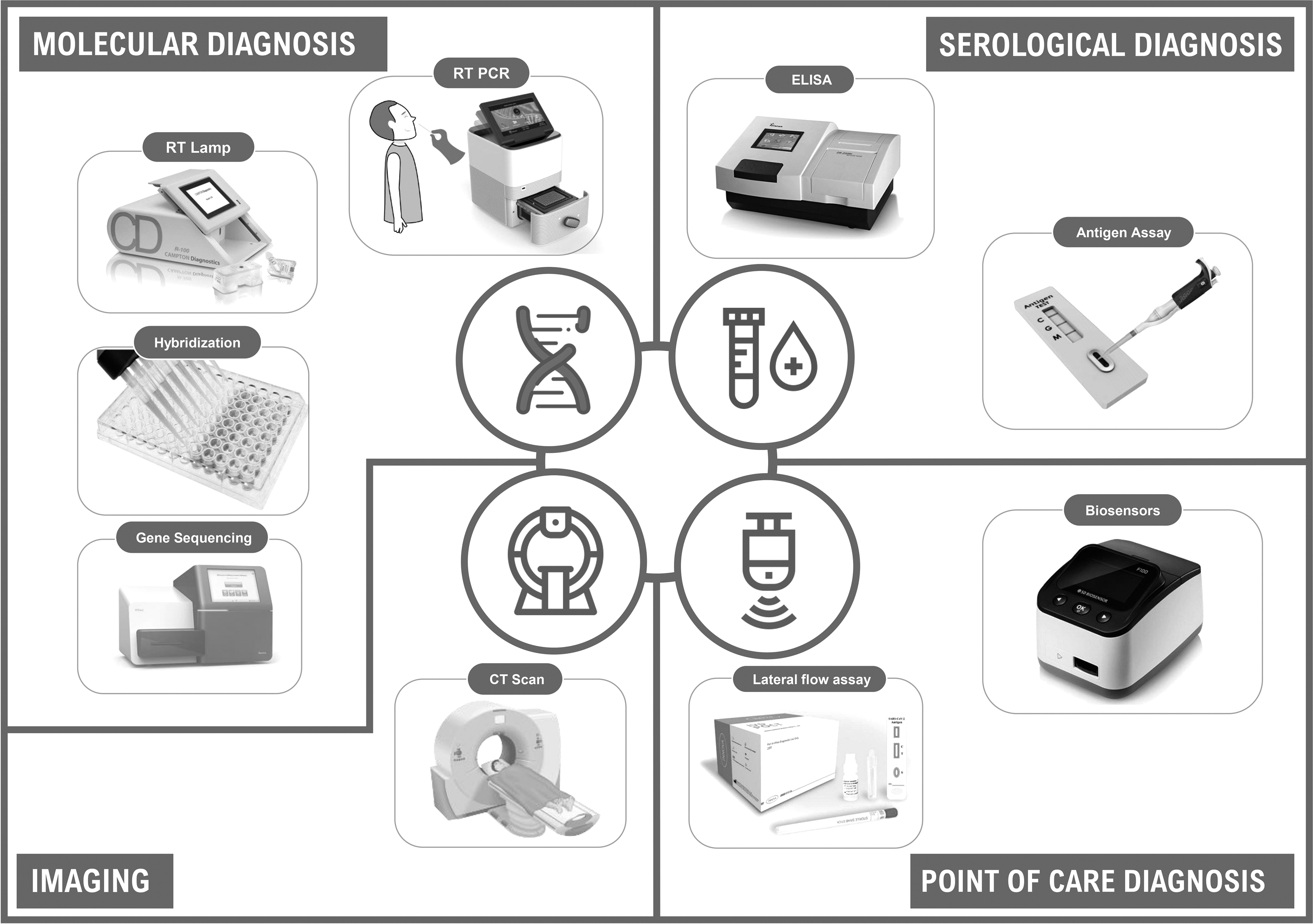
Currently available approaches to detect SARS-CoV-2.
A nanomaterials-based detection platform could be a potential resource to fight against the spread of the virus. Also, optical biosensors could be a simple, fast, and reliable technique to detect the virus. A group of scientists from the University of Maryland, Baltimore developed a colorimetric-based diagnostic platform using plasmonic gold nanoparticles (AuNPs), which can detect SARS-CoV-2 in 10 min. The platform detects the viral RNA from the patient's salivary or nasal mucosa and changes the color from purple to blue.
An interesting part of the platform is that it can detect the virus on the first day of infection ensuring the least spread of the disease (Moitra et al, 2020). Furthermore, a study conducted by Yeh et al (2020) on metallic NP-based diagnostic tools having Surface-Enhanced Raman Scattering (SERS) and fluorescence activity showed rapid results with higher accuracy and specificity up to 90% toward virus capture and identification from clinical samples.
Further, a study showed that the functionalized magnetic NPs could be a potential resource to extract viral RNA in a time-efficient approach. The use of magnetic NPs can club the lysis and elution step into a single step, and reduce the isolation time to 20 min for several samples. This approach not only reduces the time for diagnosis but also reduces the risk of contamination of COVID-19.
In addition, to prevent the spread of the infection, it is important to detect the virus before it enters the human body. Scientists are exploring various techniques with the use of nanomaterials, including metallic NPs, magnetic NPs, and metal–organic frameworks to detect and quantify the virus outside the human body (Rabiee et al, 2020). Table 2 depicts different approaches available for the detection of SARS-CoV-2 and their advantages and limitations.
Comparison of Various Detection Techniques for SARS-CoV-2
CT, computed tomography; ELISA, enzyme-linked immunosorbent assay; RT-PCR, real-time reverse transcription polymerase chain reaction; RT-LAMP, reverse transcription loop-mediated isothermal amplification.
Therapeutic Strategies for the Circumvention of SARS-CoV-2
Al-Taie et al (2022) recently underlined that “molnupiravir and nirmatrelvir–ritonavir are oral antivirals becoming available around the world in the current historical moment when we are facing the spread of omicron SARS-CoV-2 variant globally.” Antiviral therapies, immunological therapy, anti-inflammatory therapy, vaccines, and other treatments for COVID-19 face the challenges posed by new virus variants and many unknowns about the pathophysiology of this new disease (Kang et al, 2020; Shah et al, 2020).
Conventional therapies for viral infections can gradually diminish in effectiveness due to viral alterations and the emergence of new viral strains (Strasfeld and Chou, 2010). Developing broad-spectrum antiviral drugs that are less susceptible to resistance and can be used to treat a wide range of viruses, including novel virus variants, are of major interest in the current historical moment of the pandemic. New drug development, on the contrary, is slipping behind demand due to the time-consuming processes that are nonetheless necessary to establish efficacy and safety (Chen et al, 2020). Integrated research initiatives aimed at the development of new antiviral treatments targeting various phases of the viral replication cycle are critical against ecological crises by infectious pathogens (Revuelta-Herrero et al, 2018).
Drug repurposing seems to be an efficient strategy to accelerate and expedite the treatment of coronavirus. Several groups have been working on the design and development of novel inhibitors of coronavirus protease and repurposing existing drugs to combat COVID-19 (Elmezayen et al, 2021, Khan et al, 2020). The availability of such repurposed medications' pharmacological profile, safety, and efficacy outcomes instills trust in clinicians, reduces the financial load on researchers, and allows for speedy regulatory approvals.
Nanotechnology offers prospects for clinical medicine by allowing drugs to be delivered to the target site with lesser adverse effects. Nanotechnology has a diverse spectrum of implications in the fight against COVID-19, with the potential ability to disrupt virus–cell interaction, membrane fusion, cellular internalization, transcription, translation, and viral reproduction, as well as activate intracellular circuits that inflict irreversible virus damage (Mainardes and Diedrich, 2020).
Nanotechnology has garnered much attention in the biomedical field in the last decade because of its use in domains pertaining to targeted drug and gene delivery, imaging, sensing platforms, as well as the advancement of potent therapeutics against viral, bacterial, and fungal infections (Padhi et al, 2018; Patra et al, 2018). It can also be used to deliver a variety of drugs with differential physicochemical attributes and seen in this light, offers prospects to combat SARS-CoV-2 as well.
Due to the shielding properties of some nano-sized materials, the nanometer-size spectrum of nanomaterials guarantees simple access to cells and precludes degradation of encapsulated drugs (Wang et al, 2018). Because SARS-CoV-2 has a diameter of reportedly in the 50 − 200 nm range (Chen et al, 2020; Rastogi et al, 2020), which is within the nano-size range, biocompatible nanostructures can be persuasive drug delivery options for simultaneously identifying and annihilating this novel coronavirus through multiple interventions, as has been done earlier against several viral infections. High surface energy associated with the designed nanodelivery systems may result in robust biomolecular adhesion. This property can be tweaked to accurately imitate viral features and effects, prompting the immune system to produce antibodies and immune cells to fight the deadly viral infections (Schöttler et al, 2016).
The next section presents a comprehensive overview of investigations on the prospects for the usefulness of various nanocarriers for therapeutic purposes, which suggests that nanomaterials could be suitably explored to develop many potential therapeutic interventions in the near future to tackle COVID-19 as depicted in Figure 3. The nano-based approaches used for encapsulating repurposed drugs for the treatment of COVID-19 are discussed, which could strengthen the currently available therapeutic platforms for the treatment of COVID-19–related viral infections and comorbidities.
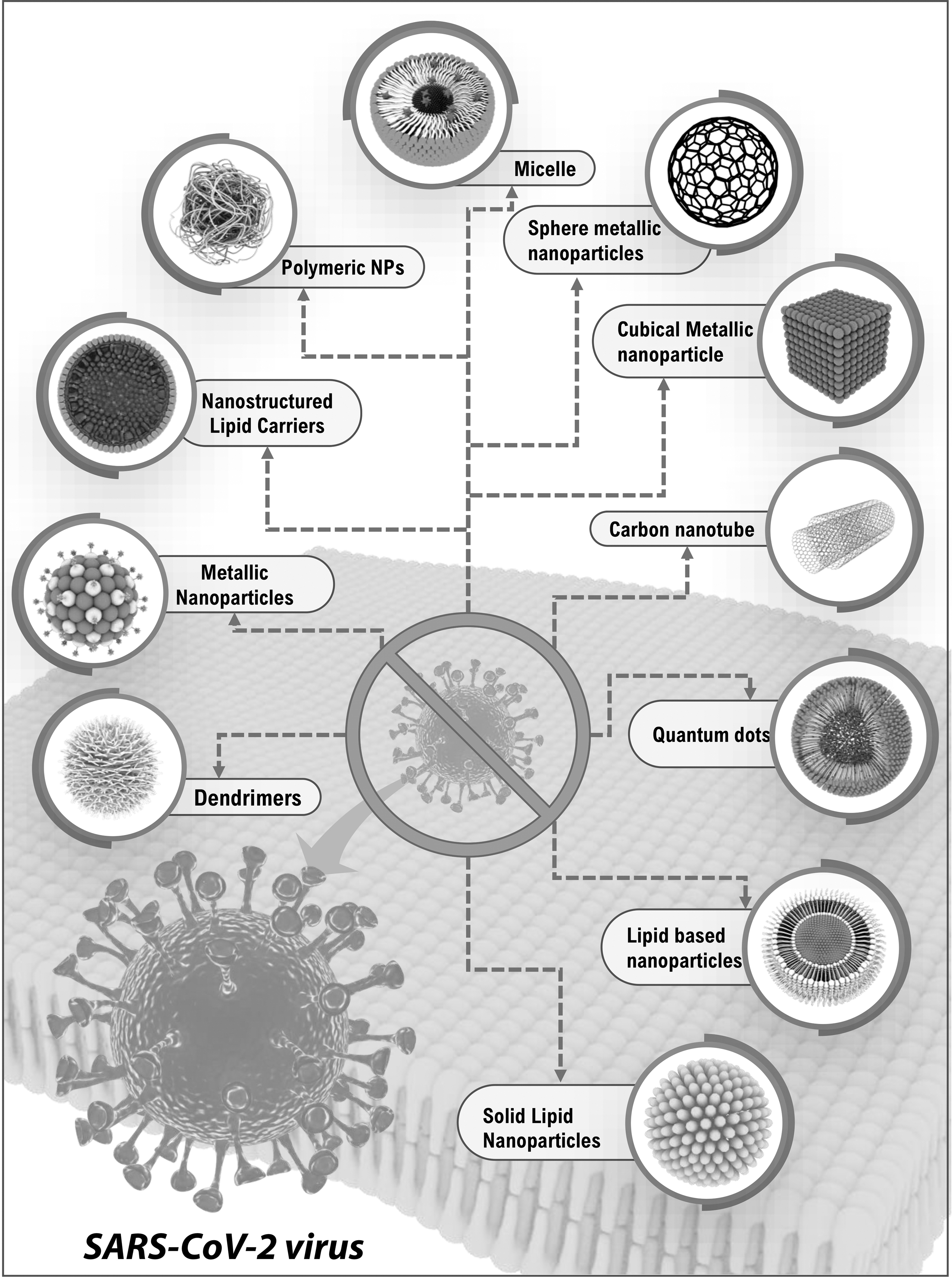
Different types of nanoparticles applied in the design of nanocarriers in battling COVID-19.
Polymeric NPs
Controlled drug release formulation is often used in clinical practice. Polymeric NPs are the most common type of nanocarriers capable of modulating the pharmacokinetic parameters of the encased drug molecule (Lee and Yeo, 2015). Solvent evaporation, ionic gelation, spray drying, living- or free-radical polymerization, nanoprecipitation, and polymer dispersion technique are the major methods followed for fabricating polymeric NPs.
Numerous biodegradable polymer-based products have been approved by the FDA and the European Medicines Agency (EMA) for usage in the production of NPs for the specific delivery of novel antiviral therapeutics. Because polymeric NPs may be tailored to hit specific targets and prevent virus adhesion to host cell receptors, they are noteworthy candidates for use against viral illnesses. These features are relevant for controlling viral illnesses, as well as reducing the associated side effects (Singh et al, 2017), enhancing antiviral efficacy with appreciable safety, and combating cellular drug resistance (Cagno et al, 2018).
COVID-19 infections are progressively being recognized as escalating to a hyperinflammatory state characterized by a fast progressing cytokine storm before the symptoms of abrupt respiratory failure and mortality (Mehta et al, 2020). A clear comprehension of the biology of acute inflammation can help researchers create novel treatments for inflammatory illnesses (van der Poll et al, 2017). The supremacy of the proinflammatory signaling circuit along with oxidative stress fuels the occurrence of proinflammatory states that are difficult to cure. In this case, targeted delivery using a nanotechnology method stands out as a viable option. A study was carried out on squalene (SQ) decked prodrug-based NP formulation entrapping adenosine (Ad) and tocopherol (Vit E) building on the latter idea (Dormont et al, 2020).
In numerous mouse models of inflammation, the nanoformulation may target inflamed regions for selective or targeted Ad receptor activation and antioxidant activity. These qualities and functionality, together, support the utilization of pharmacotherapeutic interventions with high antioxidant capacity, allowing for better management and optimization of Ad pharmacological use in acute inflammatory illnesses. The SQ-decorated multidrug-entrapped NPs can be a novel strategy to work across oxidative stress, inflammatory response, as well as controlled release of therapeutic molecules at the site of inflammation, potentially opening up new opportunities in counteracting unregulated inflammation in a complex multifaceted disease such as COVID-19.
A study conducted by Ge et al (2004) reported the capacity of small-interfering RNA (siRNA)–entrapped polyethyleneimine (PEI) NPs to inhibit influenza virus multiplication from an invariant genetic region associated with virus susceptibility. PEI complexes proved to be effective siRNA carriers into the lungs, reducing viral infection by 1000-fold compared with certain other oligonucleotide-encoding vectors (Ge et al, 2004).
Cyclodextrin is a natural cyclic polysaccharide that contains the fundamental units of α, β, and γ, and it has been extensively investigated as a pharmaceutical solubilizer for developing formulations that use host–guest complexation to dissolve hydrophobic and hydrophilic pharmaceuticals. It is one of the generally recognized safe substances for human administration that is considered safe and has a number of well-established formulations. Remdesivir, a cyclodextrin-based formulation, was recently licensed by the FDA for the treatment of COVID-19, and it has shown encouraging results in clinical trials against several other viruses, including MERS-CoV (Sheahan et al, 2020).
Adjuvant therapy involving polymeric NPs can capture and remove toxic compounds from the body. NPs can be tailored to bind viral proteins, similar to antiviral medicines, reducing disease pathogenicity. Bawa et al (2016) have demonstrated that polymer-coated NPs can capture and eliminate viral particles. After averting cellular internalization, nanoviricides attach to various virus receptors and neutralize viral replication. NPs complexed with targeting proteins boost the affinity and specificity of the intended target virus, and may offer new therapeutic paradigms to treat novel diseases.
Polymers such as PLGA, PLA, poly (ethylene glycol)-poly (-caprolactone) (PEG-PCL), and PLA-PEG have been researched extensively as nanocarriers for the systematic distribution of drug molecules and biomolecules for the treatment of viral and other diseases (Makadia and Siegel, 2011). Yavuz et al (2018) formulated a novel antiviral cocktail therapy approach utilizing biodegradable polymeric NPs. They constructed PEG-PLA–based cocktail NPs to encompass HIV-1 entry inhibitors and combined them with reverse transcriptase inhibitors, resulting in potent anti-HIV-1 activity (Yavuz et al, 2018).
The infection causes activated immune cells in COVID-19 patients to produce inflammatory cytokines (Hojyo et al, 2020). In the past, nebulization of PLGA NPs coated with chitosan was able to stop the spread of eosinophils and neutrophils in the lungs due to intensive phagocytosis executed by white blood cells (Aragao-Santiago et al, 2016). Nanomaterials containing anti-inflammatory drugs inhibit the formation of intracellular reactive oxygen species in the lung epithelium, and prevent alveolar macrophages (AMs) from expressing IL-6 and the chemokine MIP-2. These findings suggest that developing efficient polymeric NP-based nanotherapies to convey antiviral drug therapies and immunomodulate cytokine storms in COVID-19–infected patients with respiratory concerns might be a viable option.
Lipid-based nanoparticles
Because of the increased biocompatibility provided by the lipid composition, NPs produced from lipids are notably appealing for biomedical applications (Kumar et al, 2016). Phospholipids, fatty acids, mono-, di-, and triglycerides, waxes, and oils are examples of lipid raw materials that organize in water in various structural systems owing to their hydrophobic and amphiphilic properties.
The formulated LNPs resemble cell membranes, and this may be a plausible reason for the lower toxicity profile as compared with other nanocarriers. As a consequence, lipid NPs have lower toxicity than other nanomaterials. LNPs have already been studied for the treatment of HIV, herpes, and hepatitis B virus (HBV) and hepatitis C virus (HCV) due to their ability to encapsulate multiple types of antiviral drugs, and thereby help facilitate delivery from the administration site to the target (Singh et al, 2017).
The cytokine storm by COVID-19 is characterized by increased production of proinflammatory cytokines, which contributes to organ dysfunction and rapid clinical degeneration (Soy et al, 2020). siRNA encased with lipidic NPs were specifically designed to silence the chemokine receptor CCR2, which inflammatory monocytes use to locate inflammation sites. CCR2 messenger RNA (mRNA) accumulates in inflammatory locations unless it is properly degraded in monocytes. In this approach, the problem of unregulated monocyte recruitment in inflammatory processes was overcome, with encouraging outcomes when studied in mice models (Sun et al, 2020).
The liposomes can be surface decorated with ligands to make them a “stealth liposome,” and can entrap as well as deliver targeted and stimulus-responsive drugs. It is one of the ideal nanocarriers for drug formulation owing to its biocompatibility and biodegradability, and it could be a framework for designing a novel formulation to treat COVID-19. Synthetic peptide-based liposomes are also noteworthy (Ohno et al, 2009; Su and Kang, 2020). The chemically linked peptide-liposome was instrumental in promoting cytotoxic T cells, which eliminate the virus load (Ohno et al, 2009).
Because of its capacity to facilitate intracellular delivery of a range of medications, liposome-based carriers have also been employed to encapsulate antivirals for use in the treatment of infected cells. Furthermore, lipid content influences cell infectivity. It has been observed that cationic and anionic liposomes interact with equine herpesvirus type 1 (EHV-1) and inhibit infection. Liposomes are microscopic phospholipid bubbles with a bilayered membrane that have garnered research and clinical interest as pharmaceutical carriers of marked potential in the past few decades (Torchilin, 2005). Liposomes offer therapeutic potential in the area of drug delivery, cancer treatment, and gene therapy. They have been used as carriers for antivirals, antibacterial, anticancer, and antifungal drugs (Maherani et al, 2011).
A recent study was conducted on EHV-1, an important pathogen, globally. EHV-1 binds to cellular receptors and activates phospholipid scramblase followed by subsequent exposure of the phosphatidylserine (PS) on the outer leaflet of the plasma membrane. The role of phosphatidyl serine and the interaction of differently charged phospholipids with virus particles, which influences the entry and infectivity of viral particles, were investigated. The study concluded that liposomes containing negatively charged PS or positively charged DOTAP (N-[1-(2,3-Dioleoyloxy) propyl]-N, N, N-trimethylammonium) inhibited EHV-1 infection, while neutral phosphatidylcholine (PC) was ineffective, suggesting that charged phospholipids with antiviral effects could be used to inhibit EHV-1 infection (Kolyvushko et al, 2020).
To improve target selectivity, liposomes are routinely complexed with ligands such as hydrophilic polymers, proteins, and monoclonal antibodies. Given that AMs remove debris from the lung surface that might block pneumocytes' therapeutic advantages, this hypothesis is especially intriguing in the context of COVID-19 therapeutics. When protein or mAb (monoclonal antibody) surface modification was performed, this approach was demonstrated to offer selectivity to nanocarriers toward viral proteins (Padhi et al, 2020).
Furthermore, these customized liposomes boosted cellular internalization, indicating that they may be employed to control antiviral activity in infected cells. For example, liposomes containing the PI1 protease inhibitor conjugated with PEG and an HIV-directed mAb fragment inhibited HIV-1 replication in a sustained and targeted manner (Clayton et al, 2009).
Solid lipid NPs (SLNs) and nanostructured lipid carriers (NLCs) are two emerging nanosystems that are predicated on solid lipids or a blend of solid and liquid lipids. Despite their physicochemical differences, both nanosystems have been employed to deliver poorly soluble therapeutics through a variety of administration routes (Naseri et al, 2015). The concentration of ritonavir-entrapped SLNs in the spleen and thymus was higher than that in plasma, indicating its exclusivity in targeting intestinal lymphatic regions (Clayton et al, 2009). In the case of SARS-CoV-2, comparable strategies can be conceivably used to target lopinavir or lopinavir/ritonavir combinations.
Rifampicin (RFP)-entrapped SLN (RFP-SLNs) were studied for their ability to target AMs where the formulated particles had an average size of 829.6 nm. RFP-SLNs were noted to have greater uptake to AMs (Song et al, 2015). The concentration of RFP in AMs was substantially larger than that in alveolar epithelial cells at each time point after pulmonary delivery of RFP-SLNs in Sprague-Dawley rat models (Chuan et al, 2013). SLNs are a successful approach for targeting RFP administration to AMs. Because AM is a type of cell involved in infectious lung disorders such as COVID-19, these nanoformulations could be a promising candidate for COVID-19 treatment and call for further research (Prasanna et al, 2021).
Dendrimers
Dendrimers, as innovative nanocarriers capable of improving the efficacy of medications and bioactive substances, constitute a breakthrough in the field of nanotechnology. Because dendrimers have a high proclivity for forming strong contacts with viruses, they may be suitable antiviral defense systems.
Polycationic dendrimers based on the main amine were utilized in emerging research to evaluate the efficiency of in vitro antiviral treatments against MERS-CoV. The effect of dendrimer size and terminal charge on the ability of the virus to create lesions in infected Vero cells was studied (Kandeel and Al-Nazawi, 2020). Polyanionic dendrimers offer prospects to transport drugs while also increasing antiviral activity (Chuan et al, 2013). Dendrimers can suppress the herpes simplex virus in the treatment of attendant diseases.
The major modes of action involve hindering the viral attachment to target cells, preventing transmission, and disrupting infection. Dendrimers appear to be viable delivery systems for the treatment of infectious disorders (Kandeel et al, 2020). However, more research is urgently needed to comprehend their mechanism of action furthering its application toward COVID-19. Although dendrimers have not been investigated against SARS-CoV-2, their efficacy in the treatment of viral infections has been demonstrated, suggesting that they could be a promising future strategy in the fight against COVID-19.
Quantum dots
Carbon quantum dots (CQDs) in conjunction with boric acid were used to suppress the human coronavirus HCoV-229E (Łoczechin et al, 2019). The functional groups (boronic acid) of the CQDs have a better affiliation with the virus receptors and glycoprotein S, impeding the virus binding to the cell (Mhlwatika and Aderibigbe, 2018). The CQDs were noted to be either engaged with the S protein of HCoV-229E or contacted with entrance factors to prevent infection. In addition, CQDs were able to stop viral replication.
In this sense, this method could potentially be effective for preventing SARS-CoV-2 infection at various phases of the disease. According to Łoczechin et al (2019), quantum dots (QDs) conjugated with transferrin and saquinavir can freely traverse an in vitro model of blood brain barrier (BBB), and have notable antiviral activity against HIV (Łoczechin et al, 2019). Furthermore, QDs have been utilized to treat as well as diagnose viral infections in vitro. Although much progress has been made in the evaluation of carbon-based nanosystems for viral infection, clinical use is dependent on deciphering their safety and efficacy in comparison with competing approaches (Xu et al, 2013).
Carbon nanotubes
Carbon nanotubes (CNTs) are 3D carbon NPs made out of thin graphite tubular sheets wrapped up into tubes (Bhattacharya et al, 2016). Much research is being conducted to examine surface modifications, attaching targeted molecules on the surface of the nanoformulations for site-specific delivery, and leveraging CNTs' notable near-infrared light absorption qualities and strong photothermal transformation. A proposal for a new method of combating COVID-19 using acidifying and RNA lyase-modified CNTs in combination with the photodynamic thermal effect is noteworthy in this context (Yang, 2020).
Metallic NPs
Controlled stability, increased permeability, enhanced functionalization capabilities, and prompted controlled release are the main characteristics that enabled metallic NPs to be used in biomedicine (Yang, 2020). The capacity of these NPs to reveal multiple surface binding sites has received a lot of attention among researchers, which has opened up more exploration of the said nanocarrier for multiple applications (Anselmo and Mitragotri, 2019). Inorganic nanocarriers for drug delivery can be made from a variety of metal NPs, including gold, silver, platinum, gadolinium, silica, and its composite nanostructure (Patra et al, 2018).
Gold nanoparticles
To prevent herpes simplex virus type 1 (HSV-1) from binding to cells, a group of researchers used AuNPs capped with mercaptoethanesulfonate (Au-MES NPs) to imitate this receptor (Yang et al, 2021). This method prevented the virus from attaching to cells and entering them, as well as spreading from one cell to another. Although this research focused on the herpesvirus, this technology could potentially be used to combat SARS-CoV-2, as heparin sulfate proteoglycans (HSPGs) are one of the virus's entry points. AuNPs coated with a biocompatible polymer have been shown to have antiviral efficacy against a variety of viruses, including HIV-1, H1N1, H3N2, H5N1, dengue virus, bovine viral diarrhea virus, and foot-and-mouth disease virus (Anselmo and Mitragotri, 2019).
Silver nanoparticles
Ag has long been known for its antibacterial properties, and the antiviral properties of AgNPs have recently sparked a resurgence of interest among biomedical researchers (Baram-Pinto et al, 2010). The entire mechanism by which AgNPs combat viruses is currently unknown. AgNPs, on the contrary, have been shown to interact with structural proteins on the surface of extracellular viruses to thwart infection at the early stages, either by limiting viral adherence or entry or by degrading surface proteins, impacting virions' structural stability (Galdiero et al, 2011).
A study report implied that extracellular SARS-CoV-2 was efficiently inhibited by AgNPs, protecting target cells from infection, and the pseudovirus entry assay demonstrated that AgNPs interfered with the viral entry (Jeremiah et al, 2020). The size and structure of AgNPs have a significant impact on their antiviral efficacy. Several investigations have demonstrated that surfaces with dimensions <10 nm are substantially more reactive (Jeremiah et al, 2020). The shape of the virus can also vary ranging from triangular, bar, or spiral, which has a significant impact on the viral action process as spherical and cylindrical viruses are known to be more easily phagocytosed (Aasi et al, 2020).
Nano-Based Vaccines
Previous global viral outbreaks show that immunizing individuals appears to be the only way to avoid repeated viral infections; hence, pharmacotherapeutic intervention aiming at vaccination is the major focus of research. Vaccination has been shown to be the most complete and integrated method for preventing or limiting the transmission of infectious illness, and it appears that it is the only option for COVID-19. The unstoppable increase in SARS-CoV-2 cases, as well as the introduction of novel SARS-CoV-2 strains, has highlighted the critical need for worldwide vaccine research initiatives.
Vaccination is an immunization method that activates the host immune system to develop long-term immunological memory that protects against future pathogen infection. It generates a regulated immune response to the infection by recreating the pathogen's natural interaction with the host immune system. Adjuvants are added to vaccines to improve or regulate the immune system's response to the antigen (Soiza et al, 2018). The formulation strategy employed for nanovaccine necessitates a strong recognition of the antigen's cellular presentation, as well as the selection of the right nanocarrier/nanomaterial to generate immunomodulatory consequences.
Vaccine innovation remains a critical frontier of the struggle against COVID-19 (Pulendran et al, 2021; Rawat et al, 2021) (Fig. 4). For the mRNA vaccines, internalization of mRNA by a cell is complicated by the presence of RNA degrading enzymes. Furthermore, because mRNA is negatively charged, there is hindrance to passing through a negatively charged cell membrane. LNP-based carrier molecules and nanotechnology broadly offer prospects to solve this issue to protect mRNA while enhancing its uptake into cells (Kong et al, 2019). LNPs are complex structures that help transfer siRNA or mRNA into host cells efficiently.
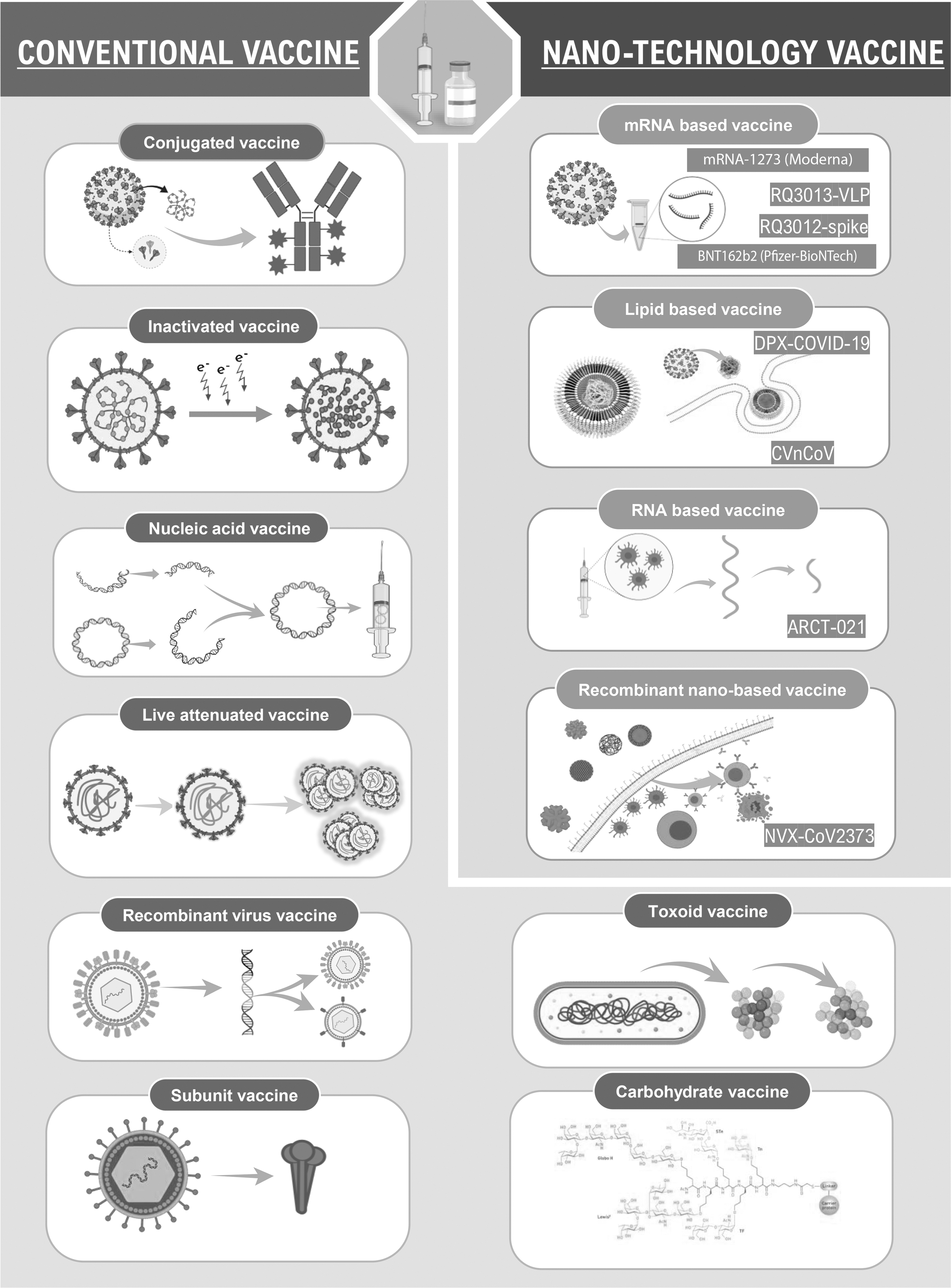
Coronavirus vaccine development from conventional vaccine to nanovaccine.
They are utilized to transport antigen-encoding mRNA and encapsulate viral antigens against a wide spectrum of viruses (Wadhwa et al, 2020). Because of their efficiency in transporting nucleic acids into cells, as well as their simple formulation procedure, reduced particle size, and serum stability, LNPs are preferred over alternative nanocarriers. The ionizable lipids are near neutrally charged at physiological pH, and LNPs are an ideal carrier system for delivering nucleic acid-based therapeutics. They get ionized in acidic endosomal compartments (pH-4.5), allowing endosomal egress and efficient intracellular delivery (Aldosari et al, 2021).
There is an urgent need to resolve some of the limitations associated with the currently developed vaccines for COVID-19. There is a lot that has to be done in the formulation methods that will favor a better clinical response in the near future. Some of the accompanying problems that must be addressed are mRNA's intrinsic immunogenicity, the tendency for enzymatic and thermal degradation, and the difficulty to penetrate negatively charged cell membranes.
These are some of the primary issues that must be addressed in the future to improve the established efficacy of these vaccine elements. The average half-life of mRNA vaccines decreases with increasing temperature, making long-term storage impractical. The chemical alteration of mRNA by surrounding it with a nonionic or ionic surfactant, on the contrary, enhances its heat stability. These chemical changes increase the size of a NP, allowing it to encase mRNA more efficiently and with improved thermal stability.
The observed allergic responses to LNP nanovaccines might thus be successfully minimized by using PEG complexed with lipids, which have superior biocompatibility. As a result, developing mRNA-based nanovaccines is one of the knowledge frontiers to improve safety, stability, and effectiveness of the planetary health interventions against COVID-19.
The LNP tool was also explored to design CVnCoV (currently in Phase III), which is a SARS-CoV-2 vaccine with a balanced immune activation and maximum protein expression. Preclinical studies conducted suggest that CVnCoV vaccination elicited substantial humoral responses, including high titers of virus-neutralizing antibodies and marked T-cell responses (Rauch et al, 2021). The absence of viral replication in the lungs showed that CVnCoV immunization protected hamsters from infection with wild-type SARS-CoV-2 (Rauch et al, 2021). Further, there was no sign of vaccine-enhanced illness in hamsters, given a suboptimal dosage of CVnCoV that resulted in breakthrough virus replication. These observations offer potential for CVnCoV.
NVX-CoV2373, recombinant SARS-CoV-2 NP vaccine, a baculovirus with a gene expressing full-length SARS-CoV-2 spike glycoprotein, resembling prototype Wuhan-Hu-1 sequence, was employed to construct the candidate vaccine (Tian et al, 2021). SARS-CoV-2 spike protein trimers were produced by infecting cells from the Spodoptera frugiperda moth with recombinant baculovirus, which were then isolated and chromatographically purified (Li et al, 2020).
The purified trimers aggregate into protein NPs comprised of a cluster of spike trimers with a polysorbate 80 (PS 80) micellar core when manufactured with PS 80. Subsequently, the NPs were further coformulated with a saponin-based adjuvant termed Matrix-M1 (Chung et al, 2020; Rauch et al, 2021). Another RNA vaccine termed ARCT-021 with a formulation comprised of LNP, encasing a full-length, unmodified mRNA encoding a prefusion SARS-CoV-2 full-length spike protein (Keech et al, 2020).
The LNPs under investigation for COVID-19 vaccines include not only the above-mentioned authorized products or those still in clinical trials, but also many others that are in preclinical research stages.
Outlook: Challenges and Prospects
Despite the notable advantages, the clinical translation of nanoproducts is still lacking. Insofar as clinical development of nanovaccines is concerned, many challenges remain: biological complexity, biocompatibility, safety, large-scale manufacturing, pathways to commercialization and ensuring equity therein to benefit public health, designing regulatory oversight informed by cutting edge science, unpredictable side effects, toxicity concerns, data on long-term outcomes, and overall cost-effectiveness in comparison with current therapies to name but a few (Dey et al, 2022; Dey et al, 2021; Mahapatra et al, 2021).
However, there are potential limits to the prospective benefits of nanoformulations, such as the difficulty of adequately sterilizing parenteral formulations, biomolecule denaturation hazards, low entrapment efficiencies, biodistribution profile assessment, and off-target accumulations.
Another critical difficulty is the absence of a thorough knowledge of the cellular, and pathogenic, features of the COVID-19 virus in relation to the specific nano–bio interfaces involved in drug/vaccine development and delivery. SARS-CoV-2 has shown various behaviors in different hosts, necessitating the development of highly efficient nanosystems such as biomimetic organoids and organ-on-chips capable of explicitly assessing and evaluating these behavioral variations.
Even though the lung and the respiratory system are the prime targets for COVID-19 control, more research is required to ensure nanomaterial safety in the context of systems medicine in a multitude of organ systems, not to mention at a molecular scale in relation to intolerable inflammation, cellular damage, fibrosis, small granulomatous lesions, geno-immunotoxicity, and oxidative stress. The creation of nanocarriers in such a way that the nanoformulation may avoid detection by scavenger cells is equally difficult and will require significant work before practical translation.
Although there are numerous approaches available at present to contain the spread of the virus, there is much room to develop reliable and cost-efficient rapid diagnostic platforms, especially with an eye to mass screening purposes. The development of a point-of-care diagnostic platform with high specificity and sensitivity for mass screening purposes is currently the need of the hour. In addition, possibilities to develop diagnostic techniques, which can detect the virus outside the human body, ought to be explored so as to minimize the spreading of the disease and thereby reducing the attendant pandemic morbidity and mortality.
Emerging SARS-CoV-2 remain one of the utmost concerns in the current historical moment of the pandemic. Vaccine equity is important for planetary health to ensure the evidence-based vaccines deemed effective and safe are available for all as a human right. This will also help reduce the probability of emergence of virus variants. As high-income countries rush to immunize their populace rapidly within months, until the vaccines are globally available and under equitable conceptual frames, the risks for SARS-CoV-2 mutating into new variants continue. Nanotechnology offers a multitude of promises in this regard for vaccine innovation as well as antiviral drug and other therapeutic and preventive medicine innovations.
Modifications in the spike protein of circulating SARS-CoV-2 strains must be monitored to gauge prospective antigenic alterations (Volz et al, 2021). T-cell–based immunity is also vital in the fight against and elimination of COVID-19 viral infections. While T-cell immunity is assessed after SARS-CoV-2 infection and vaccination, it is yet not fully deciphered. More research is called for in this regard, including the pathways to innovation on which nanotechnology might productively engage with various dimensions and actions of the immune system against the virus.
The lessons learned from nanomedicine offers promise going forward in the course of the COVID-19 pandemic. Nanomaterials have potentials to help reduce the side effects of antiviral drugs, codeliver multiple drugs while maintaining stability in the biological milieu, and sustain the release of entrapped drug(s) for a predetermined time period, to name but a few conceivable scenarios wherein nanotechnology can enable and empower preventive medicine and therapeutic innovations against SARS-CoV-2.
We suggest that nanotechnology-based interventions warrant further consideration to enable precision planetary health responses against the COVID-19 pandemic. Furthermore, we call for research on appropriate models for assessing the toxicity profile of the envisioned nanomedicines as well as their large-scale manufacturing capacities to benefit planetary health and the communities impacted by COVID-19.
Footnotes
Acknowledgments
We acknowledge infrastructure support available through the DBT-BUILDER program (BT/INF/22/SP42155/2021) at KIIT Deemed to Be University, Bhubaneswar. We thank Mr. Krishn Kumar Verma (Associate—Scientific Visualizer, KIIT-TBI) for his contribution in designing the graphical representation of figures.
Author Disclosure Statement
The authors declare they have no conflicting financial interests.
Funding Information
The authors received no funding support from an external source.