






Abstract
Introduction
Z
To achieve an adequate and stable interfacial bonding between the core–veneer interfaces, various surface conditioning methods are used nowadays. These methods are grinding, 20 sandblasting with aluminum oxide (Al2O3), 21,22 tribochemical silica coating, 23,24 hydrofluoric (HF)-acid etching, 25,26 and laser irradiation. 1,27,28
Sandblasting can increase the surface roughness, provides micromechanical undercuts, cleans the zirconia surface, and increases the surface energy and wettability, which can improve the adhesion of the zirconia ceramics. 29,30
Laser irradiation is a promising technique for the surface treatment of Y-TZP ceramic. 31 The Erbium:Yttrium–Aluminium–Garnet (Er:YAG) laser is used in clinical dentistry applications, especially for the ablation of the dental hard tissues. 32 –34 It is also used for surface conditioning for dental materials, 35 –37 to increase surface roughness for obtaining adequate bonding strength. 38
Femtosecond technology is an innovative laser technology that can be used for multiple applications with its ultrashort light pulses. 39 It has been used in a broad range of applications, from waveguide fabrication to cell ablation, 40 and has been tested as an alternative tool for orthodontics and dental surgery during the last decade. 41 Delgado-Ruiz et al. 2 reported that surface roughness of zirconia could increase by using femtosecond laser microstructuring. They also concluded that zirconia did not exhibit phase transformation, resulting in a surface that retains its characteristics permanently. A recent study also showed that femtosecond laser application is an effective method for roughening surfaces of zirconia ceramics and increasing the bond strength between zirconia and resin cement. 27
There is lack of information about surface treatment of zirconia ceramics by femtosecond laser and its bonding strength with veneering ceramic. In the literature, there are only a few studies about bond strength of zirconia core and lithium disilicate ceramic in the CAD-on technique, and no surface treatments were used in that studies. 16,42 Also, there is no study about the bond strength of the CAD-on technique with which the zirconia core surfaces were treated with sandblasting, Er:YAG, and femtosecond lasers. Therefore, the aim of this study was to compare and evaluate the effects of sandblasting, Er:YAG, and femtosecond lasers on shear bond strength (SBS) between the zirconia core and veneering ceramic by using the CAD-on technique. The null hypothesis is that the application of different surface treatments to the zirconia core does not affect the bond strength between the zirconia core and the veneer ceramic.
Materials and Methods
Forty zirconia specimens (11.4 mm × 12.4 mm × 3 mm) were cut from presintered zirconia blocks (IPS e.max ZirCAD, Ivoclar Vivadent) by using a slow-speed diamond saw (Isomet, Buehler Ltd, Lake Bluff, IL) under water cooling and sintered according to the manufacturer's instructions. All sintered zirconia specimens were wet-polished with 600 grit silicon carbide paper. The surfaces were cleaned with ethanol and air dried. The zirconia cores were then cleaned ultrasonically with distilled water for 10 min and air dried before surface treatments. The specimens were randomly divided into four experimental groups (n = 10 each).
Surface treatments
Group C (control)
No surface treatment was applied to the zirconia ceramic surfaces, and thus this group served as a control.
Group S (sandblasting)
The bonding area of the zirconia ceramics were abraded with 50 μm Al2O3 particles with a sandblasting machine (Korox; Bego, Bremen, Germany) at a pressure of 3 bar from a distance of ∼10 mm for 10 sec.
Group E (Er-YAG laser irradiation)
To irradiate the zirconia ceramic surfaces, an Er:YAG laser (Fotona, At Fidelis, Ljubljana, Slovenia) was used. A noncontact, 90 degree angled handpiece (HP R02-C, Fotona) was used perpendicular to the zirconia ceramic surface with a working distance of 1 mm, and the bonding area was scanned for 20 sec under cooling by using an air-water spray. Er:YAG irradiation parameters were: 75 μs pulse duration with 300 mJ pulse energy, 6 W power setting, 20 Hz pulses/sec, and 10.60 J/cm2 energy density.
Group F (Femtosecond laser irradiation)
Femtosecond laser pulses from an amplifier (Integra-C-3.5; Quantronix, NY) were applied to the bonding area of the zirconia ceramic surfaces with random pattern type, and the laser was passed through the same line 10 times. The femtosecond laser parameters were as follows: The wavelength of the laser beam was 800 nm, 730 mW/pulse, and pulses at 90 fs with 30 mm/sec scanning speed with a 1 kHz repetition rate for 496 sec, and energy density was 57 J/cm2 with 25% repetitive pulse overlap. The laser marker system (Q-Mark, Quantronix, NY) used to deliver the laser beam to the zirconia surface had a back focal length of 11 cm, which was controlled by software, and which could scan the work plane at various scanning speeds.
Preparation of veneering ceramics
Disk-shaped specimens (5 mm diameter and 2 mm height) were cut using using a slow-speed diamond saw (Isomet 1000) under water cooling from the lithium disilicate CAD/CAM blocks (IPS e.max CAD, Ivoclar Vivadent, Schaan, Liechtenstein). All the veneer ceramics were then cleaned ultrasonically in distilled water for 10 min and air dried. A thixotropic glass-fusion ceramic (IPS e.max CAD Crystall/Connect; Ivoclar Vivadent) was placed on the table of the vibrating device (Ivomiks, Ivoclar Vivadent) and vibrated for 10 sec according to the manufacturer's instructions. A small amount of liquescent glass-fusion ceramic was applied to the middle of zirconia surface, fused with veneer ceramic, and then vibrated using Ivomiks to ensure homogeneous distribution of the fusion ceramic (Fig. 1). All the core-veneer specimens were then submitted to the crystallization/fusion process according to the manufacturer's instructions.
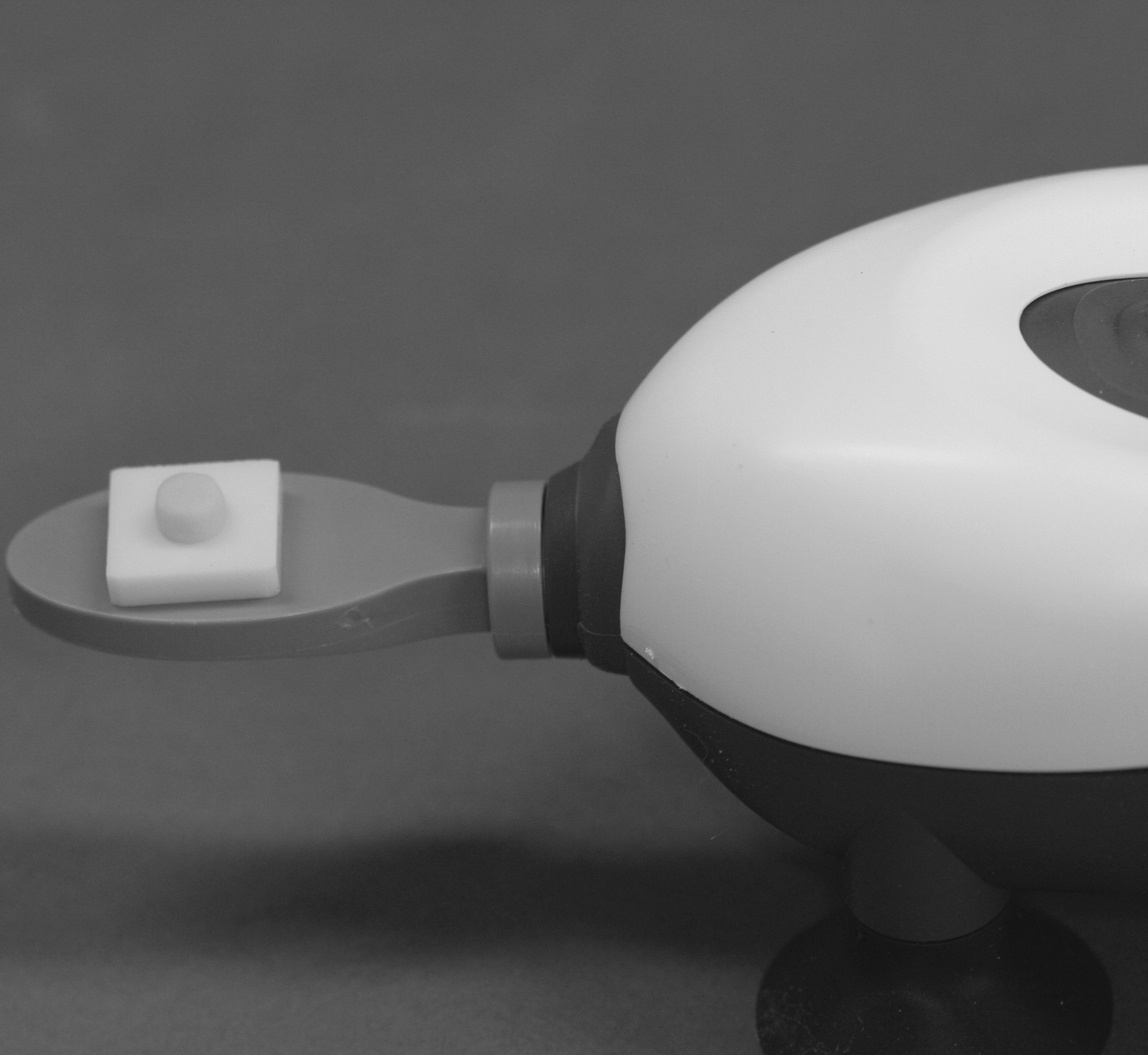
Fusion of the lithium disilicate veneer ceramic and zirconia core by Ivomiks (Ivoclar Vivadent, Schaan, Liechtenstein).
SBS test
Specimens were placed in a custom-made apparatus and then a shear force was applied to the veneer-zirconia bonding area by using a universal testing machine (TSTM 02500; Elista Ltd. Sti, Istanbul, Turkey) at a crosshead speed of 0.5 mm/min until fracture (Fig. 2). SBS was calculated according to the formula:
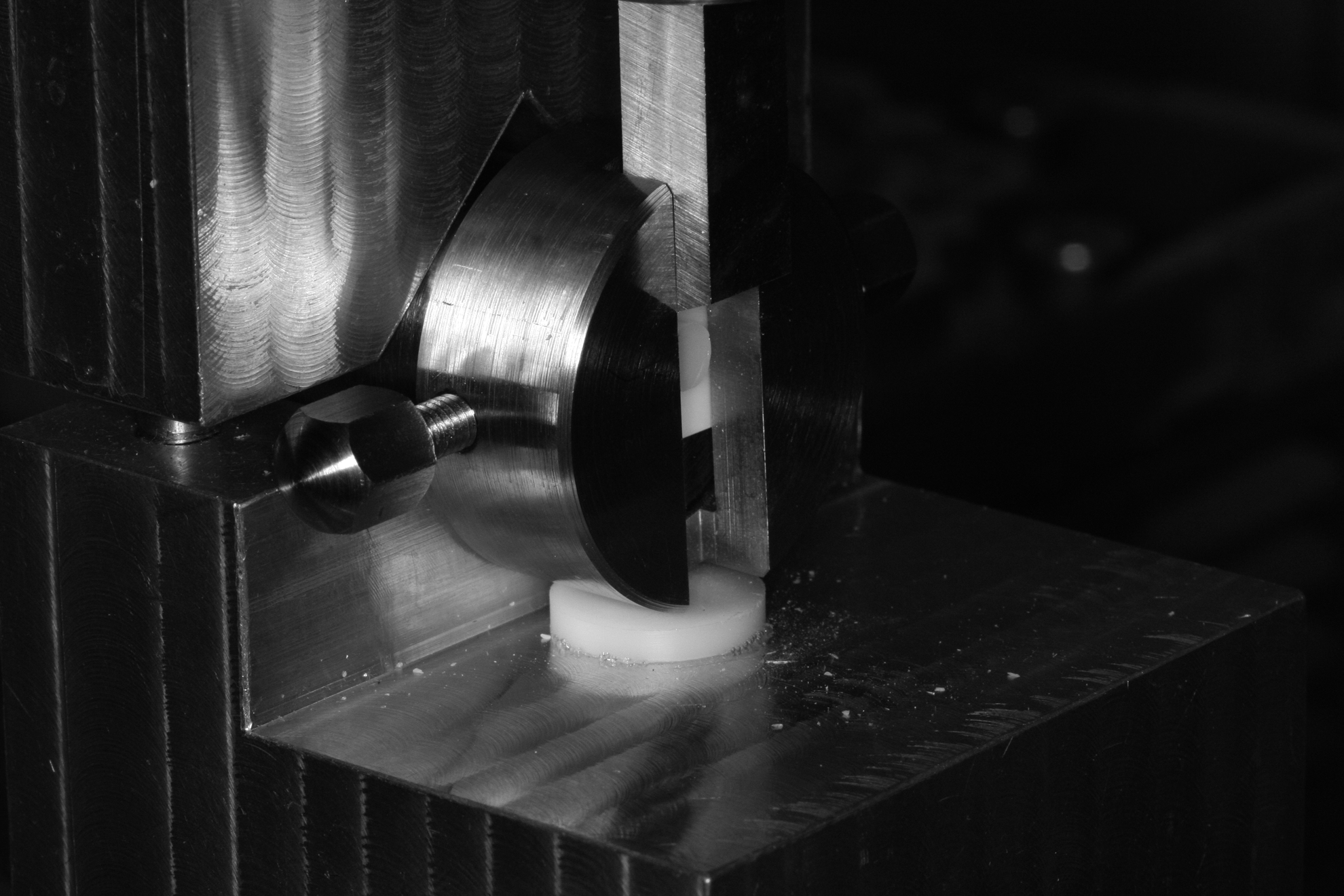
Shear bond strength test with a custom-made apparatus.
Microscopic evaluation
The fractured surface of each zirconia was examined under a stereomicroscope (Olympus SZ 40, SZ-PT, Japan) at 20× magnification. The failure modes were classified as adhesive (failure between the core and veneer ceramic), cohesive (failure within the veneer ceramic), or mixed (combination of adhesive and cohesive failure modes). In addition, one specimen from each group of all materials was sputter-coated with gold and analyzed using a scanning electron microscope (SEM) (SEM-Zeiss LS-10 England).
Statistical analysis
The data were analyzed by one way ANOVA and Tukey honest significant difference (HSD) multiple comparison tests with a software program (SPSS Statistics 22, IBM, Chicago, IL) (p < 0.05).
Results
The mean SBS values and standard deviations (MPa) of the four surface treatment groups are presented in (Table 1). The highest mean SBS was observed in Group F (36 ± 3.31 MPa), followed by Group S (33.03 ± 5.05 MPa). The lowest mean SBS was observed in Group E (31.02 ± 4.96 MPa), and Group C (32.52 ± 10.15 MPa), which served as control, showed higher bond strength than Group E. However, there was no significant difference between the test groups according to one way ANOVA (Table 2) (p = 0.337, p > 0.05). The statistical power of the performed test at α = 0.05 was 0.263.
Same letters indicates that there is no difference between the groups (p > 0.05).
The differences were significant at the p < 0.05 level.
Stereomicroscopic analysis showed that all of the specimens showed a mixed type of failure in all groups. In all the specimens, the fracture started at the core–veneer interface and proceeded into the veneering ceramic that was observable in the SEM images after fractures (Fig. 3A–D). Glass-fusion and veneering ceramics remaining on the zirconia surface were clearly visible in all the SEM images. Figure 3D shows the traces of the femtosecond laser clearly. These traces were filled with the glass-fusion ceramic. Figure 3C shows that Er:YAG laser had scratched the surface of zirconia. Sandblasting with Al2O3 has caused many surface irregularities, as shown in the Fig. 3B.
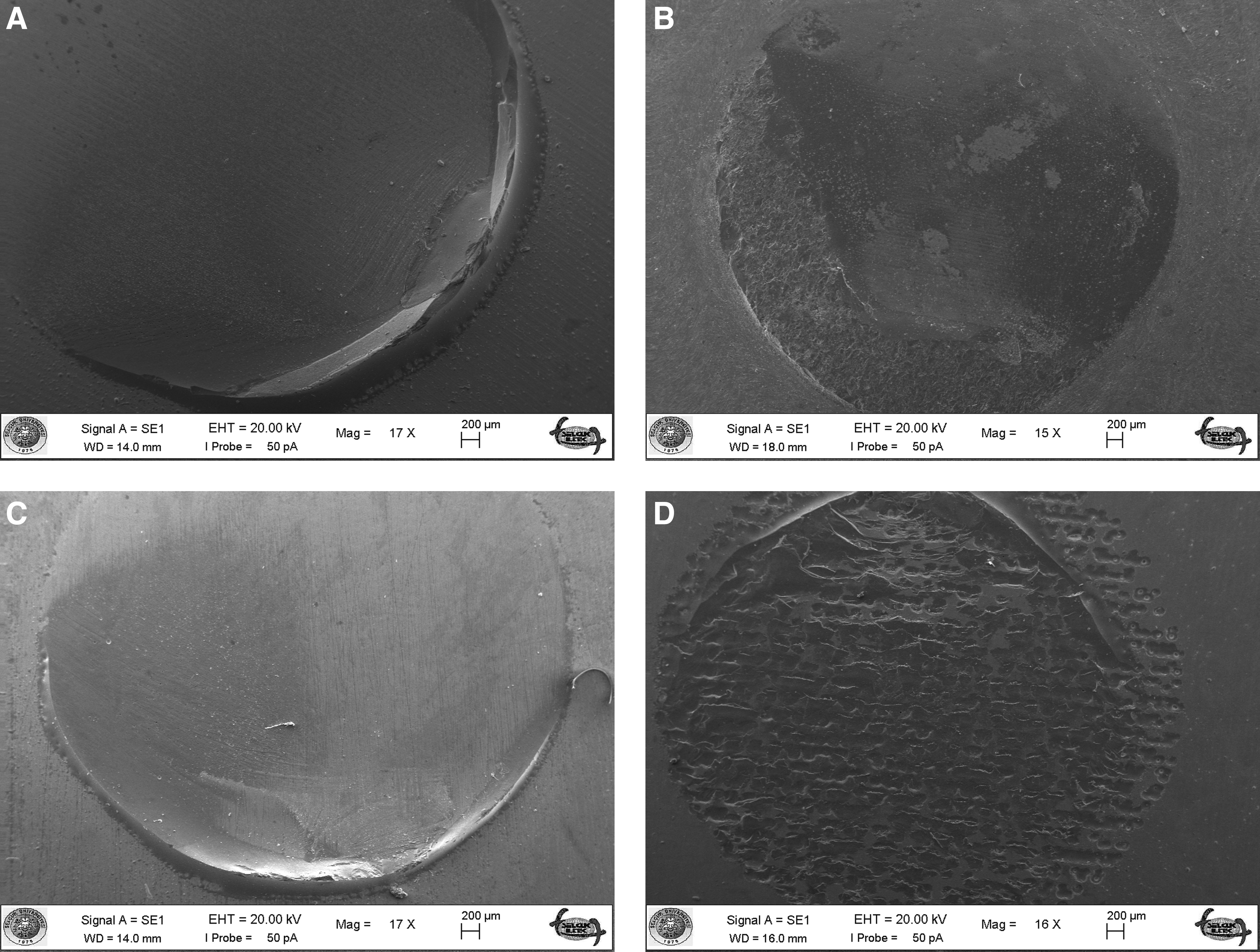
Scanning electron microscopic (SEM) images of fractured specimens from each group after the shear bond strength (SBS) testing.
Discussion
The primary requirement for a successful zirconia-based restoration is the development of an adequate and stable bond between the veneer ceramic and the zirconia core.
This study was evaluated the bond strength of the lithium disilicate veneer ceramics to the zirconia cores, treated by different surface conditioning methods (sandblasting, Er:YAG laser, and femtosecond laser) and demonstrated that there are no significant differences in the shear bond strength between the groups (p > 0.05). Therefore, the results of this study accept the null hypothesis.
According to the International Standards Organization (ISO 9693), a minimum bond strength for metal-ceramic restorations should be 25 MPa. 43 There are various studies about bond strength between zirconia cores and veneering ceramics; 16,17,37,44 –49 however, there is no consensus about a minimum required bond strength for bilayered all-ceramic materials. 44 Aboushelib et al. 50 pointed out that the core–veneer interface is the weakest part of the all-ceramic restorations and plays a significant role in the success of these kinds of restorations.
Delamination or chipping of veneering ceramic in zirconia-based restorations is described as the most frequent failure reason, 46,48,49 and the reasons were reported as multifactorial. 44 Several factors may affect the core–veneer interface, such as thickness of the veneer ceramic, coefficient of thermal expansion (CTE) mismatch and lack of thermal conductivity, 13 veneer application techniques, 16,51 framework design, 16,51 cooling rate, 14,49 wetting property of the veneer ceramic, 47 and surface roughness of the zirconia. 30,48,52
The bonding strength between core and veneering ceramic is affected by the type of zirconia core material, 53 hence one type of zirconia core was used in this study to eliminate the effect of the core material itself.
To achieve a relevant core–veneer bonding, several surface treatments could be applied on the zirconia ceramic surfaces. In dentistry, sandblasting with Al2O3 particles is a well-known surface treatment technique to the ceramic and zirconia surfaces. This procedure is used for obtaining a rougher surface, to increase the bonding area either to the inner surface of the restoration or between the core–veneer surfaces. 23,52 There are several studies about the effect of sandblasting on the zirconia surface. Most of the studies evaluated the bond strength between the surface-treated zirconia core and resin cements. However, the results are controversial. Some studies revealed that the sandblasting is a useful surface treatment technique to improve the bond strength between the zirconia and the veneer ceramic. 48 Aboushelib et al. 54 reported that sandblasting the white zirconia surface with 50 μm Al2O3 increased the bond strength between the zirconia core and the veneer ceramic. On the other hand, some studies reported that sandblasting of the Y-TZP surface does not necessarily enhance the bond strength of the veneer ceramic to the zirconia core. 45,50,52 Guess et al. 44 concluded that sandblasting with Al2O3 (110 μm, 2.4 bar) had no significant effect on the bond strength between the core and the veneering ceramic. Elsaka 55 also concluded that the surface treatments of different zirconia cores with sandblasting did not significantly improve the adhesion between zirconia and veneering ceramic.
In this study, the sandblasted group did not enhance the bond strength between the lithium disilicate veneer ceramic and the zirconia core, because the differences are not significant (p > 0.05). However, according to previous studies, the sandblasting procedure might be useful before sintering, 56 and when small particles are preferred. 57
When using the sandblasting procedure, it is necessary to consider that the procedure might induce phase changes on the zirconia surface that could change the crystal structure from tetragonal to monoclinic. 20,52,58 If the monoclinic phase level increases on the zirconia surface, it may lead to micro-cracks in the glass phase of the veneer ceramic at the inter-grain level, and this may reduce the bond strength. 50,59 To eliminate these phase changes, using sandblasting prior to the sintering process 56 or heat treatment was suggested. 29 The monoclinic phase on the zirconia surface that was generated during sandblasting would be turned back into the tetragonal phase with heat treatment. 29 If sandblasting is used after the sintering process, the heat treatment could be a veneering procedure or re-glazing after clinical adjustments. 60 Although phase changes or differences according to heat treatment are not the subjects of this study, the veneering process that was used in this study might reduce the monoclinic phase ratio, and relatively small particles were used (50 μm), as the one study recommended using 50 μ Al2O3 particles to lower phase transformation on the zirconia surface. 60 Additionally, optimum sandblasting application time to the zirconia surface is not clear. Sato et al. 21 indicated that the thickness of the transformed layer over the zirconia surface mainly depended upon the kind of the sandblasting particles, not the sandblasting application time. Therefore, 10 sec application time was chosen in this study, which many of the studies in the literature preferred. 52,61 –63
The use of laser irradiation for surface roughening is an alternative and innovative method 64 and it might be a potential new means of surface treatment for enhancing the zirconia–veneer ceramic interfacial bonding and integration. 28
There are various studies about laser surface treatments on the zirconia surface; however, most of them investigated zirconia–resin bonding strength. There are little data on the effect of the laser surface treatment on the zirconia–veneer ceramic bonding strength. Kirmali et al. 37 investigated the effects of different pre-sintering treatments on the bond strength between the zirconia (sandblasting, Er,Cr:YSGG laser irradiation 1–6 W) and veneer ceramic that was fabricated with layering technique, and they found smaller shear bonding strengths (13–20.54 MPa) than in this present study. They found the highest bond strength in the laser group, which was treated with 6 W energy, and recommended using higher energy densities for the laser irradiation to increase the bond strength between the zirconia core and the veneering ceramic. The same energy density was used in this study, and the bonding strength is much higher; however, the Er:YAG laser treated group showed the lowest bond strength in this study, but the mean bond strengths of the groups were similar. Demir et al. 35 reported that Er:YAG laser irradiation at different intensities to sintered zirconia surface increased the surface roughness; however, they stated that sandblasting is the most effective surface treatment method. Similar results were also reported by Subasi and Inan, 3 who pointed out that sandblasting and Er:YAG surface treatments can be used for roughening zirconia surface; however, sandblasting is a more effective method for improving zirconia–resin bonding.
It is noteworthy that laser irradiation may cause surface alterations on the zirconia surface. Noda et al. 65 irradiated the zirconia surface with Nd:YAG laser, and they showed that cracks and melting points also had a blackening effect over the zirconia surface. In addition, they pointed out that the elemental composition of zirconia was changed by the laser application. They concluded that Nd:YAG laser should not be used over the tetragonal zirconia. Cavalcanti et al. 36 used Er: YAG laser over the zirconia, and reported that higher Er:YAG laser pulse energy settings (400 and 600 mJ) caused excessive material deterioration such as cracking. The same Er:YAG laser pulse energy (300 mJ) was chosen in the study by Kara et al., 27 and the authors revealed that the Er:YAG laser caused melted and erosive areas without any crack formation. Unlike the study by Noda et al., 65 no cracks or black melting points were observed in either the Er:YAG or the femtosecond laser-irradiated groups in the present study.
A recent study declared that the femtosecond laser pulses provide promising advantages compared with conventional abrasive surface structuring methods for zirconia ceramic. 66 Delgado-Ruiz et al. 2 irradiated the zirconia implant surfaces with femtosecond laser and reported that it reduced the presence of residual elements. Additionally, they showed that the zirconia surface characteristics did not change after the treatment and did not exhibit phase transformation. Another study also investigated the effect of different surface treatments (femtosecond, Nd:YAG, and Er:YAG) on zirconia and the bonding strength between the resin and the cement. The authors reported that the femtosecond-treated group showed significantly higher resin bond strength than the Nd:YAG- and Er:YAG-treated groups. 27 Unlike the study by Kara et al., 27 the femtosecond laser-treated group did not show statistically different bond strength compared with the other groups in this study. However, this finding is similar with another study, which investigated the bonding strength between the surface treated (sandblasting, 9.6% hydrofluoric acid gel, Nd:YAG laser, and femtosecond laser), feldspathic porcelain, and metal brackets. They showed that the femtosecond-treated group showed higher bond strength values than the other test groups; however, there were no significant differences between the hydrofluoric acid applied and sandblasted groups. 22 It also needs to be highlighted that a new veneering technique called CAD-on was used in this study. Nevertheless, there is little information in the literature about the bond strengths of this technique. Also, there are no data to compare these findings, because the studies in the literature about the CAD-on technique did not use any surface treatments to the zirconia core.
All the failure types were a mixed type in this study, and no adhesive or cohesive failures were observed. Mixed type failures are clinically preferred to adhesive failures because this type of failure usually shows the adequate interfacial bonding and is associated with high bond strength values. 67 It is noteworthy that the absence of the cohesive failure in the veneer ceramic indicated that the laser treatment did not induce the internal weakening of the veneer ceramic in this study, which was similarly reported by Gomes et al. 68 SEM image shows regular pits, which were created by the femtosecond laser beam, and these pits were filled with glass-fusion ceramic (Fig. 3D), which might act as the micromechanical retentive understructures that increased the adhesion between the lithium disilicate ceramic and the zirconia. 28 These pits could not be observed in the Er:YAG laser-treated group (Fig. 3C), and the eroded zirconia surface could lead to lowering of the bonding strength compared with the utreated group in this study.
One limitation of this study is that the small number of specimens limits the interpretation of the results, because a higher number of specimens might have produced significant differences with a smaller standard deviation. Surface roughness measurements and crystallographic analyses are the other limitations of this study. Also, geometric shapes of the specimens did not represent the anatomic forms of the restorations; however, the geometric shape is required for the measurement of the SBS. Further studies should focus on an increased number of specimens per group when evaluating the bond strength of the surface-treated zirconia cores using the CAD-on technique in in vitro and in vivo conditions.
Conclusions
Within the limitations of this present study, the following conclusions were drawn.
1. Surface treatment is not necessary if the CAD-on technique is to be used.
2. Femtosecond laser irradiation formed regular pits on the zirconia surface that could provide micromechanical adhesion, unlike Er:YAG laser irradiation, which created scratches on the zirconia surface according to the SEM images.
Footnotes
Author Disclosure Statement
No competing financial interests exist.