







Abstract
Elderly individuals represent a significant demographic undergoing total hip arthroplasty, with distinct risks and complications. The study aimed to determine whether predictive nursing, guided by risk assessment, could reduce these risks and improve patient outcomes. A total of 191 elderly patients undergoing total hip arthroplasty were included in the study, with 142 patients randomly assigned to either the control or observation groups. The control group received routine care, while the observation group received predictive nursing based on comprehensive risk assessment. Various assessment tools were employed to evaluate risks such as venous thrombosis, pressure injuries, falls, joint dislocation, infections, and psychological factors. The primary outcomes included functional improvement measured by the Harris Hip Score, Activities of Daily Living (ADL), anxiety levels, and patient satisfaction. Our study demonstrated that predictive nursing interventions, guided by comprehensive risk assessment, yielded significant reductions in postoperative complications, particularly deep vein thrombosis, in elderly patients undergoing total hip arthroplasty. In addition, patients who received predictive nursing care experienced notable benefits, including shorter hospital stays, heightened satisfaction levels, enhanced hip function, improved ADL scores, and reduced anxiety levels compared with those receiving standard care. The study underscores the substantial benefits of predictive nursing interventions guided by risk assessment in improving outcomes for elderly patients undergoing total hip arthroplasty, highlighting the potential of individualized nursing care to optimize postoperative recovery and enhance patient well-being.
Introduction
Total hip arthroplasty stands as a transformative intervention for elderly individuals afflicted with debilitating hip joint pathologies, offering significant relief from pain and restoration of mobility. 1,2 As the global population continues to age, the prevalence of hip-related disorders such as osteoarthritis and femoral neck fractures in the elderly population escalates, underscoring the growing importance of total hip arthroplasty as a vital orthopedic procedure. 3 However, despite the substantial benefits conferred by total hip arthroplasty, it is imperative to acknowledge the inherent risks and potential complications associated with this surgical intervention, particularly in the context of the elderly population. 4
Clinical research endeavors aimed at elucidating the surgical outcomes and postoperative complications of total hip arthroplasty in the elderly shed light on the unique considerations and challenges encountered in this patient demographic. 5 While total hip arthroplasty is generally associated with favorable outcomes in terms of pain relief, functional improvement, and patient satisfaction, elderly patients may exhibit distinct patterns of surgical outcomes and complication rates compared with their younger counterparts. 6,7 Research studies have identified advanced age as a significant risk factor for perioperative complications such as surgical site infection, venous thromboembolism, myocardial infarction, and delirium, highlighting the importance of postoperative nursing and risk stratification in elderly total hip arthroplasty candidates. 8 –10
Predictive nursing strategy is an evidence-based approach designed to anticipate patient needs and prevent complications by identifying potential risks early in the care process. 11 It integrates comprehensive patient assessments, such as physical, psychological, and social factors, with predictive tools and data analytics to stratify patients according to their risk profiles. 12 Based on this stratification, individualized interventions are implemented, focusing on key areas such as prevention of infection, management of comorbidities, and early rehabilitation. 13 This approach emphasizes continuous monitoring, early detection of clinical deterioration, and timely interventions, thereby improving patient outcomes, optimizing resource utilization, and reducing healthcare costs. 14 Predictive nursing is particularly beneficial in high-risk populations, such as postoperative patients or those with chronic conditions, where early interventions can significantly impact recovery and long-term health. 15
This study focuses on elderly patients undergoing hip arthroplasty at our hospital. Our research aims to select a comprehensive nursing protocol for risk prevention based on assessment results, with the goal of minimizing adverse postoperative outcomes in elderly total hip arthroplasty patients as much as possible.
Methods
Study design
This is a prospective randomized controlled trial. This study analyzed a total of 191 elderly patients who underwent total hip arthroplasty, among which 36 did not meet the inclusion criteria, and 13 refused to participate. After excluding these cases, 142 patients were randomly divided into a control group and an observation group. The control group received routine care, while the observation group received predictive nursing based on risk assessment. The nursing period extended from preoperative care to discharge. During the nursing process, two cases in one group and one case in the other group withdrew. In addition, during the 3-month follow-up after discharge, three and six cases were lost to follow-up, respectively, as detailed in Figure 1. After three months, 66 cases in the observation group and 64 cases in the control group successfully completed the study. The study was approved by the First Affiliated Hospital of Qiqihar Medical College (#2022-55), and written informed consent was obtained from the participants. The patients were not blinded to the care they received, while the researchers responsible for collecting the scale data were blinded to the group assignments.
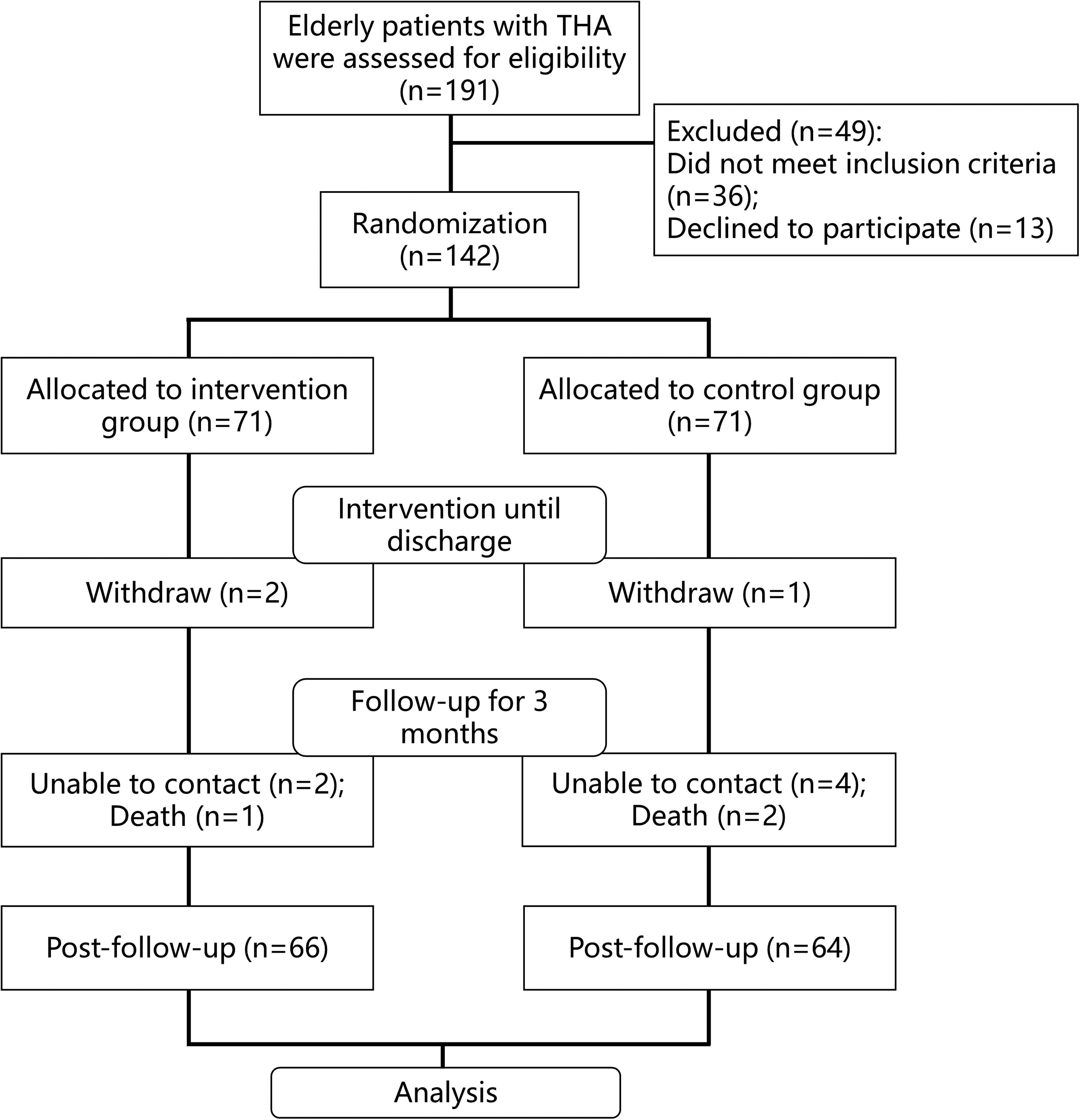
Research framework of this study.
Inclusion criteria
Eligible participants comprise elderly individuals undergoing their initial total hip arthroplasty procedure, demonstrating suitability for total hip arthroplasty treatment, providing written informed consent for a 3-month intervention and subsequent follow-up, aged 60 years or older, and possessing the cognitive capacity to comprehend and cooperate with questionnaire-based inquiries. Patients with osteoarthritis and femoral head necrosis underwent elective surgery.
Exclusion criteria
Excluded from the study are individuals with a medical history of thrombotic disorders or coagulation impairments, patients presenting with consciousness or mental disorders, those unable to adhere to scheduled follow-up appointments, individuals classified as bedridden or incapable of self-care preoperatively, noncompliant patients, cases of hip joint infectious pathologies, malignancies, or severe cardiopulmonary, hepatic, or renal dysfunction.
Randomization
Utilizing hospital admission numbers as identifiers, participants scheduled for total hip arthroplasty are randomly allocated into two groups through the application of a random number table. The intervention group receives predictive nursing care, while the control group receives standard care.
Intervention
Control group
Patients assigned to the control group receive conventional clinical management. Preoperatively, patients undergo comprehensive physical assessments, receive detailed instructions regarding treatment-related precautions, and undergo thorough preoperative preparations. Intraoperatively, nursing personnel collaborate closely with surgical teams, meticulously monitoring vital signs, evaluating postoperative pain levels, administering appropriate analgesics as prescribed, and providing guidance on dietary and exercise regimens. Meanwhile, the observation group implements predictive nursing protocols integrated with routine care.
Predictive nursing protocol
Predictive nursing interventions are driven by risk assessment. Preceding the study, the research team devises a preventive care algorithm tailored for high-risk individuals. Study personnel employ assessment tools such as the Morse scale, Caprini scale, Braden scale, and others to conduct dynamic risk evaluations encompassing lower limb venous thrombosis, pressure ulcers, fall risks, joint dislocations, infections, pulmonary complications, adverse drug reactions, knowledge deficits, depressive and anxiety symptoms, pain severity, and compliance with rehabilitation protocols.
Preoperative
A comprehensive assessment of the patients was conducted, including physical signs and medical conditions. Special attention was given to patients with high-risk factors for deep vein thrombosis (DVT) such as varicose veins, cardiovascular disease, and diabetes. Patients were encouraged to maintain a positive attitude and actively cooperate with the treatment of comorbidities. Preoperative physical examinations were completed, and patients and their families were informed about the causes and adverse effects of DVT to raise awareness.
Intraoperative
Nurses closely monitored the patients’ vital signs, promptly identifying and addressing any adverse conditions while assessing the impact on the patient. Proper fluid and blood replenishment were administered to avoid increased blood viscosity due to significant blood loss.
Postoperative
Patients were reassessed, and based on their DVT risk level, they were categorized into groups. High-risk patients were given priority for predictive nursing interventions, including medication administration, dietary management, rehabilitation exercises, and postural care. Patients were advised to lie flat postoperatively with the affected limb slightly elevated on a soft pillow to promote venous return while avoiding excessive flexion of the hip joint. Compression stockings were recommended for high-risk patients as a preventive measure.
Nurses regularly observed and recorded the temperature, color, circumference, sensation, movement, dorsalis pedis pulse, and pain level of the affected limb. If symptoms such as swelling, redness, or pain appeared, nurses immediately evaluated whether DVT was present. The limb temperature was maintained at a stable level to avoid increasing local oxygen consumption due to hot compresses.
To ensure adequate nutritional intake, patients were encouraged to eat foods rich in vitamins, high in protein, and low in fat, while reducing the consumption of stimulants, spicy foods, high-salt, and high-fat foods. Patients were advised to drink 2000 mL of water per day and maintain regular bowel movements. Postoperatively, blood and fluid replenishment were promptly administered, and patients were prescribed anticoagulants such as rivaroxaban and low-molecular-weight heparin sodium, with careful monitoring for signs of incisional drainage, mucosal bleeding, or gum bleeding.
Once awake postoperatively, patients performed simple rehabilitation exercises involving knee and ankle joints, including flexion and extension of the ankle and metatarsophalangeal joints. Assisted training with a pressure circulation pump and a continuous passive motion machine helped patients gradually regain motor functions. Through systematic rehabilitation training, lower limb blood flow improved, but caution was taken to avoid excessive hip flexion during training to prevent impairing the recovery of hip joint function.
Outcomes
The Harris Hip Score (HHS) serves as the primary measure to assess posttotal hip arthroplasty functional outcomes. Comprising 10 items, the HHS captures a comprehensive array of domains pertinent to hip function, including pain severity during various activities, functional limitations in daily tasks such as walking and stair climbing, as well as the range of motion and presence of any deformity. Each item is scored on a scale from 0 to 100, with higher scores indicating superior hip function and diminished pain. Notably, specific score ranges delineate varying degrees of dysfunction, with scores below 70 indicative of severe dysfunction, 70–79 indicating moderate dysfunction, and so forth, up to 90–100 representing normal function.
Activities of daily living scale
The Activities of Daily Living (ADL) scale is a validated instrument utilized to assess an individual’s ability to independently perform essential activities necessary for daily functioning. The scale encompasses a range of tasks such as bathing, dressing, grooming, toileting, mobility, and feeding. Each activity is evaluated based on the level of assistance required, with scores typically ranging from 0 to 100. Lower scores indicate greater dependency and functional impairment, while higher scores signify greater independence and functional capacity.
Self-rating anxiety scale
The Self-Rating Anxiety Scale (SAS) comprises a set of 20 self-report items, each rated on a four-point Likert scale ranging from 1 (rarely or none of the time) to 4 (most or all of the time). These items cover various aspects of anxiety, including both psychological and physical symptoms, such as nervousness, tension, apprehension, and palpitations. The total raw score is obtained by summing the responses to all items, with a higher score indicating greater levels of anxiety. A standard scoring system is then applied to convert the raw score into a standardized score, ranging from 25 to 100. The cutoff value for clinical interpretation is typically set at 50, with scores falling between 50 and 59 indicating mild anxiety, 60–69 indicating moderate anxiety, and scores exceeding 69 indicating severe anxiety.
Nursing satisfaction
Nursing satisfaction is assessed via a 10-item questionnaire encompassing aspects such as nursing modalities, health education provisions, medical care services, appointment scheduling procedures, and others. Responses are evaluated using a Likert scale from 1 to 5, with higher scores indicative of heightened satisfaction levels.
Statistical analysis
The statistical analysis was conducted using SPSS version 25. Descriptive statistics, including means, standard deviations, frequencies, and percentages, were calculated to summarize the demographic characteristics of the study population. To compare the effectiveness of the intervention between the control and observation groups, independent t-tests or Mann–Whitney U tests were employed for continuous variables, depending on the normality of data distribution. Categorical variables were analyzed using chi-square tests or Fisher’s exact tests, as appropriate. In addition, repeated measures analysis of variance was utilized to assess changes in outcome measures over time within each group. All statistical tests were two-tailed, and p-values <0.05 were considered statistically significant.
Results
Demographic and clinical characteristics
Table 1 provides a comprehensive overview of the demographic and clinical profiles of elderly patients who underwent total hip arthroplasty, segregated into the intervention (n = 66) and control (n = 64) groups. The median age of participants in the intervention group was 71 years (interquartile range [IQR]: 62–80), comparable to 70 years (IQR: 61–79) in the control group, with no statistically significant difference noted between the cohorts (p = 0.376). Gender distribution revealed a balanced representation, with 31 males (46.9%) and 35 females (53.1%) in the intervention group, and 28 males (43.8%) and 36 females (56.2%) in the control group (p = 0.728). Regarding primary diagnosis, the most prevalent conditions were femoral neck fracture, femoral head necrosis, and osteoarthritis, with no significant discrepancy observed between groups (p = 0.923). Educational attainment, hypertension prevalence, diabetes mellitus incidence, and coronary heart disease prevalence also exhibited no significant differences between the intervention and control arms (all p > 0.05). Notably, at the 3-month follow-up, 66 patients in the observation group and 64 patients in the control group completed the study successfully. These findings underscore the baseline comparability of demographic and clinical characteristics between the intervention and control groups, affirming the suitability for subsequent experimental interventions and follow-up evaluations within the study framework.
Demographic and Clinical Characteristics of Elderly Patients Received Total Hip Arthroplasty
Values were expressed as n (percentage, %) or median (interquartile range). p values were derived from the Mann–Whitney test. Chi-square test or Fisher’s exact test was used for assessing the distribution of observations or phenomena between different groups.
Complications between the two groups until the end of follow-up
Table 2 presents a detailed comparison of complications between the intervention (n = 66) and control (n = 64) groups throughout the nursing period and up to three months postdischarge. The data reveal notable disparities in the incidence of DVT, with none observed in the intervention group and five cases (7.8%) documented in the control group (p = 0.027). In addition, the overall incidence of complications differs significantly between the two groups (p = 0.005), with a total of five cases (7.6%) occurring in the intervention group compared with 17 cases (26.6%) in the control group. Noteworthy complications include incision infection, urinary tract infection, pressure injury, and prosthesis looseness or dislocation. Importantly, all patients completed the 3-month follow-up period in both groups. These findings underscore the substantial benefit of predictive nursing interventions guided by risk assessment in mitigating complications among elderly patients undergoing total hip arthroplasty, particularly in reducing the incidence of DVT.
Comparisons of the Complications Between the Two Groups Until the End of Follow-Up
Values were expressed as n (percentage, %). Fisher’s exact test was used to assess the distribution of observations between the two groups.
Length of stay after surgery and satisfaction score
Figure 2 illustrates a detailed comparison of the length of stay after surgery (Fig. 2A) and patient satisfaction scores (Fig. 2B) between the two cohorts: those who underwent standard nursing processes (Control, n = 64) and those who received predictive nursing processes (Intervention, n = 66). The data are presented as mean values accompanied by their respective standard deviations. Utilizing the Mann–Whitney test for statistical analysis, significant differences (p < 0.01) were observed between the groups. Specifically, the implementation of predictive nursing processes guided by risk assessment resulted in a notable reduction in the length of postoperative hospitalization and a notable enhancement in patient satisfaction with the provided nursing care. These findings underscore the efficacy of predictive nursing interventions in optimizing postoperative outcomes and patient experiences following total hip arthroplasty.
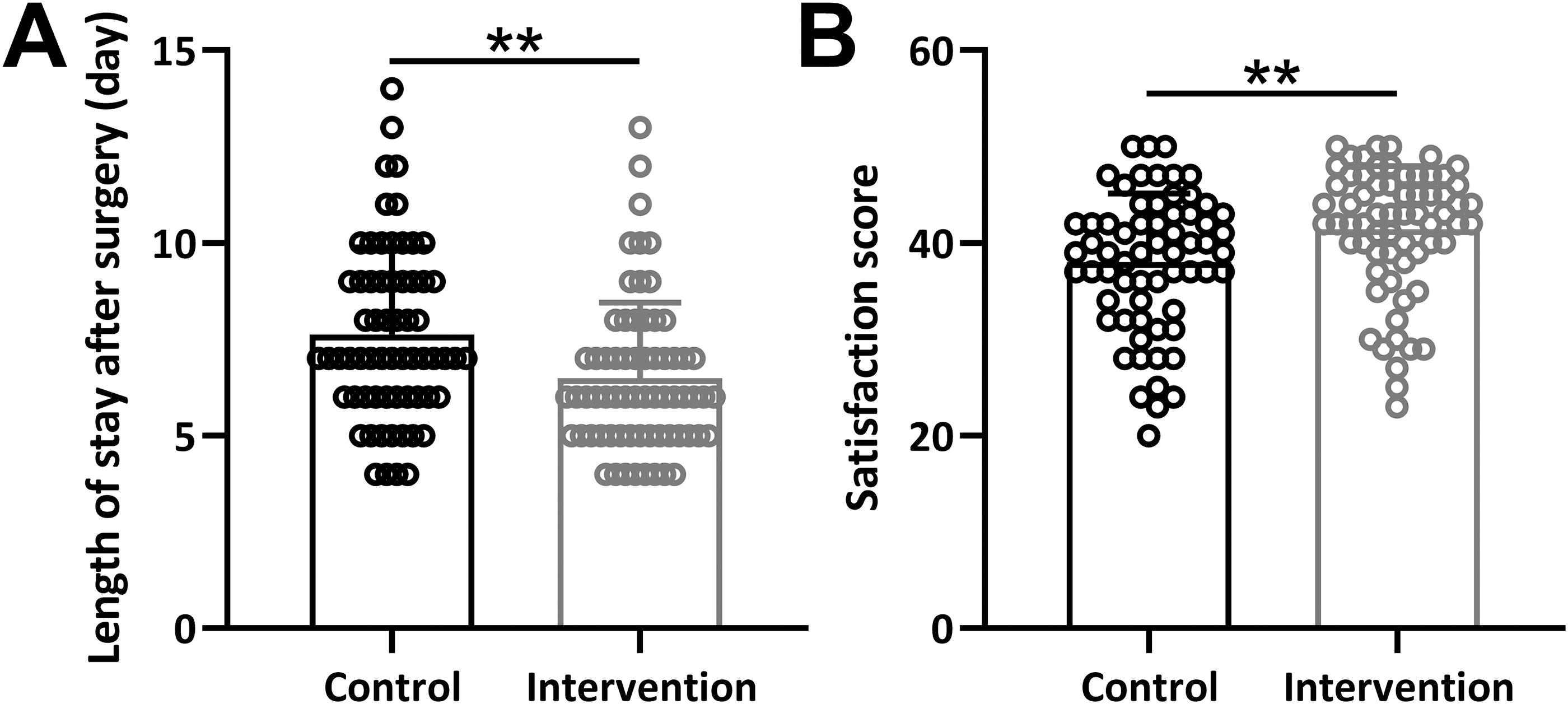
Comparisons of length of stay after surgery
Hip joint function of the participants
A comprehensive comparison of the HHS across different time points (admission, discharge, 1-month postdischarge, and 3-month postdischarge) between patients who underwent standard nursing processes (Control, n = 64) and those who received predictive nursing processes (Intervention, n = 66) was illustrated. Figure 3 demonstrates that at the time of admission, there were no significant differences in hip joint function between the two groups. However, noteworthy disparities emerged during subsequent assessments. Specifically, at discharge and throughout the 1- and 3-month postdischarge periods, patients who underwent predictive nursing processes exhibited significantly enhanced hip joint function compared with their counterparts who received standard nursing care. These findings underscore the profound impact of implementing predictive nursing processes guided by risk assessment in optimizing hip joint function among patients undergoing total hip arthroplasty, thereby emphasizing the importance of predictive nursing interventions in postoperative rehabilitation and recovery.
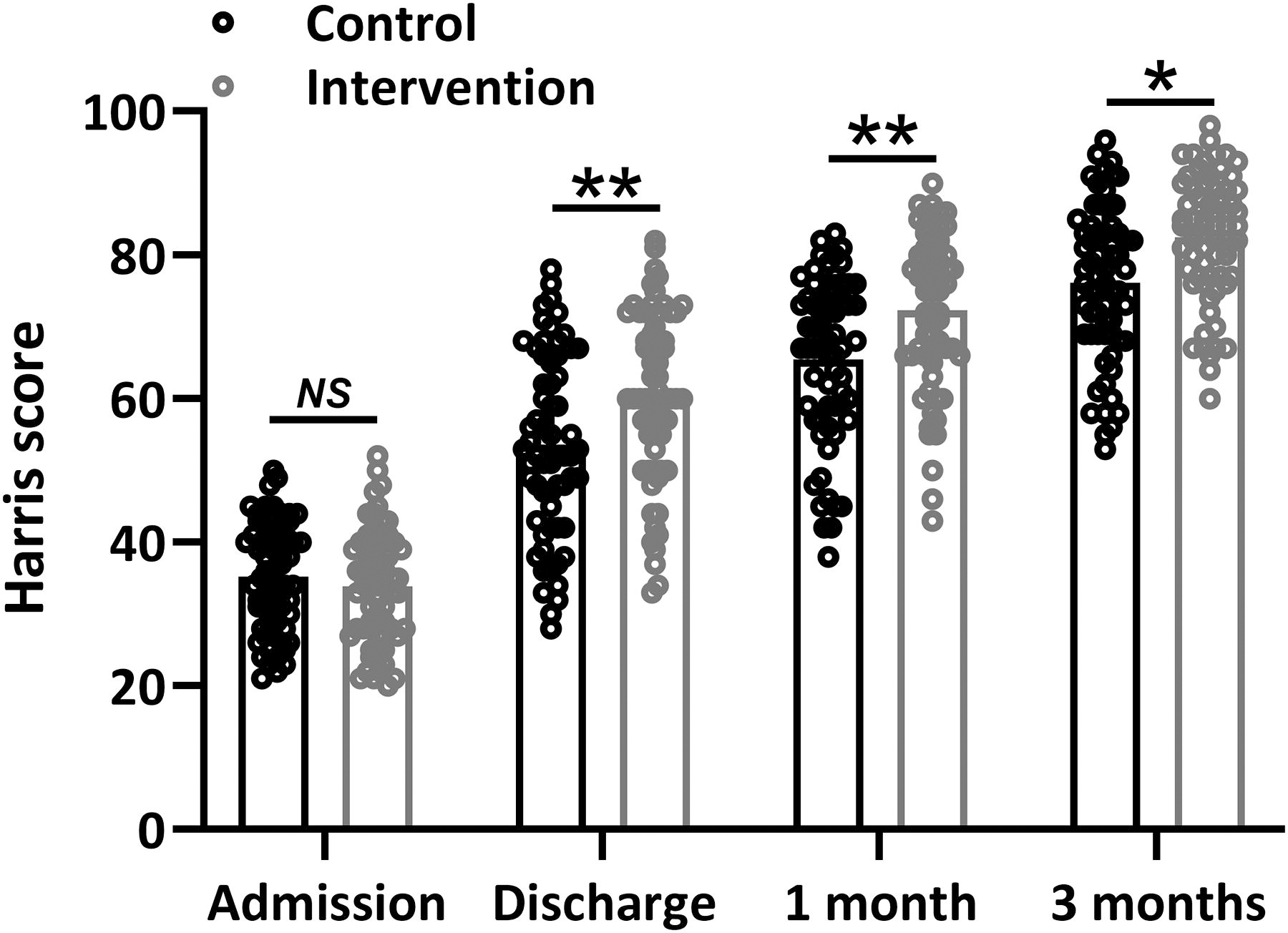
Comparisons of Harris score between patients who received normal nursing process (Control, n = 64) or predictive nursing process (Intervention, n = 66). Values were expressed as mean ± SD. *p < 0.05;**p < 0.01. NS, no significance, from Mann–Whitney test.
ADL and SAS
A comparative analysis of the ADL score and the SAS between patients who underwent standard nursing processes (Control, n = 64) and those who received predictive nursing processes (Intervention, n = 66) was performed. Figures 4A and 4B compared the ADL scores and SAS of patients at admission and 3-month postdischarge. At admission, no significant differences in ADL scores or anxiety levels were observed between the two groups. However, notable discrepancies emerged during the 3-month postdischarge assessment. Specifically, patients who underwent predictive nursing processes exhibited significantly improved ADL scores and reduced anxiety levels compared with those who received standard nursing care. These findings underscore the substantial benefits of implementing predictive nursing processes guided by risk assessment in enhancing patients’ ADL and ameliorating anxiety levels during the postoperative recovery period.
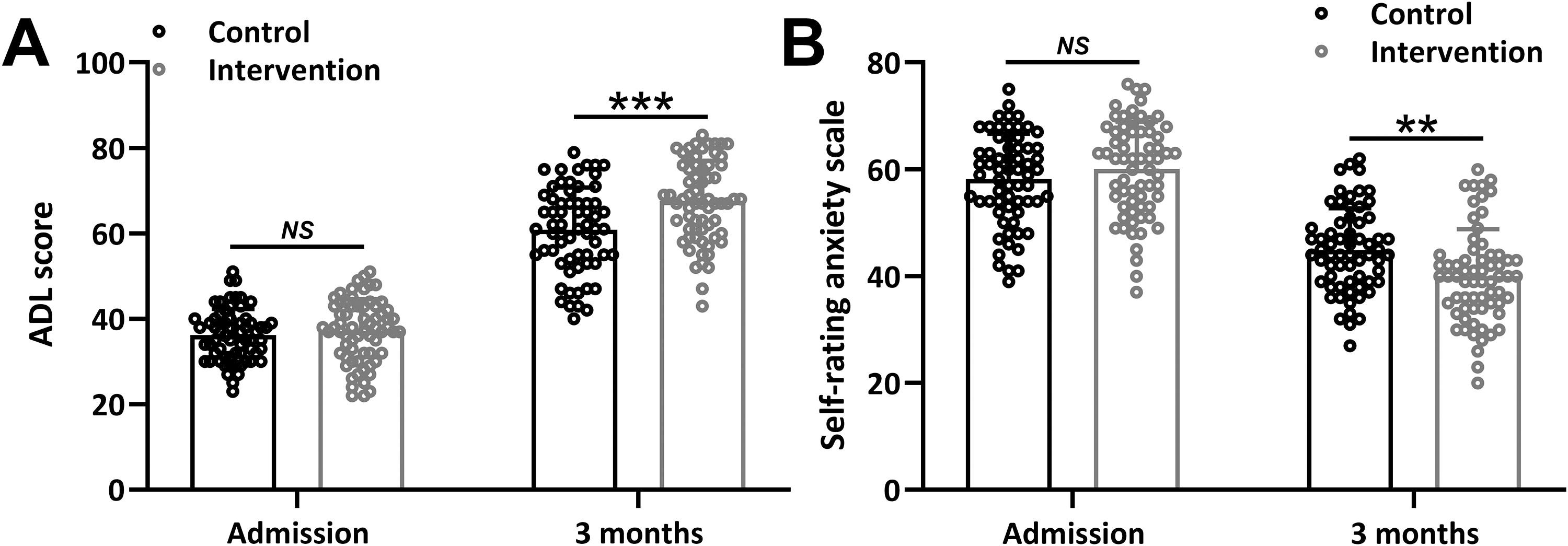
Comparisons of ADL score
Discussion
Total hip arthroplasty represents a transformative intervention for elderly individuals suffering from debilitating hip joint pathologies, providing substantial relief from pain and restoration of mobility. 16 –18 As the global population ages, the prevalence of hip-related disorders escalates, underscoring the growing importance of total hip arthroplasty as a vital orthopedic procedure. 19,20 However, despite its benefits, total hip arthroplasty carries inherent risks and potential complications, particularly in the elderly population. 21,22
Risk assessment-driven predictive care represents an innovative approach in healthcare aimed at optimizing patient outcomes through predictive identification and mitigation of potential risks. 11,23,24 In recent years, there has been a growing recognition of the importance of individualized care strategies tailored to patients’ specific risk profiles, particularly in the context of complex medical interventions such as surgical procedures. 13,25 Total hip arthroplasty, a commonly performed orthopedic procedure, exemplifies the significance of risk assessment-driven predictive care in mitigating perioperative complications and enhancing postoperative recovery. 26,27 By systematically evaluating patients’ preoperative risk factors and dynamically monitoring their clinical status throughout the perioperative period, healthcare providers can anticipate and address potential complications more effectively, thereby improving overall treatment outcomes and patient satisfaction. 28 –30 This study aims to investigate the effects of a predictive nursing process on elderly patients undergoing total hip arthroplasty.
The demographic and clinical characteristics of the intervention and control groups were comparable, indicating successful randomization and ensuring the baseline comparability of the study cohorts. This baseline equivalence is crucial for interpreting the subsequent intervention effects accurately. Notably, the successful completion of the study by a substantial number of participants in both groups underscores the feasibility and acceptability of the proposed nursing interventions in the elderly total hip arthroplasty population. Our results demonstrate that predictive nursing interventions guided by risk assessment significantly reduced the incidence of complications, particularly DVT, among elderly total hip arthroplasty patients. The absence of DVT cases in the intervention group highlights the potential of risk-based nursing protocols in mitigating postoperative complications. In addition, the overall incidence of complications was significantly lower in the intervention group, reaffirming the efficacy of predictive nursing processes in enhancing patient safety and reducing adverse outcomes following total hip arthroplasty. Third, our study elucidates the beneficial impact of predictive nursing processes on various clinical outcomes, including postoperative length of stay, patient satisfaction, hip joint function, ADL, and anxiety levels. Patients who received predictive nursing care exhibited shorter hospital stays, higher satisfaction levels, improved hip joint function, enhanced ADL scores, and reduced anxiety levels compared with those receiving standard care. These findings underscore the multifaceted benefits of risk-based nursing interventions in optimizing postoperative recovery and enhancing overall patient well-being.
The shorter postoperative length of stay observed in the intervention group suggests that predictive nursing interventions may facilitate smoother recovery trajectories and expedited discharge processes. By identifying and addressing potential complications early in the postoperative period, predictive nursing care minimizes the risk of prolonged hospitalization, thereby reducing healthcare costs and improving resource utilization. Moreover, the higher satisfaction levels reported by patients in the intervention group underscore the importance of patient-centered care and the positive impact of tailored nursing interventions on patient experiences and perceptions of care quality. Enhanced patient satisfaction not only reflects the effectiveness of nursing interventions but also contributes to improved patient compliance, engagement, and overall treatment outcomes.
Furthermore, our study demonstrates the significant improvements in hip joint function observed in patients receiving predictive nursing care. Enhanced hip function is a key determinant of postoperative mobility and functional independence, essential for achieving optimal rehabilitation outcomes and restoring patients’ quality of life. By providing targeted interventions to address individual patient needs and mitigate functional impairments, risk-based nursing processes empower patients to regain independence and participate more actively in daily activities, thereby facilitating long-term recovery and rehabilitation. Similarly, the improvements in ADL scores and reductions in anxiety levels among patients in the intervention group highlight the holistic benefits of predictive nursing interventions in promoting physical and psychological well-being. ADLs encompass essential tasks necessary for independent functioning and are integral indicators of overall functional status and quality of life. By addressing patients’ physical, emotional, and social needs holistically, predictive nursing care enhances patients’ ability to perform daily activities, fosters self-confidence, and alleviates psychological distress, ultimately promoting better overall recovery and adjustment to postoperative life.
Several limitations should be considered when interpreting the findings of this study. First, the single-center design may limit the generalizability of the results to broader patient populations and healthcare settings, potentially introducing selection bias. Moreover, the relatively small sample size might reduce the statistical power of the study and limit the ability to detect smaller effect sizes. The short follow-up duration of three months may not capture longer-term outcomes or complications that could arise beyond this period. The lack of blinding among study participants and personnel may introduce performance bias and influence subjective outcomes such as patient satisfaction scores. In addition, unmeasured confounders could impact the observed associations despite attempts to control for them, potentially affecting the internal validity of the study. Variability in patient adherence to prescribed interventions and protocols may also affect the consistency and effectiveness of the predictive nursing process. Last, the absence of a comprehensive economic analysis precludes the assessment of cost-effectiveness, limiting the understanding of the broader financial implications of implementing predictive nursing interventions. Future research endeavors should aim to address these limitations to provide more robust evidence and enhance the applicability of findings in clinical practice.
Conclusions
In conclusion, our study provides compelling evidence supporting the effectiveness of predictive nursing processes in optimizing outcomes for elderly patients undergoing total hip arthroplasty. By integrating risk assessment into nursing practice and tailoring interventions to individual patient needs, healthcare providers can mitigate complications, expedite recovery, and enhance patient satisfaction and well-being. The multifaceted benefits of predictive nursing interventions underscore their potential as a cornerstone of high-quality care for elderly total hip arthroplasty patients. Ultimately, predictive nursing interventions offer a promising approach to enhancing the quality of care and promoting better outcomes for elderly total hip arthroplasty patients, contributing to improved patient-centered care and healthcare delivery overall.
Footnotes
Data Availability Statement
The data could not be shared openly, as required by our department. The raw data could be obtained upon reasonable request to the corresponding author.
Authors’ Contributions
J.G.: Conceived the study. J.G. and Z.Z.: Conducted the experiments, collected and analyzed the data, and wrote the article.
Author Disclosure Statement
Authors report of conflicts of interest.
Funding Information
This work was supported by the Heilongjiang Provincial Health Commission Scientific Research Topic (#