







Abstract
Background:
Remote areas of Taiwan lack routine and specialized ophthalmology services. This study aimed to analyze feasibility of teleophthalmology service for diseases diagnosis and referral in remote areas of Taiwan.
Methods:
A retrospective study of medical records from 11 remote teleophthalmology clinics in the Taitung area of Taiwan was conducted from May 2020 to December 2021. Vision and intraocular pressure were checked. Ophthalmic imaging was performed by local trained nurses using a hand-held ophthalmoscope and slit lamp biomicroscope. The images were transmitted by telemedicine system to a medical center. Consultation was conducted via face-to-face real-time video calls. Ophthalmologists in the medical center provided diagnosis and treatment advice based on the real-time images and interactive history taking via the telemedicine system. All the images and data were collected and well-reviewed by ophthalmologists in the medical center, and disease prevalence and referral were analyzed for the program. A small-scale satisfaction questionnaire survey was conducted for efficacy evaluation of the program.
Results:
A total of 1,401 medical records from 1,094 patients were collected and screened. Patients' ages ranged from 9 months to 94 years, with a mean age of 57.27 (standard deviation ±20.47) years. The most frequent ophthalmologic diagnosis was dry eye disease (20.2%), followed by conjunctivitis (12.4%). Among 322 patients with underlying diseases of diabetes mellitus, 59 patients (18.3%) were diagnosed with diabetic retinopathy. Major diagnosis was made in 102 patients (7.3%) and referral to hospital for further management was suggested. This program had high overall satisfaction score of 89% (mean 4.43 ± 0.52 points) in satisfaction questionnaire survey.
Conclusion:
Teleophthalmology provides an alternative tool for ocular disease diagnosis and screening for patients in remote areas, especially during the COVID-19 pandemic. This service helps to detect major but undiagnosed diseases and promotes health care accessibility and availability in remote areas that lack specialists.
Introduction
With the evolving techniques of telecommunication equipment and transmission network, teleophthalmology was first introduced in the late 1990s, 1 and is designed to deliver specialized eye care to distant areas. The development of teleophthalmology bridges the clinical distance between physicians and patients and has played a crucial role during the COVID-19 pandemic in Taiwan.
Ophthalmic diagnosis relies on image-based examinations from the anterior segment to the posterior segment, making it a candidate for telemedicine services based on its high-resolution images and real-time transmission. Intraocular pressure (IOP) can be measured by pneumatic tonometer. External eye photography using a portable camera and slit lamp biomicroscope provides vast information for diagnosis of corneal disease, 2,3 while the fundus camera allows a glimpse of optic nerve disease, 4 nerve cupping, 5 and retinal disease evaluation. In addition, teleophthalmology is widely used in the screening of diabetic retinopathy (DR), showing sensitivity (62.5–98.2%) and specificity (76.6–98.7%) comparable to standard protocols. 6 In addition to disease diagnosis and screening, teleophthalmology also contributes to the early referral of critical disease, 7 which may ultimately improve clinical outcomes.
Taiwan has a world-famous National Health Insurance (NHI) system, which emphasizes the high accessibility, comprehensive population coverage, and low cost of medical care. 8 However, health gaps still exist between rural and urban areas due to uneven distribution of medical resources and physicians. 9 The eastern part of Taiwan covers nearly half of Taiwan but it is mostly mountainous, which lacks high-quality health care services and limited medical resources. For example, Taitung County is the third largest county in Taiwan (area of 3,515.25 km2), but has the lowest number of physicians per square kilometer (0.09 physician/km2) in Taiwan. Only seven ophthalmologists are found in Taitung County, which is ranked the lowest for health care services in Taiwan's main island. 10
To conquer this big challenge of limited ophthalmology care services, we started a teleophthalmology system in the remote townships of Taitung County in 2020, using real-time video calls and image transmission. With the novel device and real-time data transmission, our teleophthalmology clinic provided specialized eye care in remote Taiwan, which improved accessibility and the availability of eye care in these areas. The goals of the teleophthalmology program include ophthalmic disease diagnosis and screening, general management, and early referral for suspicious and critical cases. The present study aimed to analyze the disease distribution and referral rate of the teleophthalmology service in remote areas of Taiwan.
Methods
SUBJECTS AND STUDY PROTOCOL
A retrospective chart review study was conducted using electronic medical records from 11 remote local health clinics in the Taitung area of Taiwan from May 2020 to December 2021. A total population of the 11 remote towns was about 70,000 in 2021. 11 Patients who registered at local health clinic during announced clinic hours can utilize the teleophthalmic service. The hospital Institutional Review Board and Ethics Committee approved the study protocol [KMUHIRB-E(I)-20220166], which adhered to the Declaration of Helsinki. Since this research was retrospective in design and used existing deidentified information, patients' informed consent was waived.
Upon arrival, patients will receive ophthalmic examination, including external eye photography, color fundus photography, visual acuity measurement, and IOP measurement. Ophthalmic imaging was performed by trained nurses at the health clinics using handheld ophthalmoscopes and slit lamp biomicroscopes, and images were transmitted via the telemedicine system to ophthalmologists in a medical center. Consultation was conducted via face-to-face, real-time video calls. Diagnosis and treatment advice was provided by ophthalmologists in the medical center via the telemedicine system and was based on real-time images and interactive history taking (Fig. 1).
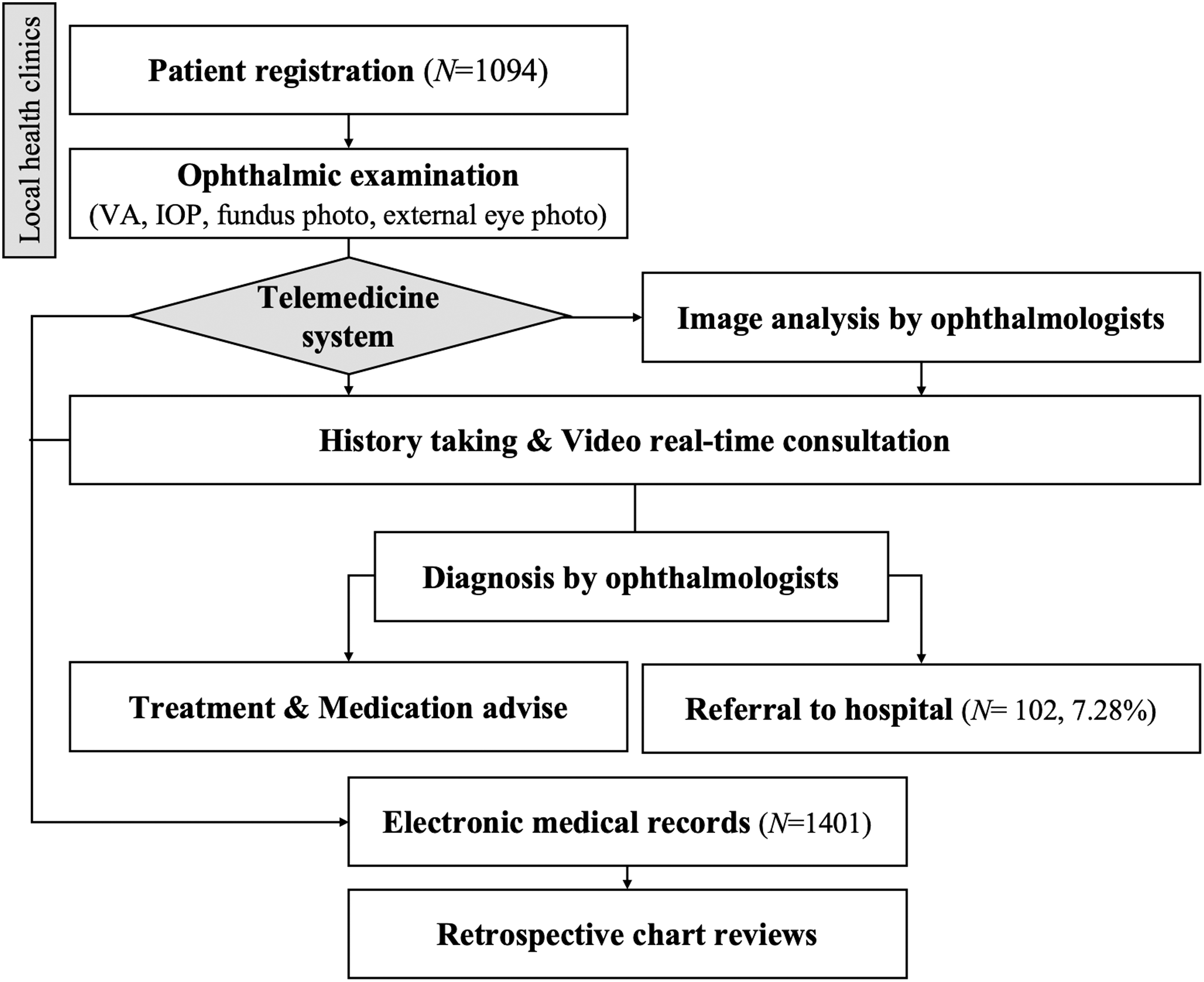
The protocol of our teleophthalmology program.
All diagnosis for each individual subject was established according to codes from the International Classification of Diseases (ICD)-10.
MEASUREMENT
All individual visiting records will be kept as electronic medical records in hospital. A complete medical record in our study includes patient's profile, ophthalmic images and examination result, clinical diagnosis, and medical advice. A total of 1,401 valid medical records from 1,094 patients were carefully reviewed in this study, and incomplete records were excluded.
A small group survey study with satisfaction questionnaire of teleophthalmic program was conducted from May 2020 to June 2021 at three local health clinics. After complete examination and consultation, patients who had capability of literacy can answer the questionnaire. A total of 98 valid questionnaires were analyzed in this study, and questionnaires with incomplete answer and patients who refused to answer were excluded. The hospital Institutional Review Board and Ethics Committee approved the study protocol [KMUHIRB-E(I)-20220166].
STATISTICAL DESCRIPTION
All descriptive data are presented as mean ± standard error for continuous variables.
Results
DEMOGRAPHIC AND CLINICAL CHARACTERISTICS
A total of 1,401 medical records from 1,094 patients with mean age 57.27 ± 20.47 made up the analytic sample for this study, including 449 males (57.06 ± 21.11 years) and 645 females (57.42 ± 20.01 years) (Table 1).
Demographic Data and Clinical Characteristics
DR, diabetes retinopathy; SD, standard deviation.
OCULAR DISEASE DIAGNOSIS
The study reviewed patients' most frequent chief complaint. Blurred vision was the leading cause for visiting, accounting for 34.2% of total visits, and dryness (18.5%) and grittiness (15.7%) ranked second and third, respectively. Other common chief complaint included itchiness (15.3%), tearing (10.4%), discharge (10.2%), eye redness (7.5%), and eye pain (5.03%).
Image interpretation was done by clinical ophthalmologists in hospital, playing the critical role for disease diagnosis. External eye photo and slit photo provided a view of external eye and anterior chamber, including eyelid, conjunctiva, cornea, and lens. Fundus photo delivered the information of posterior pole, including retina, macula, and optic disc. Ophthalmologists checked above structure and made clinical judgment according to live image from teleophthalmology system (Fig. 2).
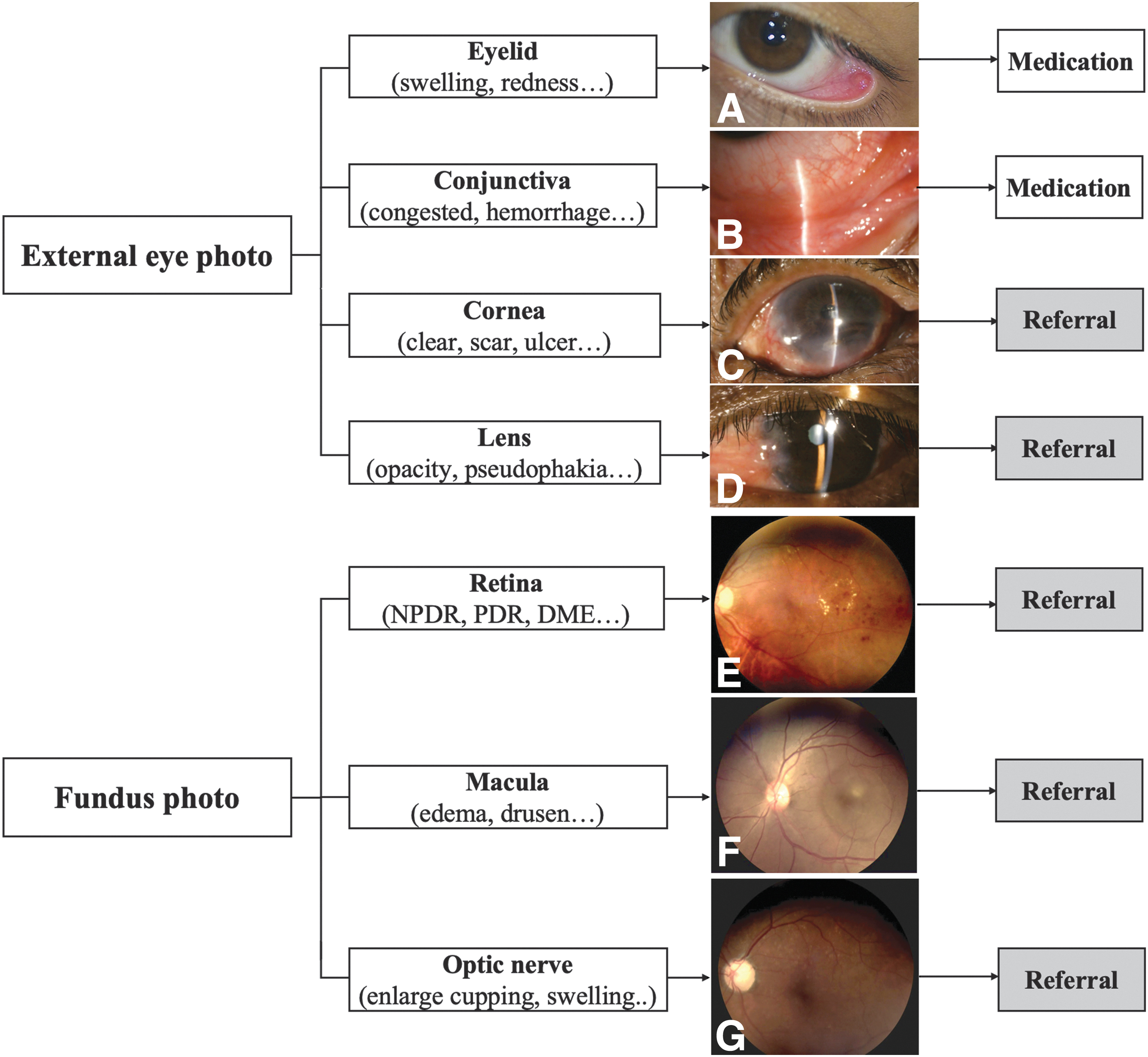
Examples of diagnosis protocol and clinical judgment. All of the diagnostic judgment was made by clinical physician according to ICD-10.
The diagnoses were mostly minor except for 102 patients (7.28%) who needed further management. Among these, dry eye disease (33.09%) was the most frequent, followed by conjunctivitis (20.29%) and cataract (18.46%) (Fig. 3).
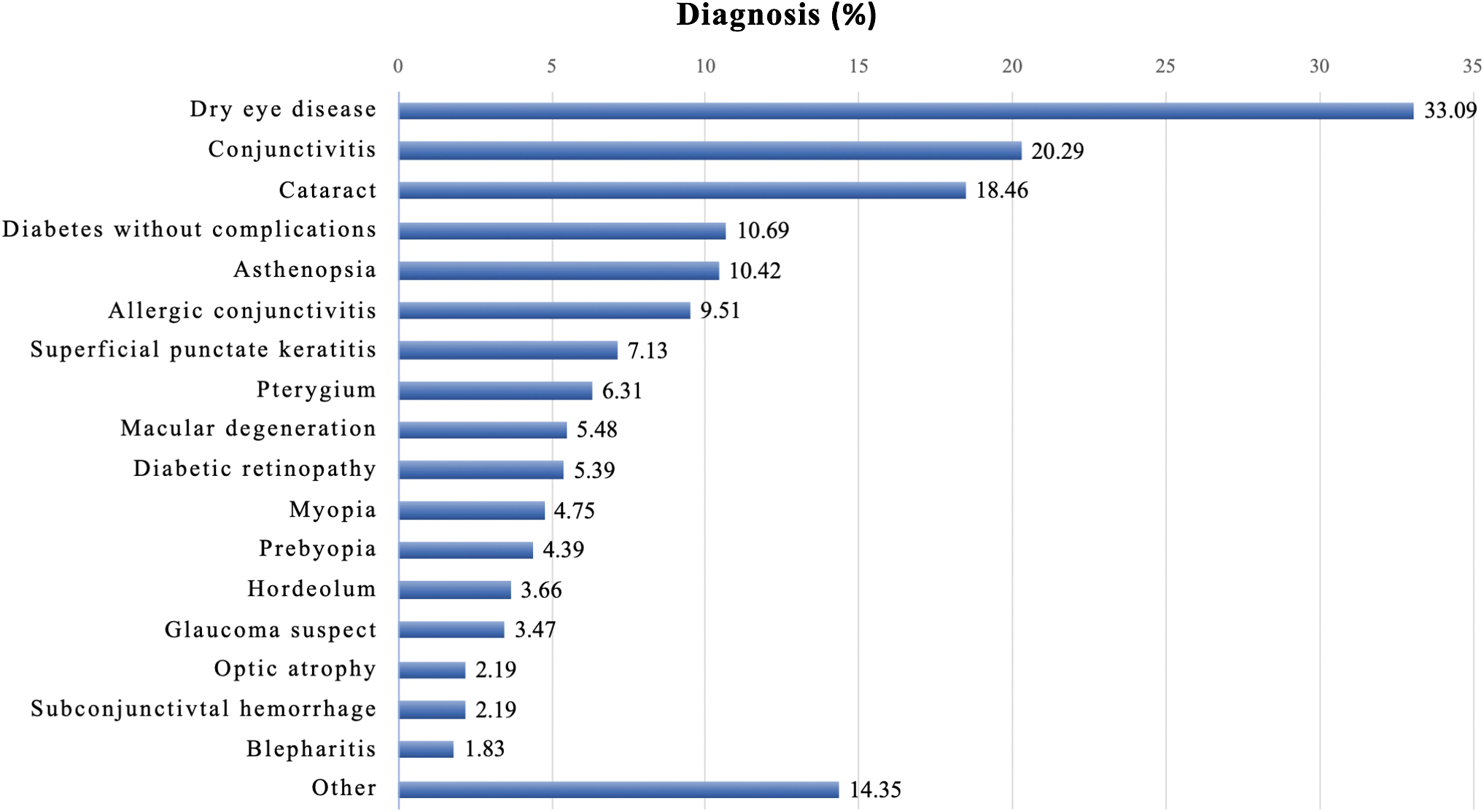
Most frequent diagnosis in presenting study. All the diagnostic judgments were made by clinical physician according to ICD-10. Other diagnosis was listed detailed in Supplementary Table S1.
DISEASE SCREENING
Since DR is one of the leading causes of visual loss globally, DR screening has become one of the major goals of teleophthalmology. Among 322 patients who had underlying diabetes mellitus, 59 patients were diagnosed with DR, accounting for 18.3% of diabetic subjects. When severity of DR was categorized according to The International Clinical Diabetic Retinopathy (ICDR) severity scale, among the 59 patients with DR, 17 patients were classified as mild DR, 38 were classified as moderate DR, while 4 were diagnosed with severe DR or proliferative diabetic retinopathy (PDR) (Table 1).
In addition to DR, fundus screening also provided information about the structure of optic disc, which can detect glaucoma suspects early. A total of 38 patients (3.5%) were diagnosed as glaucoma suspects due to enlarged cupping or nerve fiber defects, and further referral for treatment was suggested.
EARLY REFERRAL
After identifying individual eye or vision problems, general treatment was given at the local clinic according to the ophthalmologists' advice, and consultation and education were done via real-time video-call. If the situation needed further management, referral was arranged. A total of 102 patients (7.3%) received referrals to ophthalmology clinics or hospitals for further management, including severe nonproliferative or PDR (4 patients), glaucoma suspects (38 patients), cataract (19 patients), maculopathy (8 patients), corneal ulcer (3 patients), and others as listed in Table 2.
Referral Cases in Our Study
PATIENTs' SATISFACTION
A satisfaction questionnaire was designed to evaluate the patients' level of satisfaction with the care received (Table 3). Every question was evaluated by a grading system on a scale from 1 to 5: 5—very good, 4—good, 3—fair, 2—poor, and 1—very poor.
Satisfaction Questionnaires
Mean overall satisfaction score of the teleophthalmology experience was 4.43 ± 0.52 points. Cost efficiency of teleophthalmology received the highest satisfaction score (4.53 ± 0.50 points), including reduced travel expenses. The lowest score was 4.41 (standard deviation ±0.52) points, based on a few patients who thought that a gap still existed in receiving deserved medical care by teleophthalmology.
Generally, the included patients showed high satisfaction with the teleophthalmology project, and all items of the questionnaire received scores above 4 points. The questionnaire feedback included two patients who reported unstable transmission quality and one patient who reported having a long waiting time.
Discussion
Results of the present study showed that teleophthalmology provides an effective tool for ocular disease diagnosis and screening for patients in remote areas, especially during the COVID-19 pandemic. This is the largest retrospective study of teleophthalmology in Taiwan, to the best of our knowledge.
The teleophthalmology screening program in remote Tungyin island was the first report to describe teleophthalmology in Taiwan, including 113 subjects and 12% of cases diagnosed with macular degeneration, and 6% of cases with optic disc problems. 12 Based on the development of the handheld nonmydriatic fundus camera, retinal screening in remote Orchid island with 176 eyes reported high diagnostic accuracy and high patients' satisfaction. 13,14 Due to the imbalance of economic resource between east and west Taiwan, the mean age of the participants in the present study was relatively older than those in western Taiwan.
Although most of the diagnoses were minor, this service helped to detect major but undiagnosed diseases and promote health care accessibility and availability in remote areas that lack specialists. In the present series, 102 patients (7.3%) received further referrals to ophthalmology clinic or hospital for further management, while the average referral rate in previous studies was reported to be from 6.3% to 19.5%. 7,15
With the development of teleophthalmology, this visual way of in-person screening and diagnosis has been developed and services boosted. The benefits are not only for remote patients, but teleophthalmology also provides instant help for patients in quarantine during the COVID-19 pandemic era and is thought to improve patients' clinical outcomes. Sreelatha et al. 16 suggested that teleophthalmology produces the same desired clinical outcome as the conventional person-to-person system and improves total health outcomes due to expanding specialists' care for a larger region. Al-Khaled et al. 17 reported that telemedicine systems for ophthalmology will potentially improve patients' prognosis. The present teleophthalmology program aimed to deliver basic ophthalmic care to remote areas that lack specialists. By providing treatment advice and catching the complicated cases, eye care services and clinical outcomes can be improved in remote Taiwan.
Patients' satisfaction with teleophthalmology is another crucial factor for the assessment of clinical health care quality. Gerbutavicius et al. 18 revealed patients' high satisfaction with video ophthalmology consultation during the COVID-19 pandemic. Alhumud et al. 19 conducted a tele-retinal screening program among diabetic patients and reported high patient satisfaction of 80.4%. A small-scale questionnaire survey revealed a high overall satisfaction score of 89% (mean 4.43 ± 0.52 points). More extensive investigation and feedback system, including satisfaction of clinicians, will likely be conducted in the future to further evaluate and improve the efficacy of the program presented in this study.
With the development of artificial intelligence (AI), teleophthalmology with AI-automated detection and classification of DR has changed the screening strategies and is reported to be cost-effective. AI for teleophthalmology-based DR screening in a Singapore national program provided a strong economic rationale for using deep learning systems as an assistive tool to screen for DR. 20 A report from India revealed high acceptability and satisfaction with an AI-based retinal screening model. 21 We expect that the AI-based system will further increase the efficiency and coverage of the ophthalmologic teleservice introduced in the present study.
LIMITATIONS
This study is inherently limited by its retrospective and observational nature, which may limit the generalizability of results to other populations or locations. The possibility of coding errors exists as in other studies using ICD coding systems. Also, consultation from different ophthalmologists in medical center may result in different diagnosis and management.
Conclusions
In conclusion, teleophthalmology becomes increasingly important in the modern era, and also acts as an efficient alternative during the COVID-19 pandemic. The teleophthalmology service helps to detect major but undiagnosed diseases and promote health care accessibility and availability in remote areas that lack specialists. Our program of teleophthalmology provides accessible health care and improves patients' outcomes in remote Taiwan by early ocular disease detection and referral, and high satisfaction was reported.
Footnotes
Acknowledgments
We thank Far EasTone telecommunications for launching the 5g network telemedicine system. We also thank the staff of the Taitung local clinics, including Yanping, Luye, Guanshan, Haiduan, Chishang, Chenggong, Changbin, Dawu, Daren, Green Island, and Orchid Island, for image acquisition and clinical practice services during our program.
Authors' Contributions
Y.-C.S.: investigation, formal analysis, data curation, writing—original draft, and visualization; S.-J.S.: conceptualization, methodology, writing—review and editing, and project administration; S.-L.H.: conceptualization, methodology, writing—review and editing, supervision, visualization, and project administration.
Disclosure Statement
The authors declare that there are no conflicting relationships.
Funding Information
This study was no financial support.
Supplementary Material
Supplementary Table S1
References
Supplementary Material
Please find the following supplemental material available below.
For Open Access articles published under a Creative Commons License, all supplemental material carries the same license as the article it is associated with.
For non-Open Access articles published, all supplemental material carries a non-exclusive license, and permission requests for re-use of supplemental material or any part of supplemental material shall be sent directly to the copyright owner as specified in the copyright notice associated with the article.
