







Abstract
Abstract
Developing zebrafish embryos were used as a model system for high school students to conduct scientific investigations that reveal features of normal development and to test how different environmental toxicants impact the developmental process. The primary goal of the module was to engage students from a wide range of socio-economic backgrounds, with particular focus on underserved inner-city high schools, in inquiry-based learning and hands-on experimentation. In addition, the module served as a platform for both teachers and students to design additional inquiry-based experiments. In this module, students spawned adult zebrafish to generate developing embryos, exposed the embryos to various toxicants, then gathered, and analyzed data obtained from control and experimental embryos. The module provided a flexible, experimental framework for students to test the effects of numerous environmental toxicants, such as ethanol, caffeine, and nicotine, on the development of a model vertebrate organism. Students also observed the effects of dose on experimental outcomes. From observations of the effects of the chemical agents on vertebrate embryos, students drew conclusions on how these chemicals could impact human development and health. Results of pre-tests and post-tests completed by participating students indicate statistically significant changes in awareness of the impact of environmental agents on fish and human beings In addition, the program's evaluator concluded that participation in the module resulted in significant changes in the attitude of students and teachers toward science in general and environmental health in particular.
Introduction
A
The module was designed for students to conduct scientific investigations in environmental health using the zebrafish, Danio rerio, as a model system. In this module, students exposed developing zebrafish embryos to different concentrations of environmental chemicals and examined the effects on the development of exposed embryos relative to unexposed (control) embryos, using tools commonly available in the classroom or at a local fish supply store. Based on their observations, students were able to consider the effects of these environmental chemicals on human health and development and, by extension, themselves. The chemicals used in the module ranged from lifestyle ones (e.g., caffeine and nicotine), to pesticides and herbicides, to unknown substances (e.g., filtered environmental water samples). Since zebrafish embryos reside in an aqueous environment, almost any water-soluble chemical can be easily administered to developing embryos to observe their effects on development.
Zebrafish possess several inherent qualities that made them an excellent model system for studying the many aspects of vertebrate development, both normal and abnormal, in the high school classroom. 1 Among these were the following: (i) The relative hardiness and ease of spawning.2–6 (ii) The large number of eggs produced during a typical spawning, combined with the embryos rapid rate of development and optical clarity, made the zebrafish a popular model for studying vertebrate development.7–11 (iii) Due to their common use in biomedical research, a vast array of support materials were available for use in the classroom by both teachers and students. Among these resources were detailed drawings, images, and time lapse videos describing the stages of zebrafish development, as well as morphological landmarks characteristic of the different developmental stages.1,10
Zebrafish embryos, similar to humans, undergo a series of reproducible, identifiable stages during normal development that were easily observed by students using a standard stereomicroscope. The morphological indicators of each developmental stage were used to assess the effects of these common environmental chemicals on development. For example, since the early stages of zebrafish development were characterized by rapid, synchronous cell divisions, the effects of a chemical agent on this synchronization were noticeable, even to the casual observer. 10 Similarly, defects in the development of the eyes or otic vesicles were readily visible. Not only was morphology used as a marker for the proper development of neurons, but activity and behavior was used as well.12,13 For example, treatment of embryos with nicotine resulted in loss of spontaneous tail wiggling behavior, indicating a problem with the motor neuron network.12,14,15 For these reasons, and many others, zebrafish proved to be an excellent tool for enhancing environmental and life science studies at the high school level.2–6,16
In addition to the creation of the zebrafish module, there were several key components to our Science Education Partnership Award (SEPA) 1 program that were critical to the success of both teachers and students, includingi (Fig. 1) continuous module development and refinement, summer teacher professional development workshop, year-long program support, mini-review workshop, module implementation with experimentation by students, lab report/scientific manuscript writing by students followed by paper exchange and critique (peer review), paper judging by the SEPA team, and student presentations, both oral and poster sessions, at the annual high school SEPA science conference. The program model also included an external evaluation design that incorporated both quantitative and qualitative methods for gathering data on the impact of the program on student's attitudes about science and environmental health.
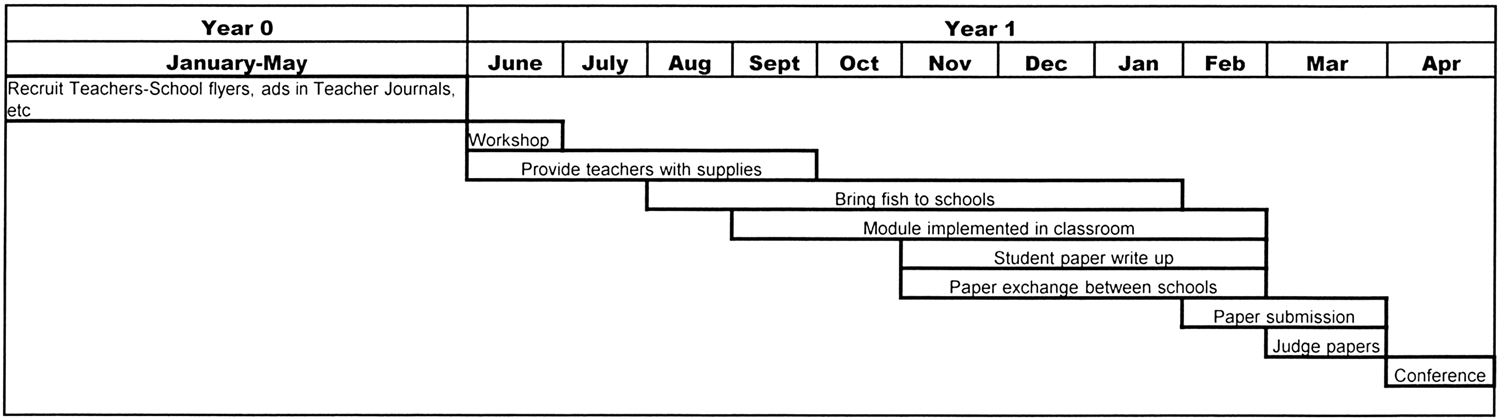
Science Education Partnership Award (SEPA) program components. Approximate time line for steps involved in the program. Year 0 refers to the time before the teachers implemented the module. It refers primarily to the time period required for recruiting teachers into the program. Year 1 is the time period during which the teachers implement the module. The timing of each step will vary depending on when the module fits into the teacher's class schedule.
At the outset, teachers were provided with a comprehensive document that described the module with regard to background science and readings, and experimental methods and experiments, including a timeline for doing the experiments.
The zebrafish environmental health module was one of the several modules created by our SEPA program, and it represents the collaborative effort of scientists, education professionals, and science teachers. Environmental health scientists were recruited to create and develop the experimental protocols utilized in the classroom. They chose the model system, environmental toxicants, and the observable outcomes or assays used to assess the effects of the environmental toxicants. Since the scientists opted to develop the module around the model system they used in their lab with their preferred environmental toxicants and the outcomes observed in their lab, the modules had the characteristics and feel of actual inquiry-based research. The education professionals then created the instructional framework for the modules, connected them to state and national science standards (Table 1), and then ensured they were presented at the proper level of sophistication.17–24 The teachers tested the modules in their classrooms and provided valuable feedback on the effectiveness of the modules. The utilization of process and outcome evaluation measures at multiple points in time ensured that teachers, students, and principals would be given the opportunity to assess and make recommendations regarding the program model. As such, the module evolved considerably.
Materials and Methods
Materials
The components of the stand-alone rack system used for housing and spawning the adult fish, as well as serving as a constant temperature incubator for raising embryos and fry, are listed in Supplementary Table S1 (Supplementary Data are available online at www.liebertpub.com/zeb). Flake fish food, frozen brine shrimp, Instant Ocean salts, nets, 10 gallon aquariums, filters, heaters, hoods with lights, and thermometers were obtained from a local distributor, Naja. Artemia cysts were purchased from Argent Laboratories. The spawning apparatus was constructed from Cambro Food Pans (24CW; Cambro Manufacturing Corp.), with a plastic mesh screen (4.0 mm mesh, Cat. no. N1170; Aquatic Ecosystems) covering the bottom of the upper chamber and was sealed in place using aquarium-grade silicon glue.
Zebrafish husbandry
Wild type, referred to as EKs, and leopard long fin (LLF) strains of zebrafish were obtained from Ekkwill Waterlife Resources and housed at the University of Wisconsin-Milwaukee Children's Environmental Health Sciences Core (CEHSC) Center Aquatic Animal Model Facility before distribution to teachers. On arrival, the fish were screened for signs of injury and disease and unfit fish were euthanized using an overdose of MS-222 (Sigma-Aldrich). Fish were housed at a density of 10 fish per liter in a flow through rack system supplied with dechlorinated municipal tap water and fed flake food in the morning, freshly hatched Artemia in the early afternoon, and frozen adult brine shrimp in the evening. During the third week after arrival, males and females were segregated and housed separately in a flow through rack system. Fish were kept in a light-controlled environment with 14 h of light and 10 h of dark. All fish husbandry protocols were reviewed and approved by the University of Wisconsin-Milwaukee IACUC. During the summer workshop, teachers were trained to follow the fish husbandry protocols and signed a form to this effect before being given fish. Protocols were adapted from Nusslein-Volhard and Dahm 1 and Westerfield et al. 10 .
EKs were crossed with LLFs to generate EK-leopard long fin (EK-LLF) lines for use in the classroom.
Classroom rack system
The rack system (Supplementary Table S1 and Fig. 2) consisted of a Cambro Element rack (4 ft long by 6 ft tall by 14″ deep) with four shelves that was capable of holding four 10-gallon aquariums filled with de-chlorinated tap water maintained at 28°C by a submersible heater and other supplies used in the experiments. The temperature was monitored using a thermometer adhered to the side of the aquarium and calibrated using a certified mercury thermometer. Two of the aquariums were used to house male and female fish, respectively, while the other two aquariums served as a multi-purpose heat sink (a) to keep the spawning fish at 28°C, and (b) as an incubator for keeping the developing embryos and fry at a constant 28°C for the first week of their life. The water in the aquariums was filtered using an Aqueon power filter. Light was provided by a fluorescent light that is controlled by a timer to provide a light cycle of 14 h of light/10 h of darkness. In order to exclude external light from the system, the entire rack was covered with 6 mil black plastic fastened to the rack using Velcro strips. The front black sheet was peeled back to provide access to the fish. A light connected to the timer was located outside of the rack and served as an external indicator of when the aquarium lights were on or off. Once the racks were set up, five female and five male fish were added to the separate aquariums. For the first 3 weeks, the fish were fed flake food twice daily. The ammonia and nitrite levels were monitored daily over the next 3 weeks using a commercially available dip stick kit and recorded. Whenever ammonia or nitrite levels exceeded kit manufacturer recommended levels, water changes were performed to bring the ammonia or nitrite levels below detection. Usually, after 2 weeks, the ammonia and nitrite levels were below measurable levels. At this time, 15 more females and 5–7 male fish were added to the aquaria, respectively. This brought the number of fish to the desired number of 20 females and 10–12 males for use in the experiment. Ammonia and nitrite levels were monitored as described earlier for the next 2 weeks. To bring the fish into spawning condition, the fish were fed flake food in the morning and thawed frozen adult brine shrimp three to four times at hourly intervals in the afternoon. By the end of the 2–3 week period, the fish were ready to be spawned. The fish were set up for spawning weekly as described next.
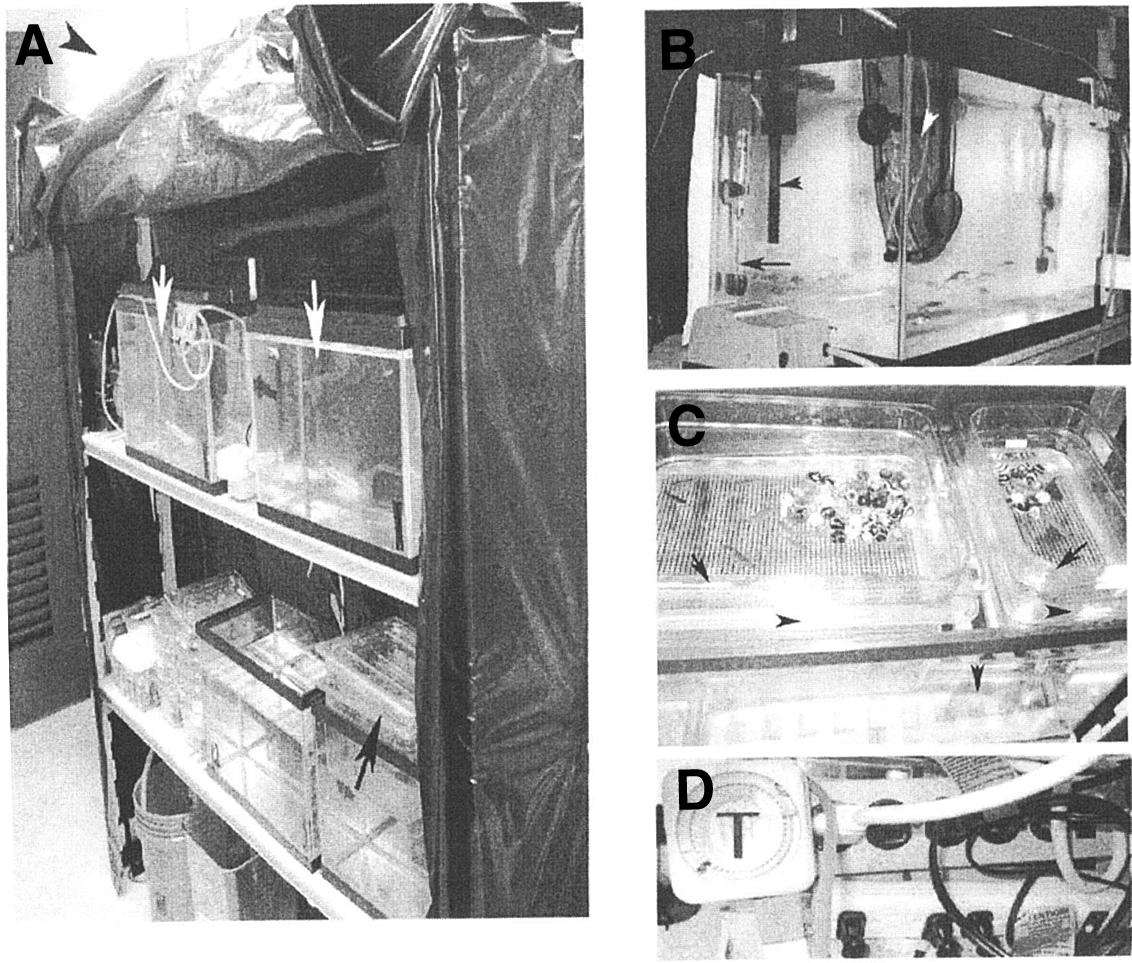
Stand-alone zebrafish rack.
Spawning
For spawning, eight EK-LLF female zebrafish were placed along with four EK-LLF males in a 9 L spawning apparatus and four EK-LFF female zebrafish were placed along with two EK-LLF males in a 3 L spawning apparatus. The spawning apparatuses were constructed out of mouse cages, Cambro Food Pans, and Tupperware, Rubbermaid, or similar containers. The spawning apparatus consisted of two nested plastic containers, where the bottom of one container had been cut out and replaced with a mesh screen (1.2×1.2 mm pore size) before being glued into place using Aquarium grade Silicone glue. The bottom container was filled with embryo water (200 mg/L Instant Ocean), and the screened bottom container was placed inside of it. The spawning apparatus was partially submerged/floated in a 10 gallon aquarium and was partially filled with dechlorinated tap water maintained at 28°C using a submersible heater. The dimension of the spawning container was such that the rim of the container rested on the top edge of the aquarium, enabling the chamber to be partially submerged in the water, but not sink. The aquarium water served to maintain the spawning chamber at the proper temperature. Two aquariums were used for spawning. One aquarium contained a complete spawning apparatus; the second contained only the bottom chamber with fresh embryo water in it. The fish were placed in the upper chamber the night before eggs were collected. Then, just before lights came on the next morning, the top chamber containing the fish was lifted out and placed into the second chamber. By following this procedure, the fish were placed in clean water, which might elicit stronger spawning behavior, as well as enable the eggs to fall through the mesh into a lower chamber with clean water, reducing the effort required to clean the eggs from detritus. Before egg collection, adult fish were carefully netted and returned to their respective home tanks.
Better results were obtained if the fish were spawned weekly for 2–3 weeks before the embryos were needed for experiments. This served two purposes. First, the teacher and students practiced handling the fish, assembling and disassembling the spawning setups, and collecting and sorting the embryos. Second, the fish were acclimated to spawning in the new setups and older eggs that accumulated in the female were dispelled. Weekly spawning also kept the female from accumulating eggs or becoming “eggbound,” characterized by an overextended abdomen containing compacted eggs. Both contributed to better and more reliable embryo production and better experimental results. As Table 2 indicates, egg production was more reliable with each additional week.
Embryo production improved with practice. The number of embryos produced was greater than 1500 for the last 16 weeks, as compared with most spawning generating less than 1000 embryos over the first 10 weeks. If more than 1500 embryos are needed for a class, then it would be wise to have two spawning setups with 12 females in each one. Other teachers in a school where multiple teachers were raising zebrafish could spawn fish on the same day to provide a backup supply of embryos.
Minimum number of embryos produced, as embryos were given to teachers before counting them.
Did not reproduce.
nd, Not determined.
Embryo collection and chemical exposures
Embryos were collected from the spawning apparatus as follows. The upper chamber, complete with the adult fish, was removed from the lower chamber containing the embryos. The lower chamber was lifted out of the aquarium and set aside for a few minutes in order to let the embryos settle to the bottom of the tank. Water was carefully decanted from the container through a mesh whose pore size (0.5 mm in diameter) was smaller than the embryos, in order to catch any embryos, until <2 cm of water remained in the container. The container was tilted to one side so that it rested on one edge, where the embryos would gather for easy collection using a large bore transfer pipet. Detritus and dead, or unfertilized, embryos were removed, and the live embryos were rinsed with embryo water. The embryos, in their chorions, were counted and distributed into individual wells of a multi-well plate at 8–10 embryos per well. We used 4, 12, and 24 well plates, depending on the number of different chemical exposures and the number of students (Fig. 3). For chemical exposure, the water was carefully removed using a transfer pipet with a small tip and 1.5 mL of the appropriate chemical solution was added to each well. The solutions used in this table were listed in Supplementary Table S2. All of the chemicals were prepared using embryo media (200 mg/L Instant Ocean in distilled water). Embryos raised in embryo media served as negative controls and a baseline for comparison. For chronic exposure, the solution in each well was removed daily using a transfer pipet and replaced with the same solution. Every day, the embryos in each well were examined and the number of living embryos was counted and recorded (Table 3). The embryos in each well were examined using a stereomicroscope, and the morphology of the embryos was documented by either drawing or photography. Notes were made describing the physical condition of the embryos. The heart rate of the embryos was determined by observing the embryos using a stereomicroscope and counting the number of times the heart contracted over a 1 min period. The heart rate of embryos exposed to different chemicals was compared with untreated controls. On the fourth day post-fertilization, final observations were made and the embryos were euthanized using an overdose of MS-222 (Sigma-Aldrich) and fixed with 95% ethanol. These embryos were saved for demonstration purposes or for future use (e.g., stained with Alzarin red and Alcian blue to reveal the morphology of the developing cartilage and bone).25,26
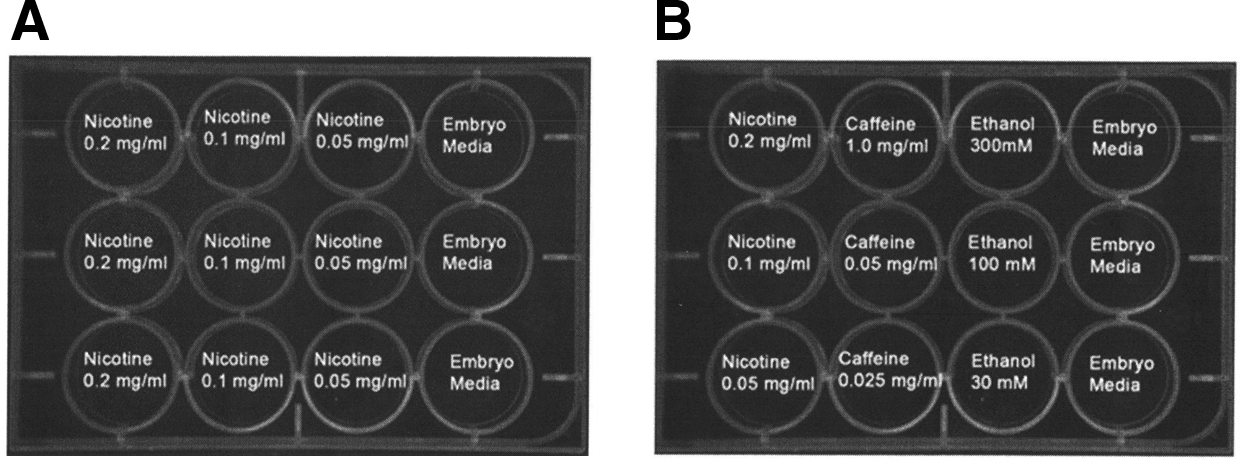
Multiwell exposure plates.
Hatched, escaped from chorion; live, hatched plus non-hatched.
Cartilage staining
Cartilage in the larval zebrafish was stained using Alcian blue (Sigma A-3157) as modified from Emran et al. 25 In order to minimize exposure of students to hazardous chemicals, all solutions containing hazardous chemicals (e.g., HCl and MS-222) were prepared by the teacher before class. While doing this protocol, the students wore appropriate personal protection gear, including lab coat, gloves, and eye protection. Briefly, larval zebrafish were euthanized by overdosing in a solution of 0.01% MS-222 (Tricaine, Sigma A-5040; Sigma-Aldrich) in embryo media. The euthanized larval fish were fixed by placing in 0.0037% HCl-70% ethanol (acid-ethanol) solution and kept at 4°C for 24 h. The fixed larval fish were stained overnight in 0.2% Alcian blue in the acid-ethanol solution overnight at room temperature. The next day, the Alcian blue solution was decanted carefully and discarded into the appropriate chemical waste container, and the larval fish were washed with acid-ethanol overnight, or until all of the non-cartilage-bound Alcian blue was removed as determined by viewing under a stereomicroscope. After washing, the acid-ethanol solution was decanted into the chemical waste container and the larval fish were immersed in a KOH-Glycerol (1% KOH-50% Glycerol) solution. The stained embryos were visualized using a stereomicroscope, and images were collected using either cameras attached to the microscope or as a part of the student's cell phone.
SEPA Program
Summer teacher workshop
High school science teachers were recruited for the professional development workshop during the winter and notified of their acceptance into the program in April. The weeklong workshop took place during the summer and provided teachers with hands-on experience in the module's content. To place the module in context, scientists presented relevant lectures covering key concepts in environmental health. Members of the professional development team presented and discussed educational tools, pedagogy, and evaluation. Scientists led daily sessions that covered the basic science and related environmental health content of the module. Working at experimental setups, they led teachers through the module's methodology and were present to answer teachers' questions about zebrafish husbandry, development, and toxicology. Over the course of the week, the teachers were prepared for the successful implementation of the module in their classroom laboratories.
School year support
It was critical that the teachers were well supported by scientists during the school year. Before classes began in the fall, the teachers were provided with all of the materials (Supplementary Table S1) needed to raise the adult fish, get them into spawning shape, spawn them, gather the embryos, and expose the embryos to environmental toxicants. In addition, a mini-refresher course covering basic zebrafish husbandry and the finer points of the module was made available to the teachers during the fall. Additional support for the teachers from a scientist and staff was available during the school year via in-school visits, a program blog, e-mail, and video conferencing.
Zebrafish module
The module was designed to be completed in a week. Usually, the fish were spawned on a Monday and the embryos were collected and exposed to the toxicants until Friday. Each day, the students observed experimental and control embryos and noted the effects of the toxicants on the developing embryos. The students documented their observations using microscopes equipped with cameras. Alternatively, students obtained quality images of the embryos by pointing their cell phone cameras through the lens of the microscope. The students used the images of the embryos treated with toxicants and other data collected, documenting the effects as a basis for writing a scientific report.
Written report
The report was intended to be a full scientific communication or paper. It helped students recognize that communication of results was an integral aspect of scientific research. It also provided the impetus to carefully organize and evaluate experimental results. An option in the overall program offered students in one classroom the opportunity to exchange their written reports with students from another classroom, often at a different school. Each student peer reviewed another student's report that had been encoded to ensure anonymity. In this way, the students gained experience not only in writing a scientific paper, but in how to critique one as well.
Student research conference
The final, culminating activity of the program was a student science research conference held in the spring, which was intended to give students the intellectual invigorating experience of meeting with their peers to discuss science. The conference featured student presentations, which consisted of both oral presentations and a poster session, with the oral presentations chosen by conference organizers from the written lab reports submitted by teachers. The teachers pre-screened the reports and submitted the best ones to the committee for consideration. All of the students were invited to the conference to share their experience with students from other schools. The conference also included poster presentations by SEPA program students, as well as graduate students in environmental health, a keynote address by a faculty member, and opportunities to learn about careers in environmental health in universities, government, and the private sector.
A minimal timeline for implementing the experiment in the classroom, from setting up the aquarium to starting an experiment, was about 7 weeks (Table 4). The timeline served multiple purposes; not only did it provide teachers with a schedule for the different parts of the module, but also the timeline revealed the earliest and latest time during the school year that the module could be completed. This aided teachers in deciding where the module fit best into their curriculum.
Days of the week for week 7.
Program evaluation
A key component of the SEPA program model was an external process and outcome evaluation, utilizing a mixed-method design. Teachers were introduced to the evaluation at the Summer Workshop by the evaluation team. They completed evaluations at the end of the weeklong workshop and, again, after they had taught the module. Students completed pre-test/post-test surveys that focused on knowledge, attitudes, career plans, and their assessment of and recommendations for the zebrafish module. Other sources of data for the evaluation included program records, statistics, and reports; curriculum materials; research conference teacher and student evaluations; observations; and interviews with principals of participating schools. Over the long term, the rationale for data collection was to fully document the extent to which the UWM SEPA program (i) increased the ability of participating teachers to understand and utilize new inquiry-based science modules and curriculum, and (ii) enhanced students' success in inquiry-based learning related to life and environmental health science research.
Results
Implementation of module
Producing enough healthy embryos was critical to the success of experiments. For this reason, EK and LLF zebrafish were crossed to create a hybrid EK-LLF line of fish for use in secondary school classroom experiments. The EK-LLF line was robust and spawned proficiently, producing more than 300 viable embryos per female weekly, which were characteristics highly prized in the classroom setting. The SEPA program supplied classrooms with 6–8-month-old EK-LLF zebrafish, because zebrafish are most fertile from 6 to 15 months of age (Henry G. Tomasiewicz, unpublished results). In most classes, the students worked in pairs and each pair did their exposures in 12 or 24 well plates, with each well containing 10 embryos. Thus, each class of 30 students required ∼1500–2000 embryos for their experiments (Table 5). Since the teachers could not house the fish over the summer recess, new fish from the CEHSC Center's Aquatic Animal Facility were provided to the teachers each fall.
Using this table in conjunction with Table 2, teachers can estimate how many spawning setups they will need to generate the number of embryos for their experiments. In addition, based on the number of embryos the fish generates, the teacher can decide on how many embryos to put in each well, the number of plates available, and the size of the groups the students are divided into to do the experiment.
Assumes 50% of females spawn and produce 200 embryos each.
Each spawning setup consists of four females and two males.
In the first year, the module was implemented, and teachers were unable to obtain large numbers of embryos through the spawning procedure. This problem was attributed to multiple factors, including, but not limited to, (i) the water in the spawn tank being too cold; (ii) an inconsistent light cycle (i.e., difference in light cycle between home and spawning tanks); (iii) poor water quality; and (iv) adult fish not being fed enough or having a poor diet. Many of these problems were traced to the layout of the adult fish tank and spawning setup, which resulted in the design of the setup described in the “Materials and Methods” section.
Teachers used exposure of the embryos to different environmental parameters, such as pH, salinity, and temperature, as a trial run before conducting the chemical exposure experiments. Testing all of these parameters, along with a negative control, was done in a single 12-well plate, which provided the students with an opportunity to see normal zebrafish development, as well as to gain experience in removing and adding solutions to the wells without harming the embryos. The students learned that zebrafish went through similar stages of development as mammals. During this experiment, the students were able to observe the effects of “suboptimal,” even harsh, environmental conditions on zebrafish development. From these observations, they began to recognize the complexity and fragility of vertebrate development. In addition, this experiment served to demonstrate the advantages of mammalian development occurring within the relatively protective environment of the uterus.
A second set of experiments tested the effect of lifestyle chemicals (e.g., ethanol, nicotine) on zebrafish development. In these experiments, zebrafish embryos exposed to different concentrations of the chemicals were examined for morphological malformations, physiological alterations, and behavioral anomalies.5,12,14,15,27–32 The type and severity of dysfunctions the embryos experienced corresponded directly with the concentration or dose of chemical to which the embryo was exposed; the higher the dose, the greater the problems, ending with death of the organism (Table 3). This was precisely what has been observed in the labs of scientists studying these chemicals.5,12,14,15,27–32. The most common malformations observed involved the craniofacial structures of the developing fish and cardiac edema (Fig. 4). Nicotine and caffeine caused changes in the heart beat rate, with exposed fish having a greater heart rate than control fish. In addition, 24 h post-fertilization, embryonic zebrafish exposed to nicotine displayed a reduced frequency of spontaneous movement and did not respond to tail touches. However, older fish exposed to nicotine were hyperactive compared with control zebrafish embryos.
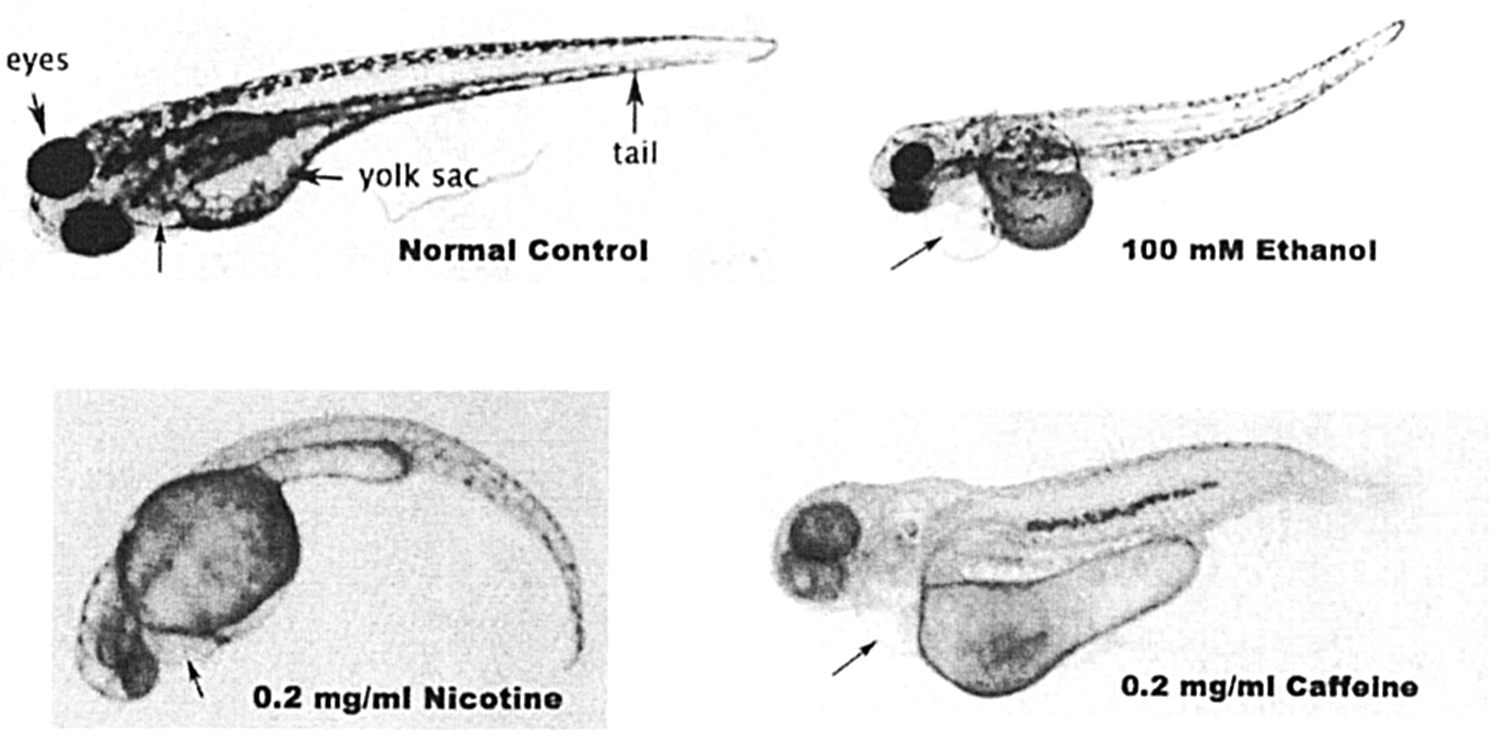
Lateral view of 4 day post-fertilization zebrafish embryos unexposed or exposed to caffeine, ethanol, and nicotine, respectively. Dorsal is up and unlabeled arrow points to cardiac edema. Note the discernible spinal curvatures and shorter body length of the embryos exposed to the different environmental agents.
Zebrafish embryos were used to examine the effects of pesticides, herbicides, and environmentally questionable sources of water (e.g., mud puddles or water from roofs or parking lots). For example, we have looked at the effects of water extracted from sand taken from Gulf of Mexico beaches impacted by the 2010 Gulf Horizon oil spill. The zebrafish module provided students with the opportunity to observe the effects of toxicants on morphology and easily observable physiological effects (e.g., heart rate), as well as on survival of the developing embryo. The study ended with the students staining the skeleton and observing the morphological changes in the craniofacial skeleton caused by exposure to different toxicants.
Teacher and student participation
Teachers
In the first year of the program, a total of 13 teachers from four Milwaukee Public School (MPS) and four suburban schools participated in the 2010 Summer Workshop, with 6 of the teachers from MPS and the remaining 7 teachers from the suburban schools. Eight of the 13 teachers who attended the workshop taught the zebrafish module in their classrooms during the 2010–2011 school year. Seven of the eight teachers continued to use the module in the 2011–2012 school year. In the second year of the program, 22 teachers, representing 20 schools, participated in the 2011 Summer Workshops. The 20 schools represented at the second workshop included 10 MPS, 3 private schools, and 7 suburban schools. Ten of the teachers were from MPS, 3 were from private schools, and the remaining 9 were from suburban districts. Fourteen teachers taught the zebrafish module during the 2011–2012 school year, and 15 teachers taught the module during the 2012–2013 school year.
Students
Program teachers taught the module to 419 students in Biology, Advanced Placement (AP) Biology, and International Baccalaureate (IB) Biology during the 2010–2011 school year. During the first year, 59% of the students were women and 41% were men. During the 2011–2012 school year, teachers reported presenting the zebrafish module to a total of 460 Biology, AP Biology, IB Biology, Environmental Science, AP Environmental Science, Ecology, Anatomy, Physiology, and Chemistry students. Of the students involved with the module during the 2011–2012 school year, 54% were men and 46% were women. During the 2012–2013 school year, teachers presented the module to 810 students; of these, 55% and 43% were women and men, respectively, with 2% not indicating their gender on the form.
Module assessments
Teacher evaluations
The project received high marks from participating teachers on several measures. In follow-up surveys, teachers reported being able to integrate the module into their curriculum, appreciated the opportunity to participate in the program, valued the support of the Center scientists, and felt that the scientific information in the module had been presented with clarity. Over the past 3 years, a total of 37 teachers used the zebrafish module in their classroom. All of the teachers who taught the zebrafish module felt that it had improved their students' scientific and analytical skills, as well as their students' environmental health science literacy. All of the teachers “strongly agreed” or “moderately agreed” that their students demonstrated an increased understanding of the relationship of toxicants to zebrafish embryo development.
Student assessment: (pre-tests/post-tests)
During the second project year, the SEPA teachers administered a pre-test during the week before teaching a module. In addition to demographic information, the pre-test survey assessed student knowledge about concepts and information taught during the zebrafish module, the scientific process and reasoning, and each student's educational and career plans. The post-test survey was administered within 1 week after teaching the module and assessed the same information, in addition to gathering student impressions of the module. To enable tracking of each student anonymously, a unique student identification code was created for each student's survey. In addition, students were reassured verbally and in writing that the survey was not a test and that their answers were anonymous and confidential. The pre-test and post-test survey content was developed jointly by the SEPA project administrators and the evaluation team. Of the 460 students who completed the zebrafish module during the 2011–2012 school year, matched and coded responses were available for 244 respondents, or for 53% of the 460 students who completed the zebrafish module.ii Fourteen area high schools offered the zebrafish module during the project's second year. Pre-tests/post-tests completed at 12 of the schools were included in this analysis.iii During the 2012–2013 school year, 491 of the 810 students using the zebrafish module completed both the pre-tests and post-tests.
Based on pre-test/post-test results, there were several statistically significant changes in student responses (p≤0.05) from the time of the pre-test to the time of the post-test. Results indicate that student opinions shifted significantly for 4 of the 11 statements included in the survey from the time the pre-test was administered to the time of the post-test (Table 6). At the time of the post-test, significantly more students agreed that (i) “Seeing how an environmental agent affects fish helps me understand that those same agents can also affect me.” (ii) “Science experiments that use other living things such as fish show us how the environment affects a human being.” (iii) “A life form's behavior evolves through adaptation to its environment.” Significantly more students disagreed that “Doing experiments with fish does not help me make decisions about how the environment affects my health.” Results were not statistically significant for the remaining seven statements (e.g., “Something that I am unable to see, hear, smell, touch, or taste will not affect my health.” “Because I am a part of the animal world, I affect the world and it affects me.”) (Table 6) includes both statistically significant and non-statistically significant results for pre-test/post-test statements. Students were also asked in pre-test and post-test surveys to respond regarding whether zebrafish would be affected by exposure to 10 toxicants. Students were significantly more likely (p≤0.05) to have shifted from “no” or “not sure” (a non-preferred response) to “yes” or the preferred response in the post-test surveys for 5 of the 10 toxicants: nicotine, caffeine, salt, ethanol, and pH. These toxicants were among those tested in class as a part of the SEPA module. Other toxicants (e.g., mercury, fertilizer) where students did not demonstrate any clear changes in knowledge had not been tested in the classroom labs. Table 7 includes both significant and non-significant results.
The values were percent change in response to questions from pre- and post-tests. Numbers in bold indicated the largest absolute value change from pre- and post-test responses. The pre- and post-test data can be found in Supplementary Table S3.
Data taken from Supplementary Table S4. Toxicants in italics were tested in the module. The number indicated changes in students' answers from pre- and post-tests.
As a part of the survey, students were asked to indicate their interest in having a career in different areas of science. There was a statistically significant (p≤0.05) increase in the level of interest in having a career in environmental science after completing the module.
Finally, as a part of the post-test, students were asked to comment on their experience with the zebrafish module. For the 2012–2013 school year, student responses indicated a positive experience with the module. For example, nearly three-quarters (73%) of the students strongly or moderately agreed that “After doing the zebrafish module, I have a better understanding of the effects of toxins on zebrafish and human embryo development.” More than 60% strongly or moderately agreed, “I would like to do lab experiments like the zebrafish in future science classes.” Three-quarters of the students felt that the module content and activities were appropriate for high school students.
Conference participation
From 2011 to 2013, students and teachers were invited to attend an SEPA sponsored Research Conference held in April of each year on the UWM campus. In 2013, 13 teachers from 10 schools brought 232 students to the Conference, which was up from 3 teachers and 44 students from 3 schools in 2011, and 11 teachers and 146 students from 10 schools in 2012, respectively. Overall participation by students in the conference increased from 16% to 31% of the students doing the module from 2011 to 2013. The number of students presenting posters has increased substantially from 6 in 2011 to more than 76 in 2013. A similar yearly increase was observed in the number of students who submitted papers, from 9 in 2011 to 80 in 2013. Significantly, at both the 2012 and 2013 conferences, an increasing number of students presented posters depicting results from studies of zebrafish embryos exposed to chemicals other than the ones listed in the original module, a strong indication that the students were taking ownership of the module and adapting it to study environmental chemicals of interest to them.
Discussion
The zebrafish environmental health module was the end result of the combined effort of scientists, education professionals, and teachers. The module that was developed and implemented remained true to NSES and Next Generation Science Standards and original project aims (Table 1). The module comprised a series of inquiry-based, hands-on experiments for students to do using a relevant animal model, the zebrafish embryo, by examining the effects of common environmental toxicants on normal development. It offered authentic experiences that provided teachers and students with the opportunity to contribute to their design in each individual classroom. The modules linked basic life science content to contemporary biomedical and environmental health problems, and their content was explicitly linked to a number of national standards for life science content.
The overall response of the teachers and students toward doing the experiments described in the module was positive. From the beginning to the very end, the students were actively engaged in the experiments. Since development was an active process, it held the attention of both the teachers and students alike. Every day, the embryos looked markedly different: Changing from a ball of cells to something that looked similar to a fish. Within a few days, the embryos were moving and by the end of the week, they were swimming around the well. In addition, the students were able to observe differences in the development of embryos exposed to different environmental toxicants relative to their normal clutch mates. Many of them noted defects in the craniofacial structure and cardiac edema in fish exposed to ethanol. By extension, the students were able to draw a parallel between what happened to the fish embryos and what can happen to humans exposed to ethanol via maternal exposure.
Some problems were encountered during the first year of implementing the module in high school classrooms; mostly, problems centered on zebrafish husbandry. While the teachers were able to keep the adult fish alive, some were not able to get them to spawn to produce the number of eggs required to do the experiments. Teachers were housing the female and male fish in separate 5 gallon aquariums that were equipped with filters, heaters, and a tank which was light controlled by a timer. To spawn, the fish were moved to spawning chambers that were exact replicas of the ones used in scientists' labs. Initially, however, teachers were spawning the fish on a lab bench or in an unused chemical hood. In both places, the fish were being kept at room temperature, which may have been as low as 22°C, while they were spawning. This temperature may have been too low for them to spawn. In addition, the light cycle may not have been properly maintained for the spawning fish. Together, these two factors may have combined to block spawning.
Based on these observations, a rack was designed for holding both the tanks for housing the fish and the spawning tanks. The entire rack was covered with black plastic and the lights for both housing and spawning the fish were on the same timer, keeping the spawning fish on the same light-dark cycle. Since the spawning setups were submerged in water kept at 28°C by a submersible heater, the fish were maintained at the proper temperature during the entire spawning process. During the second year of implementing the module, while several teachers were able to spawn the fish and generated enough eggs for the experiments, others were not as successful. For some teachers whose fish do not spawn, we think this may be a problem with their water, but it has provided an opportunity for teachers and students to inquire into confounding factors. The ability of the teacher to recruit students to help with the fish husbandry was a key factor in the successful implementation of the module. The students fed the fish and did the requisite water changes for maintaining healthy fish. In this way, the students became invested in the outcome of the module, which led to a greater input by the students into the running of the module.
In addition to keeping the spawning fish warm, the aquariums served as an incubator for the embryos. The embryos were exposed to chemicals in multi-well plates, usually with 12 or 24 wells, which were placed in a sealed plastic container that was floated in the aquariums partially filled with water kept at 28°C by submersible heaters. Several teachers used this incubator to raise embryos successfully.
The module also provided the students with the opportunity to do statistics on an authentic data set. Since 10–15 exposure sets were generated per classroom, the data from a class were pooled and statistical analysis was done on the dataset. From these, the students derived means, standard deviation, and variance. This information was used to determine whether the effects of the chemicals on zebrafish development were statistically significant. The results were further strengthened by including data from different classes. These data also provided a good opportunity to graph the results, complete with error bars. The students were able to graph survival versus days post-fertilization, with each dose represented by a different color line. In addition, a careful analysis of the results led to the students' determining where errors were being made and what could be done to improve the protocol.
The SEPA zebrafish module was able to reach a growing number of teachers and students in a variety of school settings, both urban and suburban. In its first year of implementation (2010–2011), eight teachers taught the zebrafish module to 419 students in Biology, AP Biology, and IB Biology. During the 2011–1012 school year, teachers reported presenting the zebrafish module to a total of 460 Biology, AP Biology, IB Biology, Environmental Science, AP Environmental Science, Ecology, Anatomy, Physiology, and Chemistry students. During the 2012–2013 school year, teachers presented the zebrafish module to 810 students.
In order to assess the impact of the module on students' understanding of environmental health and the scientific process, students completed a pre- and post-module survey conducted by an independent evaluator. Completion of the zebrafish module resulted in significant changes in students' opinions regarding an increased understanding of the effect that environmental agents have on fish and how experiments with fish increase students' understanding of the ways in which the environment affects humans. Zebrafish module students also demonstrated increased knowledge about the effects of specific toxicants on the organisms. In the post-test survey, students generally agreed that the modules were well organized, that their content was age and classroom appropriate, and that the module had had a positive impact on how they viewed science and environmental health. Participating teachers and students thought the module provided authentic experiences and contributed to their being able to link the life science course lessons to real-world environmental health problems.
As hoped, the module was flexible and dynamic, and it enabled the teacher and students to adapt the experiments to fit their needs and interests. For example, in addition to the agents listed in this module, several classes used pesticides, herbicides, and other environmental chemicals that they were interested in pursuing. Often, students were first exposed to the module during Biology or Life Science classes, where they learn about zebrafish development. Later, many of the students revisited the module in an AP Biology class, where they did more sophisticated experiments with environmental agents. Some students have used the module as the basis for independent study projects. This provided students with the opportunity to develop independent projects to explore their interest in the effects of a particular chemical on embryonic development or on different organ systems (e.g., heart, eye, or brain). The teachers and students were even open to testing the effects of water from different sources on embryonic development. For example, they compared the effects of water taken from an urban river, a river flowing through agriculture fields, and a stream flowing through a forest. In this way, teachers and students used the knowledge they gained about zebrafish development from doing the module to create their own inquiry-based study of an environmental health question.
The zebrafish module was successfully implemented in schools of the MPS system, which contains a diverse population of underserved students, as well as suburban and rural schools throughout Southeastern Wisconsin. This was determined by several criteria: (i) an increase in the number of students doing the module; (ii) an increase in the fraction of students exposing the embryos to toxins other than the ones listed in the module; and (iii) the doubling of the fraction of students attending the Research Conference who presented posters. In the short term, the exposure of students to inquiry-based experiments had a positive effect, as determined by both observation of participating teachers of students' reactions to doing the module and the students response to survey questions after completing the module. Whether this translates to long-term effects as measured by an increase in the number of students attending 4 year colleges and majoring in an STEM-related field remains to be determined and is the subject of further evaluation.
Footnotes
Acknowledgments
The authors are grateful to Sandra McLellan and her lab for the Gulf of Mexico beach sand samples and Tyrone Gandy for excellent fish husbandry care, preparing supplies for teachers, and zebrafish embryo images. Kris Kosteretz and the staff of the UWM CEHSC Center Aquatic Animal Model Facility provided excellent fish husbandry support. Thanks are due to Barbara Goldberg and Associates, LLC for preparation and analysis of module evaluation. The work described in this article was supported by a Science Education Partnership Award (SEPA) from the National Institutes of Environmental Health Sciences (NIEHS) (R25RR026299) to D.H.P. and an NIEHS Children's Environmental Health Science Core Center Grant (ES0004184-24).
Disclosure Statement
No competing financial interests exist.
i
Supported by a grant from the National Institute of Environmental Health Sciences and part of the Science Education Partnership Award (SEPA) Program, formerly of the National Institutes of Health (NIH)–National Center for Research Resources and currently located in the Office of Director at the NIH.
ii
Four hundred eleven students completed a pre-test survey; of those, 385 included their unique student code in the survey, and 26 did not include the student code. A total of 367 students completed the post-test survey. Among the post-test respondents, 350 included a student code and 17 did not include the student code information.
iii
At one of the two remaining schools, students only completed pre-tests; at the other school, students did not include the student codes, so they could not be matched.
References
Supplementary Material
Please find the following supplemental material available below.
For Open Access articles published under a Creative Commons License, all supplemental material carries the same license as the article it is associated with.
For non-Open Access articles published, all supplemental material carries a non-exclusive license, and permission requests for re-use of supplemental material or any part of supplemental material shall be sent directly to the copyright owner as specified in the copyright notice associated with the article.
