







Abstract

New revalidation portfolio
The Royal College of General Practitioners (RCGP) has produced a Revalidation Portfolio, free of charge to members, and a free trial for non-members until April 2010. Primary Care Organizations are being invited to register an interest at
Several local deaneries are offering temporary electronic solutions. Until we know what the formal national recommended system is going to be, it is probably not worth spending much money or time on uploading documents onto stopgap systems.
Sickness certification
www.wessexlmcs.com/fit_certificates.html.
I was sent this useful link that gives a list of expected recovery times after common surgical procedures. I often find that patients are discharged after surgery without any advice about the length of time that they need to take off work.
Chaperones
This week, here in Australia, I had to teach the examination of the breast to year 2 medical undergraduates. In addition to the basic objectives of the tutorial, I specifically highlighted the appropriateness of chaperones in consultations.
Surprisingly, the routine use of chaperones in Australia appears low, in part due to a difference in patient attitude with a reported fewer than 20% of Australian sexual health clinics offering this service.
This is not aided by woolly guidelines by the Australian RACGP that seem to imply that although there are regulations around the use of chaperones, these ‘recommendations are not compulsory’ and ‘in Australian general practice it may not be feasible or appropriate to have a chaperone present during a consultation’.
This is in contrast to the General Medical Council in the UK and American Medical Association that advocate offering chaperones for all intimate examinations including breast examinations.
My personal opinion is that chaperones should always be offered for all intimate examinations and this is what I conveyed to the students. This is particularly relevant where the practitioner is male and the patient is female. If this offer is declined, that should be clearly documented. Should an appropriate chaperone not be available, it maybe more appropriate to defer the examination until later date.
RACGP position paper. The use of chaperones in general practice (2007). Accessed via www.racgp.org.au/policy/Chaperones_in_gp.pdf
Henrietta Lacks
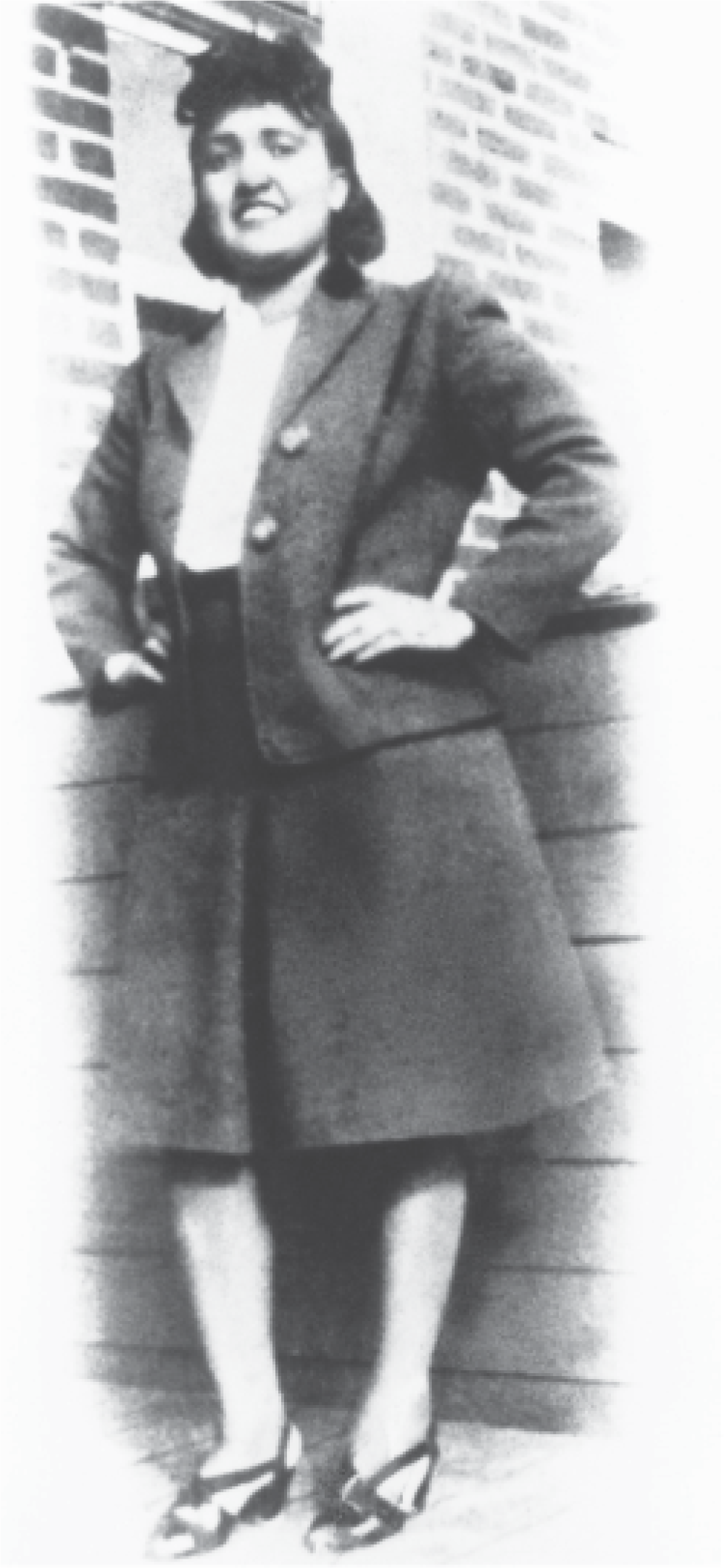
I have asked for ‘The immortal Life of Henrietta Lacks’ by Rebecca Sloots for Christmas. Cells from her cervical adenocarcinoma were used to produce immortal cells, HeLa, that I, and maybe others of you, used in my BSc. One could write a whole text book on the ethics of their use. They were used to develop a polio vaccine, to agree the correct number of human chromosomes, to test new drugs and to look at the effects of radiation on cells. Henrietta Lacks died at 31; neither she nor her family were asked permission and neither they nor her doctors made any money from a process that earned millions of dollar for the companies involved. In the USA, unlike the UK, consent is still not needed to use patients' tissues.
Obstetrics & Gynaecology/SPL
Post certification challenges
I am an examiner for interim Membership by Assessment of Performance (iMAP; Royal College of General Practitioner membership by submission of a portfolio of evidence rather than the examination during training-based route). I admire the doctors who find time to collect a large portfolio of evidence and are prepared to submit their practice to scrutiny. I read about practices all around the UK and I am struck by the variety: from work on tiny Scottish islands to inner city practices, from established training practices to practices taken over after General Medical Council cases.
After certification there is no longer a simple choice of partnership, locum or assistant. Some of you may become salaried doctors. In a recent British Medical Journal article, Kiran Jobanputra described his experience of turning around a failing practice that had been taken over by the Primary Care Trust. He described the initial ‘firefighting’, how they prioritized and what they learnt. It made me feel very grateful for my well organized training practice.
Jobanputra, K.J. Turning around a general practice. Accessed via http://careers.bmj.com/careers/advice/view-article.html?id=20001086
Diagnostic labels and treatment dilemmas
What do we do with patients who have symptoms that do not fit a diagnostic pattern? Sometimes giving a collection of symptoms a medical label can make it easier to reassure an anxious patient. Dr Kevin Barraclough and his colleagues have written a series of articles on diagnosis in general practice. In one, they discuss how resisting the temptation to give a diagnostic label might benefit the patient. You might find that reading it makes you think about the way that we handle such patients.
Chronic kidney disease hit the headlines 2 or 3 years ago. I sometimes wonder whether we are doing our elderly patients a favour by labelling them with a disease. Practising giving explanations is one way of preparing for the Clinical Skills Assessment: try explaining CKD 3 to a patient.
Pre-hypertension is defined as systolic blood pressure levels of 120–139 mmHg or diastolic blood pressure of 80–89 mmHg. I wonder how many patients you see who would fall into this category? My cynical self wonders how much the pharmaceutical industry would gain if we started treating this group of patients.
Jones, R. When no diagnostic label is applied. British Medical Journal (2010) 340: pp. c2683
US Department of Health and Human Services. The seventh report of the Joint National Committee on prevention, detection, evaluation, and treatment of high blood pressure (2003). Accessed via www.nhlbi.nih.gov/guidelines/hypertension/express.pdf
Recent pregnancy advice
Overweight pregnant women have a greater risk of miscarriage, gestational diabetes and pre-eclampsia. Pre-conception counselling would be a good 10 minute case for the Clinical Skills Assessment (CSA) exam.
National Institute for Health and Clinical Excellence (NICE) has recently produced guidelines about weight management in prenatal and post-natal women. Pre-pregnancy advice about weight loss may help reduce the incidence of pre-eclampsia. NICE has produced detailed guidance focussed on reducing unnecessary intervention in women with mild to moderate disease. The guideline includes pre-conception advice, advice for women with existing chronic hypertension and advice for follow-up after delivery.
I have never felt my advice to women who have had a miscarriage is based on anything other than anecdote. A retrospective study on over 30 000 Scottish women who had a miscarriage in their first recorded pregnancy found that the best outcomes in a subsequent pregnancy occurred if they conceived again within 6 months.
NICE. Weight management before, during and after pregnancy (2010). Accessed via www.nice.org.uk/guidance/PH27
Love, E.R. Effect of interpregnancy interval on outcomes of pregnancy after miscarriage: retrospective analysis of hospital episode statistics in Scotland. British Medical Journal (2010) 341: pp. c3967
New criteria for rheumatoid arthritis
A joint American and European working party has developed new classification criteria for rheumatoid arthritis (RA), replacing criteria developed more than two decades ago. This is to encourage earlier diagnosis and treatment of the condition.
The main difference in classification is that RA will no longer be characterized by erosive joint disease—signs of established disease; instead, it will be defined as unexplained synovitis in at least one joint, along with a high-risk score based on a combination of factors such as serology, acute phase reactants and symptoms duration.
Aletaha, D., Neogi, T., Silman, A. et al. Rheumatoid arthritis classification criteria: an American College of Rheumatology/European League Against Rheumatism collaborative initiative. Annals of the Rheumatic Diseases (2010) 69: p. 1580–88
Quality and Outcomes Framework and Australian General Practice
One month into my lecturing job, you start to appreciate the slight differences between Australia and the UK and, as one does, you tend to compare the health systems. The major issue here at the moment is whether to go ahead with a personalized e-health record.
For those who do not know, the Australian health system shares with the UK a structure of GP-led primary care responsible for much of the chronic disease management. However, there are significant organizational differences between the two systems. Whereas in the UK all patients are registered with a single general practice of their choice, Australians are free to choose at any time a doctor who is willing to see them. Consequently, each practice in Australia involved in the care of a specific patient maintains a separate unlinked record (with all its associated problems).
Despite concerted efforts to collate all health information into a personalized e-health record in Australia, there is no Quality and Outcomes Framework (QOF) equivalent in the Australia. I did, however, find a recent article where a practice in South Australia attempted to apply UK pay for performance (QOF) indicators for the years 2008–09 to their practice data, which makes for interesting reading.
In the first instance, outcome measures were obtainable for 79 of 80 indicators (there was no Australian equivalent for recording follow-up contact for patients with psychotic or bipolar disorder who missed their annual health promotion visit). Although the practice achieved greater than 95% of the available points for approximately half the indicators, the total achievement was only 66% of the available pay for performance points (the UK average is 97%). This apparent low level has to be taken in context as there is often a significant lead in time in the UK before QOF targets are assessed where practices can adjust their clinical and organizational systems to maximize their performance. It is hardly surprising that this ‘snapshot’ fails to achieve comparable results.
This project demonstrates that it is possible to collect UK QOF data (or comparable outcomes) in a large practice in a small town or a one-practice town but might not work well in urban areas where patients have a greater tendency to use more than one practice. It also had valuable implications for the practice itself in highlighting aspects of chronic disease management where the practice could improve.
Elliot-Smith, A., Morgan, M. How do we compare? Applying UK pay for performance indicators to an Australian general practice. Australian Family Physician (2010) 39: p. 43–8