







Abstract

Quality of GP care
A King's Fund study has found that the care given by general practice is good but found wide variations in diagnosis, referral and prescribing. The panel was not able to suggest new ways of measuring quality and therefore found interpretation of the variation difficult.
I think this opens for the debate the old question as to whether being a high or a low referrer is better. With the advent of GP commissioning, there will be financial pressures to cut referrals and possible identification at appraisal or during analysis of practice and individual referral data of ‘financial performance issues’. You might want to reflect on the possible good and bad reasons for being high and low referrers and ask yourselves how you are going to balance the clinical need of individual patients against those of your commissioning organizations.
If you are interested in reading further around the subject, a recent British Medical Journal (BMJ) article discusses the pattern of care in the USA and also looks at some ways that the Netherlands are trying to standardize care, with primary care at the centre of the reforms.
To tie in with this, the General Medical Council (GMC) is updating its Management for Doctors guidance. The consultation on the update examined issues raised by commissioning, competing demands for resources and patient safety.
Wennenberg, J. Time to tackle unwarranted variations in practice. British Medical Journal (2010) 342: p. 687–69
Improving the quality of care in general practice: report of an independent inquiry. Accessed via www.gmc-uk.org/guidance/news_consultation/8851.asp [date last accessed 27.03.2011]
Minimizing radiation exposure
As I write this in the aftermath of the Japanese earthquake, tsunami and Fukushima nuclear power plants disaster, knowledge of radiation doses seems particularly pertinent. A recent BMJ review gives some ideas of relative radiation doses and how to minimize exposure. There is a useful table giving the doses of some common investigations.
For example, a computed tomography (CT) scan of the chest gives a 350 and a barium enema a 400 radiograph-equivalent exposure. Breast mammography gives an organ-specific dose greater than the average person's exposure to radiation over a whole year. The article reminds us that pregnant women and children are particularly at risk (yet, in the USA, 6–11% of CT examinations are carried out on children). The article ends with a discussion of what patients should be told.
This may make you reflect; it may also make it easier to explain why you are not performing a CT brain to investigate a benign-sounding headache.
NICE guidelines
Guidelines drawn up by the National Institute for Health and Clinical Excellence (NICE) are widely used to set standards for care and to define GP performance and pay. When three recent guidelines were selected, there was wide variation in the proportion of studies based on primary care. The authors expressed concern that not only were studies based on primary care being used in such a prominent role in primary care, in many guidelines whether or not the studies were performed in primary or secondary care was not even defined.
Scullard, P., Abdelhamid, A., Steel, N., et al. Does the evidence referenced in NICE guidelines reflect a primary care population? British Journal of General Practice (2011) 61(6): p. 584e112–7
Forensic faculty launches new e-learning course to spot abuse
Every nurse, midwife, health visitor and family doctor should be trained to spot the tell-tale signs of sexual abuse in children and adults—that is the aim of a new initiative. The e-learning course for all health professionals has been developed by the Faculty of Forensic and Legal Medicine (FFLM) in conjunction with the University of Ulster. The initiative has been funded by the Department of Health (DH) as part of its response to last year's Taskforce on the Health Aspects of Violence Against Women and Children.
Although the overall aim of this e-learning tool is to provide vocationally relevant education for those doctors and health care professionals who wish to study Forensic and Legal Medicine at a higher level, it is open to all health professionals.
Faculty of Forensic and Legal Medicine. Accessed via http://fflm.ac.uk/education/e-learningcourse/ [date accessed 31.03.2011]
Rationalizing repeat prescribing systems
I was recently sent a useful Pulse/GP Notebook update on repeat prescribing. Key points included:
Don't put on repeat:
New prescriptions until they have been shown to have proven benefits and a requirement for long term use. PRN (as required) medicines such as analgesics. Other items likely to be stock piled, for example blood glucose testing strips.
No automatic repeats, particularly for nursing homes and housebound patients. ‘Only tick/order what you need’ could reduce over-ordering.
Advise patients of likely course length at start of therapy.
Review on admission and discharge from hospital.
Simple memory aids include:
Association with a usual daily activity A simple chart of how and when to take medicines for patients on complex regimens Ticking off on a calendar or chart to show when a dose has been taken Selected use of compliance aids/monitored dosage systems.
Kathryn, C. Pulse/GP Notebook Clinical update 25.3.2011
Co-prescription of macrolide antibiotics and calcium channel blockers and the risk of hypotension in the elderly
The macrolide antibiotics clarithromycin and erythromycin may potentiate calcium channel blockers by inhibiting cytochrome P450 isoenzyme 3A4. However, this potential drug interaction is widely underappreciated.
A recent study exploring the risk of hypotension or shock in those aged 66 years and older using a macrolide antibiotic (erythromycin, clarithromycin or azithromycin) and simultaneous use of calcium channel blocker showed that use of erythromycin or clarithromycin was associated with an increased risk requiring admission to hospital. Azithromycin, which does not inhibit cytochrome P450 3A4, was not associated with an increased risk of hypotension.
Preferential use of azithromycin should be considered when a macrolide antibiotic is required for patients already receiving a calcium channel blocker.
Wright, A., Gomes, T., Mamdani, M., et al. The risk of hypotension following co-prescription of macrolide antibiotics and calcium-channel blockers. Canadian Medical Asociation J (2011) 183(3): p. 303–7
Important lessons from normal heart and respiratory rates in children
In children, heart rate and respiratory rate are key vital signs used to assess physiological status in many clinical settings. You may have come across them in paediatric early warning scores and triage screening. Accurate reference ranges are essential to assessing whether vital signs are abnormal. However, infancy and childhood are periods of enormous physiological and developmental changes, particularly in the early months and years. Just as with blood pressure readings, you might think that current reference ranges for heart rate and respiratory rate in children are based on evidence. In fact, the opposite is true.
A recent report in the Lancet has highlighted the lack of evidence underpinning current normal reference ranges for heart rate and respiratory rate. The group collated the heart rate and respiratory rate in healthy children to create new centile charts, derived from 69 studies (about 150 000 children) and then compared them with those existing reference ranges, currently cited in international paediatric guidelines. There was substantial disagreement between existing reference ranges (based on consensus) for heart rate and respiratory rate in children and the authors' centile charts. Their centile charts showed a predicted decline in the respiratory rate from birth to early adolescence but with the steepest fall apparent in infants under 2 years of age. Heart rate shows a small peak at age 1 month (median heart rate: 127 beats/minute at birth to a maximum of 145 beats/minute at about 1 month).
There are certain caveats. The centile boundaries are particularly wide up to 2 years of age. Direct extrapolation from the study's centile charts for heart and respiratory rate to recommendations for cut-offs for intervention would be unwise: a child whose normal heart rate may sit on the 90th centile might be inappropriately categorized as tachycardic. Similarly, heart rate may be raised by various factors in well children, e.g. unfamiliar surroundings or children without serious illness (high temperature or pain). This study highlights that further research is needed about the impact of such stimuli on heart rate and respiratory rate before setting a cut-off value and a reference range.
Fleming, S., Thompson, M., Stevens, R., et al. Normal ranges of heart and respiratory rate in children from birth to 18 years of age: a systematic review of observational studies. Lancet (2011) 377: p. 1011–8
Coding of diabetes
Coding, classification and diagnosis of diabetes contains a new algorithm and audit tool to check that patients have been correctly diagnosed as diabetic and have been correctly classified.
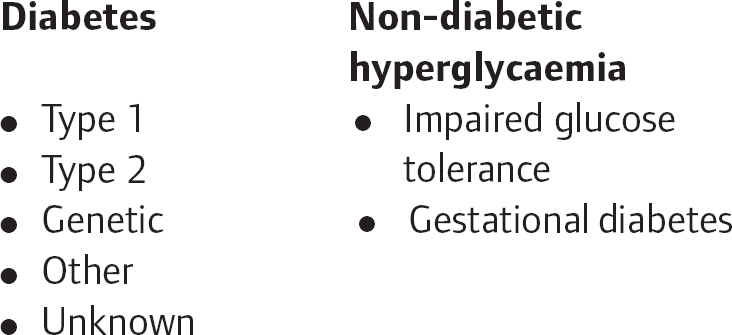
Of 16 000 patients, 2.2% of patients coded as diabetic were not diabetic and 2.1% were misclassified. If the same applies across the UK, it might be a worthwhile audit. Most Deaneries are now suggesting that you should complete an audit in the primary care component of your training.
www.diabetes.nhs.uk/our_work_areas/classification_of_diabetes/ [date last accessed 03.04.2011].