







Abstract
Background
Cardiovascular diseases (CVD) are the main health problem in Poland. We decided to use modern social marketing methods to present the current epidemiological situation to political and key opinion leaders in Poland.
Materials and methods
The surveys were carried out in the following groups: members of the Polish parliament, members of the executive bodies of the two largest trades unions in Poland, participants at the Polish Hygiene Society Congress, representatives of the health insurance board in the district of Pomerania, and press and radio journalists. The study consisted of a questionnaire, anthropometric measurements, blood pressure measurements, and cholesterol and glucose level tests. The results were presented to examined subjects individually and in the form of an educational conference held on the same day.
Results
In the examined groups of political and opinion leaders awareness of one's own blood pressure was declared by 40.6–86% of the subjects, increased blood pressure was found in 36–43.5%, overweight or obesity (body mass index 25kg/m2) in 40.6–67.3%, smoking was declared by 16.5–30%. The results were compared with those obtained in corresponding age groups in the general population.
Conclusion
The idea of presenting the current epidemiological burden caused by CVD in Poland by means of an assessment of individual and collective CVD risk among political and opinion leaders appeared to be an effective method of education and constructive lobbying for the fight against an epidemic of myocardial infarctions and strokes in Poland. Eur J Cardiovasc Prev Rehabil 13:319–324 © 2006 The European Society of Cardiology
Introduction
Cardiovascular diseases (CVD) represent the most common cause of death in developed countries. A similar situation also exists in Poland, where cardiovascular diseases caused 48% of all deaths in 2001. Almost one in five victims was less than 65 years old [1]. Over the past three decades a constant and significant decrease in cardiovascular mortality has occurred in EU countries [2–4]. In Poland, on the contrary, in the 1970s and 1980s the rate of increase in cardiovascular mortality was among the highest in the world. We managed successfully to stop and then reverse this unfavourable trend in the 1990s. Over the past few years the gap between Poland and western countries has not widened any further, but it has not closed either [5, 6]. For example, age-standardized coronary disease mortality rates for male patients in Poland are almost twice as high as the corresponding rates in EU countries.
The epidemiological study NATPOL PLUS, carried out on a representative sample of adult Poles, has shown that the main reasons behind the epidemic of CVD in Poland are, first, the widespread character and low detectability of the main risk factors, namely arterial hypertension and lipid disorders, and second, the excessively high smoking rate [7–11].
In view of the bad epidemiological situation in Poland and considering the need for integrated and effective action to remedy this, the team of the Chair of Hypertension and Diabetology of the Medical University in Gdańsk, working closely in the years 1998–2002 with Polish scientific associations in the field of cardiology and hypertension, launched and implemented an original educational programme addressed at Polish decision- and opinion-making circles. The purpose of the programme was constructive lobbying for a more effective fight against CVD in Poland.
The groups targeted by the programme included the Polish parliament, the central authorities of major trades unions [Niezalezny Samorzadny Zwiazek Zawodowy Solidarnosc (NSZZ) ‘Solidarność’ and Ogolnopolskie Porozumienie Zwiazkow Zawodowych (OPZZ)], representatives of local government and healthcare financing authorities (Kasy Chorych), experts responsible for health promotion in Poland (participants of the Polish Hygiene Society Congress), and journalists.
Experts invited to work on the preparation and implementation of the project included specialists in sociology and social psychology. The project was designed as an attempt to reach political and opinion-making elites using current methods of social marketing. The purpose of the assessment of cardiovascular risk carried out for individuals and specific groups was to get across to the participants the message about the scale and weight of the problem.
Materials and methods
The participants were briefed on the CVD epidemiological situation in the country and the purpose of the project 2 weeks before the date of the planned assessment and results session. They received a specially designed educational package on the importance of cardiovascular risk factors for the health of an individual, with special emphasis on heart attacks and strokes. The programme made use of the materials and guidelines of the European Society of Cardiology translated into Polish.
Several days before the assessment took place, posters and banners with information on the main threats resulting from the epidemic of heart attack and stroke in Poland were put on display in the institutions where the assessment session was to be held.
The assessment session was designed each time so that it was possible to carry out the tests over 4–6 h on a single day. In the Polish parliament, the number of potential participants reached 600 individuals, and the project there was carried out by 50 professionals, consisting of nurses, doctors and specially trained medical students.
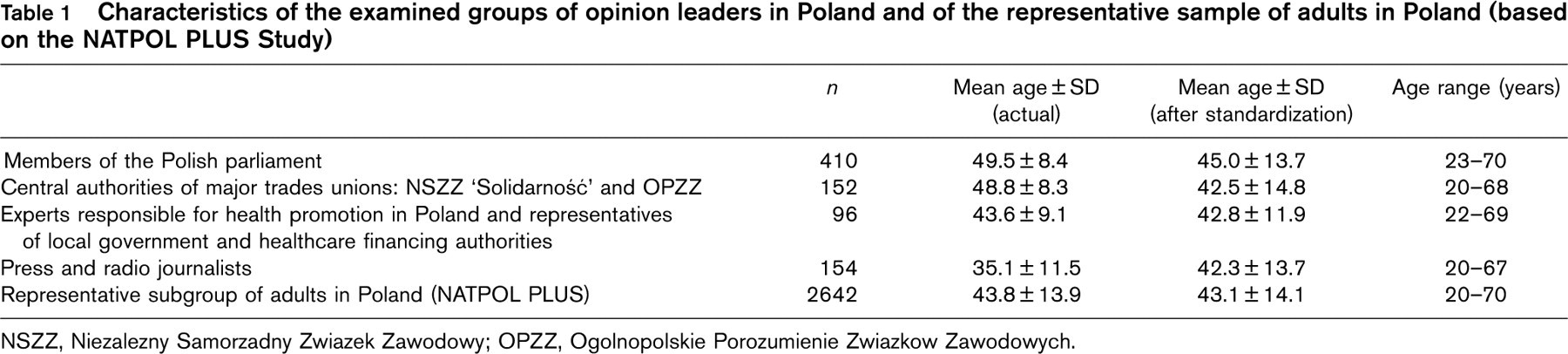
The number of participants in each assessment session and their mean ages are shown in Table 1. Each session consisted of two parts: a questionnaire that tested the participant's knowledge about cardiovascular risk factors, and second a medical assessment taking blood pressure readings three times and anthropometric measurements [body mass index (BMI) and waist circumference]. Members of parliament were also tested for cholesterol using strip tests.
To do this, we organized testing stands where specially trained medical students carried out the interviews and tests. At each location a doctor was available to provide consultations, a nurse to carry out strip tests, and a nutritionist to give dietary advice.
Each participant received a card with their test results, a detailed calculation of their personal cardiovascular risk (based on European Society of Cardiology materials), and advice on the desired modification of their lifestyle.
When the tests were finished, the next 2 h were spent calculating the results and preparing a summary presentation. After that, during the plenary sessions of each institution where the assessment session was held, the results were presented to the decision-makers in the format of an educational conference.
Characteristics of the examined groups of opinion leaders in Poland and of the representative sample of adults in Poland (based on the NATPOL PLUS Study)
NSZZ, Niezalezny Samorzadny Zwiazek Zawodowy; OPZZ, Ogolnopolskie Porozumienie Zwiazkow Zawodowych.
The results were compared against the national results for the representative subgroup of adults in Poland (NATPOL PLUS) when standardized for age. The selection of respondents in the NATPOL PLUS project was a three-stage procedure aimed at selecting a nationally representative sample of adult Poles (age range 18–94 years, sample size n = 3051). The units used for the first stage draw were municipalities. The units drawn at the second stage were villages in rural areas and streets in urban areas. The units drawn into the sample at the third stage were individual respondents aged 18 years or over. Thanks to this design, a representative, automatically weighted sample was obtained, with individuals drawn into the sample spread over 304 locations all over the country. Therefore, the sample was appropriately dispersed geographically. As the age range of participants of the examined groups of opinion leaders was between 20 and 70 years, for the statistical analysis we used a subgroup (n = 2642) of individuals from the NATPOL PLUS study in the same age range (Table 1). Blood pressure readings were taken using Omron M5-I devices. In the NATPOL PLUS study the measurements were taken at the respondent's home.
Results
Participation rates in the project carried out in Polish political and opinion-making circles ranged between 70% (Polish parliament) and 100% (experts responsible for health promotion in Poland) of those invited to participate (Table 1). This article compares the results of the tests carried out among politicians and decision-makers with the results of the nationwide project carried out on a national representative sample of adult Poles (NATPOL PLUS).
The average systolic blood pressure during a normal working day ranged from 130 ± 14.7 mmHg (Polish parliament) to 133 ± 18.9 mmHg (press and radio journalists). The average diastolic blood pressure ranged between 82 ± 12.4 mmHg (press and radio journalists), 83 ± 10.8 mmHg (Polish parliament) and 84 ± 13.9 mmHg (NSZZ ‘Solidarność’ and OPZZ trades unions). By comparison, in a representative sample of adult Poles, the results of in-home tests taken at rest were: systolic blood pressure 133 ± 21 mmHg and diastolic blood pressure 82 ± 12.4 mmHg (Figs 1 and 2).
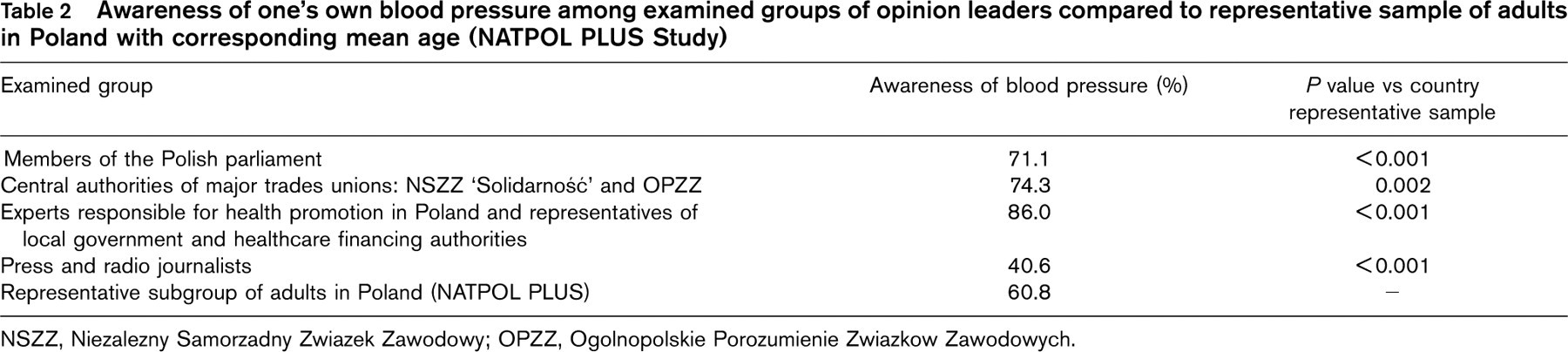
An awareness of their own blood pressure was declared by 40.6–86% of participants (press and radio journalists and experts responsible for health promotion and representatives of local government and healthcare financing authorities, respectively, see Table 2). Among the representative group of adult Poles, awareness of their own blood pressure was declared by 60.8% of respondents.
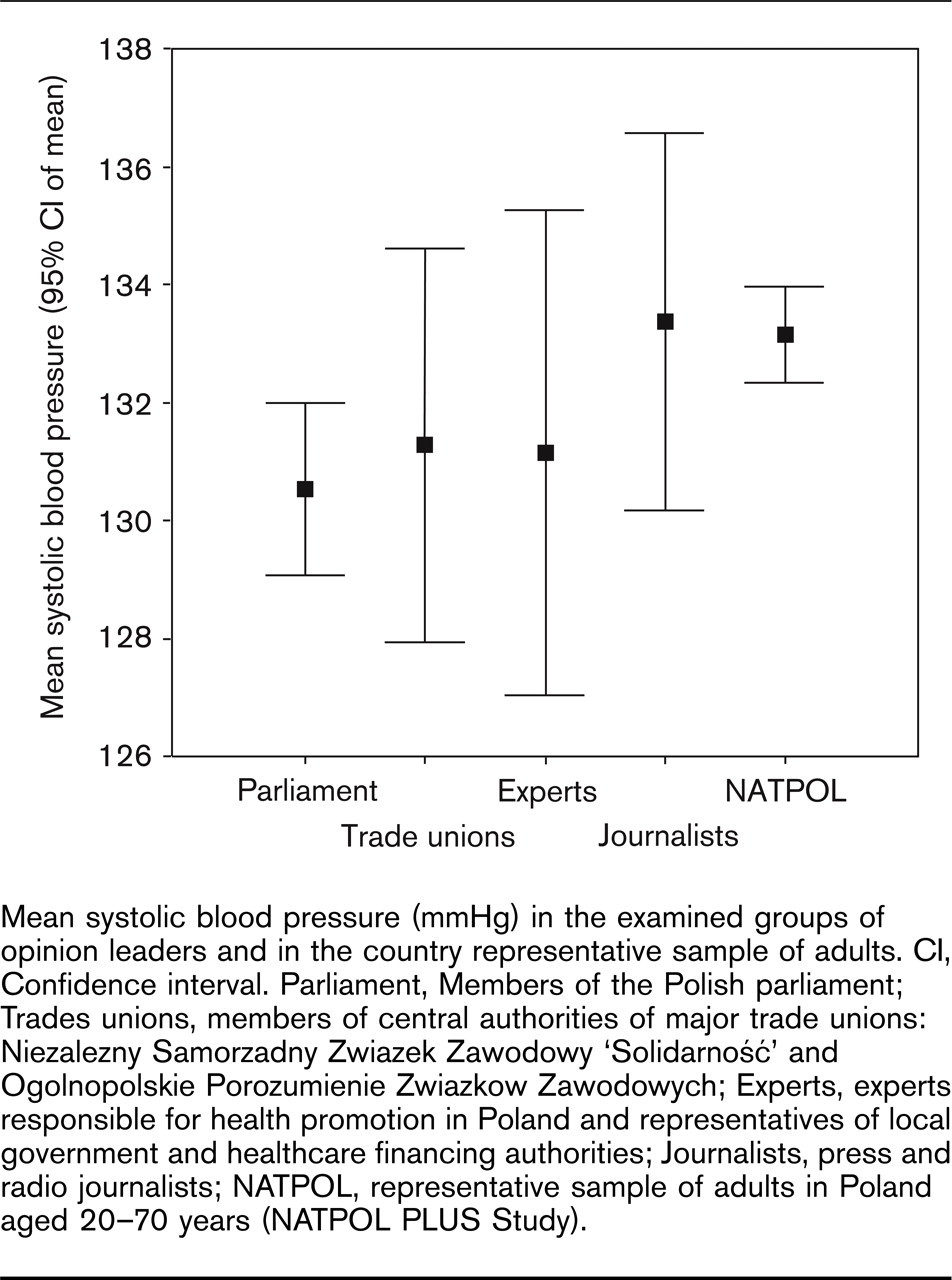
Mean systolic blood pressure (mmHg) in the examined groups of opinion leaders and in the country representative sample of adults. CI, Confidence interval. Parliament, Members of the Polish parliament; Trades unions, members of central authorities of major trade unions: Niezalezny Samorzadny Zwiazek Zawodowy ‘Solidarność’ and Ogolnopolskie Porozumienie Zwiazkow Zawodowych; Experts, experts responsible for health promotion in Poland and representatives of local government and healthcare financing authorities; Journalists, press and radio journalists; NATPOL, representative sample of adults in Poland aged 20–70 years (NATPOL PLUS Study).
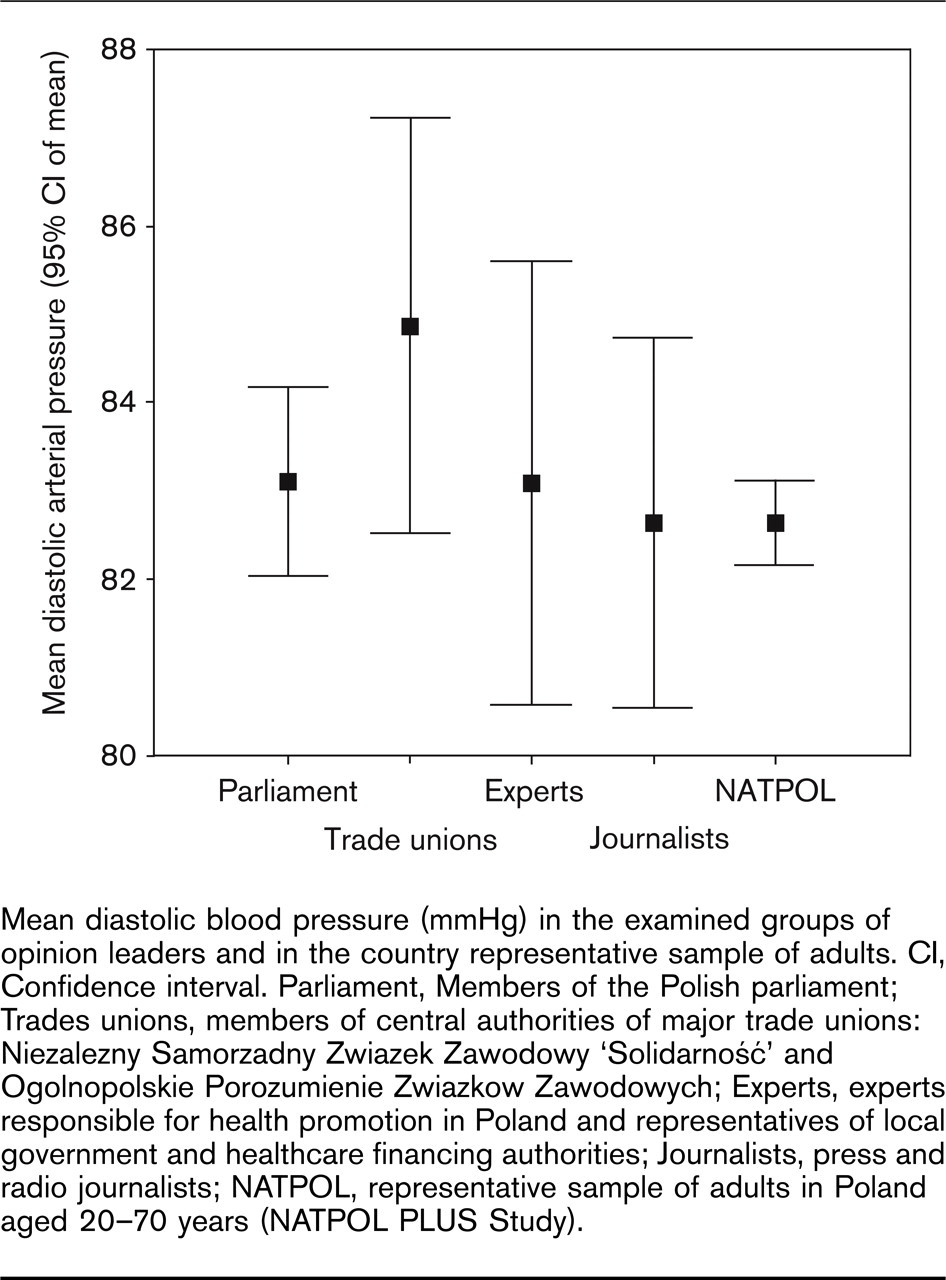
Mean diastolic blood pressure (mmHg) in the examined groups of opinion leaders and in the country representative sample of adults. CI, Confidence interval. Parliament, Members of the Polish parliament; Trades unions, members of central authorities of major trade unions: Niezalezny Samorzadny Zwiazek Zawodowy ‘Solidarność’ and Ogolnopolskie Porozumienie Zwiazkow Zawodowych; Experts, experts responsible for health promotion in Poland and representatives of local government and healthcare financing authorities; Journalists, press and radio journalists; NATPOL, representative sample of adults in Poland aged 20–70 years (NATPOL PLUS Study).
Awareness of one's own blood pressure among examined groups of opinion leaders compared to representative sample of adults in Poland with corresponding mean age (NATPOL PLUS Study)
NSZZ, Niezalezny Samorzadny Zwiazek Zawodowy; OPZZ, Ogolnopolskie Porozumienie Zwiazkow Zawodowych.
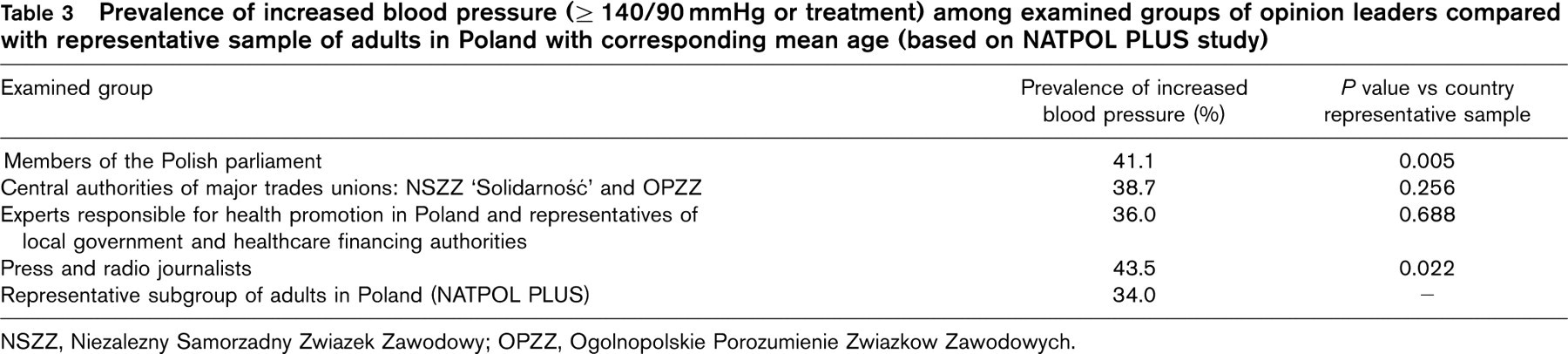
Prevalence of increased blood pressure (≥140/90 mmHg or treatment) among examined groups of opinion leaders compared with representative sample of adults in Poland with corresponding mean age (based on NATPOL PLUS study)
NSZZ, Niezalezny Samorzadny Zwiazek Zawodowy; OPZZ, Ogolnopolskie Porozumienie Zwiazkow Zawodowych.
Increased blood pressure (≥ 140/90 mmHg or treatment) was detected in 36% of experts responsible for health promotion and representatives of local government and healthcare financing authorities and in 43.5% of representatives of press and radio journalists (Table 3). Among the members of parliament, increased blood pressure was detected in 41.1% of study participants. By comparison, in the general population, increased blood pressure was detected in 34% of individuals.
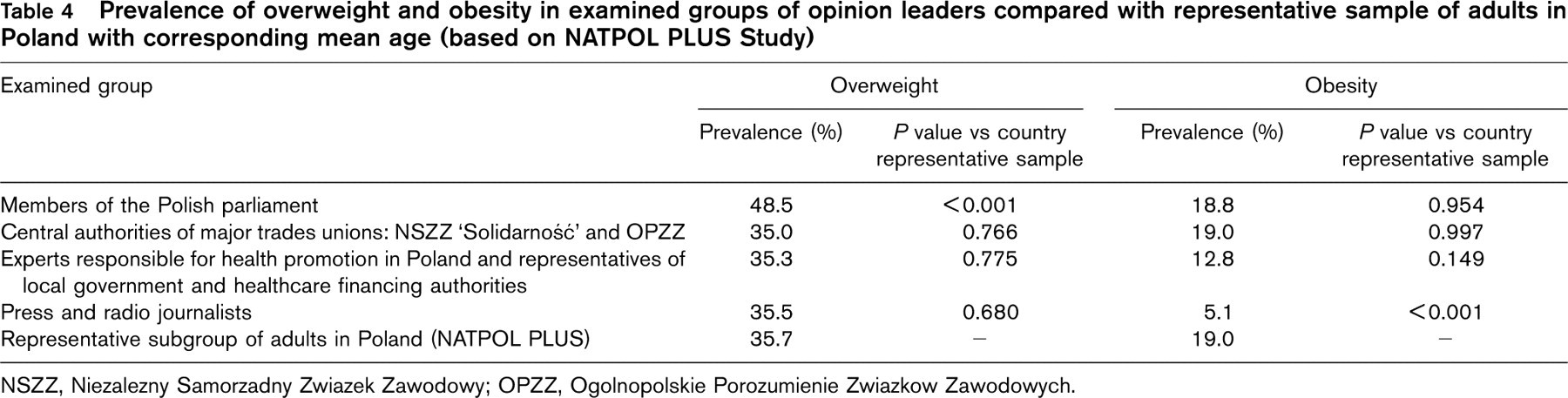
The mean BMI in the examined groups of opinion leaders and in the country representative sample of adults is presented in Figure 3. Increased BMI (≥25 kg/m2) was detected in 40.6% of journalists (overweight 35.5%, obesity 5.1%) versus 67.3% of members of parliament (overweight 48.5%, obesity 18.8%; Table 4). By comparison, in the general population, increased BMI was detected in 54.7% of individuals (overweight 35.7%, obesity 19%).
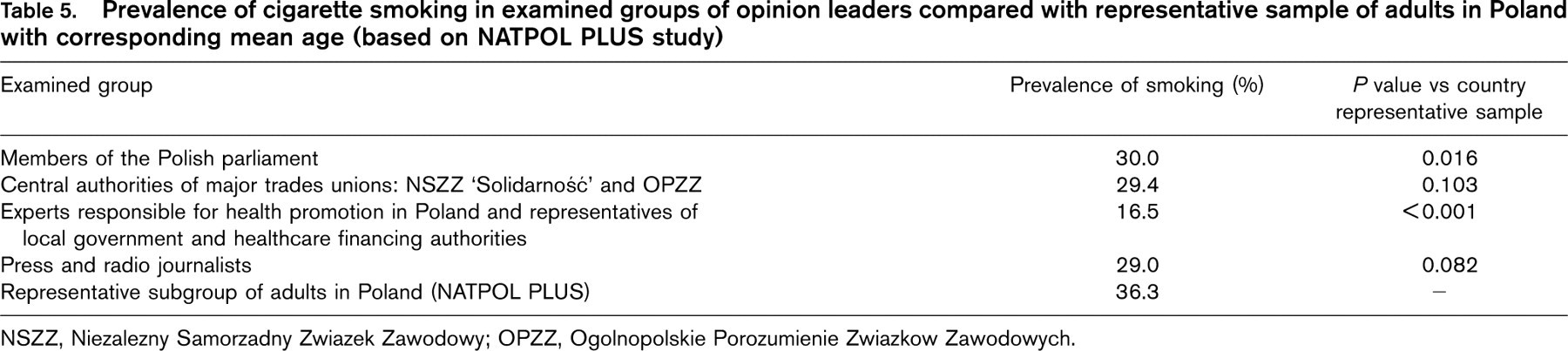
The percentage of those who admitted their smoking habit ranged between 16.5% (representatives of experts responsible for health promotion and representatives of local government and healthcare financing authorities of the Pomerania region) and 30% (members of the Polish parliament) of the opinion-makers in the study (Table 5). In the general population of adult Poles the smoking rate was 36.3%.
Discussion
The prevalence of increased arterial blood pressure among the tested members of political and opinion making circles, was more common than that found among the representative group of adult Poles. This finding may have been influenced by the circumstances in which the assessment was performed: politicians and opinion-makers were tested in the work environment, which is often stressful, whereas in the study on the representative group of adult Poles all tests were carried out at rest in the home.
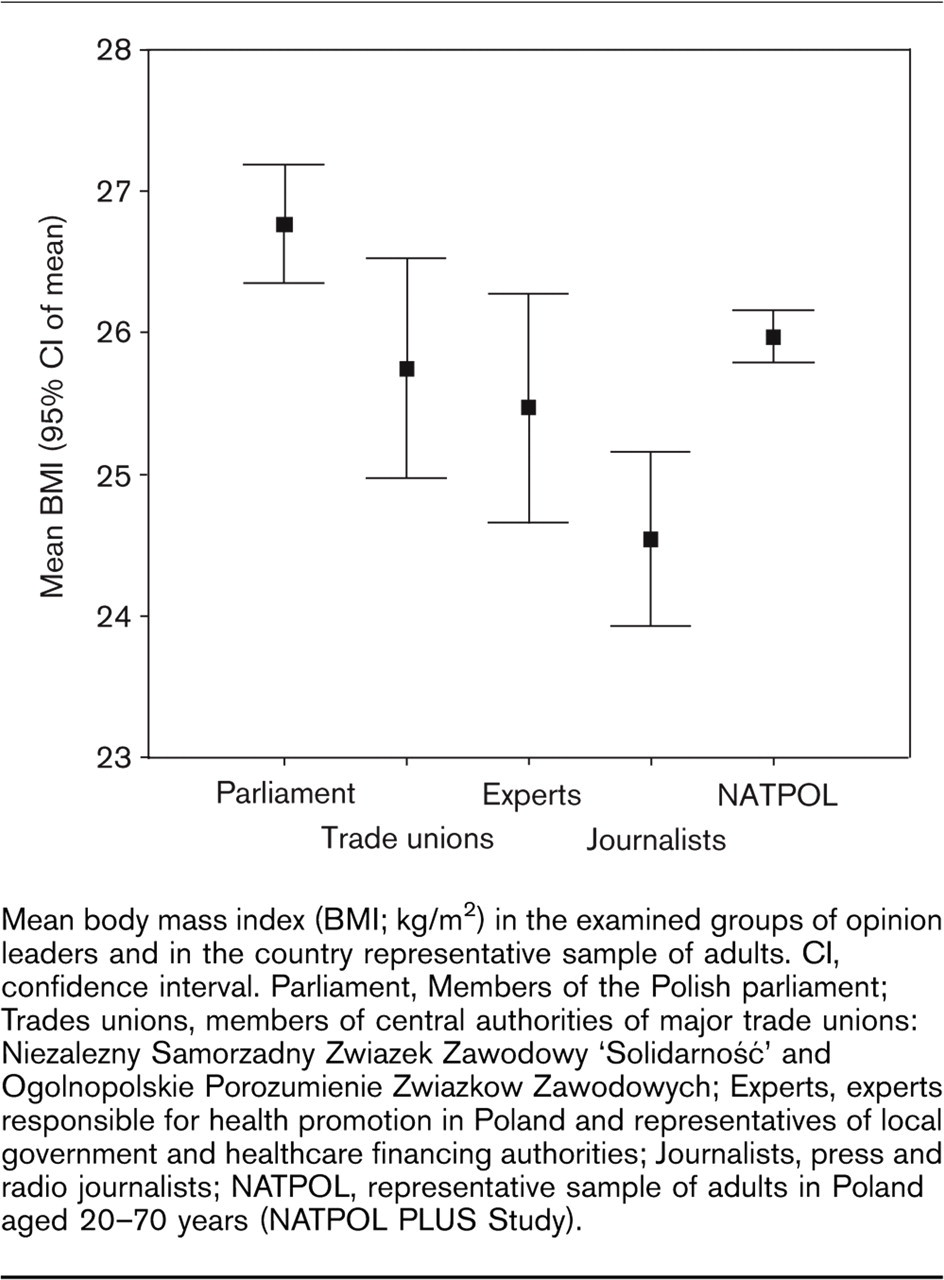
Mean body mass index (BMI; kg/m2) in the examined groups of opinion leaders and in the country representative sample of adults. CI, confidence interval. Parliament, Members of the Polish parliament; Trades unions, members of central authorities of major trade unions: Niezalezny Samorzadny Zwiazek Zawodowy ‘Solidarność’ and Ogolnopolskie Porozumienie Zwiazkow Zawodowych; Experts, experts responsible for health promotion in Poland and representatives of local government and healthcare financing authorities; Journalists, press and radio journalists; NATPOL, representative sample of adults in Poland aged 20–70 years (NATPOL PLUS Study).
Prevalence of overweight and obesity in examined groups of opinion leaders compared with representative sample of adults in Poland with corresponding mean age (based on NATPOL PLUS Study)
NSZZ, Niezalezny Samorzadny Zwiazek Zawodowy; OPZZ, Ogolnopolskie Porozumienie Zwiazkow Zawodowych.
Prevalence of cigarette smoking in examined groups of opinion leaders compared with representative sample of adults in Poland with corresponding mean age (based on NATPOL PLUS study)
NSZZ, Niezalezny Samorzadny Zwiazek Zawodowy; OPZZ, Ogolnopolskie Porozumienie Zwiazkow Zawodowych.
The fact that an awareness of one's own blood pressure was at the lowest level among the group of journalists may be due to the fact that younger people visit their general practitioners less often and are less interested in their own health than older people.
The members of the Polish parliament were more often overweight or obese than adult Poles and the other groups assessed in our study, whereas the smoking rate among them was lower than in the representative subgroup of adults in Poland.
The opinion-makers in the study had a better awareness of their own blood pressure (except for the journalists) and a better awareness of their excessive body weight (except for experts responsible for health promotion), compared with corresponding representative subgroups of adult Poles. These results were influenced by the educational actions for the tested opinion-makers, carried out in the form of the distribution of materials and information on the purpose of the study and the importance of cardiovascular risk factors.
The assessment of cardiovascular risk factors raised the awareness of the study participants with regard to the scale and weight of the problem from the personal, group and national perspective. The results were met with interest and increased the understanding of the problem of the epidemic of CVD and, according to those who participated in the study, they were much needed and successful.
Being fully aware that actions of this type will not bring measurable results at once, we consider them to be a starting point for a long-term educational programme addressed at political and opinion-making elites. The programme will continue after the next parliamentary elections, local government elections, and when organizing the new structures of the national health fund.
We hope that making those in charge of the national legislation, the parliament and senate, as well as other opinion-makers aware of the unfavourable epidemiological situation concerning CVD in Poland will be reflected in the future legislative processes concerning a better organization of the healthcare system and the introduction of integrated and systematic preventative measures [12]. To achieve success in counteracting the epidemic of CVD one urgently needs appropriate political and legislative action, as confirmed by a recognized expert in the field of hypertension, Professor Swales, who in his article Hypertension in the political arena [13] wrote: ‘(…) the problems extend far beyond the implementation of expert guidelines (…) the social and political environment in which cardiovascular disease is managed is of crucial relevance to how successful we are in controlling it …'.
Our assessment programme was instrumental in facilitating the implementation of procedures related to the development and realization of the National Cardiovascular Prevention and Treatment Program for 2003–2005 – POLKARD.