






Abstract

017 Tissue velocity imaging with dobutamine stress echocardiography- a quantitative technique for identification of coronary artery disease in patients with left bundle branch block
H. Badran
Background Patients with left bundle branch block exhibit abnormal septal motion which may limit the interpretation of stress echocardiograms and persuade great number of false-positive tests using myocardial scintigraphy.
Objectives To analyze whether the use of tissue velocity imaging (TVI) during graded dobutamine infusion is useful to identify and predict coronary artery disease (CAD) in patients with complete left bundle-branch block (LBBB).
Methods Sixty-two left bundle branch block patients (mean age 62 years, 34 men) with suspected CAD underwent dobutamine stress – Tissue Doppler echocardiography (DS-TDE) within 6 weeks before coronary arteriography. Dobutamine infusion started at 5 μ/k/min and increased up to 40 μ/k/min with additional atropine during submaximal heart rate responses. Beside wall motion analysis pulsed wave Doppler tissue sampling of mitral annulus at 5 corners were performed at rest in the apical four-chamber plus aorta and two-chamber apical views. The measurements were repeated at low dose (10–15 μ/k/min), and at peak stress. TDE measurements included peak early systolic (PSV), post systolic shortening (PSS), peak early diastolic (Ve), and peak late diastolic (Va) velocities. The results were compared to 20 healthy subjects as a control. Patients were classified into two groups according to angiographic results, LBBB with CAD (n = 32) and LBBB without CAD (n = 30).
Results There was no significant difference between LBBB groups in global WMSI at rest, the Δ changes in each group was almost similar during peak stress test (P > 0.05). In LBBB with CAD group PSV increased during peak stress to a smaller extent (6.3 ± 1.1 to 7.2 ± 2.0 cm/s, ∼ 24% P < 0.03) than in non CAD group (6.8 ± 1.0 to 9.6 ± 2.7 cm/s, ∼ 46% P < 0.01). Similarly, Ve increased to less extent in CAD group (Δ Ve 0.2 ± 2.9 versus 2.8 ± 1.7 cm/s, ∼25% versus 42% P < 0.0001). No significant difference in Δ Va between LBBB groups and control or between each of them. PSS could be recorded at rest in 24/32 (75%) in CAD and 17/30 (57%) in non CAD group. In LBBB with CAD group PSS was developed and significantly augmented from 4.7 ± 3.1 to 6.3 ± 3.4 cm/s (P < 0.001) during stress. Increment of < 2.5 cm/s in PSV and Ve during peak stress identified CAD with 88% sensitivity and 90% versus 87% specificity, respectively. The cut-off values of PSS velocity > 4 cm/sec at peak stress have strong diagnostic power for prediction of obstructive CAD in LBBB patients (82% accuracy).
Conclusion DTE with dobutamine stress allows a diagnostic benefit in the detection of CAD in patients with LBBB. The magnitude of change of peak systolic velocity and early diastolic velocity in addition to PSS are quantitative parameter to identify CAD in patients with LBBB where subjective wall motion analysis failed.
Key Words Tissue velocity imaging - Dobutamine stress - Coronary artery disease - Left bundle branch block
028 State of the cardiovascular system and circadian blood pressure rhythm in men with mild to moderate hypertension and obesity
Ketevan Chagunava
National Centre of Therapy 2, Gamsakchurdia Av., Ap.23, 4, Chachava Str. Tbilisi 0159, Georgia
Objectives Obesity and hypertension are considered as the most important related risk-factors of cardiovascular disease (CVD). To study influence of the obese state on structural and hemodynamical changes of the cardiovascular system and circadian blood pressure (BP) rhythm in patients with mild to moderate hypertension we examined 78 male patients (mean age 48,6 ± 2,1years, duration of hypertension 4,8 ± 1,3 years).
Methods Examination included: detection of CVD risk-factors; ultrasound evaluation of left ventricular mass index (LVMMI); colour triplex carotid artery scanning; assessment of endothelial function of brachial artery; 24-hour blood pressure monitoring. 25 patients with abdominal type of obesity and hypertriglyceridemia (metabolic syndrome) were assigned to group 1, 28 patients with obesity to group 2 and 25 patients with normal weight to group 3.
Results The groups were comparable by the age, duration of hypertension, daily mean BP values. In group 1 values of LVMMI (gr1:158,2 ± 9,8 gr/m; gr2:144,7 ± 5,8 gr/m; gr3:142,6 ± 8,8 gr/m), carotid artery intima-media thickness (IMT) (gr1:1,16 ± 0,05 mm; gr2: 1,09 ± 0,03 mm; gr3: 1,02 ± 0,04 mm) were certainly increased (p < 0,001), endothelium – dependent vasodilatation (EDVD) was significantly reduced (gr1:6,85 ± 0,4%; gr2: 7,07 ± 0,4%; gr3: 7,5 ± 0,3%, p < 0,001). Occurrence of left ventricular hypertrophy was highest in gr 1(gr1: 80%; gr2: 69%; gr3: 55%), of eccentric hypertrophy in gr1 (gr1: 50%; gr2: 15%; gr3: 10%), of concentric hypertrophy in gr2 (gr1: 30%; gr2: 54%; gr3: 45%). Normal geometry occurred only in gr2 and gr3 (8vs 25%). Number of patients with abnormal BP rhythm (Non-Dipper profile) was highest in gr1 (gr1: 77%; gr2: 64%; gr3: 55%).
Conclusions Thus, in men with mild to moderate hypertension, obesity, particularly abdominal type, is associated with more pronounced and frequent changes of the target organs (LVH- mostly eccentric and concentric hypertrophy; carotid artery affection- intima-media thickening, EDVD reduction) and disorders of BP circadian profile. Data of our study suggest, that hypertensive patients with obese state need more profound examination of cardiovascular system and more aggressive blood pressure and weight reduction.
041 Paraoxonase activity following exercise based cardiac rehabilitation program
Ehud Goldhammer1, David Ben Sira2, Ghassan Zaid1, Yael Biniamini1, Irit Maor1, Alon Tanchilevitch1, Michael Sagiv2
1Bnai Zion Medical Center & Faculty of Medicine, Technion, Haifa
2Wingate College of Physical Education
Paraoxonase (PON)1, an HDL-associated enzyme that confers antioxidant activity on HDL, and its activity in serum have been correlated with protection against atherosclerosis, an oxidative and inflammatory disease. Serum PON-1 activity is highly variable and its regulation is complex, involving both genetic and environmental factors. Its activity is influenced by gender as well. Regular aerobic exercise in well trained athletes was found to be associated with an increase in PON1 activity.
The major objective of this study was to determine the effect of chronic aerobic exercise on PON serum levels in chronic ischemic heart disease patients participating in an aerobic training program.
Thirty seven patients, 23 males and 14 females, age 65.9 ± 7.3, BMI 26.5 ± 6, all with proven coronary disease (previous myocardial infarction, percutaneous coronary intervention or coronary artery by-pass surgery) were included in the study. 31 patients (83.8%) were treated with β-blockers, 37 (100%) with Aspirin, 35 (95%) with Statins, 29 (78.4%) with ACE-inhibitors, and 16 (43.2%) with hypoglycemic agents.
All subjects underwent a 12 weeks aerobic exercise training program at 70%–85% of their individual maximal heart rate, 45 minutes sessions, 3 times/week.
PON activity was measured by its arylesterase activity (spectrophotometrically, at 250°C, wavelength 270 nm).
The effect of the exercise program on Paraoxonase serum activity, total cholesterol, HDL, & LDL cholesterol, triglicerides, high sensitive C-Reactive protein (HS-CRP), exercise test duration, metabolic equivalents (METS), waist – hip ratio, and body mass index (BMI) were evaluated at rest and following 12 weeks of exercise.
The effect of the exercise program on Paraoxonase serum activity was also evaluated utilizing a gender by pre/post two way analysis of variance with repeated measures on the pre/post factor. The same procedure was applied to the other dependent variables as well. The relationship between Paraoxonase serum activity and the other dependent variables was assessed by means of the Pearson product-moment correlation for each gender separately.
Results PON serum activity increased from 68.83 ± 13.51 u/ml to 80.31 ± 16.22 (16.7%), p < 0.01, HS-CRP decreased from 6.08 ± 4.18 mgr/ml to 3.48 ± 2.43 mgr/ml (42.8%), p < 0.01, T-Chol, and LDL decreased significantly as well and the METS and exercise duration increased significantly following 12 weeks exercise program.
None of the dependent variables showed evidence of a significant interaction effect, indicating that the effect of the exercise program was identical for both genders. Mean Paraoxonase serum activity increased significantly following the exercise program (15.1% for males and 18.3% for females). In addition, there was a significant gender effect with higher mean Paraoxonase serum activity levels among females as compared with males during both pre exercise (20.8%) and post exercise (24.2%) testing.
In conclusion, aerobic exercise training is probably an effective mean in inducing plasma levels elevation of the anti-oxidative, anti-atherogenic Paraoxonase in patients with coronary artery disease, and in female patients in particular.
Key words Tissue velocity imaging-Dobutamine stress-Coronary artery disease-Left bundle branch block
072 C-reactive protein and tumor necrosis factor-alpha in hypertensive patients
Tatyana Ashcheulova, Olga Kovalyova
Kharkiv State Medical University
Objective Several lines of evidence indicate that inflammatory cytokines play a pathogenic role in cardiovascular pathology. The proinflammatory cytokine – tumor necrosis factor-α (TNF-α) can induce myocardial hypertrophy; promote apoptosis, fibrosis, resulting in development of heart failure. The acute phase–reactant C-reactive protein (CRP) has been shown to be predictive of cardiovascular events. The aim of our study was to investigate relationships between circulating levels of TNF-α, C-reactive protein (CRP), and left ventricular myocardium mass in essential hypertension.
Design and methods Plasma TNF-alpha and CRP levels were measured by a highly sensitive enzyme-linked immunosorbent assay (ELISA) in 61 hypertensive patients and 22 healthy controls. Left ventricular myocardial mass by M- and B-mode echocardiography have been examined.
Results The study showed elevated plasma CRP levels (6.23 ± 0.43 mg/ml) as compared with normal values, and TNF-α levels (33.74 ± 3.23 pg/ml) in the general group of patients as compared with healthy controls (13.23 ± 3.40 pg/ml; p = 0.04). In hypertensives with left ventricular hypertrophy (n = 49) CRP (8.16 ± 0.71 mg/ml) and TNF-α (33.40 ± 3.49 pg/ml) levels were higher as compared with those with normal left ventricular myocardium mass (n = 19) – CRP 6.10 ± 0.61 mg/ml (p = 0.05); TNF-α 25.59 ± 4.25 pg/ml (p = 0.05).
Conclusions Our results suggest, that increased CRP level, equally with TNF-α, may represent circulating marker of systemic inflammation in hypertensive patients possibly reflecting the degree of underlying inflammatory response.
106 Inflammatory markers in patients with STEMI and acute ischemic stroke
Marcin Skorski
Al. Krasnicka 100, Lublin 20–718, Poland, e-mail:
Introduction Acute coronary syndrome and ischemic stroke are the clinical complications of atherosclerosis. There was proven in the lot of studies, that inflammation plays an important role in the patophysiology both of these diseases, but the details of the process are still unknown.
Objective The aim of our study was to compare patients with STEMI and patients with ischemic stroke (IS) regarding to inflammatory markers.
Methods We investigated 79 consecutive patients (42 STEMI, 37 IS) admitted to intensive cardiac care unit and stroke unit care in our center. The following parameters were measured and then statistically analyzed: platelet (PLT) and white blood cell (WBC) count, fibrinogen, hsCRP, sICAM, IL-6, P-selectine, TNF-α. Presence of diabetes, hypertension, gender and age was analyzed as follows.
Results Patients with STEMI were significantly younger than with IS (65,5 vs. 73; p = 0,013). In the both investigated groups hsCRP was higher than the norm: STEMI: 3,69 mg/dl, IS: 3,24 mg/dl, but the difference was not significant. Differences in sICAM: 275 vs. 266 ng/ml and PLT: 216000 vs. 196000/μL were not significant too, although the negative correlation between age and PLT was found (p = 0,047). The WBC count was significantly higher in patients with STEMI than with IS (8550 vs. 6645/uL; p = 0,0013). IL-6 was significantly higher in patients with STEMI than with IS (7,96 vs. 1,4 pg/ml; p = 0,0000006), P-selectine was significantly higher in patients with STEMI than with IS (193,0 vs. 80,5 ng/ml; = 0,000009). But TNF-α was significantly lower in patients with STEMI than with IS (1,62 vs. 44,2 pg/ml; p <0). So fibrinogen: 355,5 vs. 424 mg/dl; p = 0,0043). Structure of both groups was similar regarding gender, presence of hypertension and diabetes. Gender, diabetes and hypertension don't affect on the level of inflammatory markers. There was no correlation between age and hsCRP, sICAM, WBC, IL-6 and P-selectine.
Conclusion Although inflammation is generally accepted, as an important component of arteriosclerosis, there are differences observed between these two groups of patient. Extremely high differences in the level of each inflammatory markers point on distinction in the particular forms of clinical manifestations of atherosclerosis. The nature of those phenomena is still unknown and should be studied in the future.
132 Prognostic value of the heart autonomic balance circadian changes for risk evaluation of cardiovascular events in patients with IHD
R. Prokopova, M. Matveev
St. Anne University Hospital, Sofia, Bulgaria and Centre of Biomedical Engineering, Bulgarian Academy of Sciences, Sofia, Bulgaria
Objectives In our previous studies we indicated that: i) the various CVD (AH, CHF) have a different circadian profile of heart autonomic balance (HAB), compared to the profile in healthy subjects; ii) the restoration of normal circadian characteristics of the HAB decreases the cardiac risk in these patients. In this study we analyze the specific abnormalities in HAB circadian changes in three groups of patients with ischemic heart disease (IHD), and prognostic value of these circadian profiles for risk evaluation of cardiovascular events (CVE).
Methods The study comprised of 26 patients with unstable angina (UA) (without CVE within the framework of one year – i.e. with good prognosis); 15 patients with morning MI (MMI), and 19 patients with MI in the non-morning hours (NMMI). The patients are without diabetes or other severe system diseases, conduction disorders, frequent arrhythmias and anti-arrhythmic therapy. The HAB changes were assessed by HRV indices from ECG recordings in resting state (RS) and by parasympathetic (Valsalva manoeuvre; VM), or sympathetic (handgrip test; HT) stimulation. In Physiological measurements 24(2003) we proposed the Time Related Autonomic Balance Indicator (TRABI) – a nonparametric criterion for estimating the changes in HAB by any HRV indices. In this study, TRABI was used for evaluation of the specific changes in HAB in the three patient groups.
Results The mean value of TRABI for the HRV indices in the study in RS versus HT in healthy subjects is 0,100; in patients from the three groups this value, respectively, is: with UA 0,180 (n.s.); with MMI 0,177 (p = 0,0256); with NMMI 0,082 (ns). The mean value of TRABI in the study in RS versus VM in healthy subjects is 0,147; in patients this value, respectively, is: with UA 0,211 (ns); with MMI 0,107 (ns); with NMMI 0,053 (p = 0,0016).
Conclusions The results indicated that: i) in patients with UA the sympathetic component in HAB is more time-dependent than in healthy subjects; the parasympathetic circadian characteristic is analogous to the normal one. During stress, the vagus performs a protective role and thus secures a favorable long-term prognosis; ii) in the patients with MMI we found abnormal circadian characteristics of HAB with sympathetic hyperactivity and normal parasympathetic tone. The sympathetic dysfunction during stress is probably the reason for the morning peak in the frequency of CVE; iii) in patients with NMMI the circadian nature of the sympathetic activity is preserved, but the circadian changes of the parasympathetic activity are almost absent.
146 Vasomotor dysfunction in patients with metabolic syndrome and insulin resistance
P. Tretjakovs, A. Jurka, A. Martinsons, G. Bahs
University of Latvia, Riga, Latvia; Riga Stradins University, Riga, Latvia
Objectives Aim to evaluate the relationship between insulin resistance and cutaneous vasomotor responses (endothelial-dependent vasodilatation and peripheral sympathetic failure: noradrenergic control of smooth muscle cells – vasoconstriction and neuropeptides induced vasodilatation) in patients with metabolic syndrome (MS).
Methods and subjects Patients with insulin resistance and MS, but without hypertension were divided into two groups: 18 patients with type-2 diabetes mellitus (without insulin therapy and without pronounced diabetic complications) (DM) and 18 patients without DM. 18 healthy subjects were selected as controls (C). The study groups were matched for age and sex. Insulin resistance was measured by HOMA-IR method. We recorded changes in laser Doppler flux (LDF; PeriFlux 4001, Perimed) on the foot. Basal LDF (b-LDF), postocclusive hyperemia (m1-LDF), vasoconstrictor response (v-LDF) to deep inspiration on the pulp of the toe (apical skin); and heat (+ 44 oC; PeriTemp 4005) induced hyperemia (m2-LDF) on the dorsum of the foot (non-apical skin) were estimated using a PeriSoft for Windows program.
Results b-LDF and local skin temperature did not differ among the study groups (p > 0.05). v-LDF was significantly less pronounced only in diabetics compared to healthy subjects (DM 31.8 +/−13.7 vs. C 52.6 +/−8.5%, p < 0.05). m1-LDF was decreased in both patient groups in comparison with the controls (p < 0.05), but only in diabetics the decrease of m2-LDF was pronounced (DM 134 +/−61 vs. C 192 +/−78 PU, p < 0.05).
Conclusion Our findings show that MS patients with insulin resistance have significant cutaneous vasomotor dysfunction.
151 Breathing frequency estimation from stroke volume oscillations calculated from modelflow using continuous finger arterial pressure measurements with finometer
M.K. McMullen, J.M. Whitehouse, A. Towell, G. Shine
University of Westminster, London, United Kingdom
Objectives In Recommendations for Blood Pressure Measurement in Humans and Experimental Animals the American Heart Association recommended the Finometer instrument “for research studies assessing short-term changes of blood pressure and its variability.” Finometer measures beat-to-beat arterial pulsation in the finger but does record breathing frequency. Breathing frequency is a fundamental autonomic measure. Furthermore the Task Force of the European Society of Cardiology and The North American Society of Pacing and Electrophysiology on heart rate variability stated that vagal activity is the major contributor to the 0.15–;0.40 Hz frequency domain. The term respiratory sinus arrhythmia is used to describe the variations of heart and circulatory measures which occur during the breathing cycle. Participants with a breathing frequency less than 0.15 Hz should be excluded from spectral frequency domain studies of heart rate variability and blood pressure variability. This exclusion avoids colocation of respiratory sinus arrhythmia in the low frequency domain 0.04–;0.15 Hz where the Mayer waves (0.10 Hz) are found.
Methods We tested 23 healthy adults (age range 21–;59 years old, mean age 37, 16 women and 7 men) for 260 ± 5 seconds in supine and upright positions with Finometer. Spontaneous breathing was measured with a strain gauge plethysmograph connected to the Finometer. Breathing frequency and stroke volume oscillation frequency were calculated after signal processing by Modelflow using Beatscope (Finometer software).
Results Breathing frequency varied from 0.076 to 0.310 Hz in the supine position and from 0.085 to 0.356 Hz in the upright position. 7 participants (30%) in the supine position and 5 (22%) in the upright position had breathing frequency lower than 0.15 Hz. There was a significant positive correlation between breathing frequency and stroke volume oscillation frequency in the supine position (r = .997, n = 23, p < 0.0005, two tailed), in the upright position (r = .994, n = 23, p < 0.0005, two tailed), in supine and upright conditions combined (r = .995, n = 46, p < 0.0005, two tailed) and for breathing frequencies under 0.15 Hz (r = .989, n = 12, p < 0.0005, two tailed).
Conclusions Breathing frequency can be estimated from stroke volume oscillations across a wide range of breathing frequencies using Finometer. Finometer is suitable for short-term blood pressure variability studies and stroke volume oscillation measures can be used to exclude participants with a breathing frequency less than 0.15 Hz.
167 Intra-coronary stem cell perfusion affects cardiac functions in the hearts isolated from normal and apolipoprotein-e gene deficient mice: an experimental study in the langendorff perfusion model
Zhang Qi, Lin Jin, Li Shu, Shen Weifeng, Geng Yongjian
Department of Cardiology, Shanghai Ruijin Hospital affiliated to Shanghai Second Medical University, Shanghai 200025, China.
Atherosclerosis Basic Research Lab, Texas Heart Institute (Houston, TX, 77030, USA)
Correspondence: shen weifeng (
Objective This study was aimed at assessing cardiac hemodynamic chagnes in the isolated hearts of apolipoprotein-E gene deficient (ApoE−/−) and wild type (WT) control mice perfused via intra-coronary arteries with murine embryonic stem cells (ESCs) at different concentrations.
Methods Hearts isolated from apoE-/- mice and WT mice were perfused through coronary arteries in a Langendorff perfusion model, and ESCs were infused with different concentrations (group A: ApoE -/-mice heart with 1.0 × 10⁶ cells, group B: ApoE -/- mice heart with 2.5 × 10⁶ cells, group C: WT mice heart with 1.0 × 10⁶ cells and group D: WT mice heart with 2.5 × 10⁶ cells). The parameters for the heart hemodynamic performance, such as coronary flow (CF), heart rate (HR), + dp/dt max, -dp/dt max, left ventricular end diastolic pressure (LVEDP), were recorded after stabilization and immediately, 5 min, 15 min and 30 min after cell delivery. The cells in the transudates was counted before and after the cell infusion.
Results All the murine hearst tested showed certain degrees of changes in the hemodynamic parameters during cell perfusion. Although higher cell dosage exerted adverse effects on cardiac function of both normal and ApoE-null hearts, the ApoE−/− hearts displayed much poor outcomes, compared to the WT hearts. More striking reductions in coronary flow and heart contraction occurred in the ApoE -/- hearts when high concentrations of stem cells were delivered. However, there were more stem cells retained in the apoE-null hearts than WT hearts. Most of the cells perfused into the heart were expelled after 30 min (63.2% ∼ 77.0%).
Conclusion Coronary delivery of ESCs into an isolated heart via coronary arteries may compromise cardiac hemodynamics, especially in the artherosclerosis-prone hearts receiving higher dosages of stem cells.
Key Words cell therapy, isolated heart, function
203 Polymorphism angiotensin II type 1 receptor gene in men from Podolska population
Vadim N. Zhebel, Oksana L. Blanar, Olga L. Starginska, Ulia A. Hefter
National Medical University named after Pirogov, Clinical Regional Dispensary of Radiation Defence of Population, Vinnytsya, Ukraine
Background and aims Angiotensin II type 1 receptor (AT1R) gene encodes the major subtype of angiotensin II cell surface receptors. The aim of the study was to evaluate the influence of polymorphism of AT1R gene (that consists in variability of adenine and cytosine residues at position 1166) on the heart system condition in healthy and hypertensive men from our region.
Patients and methods We studied 103 healthy men range of 40 to 60 years (mean age 44,56 ± 0,49 years) from Podolska population. We also enrolled 102 male patients with uncomplicated EH. Mean age was 47,92 ± 0,58 years. To identify the alleles of polymorphic markers of AT1R gene we used PCR technique in combination with restriction endonuclease cleavage and gel electrophoresis. The comparison of the allele and genotype frequencies was performed between group of healthy men and joint group of patients with EH. The following parameters were estimated ultrasonically: intracardiac hemodynamics-as intraventricular septum and left ventricular posterior wall (LVPW) myocardium thickness, end systolic and diastolic dimension, left ventricle myocardium mass (LVMM). Diastolic function was evaluated with transmitral Doppler, mitral annular velocities (pulsed-wave tissue Doppler).
Results The AT1R genotype distribution among healthy men compounded: AA-61%, AC-34%, CC-6%. In EH group 48% of studied persons carried AC genotype. The AA and CC genotype frequency compounded accordingly 31% and 21%. AC and CC genotype augmentation was significantly higher in studied patients than in healthy subjects. The carriers of AC and CC genotypes had higher risk of EH (60% Ta 79% respectively, X 2 = 22,30, p < 0.01). The values of end-diastolic volume, LVPW, LVMM were higher in persons with AC and CC genotypes in both group. The results of our study also suggest that the frequency of diastolic dysfunction was higher both in healthy men and in patients with AC and CC genotypes. So we believed that the persons with AC and CC genotypes may have genetic causes of changes in the structure and function of cardiovascular system, may serve the basis for development of cardiovascular diseases.
Conclusion We can conclude that presence AC and CC genotype could be considered as an independent risk factor of the essential hypertension in men from Podolska population.
207 Brachial endothelial function in subjects with familial combined hyperlipidemia and its relationships to carotid artery intima-media thickness
D. Karasek, H. Vaverkova, M. Halenka, M. Budikova, D. Novotny
University Hospital, Olomouc, Czech Republic
Objectives The aim of this study was to quantify the flow mediated dilatation of brachial artery (FMD) in asymptomatic members of families with familial combined hyperlipidemia (FCH) and to determine the relation between FMD and risk factors accompanying FCH. We also investigated the association between FMD and the intima-media thickness (IMT) of the common carotid artery.
Methods 82 members of 29 FCH families were divided into two groups: HL (probands and hyperlipidemic first-degree relatives, n = 47) and NL (normolipidemic first-degree relatives, n = 35). The control groups –; C-HL (n = 20) and C-NL (n = 20)-consisted of sex- and age-matched healthy individuals. FMD was assessed in the brachial artery by measuring the change in brachial artery diameter in response to reactive hyperemia.
Results Both hyperlipidemic subjects and their normolipidemic relatives had significantly lower FMD (3.4 ± 3.0% vs 6.3 ± 2.8%, p < 0.001, 5.2 ± 2.3% vs 7.8 ± 2.8%, p < 0.01 respectively) compared to controls. In multivariate backward stepwise regression analysis, FMD in members of FCH families was independently associated with sex (p < 0.001), age (p < 0.01), C-peptide (p < 0.05) and borderline with glycemia (p = 0.052). FMD correlated inversely with IMT in all subjects of FCH families and in hyperlipidemic members. In multivariate backward stepwise regression analysis this relation remained independent (p < 0.001, p < 0.01 respectively).
Conclusions Members of FCH families showed impaired FMD, which was independently associated with markers of insulin resistance. FMD and IMT were independently associated in hyperlipidemic, but not in normolipidemic members of FCH families.
This work was supported by grant IGA MZCR NR/ 9068–;3.
212 The adipokine leptin induces a pro-athero-thrombotic phenotype in human coronary endothelial cells
S De Rosa, P Cirillo, M Pacileo, V Angri, G Petrillo, G Ucci, L Sasso, N Prevete, M Chiariello
Division of Cardiology and Division of Clinical Immunology and University of Naples “Federico II”, Naples, Italy.
Objectives Obesity is often associated with increased risk to develop coronary artery disease. Leptin, an adipokine produced mainly by white adipose tissue, seems to play an important role in the pathophysiology of obesity through the regulation of food intake and energy expenditure. Indeed, plasma levels of leptin are directly correlated with the extension of body adiposity. In addition, it has been demonstrated that this adipokine might play an important role in the development of obesity-associated atherosclerosis and of its complications, such as acute coronary syndromes. Thus, aim of the present study was to evaluate the effects of leptin on the expression of Tissue Factor (TF) and of Adhesion Molecules in human coronary artery endothelial cells (HCAECs) in culture.
Methods HCAECs, grown in medium supplemented with 5% serum, were incubated with increasing leptin concentrations and then processed to evaluate: a) TF-mRNA transcription by Real-Time PCR; b) TF expression as pro-coagulant activity; c) Cellular Adhesion Molecules (CAMs, as VCAM-1 and ICAM-1) expression by FACS analysis. To investigate the molecular mechanisms involved in the modulation of these phenomena, in another set of experiments, NF-κB protein levels in nuclear extracts were analyzed by electrophoretic mobility shift assay (EMSA). Finally, we investigated the potential protective effects of lovastatin in preventing leptin-induced TF and CAM expression.
Results Leptin induced TF-mRNA transcription, as demonstrated by real time PCR and expression of functionally active TF as demonstrated by pro-coagulant activity assay. In addition, leptin induced VCAM-1/ICAM-1 expression in a dose-dependent fashion, as demonstrated by FACS analysis. Lovastatin, a HMG-CoA reductase inhibitor, significantly reduced TF and CAMs expression induced by leptin. Furthermore, leptin-induced TF and CAMs expression was mediated through the activation of the transcription factor, NF-κB, as demonstrated by electrophoretic mobility shift assay and by suppression of CAMs expression and of TF procoagulant activity by NF-κB inhibitor, pyrrolidine-dithio-carbamate ammonium.
Conclusions Leptin exerts direct effects on human coronary endothelial cells, promoting CAMs and TF expression, thus inducing a proatherothrombotic phenotype. These data support the hypothesis that this adipokine, besides being an important modulator of food intake and energy expenditure, might play a relevant role in the pathophysiology of atherothrombosis in obesity.
232 Procalcitonin serum concentrations and sequential organ failure assessment (SOFA) score in patients with and without heart failure (HF) early after cardiac surgery
V Maravic-Stojkovic, T Spasic, M Jovic, M Borzanovic, P Stevanovic, S Pavlovic, B Djukanovic, D Brunner
Dedinje Cardiovascular Institute, Belgrade, Serbia; KBC Dr D Misovic, Belgrade, Serbia; KC Nais, Serbia and Interlight, Lozana, Switzerland
Background Previously we investigated the clinical course of patients with good left ventricle ejection fraction (EF) by assessing SOFA score and procalcitonin (PCT) levels as prognostic markers early after cardiac surgery. In this study we included patients with systolic heart failure, prospectively collecting clinical and laboratory data: B-type natriuretic peptide (BNP), PCT, and SOFA score in patients admitted to intensive care unit.
Methods 299 patients (age 59.91 ± 9.48 years, 65.5% male, subjected to CABG, valve reconstruction or combined CABG + valve operations) were divided in three groups: pts with echo-cardiographically estimated EF > 30% for procalcitonin treatment (group A, n = 102) and control pts on standard care (group B, n = 103), and patients with EF < 30% for BNP analysis (group C, n = 94). PCT was measured preoperatively, 6 h, 24 h and 48 h postoperatively. SOFAscore was assessed daily as SOFA1, SOFA2, SOFA3, SOFAAUC. BNP was measured preoperatively in pts with HF. Clinical endpoints were: the duration of stay in the ICU, hospital stay, and overall outcome.
Results Mean value of PCT serum concentrations are given on Table 1. In the group C mean BNP plasma levels were 667.65 ± 1058.45 ng/L. In the group A, B, and C SOFA1 was 1.31 ± 1.67 v 1.62 ± 1.65 (p > 0.05), 4.73 ± 2.57 (p < 0.05). SOFA2 was 0.97 ± 1.56 v 1.34 ± 1.67 (p > 0.05), versus 4.69 ± 2.47 (p < 0.05). SOFA3 was 0.63 ± 1.11 v 1.13 ± 1.68 (p = 0.0178), and 4.04 ± 1.81, respectively. The ICU stay was 5.74 ± 11.49 days in group A, 6.97 ± 11.61 (p = 0.04476) in group B, and 3.5 ± 1,11 days in group C. Postoperative hospital stay was 12.08 ± 11.28 v 12.93 ± 10.73 v 12.25 ± 2.5 days (p > 0.05) in A v B v C group. Mortality ratio was 3% v 3% v 2.8% (p = 0.8038) in three groups. We have found that the SOFA3 score had predicting value in mortality rate as well as PCT concentrations meassured 48 h after surgery.
Conclusion By assessing organ dysfunction over time, scoring systems such as SOFA are useful in evaluation high rates of ICU morbidity and mortality. We have found that both PCT and SOFA score prognostic models are accurate in predicting mortality of patients subjected to cardiac surgery.
Table 1 Mean values of PCT (ng/mL) measured preoperatively, 6 h, 24 h and 48 h after operation

234 The impact of a long-term rehabilitation on chronic fatigue and neurohumoral factors and their relations in patients with chronic heart failure
Lina Jasiukevičienė, Donatas Vasiliauskas, Regina Grybauskienė, Aušra Kavoliūnienė
Kaunas University of Medicine, Institute of Cardiology and Kaunas University of Medicine Hospital, Department of Cardiology
Objective To evaluate impact of a long-term rehabilitation on chronic fatigue and neurohumoral factors and their relations in patients with chronic heart failure.
Methods Three hundred twenty five patients with I-IV class (NYHA) chronic heart failure filled in chronic fatigue questionnaires MFI-20L (100 points scale), DUFS, DEFS (9 points scales). Sixty five patients with III-IV class (NYHA) underwent blood cortisol and plasma Nt-Pro BNP analysis. Measurements were repeated after 6 months. Regression analysis between neurohumoral data and MFI-20L scale overall and physical fatigue results was acquitted and Spearman correlation coefficients were established.
Results Thirty-five patients (31.5 percent) with I-II class (NYHA) were expressed chronic fatigue 32.5 +/−11.5 points in MFI-20L scale. One hundred seventy patients (100 percent) with III-IV class (NYHA) were expressed chronic fatigue 56.8 +/−28.5 points in MFI-20L scale. Chronic fatigue significantly decreased (p < 0.05) after 6 months rehabilitation. Morning blood cortizol concentration was normal 410.1 +/−175.1 mmol/l. Aternoon blood cortizol concentration was insufficiently diminished −355.6 +/−160.3 mmol/l. Correlation coefficients between neurohumoral factors and MFI-20L scale overall and physical fatigue results showed, that there is significant and average relation between fatigue and blood cortizol concentration.
Conclusion Hypothalamus-pituitary-adrenal axis violation is involved in III-IV class (NYHA) chronic heart failure.
235 Cigarette smoking induces a pro-athero-thrombotic phenotype in endothelial cells. Protective effects of statins
M Pacileo, P Cirillo, S De Rosa, A Gargiulo, F Granato Corigliano, S Musto d'Amore, R Spagnuolo, I Fiorentino, M Chiariello
Division of Cardiology and Division of Clinical Immunology' University of Naples “Federico II”, Naples, Italy
Objectives Cigarette smoking is associated with an increased risk to develop myocardial infarction and ischemic stroke. However, the mechanisms responsible for these negative effects of smoking are not completely understood, yet. Thus, aim of the present study was to investigate whether nicotine, one of the main components of cigarette smoking, might induce a pro-athero-thrombotic state in human arterial endothelial cells (HCAECs), through the expression of Tissue Factor (TF) and of the adhesion molecules ICAM-1 and VCAM-1. In addition, giving the growing body of clinical evidence suggesting the protective role of statins in this setting, we have evaluated the effects of these drugs on the phenomena.
Methods HCAECs were grown in medium supplemented with 5% serum and then incubated with different nicotine concentrations (10−5-10−12 mol/L), in a range observed in plasma of cigarette smokers, and finally processed to evaluate: a) TF-RNA transcription by Real-Time PCR; b) TF expression as procoagulant activity; c) Cellular Adhesion Molecules (CAMs, as VCAM-1 and ICAM-1) expression by FACS analysis. To elucidate the molecular mechanism by which nicotine might exerts its effects on HCAECs, in another set of experiments NF-κB protein levels in nuclear extracts were analyzed by electrophoretic mobility shift assay (EMSA). Finally, we investigated the potential effects of four different statins (simvastatin, pravastatin, lovastatin and fluvastatin) in preventing nicotine-induced expression of TF and CAMs.
Results Nicotine induced TF and CAMs expression in HCAECs in a dose-dependent fashion. These effects were mediated by the activation of the transcription factor NF-κ, as demonstrated with EMSA and confirmed by suppression of CAMs expression and of TF pro-coagulant activity by the NF-κ inhibitor, pyrrolidine-dithio-carbamate ammonium. Furthermore, cell pre-treatment with each of the statin tested was able to prevent nicotine effects.
Conclusions Results of the present study indicate that nicotine, one of the main components of cigarette smoke, exerts direct effects on HCAECs, shifting them toward a pro-athero-thrombotic state via induction of TF and CAMs expression. These effects could explain, at least in part, the deleterious cardiovascular consequences of cigarette smoking. Moreover, statins might have an important role in reducing the deleterious effects of cigarette smoking on endothelial function.
238 Plasma adiponectin positively correlates with N-terminal pro brain natriuretic peptide levels only in patients with advanced chronic heart failure
ID Laoutaris, A Dritsas, IK Vasiliadis, S Mavrogeni, A Manginas, MS Kallistratos, D Degiannis, A Chaidaroglou, DV Cokkinos
Onassis Cardiac Surgery Center, Athens, Greece
Objectives The adipocyte adiponectin (Ad) is emerging as a marker of disease severity in patients with chronic heart failure (CHF). We sought to investigate the relationship between plasma adiponectin, N-terminal pro brain natriuretic peptide (NT-proBNP) and left ventricular ejection fraction (LVEF) in patients with CHF grouped according to New York Heart Association (NYHA) functional class.
Methods Sixty-one patients, age 60 ± 2 yrs, (mean ± SEM), NYHA II (n = 27)/III (n = 34) and a LVEF of 29 ± 1% were tested. Plasma Ad and NT-proBNP were evaluated using the Elisa technique.
Results In all 61 patients, plasma Ad levels were 23.8 ± 2.5 ug/ml and NT-proBNP 1130.2 ± 201.9 pg/ml. In patients of NYHA II, age 57 ± 2yrs, plasma Ad was 19.5 ± 1.9 ug/ml, NT-proBNP, 656.6 ± 186.7 pg/ml and LVEF, 31 ± 2%. In patients of NYHA III, age 63 ± 2yrs, plasma Ad was 26.8 ± 1.5 ug/ml, NT-proBNP, 1506.3 ± 318.6 pg/ml and LVEF, 27 ± 2%. In the whole 61 patients, Ad positively correlated with NT-proBNP (r = 0.328, p = 0.01) and NT-proBNP inversely with LVEF (r = −0.367, p = 0.004). Correlations between Ad and NT-pro BNP were seen only in NYHA III patients (r = 0.357, p = 0.038) but not in NYHA II patients. LVEF inversely correlated with NT-proBNP in both NYHA II (r = −0.390, p = 0.04) and NYHA III (r = −0.347, p = 0.048) patients. Plasma Ad did not correlate with LVEF in either NYHA II or III patients.
Conclusions Although plasma Ad overall positively correlates with NT-ProBNP in patients with CHF of NYHA II/III, this only holds true for patients of NYHA functional class III with higher Ad and NT-proBNP plasma levels. The lack of correlation between Ad and LVEF is intriguing, suggesting that this cytokine may better correlate with metabolic mechanisms in advanced heart failure.
249 Optimising dietary advice in cardiovascular prevention: comparison of antioxidant activity of Muscat Hamburg and Sugraone varieties of table grape (Vitis vinifera L.)
A. Manso, D. Saura, P. Hellín, P. Flores, J. Fenol, I. Ruiz, P. Peñafiel, M. Valdés-Chávarri
Instituto Murciano de Desarrollo Agrario y Alimentario, Murcia, Spain and Servicio de Cardiología, Hospital Universitario Virgen de la Arrixaca, Murcia, Spain.
Objectives The consumption of antioxidant-rich foods might play an important role in cardiovascular prevention. Grapes contain antioxidant poliphenols that may be consumed either as wine or as fresh fruit. Among grape polyphenols, resveratrol has been shown to have beneficial cardiovascular efects. Consumer preferences are usually based on the external aspect of diferent varieties rather than on its nutritional and physiological properties. Dietery advice might be preferably based on food composition determination. It is well known that antioxidant activity in grapes is contained in its peel (skin) fraction. We aimed to compare antioxidant activity and content of resveratrol in the skin fractions of two widely spread varieties of table grapes in Europe: red Muscat Hamburg and white Sugraone (Superior Seedless®) grapes.
Methods Samples of Muscat Hamburg and Sugraone grapes were randomly collected at the time of opitimum harvest maturity. Berries were separated into skins and pulps. The antioxidant capacity of peel fraction was quantified as resveratrol equivalent antioxidant capacity (REAC) using the 2,2'-azinibis (3-ethylbenzothiazoline-6-sulphonic acid) radical cation (ABTS+) assay. Resveratrol was quantified by high performance liquid chromatography (HPLC).
Results Main results are shown in the table. Diferences were shown to be statistically significant.
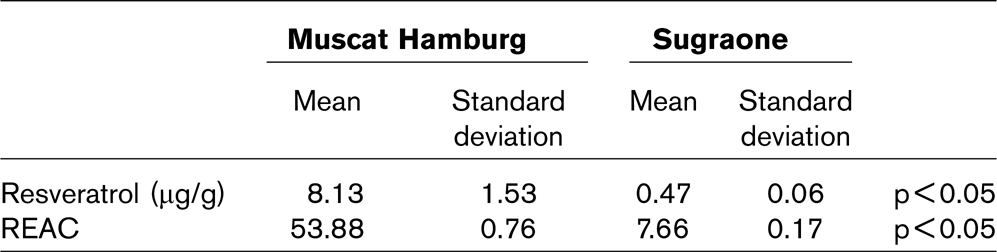
Conclusions Red grapes of the Muscat Hamburg variety have much greater antioxidant activity than those of the white Sugraone variety. Resveratrol content is higher in Muscat grapes. Dietary advice regarding the two studied grape varieties should consider Muscat Hamburg as the preferably choice owing to their greater content in resveratrol and higher antioxidant activity.
274 Hydrogen sulfide protects rat hearts against ischemic injury via inhibition of na+/h+ exchanger activity
KL Neo, PK Moore, JS Bian
Cardiovascular Biology Research Group, Department of Pharmacology, Yong Loo Lin School of Medicine, National University of Singapore, Singapore
Objectives Na+/H+ exchanger (NHE) plays a crucial role in regulation of heart function especially during ischemia/reperfusion. Hydrogen sulfide (H2S) is a novel endogenous mediator regulating heart activity. The present study is designed to determine whether H2S could protect hearts against ischemia/reperfusion induced injury via inhibition of NHE.
Methods pHi was measured using BCECF-AM as a pH sensitive indicator. Typan-blue exclusion was employed as an index of myocyte viability. The activities of NHE and Cl−/HCO3 − exchanger were measured by assessing the capacity of NHE to extrude H+ and Cl−/HCO3 − exchanger to load H+ during cellular alkalinization and acidification induced by adding or removing of 10 mM NH4Cl, respectively. Heart contractile function was measured in the isolated Langendorff hearts with a powerlab system.
Results We found in the present study that NaHS (10−5 ∼ 10−3 M), a H2S donor, concentration-dependently decreased intracellular pH (pHi) in the isolated ventricular myocytes. NaHS at 10−4 M also significantly attenuated pHi elevation induced by stimulation of NHE. Upon 10 mM NH4Cl pulse perfusion, NaHS significantly decreased the activity of NHE but had no effect on that of Cl−/HCO3 − exchanger. In addition, pHi was significantly decreased when cardiac myocytes were treated with simulated ischemia buffer, but recovered to normal under the action of NHE upon reperfusion with Krebs solution. NaHS significantly slowed the pHi recovery rate and increased cell viability during reperfusion in the isolated cardiac myocytes. Moreover, application of NaHS (10−4 M) significantly improved heart contractile function including LVEDP, LVDP and ± dp/dt during reperfusion in the isolated rat hearts. All the above findings with NaHS were mimicked by HOE-642, a selective NHE inhibitor.
Conclusions In the present study, we found for the first time that H2S may protect heart function against ischemia/reperfusion induced injury via inhibition of NHE activity.
276 Endothelium nitric oxide syntase in overweight patients with arterial hypertension
Demidenko A, Kovalyova O
Kharkiv Medical University, Ukraine
Objective Nitric oxide syntase (NOS) plays an important role in the pathogenesis of hypertension that seen in different forms of experimental hypertension. But clinical data in human hypertension are still controversial. The aim of our study was to determine the production of endothelial NOS (e-NOS) and inducible-NOS (i-NOS) in overweight patients with arterial hypertension. Material and methods: 70 untreated patients with mild to moderate essential hypertension and 20 age-matched normotensive subjects were obtained. The production of e-NOS and i-NOS was analyzed in plasma using immunological method. The patients were divided into 5 groups.
Results
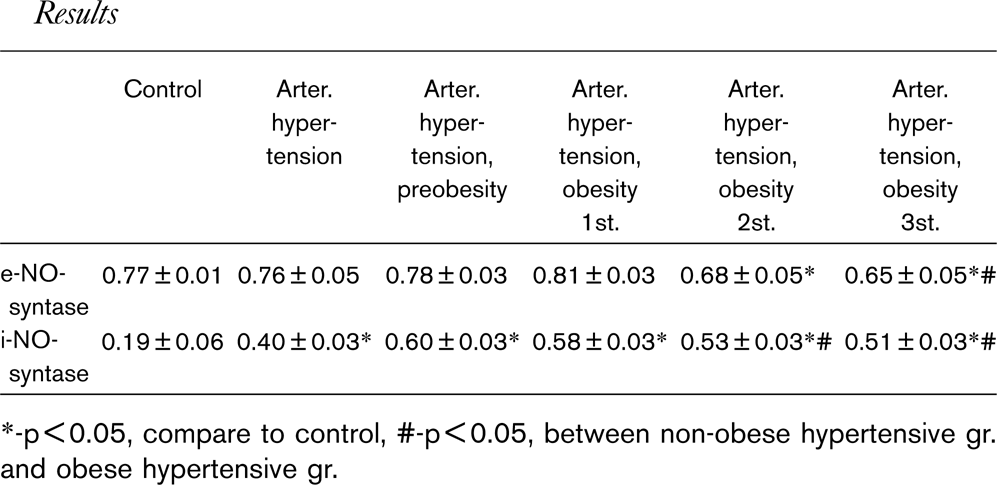
∗-p < 0.05, compare to control, #-p < 0.05, between non-obese hypertensive gr. and obese hypertensive gr.
The production of e-NOS was higher in hypertensive groups' with preobesity and obesity 1st in comparison with control. It may explain by compensatory abilities, or by reduction of bioavailability of NO, that connect with oxidative stress, because the level of i-NO-syntase was significantly higher than in control ones. Obtained data suggest that Nitric oxide production and bioavailability is impaired in obese patients with hypertension in comparable with the normotensive subjects.
Conclusions In obese patients with hypertension production of e-NOS and bioavailability of NO in vascular endothelium was significantly altered, impaired Nitric oxide system may represent as a biochemical mechanism that is responsible for the development of hypertension via involvement into the regulation of blood pressure level, total peripheral resistance and cardiovascular remodeling.
280 Long time-constant in the RR-QT system: prevention of sudden death should extend to borderline QT individuals
R Negoescu, S Dinca-Panaitescu, A Achim
Institute of Public Health, Bucharest, Romania; York University, Toronto, Canada and University of Bristol, UK
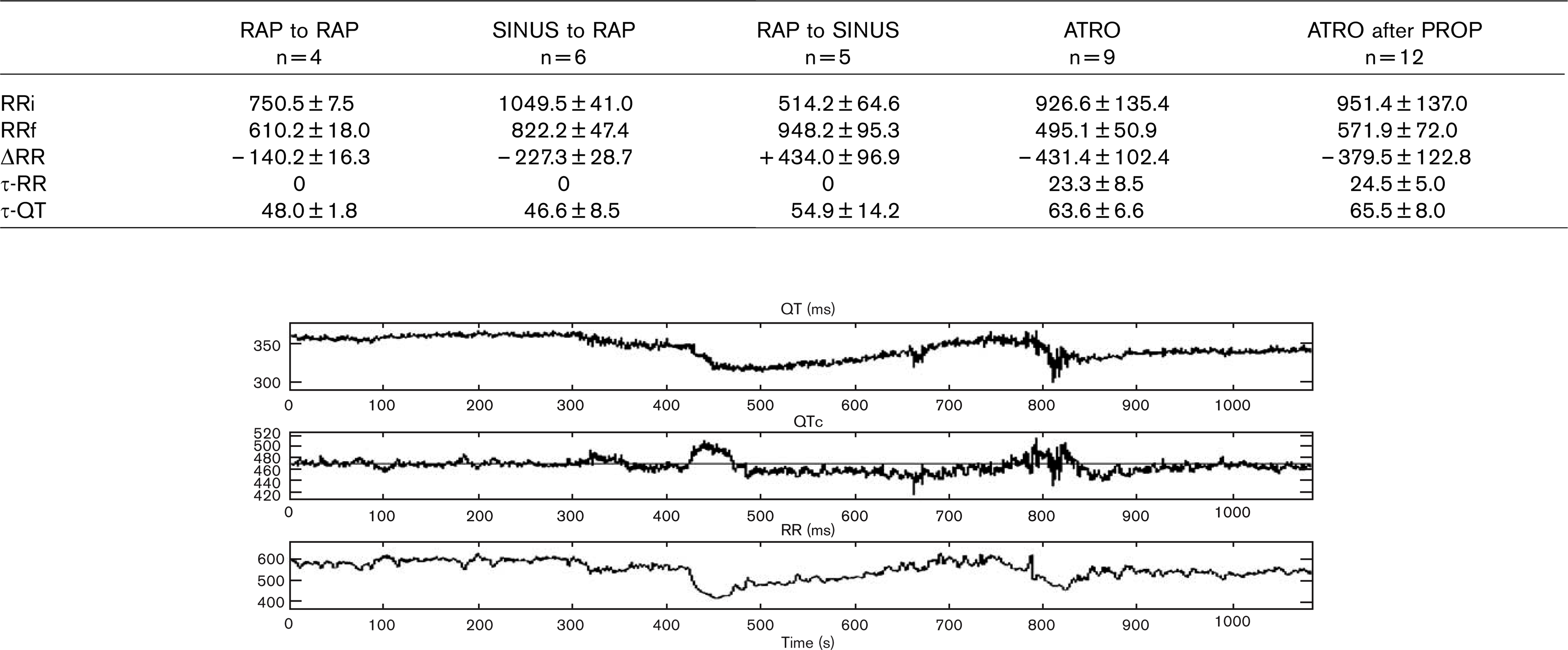
Objectives We report direct experimental estimations of time-constant in RR-QT system (τ-QT) using pharmacological or electrophysiological manipulations of heart rate (HR) that suggest that higher τ-QT may introduce in borderline subjects under current life stresses functional episodes of long QT condition.
Methods We estimated the true τ-QT in young (19–;20 years) healthy males who underwent step HR changes by right atrial pacing (RAP). Other day HR was manipulated using autonomic blockade by standard procedures (PROPranolol 0.2 mg/kg in 15 min, ATROpine 0.04 mg/kg in 2 min) to get apparent τ-QT while RR was decreasing according to τ-RR. All τs resulted from exponentials fitted on RR&QT beat-by-beat plots derived using published algorithms from thoracic ECGs digitized at 1ms (Codas, Dataq Instruments, USA).
Results Under RAP to RAP, “mid-signal” input RR-QT system behaves linearly: adjacent RR up-steps produce true τ-QTs close to 48 s (see the table; means +/− SD; i = initial; f = final; SINUS = sinus rhythm). On blockade, large signal inputs disclose RR-QT system's nonlinearity and possibly its speeding-up when vagal control gets away: difference of apparent τ-QT to τ-RR is fairly lesser than the true τ-QT. The protracted QT's adaptation to quick increases in HR may introduce in borderline QTc (Bazett corrected QT), otherwise healthy subjects functional episodes of long QT –; a syndrome associated with significant risk of sudden death. To illustrate it, the graph shows RR&QT&QTc dynamics over 1100 second (s) telemetric monitoring in a diabetic woman with baseline mean QTc = 469 ms: during QT's 45 s adaptation from supine to standing-up QTc remains fairly stable around 500 ms, mimicking a patent long QT condition; after recovery while sitting an emotional interaction propels again QTc towards long QT metrics over 50 s. In total this subject spent some 10% of a 17 minute epoch encompassing mild life stresses under long QT condition.
Conclusion Direct measurement of time-constant of RR-QT system suggests that borderline otherwise healthy subjects may experience episodically but not infrequently a patent long QT condition. Superposition of an adverse extra-stimuli (e.g. able to elicit atrial prematures) over such a vulnerable episode may conceivably lead to arrhythmic accidents. Prevention should be done either by extending specific anti-arrhythmic protection to borderline QTc subjects according to present normality thresholds or by down-grading those thresholds.
289 The dietary effect on the risk of CHD development
E. Abiyeva, Z. Kasumov, A. Bahshaliyev
Abdullaev's Research Institute of Cardiology, Baku, Azerbaijan
Complex study demonstrated close link between the diet and CHD development, particulary the main risk factors (dislipoproteinemia, arterial hypertension, smoking, excessive body mass). 167 males aged 20–;65 years were under observation. Ishemic occurrence among the observers was nearly 13,7%. Moreover, a definite CHD was 6,6%, possible –; 7,1%. While studying the dynamics of CHD we observed the increase of CHD with aging. Significant increase of body mass was also observed in the pts. With CHD along with the reduction of general dietary caloric content. Kettle's index (X + Q) in the pts. with CHD was 25,6 + 3,5%, in males with no CHD 26,8 + 3,7%. The fat in dietary structure of the observers was 38% of total caloric content, protein –; 15%, carbohydrates provided 45% of energetic value. We carried out a prospective study of dietary character during 3 years. The increase of CHD occurrence with the increase of general dietary caloric was observed. Moreover, for ration caloric content more than 3500 kcal CHD had almost each tenth male aged 40–;59 years having previously no CHD. The findings demonstrate that by means of 5 features (the increase of arterial pressure, Kettles index, smoking more than 30 cigarettes per day, high percentage of dietary caloric content due to carbongidrates, not drinking), we may properly classify 72% of males who will have no the development of CHD during 3 years, 57,3% of males who have the development of CHD.
294 Effects of valsartan on the hemodynamical parameters of diabetic patients with chronic heart failure
Zakhidova K. Kh.
Azerbaijan, Baku, Azerbaijan State Advanced Training Institute for doctors, 1st Internal Medicine and Functional Diagnostic Department
Objectives Patients with chronic heart failure (CHF) with type 2 diabetes mellitus are at high risk of cardiovascular death and recurrent hospital admissions. Renin-angiotensin –; system activity, a principal factor, determining ventricular remodeling after myocardial damage, is dependant on local angiotensin AT1 receptor (AT1 R) density. The latter is regulated by systemic factors acting independently from angiotensin 2nd concentration.
The aim of the study was to evaluate the effect of angiotensin 2nd receptor blocker Valsartan on the clinical picture, central and cardiac hemodynamics in diabetic patients with chronic heart failure. (CHF)
Methods 198 patients (100 men, 98 women with a mean age 63.2% ± 3.2% years) with type 2 diabetes mellitus and class 2nd and 3rd (NYHA Massitication) heart failure were examined. Mean left ventricular ejection fraction was 39.2% ± 1.6%, mean heart rate was 92% ± 1.4%, mean glucose blood level was 6.8% ± 0.3% mmol/l. All patients were treated ACE –; inhibitors, B- blockers and diuretics. After 24 weeks of treatment the ejection fraction improved to 44.8% ± 1.7%, though the clinical symptoms were still the same. After that valsartan titrated to 40 mg once daily was added to conventional treatment. The duration of treatment was 24 weeks. The clinical signs and the class of heart failure, heart rate, systolic and diastolic blood pressure were assessed in the repeated manner. Morfofunctional parameters of the heart (the dimension of left ventricle as well as the ejection fraction) were estimated by means of echocardiography and Doppler Echo with SSD-500 (Japan, “Aloka”) ultrasound scanner.
Results After 24 weeks repeated examination revealed the reducing of clinical symptoms of heart failure, the decrease of both breathlessness and fatigue, the increase of daily exercise tolerance. The class of heart failure improved from 3 to 2 in 92 patients (46.6%). Heart rate did not change significantly. Systolic blood pressure reduced by 10.7% and diastolic blood pressure by 7.5%. Echocardiography revealed the decrease of left ventricles dimension with ejection fraction increased by 7.5% after 24 weeks of treatment. Valsartan was well tolerated, adverse effects were not found.
Conclusion Angiotensin 2nd receptor blocker Valsartan has a beneficial effect on the clinical picture, hemodynamical and morfofunctional parameters of heart and improves life quality in diabetic patients with CHF.
297 Response to exercise training in adult cardiac serca2null mice
Madelene Ericsson
Dept of Circulation and Medical Imaging, DMF, NTNU, Olav Kyrres Gt 9, Trondheim NO-7489, Norway
Objectives Aerobic fitness, measured as maximal oxygen uptake (VO2max) is closely linked to cardiomyocyte contractile function and is associated with abundance and function of sarco-endoplasmic reticulum Ca2+ ATPase (SERCA2a) both in healthy and failing hearts. In a new mouse model of progressive heart failure, the Serca2 gene is deleted specifically in the myocardium in the presence of tamoxifen (SERCA2 KO, Serca2flox/flox (Tg(MCM)) mice. Whereas control mice (SERCA2 FF, Serca2flox/flox mice) are not affected. Our working hypothesis was that the cardiovascular response to exercise training is altered in SERCA2 KO mice.
Methods A four week exercise training program was set up to examine whether the training response in SERCA2 KO mice was different compared to control SERCA2 FF mice. Two weeks after tamoxifen treatment SERCA2 KO and SERCA2 FF control mice were either subjected to the training protocol or remained sedentary. Treadmill running was performed in intervals, 8 min at 85–;90% of VO2max, interspersed with 2 min at 40–;50%, 1 hour, 5 days a week for 4 weeks. Animals were monitored by echocardiography, VO2max measurements and postmortem analysis.
Results In SERCA2 FF mice training increased VO 2max during the training period. In contrast, VO2max declined after 2 weeks of exercise in SERCA2 KO animals, although the running speed was maintained. Echocardiographic analysis showed dilation of the left atrium in the SERCA2 KO phenotype. Increased heart and lung weights and pulmonary congestion, demonstrated the development of congestive heart failure in SERCA2 KO mice, independent of training. Despite the development of heart failure in SERCA2 KO mice, these animals were able to respond to training by hypertrophy of type I fibers in skeletal muscles. Mitochondrial activity, measured as oxygen consumption in isolated soleus muscle, was augmented in sedentary SERCA2 KO mice compared to sedentary SERCA2 FF controls.
Conclusions SERCA2 KO mice respond to exercise training. However, normal SERCA2 function in the heart seems essential to increase VO2max for adaptation to exercise training.
342 Spectral qt-lf tests positively as a pointer to ventricular sympathetic drive under hypobaric hypoxia
R. Negoescu, F. Boanta, S. Dinca-Panaitescu
Institute of Public Health; Institute of Aeronautical Medicine, Bucharest, Romania and York University, Toronto, Canada
Objectives Short-term hypobaric hypoxia (HH) is a recognized enhancer of dual (atrial and ventricular) sympathetic drive (S) to the heart. We aimed at the response of QT- LF spectral-power, an emerging index of ventricular S, to a two-step increase of dual S got by hypoxia and exercising under hypoxia in a baric room.
Methods 19 senior-pilots (41.3 mean +/−5.8 SD years old) and 21 candidate-pilots (19.0 +/−1.2) were studied during: 1) exposure to 5500 m hypobaric hypoxia while sitting, in the sequence: 1a) initial 7 min of adaptation to hypoxia (H); 1b) 7 min of recovery (E) just after 20 sec trend-mill run at 7.2 km/h; and 2) final 7 min baseline (B), while sitting and requested to relax, at “0 m altitude”. ECG traces (a type II lead, modified for T-wave visibility) were recorded at 1 ms resolution, using a real-time data acquisition system (CODAS, Dataq Instruments). Beat by beat RR and QT series were derived using published algorithms and spectral powers within LF band (0.05 to 0.15 Hz) were computed over the most RR-stationary 3 min epochs within the 7 min recordings as above.
Results and discussion Cluster analysis showed that mean RR possess the highest capability to aggregate individual response-profiles: 15 seniors and 9 candidates made-up the major cluster, featured by normal relationships triangle according to physiological expectance: H > E < B > H (p < = 0.05 between group averages). Spectral QT- LF cluster closely followed with 10 subjects in every normal cluster defined as: H < E > B < H; subjects in this cluster also showed a quasi-normal “triangle” for mean RR: H = E < B > H. Minor clustering deviating from normal triangles as above in candidates and seniors were interpreted by not-successful relaxation and exaggerated start-effects, respectively, both involving psychological side-effects. Seniors' QT- LF was higher than candidates' one (p < 0.02 Wilcoxon) during adaptation to hypoxia, as if an intensified ventricular S would match myocardial ageing. No consistent clustering was noticed for RR-LF.
In this and other studies spectral QT- LF appears related to sympathetic drive to ventricles that could or could not be synergetic with atrial drive as sensed by mean RR. Contrary to others, spectral RR-LF appears here as a biased cardiac sympathetic estimate; the predominant vagal carrier of sympathetic waving to the sinoatrial pacemaker reduces RR-LF to a misleading silence at heart rates over 100 beat/min. Study also suggests that during HH further sympathetic enhancement by exercise may address ventricles only.
Conclusion Study supports the emerging capability of QT-LF spectral power to index ventricular sympathetic control. Exposure to hypobaric hypoxia appeared to be in these subjects a psycho-physiologic rather than a purely physiologic test.
359 Leptin levels at patients with metabolic syndrome by criteria ATP 111 and IDF
O. Kulyk, O. Mitchenko, V. Romanov, L. Yakushko, I. Chulaevskaya, A. Logvinenko, G. Ilyushina
Institute of Cardiology, Kiev, Ukraine
Objectives Study leptin plasma concentrations at patients with hypertension depending on abdominal obesity by criteria ATP III(2001) and IDF(2005).
Methods 60 women and 45 men with hypertension were analyzed separately. Patients are divided in to clinical groups depending on a gender and waist circumference (WC). Women: 1gr.-WC < 80 cm (43,0 ± 6,8) years; 2gr.-WC 80–;88 cm(49,7 ± 4,3) years; 3gr.-WC > 88 cm(55,4 ± 1,2) years. Men: 1gr.-WC < 94 cm(45,6 ± 3,3) years; 2gr.-WC 94–;102 cm(49,6 ± 3,6) years; 3gr.-WC > 102 cm(56,5 ± 1,9) years. Used the following methods of research: body mass index (BMI), waist circumference (WC), monitoring blood pressure during 48 hours, echocardiography, fast levels of leptin, glucose, insulin, with definition of an index of HOMA. At an index of HOMA > 2,77 verified presence insulin resistance IR.
Results Leptin levels were increased in parallel with attributes of abdominal obesity and age. The highest leptin levels at women (31,5 ± 3,0 ng/ml) were determined in 3 gr., that is authentic (p < 0,01) differed from levels at patients 1gr. Similarly at men 3 gr. levels leptin (19,5 ± 3,3 ng/ml), it is authentic differed from levels (2,7 ± 0,6 ng/ml), (p < 0,01) at patients from 1 gr. The highest index of HOMA at women (4,5 ± 0,8) it is revealed in 3 gr., that authentically is higher than the index of HOMA (1,79 ± 0,5) at women 1gr. Such tendency was observed in men groups. Increase of leptin levels and HOMA in parallel increase of attributes of obesity and occurrence of attributes of IR has been received from the of registration metabolic syndrome (MS) according to IDF. MS was defined accordingly to ATP III criteria at female in 1gr.-0%, 2gr.–;33,3%, 3gr.–;85,7%; by criteria IDF revealing MS was defined in 1gr.–;0%, 2gr.–;83,3%, 3 gr.–;87,0%, accordingly. Among men's groups on criteria ATP III revealing MS was defined in 1gr.–;0%, 2 gr.–;14,3%, in 3 gr.–;54,8%; by criteria IDF in 1gr.–;0%, 2gr.–;43%, 3gr.–;64,5%, that also associated with growth of leptin levels.
Conclusions It has been received, that increase of abdominal obesity associates with authentic increase of leptin levels at achievement of IDF (2005) criteria, i.e. at WC > 80 cm for women, and WC > 94 cm for men. Thus, use criteria of MS by IDF (2005) in comparison with ATP III (2001) allows detection of high risk groups in 9,7% women and 15,7% men with abdominal obesity.
386 Aerobic capacity-dependent changes in cardiac gene expression
A. Bye, M.A. Høydal, O.J. Kemi, M. Langaas, V. Beisvåg, S.L. Britton, S.M. Najjar, Ø. Ellingsen, U. Wisløff
Norwegian University of Science and Technology, Trondheim, Norway; University of Glasgow, Glasgow, UK; University of Michigan, Ann Arbor, USA and Medical College of Ohio, Toledo, USA
Objectives Aerobic capacity is a strong predictor of cardiovascular mortality. Rats artificially selected for high aerobic capacity (High Capacity Runners) exhibit an inborn 30% higher oxygen uptake, increased left ventricular weight and improved myocyte contractility as compared to the Low Capacity Runners with low aerobic capacity.
By comparing the differences in cardiac gene expression between HCR and LCR animals, we can study patterns of gene expression related to aerobic capacity, which also may reflect expression patterns associated with cardiovascular disease. Processes and pathways with increased activity in LCR might represent potential drug targets of cardiovascular disease.
Methods Left ventricular RNA was isolated from 4 HCR- and 4 LCR rats, and gene expression was analyzed on microarrays.
Results Out of 28.000 screened genes, 1540 genes were differentially expressed between HCR and LCR. Of those, 618 were stronger expressed in HCR as compared to LCR, and 922 were stronger expressed in LCR versus HCR. The genetic signature of HCR was characterized by a stronger expression of genes associated with lipid metabolism, i.e. acyl-CoA dehydrogenase, very low density lipoprotein receptor, carnitine palmitoyltransferase 1 and mitochondrial acyl-CoA thioesterase 1, compared to LCR. These findings suggest a weaker lipid metabolism in LCR, perhaps due to a switch in energy substrate from fatty acids to glucose, an event that occurs in diseased hearts. This is supported by a more pronounced expression of glycolytic enzymes, like hexokinase 2 and 6-phosphofructo-2 kinase in LCR than in HCR.
Genes encoding proteins involved in cardiac contractility were differentially expressed by the two groups. HCR expressed more of the acetylcholine receptor and mitochondrial uncoupling protein 4, whereas LCR expressed more of the L-type calcium channels and tropomyosin 1.
A high expression of genes involved in myocyte growth was found in both groups. In LCR these genes were associated with fetal gene expression, indicating some stage of pathological hypertrophy. In HCR, collagen and matrix metallopepdidase 2 were among the highest expressed genes, suggesting elevated tissue turnover rate in HCR compared to LCR. HCR also exhibited a higher expression of insulin-like growth factor 2 and colony stimulating factor 1, which may reflect a low risk of obesity and atherosclerosis respectively.
Conclusions Inborn differences in aerobic capacity were detected in the cardiac gene expression pattern; reflecting differences in cardiac energy metabolism, cardiac contractility and regulation of left ventricular growth.
400 The role of training of patients with arterial hypertension in improvement of quality of secondary prevention
S. Malchikova, E. Poroshina
State Medical Academy, Kirov, Russia
Aim To study the influence of training in «School for the patient with arterial hypertension» (SAH) on compliance to changing of modified risk factors and quality of life (QL).
Materials and methods Results of training in 70 patients with arterial hypertension (AH) aged 46 to 73 years are analized. The complex clinical-tool inspection included the independent blood pressure (BP) monitoring, studied the way of life in various aspects on the special questionnaire, the estimation of the quality of life (Gladkov A.G. et al, 1982). The studies in SAH were spent in groups on 6–;10 persons by a method of lecture-discussion of actual problems for each participant. As the result there was the development of an active position and a positive motivation on treatment and preventive measures.
Results In 3 months after training knowledge of risk factors has increased from 45,5% up to 98,5%; frequency of the development of hypertensive crisises has decreased from 40,9% to 20,5%; 97,1% of the patients (before 45,7%) have controled BP daily; 92,9% (before training in SAH-42,9% only) have got the regular medicamentous treatment. 78,5% (before 4,2%) have observed the recommendations on secondary preventive measures. So, 31,3% of the patients have increased physical activity, 10%-have lowered the weight of a body on 5% from an initial level, 37,1%-have limited use of salt, 33,3% of smoking patients have stopped smoking, 74,3% of the persons have reduced use of animal fats. The result of these mesures is the achievement of target BP at 32,9% of patients (against 14,3% before training), the decreasing of emergency hospitalization in connection with aggravations of AH from 11,4% up to 2,3%.
Training of patients and rational hypotensive therapy have led to improvement of QL at 88,6% of the patients (from 7,8 ± 3,7 to 4,6 ± 2,3; p < 0,05). The improvement of QL of patients occurred due to reduction of complaints, increase of physical and daily activity, improvement of attitudes with associates on work and in family.
Conclusions Thus, the complex of treatment and prophylactic measures –; the training in SAH, the independent BP monitoring at home and the increased adherence to constant reception of preparations-promotes the adequate control on BP, overcoming of risk factors of disease and forming the healthy way of life of patients. It allows to low frequency of hospitalization and hypertonic crisises more than in 4 times and to increase QL of patients.
416 QT dispersion as a predictor of in hospital morbidity and mortality in patients with acute coronary syndrome
Hala Badran
Menoufiya University, 60 Said Street-Tanta, Tanta Gharbia 34, Egypt
ECG markers of abnormalities in repolarization have been proposed as a method for identifying patients who are at risk for sudden death. Analysis of QT dispersion (QTd) in the 12-lead surface ECG is under intense investigation in various patient populations. QTd increases in patients with acute coronary syndrome (ACS) and its subsequent shortening may reflect reperfusion after thrombolytic therapy or coronary intervention. However, its significance in early phase of ACS during hospitalization is not well tested.
The aim of the present study was to evaluate the prognostic value of QTd and its rate corrected values (QTcd) in prediction of in hospital cardiac events in patients with ACS.
Methods We prospectively enrolled 60 patients (age 54 ± 9.6) with ACS and no prior heart attacks and no bundle branch block. The values of QTd and QTcd were measured manually on 12-lead standard ECGs. QTd and QTcd were calculated on admission, 24 hours after admission and before hospital discharge.
Results QTcd was significantly increased in patients with cardiac events (death, heart failure, shock, leathal arrhythmias) during admission, 24 hours after and before discharge(88 ± 36, 141 ± 56, 68 ± 29 versus 62 ± 25, 84 ± 28, 49 ± 23 ms P < 0.01, 0.001, 0.05 respectively,). The prolonged QTd > 95 ms and QTcd > 119 ms showed a significantly higher rate of in-hospital cardiac events (RR = 2.50 95% CI = 1.47–;4.25) and RR = 2.89, 95% CI = 1.64–;5.08 respectively. In addition to age, hypotension, hypoperfusion and impaired systolic function, increased QTc and QTcd are associated with a greater incidence of hospital mortality (12% vs. 0%, p < 0.01). It remained an independent predictor of adverse cardiac events on multivariate analysis P < 0.01.
Conclusion A significant prolongation in QT dispersion may provide an additional electrocardiographic index for early in-hospital serious cardiac events in patients with ACS.
Key words QT dispersion-mortality predictor-acute coronary syndrome
420 Impaired microvascular reactivity in patients at high cardiovascular disease risk
M. Fornal, M. Dubiel, M. Stompór, J. Królczyk, T. Grodzicki
Department of Internal Medicine and Gerontology, Collegium Medicum, Jagiellonian University, Kraków, Poland; Department of General Medicine and Geriatrics, The University Hospital, Kraków, Poland
Objectives By measuring the skin microcirculatory blood flow in patients with cardiovascular disease (CVD) risk factors, we have investigated the relationship between microvascular reactivity (endothelium-dependent responses) and the severity of CVD risk.
Methods The study group consisted of 53 patients (average age 57.7) with the presence of at least one CVD risk factor. Among all patients, 37 suffered from essential hypertension (20 of which were under antihypertensive treatment), 17 had Type 2 diabetes mellitus, 35 were diagnosed with hypercholesterolemia, 14 were smokers and 25 had high value of body mass index (BMI ≥ 25 kg/m2). For all individuals, data on the serum concentration of fasting glucose, total cholesterol, low density lipoprotein, high density lipoprotein, as well as the measures of systolic and diastolic blood pressure were collected.
For each person, forearm skin microcirculatory blood flow was assessed using Laser Doppler Flowmetry. The examination was performed in 4 stages: a) measurement of the baseline blood flow (MFb)-3 minutes, b) arterial occlusion-3 minutes, c) evaluation of the dynamic parameter in hyperemic reaction, such as hyperemic peak flow (PF%), d) assessment of the mean blood flow during vasodilation reaction caused by heating up to 44°C (MF44)-8 minutes. The data were analyzed using the ANOVA test and the multi-variable regression method.
Results Even though the parameters of microvascular reactivity did not show significant correlation with any of the CVD risk factors when considered individually, significant changes of these parameters were found when taking into account the number of coexisting risk factors. In patients with 2 or more CVD risk factors, a significant decrease of hyperemic peak flow PF%: 815 vs. 1255%, p < 0.009, as well as a significant decrease of thermal hyperemic flow MF44: 173 vs. 306, p < 0.005, were observed as compared to individuals with only one CVD risk factor. These results were confirmed by the multi-variable regression analysis (including gender, age, use of medications), which identified the number of coexisting CVD risk factors as the only statistically significant independent parameter influencing the value of PF% (β = −145, p < 0.05) and MF44 (β = −41, p < 0.05).
Conclusions Our data agree with a hypothesis that the magnitude of alteration of endothelial dysfunction, measured with vasodilatatory responsiveness in microcirculation, reflects the severity of CVD risk. Consequently, the measurement of this alteration may offer a valid, noninvasive test of the degree of CVD risk.
439 Effect of endogenous hydrogen peroxide on circulating stem cells with endothelial progenitor capacity in mice
T. Suvorava, Stephanie Kumpf, Volker Adams, Rainer Hambrecht, Georg Kojda
Institut fuer Pharmakologie und klinische Pharmakologie, Heinrich Heine University, Duesseldorf, Germany; Belarusian Medical State University, Physiology Department, Minsk, Belarus; Heart Center Leipzig, Universitaet Leipzig, Germany
Bone marrow-derived endothelial progenitor cells (EPCs) characterized by coexpression of vascular endothelial growth factor receptor 2 (Flk-1) and haematopoietic stem cell markers (CD34 and CD133) play an important role in endothelial repair, postnatal angiogenesis and vasculogenesis. The amount of circulating EPCs inversely correlates with the number of cardiovascular risk factors and is reduced in cardiovascular disease states associated with increased vascular oxidative stress.
Objectives The aim of the study was to determine whether hydrogen peroxide, an important component of vascular oxidative stress influences the number of circulating EPCs.
Methods Transgenic mice with a vascular-specific overexpression of catalase and reduced vascular levels of hydrogen peroxide (cat++) and their transgene negative littermates (catn) were assigned to a sedentary group and a group undergoing moderate exercise training (15 m/min, 30 min, 5 days a week, 3 weeks). The number of EPCs in peripheral blood was analysed by Fluorescence-Activated Cell Sorting (FACS) with the anti-mouse CD3, CD34, CD133 and Flk-1 antibodies.
Results FACS analysis of cat++ and catn peripheral blood revealed no effect of catalase overexpression on the basal level of circulating EPCs counted as CD3 negative and CD34/Flk-1 and CD133/Flk-1 double positive cells. Inhibition of catalase by 3 week treatment with catalase inhibitor aminotriazole (670 mg/kg dissolved in drinking water) strongly reduced the number of endothelial progenitors in blood of sedentary catn, and to the lesser extend also in cat++ (P < 0.05, n = 5–;8). Three weeks of subischemic training failed to mobilize EPCs in catn confirming earlier reports showing that ischemic stimuli are important for the exercise-induced EPC release. When mice with vascular specific overexpression of catalase were subjected to the same exercise protocol, the number of circulating EPCs was strongly increased (P < 0.05, n = 4). Furthermore, exercise-induced increase of circulating EPCs was completely reversed in cat++ treated with the aminotriazole.
Conclusions These data suggest that endogenous hydrogen peroxide inhibits exercise-induced mobilization of EPCs. Thus, hydrogen peroxide appears to be a component of vascular oxidative stress which likely contributes to the impairment of important stem cell-induced endogenous vascular repair mechanisms in cardiovascular disease.
445 Pentaerythrityl tetranitrate and overexpression of endothelial nitric oxide synthase upregulate extracellular superoxide dismutase in mice
T. Suvorava, V. Balz, M. Oppermann, Z. Hassan-Oglu, M. Bas, G. Kojda Institut fuer Pharmakologie und klinische Pharmakologie, Heinrich Heine University, Duesseldorf, Germany; Belarusian Medical State University, Physiology Department, Minsk, Belarus; Hals-, Nasen- und Ohrenklinik, Universitaetsklinikum, Duesseldorf, Germany
Treatment with the NO-donor pentaerythrityl tetranitrate (PETN) reduces the progresssion of atherosclerosis and of endothelial dysfunction and decreases the oxidation of LDL in rabbits. Both effects have been linked to decreased vascular superoxide production but the underlying molecular mechanism remains unknown.
Objectives We aimed to investigate the effect of PETN and of over-expression of endothelial nitric oxide synthase (eNOS++) on expression and activity extracellular superoxide dismutase (ecSOD) in mice.
Methods C57BL/6 mice were randomly divided into two (n = 7 each) and received either placebo (PETN-0), 6 mg (PETN-6), 60 mg (PETN-60) or 300 mg (PETN-300) PETN/kg BW/day for four weeks. eNOS++ mice with 3.5 fold higher eNOS-expression and increased vascular NO-generation (49.4 ± 19.7 vs. 19.1 ± 8.7 pmol NO/μg protein/min) were generated using endothelial-specific Tie-2 promotor. Expression of ecSOD was determined in lung tissue by real time-PCR (rt-PCR) and westernblot. CuZn-SOD was removed from lung cytosol by chromatography using concanavalin A-substituted sepharose. Then ecSOD-activity was measured as the inhibition of cytochrome C reduction in the presence of MnSOD-inhibiting concentrations of cyanide.
Results There was no effect of PETN treatment on ecSOD mRNA in all experimental groups (n = 7, P > 0.05) as evidenced by rt-PCR. Likewise, ecSOD mRNA level was the same in the lungs of eNOS++ (10.3 ± 2.2 arbitrary units, n = 6) and eNOSn (11.6 ± 2.3 arbitrary units, n = 6). In contrast, ecSOD protein expression was increased by 2.2 times in PETN-6 (P < 0.001) and 2.3 times in PETN-60 treated animals (p < 0.001) but not in PETN-300 (1.4-fold increase, P > 0.05), each compared to PETN-0. Similarly, western blots of eNOS++ lung cytosols showed an increase of ecSOD protein level to 160 ± 23% as compared to eNOSn (n = 4, P < 0.05). The elevation in ecSOD protein expression was accompanied by an increase in ecSOD enzymatic function. For example, treatment with 60 mg/kg/day PETN strongly elevated ecSOD activity to 434.2 ± 31.7 U/mg protein as compared to PETN-0 (252.5 ± 30.7 U/mg protein, P < 0.01). Likewise, there was a significant increase of ecSOD activity (729 ± 32 U/mg protein) in eNOS++ compared to eNOSn (592 ± 32 U/mg protein, P < 0.05).
Conclusions These data suggest that increased expression and activity of ecSOD contributes to the previously shown antiatherosclerotic effects of PETN in vivo. Furthermore, these actions are likely induced by an increased bioavailability of vascular NO as evidenced by the results obtained in eNOS++. Thus, upregulation of ecSOD may represent one of the mechanisms underlying antioxidative effects of PETN.
456 Role of trophological status in patients with severe chronic heart failure in defining the level of physical exertion in physical training
S. Boldueva, E. Belyaeva, D. Parneva
St Petersburg State Mechnikov Medical Academy, St Petersburg, Russia
Objectives Severe chronic heart failure (CHF) has been an absolute contraindication for physical rehabilitation. Main reasons for decreased tolerance to physical exertion in CHF are disturbed peripheral microcyrculation, lung ventilation and changes in skeletal muscle structure and metabolism. Insufficient absorption in CHF leads to decreased muscle mass. This decrease is quite difficult to identify. It is most hidden by present subcutaneous fat, which makes it unrecognized for a long time.
Aim Investigation of trophological status in patients with CHF III-IV functional class (NYHA).
Methods 42 patients were recruited into the study. 1st group consisted of 24 patients with CHF III (Left ventricular ejection fraction (LVEF) 37.8 ± 1.1%), 2nd group –; 18 patients with CHF IV (LVEF 31.5 ± 2.1%). Trophological status estimation was performed according to the WHO standards: anthropometric index (estimation of subcutaneous fat fold above triceps, calipermetric method of Durnin-Womersley), functional tests (6-minutes test), laboratory analyses (total blood protein, lymphocytes count). All patients were given standard medications in adequate doses.
Results Measurement of subcutaneous fat fold indicated that in the 1st group 33.3% patients had high nutrition, 45.8% - normal, 20.9% - low nutrition, in the 2nd group −38.9% had high nutriton, 33.3% - normal, 27.8% - low nutrition. When the anthropometric index was calculated and compared to normal values it was found that all patients had decreased muscle mass. This decrease was equal to 8.3 ± 2% in the 1st group and 19.4 ± 3% in the 2nd group, p < 0.05. The mean distance in 6-minutes exertion test was 202 ± 18.3 m in the 1st group, 144.2 ± 5.1 m in the 2nd, p < 0.05. Correlation between muscle mass and 6-minutes exertion test was moderate. The results of laboratory analyses were the following: total protein was 68.2 ± 1.1 g/l in the 1st group and 58.1 ± 2.3 g/l in the 2nd group (p < 0.05), lymphocytes count was normal in the 1st group (1.89 ± 0.01 × 10⁹/l) and low in the 2nd group (1.65 ± 0.03 × 10⁹/l).
Conclusions We conclude that the 6-minutes exertion test in patients with severe CHF depends on the trophological status, which should be considered when defining the level of physical exertion in physical training performed in this group.
506 In vivo effects of pentaerythritol tetranitrate on expression and activity of vascular soluble guanylyl cyclase
Vu Thao-Vi Dao, Marc Oppermann, Murat Bas, Margret Wuttke, Tatiana
Suvorava, Georg Kojda
Institut fuer Pharmakologie und klinische Pharmakologie, Heinrich Heine University, Duesseldorf, Germany; Hals-, Nasen- und Ohrenklinik, Universitaetsklinikum, Duesseldorf, Germany; Belarusian Medical State University, Physiology Department, Minsk, Belarus
Previous data obtained in smooth muscle cells and organ bath studies have suggested that prolonged or high dose treatment with NO-donors desensitizes vascular NO signal transduction, e.g. by downregulation of the central enzyme soluble guanylyl cyclase (sGC). Such a desensitization would also impair endothelial function. Thus, this negative feedback loop might be dangerous in cardiovascular disease, in particular during treatment with nitrates.
Objectives We investigated whether prolonged in-vivo treatment with increasing doses of the NO-donor pentaerythritol tetranitrate (PETN) or overexpression of endothelial nitric oxide synthase (eNOS++) has any influence on the sensitivity of NO/cGMP-signaling.
Methods 60 C57BL/6 mice were fed for 4 weeks with either placebo (PETN 0) or a diet containing 6 (PETN 6), 60 (PETN 60), or 300 (PETN 300) PETN/kg BW/day. sGC protein levels and activity were determined in lung cytosols by westernblot and S-nitroso-N-acetyl-D,L-penicillamine (SNAP, 1 μM-1 mM) stimulated conversion of [α-32P]-GTP to [α-32P]-cGMP. Vasorelaxation to NO was examined using SNAP (1 nM–;10 μM). Similar experiments were performed with eNOS++.
Results The plasma concentrations of PETN metabolites directly correlated to the oral dose of PETN demonstrating effective absorption. Western blot analyses of sGC-α1 protein standardized by total protein revealed expressions of 148.7 ± 26.6% (PETN-6), 145.1 ± 32.7% (PETN-60) and 82.8 ± 29.0% (PETN-300, each n = 8) which were not significantly different from PETN-0 group (P = 0.0961, ANOVA). Likewise, expression of sGC-β1 protein showed no significant difference: 137.6 ± 19.7% (PETN-6), 100.9 ± 22.9% (PETN-60) and 101.1 ± 18.5% (PETN-300, n = 8, P = 0.3709, ANOVA). The maximal activities of sGC in response to 1 mM SNAP in lung cytosols (in pmol cGMP/mg protein/min) were 4,179 ± 946 in PETN-0, 4,263 ± 208 in PETN-6, 4,209 ± 450 in PETN-60 and 3,703 ± 279 in PETN-300 (each n = 7, P = 0.8809, ANOVA). Likewise, the pD2-values (halfmaximal effective concentration in –;log M) for SNAP in PETN-6 (3.84 ± 0.07), PETN-60 (3.89 ± 0.15) and PETN-300 (3.73 ± 0.14) were identical to PETN-0 (3.86 ± 0.31, P = 0.9412, ANOVA). The NO-dependent aortic relaxation and pD2-values of SNAP were also similar in PETN-0 (6.85 ± 0.08), PETN-6 (6.82 ± 0.06), PETN-60 (6.81 ± 0.07) and PETN-300 (6.84 ± 0.09, P = 0.7217, ANOVA). Transgenic mice with a vascular-specific eNOS-overexpression showed a strong blood pressure reduction sensitive to eNOS-inhibition but again no change in sGC protein levels. Although sGC activity and phosphorylation of vasodilator-stimulated phosphoprotein was largely reduced, SNAP-induced and endothelium-dependent vasodilation were unchanged.
Conclusion These data refute the hypothesis that NO plays a significant role in regulation of vascular sGC expression in-vivo. Thus, even long-term high dose treatment with PETN does not impair the efficacy of the NO/cGMP pathway.
524 Asymptomatic ischemic left ventricular dysfunction: cellular remodelling
E. Stalioraityte, D. Pangonyte, R. Žiuraitiene, J. Palubinskiene, D. Kazlauskaite
Laboratory of Cardiac Pathology, Institute of Cardiology, Kaunas University of Medicine, Kaunas, Lithuania
Objectives Left ventricular dysfunction begins with each myocardial injury or stress, and is a progressive process even in the absence of a new identifiable insult to the heart. The prevailing manifestations of its progression are left ventricular myocardial hypertrophy, chamber dilatation, increased sphericity –; processes referred to as cardiac remodeling. Myocardial remodeling is the major mechanism for chronic heart failure (CHF) and death in ischemic heart disease (IHD) patients. Much is known about left ventricular remodeling after acute myocardial infarction. As ischemia has been proved to be one of the triggers of cardiac remodeling, the state of left ventricular structural components in patients with chronic IHD acquires important clinical significance. Our aim was to examine the state of major myocardial components –; cardiomyocytes and fibrous collagenous matrix of chronic IHD patients without definite myocardial infarction and CHF.
Methods We determined left ventricular mass (by weighing), endocardial surface area (by computerized planimetry), histomorphometric cardiomyocyte dimensions: length, diameter, cross–;section area and volume fraction of interstitial collagenous matrix (by computerized image analysis system “Quantimet 520”) in autopsied males who had died unexpected suddenly (within 6 h) due to the first acute attack of IHD without CHF and any other pathology, except ischemia.
Results Left ventricular mass was found to be increased by 25.3%, endocardial surface area –; by 27.0%, cardiomyocyte length, diameter and cross–;section area –; by 8.3, 7.6 and 16.2 percent, respectively, fibrillar collagenous volume fraction –; by 1.6 times, in comparison with the controls (fatal accident cases). All the parameters were related to the severity and extent of stenotic coronary artery lesions.
Conclusions The developing left ventricular eccentric-type hypertrophy and myocardial interstitial fibrosis may by recognized as cellular remodeling associated with asymptomatic left ventricular dysfunction in chronic IHD patients.
538 Physiologic, but not pathologic hypertrophy preserves transverse tubule density in cardiac myocytes
O.J. Kemi, N. MacQuaide, M.A. Hoydal, P.M. Haram, G.L. Smith, O. Ellingsen, U. Wisloff
Institute of Biomedical and Life Sciences, University of Glasgow, United Kingdom; Department of Circulation and Medical Imaging, Norwegian University of Science and Technology, Trondheim, Norway; Department of Cardiothoracic and Vascular Surgery, University Hospital of North Norway, Tromso, Norway
Objectives The cardiac myocyte adapts to stress by cellular hypertrophy. However, the type of stress (physiological or pathophysiological) on the myocardium has important consequences for remodeling and the contractile function of the myocyte. Previous studies have indicated that in parallel with cellular hypertrophy, the transverse tubule (TT) system is also remodeled. In general, cellular hypertrophy associated with pathologic remodeling is accompanied by a reduction of TT-density. In this study, we examined the effects of exercise training and the associated physiological remodeling on TT-density.
Methods Adult Sprague-Dawley rats were exercised for 8 weeks on a daily treadmill interval training program that increased exercise capacity by ∼50%. Isolated cardiomyocytes were stained with Di-8-ANEPPS to image the TT-system with confocal microscopy (ex488 nm-em ≥ 505 nm).
Results Exercise caused an increased cardiomyocyte length (sedentary 101 ± 3 μm vs. trained 112 ± 5 μm); relative TT-density remained constant (sedentary 0.2 ± 0.04 vs. trained 0.21 ± 0.04). In a separate group of rats, cell size and TT-densities were examined 12 weeks after myocardial infarction (MI). Cell length increased (sham 101 ± 3 μm vs. MI 130 ± 7 μm), but TT-density decreased (sham 0.2 ± 0.04 vs. MI 0.1 ± 0.01). Exercise training from weeks 4–;12 after MI reduced the pathologic hypertrophy of the cell (MI sedentary 130 ± 7 μm vs. MI trained 117 ± 4 μm). However, TT-density remained lower, although a modest, insignificant trend towards restoration was observed (MI sedentary 0.1 ± 0.01 vs. MI trained 0.13 ± 0.03).
Conclusions The TT-system is sustained in cardiomyocytes during physiologic, but not pathologic hypertrophy. Furthermore, exercise training can reduce pathological hypertrophy but does not appear to restore TT-density.
539 The importance of electrocardiography when screening for inherited cardiac diseases in the young
M. Wilson, S. Basavarajaiah, G. Whyte, S. Cox, M. Loosemor, S. Sharma CRY Centre of Sports Cardiology, Olympic Medical Institute, Harrow, United Kingdom, Kings College Hospital, Denmark Hill, London, UK SE5 9RS, English Institute of Sport, Olympic Medical Institute, Harrow, United Kingdom
Objectives The International Olympic Committee (Dec 2004) and the European Society of Cardiology (Feb 2005) have released consensus statements recommending a common screening protocol based on a 12-lead ECG, personal/family history and physical examination. Implementing a screening programme of such magnitude may place a financial burden upon some sporting organisations, with controversy from the American Heart Association, refusing to implement an ECG based screening policy. This study tests the efficacy of resting 12-lead ECG alongside symptoms, family history and physical examination.
Methods One thousand and seventy four National and International junior athletes (15.8 ± 0.71 years, range 10–;27) and 1646 physically active school children (16.1 ± 2.12 years, range 14–;20) were screened using personal and family history questionnaires, physical examination and resting 12-Lead ECG.
Results The statistics comparing junior athletes from school children participating in the cardiovascular screening programme are tabulated below.
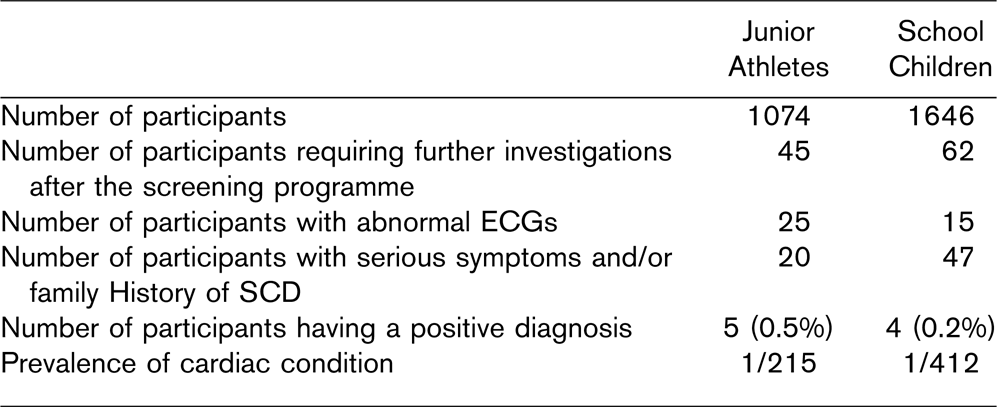
Details of the 9 participants with a positive diagnosis of a cardiac disorder that have the potential of causing sudden cardiac death (SCD) are as follows.
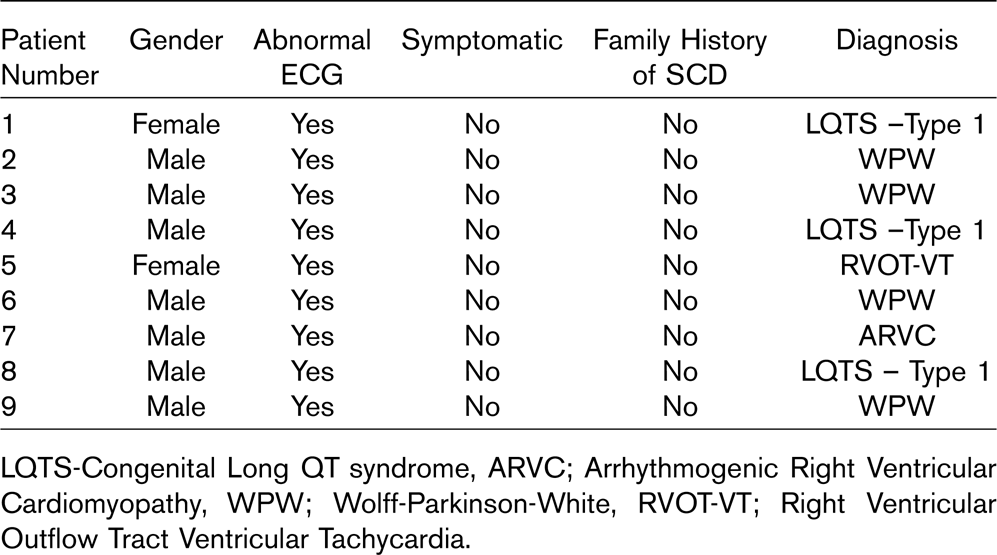
LQTS-Congenital Long QT syndrome, ARVC; Arrhythmogenic Right Ventricular Cardiomyopathy, WPW; Wolff-Parkinson-White, RVOT-VT; Right Ventricular Outflow Tract Ventricular Tachycardia.
None of the participants diagnosed with a cardiac disorder were symptomatic or had positive family history of the condition or premature SCD.
Conclusion Family history and symptoms questionnaires alone are inadequate in identification of individuals with cardiac condition that are associated with SCD. All 9 participants with a positive diagnosis would not have been identified with just symptom enquiry and cardiovascular examination, implying that a 12-lead ECG is paramount when screening for cardiac conditions.
573 Left ventricular performance evaluated by TEI index in patients with mitral valve prolapse: Doppler tissue imaging study
M. Soliman, A. Serag, A. Emara, W. Haddad, S. Shalaby
Cardiology Department, Menoufyia University, Shebin El-Kom –; Egypt
Objective Mitral valve prolapse (MVP) is a common cardiac abnormality with a variety of clinic and echocardiographic findings. Doppler tissue imaging (DTI) is a simple technique that can be used for assessment;of both global and regional LV function with high temporal and spatial resolution. The aim of this study was to assess LV performance in patients with mitral valve prolapse with DTI derived index; TEI index.
Methods The present study enrolled 40 patients with MVP (13 males & 27 females), with a mean age = 23.9 ± 4.3 years. The control group included 25 healthy individuals (8 males & 17 females) with a mean age of 21.8 ± 4.8 years. Both groups were comparable as regards age & sex.
All were subjected to conventional M-mode & two dimensional echo Doppler and tissue Doppler examination.
In apical four & two chamber views, pulsed-wave DTI was used to assess the myocardial velocities in basal, mid: septal, lateral, anterior & inferior segments as well as septal lateral, anterior, inferior aspects of mitral annulus, anterolateral & posteromedial papillary muscles.
The following indices were measured: Peak systolic velocity (S wave), cm/s, early filling velocity (E wave), cm/s, late filling velocity (A wave), cm/s, isovolumetric relaxation time (IVRT) ms, isovolumetric contraction time (IVCT) ms, contraction time (CT) ms, TEI index (IVCT + IVRT divided by CT).
Results MVP group had significantly higher aortic root, LA dimension, anterior leaflet length, thickness (posterior displacement) and mitral annular diameter than control group (P < 0.001).
MVP group had significantly higher IVRT & IVCT in basal mid: septal, lateral, anterior & inferior segment as well as both papillary muscles than in control group.
MVP group was then subdivided into two subgroups:
The subgroup A had significantly higher IVCT in all segments, also higher but not significant IVRT compared to subgroup B. As regards TEI index; patients with MVP had significantly higher index than control & subgroup A had significantly higher index than subgroup B and control group (P < 0.001).
TEI index was significantly higher in MVP patients presented by palpitation than those without palpitation and was non different in those presented by chest pain and those without.
Conclusion patients with MVP have significantly higher TEI index than healthy control individuals denoting subtle LV dysfunction particularly those with significant MR.