







Abstract
The current study explores how the failure of innovative projects and positive organizational performance influence specific content within narratives. Building on theoretical perspectives regarding the sensemaking of failure events and emotions, we develop and test a performance event model of narratives. Using computer–aided text analysis of annual reports, we found that project failure rates have a positive relationship with narratives’ negative emotional content. Additionally, narratives’ positive emotional content is associated with reduced negative emotional content. Finally, positive organizational performance magnifies the negative association between narratives’ positive and negative emotional content. We discuss the implications for these results on the literatures regarding the failure of entrepreneurial projects, narratives, and emotions.
“We were disappointed that in late December the European Medicines Agency (‘EMA’) gave a negative opinion on the application [for a new drug to be made commercially available to treat brain cancer].” (Ark, 2009, p. 7)
Entrepreneurial initiatives within the corporate setting often involve higher risk or uncertainty than other projects (Deeds, DeCarolis, & Coombs, 2000) and therefore carry a greater likelihood of project failure (Corbett, Neck, & DeTienne, 2007). This is particularly true of innovative efforts, such as new product development (NPD) initiatives, undertaken by science–based organizations (Pisano, 2010). Science–based organizations are founded in areas in which basic technological feasibility is an important concern, so failure in innovative efforts becomes the norm rather than the exception (Pisano). Because of this, these organizations have a greater need to be able to effectively interpret, understand, and make sense of failures and to apply the knowledge they gain from such experiences to subsequent activities. Project failure can have beneficial effects. For example, it can facilitate a deeper understanding of the firm's overall situation (Popper & Lipshitz, 2000) and provide a source of learning that can ultimately improve firm performance (McGrath, 1999).
However, research also indicates that experiencing elevated levels of project failure can have decidedly negative effects as well (Shepherd, Wiklund, & Haynie, 2009) and that experiencing high levels of project failure can produce downward performance spirals (Lindsley, Brass, & Thomas, 1995) and eventually result in withdrawal from exploratory activities in lieu of less uncertain endeavors (March, 1991). Indeed, researchers have shown that high levels of project failure produce negative emotions for individuals involved in the failed projects similar to grief–like symptoms in those who have lost a loved one and that these emotions can obstruct learning (Shepherd, Patzelt, & Wolfe, 2011). In turn, these individual emotions can be transmitted to other members of the organization via a number of different mechanisms (e.g., emotional contagion [Hatfield, Cacioppo, & Rapson, 1992], vicarious affect [Bandura, 1986], affective influence [Ashkanasy & Tse, 2000], etc.), resulting in the formation of collective emotions, which influence work outcomes (Barsade, 2002; Dasborough, Ashkanasy, Tee, & Tse, 2009; Hatfield, Cacioppo, & Rapson, 1994). Given both the opportunity to learn from project failure as well as the obstacles to learning generated by project failure, it is important to understand how organizations make sense of project failure to increase the potential for project success in the future and to ultimately enhance performance. In this study, we specifically investigate how the rate of NPD failure is related to specific content dimensions included in an organization's narrative and how the modification of certain aspects of the narrative as a result of performance events reflects the sense–making of those events.
There is a well–established basis for using narratives in understanding organizational sense–making (Brown, Stacey, & Nandhakumar, 2008) and a growing movement interested in investigating messages contained within narratives from an entrepreneurial perspective (Fuller & Tian, 2006; Lounsbury & Glynn, 2001). For example, Dutton and colleagues found that narratives can be used as a mechanism for accomplishing compassion organizing within organizations (Dutton, Worline, Frost, & Lilius, 2006). This goes along with a growing trend in organizational research to utilize a social constructionist framework (Boyce, 1996) to justify investigating emotions contained within narratives (Brown, Gabriel, & Gherardi, 2009). However, although it is widely acknowledged that narratives can contain specific emotional content and the importance of narratives for sense–making purposes has been well established, few attempts have been made to investigate how narratives’ specific emotional aspects are altered as a result of key events for potential sense–making purposes. We attempt to address these gaps by focusing on the following research question: how are narratives altered by negative and/or positive performance events?
In developing and testing our performance event model of narratives, we make three contributions to existing streams of research. First, our primary contribution relates to corporate entrepreneurship, which at its foundation is built upon organizational innovation (Ireland, Kuratko, & Morris, 2006), involves significant levels of uncertainty or risk (Deeds et al., 2000), and often results in failure (Corbett et al., 2007). Understanding and making sense of such failure with regards to corporate entrepreneurship is an important process for organizations to undertake to avoid similar failure in future endeavors (Luscher & Lewis, 2008). When used for sense–making purposes, organizational narratives can provide insights into this process. Specifically, narratives are an important mechanism through which organizations achieve strategic management (Barry & Elmes, 1997), and evidence suggests that narratives can be employed in an attempt to achieve a number of important outcomes, including defining market boundaries (Santos & Eisenhardt, 2009), conveying an organization's entrepreneurial orientation (Short, Broberg, Cogliser, & Brigham, 2010), and obtaining important organizational resources (Fuller & Tian, 2006; Lounsbury & Glynn, 2001; Martens, Jennings, & Jennings, 2007). However, although research has focused on the potential consequences that employing narratives might produce (Downing, 2005; Garud, Dunbar, & Bartel, 2011), relatively less attention has been given to the antecedents of narrative content. We attempt to address this gap in the current study. By gaining a more complete understanding of how specific narrative elements are altered as a result of performance events (including failure) in the presence of conjointly influential factors, we can gain a better understanding of variance in narratives.
Additionally, past research has treated failure as a relatively homogeneous situation of “deviation from expected and desired results” (Cannon & Edmondson, 2001, p. 162) without taking into consideration factors that might alter how failures are interpreted and understood and, thus, communicated. For science–based firms, NPD failure is often the by–product of engaging in higher levels of research and development (R&D) and can exist side by side enhanced organizational performance (Cheng & Bolon, 1993; Del Monte & Papagni, 2003; Henderson & Cockburn, 1994). This increase in performance could impact how failures are presented within narratives. By understanding how these factors interact, we can provide greater insight into how narratives reflect continued engagement in entrepreneurial activities in the face of failure for NPD efforts.
Second, although narratives have been linked to sense–making (Brown et al., 2008) and have been shown to contain specific emotional content (Frost, Dutton, Worline, & Wilson, 2000), relatively little research examines how narratives’ emotional content is reflective of performance events. Additionally, there has been a recent call for additional investigation into the process of collective sense–making (Ucbasaran, Shepherd, Lockett, & Lyon, 2013). This study attempts to address both of these gaps. We build on existing studies examining how organizations use narratives for specific entrepreneurial processes (Fuller & Tian, 2006; Martens et al., 2007) and extend this line of research to specifically examine how narratives are altered in response to performance events. Additionally, while there is no shortage of investigations on profitability (Hill & Snell, 1988; Russo & Fouts, 1997), the majority of these studies investigate this factor as the dependent variable. Because of the nature of the sample we utilize (i.e., annual reports), the firm's profitability is determined prior to the construction of the narrative, and this inherent chronological sequencing allows us to examine profitability as an antecedent to the emotional content of the organizational narrative.
Finally, we contribute to the existing literature on the role emotions play within organizations. From an organizational perspective, emotions have been shown to influence a number of key organizational aspects such as organizational attitudes toward leaders (Dasborough et al., 2009) and can potentially lead to upward performance spirals (Fredrickson, 2003). Additionally, emotions have been shown to produce substantial influence on strategy implementation (Huy, 2011). However, there is relatively little work investigating how different emotions are configured within the same narrative to present a plausible representation of past events. In the current study, we focus on how certain performance events can influence narrative content and modify the association of narratives’ positive and negative emotional content in the hopes of gaining a better understanding of how performance events influence sensemaking.
Performance Events and Narratives
Building on theoretical perspectives of emotions in the literature on learning from failure (Cannon & Edmondson, 2001, 2005; Shepherd, 2009; Tucker & Edmondson, 2003) and on the “broaden–build” principle from positive psychology (Fredrickson, 2003; Sekerka & Fredrickson, 2008), we develop and test a narrative model of performance events. The primary focus of this study is on the configuration of both the amount of narratives’ negative emotional content resulting from NPD failure (i.e., a negative performance event) and the amount of narratives’ positive emotional content. In addition to these direct relationships, we investigate the effect of profitability (i.e., a positive performance event) both on the configuration of the amount of narratives’ positive and negative emotional content and on the relationship between NPD failure and narratives’ negative emotional content. That is, we propose that change in profitability will have a direct main effect on narratives’ negative emotional content and that it will moderate the relationships between failure and negative emotional content as well as between positive and negative emotional content (Figure 1).
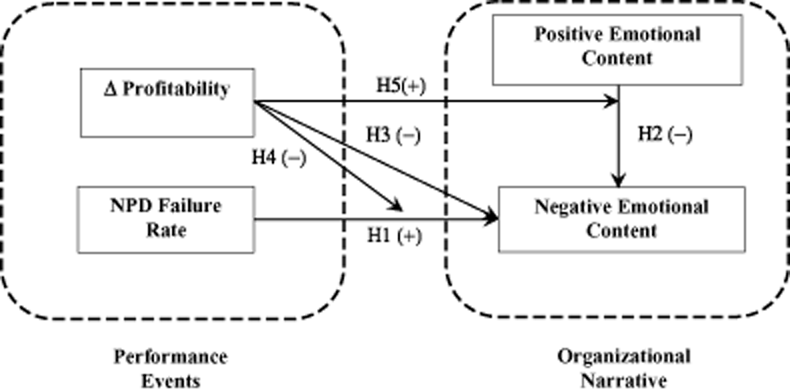
A Performance Event Model of Narratives
Theoretical and Empirical Context: R&D Significance in the Pharmaceutical Industry
The benefits of entrepreneurial activities and entrepreneurial orientation for established organizations have been well documented (Covin & Slevin, 1991). Of particular interest is the influence innovation—primarily in the form of NPD—exerts on science–based firms (e.g., pharmaceutical organizations) (Pisano, 2010). Firms based on science (as opposed to technology–based firms) are presented with a remarkably higher risk profile, and technical failure is often the norm rather than the exception (Pisano). However, firms in these industries cannot simply choose to forego engaging in R&D activities as a result of continued failure since ultimate success is inextricably linked to R&D activity (Del Monte & Papagni, 2003). Evidence suggests that NPD—as produced by R&D initiatives—can affect a vast array of outcomes, including entrepreneurial wealth creation (Deeds, 2001) and economic growth (Stokey, 1995). Indeed, there is a rich history of studies demonstrating the importance of R&D for the overall success of firms operating within the pharmaceutical industry (Nerkar & Roberts, 2004). For example, the ability to produce innovative products through superior R&D efforts is a driving factor in sustaining high profitability and superior market position within the pharmaceutical industry (Roberts, 1999). Additionally, firms are increasingly relying on corporate entrepreneurship as a driving force of innovation (Ireland et al., 2006). As a result, pharmaceutical firms make substantial investments in R&D, with estimates of the overall expenditure for projects topping $49 billion USD in 2006 (listed in the Pharmaceutical Research and Manufacturers of America [PhRMA] annual report). Because they rely on R&D efforts as a crucial component for overall organizational success, firms within the pharmaceutical industry are ideal candidates for studying attempts to understand and make sense of these failures as reflected in their narratives.
To investigate the significance of R&D efforts in pharmaceutical firms, we first need to understand the process by which these projects proceed. While there has been an increase in the types of processes and fundamental techniques employed in the pursuit of drug discovery (Chessari & Woodhead, 2009; Whittaker, Law, Ichihara, Hesterkamp, & Hallett, 2010) (a fact that we will discuss in detail later), in this study, we focus on the process of high–throughput screening (HTS), a technique that has historically been a cornerstone of pharmaceutical research (Macarron et al., 2011). The process of new molecular entity (NME) development via HTS methods begins with a prediscovery phase involving screening potential target compounds. During this process, typically 5,000 to 10,000 compounds are screened and analyzed for their potential efficacy. After this step has been completed and a set of roughly 200 to 300 viable compounds have been identified, these compounds are subjected to preclinical testing, which further narrows the list to the most promising 5 to 10 compounds. These most promising compounds are subjected to extensive clinical trials in the hopes of finding one viable new drug. The nature of clinical trials are specified by the governing pharmaceutical bodies of the targeted countries of product release (e.g., the Food and Drug Administration, the European Medicines Agency [EMA], etc.). Generally, the approval process involves two or three stages of trials, including anywhere from several dozen to several thousand participants who undergo therapy with the compounds of interest to gauge the products’ attributes in a number of different categories (e.g., efficacy, safety, stability, etc.). At the completion of the clinical trials, if the product is approved, firms are able to market and sell the final drug in the approved market. All these steps—from initial R&D to the approval stage—represent a substantial commitment by pharmaceutical firms (e.g., time, energy, and financial resources). For example, the estimated cost of developing a single NME ranges from $800 million to $1 billion USD and takes 10 to 15 years to complete on average (PhRMA, 2006). As a result, NPD failure leads to considerable disappointment (Johnson & Hoopes, 2003).
As mentioned above, HTS is not the only procedure that has emerged as a basis for pharmaceutical drug development. Alternative technologies, such as fragment–based drug discovery (FBDD), as well as other biopharmaceutical applications have become increasingly popular methods in the search for viable drug candidates (Chessari & Woodhead, 2009; Whittaker et al., 2010). These forms of drug discovery are often more focused and theory driven (Gottinger & Umali, 2008) and therefore involve markedly different processes and procedures from those outlined in HTS. However, although these procedures tend to involve relatively more focused initial approaches, evidence suggests that these efforts do not necessarily translate into a reduction in the overall costs of NDP, with the estimated total capitalized costs for biopharmaceuticals being nearly identical to those of traditional pharmaceutical development (DiMasi & Grabowski, 2007). Because the skills and expertise necessary to successfully engage in these biopharmaceutical forms of research are fundamentally different from the more traditional HTS approach, large–scale pharmaceutical firms are becoming increasingly more active in developing partnerships in an attempt to access these resources externally rather than develop them internally (Cassiman & Veugelers, 2006; Gottinger & Umali). However, although there is a growing trend in the popularity of these alternative forms of drug discovery, HTS still remains at the forefront of pharmaceutical and biomedical research (Macarron et al., 2011). Rather than serving as a replacement for more traditional HTS procedures, new alternative approaches (e.g., FBDD) can instead be viewed as vital complementary methods that benefit the process of drug discovery (Chessari & Woodhead; Whittaker et al.).
Additionally, although there has been a growing trend in large pharmaceutical firms to form partnerships to obtain capabilities in these alternative research areas externally, such efforts are not meant to replace internal R&D. Evidence suggests that internal R&D and external knowledge acquisition are complementary activities in that the marginal return of one activity increases as the intensity of the other increases (Cassiman & Veugelers, 2006). This complementary association relates somewhat to the notion of absorptive capacity, which stresses the importance of a stock of prior knowledge to effectively scan, screen, and absorb external knowhow (Cohen & Levinthal, 1990). From this perspective, solid internal R&D capabilities are necessary to monitor and evaluate research being conducted externally (Rosenberg, 1990). In fact, evidence suggests that large firms with higher internal knowledge (as measured by the number of patents they produce) are more actively involved in pursuing external linkages (Arora & Gambardella, 1990) and that external sourcing of knowledge resources actually stimulates internal R&D expenditure (Veugelers, 1997). 1
Narratives as Sensemaking
There has been a considerable theoretical movement centered on sensemaking within the organizational context (Balogun & Johnson, 2004; Brown et al., 2008). Research has shown that organizations use sense–making processes to understand numerous situations, including unexpected failure (Cannon, 1999), organizational restructuring (Balogun & Johnson, 2004), and organizational change (Luscher & Lewis, 2008). For the purpose of this study, we define sensemaking as the process of continuously developing plausible retrospective accounts of past events that are used to inform current action (Weick, Sutcliffe, & Obstfeld, 2005). The sense–making process does not necessarily focus on the accuracy of the constructed explanations but more so on the plausibility of these accounts and how they impart meaning and understanding to inform action (Mills, 2003). Sensemaking has been theorized to involve a series of activities that help organizations notice, arrange, label, and eventually act upon previous events (Weick et al.).
Although all aspects of sensemaking are important, we focus on one particular element that is critical to sensemaking—namely, communication. It has been postulated that sensemaking “is embodied in written and spoken texts” (Weick et al., 2005, p. 409) and that “reading, writing, conversing, and editing are crucial actions that serve as the media through which the invisible hand of institutions shapes conduct” (Gioia, Thomas, Clark, & Chittipeddi, 1994). Because of this, it is important to understand how organizations communicate their sensemaking efforts. As a form of communication, narratives go beyond simple description and focus instead on explaining events and activities that have occurred or will occur in the future (Pentland, 1999). Narratives link causes and effects both within and across different parts of a story (Brown et al., 2008). In doing so, they can be used to explain an organization's actions, essentially making actions appear plausible within a given environmental context (Quinn & Worline, 2008). Thus, narratives “help explain the relationships between events” (Pentland, p. 711). We define narratives as thematic sequenced accounts of interrelated events or actions that are undertaken by the characters who tell them or about whom they are told and convey meaning from the author to the reader (Barry & Elmes, 1997; Czarniawska, 1998; Gabriel, 2000). Narratives contain three necessary elements: a subject, an object, or goal the subject is attempting to obtain or accomplish, and a set of forces that enables or restricts the subject from obtaining the desired object or accomplishing the desired goal (Fiol, 1989). Additionally, narratives contain some form of temporal sequencing (either implicit or explicit) that creates a sense of plot for the story being told (Barry & Elmes; Czarniawska; Gabriel).
Annual Reports as Narratives
The sources of narratives can vary widely in length and content. Narratives can range from brief informal face–to–face conversations between members of an organization or with customers and suppliers (Hjorth & Steyaert, 2004) all the way to more formal scripted and written communications, such as business plans (Doolin, 2003), initial public offering (IPO) prospectuses (Martens et al., 2007), and annual reports (Chreim, 2005; Rutherford, 2005). Because the focus of this study relates to the influence of performance events on narratives, we determined that using the complete corporate annual report as the basis for this study was the most appropriate narrative form. While examining specific annual report subsections is common in the management field (Chreim; Ravasi & Schultz, 2006; Yuthas, Rogers, & Dillard, 2002), recent studies into institutional entrepreneurship have utilized analyses of annual reports in their entirety as sources of organizational narratives (Greenwood & Suddaby, 2006; Greenwood, Suddaby, & Hinings, 2002; Navis & Glynn, 2010). Additionally, other academic fields (most notably, accounting [Aerts, 2005; Neu, Warsame, & Pedwell, 1998; Stanton & Stanton, 2002] and business communication [Rutherford]) have conducted studies on the annual report as a whole to determine specific firm–related messages contained within the report. Therefore, our choice of annual reports as the source of narratives is in line with other areas of established research on narratives.
In addition to variation in terms of narrative sources, the messages conveyed as well as the key stakeholders targeted by those messages often vary widely. Whether narratives are used to reflect market boundaries (Santos & Eisenhardt, 2009) or chief executive officer (CEO) letters to shareholders are used as a way to capture entrepreneurial orientation (Short et al., 2010), narratives have been shown to be useful for understanding a variety of strategic tasks. We use the firm's annual report as a narrative. By employing this particular sample, we stress that our investigation is focused on the content of the narratives analyzed. For example, we are concerned only with the configuration of the amount of emotional content included in the narratives constructed and how these configurations might be influenced by performance events, and we view organizational narratives as reflective of sensemaking efforts. Indeed, there are several advantages to using annual reports as the sample for this study. First, annual reports are mandatory documents. Not only are all publicly traded firms required to produce annual reports, each report must contain certain sections depending on the governing body with which it is filed. This allows for a certain level of systematic and comparative analysis based on the text included in these reports (Martens et al., 2007). However, while annual reports and specific sections within these documents are required, the manner in which information is presented within these texts is somewhat subjective. This subjectivity provides some liberty with regard to the retelling of certain facts, leading to substantial variation in terms of the stories produced. Second, senior management must approve annual reports and verify that they accurately portray the firm. Specifically, the Securities and Exchange Commission (SEC) requires signatures from the CEO, chief financial officer, controller, and at least a majority of the board of directors on all annual reports as proof the documents are accurate (SEC, 1934). These requirements, along with the potential penalties that the individuals who sign off on the reports stand to face if they are found to be inaccurate or—worse—fraudulent, enhance the legitimacy of annual reports as a form of organizational narrative (Bargeron, Lehn, & Zutter, 2010). Third, annual reports are scrutinized by key stakeholders and can have significant consequences for the organization (Stanton, Stanton, & Pires, 2004). Therefore, it is important that the narratives constructed within these reports are created in a manner that best conveys the organization's identity as well as justifies the organization's actions. A final advantage of using annual reports as a narrative source is the temporal order they possess with regard to the variables of interest in this study. Because the narrative (in this case, the annual report) is only constructed and produced after the performance events of the year (e.g., NPD failure and profitability) have occurred or been determined, there is a sequential order of events that strengthens the theoretical validity of the relationships proposed.
NPD Failure Rate and Narratives’ Negative Emotional Content
Firms that engage in entrepreneurial activities take risks (Covin & Miles, 1999) and often have R&D initiatives as the basis of their core strategy (Khandawalla, 1977). While firms that engage in entrepreneurial activities might experience certain performance benefits (Covin, Green, & Slevin, 2006), they are also prone to experience more project failures (Wiklund & Shepherd, 2011). Furthermore, it is common for employees to develop a sense of psychological ownership for projects with which they are involved and over which they have control (Pierce, Kostova, & Dirks, 2001). This psychological ownership has been conceptualized as a positive psychological resource (Avey, Avolio, Crossley, & Luthans, 2009) and has been shown to increase positive emotions and benefit organizational change (Avey, Wernsing, & Luthans, 2008). Additionally, group–level positive emotions have been linked to increased cooperation, decreased conflict, and increased perceived performance (Barsade, 2002). However, these benefits do not come without risk. Just as entrepreneurial projects can increase motivation for success, they also likely produce greater negative emotional consequences when they fail (Shepherd, 2009; Shepherd, Covin, & Kuratko, 2009). This increase in the level of negative emotional consequences resulting from project failure can have substantial effects at both the individual (Pierce et al.) and group levels (Cannon & Edmondson, 2001).
Collective–level emotions have been defined as emotions that are shared by large numbers of individuals in a certain society (Stephan & Stephan, 2000). Similarly, group–based emotions have been conceptualized as emotions that are experienced by individuals as a result of being part of a specific group or organization (Bar–Tal, Halperin, & De Rivera, 2007). Research has found that the formation of such collective emotions among a group may lead to common action for a group goal even though individual group members may experience different personal emotions as a result of occupying different roles within the group (Barbalet, 1998). From the narrative perspective, the presence of collective emotions frequently appears in the public discourse in which an organization engages (Bar–Tal, 2001) and is therefore present in the narratives an organization constructs regarding actions and events. Examples of such occurrences taken from the sample used in this study include excerpts like “As any scientist can tell you, those rare moments of success are often woven together with countless moments of disappointment” and “We also experienced disappointments with [drug projects] Exanta and Iressa and some difficult market conditions.” In turn, these collective emotions can impact work outcomes (George & Brief, 1992).
The collective negative emotions groups within firms experience as a result of project failure can produce substantial alterations in the content and messages communicated within narratives (Dutton et al., 2006). These collective emotions can transform into organizational routines and norms over time (Huy, 1999), which can in turn influence the construction of the organization's narrative. Because project failure is likely to produce negative emotions for those involved (Cannon & Edmondson, 2001; Shepherd et al., 2011), narratives regarding such events are likely to include higher levels of negative emotional content. From an organizational perspective, narratives regarding project failure could be used to justify or legitimate activities that lead to those failures (Vaara, 2002). Although a narrative comprises a retelling of a specific sequence of events that is given meaning by the narrative's plot, it is important to note that the plot is not inherent to the events but is instead a device constructed by the author(s) to make sense of these occurrences (Vaara). Therefore, it is possible that a given narrative's plot could be altered as needed to paint negative events, such as project failures, in a more favorable or less disappointing light.
Including high levels of negative emotional content within a narrative regarding project failure could portray to shareholders that the failed initiatives were important to the firm. Additionally, such language could communicate that the organization has continued interest in R&D initiatives in general to maintain future performance. Therefore, we offer the following hypothesis as a baseline from which we build the rest of the model:
Narratives’ Positive and Negative Emotional Content
In her seminal work regarding the interaction of positive and negative emotions, Fredrickson (2001) suggests that an undo mechanism can explain how positive emotions reduce the effects of negative emotions. Positive emotions can also “broaden one's thought–action repertoire, expanding the range of cognitions and behaviors that come to mind” (Tugade & Fredrickson, 2004, p. 321), and this broadened set of thought–action resources might be beneficial in helping successfully regulate the negative emotions experienced as a result of unexpected failure events (Tugade & Fredrickson). Subsequent work builds upon this finding at the individual level and demonstrates how positive emotions can result in similar benefits at the organizational level as well (Fredrickson, 2003). For instance, positive emotions can promote organizational development by “stimulating useful cognitive and social capabilities” (Sekerka & Fredrickson, 2008, p. 532). Additionally, positive emotions can produce increased cooperation in organizations as a result of building and reinforcing relational strength (Sekerka & Fredrickson), and they have been shown to increase the potential for organizational change (Avey et al., 2008).
It is important to note that while positive emotions can impact the level of negative emotions, positive and negative emotions are separate constructs. Indeed, evidence suggests that the two are nearly independent from one another (Diener & Emmons, 1984), and instruments developed to measure the two are largely uncorrelated (Watson, Clark, & Tellegen, 1988). The reasoning behind this relates to the two underlying dimensions of these emotions—namely, frequency and intensity (Diener, Larsen, Levine, & Emmons, 1985). Logically, the more time spent experiencing one emotion, the less time there is available to experience the other, which is why research has shown that in terms of the frequency dimension, positive and negative emotions are highly negatively correlated (Diener et al.). However, a predisposition to experience high levels of one emotion often translates into a greater tendency to experience high levels of the other emotion as well, therefore making the intensity dimension of positive and negative emotions highly positively correlated (Diener et al.). Because the mean levels of affect depend on contributions from both the frequency and intensity dimensions, this results in overall affect levels being relatively uncorrelated over longer periods of time.
The lack of correlation between positive and negative emotions has important ramifications for the current study. Because of this independence of the positive and negative emotion constructs, we determined that it was more valid to examine these narrative content dimensions as separate constructs rather than opposing ends of a single dimension. Instead of taking the perspective that specific performance events will change positive emotional content to negative emotional content or vice versa, we adopt the idea that particular performance events will result in one predominant type of emotional content within the narrative independent of the other emotional content. This approach allows us to make specific predictions within our model not only regarding how performance events relate to specific emotional content but also regarding how the levels of emotional content relate to one another. Examples of positive emotional content contained within the sample used for this study include statements like “I am very pleased to announce another successful year” and “After my first year as chief executive officer, I am delighted to introduce an annual report that not only records our strong financial performance … but also demonstrates our commitment to overcoming the challenges that we and our industry face.”
Interestingly, although most of the work done regarding the relationship between positive and negative emotions has focused on the individual level, there has also been some research regarding how positive emotions can influence organizations (Fredrickson, 2003). Because emotions evolve in social contexts, they can serve social functions (Fischer & Manstead, 2008). For instance, positive emotions can act as a form of “social glue,” increasing the affiliation that group members have for one another (Fischer & Manstead). Evidence also supports the idea that the effects positive emotions have are somewhat similar at both the individual (Fredrickson & Joiner, 2002) and organizational (Fredrickson) levels. For example, it has been shown that a leader's expression of positive emotions can be influential in predicting his/her entire group's performance (George, 1995). These results lend support to the idea that positive emotions can have a similar influence at multiple levels. Based on the above reasoning that positive emotions “undo” negative emotions (Fredrickson, 2001, 2003; Tugade & Fredrickson, 2002, 2004), we propose the following with regard to the emotional content of the narrative:
Profitability and Narratives’ Negative Emotions
Project failure is often viewed as a negative event (Iacovoc & Dexter, 2005), but project failure is a somewhat expected outcome when engaging in entrepreneurial initiatives under high uncertainty (McGrath, 1999). While project failure can represent an objective, quantifiable negative event, the occurrence of a project failure event does not necessarily reflect the overall level of success a firm experiences. Indeed, higher project failure rates could represent higher levels of innovativeness and proactiveness (McGrath), which represent the cornerstones of a firm's entrepreneurial orientation (Covin et al., 2006). Furthermore, failures represent an opportunity for firms to learn (Chuang & Baum, 2003), and the ability to learn from such events is crucial for firms to succeed (Minniti & Bygrave, 2001). As firms learn from their failures, they gain an understanding of the causes of those failures and, in doing so, decrease the likelihood they will make similar mistakes in the future. This increase in success can translate into an overall improvement of the firm's performance, especially profitability. Indeed, profitability has been used in a wide variety of research as one of the key measures of firm performance (Anderson, Fornell, & Lehmann, 1994), and increases in profitability can be interpreted as positive performance events.
Positive events have been shown to counter the effects of negative emotional events in a number of ways (Lyubomirsky, King, & Diener, 2005). More specifically, positive feedback has been shown to have beneficial effects on group pride, involvement, and esteem (Nadler, 1979) and has been linked with improved perceptions of group efficacy (Druskat & Wolff, 2001). This collective efficacy can facilitate cooperation and collaboration (Druskat & Wolff) and has been shown to reduce negative as well as increase positive individual well–being (Salanova, Llorens, Cifre, Martínez, & Schaufeli, 2003). Additionally, positive performance feedback can help to mitigate the negative consequences of project failures by serving to stimulate self–correcting cycles within the organization (Lindsley et al., 1995). These self–correcting cycles occur when decreases in performance and efficacy are followed by subsequent increases in both and have been postulated to be important factors related to long–term organizational success (Lindsley et al.). Therefore, when an organization has high levels of project failure, the potential negative emotional consequences of this project failure can be mitigated by focusing on sources of positive information, such as gains in profitability.
An organization's level of profitability can influence its efforts to understand and make sense of its current reality. To determine whether or not performance is acceptable, organizations compare current performance with historical aspiration levels (Greve, 2002). Evidence shows that the results of these evaluations provide critical inputs for decisions regarding organizational change in a number of key areas, including innovation (Bolton, 1993), strategic outlook (Grinyer & McKiernan, 1990), and corporate reorientation (Lant, Milliken, & Batra, 1992). From this threshold perspective, previous performance serves as a benchmark with which current performance is compared: Current performance above that of the previous year is interpreted as having met (or exceeded) the desired aspiration levels, whereas performance that falls below previous performance levels can be perceived as a negative outcome (Greve). Gains in profitability suggest that firms are performing at (or above) acceptable levels, perhaps in spite of (or because of) the relative levels of project failure experienced in other areas, such as R&D. While increased levels of project failure tend to result in lower levels of activity in areas like R&D, gains in profitability can counter such effects. Profits can be used as a source of funds for future R&D efforts, and evidence shows that “as profit opportunities expand, firms compete to exploit them by increasing R&D investments” (Scherer, 2001).
Firms’ narratives will likely include this information to successfully communicate their overall health and well–being even in the face of specific failure events. Narratives from organizations that experience increased levels of project failure but still exhibit gains in profitability could contain greater content on positive performance information (i.e., gains in profitability) as well as a diminished level of negative emotional content relating to project failures. Under these conditions, narratives serve to highlight the positive aspects of organizations’ overall performance and assist in reconciling the circumstances that allow for high levels of project failure in conjunction with gains in profitability. This reasoning leads to the following hypothesis:
Moderating Role of Performance Events
Positive performance events likely influence the relationship between project failure and narratives’ negative emotional content. High levels of project failure can result in the organization tending to over–identify with specific failure events, thereby ignoring the broader scope of the encompassing situation and leading to potentially detrimental effects (Derryberry & Tucker, 1994). This over–identification can interfere with individuals’ ability to develop alternative interpretations of and responses to project failures (Bennett–Goleman, 2001). Because attention and awareness are so focused on this subjective reaction, it could become difficult—if not impossible—for those experiencing such reactions to take a more objective perspective of the situation (Neff, 2003), which could lead to detrimental organizational outcomes, such as escalation of commitment (Staw, 1981) or threat rigidity (Staw, Sandelands, & Dutton, 1981). The results of these effects are likely to be reflected in narratives, specifically in their level of negative emotional content. However, it is possible that positive outcomes in areas other than specific project performance can mitigate this over–identification with project failure. Positive outcomes, such as gains in profitability, can serve as stimuli causing the organization to alter attentional focus, shifting attention away from internal aspects related to negative emotions and onto other areas of importance (Ocasio, 1997, 2011). This broadening effect on attention could reduce or even eliminate the potential for rumination over and obsession with specific project failure events, thereby mitigating the potential for negative emotions to develop as a result of project failures. Based on the above reasoning, we offer the following hypothesis:
Just as performance events in the form of profitability can moderate the effect project failure has on narratives’ negative emotional content, such events can also alter the configuration of narratives’ positive and negative emotional content. Increases in profitability provide support that can be used to justify the presence of positive emotions within the organization, which, as mentioned previously, have been shown to undo the effects of negative emotions (Fredrickson, 2003). Justification can magnify the effects that positive emotions have on countering the effects of negative emotions (Fredrickson, 2001). Positive performance in the form of gains in profitability reinforces a positive perspective on the current situation, which in turn allows groups to enact “major shift(s) from existing processes” as well as “alter the nature of their pre–existing behaviors” (Sekerka & Fredrickson, 2008, p. 532). Additionally, positive performance events can be used in narratives to shift attention away from internal sources of project failure and onto positive external outcomes. This shift in attention could enhance the broaden–and–build benefits produced by the presence of positive emotions again by reducing over–identification with the project failure, thereby allowing for a more balanced, objective perspective of the situation. A reduction in the firm's fixation on recent failures could reduce the use of negative emotional content in the narrative and could help trigger a self–correcting spiral, whereby the organization can correct its past performance (Lindsley et al., 1995). The potential influence of gains in profitability on the configuration of narratives’ positive and negative emotional aspects is offered in the following hypothesis:
Methods
Sample
The sample chosen for this study provides some important advantages and disadvantages with regard to this study. It is important to note the sequential nature of the relationship between the variables of interest in this study. The independent performance events (i.e., project failure and profitability) by necessity occur prior to the construction of the narrative (i.e., the preparation of the annual report). Because of this temporal relationship, there is a theoretical foundation grounding the causal nature of the relationship between performance events and the narratives that report them. However, this sequential relationship also hinders the ability to test true lagged relationships since the shortest lag available with annual reports is an entire year. The likelihood that performance events—whether positive or negative—would have such a long–lasting influence on narratives is less plausible. A final advantage of using annual reports is that they are scrutinized by key stakeholders and can have significant consequences for the organization (Stanton et al., 2004). Therefore, it is important to the organization's management that the narratives constructed within these reports are created in a manner that best conveys the organization's identity as well as justifies the organization's past and future actions. For these reasons, we believe annual reports and the narratives contained within them are ideal information sources for this study.
We analyzed annual reports from public firms that had submitted at least one drug–approval application to the EMA from 2002 to 2010. To accomplish this analysis, we used computer–aided text analysis (CATA) to examine each report for the relative levels of specific dictionaries of terms established to relate to the variables of interest. 3 While there are other methods of text analysis, we were specifically interested in how certain performance events influenced the overall positive and negative emotional content within the narrative as a whole, so we chose this particular method following established conventions (Pfarrer, Pollock, & Rindova, 2010). It is important to note that we included reports from firms that met these criteria of having submitted an application for approval at some point in this window even in years in which they did not submit an application for approval. It is also important to note that not all firms filed reports for all years during this period as some were newly public or ceased operations during this time. This yielded an unbalanced panel of data consisting of 68 firms and 356 observations. The age and size of the firms included in this study varied greatly, but on average, firms within the panel had been in operation for 65.78 (standard deviation [SD] = 54.49) years and had employed 32,480 (SD = 37,570) employees. Additionally, the total number of applications that each firm had submitted in a given year ranged from a minimum of one to a maximum of 24 with an average of 0.56 (SD = 1.33). The firms in the sample were composed of a multinational set of corporations with corporate headquarters located in 19 different countries.
Dependent Variable
The Narrative's Negative Emotional Content
Consistent with previous studies (Brett et al., 2007), we utilized CATA to determine narratives’ negative emotional content using the negative emotional word Linguistic Inquiry and Word Count (LIWC) dictionary (Pennebaker, Francis, & Booth, 2001). The LIWC negative emotion dimension consists of 499 entries and includes words like hurt, ugly, nasty, etc., which have been used previously in numerous studies regarding the interpretation of written language (Burton & King, 2004; Merkl–Davies, Brennan, & McLeay, 2011; Ulrich & Lutgendorf, 2002). See Tausczik and Pennebaker (2010) for an extensive review of literature utilizing this operationalization.
Independent Variables
The Narrative's Positive Emotional Content
Similar to the negative emotional content variable previously detailed and again consistent with previous studies regarding language analysis (Guastella & Dadds, 2006; Junghaenel, Smyth, & Santner, 2008), we constructed the positive emotional content variable using CATA and the positive emotional word LIWC dictionary analysis for positive emotions (Pennebaker et al., 2001). The LIWC list for positive emotions contains 406 separate entries and includes words like love, nice, and sweet. See Tausczik and Pennebaker (2010) for an extensive review of literature utilizing this operationalization.
Change in Profitability
Consistent with existing research examining profitability as a measure of firm performance (Hull & Rothenberg, 2008), we measured profitability as the overall return on assets (ROA) as calculated by dividing net income by the total assets listed in the firm's annual report. To gauge the change in firm profitability, we subtracted ROAt0 from ROAt1. We then used this value in subsequent regressions as the measure of the overall change in profitability a firm experienced on a year–over–year basis.
Failure Rate
While failure can be determined internally via the disbandment of activities due to poor performance, we adopted a more objective measure of firm failure rate. Consistent with other research regarding NPD failure rates within the pharmaceutical industry (Kola & Landis, 2004), we captured the rate at which firms failed to receive approval for new drug applications from the appropriate governing body (e.g., EMA). This value was calculated by dividing the number of rejected applications a firm received in a given year by the total number of applications the firm submitted during that same period. This value represents a relative measure of the rate of failure firms experienced in comparison to their overall activity.
Control Variables
We included other variables in the analysis to control for possible alternative explanations for the hypothesized relationships, including firm size, firm age, and R&D intensity. 4
Firm Size
Firm size has been linked empirically and theoretically to several of the variables in this study and has the potential to confound the findings. For example, large firms might have a higher success rate because they may be better able to afford the specialized equipment that is often required by different therapeutic categories (Graves & Langowitz, 1993). Larger firms may also have more extensive chemical libraries, which serves as an advantage in generating more viable drug candidates for the development process (Thomke & Kuemmerle, 2002). Firm size has also been associated with the innovativeness of new products. Small firms are associated with more innovative products, whereas large firms are associated with less innovative products (Kotabe & Scott, 1995). Firm size was measured as the log of the number of employees reported in the firm's annual report.
Firm Age
Firm age has been found to have a significant influence on growth rates in high–technology firms (Colombo & Grilli, 2005), with several studies pointing specifically to the effect age has on firms within the pharmaceutical industry (Henderson, 1999) as an influential firm growth factor. For these reasons, we included firm age as calculated by subtracting the firm's founding year from the year the document analyzed was produced and then taking the log of this value as a control variable for all analyses.
R&D Intensity
R&D has been found to have substantial influence on several aspects of science–based firms (Pisano, 2010). Because of the importance of R&D as the foundation of this study, it was necessary to control for the relative intensity of R&D efforts for each firm. Therefore, we included R&D intensity—calculated by dividing overall R&D spending by annual sales—as a final control for all analyses (Lu & Beamish, 2004).
Results
Table 1 presents the means, standard deviations, and bivariate correlations among all the study variables. Table 2 details the results of the models with the narrative's negative emotional content as the dependent variable. We used a random–effects time series regression model to estimate the models (Greene, 2003; Semadeni & Anderson, 2010) with additional robustness checks utilizing feasible generalized least squares (FGLS) estimation where appropriate. 5 As previously mentioned, the sample contained 356 unique observations from 68 firms over 9 years, yielding an unbalanced time series panel. We calculated and reported the Akaike's information criterion (AIC) (a decrease in the AIC indicates a better model fit [Akaike, 1974]) to assess the models’ overall fit.
Means, Standard Deviations, and Correlations
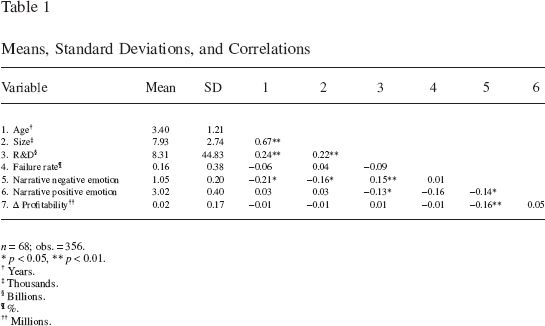
n = 68; obs. = 356.
p < 0.05
p < 0.01.
Years.
Thousands.
Billions.
%.
Millions.
Results of Hypothesis Testing Using Random–Effects Modeling
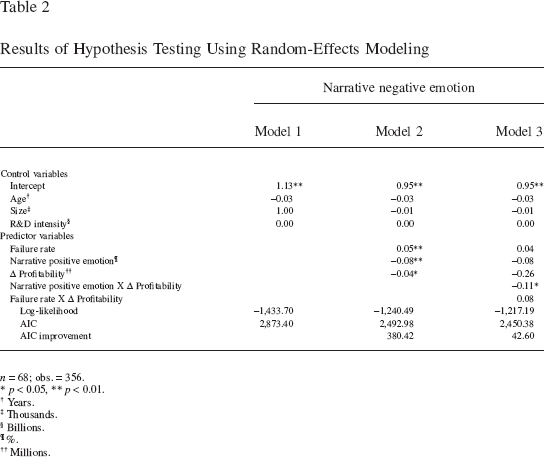
n = 68; obs. = 356.
p < 0.05
p < 0.01.
Years.
Thousands.
Billions.
%.
Millions.
Model 1 in Table 2 represents the base model with only the controls present. In the base model, neither age (β = −0.03, p > 0.05), size (β = −0.01, p > 0.05), nor R&D intensity (β = 0.00, p > 0.05) show a significant relationship with the narrative's negative emotional content. Model 2 includes the addition of the proposed main effects on the narrative's negative emotional content, which results in a better overall model fit (Δ AIC = 380.42). The results presented in Model 2 show a significant positive relationship between NPD failure rate and the narrative's negative emotional content (β = 0.05, p < 0.01). This suggests that the failure rate of an organization's NDP projects has a positive relationship with the narrative's negative emotions, providing support for hypothesis 1. Model 2 also shows a significant negative relationship between the narrative's positive and negative emotional content (β = −0.08, p < 0.01). This indicates support for hypothesis 2, which stated that the greater the narrative's positive emotional content, the lesser the narrative's negative emotional content. Finally, the results of Model 2 show a significant negative relationship between change in profitability and the narrative's negative emotional content (β = −0.04, p < 0.01). This suggests that the greater the profitability, the lesser the narrative's negative emotional content, thus providing support for hypothesis 3.
Model 3 in Table 2 includes the proposed interactive terms for the narrative's positive emotional content and changes in profitability as well as between NPD failure rates and changes in profitability. Adding these interactive effects results in an improved model fit over the main effects model (Δ AIC = 42.60). These results indicate that there is a significant interactive effect between the narrative's positive emotional content and changes in profitability (β = −0.11, p < 0.05). Figure 2 shows a graph of this interaction. As Figure 2 shows, the negative relationship between the narrative's positive emotional content and negative emotional content is more negative when there are greater gains in profitability than when there are lesser gains (or greater losses) in profitability, thereby supporting hypothesis 5. The interactive effect between NPD failure rate and changes in profitability is not significant (β = 0.08, p > 0.05), so hypothesis 4 is not supported.
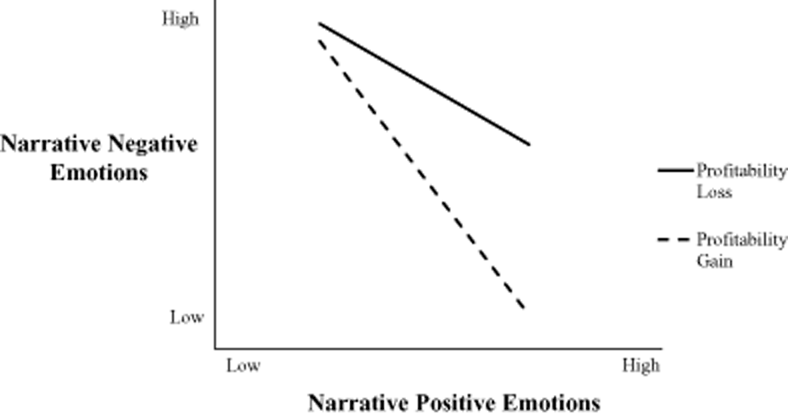
Positive Emotional Content, Profitability, and Negative Emotional Content
Discussion
Although narrative–based research has provided a deeper understanding of strategic management and entrepreneurship, few studies have helped researchers understand how organizations create and alter narratives based on the events they experience. Prior narrative–based work has primarily focused on how narratives relate to phenomena like innovation (Bartel & Garud, 2009) and change (Chreim, 2005) despite scholars’ recognition of the importance of narratives in defining identity (Brown, 2006) as well as in serving as an important component in the sense–making process (Brown et al., 2008). In the current study, we have begun to fill this gap by investigating how performance events affect specific elements contained within narratives. Adopting a sense–making perspective, we argued that understanding and communicating a plausible account of past experiences involves altering certain aspects of narratives to present a coherent representation of prior events. With psychological theories of positive and negative emotions as the theoretical basis of our model, we make three sets of theoretical arguments. First, increased rates of NPD failure are reflected in greater levels of negative emotional content within the narrative. Second, the more positive emotional content there is within the narrative, the less negative emotional content. Finally, positive performance events not only have a direct influence on the amount of negative emotional content within the narrative but also influence the configuration of the narrative's positive and negative emotional content. Our findings largely support these theoretical arguments and provide a number of theoretical contributions regarding research on entrepreneurship and project failure, narratives, and emotions.
Implications for Research on Entrepreneurship and Failure
The findings of this study represent important contributions to the study of corporate entrepreneurship, particularly as it relates to science–based organizations. Corporate entrepreneurship has been alluded to as the foundation for innovation (Ireland et al., 2006), and as such, it is a critical element for firms that revolve around innovation as the basis for their very existence. Nowhere is this more evident than in science–based firms (Pisano, 2010) like those in the pharmaceutical industry. It is imperative for science–based organizations to continue to maintain a high level of activity in R&D areas, for which technological feasibility is questionable at best and innovative activities (e.g., R&D) face inordinately high failure rates. One way to reconcile this issue is to understand and make sense of failures and communicate this understanding effectively so as to reduce the likelihood that future efforts will meet with similar results. In finding that organizations alter their narratives’ content as a result of certain performance events, we present evidence of how organizations attempt to understand these events and presumably apply that understanding to help maintain entrepreneurial and innovative activities.
Additionally, prior research has generally treated failure situations as homogeneous instances of “deviation from expected and desired results” (Cannon & Edmondson, 2001, p. 162) without considering influences that vary how failure events are interpreted and understood. Failures do not occur in a vacuum, so it is likely that they will be influenced by specific contextual factors. By examining the relationships between performance events and narratives’ emotional content, this study offers empirical support for two sets of theoretical arguments. First, although project failure rates do result in increases in narratives’ negative emotional content, failure rates alone are not the only important factor to consider with regard to narratives’ level of negative emotional content. Specifically, because a narrative must present a plausible and understandable representation of the firm to be used for sense–making purposes, the configuration of positive and negative emotional content within the narrative aligns to present a representation of the organization. Therefore, the presence of positive emotional content often coincides with a lower level of negative emotional content in narratives.
Second, we complement and extend the firm performance literature by theorizing and finding that positive performance events—in the form of gains in profitability—reduce narratives’ level of negative emotional content. The occurrence of positive performance events may shift narratives’ attentional focus away from project failures and instead direct attention to the positive aspects of previous events. These findings suggest that when organizations experience high levels of project failure, the levels of negative emotional content contained within the narratives produced as a result of these project failures appear to be mitigated by focusing on sources of positive performance information, such as gains in profitability. This shifting of attentional focus can be particularly beneficial in terms of learning and coping with the failure of entrepreneurial initiatives. Taken as a whole, these results support the notion that when examining the effects of project failure on organizational narratives, it is important to consider influences that vary how failure events are interpreted and communicated to determine the eventual consequences that project failures might have on the narratives constructed.
Implications for Research on Narratives
The results presented in this study show that narrative content is altered to accommodate specific performance events. This expands on existing theory linking narratives to the sense–making process (Brown et al., 2008) and provides evidence that narrative emotional content provides an important mechanism for this process to occur. Specifically, organizations modify the negative emotional content within their narratives as a result of project failures as well as positive performance events (e.g., increased profitability). To understand and make sense of past events, organizations alter specific narrative content to present cohesive, plausible accounts of previous experiences. The results presented here suggest that configuring positive and negative emotional content within narratives is an important method organizations can utilize to better understand and make sense of the current reality in which they exist. In turn, these narrative accounts can be used as instruments to communicate specific messages to justify past experiences as well as future actions. These results help address the call for additional investigation into collective sensemaking and the specific mechanisms involved in this process (Ucbasaran et al., 2013). Our findings also support and extend previous work suggesting that organizations can use the narratives they construct for specific entrepreneurial purposes (Fuller & Tian, 2006; Lounsbury & Glynn, 2001; Martens et al., 2007) by demonstrating how organizations can alter specific facets of their narratives as a result of previous performance events.
Implications for Research on Emotions
The results presented in this study also represent important contributions to research on the role emotions play in the entrepreneurial process. Although emotions have been theorized to influence a number of aspects of the entrepreneurial process (Baron, 2008), our study specifically investigates the antecedents of emotional content within narratives and what influence these events might have on organizations’ attempts to use the narratives they construct for sensemaking purposes. We theorized and found that the configuration of narratives’ positive and negative emotional content is complex in nature. We found that when organizations experienced positive performance events, the association between narratives’ positive and negative content was enhanced. It is possible that positive outcomes in areas other than specific project performance can mitigate over–identification with project failure in the narrative. Positive outcomes, such as gains in profitability, can alter attentional focus, shifting attention away from internal aspects related to narratives’ negative emotional content and onto other areas of importance (Ocasio, 1997, 2011). This broadening effect on attention could reduce or even eliminate the potential for rumination over and obsession with specific project failure events, thereby mitigating the potential for negative emotional content to develop within organizations’ narratives as a result of project failures. From an entrepreneurial perspective, this configuration of emotional content supports the idea that “entrepreneurial action is characterized by the dominance of pride and the relative absence of shame” (Goss, 2005, p. 212), so narratives constructed regarding those activities will have content that reflects as much. These findings support the notion that when examining the configuration of narratives’ positive and negative emotional content, it is important to understand how the context within which these factors are being analyzed can influence the association between the two. Additionally, these findings provide a basis to explain why—although empirically independent—there are additional theoretical influences that could be considered as possible antecedents to each as well as potential moderators of the relationship between the two.
Limitations and Future Research
As with any study, this study has limitations that should be recognized and considered. First, while annual reports do hold specific advantages (e.g., the mandatory nature of reporting, comprehensive perspective of the firm, etc.), there are disadvantages to using this form of narrative. By necessity, annual reports are well sanitized in terms of the emotional content they contain, which inherently reduces potential effects and could result in the suppression or even elimination of important effects of interest. Although we did find sufficient variation in the annual report narratives we examined, future research could look into alternative forms of narratives, such as board notes, press releases, or even official internal communications, to gain a better sense of how specific events, such as project failures, impact the narratives organizations construct regarding those events. Additionally, although we did not find significant cultural influences present on the variables examined in this study, further research might prove more insightful in this respect. Because of the somewhat standardized nature of annual reports, it is possible that important cultural variances were not captured in the chosen sample. Therefore, it would be beneficial to further analyze less standardized sources of organizational narratives to better determine if potential cultural variances do exist.
Second, although it can be assumed that all the relevant project failures studied occurred before the annual reports were written, it is not possible to determine causality with this study. Because of this, it is impossible to truly assign causal relationships to these results. While it is true that the panel data set analyzed for this study could be used for such analysis, the large time lag (i.e., 1 year) between each narrative makes it unlikely that the impact of the specific events would have a significant influence on the content of the subsequent year's narrative. For future research into this area, it will be important to select narrative sources with shorter time intervals (e.g., quarterly reports, monthly releases, etc.) so that longitudinal analysis can be undertaken to determine what the causal relationships between these constructs might be. Additionally, there is a need for further research into how alterations of narrative content could potentially influence future organizational behaviors. Subsequent research will be necessary to determine if such relationships are significant. While this study represents a vital first step in examining what specific narrative attributes are altered as a result of performance events, further investigation into what influence narrative content has on subsequent activities will provide a better understanding of how narratives fit within the sense–making process. Finally, although we present evidence that profitability—most often considered a dependent variable—can have potential subsequent effects as an independent variable in terms of narrative content, these relationships could benefit from further investigation utilizing closer lagged reports of profitability and subsequent narratives to better examine their causal nature.
Third, although care was taken in this study to keep the type of failure analyzed homogeneous—namely, rejections of late–stage drug applications—future research will be necessary to determine how potential differences in the type of failure experienced might impact narratives. As previously noted, while failure at the final approval stage is the most uncommon form of failure organizations experience and could therefore be the most impactful on a per failure basis, this by no means represents the totality of failure experienced throughout the drug–development process. As such, future research into how failure at various other stages in the development process influences key narrative content is necessary to better understand the relationships presented in this study. For example, it would be beneficial to investigate if failures which are less costly but more frequent have similar or differential influences on narrative content. Because of the important variance between the time and resources committed to moving a drug through the various stages of approval, it will be imperative for future research to investigate these different failure stages to gain a richer, more nuanced understanding of how failure relates to narratives and the sensemaking process.
Finally, there are limitations within this study with regard to the specific characteristics of the industry of interest. The pharmaceutical industry is an advantageous source of information for this study for several reasons, not the least of which being the quantity and importance of project failure experiences common to pharmaceutical firms. However, the very aspects of this industry that make it appealing could potentially lead to certain disadvantages as well. Because firms within the pharmaceutical industry experience such high rates of project failure, it is possible that certain normalization effects could be present within these firms. This normalization could result in a general industry effect in terms of reduced levels of negative consequences produced as a result of project failures. Due to these potential industry influences, it will be important for future research to examine how these variables relate to one another in other more diverse industries to establish the overall generalizability of the results presented in this investigation.
Conclusion
Narrative communication can be an important tool for organizations as they attempt to understand and make sense of past events. This is particularly true for science–based organizations that utilize corporate entrepreneurship as the basis for the innovative initiatives required to maintain competitiveness. The ability to interpret and communicate the significance and impact of past experiences—both positive and negative—is vital for these organizations to construct plausible explanations of prior events as well as to inform and influence future actions. We theorized and found that project failure rates increase the level of negative emotional content within narratives. We also theorized and found that both positive emotional content as well as positive performance events are associated with less negative emotional content within narratives. Finally, we theorized and found that positive performance events moderated the relationship between positive and negative emotional content, enhancing the effects of this relationship. Overall, we provided preliminary evidence as to how the emotional content within narratives can be altered in an attempt to make sense of prior experiences.
Footnotes
CATA Variables,Definitions,Operationalizations,and Examples
Examples of Negative and Positive Content Utilized in the Same Context within Narratives
1
For the purposes of this study, we are specifically investigating drugs that failed at the final approval stage of development. We acknowledge that this is not the only stage at which projects can fail, and the potential for projects to be abandoned is substantial at all stages of clinical trials, with varying levels of costs associated with terminations at each stage (DiMasi, Hansen, & Grabowski, 2003). In fact, most drugs are abandoned prior to final application, with the most costly project abandonment occurring at the final clinical phase (DiMasi, 2001; DiMasi et al.). While these project failures represent substantial losses of resources and time invested, it is understood that the potential for failure at these clinical stages is high, with only 63.5% of the projects that enter into Phase III clinical trials eventually applying for final approval (DiMasi et al.). Because failure rates in the initial stages of drug discovery are relatively high, it is possible that a certain level of normalization—a process whereby failure is rendered more ordinary and is therefore less salient and arousing (Ashforth & Kreiner, 2002)—can occur regarding these failures. However, drugs that successfully make it out of clinical trials and proceed to the final approval stage have a much higher success rate and are therefore usually expected to gain approval (DiMasi; DiMasi et al.). Because the expectation is that drugs that reach the approval stage will ultimately be successful, the impact of failures that occur at this juncture is likely to generate severe reactions. While we recognize that narrative content is not solely determined by these final–stage failures, we contend that failures at this final approval stage will result in substantial alterations of the narrative content on a per failure basis. Therefore, while we acknowledge that the focus of this study is on a relatively small subset of project failures and that future research into the differential effects of failure at various other points in the development process will be necessary to provide a better understanding of the relationships presented in this study, we believe that the sample employed for this study represents an important set of research–related events to analyze in the initial development of an event model of narratives.
2
See Appendix B for examples of positive and negative emotional content used within the same context.
3
See Appendix A for a complete list of the CATA variables used, their definitions, operationalizations, and examples of each from the text.
4
We also created dummy variables to control for the country of origin for each firm, but no significant influences were found in any of the regressions included in this study.
5
We used the Breusch–Pagan Lagrange multiplier test and the Hausman test to determine the influence of autocorrelation and heteroscedasticity. We used the FGLS estimation technique to test the validity of the constructed models. This alternative method did not produce significant differences in the results.