







Abstract

Dear editor,
Cerebral venous thrombosis has a wide spectrum of symptoms. Also, patients with symptomatic venous thrombosis are more often treated in the hospitals compared with monosymptomatic patients (1).
We suggest that the risk of recurrences in untreated patients with monosymptomatic focal cerebral signs is associated with insufficient treatment.
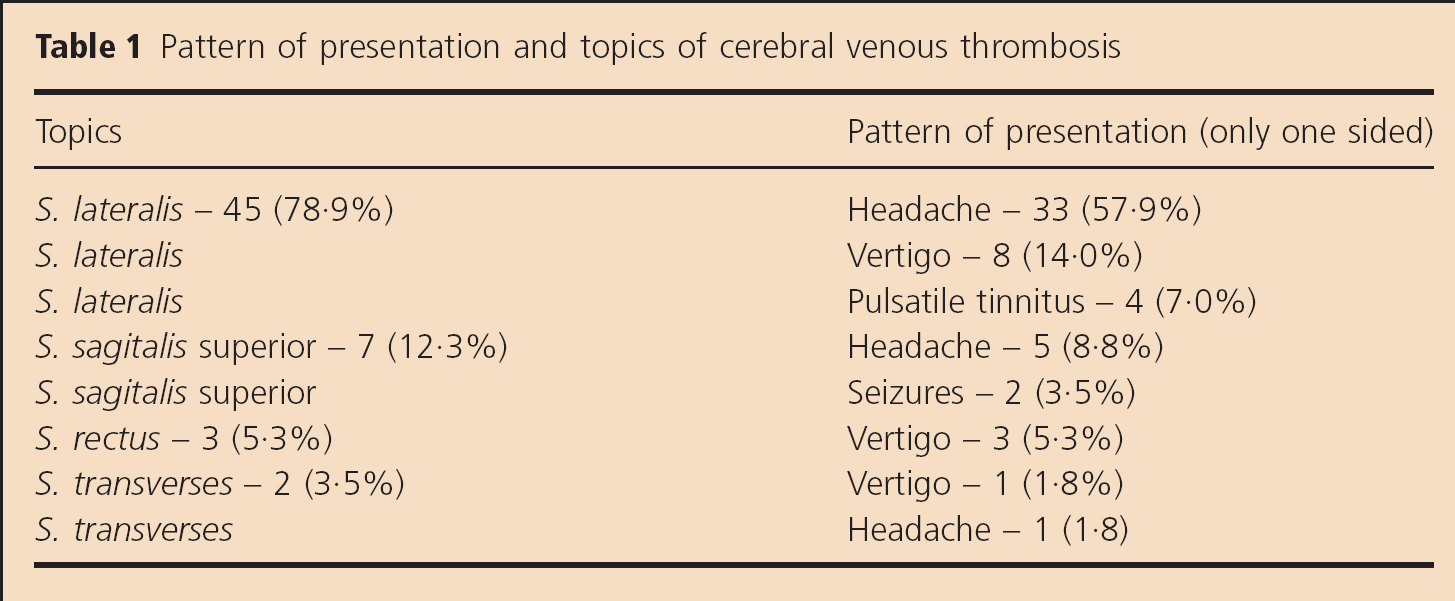
Focal cerebral signs (monosymptomatic) in isolated nonseptic thrombosis were found in 57 patients (2004–2015 year). Frequency in gender – males to females – was 1:2, mean age 32 ± 11·8. Diagnosis was confirmed (2) by history of diseases (100%), neurological (100%) and ultrasound (45%) examination, by results of MRI, and MRI venography (100%), and D Dimmer was elevated in 100% of patients. Forty-one (71·9%) cases underwent standard hospital treatment (2), continued ambulatory, while 16 patients (28·1%) refused this treatment. Pattern of presentation and topics are shown in Table 1. According to literature, expected recurrences in treated thrombosis are 4·4% (3).
Pattern of presentation and topics of cerebral venous thrombosis
Patients were monitored at 3rd, 6th, 12th, 24th, 30th, and 36th month with diagnostic methods.
After six-months, 35 (61·4%) cases from treated patients went under recanalization, compared with only 3 (18·8%) untreated. Twelve months later, 37 (64·9%) treated patients were completely recanalized and 2 (3·5%) partially. From untreated patients 12 months later, 5 (31·3%) were completely recanalized, 3 (18·8%) partially, and 8 (50·0%) were not recanalized. Table 2 shows recurrences in treated and untreated patients.
Recurrences in treated and untreated patients
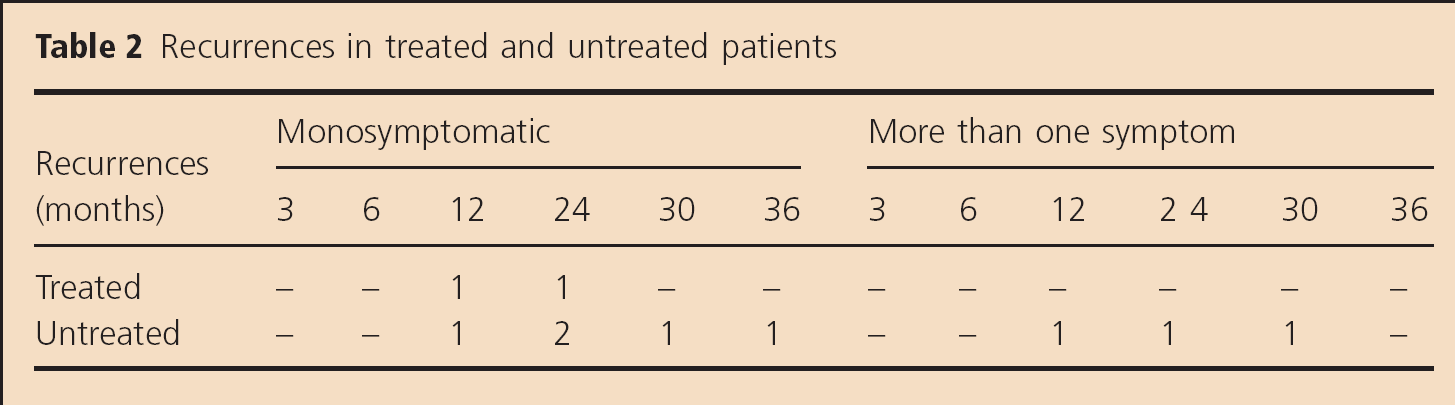
Recurrences were found in 8 (50·0%) untreated patients (5 monosymptomatic and 3 with more than one symptom), while there were 2 treated patients (4·9%) (4,5).
Data analysis shows statistically significant differences between recanalizations and in recurrences between treated monosymptomatic and untreated patients. Recovery is difficult in untreated patients. Recurrences, which are probably connected to intracerebral embolism, are manifested mainly because of not implemented treatment.