







Abstract
This article proposes a greater emphasis upon the intellectual history of political studies in the UK. The limitations of conventional understandings of the disciplinary past are considered in relation to the 1950s and 1960s. The author seeks to challenge contemporary views of this period in two respects. First, he shows how the key institutions of the emergent discipline were formed for highly contingent reasons, and how they were underpinned by a disciplinary ethos that was inherited from the late 19th and early 20th centuries. Second, he draws attention to an important, and neglected, shift in disciplinary self-understanding in the late 1950s and 1960s, as figures like W. J. M. Mackenzie blended aspects of the dominant approach to political inquiry with newer ideas, thus generating an influential conception of a distinctively British political science.
Politics … still remains, however closely related to the subjects in conjunction with which it has been taught in the past; and there is, as far as I know, no movement anywhere in favour of establishing a first degree course to be taken exclusively in the range of subjects usually classed as Politics (Cole 1950).
Introduction
An important aspect of the identity of an academic discipline—however diverse it may be in terms of its objects of study, its methods of inquiry and its theoretical traditions—is its sense of ‘disciplinary history’. This term is used by intellectual historians to denote the significance of the narratives about its past through which an academic discipline: (Farr and Seidelman 1993) accounts for its origins, development and current trajectory; (Postman 1987) reinforces the legitimacy of the relative standings of those approaches and subjects deemed central and those that are supposedly marginal to the disciplinary enterprise; and (Paolo Mancini and David Swanson (1996) generates a sense of purpose and belonging for contemporary practitioners.
Among historians of academic disciplines, three particular lines of debate have emerged around the contested idea of ‘discipline-history’ (Collini 1988; Vout 1995). The first concerns whether an ‘objective’ approach to the historical understanding of a discipline is possible, given the propensity of current practitioners to view earlier developments through today's interpretative lenses (Dryzek and Leonard 1988; Farr, Seidelman, Dryzek and Leonard 1990; Farr and Seidelman 1993). For some practitioners, a more historically nuanced and intellectually pluralistic sense of a discipline's past can only enhance the scholarship of contemporaries. The practice of political science, according to John Dryzek and Stephen T. Leonard (1988), is enhanced by a deep appreciation of traditions of inquiry that have shaped a particular sub-field and the discipline as a whole. This position, together with the debates it has generated, is far more familiar in the United States, where the writing of the history of political science occupies an important, though by no means uncontentious, place in the disciplinary field.
The second debate is about whether the very idea of a ‘discipline’ projects a spurious unity, and misleading singularity, on to what are in reality internally diverse and loosely bounded fields of study. As Stefan Collini puts it:
What is called a ‘discipline’ is in fact a complex series of practices, whose unity, such as it is, is given as much by historical accident and institutional convenience as by a coherent intellectual rationale. These practices almost invariably incorporate layers or residues from some previous forms of the constituent activities, elements that do not necessarily have an intrinsic connection with those concerns which many current practitioners might regard as being at the core of the discipline … From time to time efforts are made to purify this heterogeneous bundle: new definitions, methodological prescriptions, curricular re-organisations, the founding of breakaway professional societies and so on (Collini 2001, 298).
A third, related debate prevalent among American historians of political science focuses on whether the characteristics and development of academic disciplines should be explained through the adoption of an ‘external’ focus upon societal and political contexts, or by emphasising discursive developments and conceptual changes that relate to the internal intellectual character of the discipline (Farr and Seidelman 1993; Gunnell 1993). Not surprisingly perhaps, there is now an increasing consensus in favour of smoothing over this dichotomy and combining both interpretative perspectives (Farr, Dryzek and Leonard 1995, 6–7; though, for a counter-argument, see Gunnell 1993, 9).
These debates inform the interpretation that I offer of the changing character of political studies in the 1950s and 1960s. The weakness of the intellectual history of the discipline in the UK in comparison to the US (despite some important individual excursions on to this terrain, for instance Hayward and Norton 1986; Hayward 1991; Hayward, Brown and Barry, 1999) reinforces the claim that a sense of the disciplinary past is only weakly apparent in current British scholarship. One reason for this absence is the ubiquity here of the guiding assumption about cumulative intellectual progress that Thomas Kuhn (1962) identified as a hallmark of the modern social sciences. More particularly, there may well exist a subconscious collective desire in a subject that has only recently ‘arrived’ as an institutionally recognised, independent discipline to distance itself from its preprofessionalised infancy. A range of other contemporary institutional and cultural pressures may also encourage practitioners to accent the novelty of contemporary scholarship and its relevance to today's issues and debates, rather than paying attention to the relations between current concerns and those of predecessors.
Yet, in a context where the flow of personnel, ideas and information from other countries into the indigenous discipline has increased enormously, and where many of the debates that shape the concerns of political analysts in separate sub-fields increasingly occur on a European or international basis, two questions are increasingly pertinent. First, how should the discipline of political studies relate to its past, given the many obvious transformations of culture, gender, national origin and intellectual influence that characterise today's profession? And, second, is there a distinctively British way of studying politics that still endures? One of the aims of this article is to help justify the worth and importance of these questions for current practitioners. I do so while focusing upon this important period in the development of the subject.
Among today's practitioners, the scholarly output of the years after the Second World War is largely overlooked, or, when recalled, viewed as an interesting but flawed preparation for the more theoretically informed, empirically sound or methodologically rigorous work of contemporaries. This standpoint is overdue for reconsideration, not least because it has helped cement an unhelpfully teleological mindset regarding the discipline's development, a stance that can induce undue complacency about the supposedly mature subject in the present. If we step away from the tendency to construe this period as a kind of amateurish prequel to the establishment of a modern autonomous discipline, some of the tensions and shifts that were played out in these years become more visible and a more interesting set of interpretative questions about the disciplinary past can be engaged with. In considering these issues I draw attention to the particular circumstances in which the Political Studies Association (PSA) and then Political Studies were born, and observe the ethos that underpinned both. I also point towards the significance of a revealing, yet rather forgotten, debate that emerged about the purpose and nature of political education. This, I will suggest, sheds some important light upon the changing character of political studies in the UK.
It is commonly observed that much of the scholarship of these years was tainted by the historically inclined, institutionalist focus of its authors, and that the discipline was weakened both by the close relations of some political scientists and the political elite (Sharpe 1975, 28–30), and, more generally, by unquestioned assumptions about the exceptional character and moral superiority of the Westminster model of parliamentary government (Gamble 1990). As a judgement about the totality of the scholarship produced in these years, this smacks of hubris, and is founded upon an unpersuasive kind of historical partiality. It was in fact intellectual developments from this period that prepared the greater openness to theoretical models emanating both from the United States and continental Europe that occurred after the 1960s, and which helped undermine prevalent Whiggish understandings of British politics. Whether the advent of the 1970s represents quite the watershed signalled by some commentary is therefore open to question (see, for instance, Gamble 1990; Hayward 1991). The alteration to the ethos of political studies that occurred in the decade before 1970 involved a move away from some aspects of established modes of thinking about the subject and a repackaging of others. The disciplinary identity that emerged from these developments has continued to inform the mindset and guiding assumptions of a considerable portion of the discipline in the decades that followed. One consequence of these subtle, and somewhat ambiguous, shifts was the appearance of an important new account of the role and nature of political science, a conception that has informed the more recent development of political studies. In this article, therefore, I offer an interpretation of the changing discipline in the 1950s and 1960s, rather than a definitive historical account of its various sub-fields. My argument focuses principally upon analyses of the British polity and debates about the purpose and nature of political studies in this period. 2
Political Studies circa 1950
G. D. H. Cole is one scholar from this earlier era whose sense of the limitations of the indigenous study of politics was in some respects as sharp as that of later critics (Wright 1979). And yet, his own distinctive scholarly output is generally overlooked today. This is primarily since his work differs radically from current tastes and intellectual genres, and due to his overt political commitments and willingness to write for a broad, non-specialist audience. But the quotation placed at the head of this article reveals that in important respects Cole anticipated the familiar contemporary view that the major reason for the deficiencies of the scholarship of the 1950s was the continuing hold of other disciplinary fields over the study of politics. This argument surfaced in a report that he authored in 1950 into the teaching of political studies in British universities. In his authoritative and detailed overview (Cole 1950), he drew attention to the continuing tendency for political subjects to be taught within departments of history, law and philosophy. Even where undergraduate courses devoted to political themes were offered, the shadow of the intellectual traditions associated with these subjects, especially as they had developed at the universities of Oxford and Cambridge, hung heavily over the teaching of politics. The assessment and development of political theory, and the analysis of governmental institutions and political systems, he suggested, revealed the impress of both the moral philosophy practised at Oxford since the late 19th century and the constitutional history developed at Cambridge in the same period (Cole 1950, 619–623).
Cole argued that an independent discipline requires its own set of distinctive analytical frameworks, and a measure of institutionalised independence from other subjects in the academy. Like other proponents of this view, he was impressed by the autonomy achieved by the discipline of economics in the years after 1945 (he was appointed Reader in economics at Oxford in 1944) and saw much for his fellow political scholars to emulate in this disciplinary exemplar: ‘whereas in Economics there is at any rate a lingering belief in a common body of economic doctrines which are “applied” in the specialist branches of economic study, there is in Politics no corresponding central core that does not evidently involve value-judgements’ (Cole 1950, 625).
For Cole, political institutions represented the principal empirical object towards which political analysis and theorising should be directed. While he did observe the need to throw off the influence of the British constitutional-historical tradition and turn attention to the systems of other countries—‘the study of Political Institutions and of Government has tended until quite recently to develop in their hands mainly as a branch of British History, without any considerable comparative element’ (Cole 1950, 627)—he also maintained that scholars should refine, not discard, the distinctive combination of political theorising and analysis of state institutions that was the hallmark of the British study of politics. A proponent of the label ‘political studies’, as opposed to ‘political science’ for the embryonic subject (Hayward 1991, 307), Cole envisaged the disciplinary future as an improved version of the past—an expanded, updated and more rigorous version of the ‘theory and institutions’ tradition of study which had grown up in the leading universities during the latter half of the 19th century. His argument offers an important clue to the changing character of political studies in the years that followed, and provides an early expression of aspects of the ethos that came to underpin the emergent discipline.
The 1950s and 1960s in Retrospect
The two decades after 1950 were of particular significance in the development of the discipline in Britain. It was in these years that political studies was transformed from being a loosely constituted intellectual community into an institutionally accepted academic discipline. Until this point, as Cole observed, the subject had generally been taught either on individual papers within other degree courses, or appeared within specialist degree programmes, such as the BA in Public Administration at Manchester University. With the formation of the Political Studies Association in 1950, followed by the foundation of the journal Political Studies in 1953, and the establishment of an annual conference soon after, the visible hallmarks of the autonomous discipline were visible. Yet, the intellectual community served by these institutions was initially very small, consisting mainly of a small pool of (predominantly middle-aged) men; and lacked the kind of resources and sense of purpose conventionally regarded as necessary for a functioning discipline. It was in the decade after these developments that, slowly and steadily, universities began to hire teachers in the subject and new departments were founded at some of the main provincial universities. Only when the sector as a whole expanded in the late 1960s, and particularly with the establishment of the polytechnics, did the number of political scientists in Britain increase rapidly, a development that was also linked to the growing prestige of the social sciences as a whole (Lovenduski 1981). By the end of that decade, departments devoted to politics existed in nearly every major university. The membership figures of the Political Studies Association reflect this pattern of expansion:
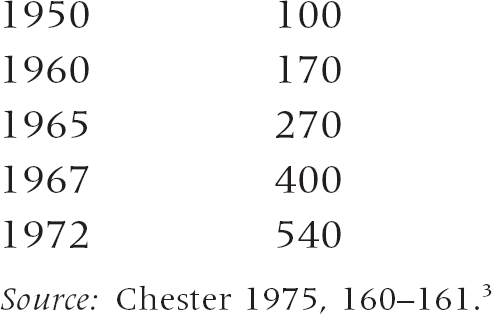
Source: Chester 1975, 160–161. 3
1. PSA and Political Studies
Perhaps the ‘event’ from these years that looms largest in the collective memory of later practitioners is the decision to adopt the nomenclature ‘political studies’, as opposed to ‘science’, for the title of the fledgling association. While this was clearly a revealing choice on the part of the small group that made it, its historical meaning is easy to misread. It is tempting to grant an exaggerated importance to this debate—endowing it with either heroic or malign implications—and to regard this as ‘the moment’ when the discipline was deflected away from the path trodden by political science in the United States.
This view is doubtful for two reasons. First, the term ‘political science’ was not at this stage associated with the American study of the subject (as it was to become later). The two terms were often used interchangeably, and for many the idea of ‘a science of politics’ was more beholden to Aristotle than to colleagues across the Atlantic in this period (Crick 1973; Collini, Burrow and Winch 1983). And second, the various published reminiscences of the developments leading up to the formation of PSA tend to support the idea that a number of contingent factors played a key role in the formation of the association, and that this was not quite the watershed event suggested by hindsight (see especially Chester 1975; Crick 1980; Finer 1980; Harrison 1975). The birth of PSA was largely determined by exogenous factors. UNESCO undertook a comparative survey of the state of political science after the Second World War. This led to a gathering of scholars in Paris in 1948 that was attended by Cole and W. A. Robson on behalf of the small group in Britain who regarded their teaching of, and writing on, political subjects as relatively independent from their disciplinary identities as historians, philosophers or economists. Out of the Paris-based meeting came the idea of the International Political Science Association, a development that implied the existence of national representative bodies. In 1949, therefore, UNESCO again invited delegates from Britain to attend an international conference of political scientists, a meeting attended by Robson, Norman Chester and Dennis Brogan (Chester 1975, 29–30).
These events constituted the immediate trigger for the formation of a British association, following a number of informal meetings in Oxford and London. Discussions about the idea of such a body were enabled by an already existing informal network, based principally at the universities of Oxford and Cambridge, and at the London School of Economics and Political Science (LSE). A letter was circulated in November 1949 to sound out colleagues in every other British university about the merits of an association and was signed by some of the leading figures in the field (Chester 1975, 30–31). It reported the suggestion that membership should be open ‘to all University teachers in Political Theory and Institutions, Government and Public Administration, Constitutional and Administrative Law, International Relations and similar subjects’ (1975, 30).
The main focus for discussion at the association's initial meeting (attended by about 50 academics) held at LSE on 23 and 24 March 1950, was a draft constitution. In the document that was circulated, the term ‘political studies’ was used to refer to the title of the association, while a reference to ‘political science’ was included in Clause Two of the proposed constitution, which defined eligibility for membership. It was the appearance of the latter term, not the former, that prompted debate. The main proponent of ‘political science’ at this inaugural meeting was Robson (standing in for Harold Laski, who had fallen ill shortly before the meeting and was to die soon after). The study of the political in Britain, Robson argued, was falling behind the methodological advances informing practice elsewhere. The development of an independent discipline required the adoption of modern professional norms (see also the report he prepared for UNESCO on the international teaching of political science (Robson 1954)). The reminiscences of some participants suggest that while a debate did ensue there on the ‘studies or science’ issue, more attention was actually expended at this meeting on deciding whether the association should be open to teachers of political studies ‘and other allied subjects’ (Chester 1975, 32). In other words, the variety of disciplinary and departmental locations within which politics was taught was at least as significant as the ‘science’ debate which figures more prominently in the collective memory of this meeting.
Contingent factors were vital too in determining the appearance of the association's journal Political Studies. This began life in the form of discussions between academics at Oxford and the LSE that were originally concerned with whether the LSE-based journal Politica should be revived. For PSA, the idea of offering a subvention to a putative journal was an off-putting proposition. Political Studies only became feasible once the Nuffield Foundation was persuaded to provide a grant and a deal was struck with the Clarendon Press in Oxford. While its timing and finances may have been affected by such contingencies, the course charted by the journal was informed by the continuing significance of the scholarly ethos passed down from the early part of the century. This continuity is apparent from the reminiscences of the early life of Political Studies offered by its first editor, Wilfrid Harrison (1975). The journal would celebrate no single paradigm, nor would it seek to give any prescriptive definitional content to the discipline; this ‘tolerant eclecticism’, in the words of (Bernard Crick 1980, 303), was a defining feature of the discipline in the 1950s and 1960s. 4 There were, however, limits to its tolerance. Harrison recalled his awareness of, and discomfort with, the methodological challenges laid down in the United States by Harold Laswell and David Easton (Harrison 1975). In his inaugural lecture from this period, the main intellectual source of this reaction is laid bare—his Whiggish scepticism about the rationalistic presuppositions animating American political science, and his commitment to the validity of indigenous eclecticism (see Vout 1989, 29). These commitments underwrote the placing of limits to the pluralism that the journal would practise, and are revealing about some of the norms that bound this fledgling community.
Most practitioners in the early 1950s agreed that the study of politics comprised both an empirically observable range of phenomena, particularly associated with the workings of government and its primary institutions, and the study of the lessons available from the ideas of the great figures of western philosophy. This ‘institutions and ideas’ combination was the outcrop of some of the most influential traditions shaping the study of politics in the UK in the late 19th and early 20th centuries. In Britain, one of its greatest, and most influential, proponents was Sir Ernest Barker whose scholarly output straddled the fields of the comparative and historical study of political institutions, the history of western political thought, ancient Greek political philosophy and the political culture and history of modern England (Stapleton 1994).
In its early issues, Political Studies reflected the continuing reach of this ‘institutions and ideas’ discourse. The journal gave priority to studies of particular political institutions (usually, though not always, in Britain) and to the historical interpretation of the ideas of leading figures within the canon of western political thought. It was quite common (as Cole (1950) reported) for individual academics to be entrusted with the teaching both of political institutions and ideas, an imperative that shaped the approach to the subject of many practitioners in these years. Political studies at the start of the 1950s functioned as an intellectual community, not as a professional discipline in the contemporary sense of the term. This community shared reasonably stable ideas about what counted as political and how the phenomena collected under this heading should be studied. Its prevailing ethos is captured in W . J. M. Mackenzie's observation: ‘I see the “discipline” as a group of people rather than as a set of principles, as a continuing debate rather than as an enquiry in the style of natural science, as an enterprise which is an integral part of real politics’ (1975a, ix).
2. Contesting Political Education
Contemporary analysis of the British polity is widely assumed to have moved beyond the under-theorised, insular and empirically limited studies associated with this earlier period. Such an assumption has, however, resulted in the neglect of two important interpretative questions. Which were the main intellectual and ideological traditions that established the intellectual hegemony of the ‘Westminster model’? And, have the underlying assumptions that ensured the reach and power of this construct subsided? The moralistic discourse that saturated the Westminster model—founded as it was upon the assumption that the British system embodied the ideals of individual liberty and social progress—testified to the continuing significance of a powerful assemblage of 19th-century liberal elements in post-war academic life, specifically: a conception of the British constitution that traced back to Dicey; an evolutionary perspective on British democracy advanced by various 19th-century thinkers, most notably John Stuart Mill; and a Victorian-inspired conception of the nature and purposes of political education (Gamble 1990: Hayward 1991).
This last element was integral to the philosophy underpinning the educational practice and curriculums of the country's elite university institutions in the early 20th century, which were designed in part to provide a broad moral and intellectual training for the country's political and administrative elites. This imperative informed the teaching of politics in these institutions during the decades prior to, and immediately after, the Second World War (Kavanagh 2003). Largely conducted by scholars trained to regard themselves as ‘generalists’ who ranged across the disciplines of history, philosophy and law, the teaching of politics still reflected the ideals of a classical education that was intended to provide a liberal-humanist preparation for those likely to assume prominent positions in public life (Collini, Burrow and Winch 1983). Such a view was embedded in the conviction of a number of late 19th-century intellectual luminaries that political educators could lay the foundations for the establishment of a more intelligent and morally conscious national culture.
These intellectuals, as Julia Stapleton (2001) observes, shared a notion of English identity which they tried to refine and disseminate through scholarship that was also accessible to a broad educated public. Thinkers like Dicey, J. R. Seeley and Leslie Stephen all promulgated a vision of a unified nation characterised by a strong moral sensibility and a disinterested notion of public service (see also Adcock and Bevir (forthcoming)). These values were viewed as the hallmarks of an indigenous elite that was capable of standing above political rivalries and popular prejudice (Vout 1989). As the leading chronicler of this particular milieu has observed, Oxford University played a major role in disseminating this world-view, socialising generations of graduates into its constituent ideals (Annan 2001). This early-century English vision of the role and character of the intelligentsia constituted the backdrop to the emergence of the discipline of politics into the post-war period (Beer 1977, 5). The ‘knights of the textbook’ (whose influence continued to dismay ‘modernists’ like Mackenzie in the 1960s) still reigned supreme in the post-war curriculum (Vout n.d.). Among the few dedicated texts to the study of British government, courses on British politics tended to draw upon such staples as Bagehot's English Constitution (1867), J. S. Mill's Considerations on Representative Government (1861), Lowell's Government of England (1908), H. E. Dale's The Higher Civil Service of Great Britain (1861) and The Haldane Report on the Machinery of Government (1918).
Modernising ‘the British Tradition’—W. J. M. Mackenzie
The ‘institutions and ideas’ tradition was still prevalent in the years under consideration here, when a more self-conscious attempt to engage in the practice of disciplinarity began to inform the study and teaching of politics. Significantly, it was also in these years that the hegemonic position of this conception of political education began to cede ground in the face of a number of political and philosophical challenges. The change in intellectual gestalt within the political studies community was by no means dramatic or complete, and certainly did not amount to a Kuhnian-style paradigm shift (Kuhn 1962). The lack of any overt debate about theory and methods at this time was a result of both the small size and close contacts characterising this community, as well as the continuing hold of the Whiggish liberalism that shaped the intellectual horizons of practitioners. By and large, even scholars who were more predisposed to be critical of the British political system still reflected the major assumptions of the dominant traditions of political analysis, and often focused attention upon those subjects central to the Westminster model—the unitary state, institutional continuity, class compromise, bureaucratic neutrality and ministerial responsibility (Kenny (forthcoming)). Thus, alteration to the discipline's ethos was neither sudden nor seismic, but important new fault-lines did appear in the 1950s and 1960s. There emerged, in particular, a public fissure between advocates of an indigenous political science, like Mackenzie, and those figures, like Michael Oakeshott, who preached scepticism about the idea that methods and approaches other than those of the historian or philosopher were applicable to the study of politics (Oakeshott 1977; Cowling 1963). Considerable momentum gathered behind this first idea during these years yet, in its most influential forms, the case for political science in Britain was made in terms that reflected the continuing hold of established understandings of the polity's distinct character, culture and historical traditions, rather than through a conversion to American models.
This trend is illuminated by a reconsideration of some of Mackenzie's writings about the subject. He was one of a number of figures whose work illustrates the dialectic of amendment and continuation that characterises the trajectory of the discipline in these years, and whose influence grew during this period. 5 His writing on the character of, and need for, a British political science are revealing about intellectual differences over the nature of the fledgling discipline and have since been influential upon the self-understandings of important figures within it.
One of Mackenzie's (1975a [1955]) major essays on these themes developed through a critical rejoinder to Oakeshott's defence of a tradition-based conception of political inquiry and practice. The latter's position was significant because he too laid claim to a revised version of the Whig-liberal inheritance that had shaped early-century political studies. Oakeshott (1977 and 1962) argued forcefully against the idea that a proper understanding of the political necessitated an independent disciplinary field and distinctive methodologies and theories. Instead he defended the merits of the rigorous application of historical and philosophical insights to political matters, and criticised the supposed link between improvements in the quality and quantity of data and explanatory precision that he saw as central to the emergent British political science discourse (Oakeshott 1962; Cowling 1963).
In reply, Mackenzie (1975a) objected to the ideal of political education that Oakeshott invoked, developing a challenge that reverberated more widely throughout this intellectual community. He set out to breach Oakeshott's rigid (and politically inspired) distinction between arguments derived from organic traditions and the doctrinaire assertions of ideologies. He also questioned the anti-science stance of this kind of intellectual conservatism, noting the classical antecedents for the modern ambition to create a practically orientated, and empirically informed, science of society and politics (Mackenzie 1975a [1955], 22; see also Collini, Burrow and Winch 1983). Importantly, Mackenzie criticised Oakeshott's interpretation of the contents of the British tradition, though he did not question the conceptual value of traditionally derived political inquiry. Thus, Oakeshott's normative characterisation of ‘tradition’ was represented as a covert attempt to marginalise some of the long-established perspectives that had been integral to the British tradition of studying politics. That tradition was in truth far more variegated and internally combustible than Oakeshottian thinking allowed. Oakeshott was especially guilty of ignoring a central strand of the tradition of political inquiry in Britain—those figures who focused upon the concrete principles relevant to political life, and showed a willingness to ‘teach empirical method and the use of evidence, with due precaution to ensure that the limits of the method are understood’ (Mackenzie 1975a [1955], 29; Crick 1973, 111–120).
Opting to leave Oxford for a chair in government and administration at Manchester University in 1949, Mackenzie was undoubtedly affected by the political culture he encountered in the city of Manchester. A later essay reveals his own conviction that the civic-egalitarian ideals he encountered there provided an important backdrop to the challenge he offered to inherited Whig-liberal ideas about the purpose of political education (Mackenzie 1975b [1951]). His thinking was particularly shaped by his involvement in the public administration degree offered by the department at Manchester. 6 This programme expanded considerably after the Second World War, particularly when bodies such as the city corporation's treasury department encouraged its staff to attend (Chester 1975, 156). Mackenzie was delivering his evening classes to clerks from the town hall, local government officers, trades unionists and assorted public officials, all registered for the part-time diploma in either public administration or social studies.
Mackenzie's writings in this period offer a revealing glimpse into, and were a partial cause of, the effacement of the ‘gentleman-governor’ approach embodied within the Oxford Honours School. They point to its displacement by the view that the study of politics should be grounded upon an improved understanding of the workings of extant political systems as well as the application of a more rigorous set of methodological standards. His account of the various intellectual positions jostling to shape the character of the emergent discipline suggests a more fragmented and complex picture of these years than that held by later practitioners. As well as Oakeshottian idealism, he highlighted new influences upon the fledgling discipline, specifically: the growing influence of radical, participative notions of democracy; the epic account of the natural law tradition associated especially with Leo Strauss in the United States; and the ideas associated with the ‘behavioural revolution’. None of these perspectives, however, captured what he deemed to be the ‘right’ way to think about the scientific character of political analysis, nor provided the most sensitive way of conceptualising the specifically British contribution to political science.
His thinking about this latter theme was most fully expressed in a lesser-known essay from this period—on the changing character of English (his emphasis) politics and the interpretative traditions it had spawned (Mackenzie 1975c [1965]). Representing the post-war years as an era marked by discontinuity with recent history, he perceived the rise of the American version of political science as one of several major new pressures upon established understandings of the national past and the political present. Other dynamic factors contributing to the undermining of the Whiggish complacency that characterised much indigenous political thinking included the growth of various forms of international interchange and inter-dependency. These, he argued, pointed towards a situation in which nationally distinct traditions of political inquiry were likely to wane. He urged upon his British colleagues a stance of sceptical interest in American theories: ‘It is intellectually impossible to disregard the Americans: one is forced to take up a position in relation to them, even at the risk of losing intellectual independence’ (Mackenzie 1967, 68). In ambivalent vein, he argued both that the boundary between American and British practice might be rendered more permeable, but also that for an indigenous discipline to be established, some distance from American-style political science was necessary.
Mackenzie saw particular benefits in the project of bringing the American and British disciplines into closer proximity. From the American model he drew support for his conviction that the social sciences ought to focus upon the various disciplines’ commonalities and overlaps of method, interpretative focus and data sources. He was therefore interested in David Easton's attempt to justify the applicability of systems theory for political analysis (1953). Drawn towards one of the key questions posed by Easton—what is unique about political science compared to the other social sciences?—Mackenzie sketched the outlines of a different answer. While behaviouralism reflected the trend within the social sciences to emulate the methodological approaches and intellectual norms associated with the disciplines of mathematics, chemistry and physics, he suggested instead the merits of the biological and human behavioural sciences. The study of politics should be set within a broader social scientific framework that would work towards a commonality of theoretical ideas and deploy relevant empirical data over the whole field of human society (Mackenzie 1967, 301). Thus, he concluded that the analysis of states should be supplemented with a greater focus upon political behaviour and social life independently of the state machinery. Political science would benefit from acquaintance with the study of primary group relations and tribal cultures from the fields of biology, anthropology or psychology. Mackenzie injected into his critical assessment of British political studies an important and prescient argument: the study of domestic politics required an engagement with the notion of power, and specifically an empirical consideration of the different sources of societal influence—an emphasis that he borrowed from organisational theory, but also one that he retained from his youthful Marxism (Mackenzie 1967, 217–219; Vout n.d.). Above all, he sought to contest the ingrained assumption that the most legitimate interpretative pathway to understanding the British polity lay across the fields of constitutional history.
The conception of political studies advocated by Mackenzie in this period involved an incremental alteration to, not the overthrow of, ‘the British tradition’ established since the late 19th century. He argued specifically for a subtle recalibration of disciplinary identity, an expanded awareness of methodological options and an openness to a wider set of theoretical developments. The discipline in general needed to be set on a more serious, professionalised footing. Its scholarly output should build upon the best of the ideas/institutions tradition, ‘and take seriously the more rigorous integration of theoretical and empirical study’ (Mackenzie 1967, 307–308). As well as the sharper appreciation of power dynamics and the impact of societal forces upon the political system that he advocated, he argued for the study of Britain in a wider-angled international focus (Mackenzie 1967, 310–330). Yet, he remained convinced that there was merit in the tried-and-trusted approaches and ideas associated with the British way of studying politics. While some aspects of his thinking about the subject were clearly unique, its wider significance is nicely captured by Malcolm Vout's (1989) suggestion that the key to Mackenzie's contribution was the shift in idiom that he helped effect. Specifically, he helped legitimate a conception of political study that was more social-scientific in its orientation, and more interdisciplinary in its ethos.
Increasingly overt tensions emerged around the advocacy of a more independent, modern and ‘professionalised’ discipline in these years. Yet, crucially, figures like Mackenzie were highly successful at blending these newer ideas with parts of the established tradition, brokering emergent disagreements through his distinctive conception of a distinctively British political science. The emergence and influence of this kind of position provides an important insight into the lack of overt dispute over methods and theories in the discipline during these years.
The Decline of Whiggish Liberalism
As well as these internal disciplinary challenges to the ideals of Whiggish pedagogy, a broader set of background pressures guided the development of political studies in the 1960s. The institutionalised independence given to the teaching of the subject in various university locations was accompanied by the increasingly pervasive idea that political studies should be homed (literally as well as intellectually) among the social sciences. Increasingly, the Victorian idea of political science as the discipline that integrated the study of history, law and philosophy was in tension with the notion of a narrower, more specialised and autonomous discipline. The wider shift in mood of the political elite that characterised the 1960s—towards an appreciation of technocratic knowledge and various kinds of specialist expertise—also began to filter into the discipline in these years.
A variety of exterior and internal factors thus combined to effect the steady erosion of some of the normative foundations of Whiggish approaches to the study of politics. Until this era, the characteristics and values associated with prevailing historicist idealisations of the British constitution were easily and successfully transferred on to assumptions about ‘the British way’ of studying politics. The presumed exceptionalism of Britain's political system was thus converted into a disciplinary identity formed around the twin imperatives of national exceptionalism and the rejection of American-style political science.
That this intellectual carapace began to break apart by the end of the 1960s is apparent from the shift in tone, and methodological character, of a burgeoning literature devoted to some of the inadequacies of parliamentary government in Britain. 7 Several studies in this area, such as Stuart Walkland's The Legislative Process in Great Britain (1968), sought to put the study of parliament in a wider social context. Others detached Westminster from other state institutions and began to apply some of the techniques and methods, notably quantitative analysis, associated with political science, for instance Robert Jackson's Rebels and Whips (1968) and Hugh Berrington's study of Backbench Opinion in the House of Commons (1973). The general ethos of these studies was modernising and reformist, arguing for adjustments to the workings of parliament so that its functions could be discharged in new circumstances. An important precursor of this genre was Bernard Crick's The Reform of Parliament (1964), a study that emerged from the discussions of the influential group of researchers and civil servants who formed the Study of Parliament Group. The tenor of this body of writings suggests that the erosion of a Whiggish liberalism which commentators have often linked to the wholesale importation of non-British theories and models after 1970 (for instance Gamble 1990), was in fact apparent in this earlier period.
Conclusions
There are many obvious differences between the presuppositions and intellectual character of British political studies during the period of the 1950s and 1960s and those that prevail now. Yet, the notion that this era in its intellectual ancestry is entirely separated from, and inferior to, today's scholarship betrays a more complex and important reality, and reinforces a self-serving conception of the disciplinary past. It is in relation to this particular intellectual blind spot that the debates among intellectual historians sketched at the start of this article have most relevance. Ongoing disputes about the possibility of, and epistemological conditions for, more ‘objective’ understandings of the development of the discipline offer important sustenance for the argument that the British discipline needs to consider its own history as an object for inquiry that is, to some degree, detachable from the preoccupations and convenient ‘narratives’ of contemporaries. Furthermore, the powerful case made by some intellectual historians for the study of the practice of disciplinarity, as opposed to the rehearsal of self-serving teleologies about the superior standing of current disciplines, may also underpin this kind of inquiry. In the period under examination here, this perspective suggests that instead of being satisfied with time-honoured characterisations of Britain's (anti-) intellectual culture or character, we should attend more fully to the contingencies that shaped how the discipline was institutionalised, and appreciate the importance of the recalibration of the dominant tradition overseen by some of the key figures in the subject in these years, including Mackenzie.
The third debate referenced above—on whether to prioritise socio-political factors or assume the causal priority of intellectual developments themselves—is perhaps the least useful to contemporary political scientists, given the artificial character of this conceptual separation and its echoes of familiar agency-structure debates. Yet, these arguments should at least prompt more nuanced reflection upon the interactivity of political, institutional and cultural factors with intellectual fashions and debates that shape the development of academic disciplines. In the case of British political studies, therefore, it is routinely (and rightly) observed that factors such as the rising prestige of the social sciences in British universities and the expansion of the higher education sector in the 1960s stimulated the rapid expansion of the discipline. But, this observation neglects how these developments helped legitimate, and were furthered by, the deliberate forging of a new disciplinary self-understanding in this period by analysts committed to the ideal of a distinctively British model of political science. The relative endurance of the adjusted disciplinary identity shaped by Mackenzie and others has enabled the transmission of some important continuities of thought and ethos within the British study of politics: most specifically, the continuing purchase of a relatively catholic approach to theories and method that supports a respectful interest in, as well as a critical distance from, paradigms such as rational choice. These connections with the past—whether we regard them as valuable or limiting—ought to be the object of more developed inquiry and debate.
Other aspects of the disciplinary identity established in these years continue to resonate in the very different context and intellectual culture in which political studies now operates. One point of continuity concerns the presumption that British political science has, since the Second World War, taken an unusually distinctive, and perhaps even exceptional, path. This notion is prominent, for instance, in some of the essays devoted to the history of political studies in the 20th century, published recently under the auspices of the British Academy (Hayward, Brown and Barry 1999). For some contributors, a recurrent scepticism about formal models, rationalistic philosophies and grand ideological narratives represents the enduring core of ‘the British way’ of studying politics (Hayward 1999; Bogdanor 1999). For others, it is the commitment of successive generations of British political thinkers to the values of individual agency and agent-centred modes of analysis that provides the kernel of the British contribution, and connects figures from the early through the middle to the later years of the century (Ryan 1999; Kelly 1999). Considered in relation to the problems central to the intellectual history of disciplines, we might do well to pose a different question here: should the development and distinctiveness of the discipline in the UK be understood in terms of transhistorical characterisations of Britain's intellectual culture, or by attending to the contingencies of historical development, institutional configuration and ongoing ideological contestation?
Equally, just as the development of comparative political analysis has tended to undermine more extravagant claims about the exceptionalism of polities like the UK, so we might ask whether a more developed comparative approach to disciplinary history might also undermine such claims about the study of politics. There is certainly scope to reflect further upon what is the supposed ‘norm’ against which the exceptional quality of political studies in the UK is to be assessed. 8 Offering a straightforward answer to this question becomes problematic if we observe the ingrained tendency of all academic disciplines to assert their exceptional quality. Such a claim figures prominently, it should be remembered, within the identity and self-understanding of political science in the US (Ross 1991; Ricci 1984)—often viewed from outside as the ‘norm’ against which other national disciplines are measured.
The second respect in which this period may constitute an important bridge between early 20th-century assumptions and more recent developments concerns the ‘generalist’ as opposed to ‘specialist’ ethos that some commentators regard (and, in some cases, lament) as a defining feature of the British political science community. It has been widely suggested that the ambition to develop a scholarly contribution that is in crucial respects transcendent of established sub-disciplinary boundaries, and to regard this kind of scholarship as more significant than more specialist kinds of inquiry, knowledge-addition and theoretical refinement, is a hallmark of British scholarship. This ethos was, for example, crucial to Crick's adoption in this period of the legacy of a figure like Sir Ernest Barker, allowing him to range across increasingly recognised boundaries between sub-disciplinary specialisms (Crick 1973; see also Dunleavy, Kelly and Moran 2000, 7). Such a characteristic is easy to overstate, and certainly less familiar (for various institutional reasons) in the contemporary discipline than it once was. Nevertheless, the disciplinary ethos laid down during these years by the likes of Mackenzie provides one possible explanation for the survival of such an attribute into the late 20th century.
In other respects, however, examination of the intellectual character of earlier periods heightens awareness of what has changed, and, more contentiously, what has been lost. While traces of ‘generalism’ remain embedded in the discipline, the associated idea that the teaching and study of politics within the setting of the university offered a platform from which scholars could engage with, and help shape, a much broader public culture, appears to have disappeared almost entirely (Birch 1986). As Dennis Kavanagh (2003) observes, some of the leading figures within the discipline between the wars were unselfconscious public intellectuals (see also Stapleton 2001). Yet, the idea of the political scholar as public intellectual began to lose ground during the years under scrutiny here as an alternative normative understanding of political education gained ground. One of the consequences of the new winds of professionalism, at least during the 1960s, was to delegitimate the sense of organic connection with public debates, and with political parties specifically, enjoyed by earlier generations of political scholars—Ernest Barker, G. D. H. Cole and Harold Laski being exemplars in the first half of the century (Hayward 1999). The model of the political scientist that gained credence in these years placed more emphasis upon the acquisition of specialist methodological and theoretical knowledge, greater familiarity with technical jargon and the epistemological aspiration to disinterested, impartial analysis. Certainly, individual academics have continued to enjoy access to media outlets, usually as experts on particular aspects of political behaviour or public policy. But, scholars whose work has spanned the worlds of public debate and the academy have increasingly found themselves working against the grain of academic life in this area, as the ethos of professionalisation and the idea of detachment from familiar political language and contemporary issues have become powerfully entrenched norms.
Here too, exaggeration is a temptation to be avoided. As various commentators have observed, the obituary of the public intellectual has been written recurrently throughout the 19th and 20th centuries, and ‘professionalism’ has proved a popular suspect for those seeking the cause of this figure's demise (Collini 1994; Jennings 2000; Kenny 2004). Nevertheless, there does appear to be merit in the hypothesis that the particular model of professionalisation pursued by political studies has contributed to the detachment of political science from public debate in the UK. 9 Whether the former is a cause of the latter, or merely its correlate, is an important further question.
Consideration of this theme should encourage a more rounded appreciation of the losses as well as undoubted gains that the adoption of a professionalised identity has brought in its wake. 10 Certainly, it is interesting to compare the UK discipline in this regard with its American counterpart. While the latter is typically viewed as the exemplar of the kinds of ‘normal science’ and professionalised ethos that have been the envy of some British scholars, it is also striking that many political scientists in the US have close connections with the worlds of politics and government, and political scientists arguably have a greater presence within the public sphere than is the case here. One possible explanation for this contrast concerns the continuing hold of traditions of scholarly inquiry that connected political science to the establishment, improvement and promulgation of American democracy (Crick 1959; Ball 1995; Ricci 1984). In the UK context, the major normative impulses associated with earlier periods in the development of the discipline have largely receded. Whether the norms of professionalism provide a sufficient and satisfying replacement for these impulses, or whether new ethico-political purposes should inform the discipline, are foundational and necessarily contentious issues. They would be better engaged, I would suggest, by a more developed and independent inquiry into the disciplinary past.
Footnotes
1.
I have benefited greatly from conversations I have had on this subject with Mark Bevir, James Farr, Martin Jay, Jeremy Jennings and Rod Rhodes. I am indebted to Andrew Gamble, Stephen George and Dennis Kavanagh for the detailed comments that they provided on an earlier draft of this article.
2.
Valuable accounts of related developments in the fields of comparative and international politics in these years can be found in Bogdanor (1999); Dunne (1999); and  .
.
3.
These figures are approximations only.
4.
This characterisation of the journal's ethos is to a degree borne out by the comparative analysis of the journal's content undertaken by . In comparison with American Political Science Review, The Canadian Journal of Political Science, The Indian Journal of Political Science and La Revue de Science Politique, he shows that Political Studies was among the least insular in terms of its subject matter and the national origins of its contributors from the 1950s to the 1980s.
5.
6.
7.
Other important challenges to this dominant perspective include the conscious adoption and promotion within particular departments—Essex most obviously, of some of the formal models associated with American political science.