






Abstract
This article explores MPs' use of parliamentary questions to address gender-related concerns. The discussion is based upon a sample of oral and written questions asked during the 1997/1998 parliamentary session. All questions including the terms ‘women’, ‘men’ and/or ‘gender’ were selected. Using quantitative analysis, the first part of the article examines which MPs asked these questions. The second part uses qualitative approaches to explore the content of such oral parliamentary questions. The article finds that women MPs were more likely than their male colleagues to refer to ‘women’ and ‘gender’ in both written and oral questions. Male members were more inclined to refer to ‘men’ than their female colleagues. Whilst the questions address a wide range of concerns, MPs shared a common understanding of which issues should be linked to ‘women’. Representations of wo/manhood, however, upheld conservative gender roles and risked essentialising sexual categories. The discussion has relevance for questions of women's political representation that have become increasingly topical and significant since the increase of female MPs in 1997.
Introduction
The question of women's political representation has become increasingly pertinent in the British context with the increase of women MPs in 1997. The general election returned 120 female members, doubling the previous number, and generated much debate concerning the impact of women at Westminster. Empirical research has confirmed expectations that women would act to represent women: in interviews, female MPs identified a set of issues that they regard as ‘women's issues’ (Bochel and Briggs 2000; Childs 2000) and expressed a readiness to ‘act for’ women (Childs 2002 and 2004). Survey analysis has shown that female MPs, in comparison to their male colleagues, share a greater concern for women's interests (Norris 2000; Lovenduski and Norris 2003).
The post-1997 Commons has therefore been, and continues to be, an important site for applying and assessing theoretical arguments concerning women's political representation. In calling for an increase in the number of female representatives, feminists have challenged liberal conceptions of representation. Traditionally, representatives should be judged according to their ability to represent the ideas and/or interests of a geographically defined constituency. By suggesting that the sex of the legislator matters, feminist conceptions of representation have questioned these understandings and refocused attention towards the social make-up of the polity (Vickers 1997). Theoretical discussions have considered the rationale behind these feminist claims. Within these debates, two related issues have been prominent: are women needed to represent women? Do women have a distinct set of interests?
Anne Phillips (1998), for example, maintains that women occupy a distinct position in society with specific needs and interests. Men cannot adequately represent these and so the election of women is needed to ensure their representation (see also Mansbridge 1999; Young 2000).
By focusing upon a particular parliamentary procedure, i.e. parliamentary questions, this article makes a further contribution to these debates. Identified by backbenchers as an important means of representing the interests of others (Franklin and Norton 1993), parliamentary questions provide a valuable focus for examining whether, and how, women MPs attempt to substantively represent their female constituents. Upon the basis of previous research, as cited above, it is expected that female parliamentarians would be more inclined than their male colleagues to use questions to address gender-related matters. It is likely that female MPs would share a common understanding of which issues should be connected to ‘women’ and use questions to address these. The research is structured around the following questions: did MPs ‘gender’ their parliamentary questions? Did the sex of the questioner affect (1) the propensity to pose such questions, and (2) the content of such questions? ‘Gendering’ parliamentary questions refers to members’ use of written and oral questions to identify and explore political issues in relation to women and/or men (on the concept of gender see Squires 1999).
Parliamentary questions play a significant role in the House of Commons and are increasingly used by Members of Parliament. This procedure obliges ministers to ‘explain and defend the work, policy decisions and actions of their department’ (House of Commons Information Office 2003, 2). Questions are tabled in both oral and written form. When selected by random computer shuffle, MPs ask their tabled oral question, together with a supplementary, on the floor of the House. At the discretion of the Speaker, further supplementary questions, from other members, will then be posed. In comparison to oral questions, MPs can table an unlimited number of ‘ordinary’ written questions. These questions, together with their answers, are published in Hansard (for further details see House of Commons Information Office 2003).
This study is based upon 85 oral and 562 written questions asked during the 1997/1998 parliamentary session. Whilst previous research has inevitably been based almost exclusively upon male MPs, the increase of female MPs in 1997, together with expectations of them, makes the 1997/1998 parliamentary session especially pertinent for analysis. All questions that included the terms ‘women’, ‘men’ and/or ‘gender’ in the text of the question were selected. Based upon content analysis (see Holsti 1969), this method provides a way to examine members’ use of these terms (Silverman 2001). This allows us to consider discursive constructions of sexual categories and members’ representations of wo/manhood. The Parliamentary Online Indexing Service (POLIS: see http://www.polis.parliament.uk/) was used to identify and select such questions. The texts of the parliamentary questions were catalogued into a data set for both quantitative and qualitative analysis.
The analysis is divided into two parts. First, the article identifies which backbenchers asked questions including the terms ‘women’, ‘men’ and/or ‘gender’. Statistical patterns based upon questioners’ sex and party are identified. Second, qualitative methods are used to explore the content of these oral questions, including discursive constructions of wo/manhood.
The Questioners
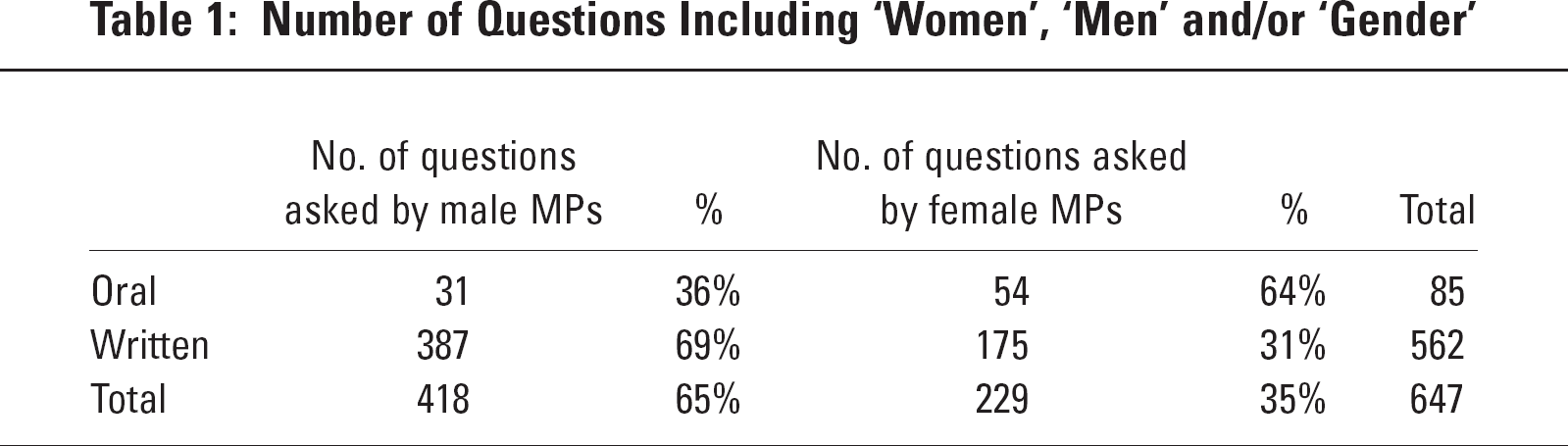
Of the 59,583 parliamentary questions asked during 1997/1998, only 1 per cent included the terms ‘women’, ‘men’ and/or ‘gender’ (see Table 1). 1
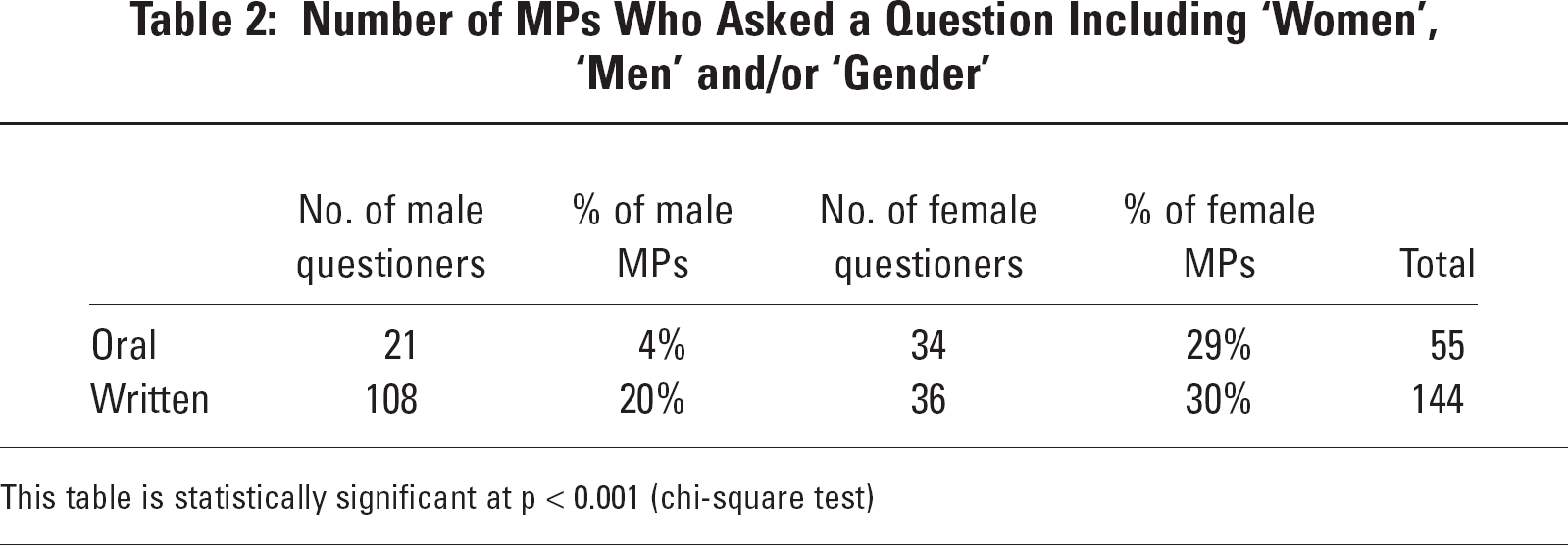
In total, 27 per cent of all MPs posed a parliamentary question that referred to ‘women’, ‘men’ and/or ‘gender’. The questioners included 48 different women and 128 different men (see Table 2). Thus, nearly half of all female MPs asked such a question in comparison to only one fifth of male members. Moreover, as Table 1 illustrates, women members asked 35 per cent of these questions; a higher than expected proportion given that they only constituted 18 per cent of the Commons.
Male members asked the majority of written questions that included the terms ‘women’, ‘men’ and/or ‘gender’. Men were less inclined to refer to these terms in the chamber, asking only a quarter of all such oral questions. Moreover, a small proportion of all male MPs posed these (see Table 2). In the 1997/1998 Session, 4 per cent of male members used these terms when asking a question on the floor of the House compared with 20 per cent who incorporated these into their written inquiries. In contrast, similar numbers of women (29–30 per cent of female MPs) posed oral and written parliamentary questions. This suggests female representatives were more likely to share and express concern for issues linked to their sex (Childs 2002; Lovenduski and Norris 2003).
Number of Questions Including ‘Women’, ‘Men’ and/or ‘Gender’
Number of MPs Who Asked a Question Including ‘Women’, ‘Men’ and/or ‘Gender’
This table is statistically significant at p < 0.001 (chi-square test)
Number of MPs Who Asked a Question Including ‘Women’, ‘Men’ and/or ‘Gender’, by Party
This table was not statistically significant at p = 0.092 (chi-square test)
Excluding ministers
Number of Written Questions Asked by Each MP Including ‘Women’, ‘Men’ and/or ‘Gender’
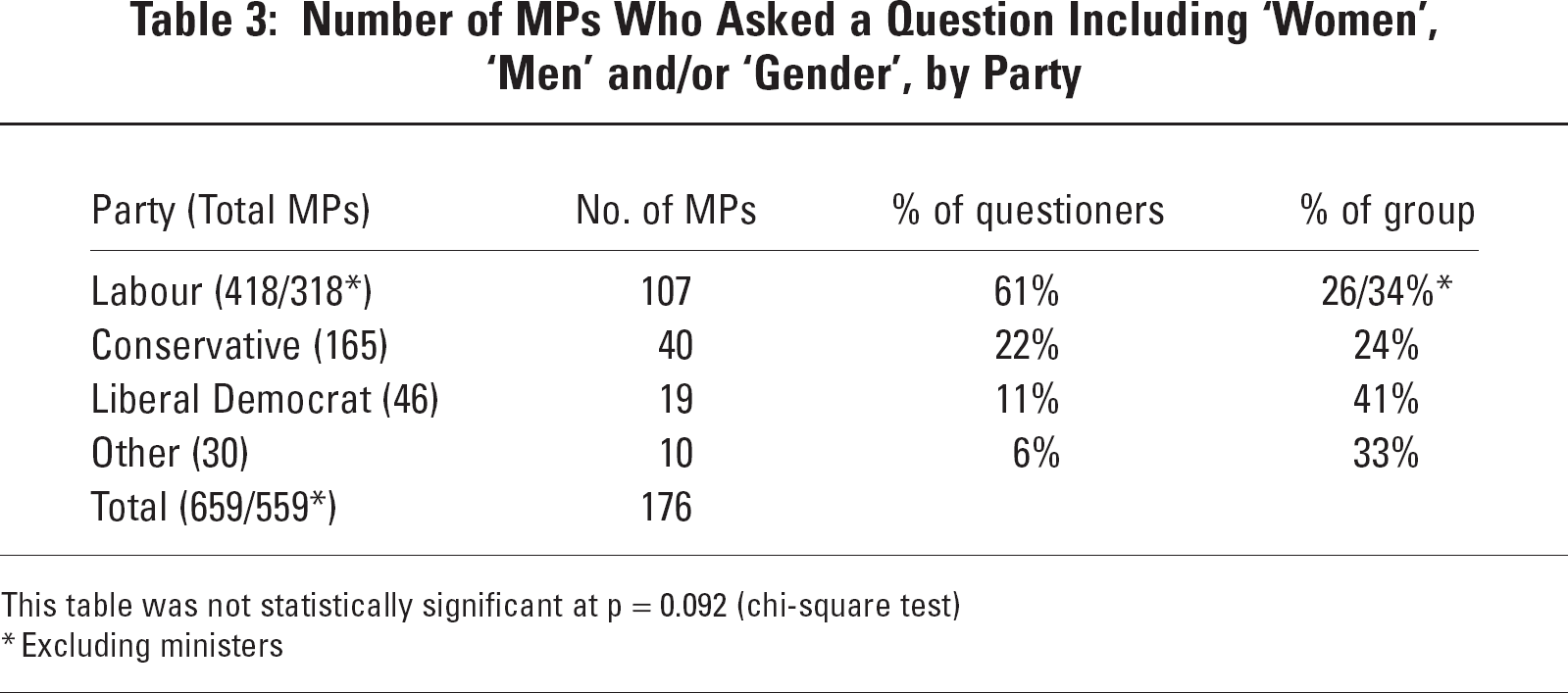
Broken down by party, the majority of questioners were Labour MPs (see Table 3). Excluding members with ministerial responsibilities, who do not table parliamentary questions (see Young et al. 2003), 2 Labour questioners represented 34 per cent of the Labour party. This is similar to the proportion of questioners from ‘other’ parties (33 per cent). Although there were only 19 Liberal Democrat questioners, these members represented 41 per cent of their party. In contrast, the 40 Conservative questioners represented only 24 per cent of their party—the lowest proportion of all parties.
Written Parliamentary Questions
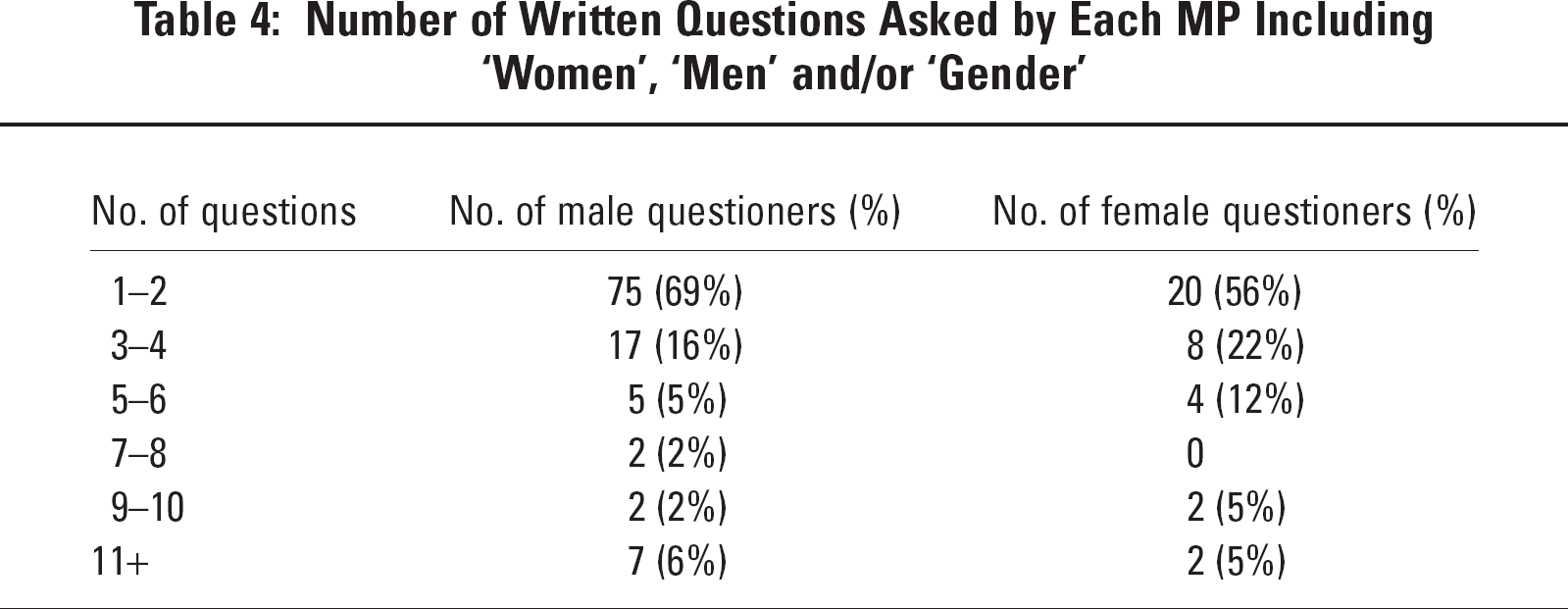
Men were responsible for asking 69 per cent of all written questions in the sample. This is not surprising given that 82 per cent of MPs in the 1997–2001 House were male, but it means that women asked a higher proportion of questions in relation to the number of seats they occupied. Nevertheless, these statistics identify willingness amongst some male members to link political matters to ‘women’, ‘men’ and/or ‘gender’. As illustrated by Table 4, the majority of men asked one to two questions. It can be assumed here that (male) MPs requested written answers in order to obtain hard-to-find information. 3 The majority of female questioners also asked between one and two questions. In comparison to men, a slightly higher proportion of the female members asked between three and six questions referring to ‘women’, ‘men’ and/or ‘gender’.
Number of Written Questions Including ‘Women’, ‘Men’ and/or ‘Gender’
Written Questions Including ‘Women’
The party of the questioner is statistically significant at p < 0.01 (chi-square test)
Excluding ministers
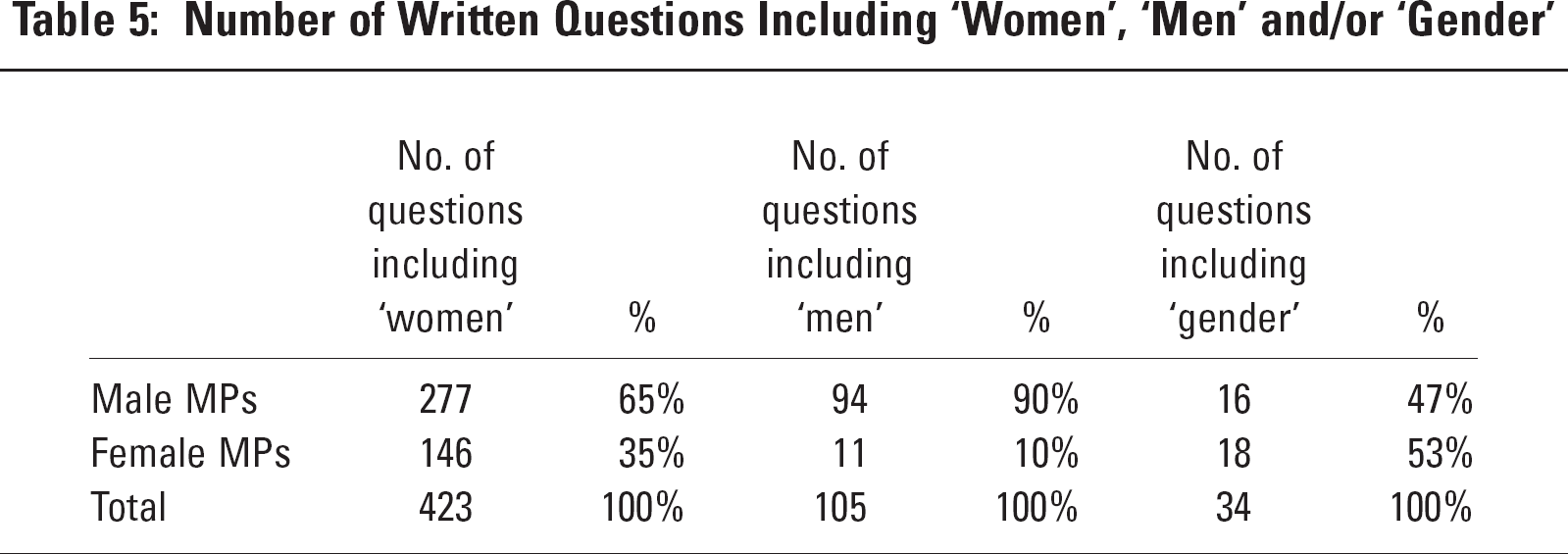
Both male and female MPs referred to ‘women’ more frequently than to ‘men’ or ‘gender’ (see Table 5). References to the term ‘women’ were four times as frequent as ‘men’. Whilst ‘gender’ was seldom written into questions, male and female members made a similar number of such references to this term. In contrast, it was male MPs who made 90 per cent of references to ‘men’ in written questions. This indicated a common reluctance amongst female members to address matters explicitly connected to ‘men’.
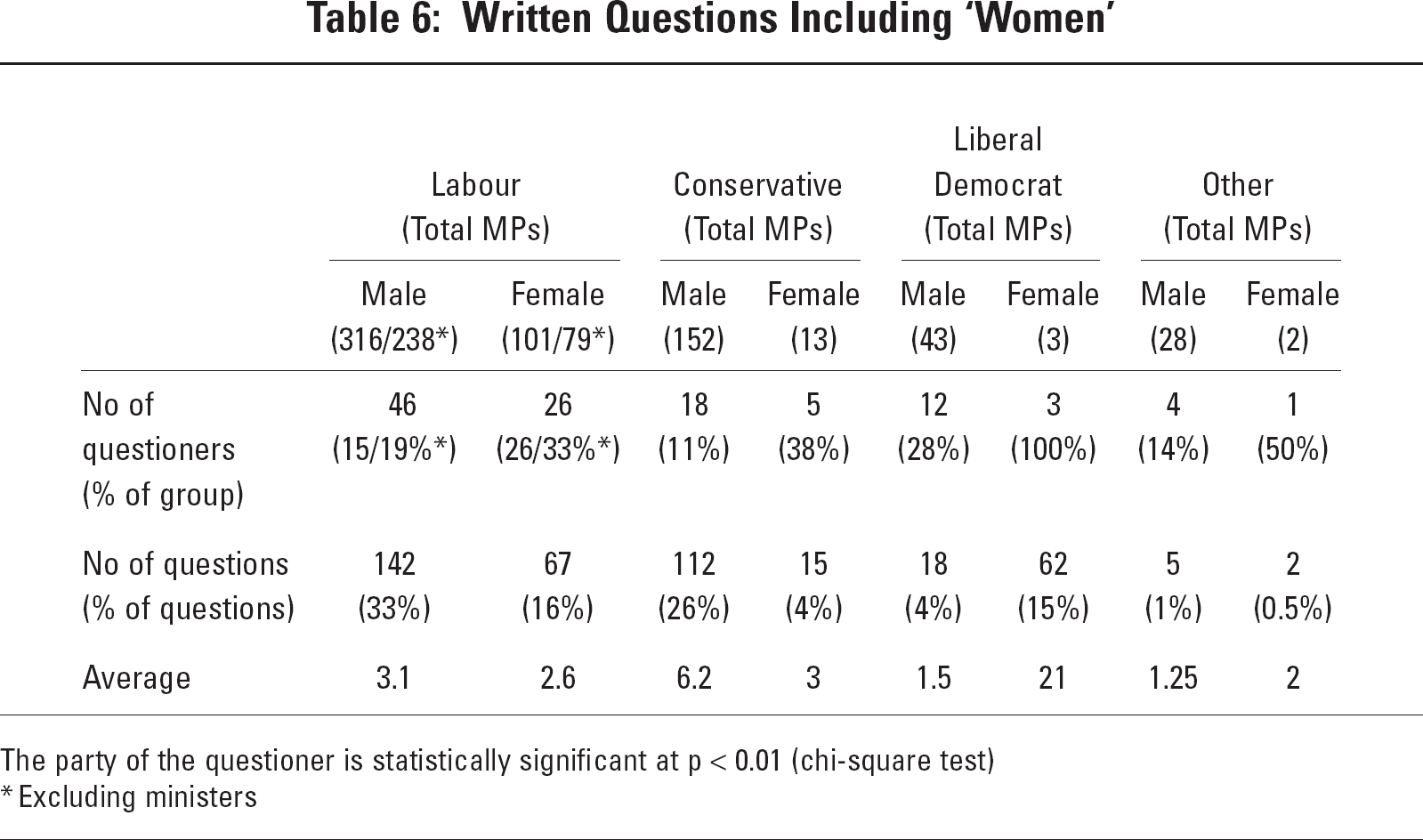
In the case of questions including ‘women’ (the largest data set), male MPs were responsible for asking 65 per cent of these. With the exception of the Liberal Democrats, male MPs tabled a higher number of such written questions than their female colleagues (see Table 6). However, compared with their male counterparts, a higher proportion of female MPs asked a question including ‘women’. Eleven per cent of Conservative men, for example, compared with 38 per cent of Conservative women referred to ‘women’ in a written question. This pattern was replicated in all parties.
Labour men asked more of these questions than any other group. These questioners represented a small proportion of men in the Parliamentary Labour Party (19 per cent excluding male ministers). In contrast, almost a third of Liberal Democrat men tabled a written parliamentary question including the term ‘women’. This group tabled an average of 1.5 questions each, significantly lower than the average number tabled by Conservative (6.2) or Labour men (3.1). This suggests that fewer Conservative and Labour male MPs tabled such questions but those who did asked a relatively high number.
Of the female questioners, Labour and Liberal Democrat women tabled the most written questions referring to ‘women’ (67 and 62 respectively). Female questioners represented a third or more of the female members of their party. Fifty per cent of ‘other’ female MPs and 100 per cent of Liberal Democrat women tabled a written question that included a reference to ‘women’. In the larger parties this ranged from 33 per cent (Labour) to 38 per cent (Conservative) of the female members. It appears that the smaller the number of women MPs in a party, the higher the proportion who tabled written questions referring to ‘women’.
Oral Parliamentary Questions
Thus far, this discussion has provided a statistical analysis of written parliamentary questions including the terms ‘women’, ‘men’ and/or ‘gender’. In keeping with the findings from this data set, just under a third of all female parliamentarians asked an oral question featuring at least one of these terms (see Table 1). Women MPs asked the vast majority of such questions (75 per cent). Only 4 per cent of male MPs asked an oral question including ‘women’, ‘men’ and/or ‘gender’, amounting to 25 per cent of the sample (see Table 2).
In the oral questions in this sample, references to ‘women’ were more frequent than ‘men’ or ‘gender’ (see Table 7). Female members made 78 per cent of these.
Number of Oral Questions Including ‘Women’, ‘Men’ and/or ‘Gender’
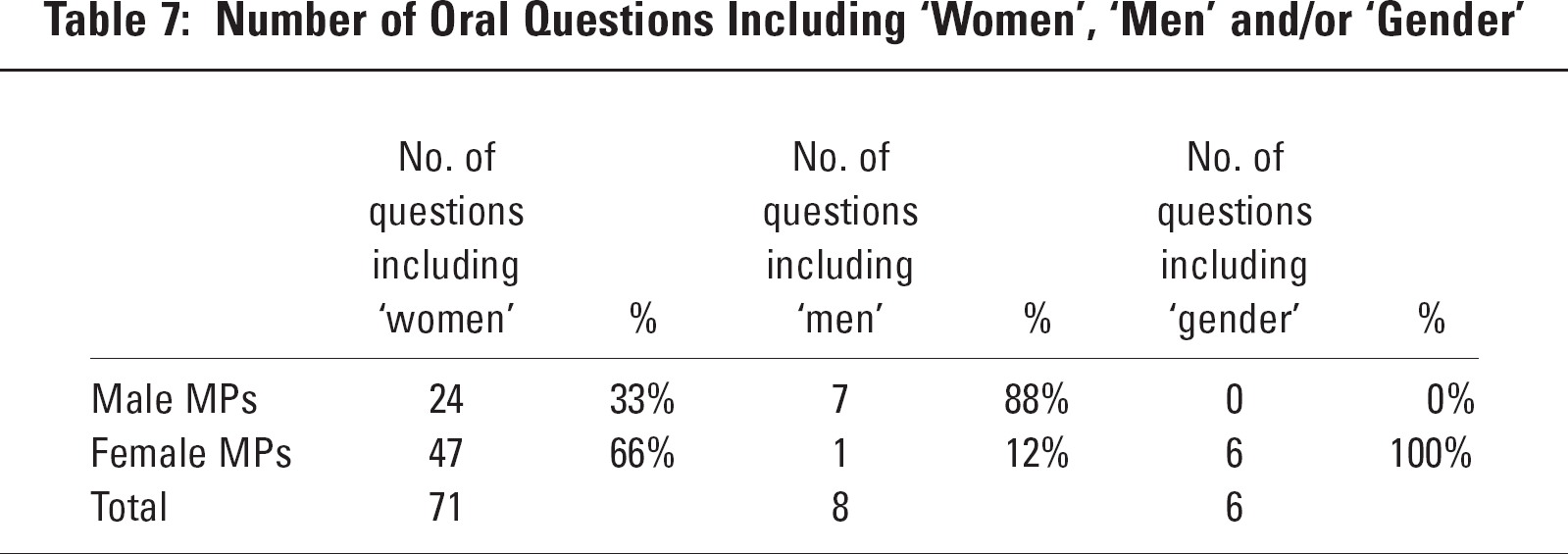
Men seldom mentioned the term ‘women’ in questions asked in the chamber and made no references to ‘gender’. This differed from written questions where male and female MPs asked similar proportions of questions referring to ‘gender’ and men contributed 65 per cent of all questions including ‘women’. Men's readiness to address issues related to ‘women’ and ‘gender’ in written questions was not equally apparent at Question Time. In contrast, references to ‘men’ were mostly made by male MPs. As in the sample of written questions, women were reluctant to include this term in their oral questions. These findings connect to a range of issues regarding substantive representation and will be further discussed below.
Labour MPs asked more than twice the number of oral questions including ‘women’, ‘men’ and/or ‘gender’ posed by members of the opposition. By focusing upon the questions referring to ‘women’, it is possible to highlight further party and sex differences.
A significantly higher proportion of female members, in all parties, asked an oral question referring to the term ‘women’ compared with their male counterparts. Below 5 per cent of male MPs from each party referred to ‘women’ in a question posed in the chamber. In contrast, between 29 per cent and 100 per cent of female MPs of each party did so (with the exception of ‘other’ party members). However, within the same party, the average number of questions asked by each male and female MP remained broadly comparable (see Table 8). Labour women asked most of the questions that referred to the term ‘women’. The proportion of Labour female members that did so, however, was substantially lower compared with Conservative and Liberal Democrat women. Again, this may be related to the small number of Conservative and Liberal Democrat women.
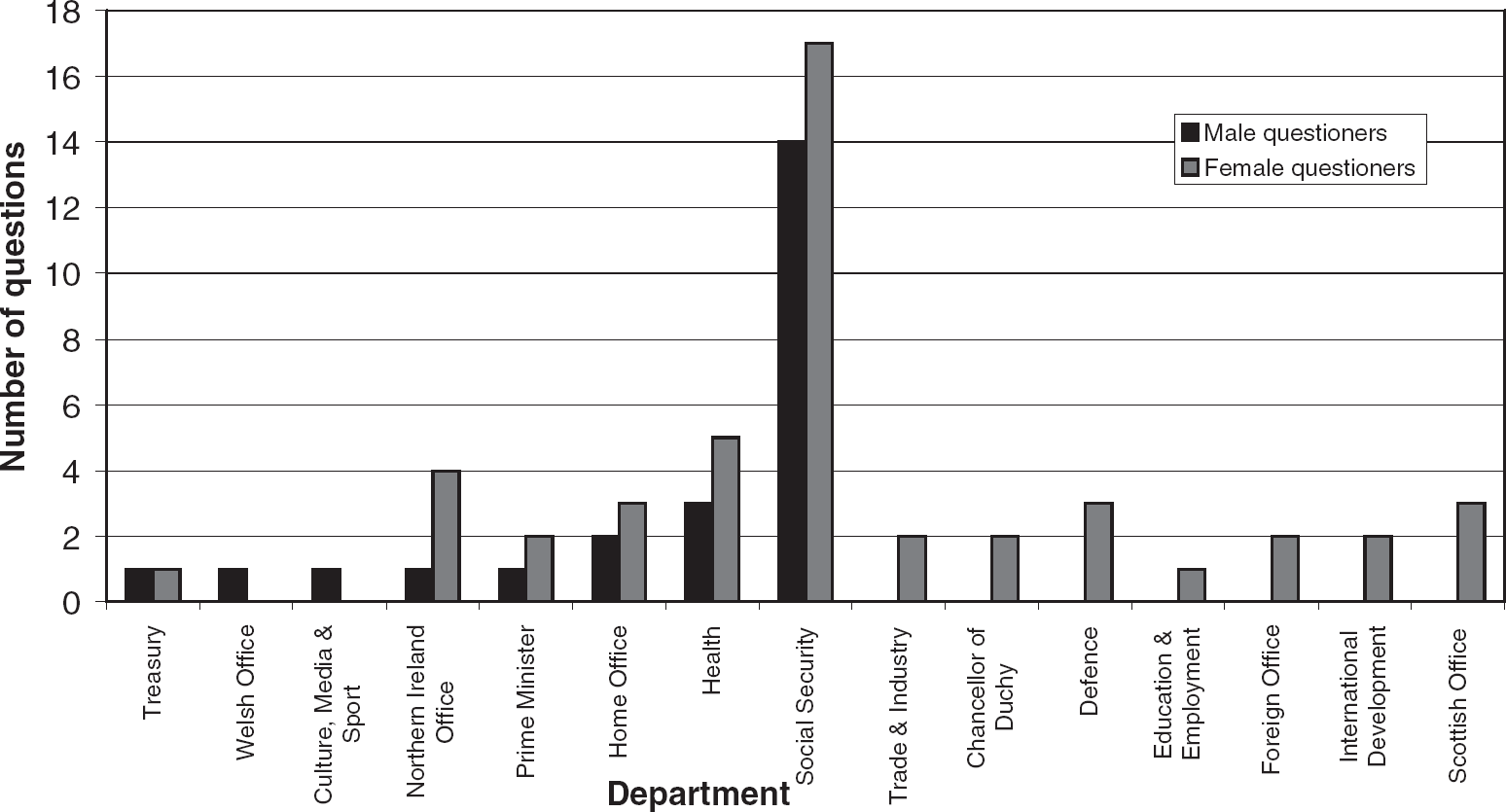
Based upon oral questions featuring the term ‘women’, Figure 1 shows the number of questions addressed to each government department. These questions were addressed to various ministries ranging from the Northern Ireland Office to the Department of Culture, Media and Sport. The Department of Social Security attracted most oral questions including the term ‘women’—the most popular department by a significant margin. This may have been a result of the amalgamation of social security positions with the minister for women (assigned to Harriet Harman and Joan Ruddock during 1997/1998). Indeed, Joan Ruddock provided a substantial proportion of the social security answers. However, POLIS did not differentiate between the two ministerial positions. It indicated in all cases that the question was directed towards the secretary of state for social security. In contrast, of the few oral questions referring to ‘men’, only one (asked by the only female MP to include this term in an oral question) was directed at the Department of Social Security. As will be illustrated below, members often connected women, but not men, to social welfare issues.
Direction of ‘Women’ Questions
Oral Questions Including ‘Women’
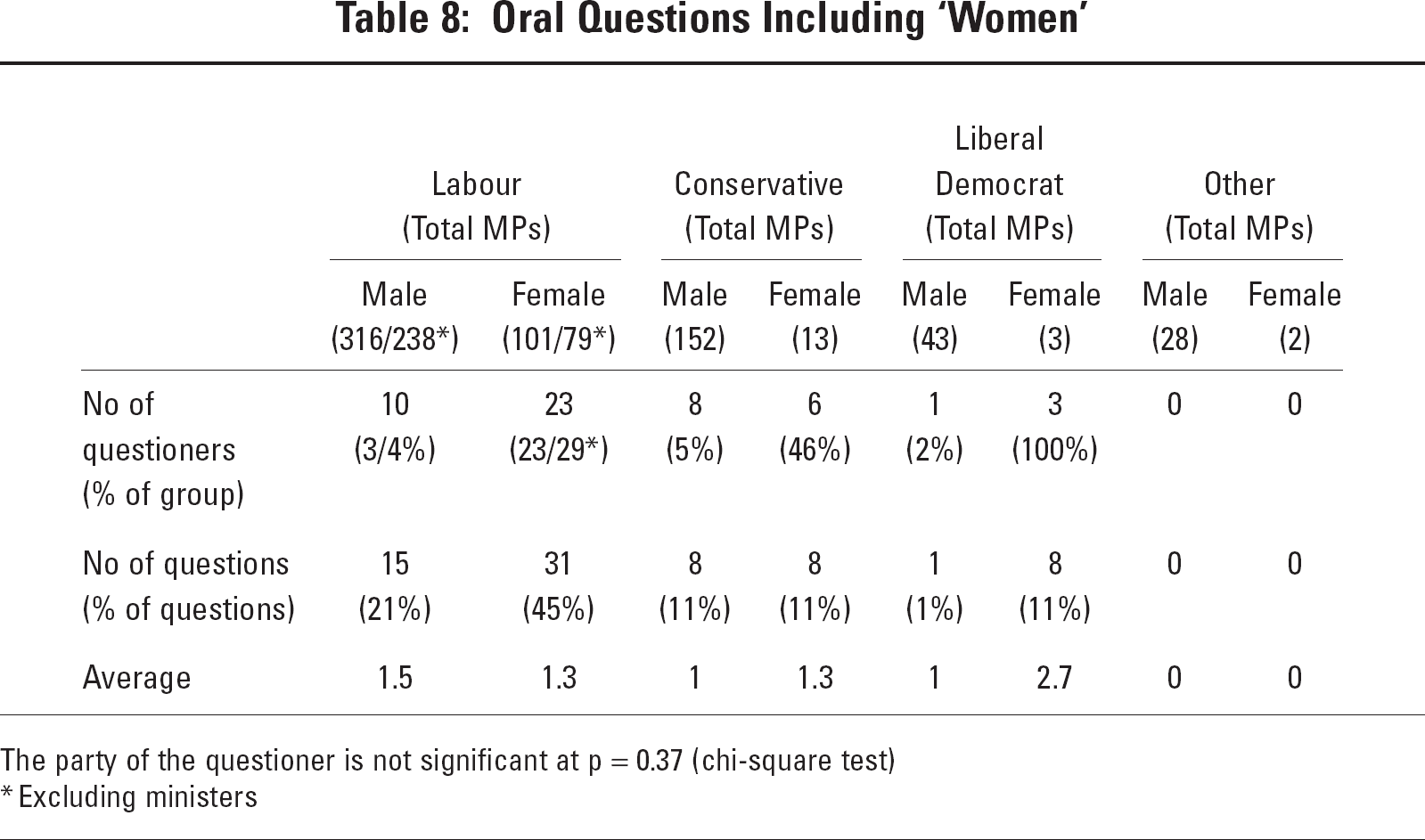
The party of the questioner is not significant at p = 0.37 (chi-square test)
Excluding ministers
Women MPs quizzed a wider range of departments than their male counterparts. The Departments of Trade and Industry, Defence, Education and Employment and the Foreign Office all received oral questions including the term ‘women’ from female but not male members. Female members did not only associate ‘women’ with traditionally ‘feminine’ departments but also addressed their questions to policy areas conventionally identified as ‘masculine’. This may have been a consequence of the larger number of female questioners. Yet, male MPs only directed their questions towards these ‘masculine’ departments when the substance of the query featured ‘men’. Male questioners, it seems, located ‘women’ and ‘men’ within traditional political areas, reflecting the stereotypical separation of men's and women's spheres in society at large.
Parliamentary procedure dictates that parliamentary questions should be directed at departments rather than individual ministers. All ministers are present at their departmental Question Time, providing an answer when the question falls within their responsibility (Rogers and Walters 2004). This would suggest that the sex of the responding minister would be of little importance. Female ministers, however, fielded the majority of questions including the term ‘women’. Whilst women occupied only 22 per cent of ministerial positions, female ministers received 59 per cent of those oral questions including the term ‘women’. This suggests that female ministers were more likely to assume responsibility for those issues connected to ‘women’.
The Questions
‘Women’
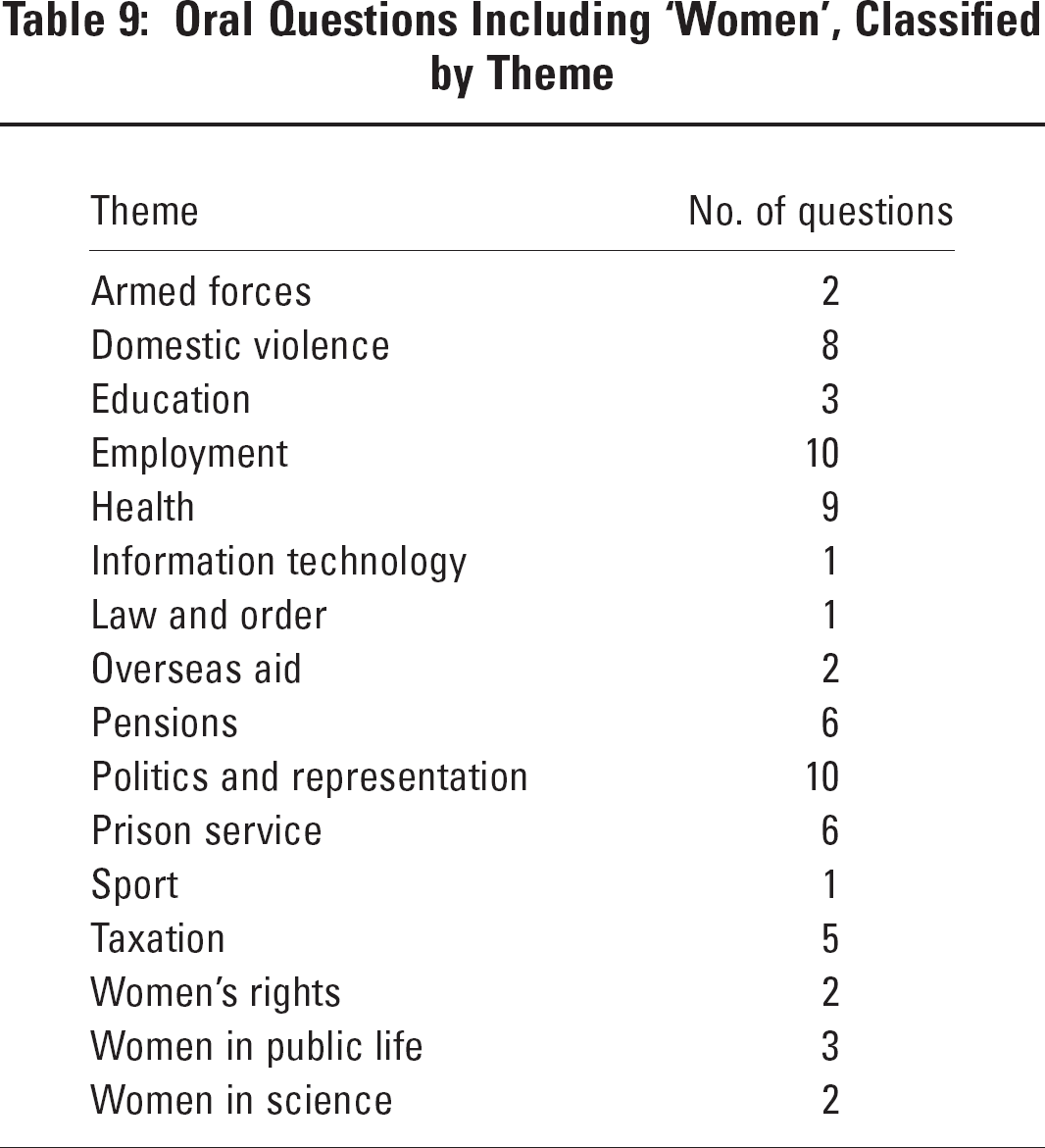
Whilst quantitative analysis has served to identify which MPs ‘gender’ their parliamentary questions, the following analysis uses qualitative approaches to examine the content of such questions. Oral questions referring to ‘women’ addressed topics ranging from women's involvement in cricket to VAT on sanitary products. As identified above, female members posed the majority of these questions. In total, the questioners raised 16 different themes (see Table 9). Of those questions, the most recurrent issues pertained to women's employment, domestic violence, politics and representation, and women's health. This suggests that there was a shared understanding of those issues that should be linked to women. Similar findings have been identified in previous research where female MPs have expressed a common understanding of ‘women's issues’, defined in terms of childcare, abortion and women's rights (Childs 2000).
Oral Questions Including ‘Women’, Classified by Theme
Questions referring to ‘women’ included a set of themes that mirrored some of the government's aspirations expressed during their first year: ‘Labour plans sex equality on pensions’ (Caine, The Sunday Times, 18 January 1998), ‘impressive pledges on childcare’, ‘words on domestic violence’ (Longrigg and Benn, The Guardian, 27 April 1998). Yet, early government decisions failed to match these ambitions (Bashevkin 2000). Moreover, whilst the development of the Women's Unit in 1997 sought to assimilate women's concerns into the government's policy-making process, ideological inconsistencies with the wider programme made this a difficult task:
It [New Labour] talks about everything from parenting to promotion in entirely gender neutral terms, while its Women's Unit works away at the sidelines analysing the very deep and subtle reasons why these experiences are anything but gender neutral (Benn 2000, 44).
By connecting ‘women’ to particular issues and using gender-specific language, members’ oral questions differed from the government's approach. Questions pertaining to domestic violence and women's employment, both common themes, will now be examined. These illustrate how MPs addressed such issues and their tendency to uphold narrow representations of womanhood.
Whilst the 1997 Labour Manifesto stated that ‘Labour has taken the lead in proposing action to tackle the problems of stalking and domestic violence’ (The Labour Party 1997, 23), such issues were not dealt with by subsequent policies on crime and the family (Kelly 1999). Thus, oral questions referring to domestic violence were seldom linked to government policy. Rather, the majority of such questions sought to raise the profile of the issue and establish it as a matter worthy of political attention: ‘Can my hon. Friend confirm that the Government will speak out on behalf of the victims and will root domestic violence out of our society?’ (H. Southworth, Hansard, col. 17, 23 March 1998).
In focusing upon ‘women who suffer from domestic violence’ (S. McDonagh, Hansard, cols. 18–20, 26 January 1998), questioners identified women as the predominant group that suffered from this violence. This was implicit in some questions as ‘victims of domestic violence’ were discussed in a non-gendered way, only to be later confirmed as female (R. Squire, Hansard, col. 3, 23 March 1998). By highlighting that women, as women, were subject to violence, members explored the wider implications of their statements. For example, in hoping that the government would ‘ensure that women can participate fully in the home, in the world of work, on transport and in the community without the fear of violence’, Lorna Fitzsimons (Hansard, col. 18, 23 March 1998) made connections between women's lives and wider encounters with violence. Such questions often drew upon women's life experiences. These referred to concerns and perspectives that might otherwise have been overlooked. Politicians’ willingness to place women at the centre of their oral questions therefore made an important contribution. However, explicit references to the experiences and interests of women were few. Some female MPs used Question Time to make such representations. These referred to individual women: ‘Angela Ashman, who is 24 and is the 100th young person to go to Doncaster college under the Government's new deal’ (C. Flint, Hansard, col. 1391, 22 October 1998); to organisations: ‘the Women's Refuge Movement’ (A. Mahon, Hansard, cols. 727–728, 6 July 1998); and to ‘15 million British women’ (J. Ballard, Hansard, col. 168, 25 June 1998).
Directing attention mainly towards women and their experiences, however, may also produce some drawbacks. Questions concerned with domestic violence, for example, often focused upon women at the expense of recognising wider relations of sexual power associated with domestic violence by feminists. Moreover, women were primarily portrayed as ‘victims’. Not only is this label objected to in some feminist camps but it also shifts attention away from the involvement of men. Subsequently, questioners often overlooked the importance of women's agency. This was evident in other topics too. Labour members who focused upon poverty, for example, identified women as victims of a particular public policy. Conservative members were also inclined to represent individuals/groups who ‘have no votes or voices’. 4 This was particularly apparent in the discourse of male MPs who expressed concern for women prisoners, children affected by domestic violence and female sufferers of cancer. This is indicative of the wider drawbacks of focusing primarily upon women and illustrates the ability of the questioner to set the nature and tone of the questioning (and response?). Indeed, some references to domestic violence shifted the focus away from women towards another, equally significant, matter in non-gender-related terms: ‘Will she confirm that one form of domestic violence that is even more common than violence against women is domestic violence against children?’(J. Brazier, Hansard, cols. 17–18, 23 March 1998).
Questions concerning ‘women who suffer from domestic violence’ serve to illustrate that representations of womanhood were relatively conservative. Women were often portrayed without agency and situated within the private sphere. The figure of ‘the working mother’ also supported traditional notions of womanhood.
A cross-section of MPs shared the government's concern for women's employment and, more specifically, ‘working mothers throughout the country’ (C. Gillan, Hansard, col. 16, 26 January 1998). Questioners expressed this interest differently. Some Labour MPs sought to echo the policy aspirations of the government, concerned with ‘… child care, training and support for parents to help them get back to work, have their children looked after and get out of poverty’ (P. Hope, Hansard, col. 15, 15 December 1997). A few members referred to family-friendly policies and, similar to dominant government discourses, employed gender-neutral narratives. Yet, the majority of Labour MPs expressed a concern to assimilate gender-specific needs into government strategy:
Will he [Gordon Brown] guarantee that, when he considers Treasury policy decisions, he will take the needs of women into account—as he has done with child care policy—so that they are part of the main stream and not an afterthought (J. Heppell, Hansard, col. 731, 12 March 1998).
Seeking assurance that the government would ‘take the needs of women into account’, questions relating to childcare, for example, identified women as the principal recipients of childcare provision: ‘the level of child care available in the past 18 years has restricted employment opportunities for many women’ (J. Heppell, Hansard, col. 731, 12 March 1998). Questioners inferred that it was women who suffer from inadequate facilities and women who would benefit from policy advances: ‘child care combined with education is the best way in which we can help young mothers’ (C. Flint, Hansard, col. 1391, 22 October 1998). In focusing upon women, questions concerned with employment may inadvertently reinforce traditional gender stereotypes. First, these narratives risked reifying women's responsibility to care for children and family members. This was most clearly demonstrated in references to part-time work that ‘… offers many women opportunities to enter the workplace that flexibly meet their needs and those of their family circumstances’ (T. May, Hansard, col. 732–733, 6 July 1998). Second, such discourses invariably overlooked the ‘working father’ and his responsibilities. Third, members rarely questioned existing gender relations or women's connection to the private sphere. Moreover, embedded within these questions were latent narratives pertaining to particular family forms, privileging heterosexuality and marriage.
Does he agree that abandoning separate taxation would further undermine the institution of marriage and make it more tax advantageous to cohabit? Will he now rule that out completely to set working mothers’ minds at rest? (C. Gillan, Hansard, col. 16, 26 January 1998)
Whilst a figure of ‘the working mother’ appeared in the questions of many members, this discourse was particularly prominent in questions asked by Conservative women. In line with this narrative, older women were typecast as exemplary carers. 5 This replicated traditional understandings of womanhood embedded in Conservative ideology (see Brown 1980). In other instances, members’ ideological standpoints appeared to shape the style and substance of oral questions regarding ‘women’. Many Labour men, for example, pursued a theme of inequality. This arguably reflected the dominance of a discourse of social injustice found in traditional Labour discourse.
Aside from influencing the content of questions, party politics played a minor role at Question Time. The infamous partisan confrontations associated with parliamentary questions were notably absent from exchanges relating to ‘women’, ‘men’ and/or ‘gender’. This may be because questions including ‘women’, ‘men’ and/or ‘gender’ seldom served partisan ends. Party standpoints on gender are often ambiguous and may be based upon a host of ideological tensions (see, for example, Maguire 1998). The issues considered by these questioners typically extended beyond the mainstream political agenda, and therefore provided few opportunities to attack or defend the government. Further, women MPs have raised doubts about the value of adversarial forms of political encounter (Ross 2002). As the majority of questions were addressed to and by female MPs, this may have influenced the propensity for adversarial encounters.
‘Men’
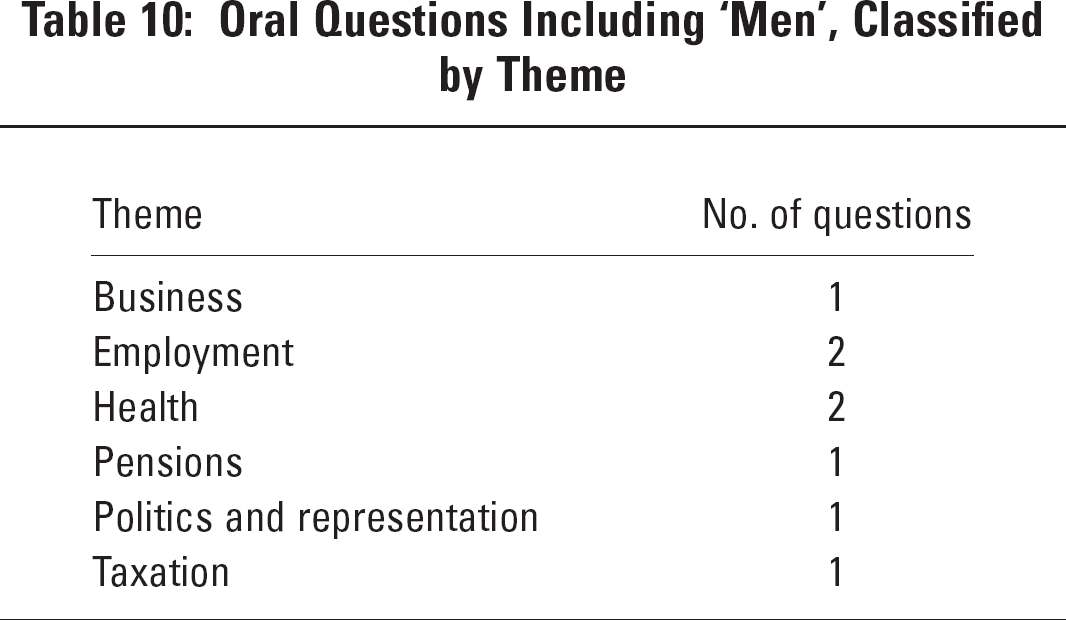
Few oral questions focused exclusively upon ‘men’. Of the sample, only eight questions did so. These were posed by male MPs and considered health, work and business issues (see Table 10).
Oral Questions Including ‘Men’, Classified by Theme
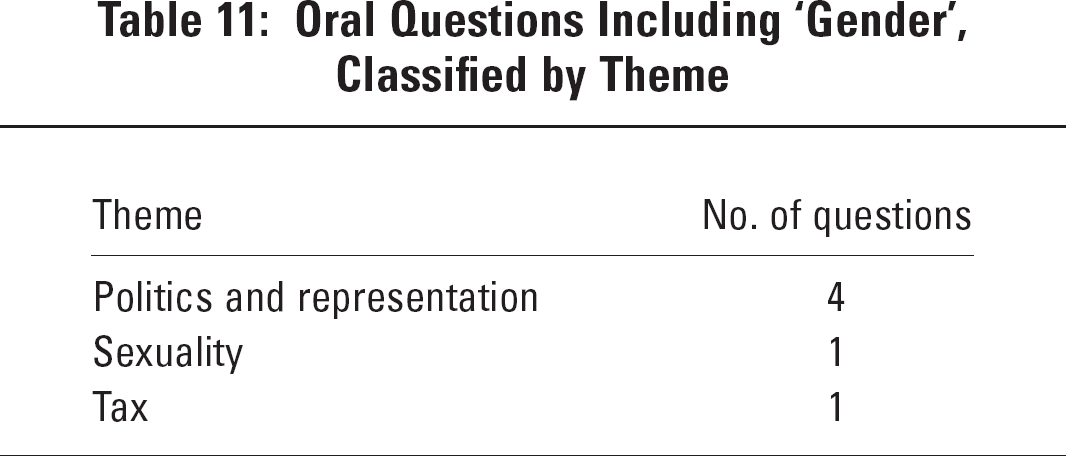
Oral Questions Including ‘Gender’, Classified by Theme
Akin to discourses on ‘women’, questions concerned with ‘men’ reflected relatively conservative gender stereotypes. ‘Men’ were located within the public sphere and identified with traditional masculine roles. David Ruffley's reference to ‘business men in my constituency’ (Hansard, col. 1221, 5 February 1998) is a typical example. Another questioner, Denis MacShane, privileged men's work when discussing unemployment (see Hansard, col. 494, 26 February 1998 and col. 967, 26 June 1997). In this question, men's lack of work was attributed to past economic policies. In contrast, oral questions concerned with women's unemployment were typically connected to childcare matters. Two male MPs directed their oral questions towards health issues. These highlighted men's reluctance to seek health advice. Concerned with the early detection and treatment of cancer in men, Barry Sheer-man noted, ‘For whatever reasons, men neglect their health and the early signs of cancer, and try to avoid tackling the problem’ (Hansard, col. 156, 2 June 1998).
‘Gender’
MPs seldom employed the term ‘gender’ in their oral questions. Only six questioners did so, all female. Of these questions, gender equity in politics was the most prevalent topic (see Table 11).
MPs’ interest in gender and political representation was expressed in various ways. Some MPs simply stated their commitment to the ‘equal representation of men and women’ (M. Fyfe, Hansard, col. 808, 20 January 1998) whilst others highlighted the complexities of the current disparity: ‘many women feel more disconnected from politics and government than men do’ (H. Bayley, Hansard, cols. 11–12, 28 July 1997). In such instances, references to gender relations provided fertile ground for the exploration of more substantive issues. Highlighting the interdependence of men's and women's lives, questions referring to ‘gender’ often provided a broader understanding of the issue at hand. Helen Southworth (Hansard, col. 17, 23 March 1998), for example, provided a rounded account of domestic violence by focusing upon male as well as female ‘victims’. She was concerned that the government should ‘… deal with domestic violence, which is an abhorrent crime in which the perpetrators attempt to intimidate the victims so that they are too afraid and ashamed to speak out’.
Unlike references to ‘women’ or ‘men’, questions including ‘gender’ highlighted the interdependence of men's and women's lives. The benefit of importing a gendered analysis (see Lovenduski 1998) may have illuminated other issues in a similar fashion. Childcare could have been understood as the responsibility of men as well as women and MPs could have considered why men are less willing than women to visit health professionals.
At the same time, a shift towards gender may risk overlooking the specific experiences or needs of women or men. As demonstrated by Fiona MacTaggart's reference to the Northern Ireland political process (Hansard, cols. 400–401, 15 July 1998), this was an important tactic. She drew attention to the distinctive contributions that women can bring to the political process: ‘Does she agree that it is the women who have been able to demonstrate practical and, often, non-sectarian organisational solutions to community problems?’. Given that most members focused upon the specific needs of women or men, as opposed to relations between them, such concerns may be unfounded in this particular context. Many questioners demonstrated the importance of sustaining such a direction: survivors of domestic violence require the focus to remain upon women; strategies to balance work and family commitments need to pay particular attention to women.
Conclusion
Focusing upon a particular parliamentary procedure, i.e. oral and written questions, this article examined which MPs referred to the terms ‘women’, ‘men’ and/or ‘gender’. This method, it is contended, allows us to gauge the prominence of gender-related issues in parliamentary questions. Explicit references to these terms demonstrate members’ willingness to address gender-related concerns. By examining members’ use of the terms ‘women’, ‘men’ and/or ‘gender’, it becomes possible to explore representations of wo/manhood together with the types of issue that MPs connect to these sexual categories. This allows us to explore a range of issues regarding substantive representation. Relatively few questions included these terms: only 1 per cent of written and oral parliamentary questions asked during the 1997/1998 session did so. Due to the small size of the sample, the findings offer necessarily provisional conclusions but are nonetheless significant.
The sex of the questioner was statistically significant. Asking a higher than expected proportion of such written and oral questions, female MPs were more likely to explicitly link political issues to ‘women’ and ‘gender’. Indeed, just under half of all female representatives asked a written or oral question that included the term ‘women’ and/or ‘gender’. Whilst male members referred to ‘women’ and ‘men’ in written questions, they were disinclined to do so in questions asked on the floor of the House. Different factors could explain this. MPs have found that Question Time primarily serves to draw attention to backbenchers and their concerns (Franklin and Norton 1993). ‘Women's’ and ‘gender’ issues often carry negative connotations. Indeed, female MPs have expressed concern about being pigeonholed through association with such issues (Childs 2000). Male MPs may be similarly wary. As mentioned above, issues connected to ‘women’, ‘men’ and/or ‘gender’ often lacked a party political dimension and were marginal to the government's programme. Since Question Time is often used as a platform for party political exchanges, such issues do not offer the political gains that other policy issues may provide.
The exchanges at Question Time rarely included party political remarks. There were, however, party differences in the number of questions and questioners who referred to ‘women’, ‘men’ and/or ‘gender’. A similar proportion of Labour, Liberal Democrat and ‘other’ party members asked a written or oral question including these terms (between 33–41 per cent). A smaller percentage of Conservative MPs similarly did so (24 per cent). Given the historical association between the women's movement and the left, such a finding makes sense. A chi-square test revealed that questioners’ party was significant for written questions including ‘women’, ‘men’ and/or ‘gender’. Liberal Democrat male MPs were most likely to table written questions referring to ‘women’ whilst Conservative men were least inclined to do so. A wide range of Liberal Democrat men asked such questions compared to relatively smaller groups of Labour and Conservative male questioners. The consistency of written questions tabled by female members was broadly comparable across all parties. Whilst questioners’ party was statistically insignificant for oral questions, qualitative analysis showed that members’ ideological standpoint often influenced the content of these questions. Traditional party narratives guided the substance of the questions: Labour MPs, for example, were more likely to address issues related to social injustice.
The majority of oral questions including the terms ‘women’ and/or ‘gender’ were posed by female MPs. Questioners shared an understanding of the main issues that affected women: employment, domestic violence, political representation and health were most frequently addressed. These questions support the finding that women MPs recognise and identify with ‘women's issues’ (Bochel and Briggs 2000; Childs 2000) and provide further indication of the substantive content of these. Female questioners addressed a wide range of departments. In comparison, male questioners who referred to ‘women’ mainly addressed their questions to the Departments of Health and Social Security. The lesser number of male questioners may explain this finding. Nevertheless, these male MPs tended to associate ‘women’ with traditionally ‘feminine’ policy areas. Qualitative analysis of questions further supported this contention. Discursive representations of ‘women’ and ‘men’ tended to uphold traditional gender stereotypes. Questions of unemployment, for example, linked women to caring roles within the family whilst men's lack of work was defined in terms of wider economic factors.
In connecting ‘women’ with specific concerns, members’ use of gender-specific language deviated from the gender neutrality of much government discourse. Questioners, purposefully or inadvertently, recognised women as a specific constituency with particular needs. With very few questioners referring to ‘gender’, the focus remained predominantly upon ‘women’ rather than the connections between women's and men's lives. Whilst these questioners recognised that a variety of issues specifically confront women, the structural connections between the lives of women and men were often overlooked. The term ‘men’ was also significantly absent from the written and oral questions of female members. Women MPs were more reluctant than their male counterparts to overtly identify or address issues connected specifically to men. The findings here suggest that male and female parliamentarians were more willing to use parliamentary questions to address issues connected to their own sex.
This empirical research offers some important considerations for theoretical debates concerning women's political representation. The findings provide a degree of support for normative arguments advocating an increase in female representatives (see, for example, Phillips 1995). Female politicians were more willing to raise issues related to ‘women’ and/or ‘gender’ than their male counterparts. This suggests that ‘women's issues’ might be granted a higher priority in parliament if the number of female politicians increased. Yet, the research found that these MPs often addressed issues relating to the lives of particular women. These often pertained to traditional gender roles. Drawing upon, and arguably reifying, narrow conceptions of womanhood, political representatives may inadvertently represent particular groups of women at the expense of others (see Young, cited in Dovi 2002, 731). Therefore, the full-time mother or childless woman, for example, may be inadequately considered in discussions of women and employment. This has wider implications for the representation of group difference and questions of gender in parliament.
Footnotes
This article draws upon research conducted for my Ph.D thesis and so I would like to acknowledge the financial support of the Economic and Social Research Council (R42200134062). I presented an earlier version of this article to audiences at the University of Essex and I would like to express thanks to all who provided helpful comments at these fora. In particular, I would like to thank Vicky Randall, Eric Tanenbaum and the anonymous referees at the BJPIR whose comments substantially improved the quality of the article.
1
This figure includes supplementary questions. When a tabled oral question is followed by a supplementary on the same topic by the same member, POLIS treats this as one question.
2
Members’ propensity to table parliamentary questions is affected by whether or not they have served as a minister or whip. This is not the case with members in the front bench teams of other parties (see  ). Sex differences were unaffected by ministerial positions as these were allocated in proportion to the sexual make-up of the Commons.
3
4
Julian Brazier was referring to children who suffer from domestic violence (see Hansard, cols. 17–18, 23 March 1998).
5
Concerned by child abuse in foster homes, Teresa Gorman suggested that ‘if more older women were used to head those institutions, there would be less of the abuse that we keep reading about in our newspapers’ (see Hansard, col. 313, 19 November 1997).