






Abstract
The language of ‘efficiency’ has increasingly been used as a rhetorical device to legitimate new approaches to refugee policy; in particular, extraterritorial processing and ‘protection-in-regions-of-origin’. This article aims to explore what ‘efficiency’ might mean from the perspective of the global refugee regime in order to, firstly, expose the hidden assumptions implicit in the use of the ‘efficiency’ discourse in the current debate and, secondly, to explore what the concept might offer in defining the normative contours of a future regime structure. Although the concept is acknowledged to be inevitably political and to carry epistemological assumptions, reconstructing the concept by drawing on economic theory is argued to offer a means to improve the quality of debate on the allocation of resources within the refugee regime. Indeed, a critical application of the concepts of productive, allocative and dynamic efficiency is shown to offer far more nuanced insights for sustainable refugee protection than is implied by the contemporary debate's political manipulation of the term. The article assesses both the theoretical and policy implications that derive from a more rigorous conceptualisation of the meaning of efficiency.
Western states spend annually around $10 billion on less than half a million asylum seekers, most of whom are not in need of international protection. By contrast, the UNHCR supports 12 million refugees and five million internally displaced persons in some of the poorest countries in the world on a budget of only $900 million.
Caroline Flint MP 1
Introduction
In the context of the growing politicisation of asylum and immigration in the UK and across Europe, there has been an increasing debate on the future of the global refugee regime. Questions have been raised about the ongoing relevance of the 1951 Convention on the Status of Refugees and there has been discussion about the viability of developing alternative approaches such as ‘offshore processing’ as a means to reconcile the protection needs of refugees with the concerns of states. The United Nations High Commissioner for Refugees (UNHCR)'s Convention Plus initiative, 2 which established a multilateral debate on supplementing the existing refugee regime to meet the contemporary concerns of states, is one manifestation of the growing concern of states to reassess the basis of the regime. The idea of such a reassessment begs the question of how the refugee regime should look and what type of normative criteria should be used to evaluate it. In the current debates, however, concepts such as ‘efficiency’ remain far more politicised than normative, being discursively invoked to legitimate a politics of exclusion. Within this context it is important that such normative-political concepts have sufficient conceptual clarity to make debate meaningful. While arguments relating to the allocation of state responsibility for refugee protection have generally been debated in the language of ‘equity’, 3 with southern host states mobilising the concept as a means to appeal for greater northern ‘burden-sharing’, ‘efficiency’ has recently emerged as a normative-political argument that is being increasingly invoked by European states.
Implicit and explicit references to the concept of ‘efficiency’ have become a key legitimating tool through which a number of industrialised asylum states and UNHCR have begun to justify innovative and supposedly new approaches to asylum and refugee policy. In particular, the UK's ‘New Vision’ paper on extraterritorial processing, 4 the Dutch government's elaboration of an EU approach to ‘protection-in-regions-of-origin’ 5 and UNHCR's ‘Convention Plus’ initiative have all appealed to the idea of redressing the current allocation of resources between ‘asylum policy’ in the industrialised north and ‘refugee policy’ in refugees’ regions of origin on the grounds of ‘cost-effectiveness’. However, despite the striking parallels with areas of applied microeconomics such as environmental economics’ analysis of trans-boundary issues (e.g. Pearce and Turner 1990; Pearce 1998) and public economics’ analysis of social policy issues (e.g. Barr 1998), the work of economists has been almost entirely absent from forced migration studies. Consequently, the significance of ‘efficiency’ and other basic economic concepts for forced migration remain under-theorised. These concepts, while entailing assumptions and limitations by virtue of their derivation from economics, offer a starting point for developing a more critical understanding of the normative basis of the global allocation of responsibility for refugee protection. The article therefore attempts to address the disjuncture between the concept's rhetorical invocation and its lack of academic conceptualisation.
Adding more conceptual rigour to the application of ‘efficiency’ is therefore not only of significance in terms of potentially highlighting the misuse or abuse of the concept at a rhetorical level. It is also intended to make a contribution to the normative debate on how to define the contours of a global refugee regime that is commonly regarded to be in ‘crisis’. Matthew Gibney (2004, 231–249) draws attention to why ‘efficiency’ is of such normative relevance. He argues that for the asylum regime to be sustainable for liberal democratic states, protection should be accorded on the basis of a ‘humanitarian principle’, whereby ‘states have an obligation to assist refugees when the costs are low’ (ibid., 231). If, as he argues, contemporary structural and political constraints on industrialised states make asylum and refugee protection scarce resources, then optimising the allocation of the scarce resources available for refugee protection becomes an issue of normative centrality with significant implications for the welfare of both citizens and refugees. Indeed, ‘efficiency’ is also an important concept to engage with because, like the language of ‘security’, it is central to the language of state policy and invokes raison d’état, justifying and legitimating action on the basis of its connotations, irrespective of its conceptual ambiguity. Clarifying its conceptual content therefore represents a means to contest its current invocation and to posit alternatives that are likely to receive priority as a result of the centrality of resource allocation decisions and ‘efficiency’ to state policy. Given the concept's normative and political significance, the article shuns a purely discursive approach to problematising the concept in favour of trying to contribute constructively to an improved understanding of the concept's scope and potential application.
This article therefore explores the meaning of ‘efficiency’ in the context of asylum and refugee policy, and its implications for the current debates on the global refugee regime. Firstly, it will outline the context in which ‘efficiency’ is being invoked in contemporary debates. Secondly, it will explain the general assumptions and limitations of using efficiency as a concept. Thirdly, it will apply the three most basic concepts of economic efficiency: ‘productive efficiency’, ‘allocative efficiency’ and ‘dynamic efficiency’, to the global refugee regime. Fourthly, it will highlight the implications of these concepts for the contemporary debates on the future of refugee protection. It will be argued that the current rhetorical use of the concept of ‘efficiency’ is out of kilter with a more rigorously applied conceptualisation of efficiency and that the implications of a more thorough analysis support an approach that can improve refugee protection while simultaneously working within the political and structural constraints of the status quo.
‘Efficiency’ in the Contemporary Debate
The concept of ‘efficiency’ has been invoked to support a range of ‘new’ approaches to the global refugee regime intended to address the limitations and inadequacies of the existing regime. In particular, ‘efficiency’ has been used in support of policies in two areas: extraterritorial processing and ‘protection-in-regions-of-origin’.
In the first instance, it has been used by states to justify unilateral initiatives on asylum processing. Matthew Gibney and Randall Hansen (forthcoming, 80–81) note that western states have been concerned to improve ‘the judicial and administrative efficiency of asylum processing’ as a response to the backlogs and inadequate funding of the 1990s, moving towards ‘fast-tracking’ procedures. UNHCR's Global Consultations exemplify this concern:
There has been some debate in recent years about what constitutes ‘fairness’ and ‘efficiency’ in procedures, against the backdrop of mixed migratory movements, smuggling and trafficking of people and a degree of misuse of the asylum process for migratory outcomes. States have legitimate concerns as regards procedures that are unwieldy, too costly, not necessarily able to respond effectively to misuse, and result in the unequal distribution of responsibilities. 6
It is within this context that the concept of ‘efficiency’ has been used to support and debate the extraterritorial processing proposals of the UK in 2003. The stated premise of the so-called ‘UK New Vision Paper’ on New International Approaches To Asylum Processing and Protection is that ‘support for refugees is badly distributed’ because of the disjuncture in spending between the legal and maintenance costs of $10,000 per person per year in the European asylum system in comparison to the $50 per person per year allocation of UNHCR to operate globally (UK Government 2003). Meanwhile Caroline Flint MP supported the proposals in the House of Lords with a speech based almost entirely around improved ‘efficiency’ and ‘cost-effectiveness’. The proposals were refuted by the International Legal Practitioners’ Association (ILPA) in the House of Lords debate by similarly contesting the causes of current inefficiency:
Undoubtedly a considerably greater amount of money is spent in the UK per asylum applicant as compared to expenditure per asylum applicant in the regions of origin. However that is reflective of the amount of money wasted, on keeping refugees out of the UK and through inefficiency and ineffectiveness in the Home Office … It is a fallacy to suggest that it would be more cost-effective to process asylum applications in the regions of origin. 7
In the second instance, the concept has been invoked with reference to the global allocation of resources for refugee protection as a means to support the idea of ‘protection-in-regions-of-origin’ inherent to UNHCR's Convention Plus initiative (Loescher and Milner 2003). In particular, former High Commissioner Ruud Lubbers’ speeches in support of the Convention Plus initiative have consistently drawn upon the imbalance between northern states’ focus on the asylum system and their longstanding neglect of protracted refugee situations in the global south. 8 Meanwhile, governments in support of the concept of ‘protection-in-the-region’ and Convention Plus have made similar claims. For example, a representative of the Dutch government argued that:
We believe that the scarce means that are available for refugee protection will be spent more efficiently. Nationally, we've been spending a lot of money on dealing with asylum claims—very often for people who turn-out not to be genuine refugees. If in some way we can free money from that pot for better protection in the region, we think that in the end that would benefit many parties. 9
In many ways the increased use of the discourse of economics in these debates is unsurprising given that a number of key actors in the refugee regime have brought ideas influenced by a market ideology to contemporary debates. For example, the architect of the UK's ‘New Vision’ proposals was Ed Bannerman, a management consultant seconded to the Number 10 Strategy Unit. Likewise, those closest to the former High Commissioner Ruud Lubbers suggest that his background as an economist has influenced his approach to the refugee regime. 10 However, despite the presence of the language of ‘efficiency’ and inferences that implicitly draw upon it, it has yet to be adequately defined or conceptualised or its assumptions made transparent. The following sections attempt to redress this deficiency and then relate the implications back to the contemporary debate.
‘Efficiency’, then, is playing a political role in justifying a differentiated allocation of responsibility for refugee protection between north and south. It is broadly being used to imply that it is legitimate for European states to revert to what has in the past been called ‘the Japanese position’, of primarily making their contribution to the refugee regime at a financial level, while leaving the direct responsibility for physically hosting refugees to countries nearer the refugees’ region of origin. In this sense, the lack of conceptual clarity concerning the meaning of ‘efficiency’ in the current debate means that it primarily serves as a ‘normative-political’ concept. In other words, its ambiguity of meaning renders it subject to political mobilisation and manipulation in order to justify a political position based on exclusion and the desire of politicians to be seen to be ‘managing migration’ by reducing asylum numbers. The externalisation of asylum policy offers such means to reduce numbers and to ‘be seen to be doing something’. 11 In this context, ‘efficiency’ provides a legitimating discourse.
However, while the inherent contestability of normative concepts such as ‘equity’ and ‘efficiency’ will always make them subject to politicisation, this does not mean that the pursuit of normative understanding is redundant unless one is to be resigned to a nihilistic abstinence from normative debate. Instead, it implies the need for greater clarity in the conceptualisation of such concepts in order to ensure that normative debate is transparent. This is particularly important with a concept such as ‘efficiency’ which, because it represents the pursuit of the optimum allocation of resources, is so central to normative debate on state policy. Applying the concept, though, requires that its assumptions are made clear from the outset.
Assumptions and Limitations
Any invocation of ‘efficiency’ makes a number of implicit assumptions that are either inherent to the concept in general or contingent upon the type of efficiency implied. Even within mainstream economics, these assumptions have not always been made clear and they are of particular importance once the idea of efficiency is discussed in relation to the refugee regime. This section therefore outlines these assumptions.
Epistemology, Ontology and ‘Homo Oeconomicus’
Mainstream economic theory has a particular epistemological and ontological basis (Murphy and Tooze 1991), which is invoked by references to ‘efficiency’. Epistemologically, it is predominantly positivist, relying on an unproblematic acceptance of aspects of the status quo by the separating of ‘subject’ from ‘object’. By predetermining and simplifying the characteristics of the object of study in which efficiency is to be achieved, there is a risk that socially constructed characteristics may be taken as inherent. In the context of refugee debates concepts such as ‘cost’ or ‘burden’, which are based on perception, risk being reified if an overly static approach to ‘efficiency’ is adopted.
From an ontological perspective, ‘efficiency’ is only meaningful in relation to a specific standpoint, which inevitably begs the question of what is to be maximised and on behalf of whom? In that sense, it may exclude from analysis, but implicitly privilege, a specific set of interests or a particular normative perspective (Cox 1986). As Gibney and Hansen (2005, 84) point out, in a refugee context, any criteria for ‘effectiveness’ can be defined from the perspective of western governments, those in need of protection or the ‘international community’. The standpoint from which ‘efficiency’ is assessed will greatly influence its implications.
In order to be either predictive or explanatory, any concept of ‘efficiency’ will draw on the ‘rational actor’ assumption that is pervasive in economic theory. In and of itself, the idea of utility maximisation applied to either individuals or states is likely to be either tautological or an over-simplification of decision-making processes (Wilk 1996, 65–66). A vast literature has highlighted the untenability of assuming that the notion of ‘homo oeconomicus’ can be applied to the actions of states (Ashley 1983 and 1986). Indeed, in asylum and refugee issues, state decisions are tied to complex interests, political concerns and media representations (Wright 2002; Robinson 2003). However, this does not mean that the concept of efficiency is redundant. So long as resource allocation decisions need to be made, an analytical basis is required for them. It simply means that the concepts used have to be informed by an awareness of the complexities of actor choices.
Actors
Which actors one identifies depends on the choice of ontological standpoint one makes as a referent for the concept of ‘efficiency’. A wide range of stakeholders with competing interests influence the contemporary refugee regime. In domestic debates on asylum processing, in which the state is the ‘community’, the principal actors are generally considered to be citizens and asylum seekers. At a global level, NGOs and IGOs play a prominent role both in influencing and implementing state policy. The contemporary ‘efficiency’ discourse generally implicitly seeks to ensure ‘efficiency’ from the perspective either of the state or a group of states, often while hiding behind the legitimacy conferred by the notion of the ‘international community’. The difficulty with such a state-centric perspective is that it may exclude refugee perspectives while disguising sub-state interests, politics and power relations.
Yet, because states control territory and make policy at both the national and global level, exploring the concept from this perspective is worthwhile, particularly if the principal means of improving refugee protection is regarded to be through changing state behaviour or improving inter-state co-operation. Furthermore, the position of ‘the state’ is determined on the basis of political process and implicitly incorporates the influence of the full range of stakeholders including the electorate, the media and politicians. In this article the central actors are therefore taken to be states and efficiency is explored predominantly from the standpoint of the ‘global refugee regime’. However, it is important to be aware of the perspectives that may be excluded by this approach (not least those of the displaced) and the abuse of the phrase ‘international community’, often to represent a narrow group of states’ collective interests.
Optimisation Problem
‘Efficiency’ implies optimising something subject to the constraint of something else. In the language of economics, this can be stated in two ways. Firstly, it can be stated as a minimisation problem: to minimise the cost of refugee protection subject to providing ‘effective protection’ to all refugees. Secondly, it can be stated as a maximisation problem: to maximise global refugee protection subject to the constraint of states’ willingness to provide protection. It is important to note that these are not the same thing. They take a different point of departure as ontologically antecedent: the former takes refugee protection as its premise; the latter takes state preferences as the starting point. While ‘productive efficiency’ is constructed around a minimisation problem, ‘allocative efficiency’ is constructed around a maximisation problem. Both optimisation problems (at least in the initially static model) reify aspects of the status quo, either holding constant the level of protection accorded to refugees or the preferences of states. 12 However, they clearly have very different implications when one is based primarily on the rights of individual refugees enshrined in existing normative standards and the other primarily on the interests of states (and therefore the rights of citizens).
Definition 1: Productive Efficiency
Alan Griffiths and Stuart Wall (2004, 82) provide a fairly standard definition of productive efficiency: ‘This involves using the most efficient combination of resources to produce a given level of output. Only when the firm [state] is producing a given level of output with the least-cost methods of production available do we regard it as having achieved productive efficiency’ (emphasis added). If, then, productive efficiency is defined as the least cost for a given output, it requires an applicable definition of both ‘given output’ and ‘cost’ for it to be meaningful.
‘Given Output’
Broadly speaking, the output created by the regime is ‘refugee protection’. However, precisely what this means depends on, firstly, which method of protection one seeks productive efficiency in and, secondly, what rights one normatively assumes constitute ‘protection’. In terms of method, the predominant means of providing protection is asylum. Within a given method of protection, how one defines ‘output’ is a normative issue. Where ‘efficiency’ is poorly defined there is a risk that the normative content of ‘protection’ implied will be arbitrary. In practice, this has led to a contemporary use of the term ‘efficiency’ to designate minimising costs by eroding the quality of ‘protection’. Instead, ‘given output’ should be informed by a conception of ‘effective protection’. In the case of protection related to asylum, this begs the question of what minimum rights one deems to constitute ‘effective protection’.
Any concept of ‘efficiency’ relating to refugee protection will have a normative basis. From a rights-based perspective, this would require an assessment of the balance of rights between refugees and citizens (states). Whether or not this draws on the legal positivist status quo or not would be an ethical and political question beyond the scope of this article. This is an ongoing and contested debate but, according to the director of UNHCR's Department of International Protection, Erika Feller, the concept of ‘effective protection’ broadly involves avoiding the risk of persecution, refoulement or cruel and degrading treatment; the absence of real risk to life; a genuine prospect of an accessible durable solution; protection against arbitrary expulsion and deprivation of liberty; provision for an adequate and dignified means of subsistence; the unity and integrity of the family is ensured; the specific protection needs of the affected persons, including those deriving from age and gender, are able to be identified and respected. 13 Once these minimum standards have been established, it is a question of establishing the ‘least-cost method’ of providing them.
‘Cost’: Financial, Social and Political Dimensions
Authors such as Michael Jandl (1995) and François Liebaut (2000) have tried to categorise the financial costs of asylum in terms of legal processing costs and social security costs. For example, Jandl (1995) suggests that these fluctuate greatly, claiming that in 1994 the average state costs per person per year (US$) for the asylum system, for both processing costs and care and maintenance, were $16,596 in Denmark, $10,299 in Sweden and $4,622 in Austria. Meanwhile, from the perspective of the global south, the financial cost per asylum seeker is lower—Ghana for instance claims to be able to provide asylum for $29 per month per refugee. 14
However, the true costs of asylum provision include many complex non-instrumental and intangible social and political factors. Increasingly, the ‘cost’ of asylum provision is not simply a financial question. The growing perception of asylum seekers as a burden is part of a trend towards increased public intolerance and is not simply due to the specific financial costs. Indeed, the social and political context will alter the perception of cost within a given state and is ultimately likely to be more significant than the financial aspect per se.
In industrialised states, asylum seekers have increasingly been portrayed in the media and by some politicians and a growing number of community action groups as having potential links to terrorism, as eroding socio-cultural cohesion, as undermining the welfare state and, where not ‘managed’, as leading to the ‘backlash’ of the Far Right (Gibney 2004; Schuster 2003). Similarly, in the global south, many first countries of asylum hosting vast numbers of refugees are developing states with limited government capacity and the insecurity, environmental degradation and resource diversion brought by large influxes often brings resentment on behalf of citizens (e.g. Rutinwa 1996; Milner 2000; Stepputat 2004). The social representation of refugees then creates potentially strong political costs (or benefits) that accrue to specific refugee policies. This often makes an open and tolerant refugee policy highly politically costly.
Minimising the Perceived Cost of Providing ‘Effective Protection’
Richard Lipsey and Alec Chrystal (1999, 287) argue that there are two aspects to productive efficiency: that within the firm (in this case within the state) and that among the firms (states). Minimising total cost in each of these aspects therefore has implications for each of these two levels.
Within states, minimising the total cost of asylum involves equalising the marginal perceived cost of the various options for administering asylum and providing protection. This has profound social policy implications for a given state. Certain policies may be financially cheap in the short run but may incur considerable social and political cost over time. This potential disjuncture between short-run financial and long-run social and political costs has particular implications for the siting of refugees and their accommodation arrangements. For example, the UK's ‘dispersal policy’ may have reduced some of the short-run costs of locating care and maintenance in the south-east; however, it created unsustainably high social and political costs (Robinson 2003; Boswell 2003). Dispersing asylum seekers to urban areas of high unemployment, in particular, led to social and racial tensions and the subsequent emergence of the right-wing British National Party in a number of the selected areas. 15 Recognising that a short-run investment may ultimately create a more sustainable asylum system also points to the role of education and community-based projects that might alter public perception and change the tone of national asylum debates. Similar issues concerning the siting of refugee settlements and the management of the relationship between citizens and refugees would apply to countries in the global south. For many countries of first asylum, for example, a certain ‘policy mix’ might be more likely to minimise the perceived cost of hosting the security, environmental and economic ‘burden’ of refugees (Milner 2000). Such policies might favour ensuring that both host communities and refugees benefit from development assistance and state social provision or that camps are placed away from border areas to minimise ‘refugee warrior’ incursions, for example (Stepputat 2004).
Among states, it is important to note that there is variation, both within and between north and south, in terms of both the financial costs (as a function of the cost of living) and, more significantly, the perception of the financial, social and political costs of providing asylum. In the north, states such as Sweden and Norway have yet to experience the type of social and political backlash against their asylum systems that has affected Denmark and the Netherlands, for example. Sweden and Norway therefore continue to maintain open and tolerant societies with higher than average recognition rates and their governments actively choose to take a disproportionately large share of responsibility for protection in relation to population and GDP. In the global south, Tanzania, Kenya, Iran and Thailand emphasise the social and economic strains of hosting such large refugee ‘burdens’. 16 In contrast, however, Uganda and Zambia are keen to promote local integration and self-sufficiency schemes, highlighting that refugees can be an asset rather than an inevitable burden (UNHCR 2003 and 2004a; Jacobsen 2002). These differential responses imply that ‘marginal perceived cost’ is about more than financial cost and is linked to the discursive construction of ‘cost’ within a social and political framework. They do, however, also suggest that, at least in the short run, certain states may have a comparative advantage in the provision of physical protection and others in the provision of financial (or in-kind) compensation.
Definition 2: Allocative Efficiency
Allocative efficiency is based on the notion of a normative criterion called Pareto optimality, which describes the optimum allocation of resources within a society. Pareto optimality, drawn from welfare economics, can be described as follows: ‘if, when the resources available to society are reallocated among alternative uses, the economic welfare of at least one member of society is increased without that of any other member being reduced, then the economic welfare of that society has increased’ (Estrin and Laidler 1995, 438). This makes it a useful criterion for comparing the outcomes of different institutional structures to evaluate whether any alternative allocation of resources might improve one member's welfare without reducing that of another (Varian 2003). As a normative criterion, Saul Estrin and David Laidler (1995, 438) highlight how this concept makes a number of assumptions: firstly, it identifies the welfare of ‘society’ (the international community) with the aggregate welfare of individuals (states); secondly, it postpones questions about equity. It is also worth noting that it is implicitly grounded in a utilitarian ethical approach, into which deontological (rights-based) concerns can only be built as additional assumptions. The approach therefore defers reconciliation with additional analysis of equity and rights.
Welfare economics predicts that, in the absence of market failure, competitive equilibrium will bring about Pareto optimality. By acting in their own self-interest and exchanging accordingly, consumers and producers will create an allocation of resources that is Pareto-efficient. Consumers will equalise their marginal utilities across different consumption choices while producers will maximise their marginal costs across different production methods. In the presence of market failures such as public goods, externalities, imperfect competition or imperfect information, however, substantial institutional intervention will be required to bring about Pareto optimality (Begg, Fisher and Dornbusch 2003). This could be achieved, for example, by a range of ‘correctives’ such as the allocation of Coasian property rights or the use of a Pigouvian taxation system to correct for market distortions. Such approaches have commonly been applied to the environment, for which measures such as tradable permits or carbon taxes have been used to correct for externalities both at a domestic and inter-state level (Turner, Pearce and Bateman 1994).
The concept of allocative efficiency therefore has very different implications for the global refugee regime depending on whether one conceives of the provision of protection as being characterised by a competitive equilibrium in which individual states act independently to derive state-specific (private) benefits from providing protection or whether one identifies the regime as characterised by market failure, in which states’ refugee policies impose external costs and benefits. The free market and market failure scenarios will be explored in turn.
The Free Market: Private Goods
Allocative efficiency entails achieving efficiency in the allocation of resources in both ‘consumption’ and ‘production’. In practice, when applied to the global refugee regime, the two sides are very closely related. Any conception of efficiency relies on the analytical commodification of something as a ‘good’ that is to be produced and consumed. In this case ‘effective protection’ is that ‘commodity’. However, states may be conceived as both the consumers and producers of the good, with governments acting on behalf of the demos to produce ‘effective protection’ insofar as doing so serves the electorate's ‘consumption’ choices.
‘Effective protection’ may be perceived as a ‘good’ by states (on behalf of their citizens) because it yields a series of products or benefits such as: firstly, humanitarianism, which may be based on the impurely altruistic motive of being or being seen to be a provider of protection in compliance with international norms and ethical standards; secondly, security in terms of maintaining the global regime, without which ‘spillover’ might be less desirably managed (Betts 2003b). The major difficulty with this idea of commodifying refugee protection, aside from the ethical debates (Schuck 1997, 296) is that ‘effective protection’ may not be a homogeneous good across different states.
Consumption
On the consumption side, ‘society's economic welfare is at a maximum where the marginal rates of substitution (MRS) between goods are equalised among different consumers’ (Estrin and Laidler 1995, 440). MRS represents the rate at which a consumer (state) is prepared to trade off her consumption of one good for another along an indifference curve. Where a good is consumed until the point at which the marginal utility derived from it is reduced to that of another good, total utility will be maximised by equalising the marginal utilities (or MRS) provided by two given goods (x and y) and then equalising them between consumers (A and B):

The trade-off between the two goods could be illustrated on an indifference curve. Allocative efficiency in consumption would be achieved by reallocating resources until consumers equalised their marginal utilities across all the available commodities and across all consumers.
Applied to the global refugee regime, and where states are conceived as the ‘consumers’, the first of these elements merely represents the recognition that states will allocate their scarce resources between competing uses (e.g. between health and asylum) to maximise their citizens’ utility. The second and more important element implies that responsibility should be allocated between states so as to equalise individual states’ marginal utilities from providing refugee protection. In practice, this suggests the need to recognise that states often have specific perceived interests. These may motivate them to privilege certain types of protection—for specific groups, for specific reasons and using specific ‘tools’. These ‘national interests’ are evident in, for example, the selective use of earmarked contributions to UNHCR, the selective use of in-country protection and the selective use of asylum based on criteria such as diaspora and colonial links (Betts 2003b; Dubernet 2001). Normatively, it implies that, in the absence of collective action failure and where refugee protection is regarded to be a ‘good’, allowing states to focus on specialising in areas in which their preferences lie may improve allocative efficiency and therefore the overall availability of protection.
Production
Allocative efficiency on the production side is given by the condition that ‘marginal rates of technical substitution (MRTS) between inputs are equalised between alternative uses’ (Estrin and Laidler 1995, 441). In other words, it relates to how a given producer should trade off the use of factors of production (capital [K] and labour [L] in the case of the simplified 2-factor model) in order to allocate scarce resources efficiently. Again the MRTS between the two factors would need to be equalised between producers (x and y), such that:

The trade-off between two different production methods could be illustrated on a production possibility frontier. Allocative efficiency in production would be achieved by reallocating resources such that marginal production costs were equalised across different production methods and different producers.
Applied to the global refugee regime, and taking states to be ‘producers’ of ‘effective protection’, whether through providing asylum or financial support, this implies: firstly, equalising the marginal net ‘cost’ (i.e. including perceived financial, social and political aspects) of providing ‘effective protection’ across different methods of protection; secondly, equalising marginal net ‘costs’ across different states. These can be analysed in turn.
In the first instance, the ‘production’ side of allocative efficiency has implications for the appropriate ‘policy mix’ between different protection ‘tools’ in order to provide most efficiently ‘effective protection’. Arthur Helton (2002, 154–198), for example, develops what he calls a ‘toolbox’ for refugee policy. Such ‘tools’ may be wide ranging and include tackling ‘root causes’, providing humanitarian relief to internally displaced people, providing ‘protection-in-regions-of-origin’, providing temporary protection or providing asylum or resettlement in a third country. As John Thorburn (1995) observes, it is likely to be desirable to place greater emphasis on dealing with causes rather than merely ‘symptoms’. However, equally, the specific and unique role played by each needs to be taken into account. Not all of the tools will be perfectly substitutable for the others. For example, providing more resources to provide effective protection where there are protracted refugee situations in the global south will not be a perfect substitute for the spontaneous arrival asylum that provides protection to those fleeing individual human rights abuses. Similarly, just as environmental economics emphasises how the optimum level of pollution is unlikely to be zero due to the rising marginal abatement costs (Pearce and Turner 1990, 61–64), so too a renewed emphasis on root causes, while desirable, is unlikely to eradicate completely the need for refugee protection
In the second instance, as has already been highlighted, states may face different ‘cost’ functions in relation to the provision of ‘effective protection’. This suggests that allocative efficiency in the production of asylum is likely to be achieved by reallocating responsibility for providing effective protection such that the marginal cost of protection is equalised across all states. However, it is important to note that this has implications that are more nuanced than simply reallocating responsibility from north to south as is implied in much of the contemporary discourse.
Although the observation that financial cost per refugee hosted is empirically lower in the developing world is important, it does not offer a complete picture. Allocative efficiency in production entails not only an assessment of ‘refugees hosted per US$’, but of the provision of ‘effective protection’ in relation to a wider range of perceived hosting costs that include social and political factors. From this point of view, Sweden or Canada, for example, may begin to look like more ‘efficient’ providers of the next ‘marginal’ unit of asylum than, for example, Kenya. Although the simple financial costs of processing and maintenance may be higher in Sweden, for example, the ability to provide effective protection is likely to be greater. This is in part because the social and political costs resulting from the direct security threats from refugee camp violence or the indirect security threats posed by environmental degradation or local inequality are likely to be far higher in Kenya.
Overall Allocative Efficiency
Combining the consumption and production elements gives the overall condition of allocative efficiency as:

This simply combines the two elements described above. In the words of Bohn (1987, 14),
To attain a Pareto optimal allocation of factors and consumption, all marginal rates of substitution between relevant pairs of commodities must be equal for all consumers. Moreover, the MRTSs must be equal for all producers concerned as well as equal to the corresponding rates of substitution.
This could be illustrated using an Edgeworth Box, for example.
Applied to the refugee regime, this overall condition implies that the central allocative efficiency problem can be conceptualised as maximising ‘effective protection’ subject to the constraints of state preferences and protection ‘costs’. Fulfilling this condition has implications for how one allocates responsibility between states for contributing to providing ‘effective protection’. It suggests that states should specialise in the methods of protection in which they have a comparative advantage and then ‘trade’.
Recognising the different financial, social and political constraints and opportunities that states face may suggest a limited role for ‘special agreements’ between states wishing to specialise in offering protection to specific groups using specific tools. This is already a premise of the idea of the Convention Plus strands on ‘strategic resettlement’ 17 and ‘targeting development assistance’ (Betts 2004b). Rather than attempting to co-ordinate multilateral efforts to overcome collective action failure per se, these initiatives attempt to facilitate directing unilateral state national interests towards protection goals. They allow states to target resettlement and development assistance not only where they are most needed, but also where the additional benefits, such as those accruing to the providing states, are simultaneously maximised. UNHCR hopes that this, in turn, will increase states’ willingness to contribute to providing protection.
Empirically identifying how, through their domestic asylum legislations and their earmarked refugee contributions, states contribute to protection in diverse ways, in different geographical regions and for a wide variety of state-specific reasons implies that there may be state-specific benefits accruing to states that offer certain types of protection (Betts 2003b). The implications of this for the refugee regime are that it may be possible to move nearer to allocative efficiency (Pareto optimality) by appropriately mobilising state interests. In other words, it may be possible that global refugee protection can be improved while working within rather than against the framework of states’ perceived preferences and interests. Importantly, however, if such an approach is to move genuinely towards a Pareto improvement it implicitly relies on diagnosing a sizeable part of refugee protection as a private rather than a public good.
Market Failure: Public Goods and Externalities
For allocative efficiency to occur without institutional intervention requires the absence of market failure. Where there are externalities or other forms of market distortion, the ‘Invisible Hand’ will be insufficient to allocate resources efficiently. In the context of global governance rather than state governance, market failure may be referred to as a ‘collective action failure’ (Olson 1965). Just as with market failure, it will arise where there is no incentive for individual actors to make their preferences known because the actions of a given state will influence the welfare of another state.
The two aspects of market failure of most relevance to forced migration are positive and negative externalities. These can be applied in turn to the refugee regime. According to Begg et al. (2003, 219), an externality arises when one actor's production or consumption affects the production or consumption of others. This is primarily because it will allow those who benefit from a given form of production or consumption to pass costs on to other actors.
Positive Externalities
In the case of positive externalities, a public good distinguishes itself from a private good by its properties of ‘non-excludability’ and ‘non-rivalry’ between actors. In other words, if one member of a community provides a good, all other members of that community receive benefit from the provision and these benefits can be extended to other actors at no marginal cost. The problem with these properties is that they allow one member of the community to ‘free ride’ on the provision of another, leading to ‘sub-optimal’ provision of the good. In this instance, Pareto optimality is only satisfied where the sum of the community's marginal valuations (MRSs) are accounted for and equalised with the MRTS for the public good (z) and another good (y) (Cornes and Sandler 1996, 23):
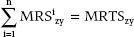
A growing body of literature has sought to apply this literature to analyse international public goods for which there is non-excludability from the benefits between state actors (e.g. Kaul, Grunberg and Stern 1999). Astri Suhrke has argued that international refugee provision represents an international public good, stating, ‘the public good nature of the anticipated benefit will invite free riders’ (Suhrke 1998, 398). She claims that refugee protection is an international public good from which all states benefit, irrespective of which state provides asylum or financial support. These non-excludable benefits, which may comprise, for example, the humanitarian and security benefits from the existence of the refugee regime, do not depend upon being the provider. They therefore invite a degree of ‘free riding’ and the potential for burden-shifting (Betts 2003b).
However, refugee protection should not be regarded as a purely public good. Many of the benefits that accrue to states from providing protection represent private benefits that result from being the provider. These include the impurely altruistic benefits from complying with international standards, the international prestige that stems from humanitarianism and the target-area specific benefits that relate to having specific security concerns or historical and diaspora links and obligations. Even where there are non-excludable benefits, the scope of their non-excludability is unlikely to be global but rather highly geographically contingent (Betts 2003b).
Of central importance to a judgement of regime ‘efficiency’ is therefore the extent to which one regards refugee protection to be a global public good or a private good. If, on the one hand, all states benefit irrespective of which state provides the indirect financial or direct physical protection to refugees, a highly institutionalised legal or normative framework is likely to be required to induce provision and overcome collective action failure. If, on the other hand, individual states derive state-specific benefits from being the provider of provision then ‘allocative efficiency’ will be more likely to result, even in the absence of extremely strong formal institutions of global governance. The analysis of this debate by Betts (2003b) and Eiko Thielemann (2003) suggests that refugee protection is neither a pure global public good nor an entirely private good but that states have a combination of complex motives and national interests that underlie their decision to contribute (or not) in different ways to the regime.
Negative Externalities
While positive externalities result in sub-optimal provision as a consequence of ‘free riding’ on the non-excludable benefits provided by other actors, negative externalities result from the disjuncture between the private and social costs of a given actor's choice and the consequent imposition of the cost differential on a third party. They are one of the main focuses of environmental economics and there is an obvious and under-explored analogy between much of the microeconomic analysis of trans-boundary externalities such as carbon dioxide and acid rain, on the one hand, and the economics of the refugee regime, on the other. Indeed, just as one state's policies on, say, sulphur dioxide or carbon dioxide discharges will impose costs on neighbouring states, so too a failure of a given state to internalise the full cost of their asylum and refugee policies may impose external costs (Turner et al. 1994; Begg et al. 2003, 223).
One only has to reflect on the symbiotic relationships of neighbouring states’ asylum policies to identify examples. France's policy on Sangatte, for example, was widely perceived as imposing its own asylum costs on the UK by geographically promoting cross-channel crossings. This prompted bilateral negotiations to ‘internalise’ the costs being passed on by France. Similarly, many contemporary debates on ‘onward secondary movements’ highlight similar bilateral concerns. Morocco–Spain, Libya–Italy, Germany–Poland are examples of bilateral dyads in which state relations have focused on notions of ‘burden-shifting’. The very idea of ‘burden-shifting’ is implicitly premised upon the notion that one state is passing the costs of its own exclusionary policy on to another state.
In a multilateral context a similar logic applies. For example, if one country reduces its legal or care and maintenance standards, cuts its recognition rates or implements other deterrence measures this will implicitly transfer a degree of the ‘burden’ to relatively more accessible or ‘attractive’ states. This type of competitive ‘burden-shifting’ can lead to a ‘race to the bottom’ in undermining protection standards, as has occurred to some degree in the EU context (Joly 1997).
Overcoming Collective Action Failure
The conventional basis upon which welfare economics, in the presence of externalities, attempts to overcome market failure is either to attempt to restore or to create artificially the conditions of market equilibrium under which Pareto efficiency would have been achieved without intervention. Two of the most common of these, applied in particular to trans-boundary environmental externalities are Coasian property rights and Pigouvian taxes. Their applicability to the global refugee regime can be assessed in turn.
Coasian Property Rights and Tradable Permits
The suggestions by Peter Schuck (1997) and James Hathaway and Alexander Neve (1997) for tradable quotas in refugee protection draw on the logic of creating a market mechanism for commodities for which there is no pre-existing market mechanism. They draw upon the logic of Robert Coase's notion of allocating property rights where they are absent, which has often been applied to overcome environmental externalities by allocating responsibility for the ‘commons’ and then allowing those responsibilities to be bought and sold.
This is the basis of tradable carbon permits, for example. To mitigate global warming, such permits have been applied both nationally and internationally, allowing firms and states to choose between cutting their own carbon dioxide emissions and paying others to do so on their behalf. In other words, once a given quota of responsibility (as a maximum in the case of a public bad or a minimum in the case of a public good) has been allocated, states are allowed to ‘trade’, essentially exchanging money for another actor to take responsibility for providing or abating on its behalf (Turner et al. 1994, 181–189). While this does nothing to increase directly the overall level of provision, which is fixed by the initial quota, it may increase allocative efficiency by reducing the net costs of that level of provision. This is because each state will face a decision about whether to undertake a direct ‘physical’ or an indirect financial burden. Responsibility will be reallocated by exchanging quotas up until the point at which net marginal costs are equalised across states. In the long run this reduced cost may induce incentives to increase overall quotas because of the perception of reduced costs.
In many ways this logic of ‘buying’ and ‘selling’ responsibility for refugee protection is implicit to extraterritorial processing and, to a lesser extent, protection-in-regions-of-origin. These proposals, much like tradable carbon permits, allow states to ‘contract out’ physical responsibility for aspects of asylum processing and refugee protection to states whose marginal willingness to be financially compensated is greater than their marginal willingness to pay another state to take the physical responsibility (Betts 2003a).
Pigouvian Taxes and Subsidies
A Pigouvian tax represents a tax imposed on actors based on the external costs they generate. It is intended to internalise the negative externality by imposing the full cost on the responsible consumer or producers while compensating the affected third party. Generally applied in environmental economics, it is based on the ‘polluter pays principle’ and is generally set at the level of the marginal external cost created by the negative external cost. The intention is that ‘producers’ will then consider the full social costs of their decision and adapt their choices accordingly (Turner et al. 1994, 166–167).
Applied to the global refugee regime, such a tool might be applied as a means to overcome ‘burden-shifting’ policies by increasing the incentive for states to internalise the costs of discharging their responsibilities. For example, if France had been forced to compensate the UK for the consequences of Sangatte, it might have developed an alternative approach to asylum processing and care and maintenance. Meanwhile, such a tax might allow those bearing a disproportionate share of responsibility for refugee protection to be compensated by those that ‘free ride’. In many ways, these are the basis of the European Refugee Fund (Thielemann 2003), although a Pigouvian tax would imply a far higher level of compensation with a stronger enforcement mechanism than is currently politically feasible.
The Limitations of Recreating Markets
Both of these two approaches suffer from at least two potential hurdles: firstly, the conceptual difficulties of establishing the criteria for an ‘optimal’ initial allocation of responsibility; secondly, the difficulties of enforcing such an institutional structure. These can be highlighted in turn.
Firstly, if one is to allocate a ‘quota’, it will first be necessary to establish the normatively desirable level of responsibility each state should have for refugee protection. The tradable permits element of the Kyoto Protocol, for example, used a method called ‘grandfathering’, in which it based initial quotas primarily on the historically contingent basis of previous emission levels with some leeway for additional pledges (Economist, 16 November 2000). The question of the normative basis of ‘responsibility-sharing’ is being tackled by the ‘irregular secondary movements’ (ISM) strand of Convention Plus. The ISM strand is basing its criteria largely on the ‘first safe country’ principle. This reflects the privileging of geographical proximity as the implicit basis for the allocation of responsibility in the current regime structure. In many ways this status quo reflects north–south power relations rather than a normative assessment of the most efficient and equitable basis for according responsibility (Chimni 1998; Castles 2003). Even this normative debate aside, abstract empirical calculation of responsibilities is likely to be complex. If, as the above analysis indicates, one hoped to measure ‘state preferences’, for example, it would be necessary to find proxies to make assessments.
Secondly, enforceability is likely to be problematic. Given UNHCR's limited enforcement and monitoring mandate under Article 35 of the 1951 Convention, there are few global bodies capable of implementing such a regime structure and ensuring compliance. This absence of an adequate enforceability mechanism is one of the reasons why contemporary international co-operation depends instead on a combination of norms and interests to overcome collective action failure (Thielemann 2003). The diffusion and inculcation of ethical and legal norms that guide state behaviour have become the principle means by which the refugee regime guides state behaviour (Noll 2000). Outside of a norm-based means to overcome collective action failure, the regime depends on the presence of private state-specific interests to motivate refugee protection (Betts 2003b). UNHCR's shift towards exploiting the latter through, for example, the ‘strategic resettlement’ and ‘targeting development assistance’ strands of Convention Plus may be linked to the fact that, in the absence of enforcement power in its mandate and with the erosion of norms enshrined in the 1951 Convention (Crisp 2003), channelling interests may be the most effective basis on which to mobilise refugee protection.
Definition 3: Dynamic Efficiency
The concepts of productive and allocative efficiency themselves are generally static and hold constant factors which may change over time. In microeconomics, however, the concept of dynamic efficiency is often applied as a counter-balance to this by adding an inter-temporal dimension to productive and allocative efficiency. Although not as precisely defined as the other two concepts, dynamic efficiency broadly refers to the economically efficient usage of scarce resources through time and thus it embraces allocative and productive efficiency in an inter-temporal dimension (Dollery and Wallis 2003, 403–406). In its narrow sense, it draws on the Schumpeterian idea that while, for instance, monopolies were regarded as ‘inefficient’ by the static analysis of theories of the firm, in the long run their propensity for innovation may bring ‘dynamic efficiency’. For instance, in looking at the economics of healthcare, Peter Zwiefel and Tony Brewer (1997, 128) argue that static concepts of efficiency take existing levels of technology as given. They suggest that in the management of healthcare an appreciation of innovation over time is required to make resource allocation decisions, for example. The concept of ‘dynamic efficiency’ can be applied to the global refugee regime in a narrow sense or a broad sense.
Narrow Application
Although the concept is under-theorised even within economics, ‘dynamic efficiency’ is generally applied to highlight how monopolistic competition may create incentives for innovation that would be absent in a perfectly competitive market. This narrow idea of a market failure based on asymmetric power relations ultimately leading to efficiency can be analogously applied to the refugee regime. While microeconomics debates the pros and cons of monopolies, international relations theory and international political economy have debated the pros and cons of hegemonic power on a similar basis. Just as the theory of the firm predicts that monopolies will bring increased innovation, hegemonic stability theorem predicts that asymmetric power can bring benefits for regime stability (Kindleberger 1973; Keohane 1984; Calleo 1987). Tentatively applying a strict definition of ‘dynamic efficiency’ to the refugee regime would involve navigating a course between the two.
In the absence of any form of central enforcement mechanism in the global refugee regime, a lack of asymmetric power relations would be predicted to result in collective action failure in the presence of externalities such as public goods (Olson and Zeckhauser 1966). In contrast, a powerful ‘monopoly’ state or a group of colluding states with aligned interests might have the incentives and capability to innovate and bring change to the refugee regime structure where it would otherwise be absent. An example of this kind of ‘innovation’ might be the emergence of the UK-Denmark-Netherlands axis currently driving many of the ‘innovative’ approaches to ‘protection-in-regions-of-origin’ within the EU and UNHCR. Similarly, the institutional strength of the European Commission has allowed it to ‘innovate’ to move towards harmonising asylum and immigration policy. This may ultimately allow EU member states to equalise their cost structures for a ‘fixed technology’, helping to bring improved long-run allocative efficiency within the EU. However, it is important to remember that, just as a monopoly will be the main beneficiary of such efficiency gains in the theory of the firm, so too the ‘gains’ from such innovation in the refugee regime are likely to favour the states that initiate change.
Broad Application
A broader application of ‘dynamic efficiency’ might simply regard it as a corrective to static concepts of efficiency. There are certain aspects of the status quo that it may be possible to change over time which should not necessarily be held constant. Most notably, notions of the perception of refugees as ‘cost’ or ‘benefit’ need not necessarily remain fixed but may be subject to reconstruction. A critical conception of dynamic efficiency problematises the very notion of ‘burden-sharing’. It points to how the ‘costs’ of refugee protection are not merely positivist financial costs but are based on perception and representation within a social and political context. If ‘cost’ and therefore ‘burden’ are socially constructed and exist on a spectrum with, rather than in a dichotomous relationship to, ‘benefits’, then the concept of refugees as ‘burden’ may be changeable over time. This is a possibility that is not only linguistically excluded by the bulk of this literature but is also analytically excluded by its predominantly static approach.
This has implications for how one conceives of the ‘optimum’ policy. Gibney (2004, 244–245) and Vaughan Robinson (2003, 167–171), for example, both draw attention to the long-run policy options that may be available for reshaping perceptions and thereby public debate. At the international level, Gil Loescher (2001, 4–6) draws attention to the role UNHCR can play in the ‘persuasion and socialisation’ of states through the creation and diffusion of international norms. Similarly, states do not simply act sui generis as is implied by the static analysis; in reality, state identity and interests are shaped through interactions (Wendt 1992).
Implications for Contemporary Debates
In the contemporary debates on the future of the refugee regime, ‘efficiency’ is being used to imply that the resources currently allocated to spontaneous arrival asylum systems in industrialised states should be reallocated to improve the asylum reception and refugee protection capacities in states in ‘regions of origin’. In other words, it is broadly being used to support a shift by European states, in particular, from ‘asylum policy’ in the north to ‘refugee policy’ in the south. Both the extraterritorial processing and ‘protection-in-regions-of-origin’ proposals imply a shift towards ‘specialisation’ and ‘trade’ based on states’ relative comparative advantages in terms of physical or financial support for protection. Both initiatives imply the ‘contracting out’ by northern states of ‘asylum processing’ or ‘refugee protection’ services to third countries.
The present analysis of the three main concepts of economic efficiency suggests that a degree of ‘specialisation’, when based on accommodating state preferences and allocating responsibility for providing refugee protection where it is ‘least costly’ or based on state-specific interests may be more allocatively efficient. Based on different perceptions of hosting ‘costs’, some states may be willing to compensate others to host refugees while others may be willing to be compensated to host refugees. As the public goods debate highlights, states may also be more predisposed to make commitments to protection where targeted assistance serves their perceived interests by offering excludable state-specific benefits. This points to the value implicit in Convention Plus’ ‘targeting development assistance’ and ‘strategic resettlement’ strands, which facilitate unilateral state initiatives to target development and resettlement where this also offers benefits to the providing state. If processing and protection can be provided in a manner in line with state preferences and at low cost, this may ultimately allow governments greater leeway (vis-à-vis their electorates) to strengthen the refugee protection regime. The consequence may then be a more sustainable refugee regime. However, the more rigorous analysis of efficiency highlights a number of limitations and caveats that go with the current debate's overly simplistic view of ‘efficiency’. These difficulties can be highlighted in turn:
Assuming perfect substitutability. The implicit assumption of much of the current ‘efficiency’ discourse is that ‘protection-in-regions-of-origin’ is perfectly substitutable for spontaneous arrival asylum. Although there may be a degree of substitutability when onward movements are caused by the absence of effective protection on transit routes, the two approaches are not perfectly substitutable. This is because a spontaneous arrival system will also cater for those fleeing individual persecution rather than merely those from protracted refugee situations or fleeing insecurity in the global south. Moreover, even to the extent that different methods of protection or prevention are substitutable, the analysis of allocative efficiency in production highlights how a range of solutions is likely to be more efficient than exclusively privileging any one. Homogenising ‘regions of origin’. States in the ‘region of origin’ may not always be a ‘cheaper’ host when one considers the full financial, social and political costs of providing ‘effective protection’. When one takes ‘cost’ to represent the net perceived financial, social and political costs of protection and incorporates state preferences, it may not necessarily and always be the case that it is more efficient to provide ‘effective protection’ in the global south. Some southern states may endure particularly acute security, environmental and social costs as a consequence of hosting refugees (e.g. Guinea or Kenya). Meanwhile, some northern states may have relatively low social and political costs that stem from maintaining high refugee recognition rates (e.g. Sweden). When one also builds in a minimum standard of ‘effective protection’ for refugees as a prerequisite for a state taking responsibility as a ‘first safe country’ of asylum, this may increase the relative cost of providing adequate protection. This is because, firstly, achieving the necessary protection capacity will require considerable investment and, secondly, if these adequate standards are to be met then local community development will be required to avoid exacerbating horizontal inequalities. Eroding norms. The analysis of dynamic efficiency points to the fact that the long-term implications of policy should also be considered. If, for example, changing norms to base refugee protection almost exclusively on ‘protection-in-regions-of-origin’ was to undermine the credibility of spontaneous arrival asylum or dilute normative standards of protection, then it might not ultimately be efficient. Legitimating a ‘contractual’ and regionally nuanced regime structure rather than one based on universally accepted norms may have long-run consequences that undermine short-term efficiency gains. Any approach that was perceived to be inequitable might ultimately bring long-term inefficiency by alienating states. To provide a more complete picture of the normative basis of responsibility sharing, the current analysis would need to be reconciled with the concept of equity and its relationship to efficiency, as well as the literature on the role of norms. There would need to be a means to ensure that the agreed normative standard of ‘effective protection’ was not gradually undermined by the proposal. Ignoring domestic policy. Efficiency is not exclusively about inter-state responsibility sharing. It also has a domestic component whereby states may be able to adapt their social policies so as to reduce the perceived costs of hosting asylum seekers and refugees without resorting to extraterritorial approaches. If ‘costs’ and ‘benefits’ are in part based on perceptions that are contingent upon policies such as approaches to integration, the siting of refugee accommodation or methods of processing, then productive efficiency might be improved within a given state instead of simply trying to reallocate responsibilities on an interstate basis.
Conclusion
In the contemporary debates on asylum and refugee protection, ‘efficiency’ is being used as a rhetorical device by state representatives, UNHCR and academics to advocate a range of policy initiatives. In particular, it is being used to support the concept of ‘protection-in-regions-of-origin’. However, the use of the term has lacked conceptual clarity. This article has demonstrated that if ‘efficiency’ is going to be used as a criterion to judge the normative contours of the changing global refugee regime then it must be invoked with definitional clarity and an awareness of its assumptions. Firstly, if the concept is used it must be made explicit whether it refers to productive or allocative efficiency, and whether it refers to a static or dynamic approach to these concepts. Secondly, given that efficiency only has any meaning from a given standpoint, it must be clear on whose behalf it is being invoked: states, refugees or the ‘international community’. Thirdly, it needs to be clear what notion of ‘cost’ is being invoked: is it purely financial, or does it also include social or political costs? Fourthly, any minimisation or maximisation problem applied to the refugee regime will be built on a rights-based framework. How the optimisation problem is set up will implicitly weigh state (citizen) and refugee rights. Fifthly, does the provision of refugee protection confer private benefits that accrue exclusively to the providing state or do state choices in asylum and refugee policy also confer positive and negative externalities? Assumptions about these five areas, in particular, will be implicit to any invocation of ‘efficiency’ with respect to refugees, making it crucial that the basis on which these assumptions are made is fully explicit. Where these assumptions remain hidden, ‘efficiency’ will either favour arbitrary outcomes or privilege the interests of those that use it as a legitimation tool.
Although there are limits and epistemological dilemmas in applying a microeconomic framework to analyse the global refugee regime, it is clearly necessary to identify a basis on which to make resource allocation decisions given economic, social and political constraints. Within this context, the above analysis points to some specific implications for the global refugee regime, in general, and the current debates on the ‘new’ approaches, in particular. Alternative approaches grounded in ‘efficiency’ must move beyond static notions of ‘cost minimisation’ from the perspective of narrow state interests. Instead, approaches such as ‘protection-in-regions-of-origin’ should favour a dynamic approach to efficiency that considers the full financial, political and social implications from a global perspective.
In particular there are four major implications for ‘protection-in-regions-of-origin’ that stem from the article's analysis. Firstly, ‘protection-in-regions-of-origin’ should not be seen as perfectly substitutable for spontaneous arrival asylum. To some extent they are complementary and cater to different groups of refugees. A range of solutions including spontaneous arrival and tackling ‘root causes’ is likely to be more efficient than exclusively privileging ‘in-region’ solutions. Secondly, such approaches should be based on a concept of ‘effective protection’ that is normatively explicit rather than arbitrarily based on simply reducing financial costs by eroding the quality of ‘output’. If, for example, safeguarding existing refugee standards were taken as the normative premise, 18 then the cost of refugee protection would need to be minimised subject to providing ‘effective protection’ to all refugees rather than global refugee protection maximised subject to the constraint of states’ willingness to provide protection. Thirdly, given that many of the benefits that stem from being the provider of refugee protection (whether financial or physical) accrue to the providing state, and that there are immense practical difficulties in overcoming collective action failure on a global level, advocating policies that simultaneously support state preferences and refugee protection are likely to be the most effective. Fourthly, taking a dynamic rather than a static approach points to the need to be aware of how the social and political dimensions of ‘cost’ and ‘benefit’ are socially constructed. How refugees are perceived over time and consequently how these costs change is therefore a function of policy and should be endogenous to any concept of dynamic efficiency.
Footnotes
1
Statement to Sub-Committee F (Social Affairs, Education and Home Affairs) of the House of Lords Select Committee on the European Union, in discussing extraterritorial processing, 29 October 2003.
3
Within the forced migration literature, the so-called ‘burden- or responsibility-sharing’ debate has attempted to look at how responsibility for the costs of refugee protection should be allocated between states. Much of this literature has based its criteria for allocating state responsibilities on equity rather than efficiency, focusing on factors such as GNP, population and other indicators of reception capacity to determine generic criteria for the allocation of responsibilities (Hathaway 1997; Thielemann 2003). However, some of the seminal work in the debate has selectively drawn its theoretical underpinnings from implicit references to the concept of allocative efficiency. Suhrke's identification of refugee protection as a global public good and Schuck's proposal for a market in refugee protection quotas, for example, draw on a wider literature on overcoming market failure to achieve ‘allocative efficiency’ (Suhrke 1998;  ). The arguments of both authors are part of a broader debate that, if contextualised, may point to additional insights for achieving sustainable refugee protection.
4
The so-called ‘UK Proposals’ explored the possibility of using ‘transit processing centres’ (TPCs) and ‘regional protection zones’ (RPZs) to deterritorialise protection and processing along the lines of the Australian ‘Pacific Solution’ (Noll 2003; ).
5
Details of the Dutch proposals for ‘protection-in-the-region’ were outlined at the Dutch EU Presidency Conference on Asylum, Migration and Frontiers in Amsterdam, 31 August to 3 September 2004 (). The proposals remain vague but focus mainly on improving protection capacities in host states of first asylum. Alexander Sorel and Liesbeth Bos of the Dutch Justice Ministry presented the justification for the proposals at a pre-conference workshop at the International Association for the Study of Forced Migration (IASFM) in Sao Paulo, Brazil on 9 January 2005. Their justification for the proposals was almost exclusively based on resource allocation, with Bos claiming: ‘we are not spending our money in the right place, nor are we spending it on the right people’.
6
7
Supplementary evidence from ILPA in response to some outstanding questions by the Sub-Committee, Statement to Sub-Committee F (Social Affairs, Education and Home Affairs) of the House of Lords Select Committee on the European Union, in discussing extraterritorial processing, 4 December 2003.
8
9
Interview with a representative of the Dutch government (anonymity requested), Geneva, 16 September 2004.
10
Interview with Mark Cutts, former Special Assistant to Ruud Lubbers, 17 September 2004, Palais des Nations, Geneva; interview with Bartjan Wegter, Special Advisor to Ruud Lubbers, 30 September 2004, UNHCR, Geneva.
11
The politics underlying these positions and the externalisation of asylum policy has been well documented already. See, for example, Betts (2004a) and .
12
In microeconomic theory these are described as ‘budget constraints’, subject to which a given object of optimisation is maximised or minimised (i.e. the second clause of the maximisation and minimisation problem).
13
Statement by Erika Feller, Director, Department of International Protection, at the Fifty-fifth Session of the Executive Committee of the High Commissioner's Programme, Geneva, 7 October 2004.
14
Interview with Sylvester Parker-Allotey, Deputy Permanent Representative, Ghana, Ghana Mission, 16 September 2004.
15
That the ‘cluster areas’ were ill-chosen is illustrated by the correlation between the areas chosen and the subsequent successes of the British National Party (BNP) in local elections: of the 18 council seats won by the party by September 2003, half had been areas of the dispersal scheme: five in Burnley, two in Sandwell, one in Kirklees and one in Stoke-on-Trent ().
16
See, for example, the statements of these states to UNHCR's Executive Committee, October 2004. On file with the author.
17
‘Strategic resettlement’ is defined by UNHCR as ‘the planned use of resettlement that maximises the benefit of resettlement, either directly or indirectly, other than to those being resettled. These benefits accrue to other refugees, the host states, other states and the international protection regime in general’ .
18
This is the normative basis of burden-sharing for which Amnesty International argues (Amnesty 2004).