







Abstract
Responses to individuals who suffer are a foundation of cooperative communities. On the basis of the approach/inhibition theory of power (Keltner, Gruenfeld, & Anderson, 2003), we hypothesized that elevated social power is associated with diminished reciprocal emotional responses to another person's suffering (feeling distress at another person's distress) and with diminished complementary emotion (e.g., compassion). In face-to-face conversations, participants disclosed experiences that had caused them suffering. As predicted, participants with a higher sense of power experienced less distress and less compassion and exhibited greater autonomic emotion regulation when confronted with another participant's suffering. Additional analyses revealed that these findings could not be attributed to power-related differences in baseline emotion or decoding accuracy, but were likely shaped by power-related differences in the motivation to affiliate. Implications for theorizing about power and the social functions of emotions are discussed.
The fact that cultures have evolved a norm of noblesse oblige—that individuals with power and wealth should behave generously toward individuals with low power—suggests that power dampens the propensity to care for other people. The investigation we report in this article explored this possibility. Specifically, we examined how power influences reciprocal and complementary emotional reactions to the suffering of another person (Batson, Fultz, & Schoenrade, 1987; Keltner & Kring, 1998). Emotional reciprocity refers to the process by which one individual comes to feel the emotions of another, as when one person's distress arouses distress in another. Emotional complementarity occurs when one person's emotions evoke different but corresponding emotions in others, as when one person's distress arouses compassion in another. We tested hypotheses concerning how power moderates these two processes so vital to interpersonal relationships.
EMOTIONAL RECIPROCITY AND COMPLEMENTARITY
Humans have a well-honed capacity to respond to the emotions of others. The emotional reciprocity between parent and child helps coordinate their goal-directed behaviors prior to the child's acquisition of language (Campos, Campos, & Barrett, 1989). In adults, brief exposure to another person's emotions automatically triggers similar emotions (Hess & Blairy, 2001). The emotional reactions of friends to evocative stimuli converge over time (Anderson, Keltner, & John, 2003). Such reciprocal emotional experiences benefit relationships by promoting coordinated thoughts and actions, mutual understanding, and interpersonal closeness (Hatfield, Cacioppo, & Rapson, 1994; Keltner & Kring, 1998).
Emotional complementarity is most evident in studies of harm, need, and suffering, which can evoke responses of compassion, pity, sadness, or even anger. In the present study, we focused on empathic concern, or compassion (Buck, 1989; Clark, Ouellette, Powell, & Milberg, 1987; Clark & Taraban, 1991; Eisenberg, 2000; Kennedy-Moore & Watson, 2001). Feelings of sympathy and compassion prompt helping behavior, thus enhancing the welfare of individuals in distress (Batson, O'Quin, Fultz, Vanderplas, & Isen, 1983). Complementary emotional responses to another person's suffering, therefore, benefit relationships by motivating prosocial behavior—a notion that dovetails with findings that complementarity of nonverbal behavior increases affection and comfort (Tiedens & Fragale, 2003). Reciprocal and complementary emotional responses to other people's suffering tend to be correlated, yet qualitatively distinct (Batson et al., 1983, 1987).
SOCIAL POWER AND EMOTION
Social power reflects the relative influence an individual exerts over other people's outcomes, and is experienced in terms of the sense of control, agency, and freedom (Fiske, 1993). The approach/inhibition theory of power (Keltner, Gruenfeld, & Anderson, 2003) provides a basis for predictions regarding how emotional reciprocity and complementarity will vary according to the power relations of the individuals involved. According to this theory, high-power individuals experience fewer social constraints and more resource-rich environments than other people. As a result, they show evidence of an activated approach system—relatively automatic information processing, behavioral disinhibition, and elevated positive emotion (e.g., Guinote, 2007). Low-power individuals, by contrast, experience greater social constraints, threats, and punishments. As a result, they show greater evidence of an activated behavioral inhibition system—more thorough information processing, behavioral inhibition, and negative emotion.
High-power individuals have been shown to experience more positive and less negative emotions than low-power people (Anderson & Berdahl, 2002; Langner & Keltner, 2008), and to express their positive emotions more (Berdahl & Martorana, 2006; Hecht & LaFrance, 1998). Furthermore, evidence suggests that high-power individuals are less accurate judges of other people's emotions than low-power individuals are (Galinsky, Magee, Inesi, & Gruenfeld, 2006; Gonzaga, Keltner, & Ward, in press). High-power individuals also react less to others' emotions. Anderson et al. (2003) found that low-power partners assimilated more to their higher-power partners in their emotional responses than vice versa. Negotiation studies found that low-power negotiators conceded more to angry opponents than to happy ones, whereas high-power negotiators did not adjust their demands to their opponent's emotion (Van Kleef, De Dreu, & Manstead, 2004).
Elevated power may reduce the propensity to respond emotionally to other people's suffering via three potential mechanisms. First, given that powerful people appear generally disposed to experience more positive than negative emotion (Anderson & Berdahl, 2002; Berdahl & Martorana, 2006; Hecht & LaFrance, 1998), one would expect them to respond with less distress and compassion to the suffering of others than low-power people do (a baseline account). Second, powerful people appear to attend less to their less powerful counterparts than vice versa (Fiske, 1993). As a result, they may perceive other people's emotions less accurately (Galinsky et al., 2006), and therefore fail to respond to other people's suffering with distress and compassion for the simple reason that they do not perceive that suffering (a decoding account). Third, high-power individuals may respond less emotionally to other people's suffering than low-power individuals do because they are less dependent on other people, and therefore less invested in interactions with them (De Dreu & Van Kleef, 2004). Lack of motivation to affiliate should reduce high-power individuals' responsiveness to the suffering of others (a motivational account).
On the basis of these considerations, we predicted that high-power individuals would be less emotionally responsive to an interaction partner's distress than low-power individuals. We tested this prediction in the context of face-to-face dyadic interactions during which participants disclosed experiences of suffering. Concerning reciprocal emotional responses, we hypothesized that high-power individuals would experience less reciprocal distress than low-power individuals when confronted with their partner's distress. Regarding emotional complementarity, we hypothesized that high-power individuals would feel less compassion than low-power individuals in response to their partner's distress.
In addition, we explored whether power affects autonomic emotion regulation as reflected in respiratory sinus arrhythmia (RSA) reactivity, an index of the neural regulation of the heart rate via the vagus nerve (Porges, Doussard-Roosevelt, & Maiti, 1994). Parasympathetic down-regulation of emotions in response to psychological stressors is marked by increased RSA, which facilitates a lower heart rate and a more relaxed state. For example, relative to a comparison group, women who were instructed to regulate their emotions during a conversation about a negative film showed increased RSA during the conversation (Butler, Wilhelm, & Gross, 2006). More generally, self-regulatory efforts, such as denying oneself a cookie or persisting at a tedious mental task, are accompanied by increased vagal control of the heart (Segerstrom & Solberg Nes, 2007). We expected high-power individuals (but not low-power individuals) to respond to increasing levels of distress from their partner with increased autonomic emotion regulation, thus tempering their emotional responses to the partner's suffering. We also explored whether the hypothesized power-related differences in emotional reciprocity and complementarity might be explained by power-related differences in baseline emotion, decoding accuracy, or motivation to affiliate.
METHOD
Participants
Participants were 118 undergraduates (70 females, 48 males; mean age = 20.90 years, SD = 4.99; 49.3% Asian American, 29.6% Caucasian, 4.2% Hispanic, 3.5% African American, 13.4% other) from a large Western university who participated in return for $15 or credit toward a psychology class requirement.
Procedure
Previously unacquainted same-sex partners were randomly paired, seated approximately 2 ft apart in comfortable chairs facing one another, and connected to physiological monitoring equipment while they received instructions. The experimenter then left the room for the remainder of the experiment and communicated with the dyad via intercom. Two video cameras recorded each participant individually. Before interacting, the partners completed measures of social power and baseline emotions.
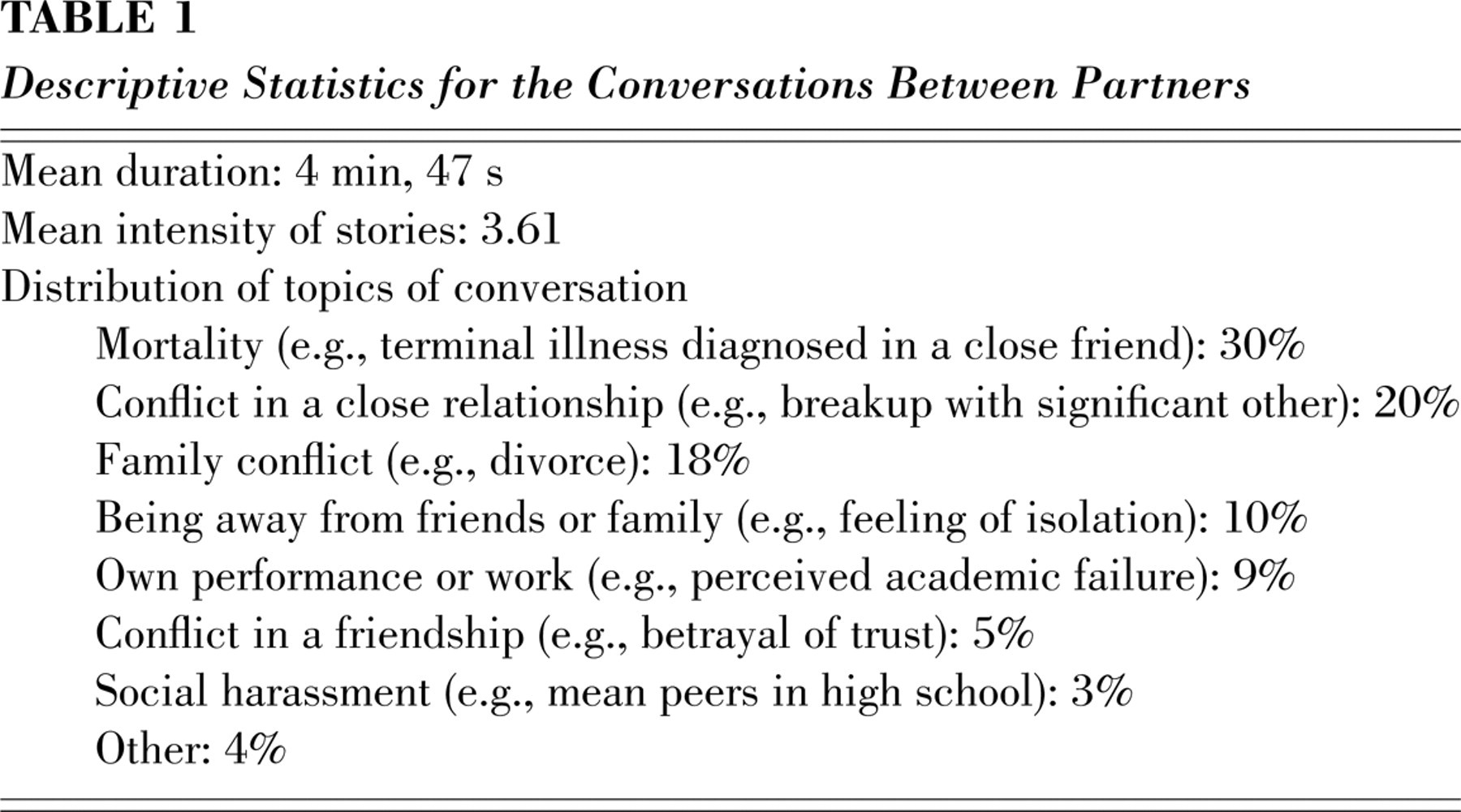
Participants were then asked to think about an event during the past 5 years that had caused them a great deal of emotional suffering and pain. For 3 min, each participant wrote a summary of this event in his or her questionnaire packet. Each participant then took a 5-min turn talking about his or her event while the other participant listened. Emotion ratings were obtained after each turn. The order of the roles was randomly determined by means of a coin flip. As talkers, participants were instructed to convey the feelings evoked by the event and its impact on their life (see Table 1 for descriptive information about the conversations). As listeners, participants were instructed to attempt to gain an understanding of the other person's experience, and they were allowed to ask questions to that end.
Descriptive Statistics for the Conversations Between Partners
Baseline Emotional Experience
Prior to the conversations, participants indicated on 7-point scales (1 = not at all, 7 = very strongly) the extent to which they felt a variety of emotions “right now.” Positive emotions were assessed by three items (happy, optimistic, hopeful), which were combined (Cronbach's α = .83). Baseline distress was also measured by three items (disturbed, distressed, troubled; α = .80), as was compassion (touched, compassion, sympathy; α = .80).
Assessment of Power
Power was assessed using the Sense of Power scale (Anderson & Galinsky, 2006), which taps into individuals' general sense of power. This measure is based on the idea that individuals form internal representations of their power relative to others across contexts and relationships. Thus, the sense of power as measured by this scale is anchored in relational experiences. The scale consists of a stem (“In my relationships with others … ”) and eight items: “I can get people to listen to what I say,” “My wishes do not carry much weight” (reverse-scored), “I can get others to do what I want,” “Even if I voice them, my views have little sway” (reverse-scored), “I think I have a great deal of power,” “My ideas and opinions are often ignored” (reverse-scored), “Even when I try, I am not able to get my way” (reverse-scored), and “If I want to, I get to make the decisions.” Responses are made on scales from 1 (strongly disagree) to 7 (strongly agree). Scores on this scale are correlated with people's actual standing in power hierarchies and predict the same behaviors as structural manipulations of power and manipulations based on semantic priming and autobiographic recall (Anderson & Berdahl, 2002; Anderson & Galinsky, 2006). The scale's reliability (α) in the present sample was .89.
Emotional Experience During the Conversations
After each conversation, the talker's distress and the listener's distress were measured on 7-point scales (1 = not at all, 7 = very strongly). Participants rated how disturbed, distressed, and troubled they felt during the preceding conversation; ratings for the three items were combined (αs = .83 and .87 for talkers and listeners, respectively). In addition, the listener rated the extent to which he or she felt touched, compassion, and sympathy during the preceding conversation; these ratings were combined to form a scale measuring the listener's compassion (α = .85).
Decoding of the Partner's Distress
After each conversation, the listener also rated how disturbed, distressed, and troubled he or she thought the talker felt during the discussion (1 = not at all, 7 = very strongly; α = .89).
RSA Reactivity
Electrocardiogram (ECG) recordings, sampled at 1000 Hz, were obtained from leads placed on the torso in a Lead II configuration using an ambulatory monitoring system (Free University, Amsterdam, The Netherlands). All data were filtered for artifacts. RSA was calculated in the 0.12- to 0.40-Hz band of the R-wave-to-R-wave interbeat interval series using CMET cardiac metric software (Allen, 2002). Baseline RSA was calculated from 2 min of ECG data acquired 15 min after the start of the experiment, during the time when participants were quietly filling in questionnaires. Listeners' RSA reactivity was calculated by subtracting baseline RSA from RSA for the first 2 min of each interaction.1
Feelings About the Partner
After the conversations, participants reported their feelings about their partner. Five items assessed participants' motivation to affiliate with their partner: “I would like to get to know the other participant better,” “I feel like the other participant and I are friends,” “I feel close to the other participant,” “I would like to befriend the other participant,” and “I would like to spend more time with the other participant.” These items were combined in an index of affiliation motivation (α = .86). Finally, three items measured participants' trust and connection with their partner: “I feel the other participant trusts me,” “I feel I can trust the other participant,” and “I feel connected to the other participant” (α = .85).
RESULTS
Preliminary Analyses
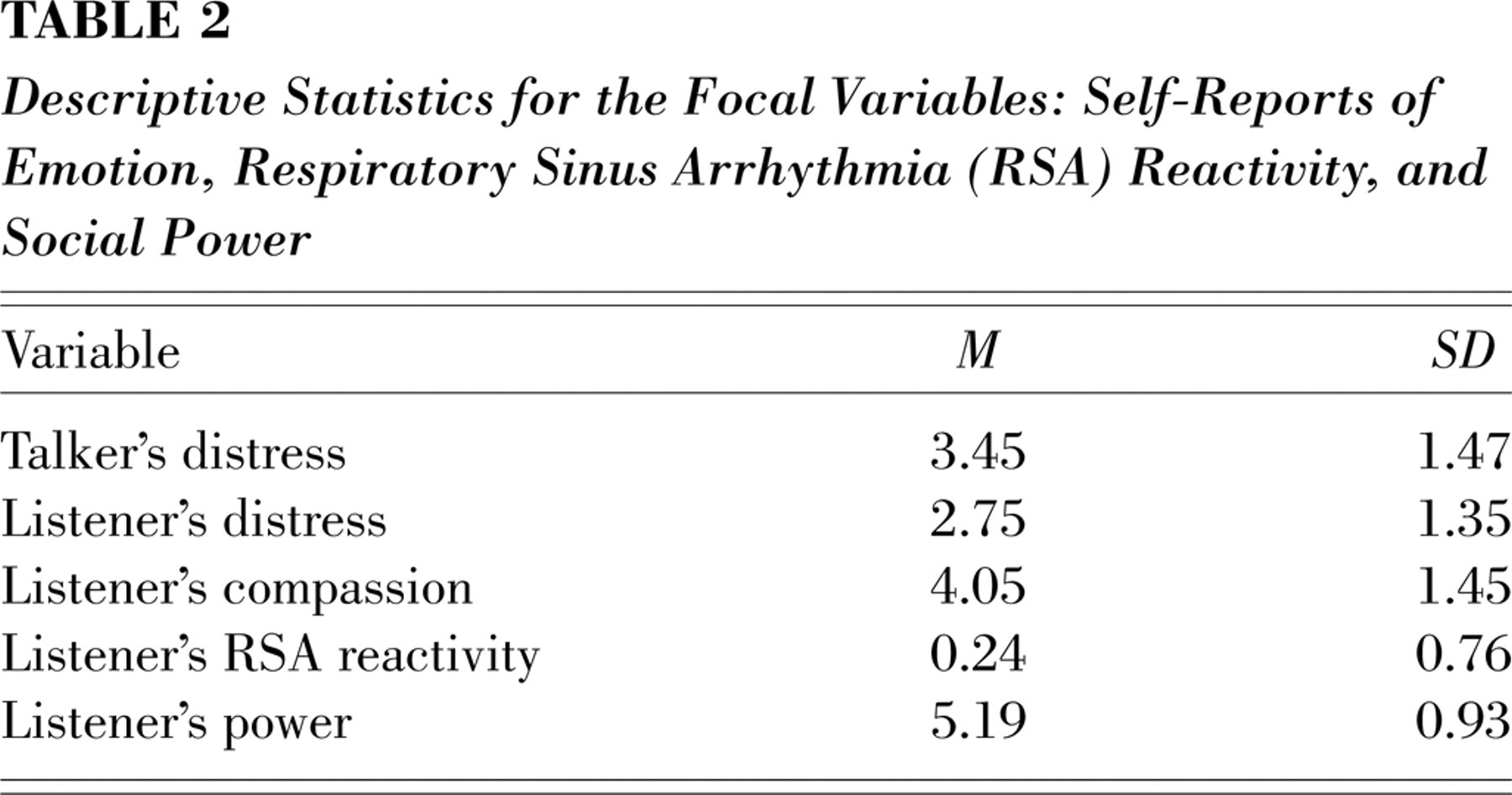
We tested our hypotheses using hierarchical linear modeling (HLM; Bryk & Raudenbush, 1992) to account for possible nonindependence of the data (i.e., talkers and listeners were part of the same dyad).2 Table 2 presents the means and standard deviations of the focal variables.
Descriptive Statistics for the Focal Variables: Self-Reports of Emotion, Respiratory Sinus Arrhythmia (RSA) Reactivity, and Social Power
Before testing our hypotheses, it was important to establish that higher-power listeners did not hear less intense stories than lower-power listeners, as this could provide an alternative explanation for our findings. Two coders blind to all hypotheses and characteristics of the participants rated video recordings of the stories of suffering for their emotional intensity on a scale from 1 (not at all emotionally intense) to 7 (very emotionally intense; α = .71). HLM revealed that talkers told more intense stories to higher-power listeners, β = .23, t(114) = 2.43, p < .05. Thus, our hypothesis tests were conservative, in that more-powerful listeners were actually responding to more emotionally evocative stories. We included story intensity as a control variable to account for its possible impact (analyses without this control yielded similar results).
Power Moderates Listeners' Emotional Responses to Talkers' Suffering
Listener's Distress
Our first hypothesis was that high-power individuals would respond with less distress to their partner's distress than would low-power individuals. Consistent with this prediction, HLM revealed a significant interactive effect of talker's distress and listener's power on listener's distress, β = −.20, t(114) = −2.02, p < .05 (see Fig. 1). Simple-slope analysis revealed that an increase in talker's distress was associated with increased distress on the part of low-power listeners (β = .36, p < .01), but not high-power listeners (β = −.02, p = .87).
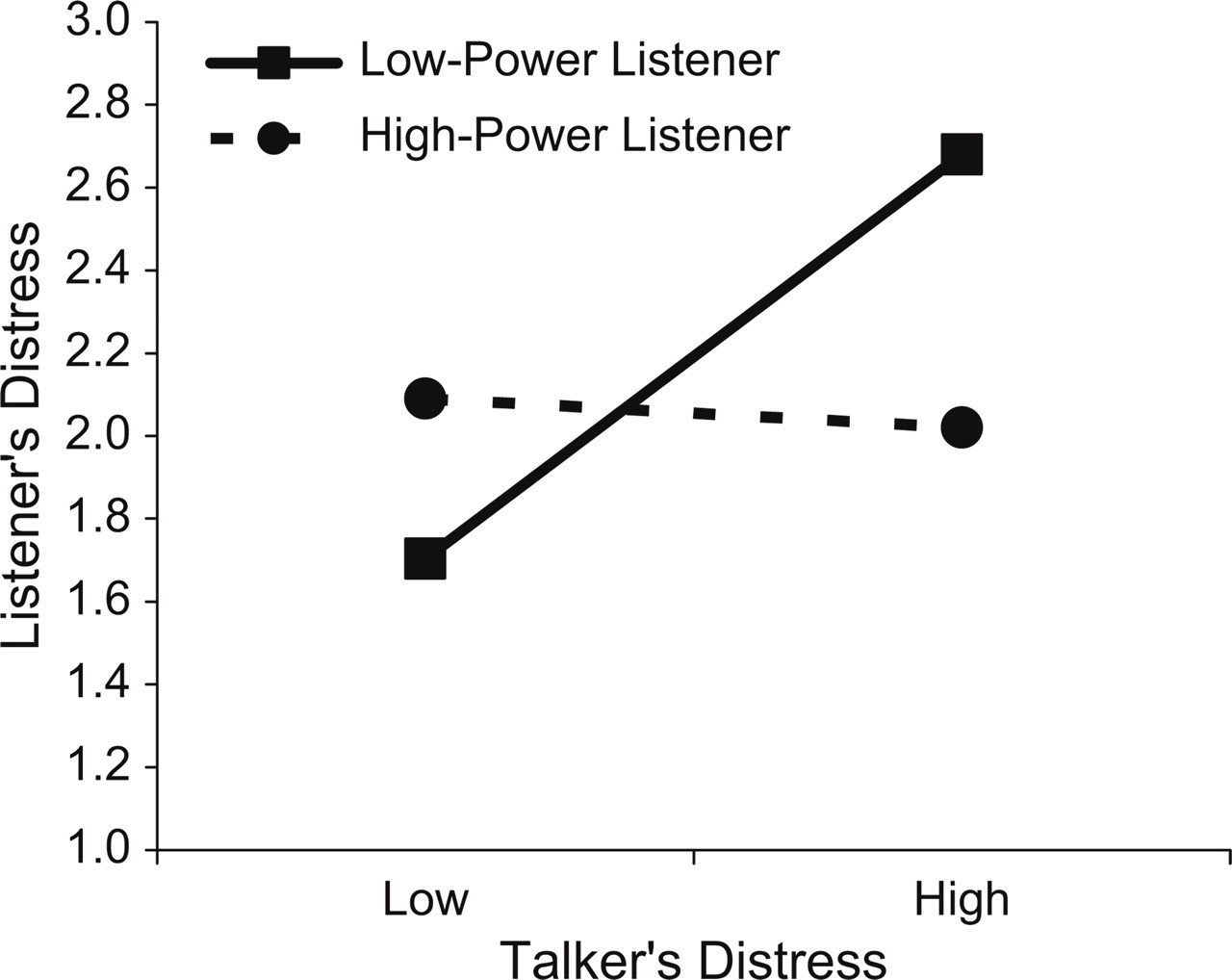
Listener's distress as a function of talker's distress and listener's power. For both talker's distress and listener's power, “low” was defined as 1 standard deviation below the mean, and “high” as 1 standard deviation above the mean.
Listener's Compassion
Our second hypothesis was that high-power individuals would respond with less compassion to their interaction partner's distress than would low-power individuals. Indeed, we found a significant interactive effect of talker's distress and listener's power on listener's compassion, β = −.25, t(114) = −2.61, p < .01 (see Fig. 2). An increase in talker's distress was accompanied by increased compassion on the part of low-power listeners (β = .31, p < .01), but not high-power listeners (β = −.19, p = .20).
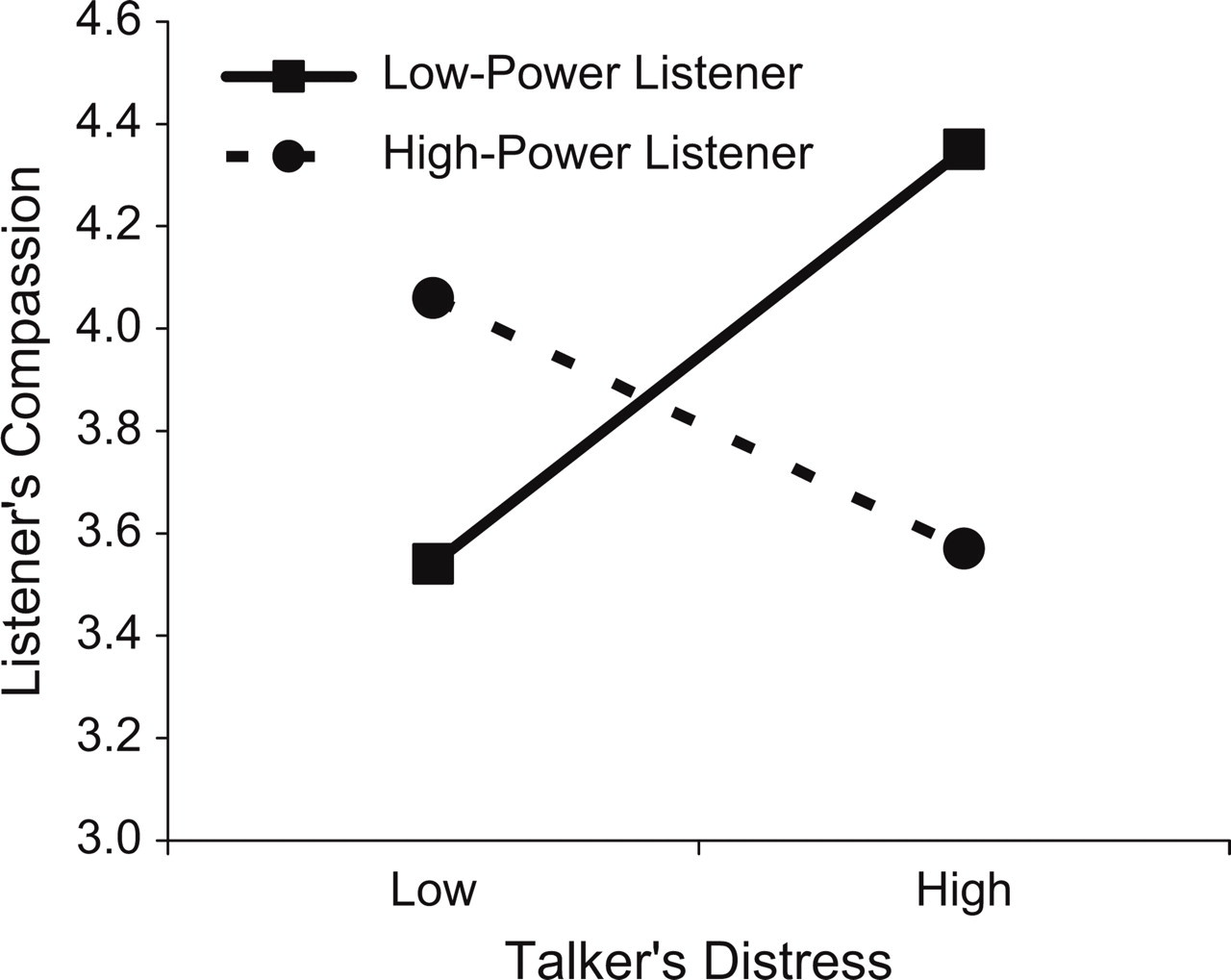
Listener's compassion as a function of talker's distress and listener's power. For both talker's distress and listener's power, “low” was defined as 1 standard deviation below the mean, and “high” as 1 standard deviation above the mean.
Listener's RSA Reactivity
In line with our third hypothesis, HLM yielded an interactive effect of talker's distress and listener's power on listener's RSA reactivity, β = .23, t(114) = 2.37, p < .05. As Figure 3 shows, high-power listeners' RSA reactivity was a positive function of talkers' level of distress—as talkers' distress went up, listeners' RSA reactivity increased (β = .37, p < .05). By contrast, low-power listeners' RSA reactivity was not significantly associated with talkers' level of distress (β = −.22, p = .16). There was no significant main effect of power on RSA reactivity (β = −.09, p = .37). These findings suggest that emotional reactions to increases in talkers' distress were buffered by autonomic emotion regulation in high-power listeners, but not in low-power listeners.3
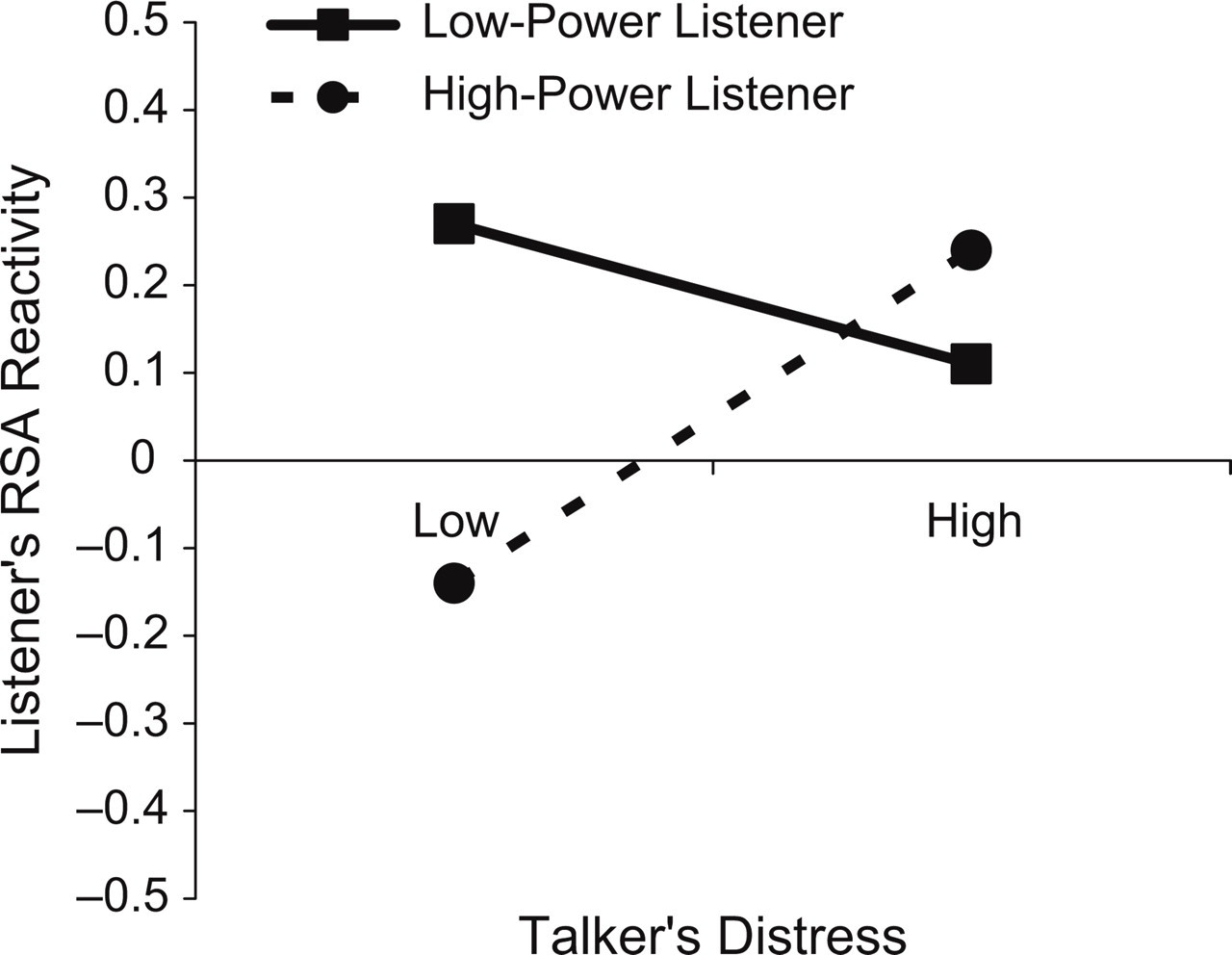
Listener's respiratory sinus arrhythmia (RSA) reactivity as a function of talker's distress and listener's power. For both talker's distress and listener's power, “low” was defined as 1 standard deviation below the mean, and “high” as 1 standard deviation above the mean.
Exploring Alternative Explanations
The results so far indicate that higher-power people responded with less distress and compassion to the suffering of their interaction partners. In this section, we consider three possible mechanisms that might account for these power-related differences in reciprocal and complementary emotion.
Baseline Explanation
Higher-power participants reported more positive emotions (β = .24, p < .01), less distress (β = −.28, p < .01), and less compassion (β = −.26, p < .01) prior to the conversation (i.e., at baseline). These findings, which are consistent with those of previous studies (e.g., Anderson & Berdahl, 2002), suggest that higher-power individuals may have responded with less emotion to the distress of their partner because their preexisting baseline state was more positive. However, controlling for baseline differences in emotionality did not reduce the reported effects of power on distress (without control: β = −.18, p < .05; with control: β = −.20, p < .05) or compassion (without control: β = −.22, p < .01; with control: β = −.25, p < .01).
Decoding Explanation
According to a decoding explanation, higher-power people are less accurate in their perceptions of other people's distress, which could account for their reduced emotional responsiveness to other people's suffering (cf. Galinsky et al., 2006). Evidence fitting this explanation would be an interactive effect of talker's self-rated distress and listener's power on listener's perception of talker's distress. Specifically, one would expect listener's perception of talker's distress to be more strongly predicted by talker's distress when the listener's power was low rather than high. However, this interaction was not significant (β = −.14, p = .15). A median split of participants into high-power and low-power groups also revealed no evidence for differential decoding accuracy, which was operationalized as the correlation between the talker's self-rated distress and the listener's rating of the talker's distress (r = .24 for low-power participants, r = .22 for high-power participants). Thus, power-related differences in decoding did not account for the observed differences in distress and compassion.
Motivational Explanation
Participants' self-rated feelings about their partners supported a motivational explanation of the relationship between power and emotional responding. Higher-power people reported a weaker desire to get to know and establish a friendship with their partner, β = −.27, t(114) = −2.99, p < .01. Furthermore, motivation to get to know the other participant was significantly correlated with listener's self-reported distress (r = .27, p < .01) and compassion (r = .25, p < .01). Simple-slope analyses showed that controlling for motivation to affiliate eliminated the effects of talker's distress on listener's distress (β = −.07, p = .87) and compassion (β = −.01, p = .98) among lower-power listeners, and eliminated the effect of talker's distress on RSA reactivity among higher-power listeners (β = .06, p = .88). We also found an effect of listener's power on talker's sense of social connectedness: Talkers felt less connection with higher-power listeners, β = −.20, t(114) = −2.10, p < .05. This, too, suggests that higher-power individuals were less motivated to invest emotionally in their conversation partners.
DISCUSSION
Responding to individuals who suffer is an elemental part of social collectives. Our data suggest that social power attenuates emotional reactions to those who suffer. Higher-power participants experienced less reciprocal emotion (distress) and less complementary emotion (compassion) in response to another individual disclosing an experience of suffering, and they showed more autonomic emotion regulation as well. This study is the first to demonstrate that power shapes emotional responsiveness to other people's suffering and is an important extension of the literature on power and emotion. Our findings inform understanding of when and how emotions coordinate social interaction, and thus speak to the contingencies of the social functions of emotions (cf. Parrott, 2001).
Our results are consistent with a principle from the reciprocal-influence model of social power (Keltner, Van Kleef, Chen, & Kraus, 2008): the principle that the thoughts, desires, and emotions of individuals with power are prioritized in social interaction. The emotional reactions of low-power participants consistently covaried with the distress of their partners. High-power individuals did not show such contingent emotional responses: Their self-reported levels of distress and compassion were not affected by their partner's distress, even though they heard more intense stories than low-power individuals did. These findings are all the more impressive when one considers that no explicit power differences were made salient. In combination with evidence that high-power individuals' emotions shape negotiations more strongly than low-power individuals' emotions (Van Kleef et al., 2004), the present findings strongly suggest that the emotions of powerful individuals disproportionately sway the direction of social interactions.
Ancillary analyses examined potential mechanisms underlying these power-related differences in distress and compassion. Even though high- and low-power individuals differed in their baseline emotion (high-power individuals reported more positive emotion and less distress), these differences did not account for the associations between power and feelings of distress and compassion. Nor could the power-related differences in distress and compassion be attributed to differential attention to the partner's emotions, for high- and low-power individuals were similarly accurate in judging their partner's emotions. Instead, the most plausible account was a motivational one: Higher-power participants reported a weaker motivation to connect to their partner, and participants disclosing their distress felt less of a social connection with higher-power listeners. In a more speculative vein, the physiological data suggest that high-power individuals engaged parasympathetic processes (i.e., RSA reactivity) to buffer themselves against the partner's distress.
These findings qualify the widespread idea that powerful individuals pay less attention to their social environment than do less powerful individuals (e.g., Fiske, 1993). Our findings suggest that high-power people do not necessarily attend less to others (see also Chen, Ybarra, & Kiefer, 2004; Overbeck & Park, 2001); rather, they appear to be less motivated to respond to others. This conclusion is compatible with recent work on conflict indicating that high-power parties are not insensitive to their opponent's emotions, but react selectively to these emotions when doing so can further their own goals (Van Kleef & Côté, 2007).
Because we investigated how power shapes emotional responses to other people during fairly naturalistic disclosures of suffering, our study is limited by third-variable concerns. We did not manipulate power, so it is possible that the observed effects were due to other variables correlated with power that were not measured. In this respect, it is important to recall that scores on the power scale used in this study are correlated with people's actual standing in power hierarchies and predict the same behaviors as structural manipulations of power (Anderson & Galinsky, 2006). Nevertheless, it is important to consider alternative explanations. One is that high-power participants (who reported more positive emotions at baseline) refused to connect with their partners because they did not want to spoil their positive mood. One study found that people in positive moods helped less than people in neutral or negative moods when the helping task was unpleasant (Forest, Clark, Mills, & Isen, 1979). This explanation hinges on the assumption that participants perceived the discussion as unpleasant, an assumption that is questionable in light of other work showing that helping a distressed person is uplifting (Cialdini & Kenrick, 1976).
Another explanation—an explanation that is compatible with the one we are offering—is that high-power people are less motivated to connect with distressed individuals than low-power people are because they have better social networks and are less interested in forming new relationships. Although people who report high levels of power do not enjoy increased popularity (Keltner et al., 2008), alternative explanations such as these cannot be ruled out definitively in a correlational design. Future research involving random assignment of participants to different power levels is needed to rule out alternative explanations regarding the underlying processes responsible for the observed effects.
Several implications of the present study warrant further investigation. Given that displays of sadness convey weakness, incompetence, and low status (Tiedens, 2001; Tiedens, Ellsworth, & Mesquita, 2000), powerful individuals' tendency to feel less distress in response to another person's suffering than less-powerful individuals do may contribute to the emergence and stability of power hierarchies; that is, powerful people show less “low-status” emotion when confronted with another person's distress, and this may reinforce their social power. In addition, one might expect power-related differences in punitive judgments and in the allocation of resources to be mediated by differences in compassion. Compassion is vital to the health of intimate relations, as is empathic emotion (Anderson et al., 2003; Neff & Karney, 2005). Our study suggests that high-power individuals may suffer in interpersonal relationships because of their diminished capacity for compassion and empathy. The many benefits enjoyed by people with power may not translate to the interpersonal realm.
Footnotes
1Analyses looking at RSA during the interaction while controlling for baseline RSA produced similar results.
2Intraclass correlations revealed no significant nonindependence; accordingly, regression analyses yielded similar results.
3We found no evidence for baseline differences in RSA between participants with different levels of power, β = −.01, t(117) = −0.09, n.s. This suggests that the moderating influence of power is better explained in terms of autonomic emotion regulation than in terms of baseline differences in RSA.
Acknowledgements
This work was supported by a research grant from the Netherlands Organization for Scientific Research (NWO 451-05-010) awarded to the first author, and by funds from the Fetzer Institute and the Metanexus Institute. At the time of the research, the first author was a visiting scholar at the Psychology Department of the University of California, Berkeley.