






Abstract
The ‘time squeeze’ is a phrase often used to describe contemporary concerns about a shortage of time and an acceleration of the pace of daily life. This paper reviews analysis of the Health and Lifestyle Survey (HALS), 1985 and 1992, and draws upon in-depth semi-structured interviews conducted with twenty British suburban households, in order to shed light on ‘senses’ of time squeeze. 75% of HALS respondents felt at least ‘somewhat’ pressed for time, with variables of occupation, gender, age and consumption significantly increasing senses of being ‘pressed for time’. This is not surprising given theories of the ‘time squeeze’. However, identification of variables only offers insights into isolated causal effects and does little to explain how or why so many respondents reported feeling ‘usually pressed for time’. Using interview data to help interpret the HALS findings, this paper identifies three mechanisms associated with the relationship between practices and time (volume, co-ordination and allocation), suggesting that ‘harriedness’ represents multiple experiences of time (substantive, temporal dis-organisation, and temporal density). In conclusion, it is argued that when investigating ‘harriedness’ it is necessary to recognise the different mechanisms that generate multiple experiences of time in order for analysis to move beyond one-dimensional interpretations of the ‘time squeeze’, and in order to account for the relationship between social practices and their conduct within temporalities (or the rhythms of daily life).
Time, like money, has become a basic unit of measurement during modernity. E.P. Thompson (1967) demonstrated how organising the production process according to time-oriented action was central for the development of industrial societies, while Veblen's (1953: 43[1899]) account of the leisure class where ‘conspicuous abstention from labour … becomes the conventional mark of superior pecuniary achievement’ highlighted how time can be associated with social status. Yet, contemporary anxieties about time go beyond measurement and display. Put simply, time is often viewed as being ‘squeezed’, that people can no longer find the time to complete the tasks and activities most important to them and that the pace of life is increasing (Cross, 1993; DEMOS, 1995). There are many explanations as to why this is the case. Some explore substantive changes in the duration of time spent on particular tasks, such as paid and unpaid work (Gershuny, 2000; Schor, 1992). Others consider the temporal organisation of societies (Zerubavel, 1979), while qualitative accounts examine narratives and experiences of those most vulnerable to time pressures (Hochschild, 1997; Thompson, 1996). The problem remains, however, that little agreement can be found regarding whether experiences of a time squeeze (or being harried) are as pervasive as popular discourse suggests, what socio-structural mechanisms generate a time squeeze and whether its effects are distributed evenly across society.
This article reviews analysis of the Health and Lifestyle Survey (HALS), 1985 and 1992, and draws upon in-depth semi-structured interviews conducted with twenty British suburban households in order to shed light on ‘senses’ of time squeeze. The HALS is interesting because it asked respondents whether they felt ‘pressed for time’ and therefore presents a quantitative source of data which can be associated with the notion of being ‘harried’ – a term often employed by people interviewed in the qualitative part of this study. 1 Literally, the verb ‘harried’ means ‘to harass’ and ‘to worry’ (Oxford English Dictionary). However, since Linder (1970) appropriated the term to describe the ‘harried leisure class’, its meaning has come to be associated more directly with both a lack of time and the acceleration of daily life. For example, to be harried is similar to being hurried and harassed in the sense that people ‘hurry’ to complete tasks within limited time frames or feel harassed by the burden of obligations to others. To this, the term ‘harried’ adds a degree of anxiety regarding the temporal over-load created by the proliferation of simultaneous demands (Southerton, 2003).
Following a brief review of the many accounts which address why a time squeeze may be emerging results from the HALS are presented. Accompanied by analysis of interview data, these results demonstrate how occupation, gender, age and consumption held various implications for the degrees to which people felt harried. When the data sources are taken together three mechanisms which generate different experiences of ‘harriedness’ are revealed. This suggests that when analysing time it is necessary to consider how multiple inter-connected, yet relatively distinct, mechanisms are at play in the conditioning of temporal experiences, not all of which relate to the distribution of practices in time but to the conduct and collective organisation of practices in time (and space).
Explanations of the ‘time squeeze’
Explanations of the ‘time squeeze’, of being ‘harried’ and ‘pressed for time’ can be broadly summarised within three themes of social change – economic, cultural and technological. The themes are not mutually exclusive, although they do indicate contrasting approaches to the study of time. This review is not exhaustive. Rather, it represents the theoretical orientation of key accounts that address this subject of social scientific enquiry.
Economic change
Those who point to economic change as the root cause of a time squeeze identify mechanisms related to employment and the provisioning of goods and services. Some highlight the pressures placed on people to work longer hours. Two related processes are widely identified. The first focuses on workplace competition, employees being pitted against one-another (with respect to career progression) in a way that generates a culture of working long hours – the principal means of demonstrating commitment and ambition by employers (Rutherford, 2001; Kunda, 2001). The second emphasises the organisation of capitalist workplaces. Schor (1992, 1998) explains the economic benefits for firms of training a limited number of employees who work long hours as opposed to a larger number of employees who work limited hours. She also highlights the significance of consumption in ‘ratcheting’ upwards the hours people spend in paid work. Assuming that people value their consumption relative to others and that a global consumer culture places the lifestyles of the most affluent as the key consumer referent group, then ‘the average individual needs to earn more money’ (Schor, 1998: 123). Overall, the logic of global capitalism is that people work more to consume more. The difficulty with these arguments is that much, although not all, time use data suggests that people are not working longer hours. Robinson and Godbey's (1997) analysis demonstrated that Americans felt more ‘rushed’ in 1995 than they did in 1965 despite having significantly more leisure time. Importantly, analysis of social change is dependent on the historical time scales taken for comparative analysis. Gershuny (2000) demonstrates that the general trend in the UK is a decrease in hours worked until the mid-1980s when hours spent in paid work increased slightly.
The changing distribution of time spent in work and leisure is important, but says little about the temporal organisation of daily life. Garhammer (1995), describing the shift toward post-Fordism, identifies a process of ‘flexibilization’ whereby working times and locations are increasingly de-regulated and scattered. The consequence is a temporal shift from ‘9 to 5, Monday to Friday’ to the ‘24 hour society’, from collectively maintained temporal rhythms toward individually organised temporalities. While Breedveld (1998) demonstrates that the ‘9 to 5’ model remains the dominant practice in the Netherlands, his analysis of ‘scattered working hours’ does suggest that those with higher socio-economic status are best placed to utilise flexibilization and gain greater control over their own daily use of time because they have autonomy over the allocation of tasks within their working day and over which hours of the day that they work. By contrast, flexibilization for lower socio-economic status groups tends to be controlled by employers and it is this group who suffer most from the temporal fragmentation caused by working ‘irregular hours’. Wouters’ (1986) discussion of ‘informalisation’, whereby group-based norms are eroded, also implies a reduction in the rigidity of institutionally timed events. A clear example is the growth of ‘grazing’ patterns of eating and decline of the ‘family meal’ (Charles and Kerr, 1988). Taken together, flexibilization and informalisation imply a weakening of socio-temporal structures that, in the absence of fixed institutional temporalities, make the potential for co-ordinating practices between social actors increasingly problematic (Warde, 1999; Southerton et al., 2001). These are theories that can be described as indicating a process of ‘de-routinization’ of society's collective temporal organisation.
A third set of theories refers to the growing number of women entering the workforce. It is suggested that women in dual income households experience a ‘dual burden’ as a consequence of ‘juggling’ both paid employment and their continued responsibility for domestic matters (Thompson, 1996). One symptom of the squeeze placed on women's time is the requirement to ‘multi-task’ or do many tasks simultaneously in order to ‘fit them all in’ to finite amounts of daily time (Sullivan, 1997). Perhaps more profound are the implications for how people interpret and organise time in their daily life. In her ethnographic study of a major American corporation, Hochschild (1997) draws together accounts of how intensifying global competition increases hours of paid work and the temporal implications of a dual burden. She argues that as hours of paid work increase (what she calls the first shift), time for domestic matters (the second shift) become squeezed, creating the need for a ‘third shift’ whereby people attempt to create ‘quality time’ for their loved ones. This is a process of rationalisation because the principles of Taylorization, whereby tasks are broken down into their component parts (fragmented) and re-sequenced to maximise temporal efficiency, have become applied to domestic matters. Consequently, the second shift becomes time pressured and, Hochschild suggests, the process spills into the third shift where even ‘quality time’ becomes regulated by the principles of efficient time use and time itself comes to be viewed as a means to an end.
Crucial to the dual burden thesis is the claim that women have comparatively less leisure time than they did in the past and than men. Bittman and Wajcman (2000) demonstrate that in OECD countries, when taking paid and unpaid work together, there is very little difference in the number of minutes men and women spend in ‘work’. While undermining the dual burden thesis, Bittman and Wajcman's study does reveal important distinctions in the ‘quality’ of leisure time experienced by men and women. They distinguish between ‘pure’ and ‘interrupted’ leisure and show that men enjoy more leisure time that is uninterrupted. Women's leisure, by contrast, tends to be conducted more in the presence of children and subject to punctuation by activities of unpaid work. In addition to implying that women's leisure time maybe less restorative than men's, Bittman and Wajcman show how the socio-economic organisation of time, particularly in terms of the domestic division of labour, can produce qualitatively different experiences of time.
Cultural change
Linder (1970) was the first to identify cultural changes in leisure practices and associate them with shifting cultural orientations toward time use. Turning Veblen's theory of the ‘leisure class’ around, Linder argued that the relationship between status and leisure today rests on the volume of leisure experiences rather than on the conspicuous display of idleness. To display status through leisure requires the consumption of more and more leisure practices, a process which in turn renders leisure less leisurely as people attempt to cram more activities into their daily life (Roberts, 1976). This basic argument is taken further by Darier (1998) who suggests that being busy is symbolic of a ‘full’ and ‘valued’ life. In his conceptualisation of the problem, reflexive modernisation and the emerging demands on individuals to narrate their identity through styles of consumption (see Bauman (1988) and Giddens (1991) for a detailed exposition of this theory) brings with it the demands of trying new and varied experiences, and it is this which leads individuals toward the infinite pursuit of more cultural practices. In short, being busy is now a necessary requirement of reflexive identity-formation.
Accounts of changing orientations toward consumption lend some support to Linder and Darier's theories. Peterson and Kern (1996) discuss omnivorousness – an orientation toward consumption where good taste is judged less by a depth of knowledge in specified cultural practices and more by a broad understanding of many different genres. From a different theoretical position, Lamont (1992) points to the orientation of the professional middle classes toward cosmopolitanism and self-actualisation – the serious and committed pursuit of many novel cultural activities. Both accounts imply that changing cultural orientations toward consumption make it a set of social practices both more demanding on time use and more central to social life. It follows that such cultural changes bring with them new experiences of time that, when taken in conjunction with the theories of Linder and Darier, indicate that consumption might be a central mechanism in generating the ‘time squeeze’.
Technological change
Accounts of socio-technological change highlight how emerging technologies impact on the temporal organisation of society. Innovations in the form of labour-saving domestic appliances have received most attention. The basic conundrum is whether labour-saving technologies also save time. Vanek (1978) demonstrated that the amount of time devoted to domestic work by women in the USA remained constant between the 1920s and 1970s. Given that this period featured the rise of domestic labour-saving technologies, Vanek explains this consistency by recognising that such technologies increase domestic productivity and with this comes a corresponding increase in (cultural) standards of domestic work. In other words, labour-saving technologies contribute to an increased frequency, range and quality of domestic work. As Schwartz-Cowan (1983) indicates, net gains in time saving are therefore limited while expectations of time saving are high, leaving impressions that it is time which has become squeezed rather than that domestic technologies have not delivered time saving (see also Shove, 2003).
Summary
Explanations of a time squeeze all take the position that contemporary life is at least perceived as an experience of increased ‘harriedness’, even if empirical accounts are inconsistent in their prognosis of the condition. Analysis has tended to focus on the relationships between work, home and consumption, with attention paid to the changing distribution of practices within and between these spheres of daily life. Whether quantitative methods are employed to investigate ‘use of time’ or qualitative methods to explore ‘experiences’ of it, the problem tends to be addressed through one-dimension – that some practices ‘take up’ increasingly more time to the detriment of others (Bittman and Wajcman being the major exception). The consequences of such changing distributions of practices in time are then associated with broader social changes such as those outlined above.
Despite the theoretical and analytical gains presented by these approaches, what remains unclear is how the idea of a time squeeze has come to be so pervasive in popular discourse. Current accounts tend to identify specific groups as being susceptible to the same one-dimensional problem through a plethora of largely unconnected processes. For example, dual burden theories identify women in paid labour as being the ‘harried’, while theories of consumption and workplace competition tend to focus on the middle classes. This article is less concerned with which social groups are most ‘pressed for time’ (although the identification of why different social groups might feel ‘pressed for time’ is important to the analysis). Rather, using a combination of quantitative and qualitative data, our concern is with understanding whether ‘harriedness’ is a uniform experience and with revealing the mechanisms that generate such experiences. As a starting point, we examine explanations of economic, cultural and technological change in relation to the available variables that affected subjective statements of the degree to which HALS respondents felt pressed for time. The article continues to reveal three different mechanisms responsible for generating multiple experiences of harriedness.
‘Pressed for time’ – results from the Health and Lifestyle Survey (HALS) 2
The HALS data were collected in 1984 and 1985 to form a random sample of 9003 respondents aged 18 or over and resident in private households in Great Britain, and included many variables related to the areas of consumption and lifestyles. For example, detailed data on food consumption, smoking, alcohol consumption, hobbies, exercising, as well as socio-demographic variables including social class, household composition, age and gender were gathered. The respondents were traced and re-interviewed seven years later (referred to as the follow-up survey) and almost all the original questions were repeated. Thus we have similar data from two points in time for the same people. However, a number of respondents from the first wave could not be traced or had died when the second survey took place, reducing the size of the second wave from 9003 to 5352. This merits some caution when analysing the second wave of the survey as we do not know what effects this attrition of the sample may have on the results. The models use data pooled for the two years so that time can be taken into account. Also note that all models, with the exception of model 1, were restricted to employees only. Attrition is controlled for in the models below by including a dummy variable (called ‘lost’) indicating that a respondent in wave 1 was absent in wave 2. 3
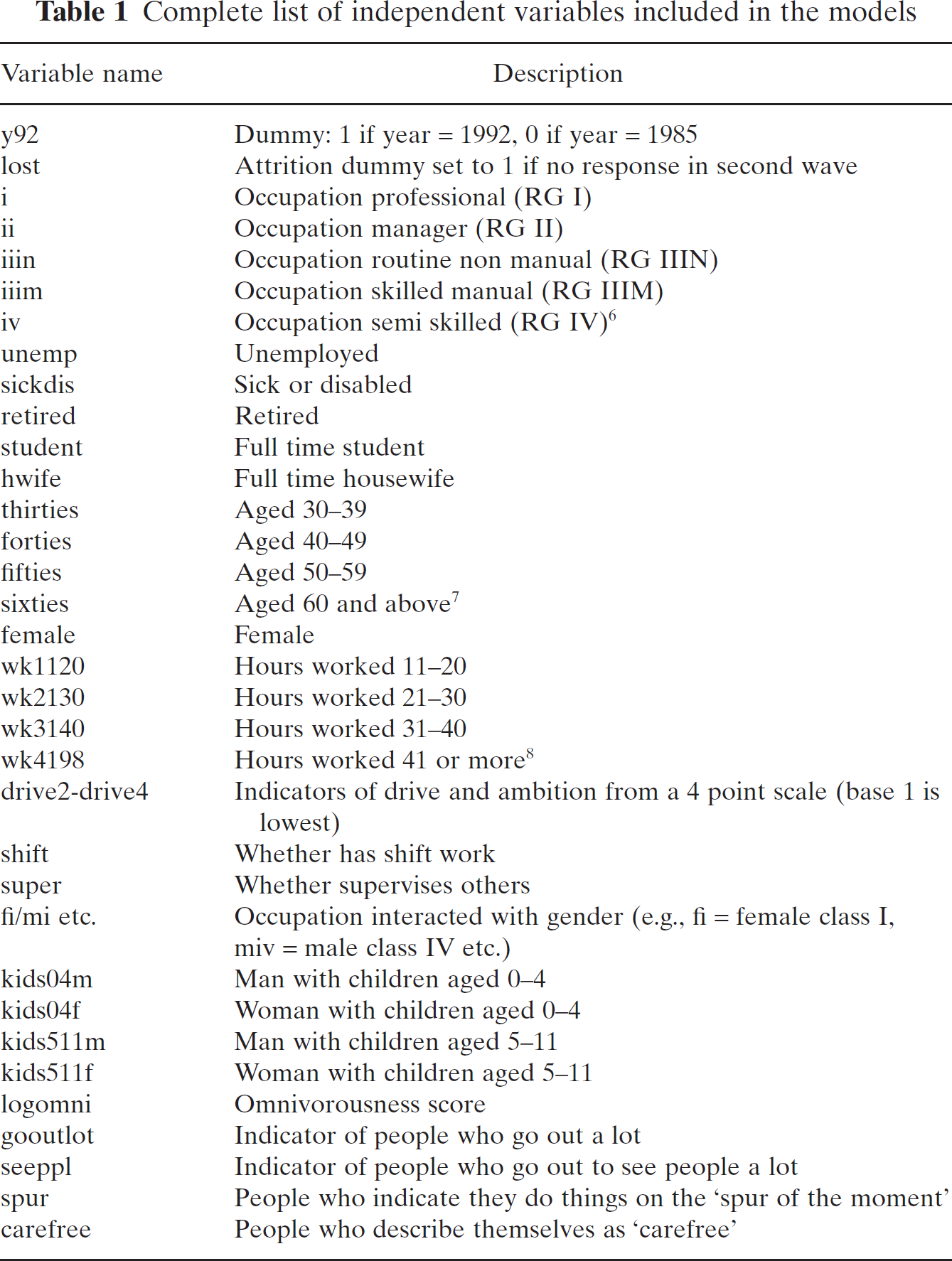
Crucially for our analysis, questions were asked about day to day habits and use of time including a variable reflecting harriedness: ‘Indicate how well the description ‘Usually pressed for time’ fits your life’. Respondents had four options in reply – ‘not at all’, ‘somewhat’, ‘fairly well’, ‘very well’. Taking these responses as the dependent variable in ordered logistic regression models, we analyse the extent that people reported feeling pressed for time in terms of social class, age, gender, life-course, and consumption orientations. We were also able to analyse the data in relation to a number of less commonly used variables, such as the effect of shift work and going out to meet people, in an attempt to isolate possible causes of being ‘pressed for time’. These variables are described in Table 1.
Complete list of independent variables included in the models
Interpretation of the survey results was aided by qualitative interview data conducted in 2000. Twenty suburban households were interviewed regarding their impressions of whether people are increasingly squeezed for time. The sample comprised single households, couples with and without children and respondents’ age varied between 25 and 65. Some were dual income households, some professionals and some retired, thus providing a range of demographic and socio-economic status groups. Interviewees were contacted via letters sent to every other house in the most and least expensive areas of the town. 4 Interviews lasted, on average, two hours. Adopting a conversational approach (Douglas, 1985) toward semi-structured interviews, interviewees were asked about whether society was, in general, more time pressured than in the past, whether they felt pressed for time, to recount and reflect on the previous week and weekend day, and to recall moments when they felt harried. In this article, interview data is used to illustrate and help interpret the significance of the HALS results (for a more detailed analysis of the qualitative data see Southerton, 2003). What follows is a general description of the survey findings, starting with responses to the initial question and followed by regression analysis of how occupation, age, gender, life-course and consumption affected the degree to which people felt ‘pressed for time’.
How many people are pressed for time?
Figure 1 reveals that little change has taken place between 1985 and 1992 with regards to ‘feeling pressed for time’. This is perhaps not surprising given the relatively short time scale between the two sample years, and because explanations of an increasing sense of feeling harried tie the process to a broader time frame. Figure 1 suggests that three quarters of the population report feeling at least somewhat pressed for time but whether ‘somewhat pressed for time’ constitutes being harried is open to interpretation.
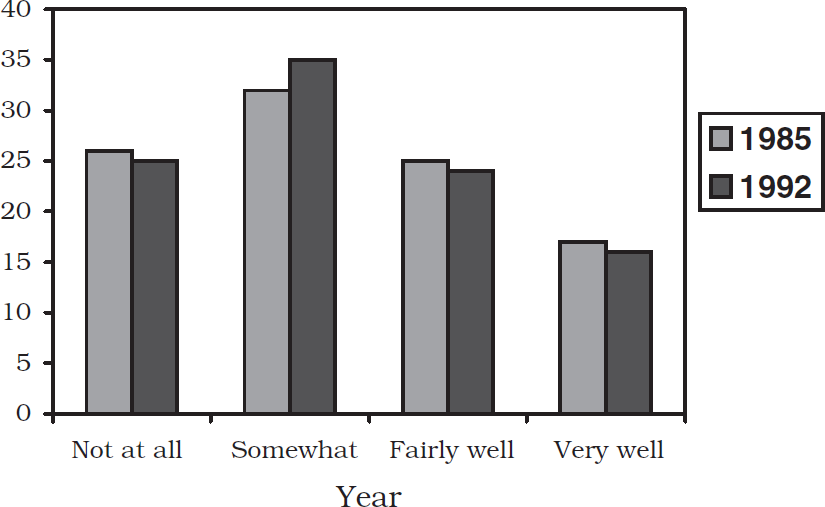
degrees of feeling pressed for time in 1985 and 1992
Impact of employment status and occupation on harriedness
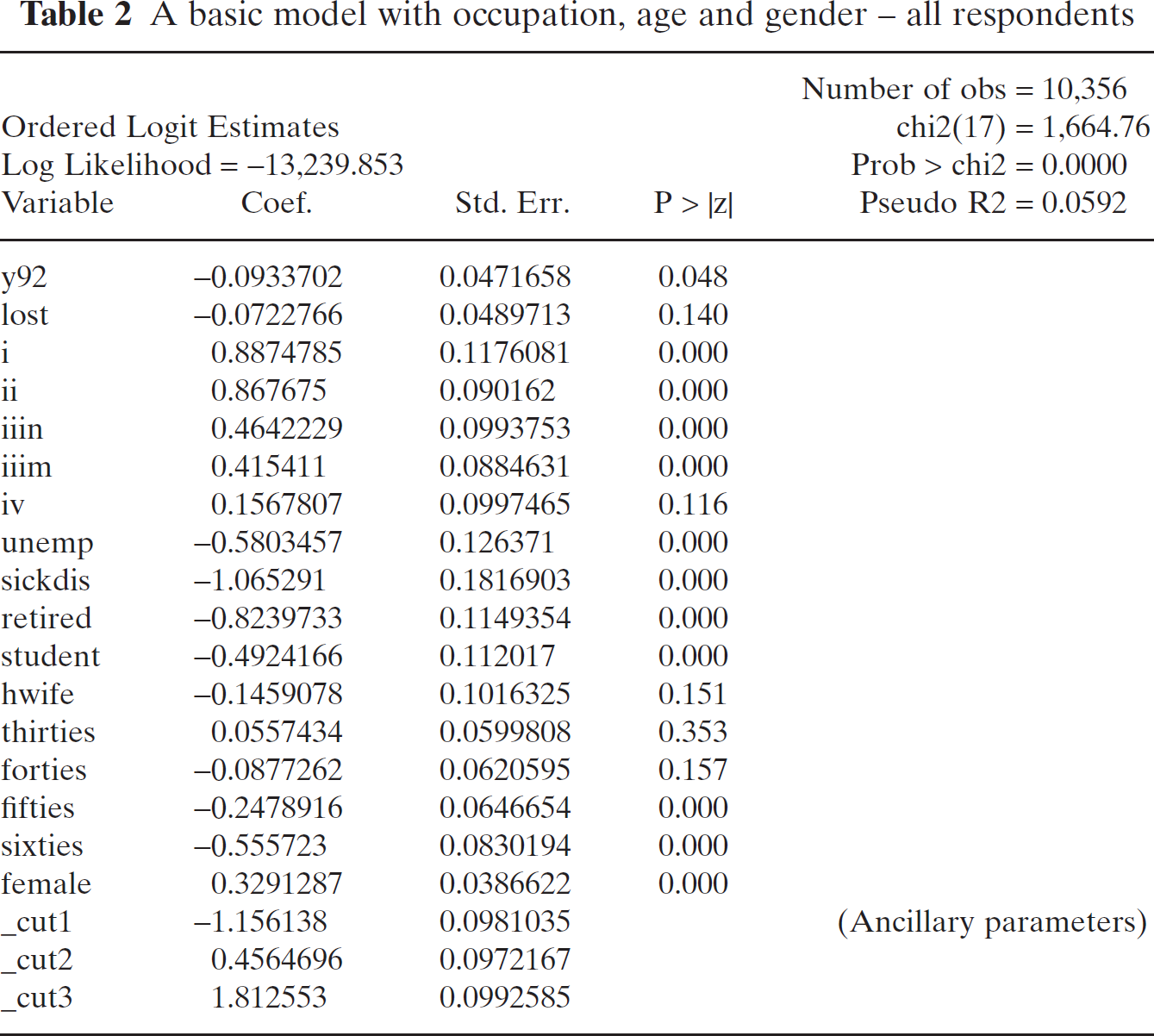
Initial regression results 5 (see Table 2) show that all classes are more pressed for time relative to classes IV and V (note that the non-employed are not assigned to a class in this analysis). The professional and managerial groups reported being most pressed for time and non-employed groups, other than housewives, were significantly less pressed for time than those in work. Thus, the unemployed, students, the sick and disabled, and the retired are all less pressed for time. There is a marginal decline in being pressed for time in 1992, but this is only just significant at the 5% level. More importantly the attrition indicator appears to be insignificant so we can be more confident that attrition in the second wave is not having a dramatic effect on the results. Other significant effects from the first model show highly significant age effects with time pressure declining as respondents get into their fifties and beyond, and a highly significant gender effect with women much more likely to describe themselves as pressed for time than men.
A basic model with occupation, age and gender – all respondents
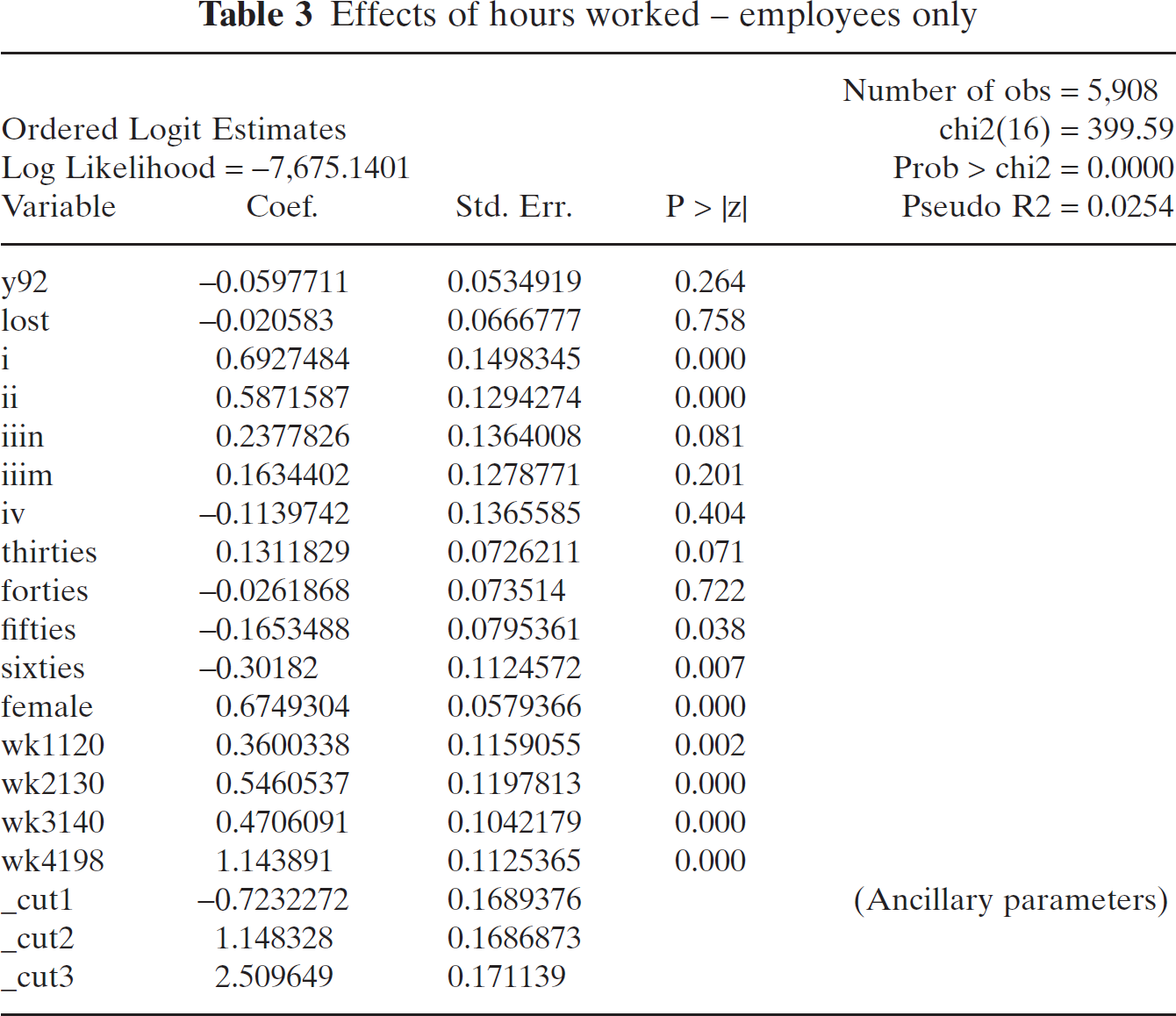
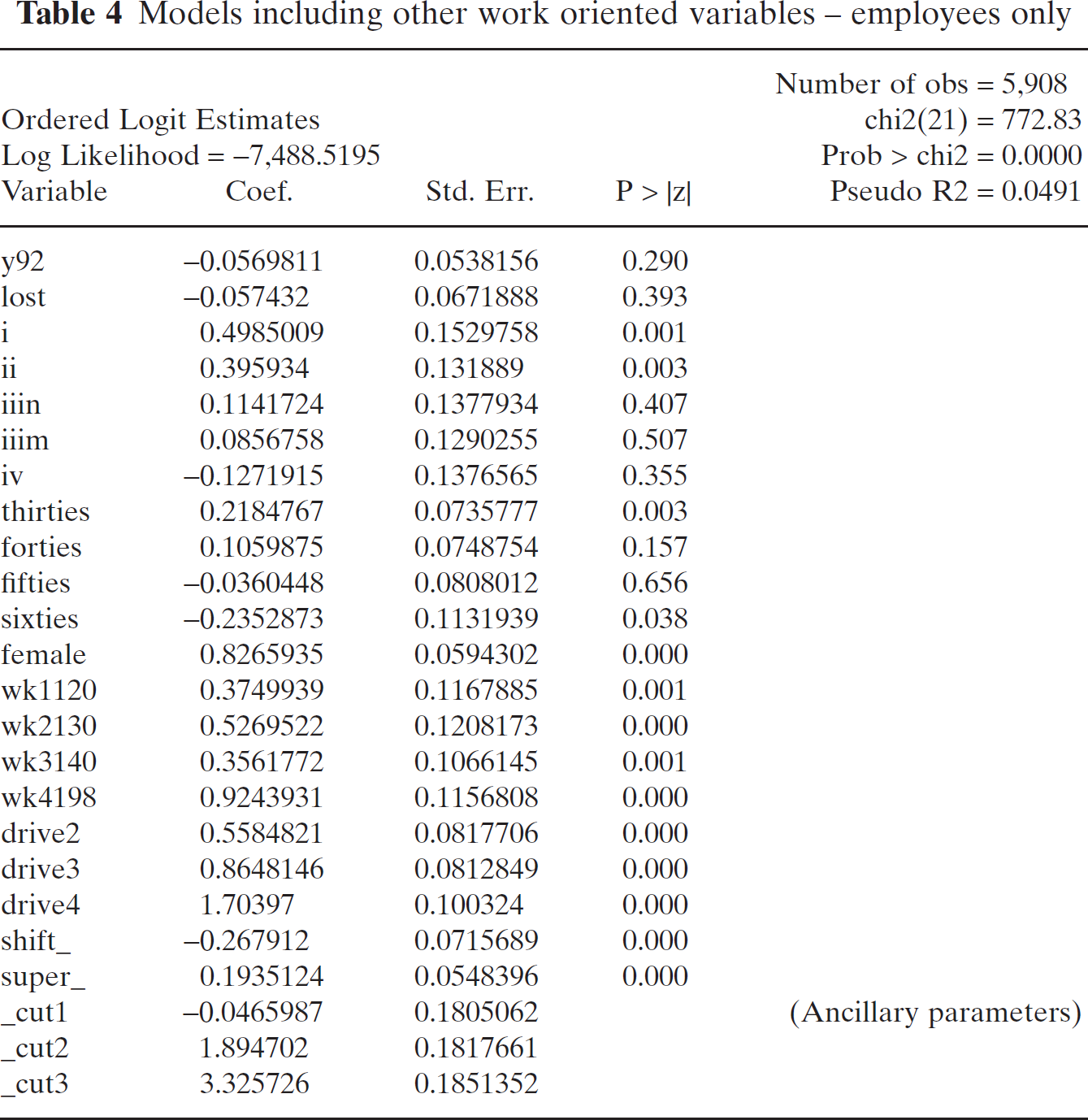
The ‘class’ effect persists even when we control for number of hours worked among employees in the sample (Table 3), but only for managerial and professional workers. Thus among the employed the most harried seem to be at the upper end of the white-collar spectrum. When we only consider employees there is no significant change in harriedness over time (y92 is insignificant) and again the attrition indicator is insignificant. It may be the case that some generalisable characteristics of professional and managerial jobs make them more demanding in terms of time. This argument gains support when the variable pressed for time is analysed in relation to whether people work shifts or whether they supervise others. Table 4 demonstrates that supervisory roles, which require a degree of responsibility for the time management of others, and not working fixed hours (i.e. not working to a shift system) increases senses of being pressed for time. This provides some support for Garhammer's theory of the impacts of flexible work and Breedveld's claims to a process of de-routinization, whereby an erosion of structured work times makes collective action a case of individual time management and has the effect of intensifying the immediacy of time. However, the class effect remains even when these things are taken into account.
Effects of hours worked – employees only
Models including other work oriented variables – employees only
Explanation as to why being professional middle class served as a significant variable might be found by generalizing about the workplace and social status. Rutherford (2001) and Kunda's (2001) ethnographic accounts of time and professional occupations suggest that the corporate world encourages, if not demands, high degrees of employee competition as an incentive for ambitious employees. Apart from placing pressure on employees to work longer hours, workplace competition has the effect of intensifying work rates, meaning that even those who did not work long hours still felt the impact of time pressure. This was also an explanation offered by interviewees such as Suzanne:
‘in the seventies ‘stress’ wasn't a word was it? … in the commercial world, and you know a lot more is expected of you compared to that era … I think companies … they demand blood … that makes it very competitive … The knock on effect of that then when you're looking at your personal life and that sort of thing, then you haven't got time! Because you're directing all your time in trying to be successful in your career.’
Rutherford and Kunda's studies also indicate how being ‘harried’ has become an important part of professional middle class identity and source of social status. Take for example Steven's remarks about career success:
‘if you're successful or have a high status job then you'll be busy and not have enough time for yourself because you'll have so much to do. It's the old money rich time poor syndrome.’
To not identify oneself as harried within the context of ‘dynamic’ careers was tantamount to admitting that one did not belong to the successful professional middle classes and was lacking ambition and personal determination to succeed within that environment.
HALS does not contain variables of workplace competition to allow for direct testing of this hypothesis. However, it does ask questions regarding the degree to which respondents felt they were ambitious. As Table 4 indicates, ambition was related to an increased likelihood of reporting being ‘pressed for time’. Whether being ambitious is a personal characteristic particular to the professional middle classes or an outcome of increased workplace competition in professional occupations is a debate beyond the scope of this article. At the very least it seems that being harried has become intimately connected with being a member of the professional middle classes in addition to any personal ambitions they might have.
The effects of gender
We saw in Table 2 that gender was highly significant. Table 5 demonstrates that women in the same occupations as men generally reported feeling more pressed for time. Professional and managerial women reported feeling the most pressed for time of all female employees and more so than their male counterparts. This finding is consistent with the effects of workplace competition having a greater effect on women compared with men in the same occupation (Rutherford, 2001). However, the largest gap between men and women of the same occupation can be found in the intermediate classes – occupations less readily associated with workplace competition over career progression. The gap between men and women appears only partially attributable to differential pressures in the workplace.
Gender and occupational interaction effects – employees only
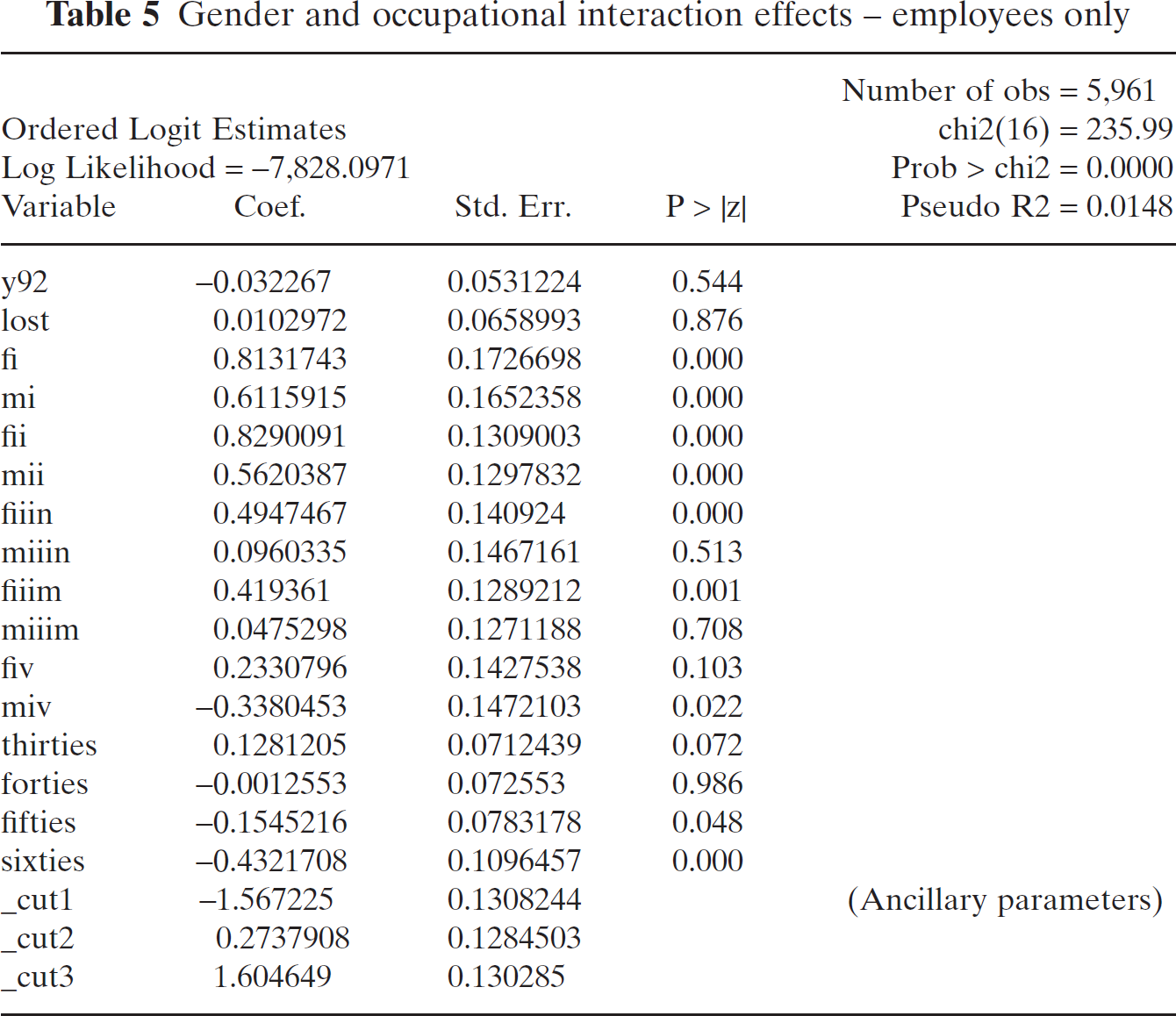
It is interesting to note that Bittman and Wajcman's (2000) time use study reports the total paid and unpaid working hours of men and women for the UK in 1985 (the same year as the first wave of the HALS). Using this data, we can see that UK men and women worked approximately 47 hours each per week. However, women were responsible for 76% of total time spent in unpaid work. Taken together with the HALS results it appears that women report feeling pressed for time more than men regardless of occupation and despite similar total hours of paid and unpaid work. This lends some support to the dual burden theory as explained by Thompson (1996). It implies that the dual burden is less about total hours worked and more about the responsibilities and obligations that accompany unpaid work and particularly the work of caring for children. Thompson (1996) employs the metaphor of ‘juggling’ to capture working mothers’ experience of time and the personal anxieties that arise through managing motherhood and career. Yet surprisingly, Table 6 demonstrates that having very young children (under 5) had little bearing on the degree to which women felt pressed for time when compared to men. Indeed it appears to be men with small children rather than women that are the more pressed for time, all things considered. The survey data, therefore, either indicates that dual burden theories are mistaken in their prognosis that juggling paid work and caring for the family create senses of harriedness or that the survey question fails to capture particular experiences of time that might otherwise be described as ‘harried’. Both men and women with children aged 5–11 showed a marginal effect on being presses for time.
Impact of children – employees only

Interviews with women did indicate that having young children significantly increased senses of being harried even if those women did not describe themselves as ‘lacking time’. Cindy provided a good case in point. She described use of time during the day of interview as a mix between leisure and domestic tasks:
‘I worked out in the gym … Then I came home, had my lunch and pottered around the house for a bit which is quite unusual for me because I usually tend to go to the shops or see friends or whatever … I had to be back to the school for about three … Then we walk home from school and I spent a whole hour getting her [daughter] to eat her tea ready for gym club which was quarter to five.’
Given this description of events it was not surprising that Cindy suggests she is not ‘short of time’. However, she was clear that she was sometimes harried:
‘I find the mornings very very hectic what with trying to feed her, get her dressed, to get myself dressed and get her out the door in time to get her to school. Like this evening she got back from school, we had about one hour and then she had to go to gym club and I was like, that's not enough time, she needs to eat her tea and you would think an hour is plenty but, so I find myself stressed all the time by trying to get her to places for the time she needs to be there.’
What is important about Cindy's case is that she demonstrates how being harried should not be conflated with feeling ‘pressed for time’ because ‘harried’ is a term which describes a density of social practices within specific frames of time. ‘Pressed for time’, by contrast, implies a general shortage of free time.
Of course, one reason why working mothers may not have reported ‘additional’ degrees of feeling pressed for time is that they are more likely to have some form of childcare. Dual burden theories suggest that women maintain responsibility for the organisation and transportation of children to the various forms of day care available to them. Sarah served as a good example. As a single working mother, Sarah admitted she was fortunate to be able to afford a nanny to care for her two children during the daytime. She was also adamant that ‘I'm not pushed for time because I'm organised’. However, she did admit that predictable moments of her daily schedule were ‘harried’:
‘it is a case of getting up, feeding the two boys, making their breakfasts, getting them off to school … we have this set routine, they get up, we have our breakfast, we hoover, they have a bath, I get them dressed and then we are ready for school. The latest that I can go upstairs for that bath is 8 o'clock. Otherwise, we are very pressured for time and then we are rushing.’
Cindy and Sarah captured how mothers in the interview sample experienced time, whether working mothers or not. These narrative accounts also tally with the qualitative accounts of Hochschild (1997) and Thompson (1996) and together indicate that the limitations of the survey question (‘are you usually pressed for time’) for revealing experiences of time and highlight that a dual burden refers more to the ‘quality’ of time than to the quantities of time spent in paid and/or unpaid work.
Consumption and lifestyle
We saw in tables 2 and 3 (above) that increasing age generally has a negative impact on being pressed for time. Life-course effects could explain why younger adults felt more pressed than those aged over fifty. However, it seems unlikely that starting a family is significant given the limited effect that having young children had on women – although the strong significance for men suggests that life-course is an important factor for them. Orientations toward consumption offer a different account of the relationship between age and feeling pressed for time. Schor's theory that consumer culture generates the ‘time squeeze’ implies a generational effect. Consumer culture is a process that can broadly be traced to the 1960s (Harvey et al., 2001), making those aged in their forties and under more susceptible to the influence of this process. To examine this claim, it is necessary to consider the impacts of consumption and lifestyle on survey responses.
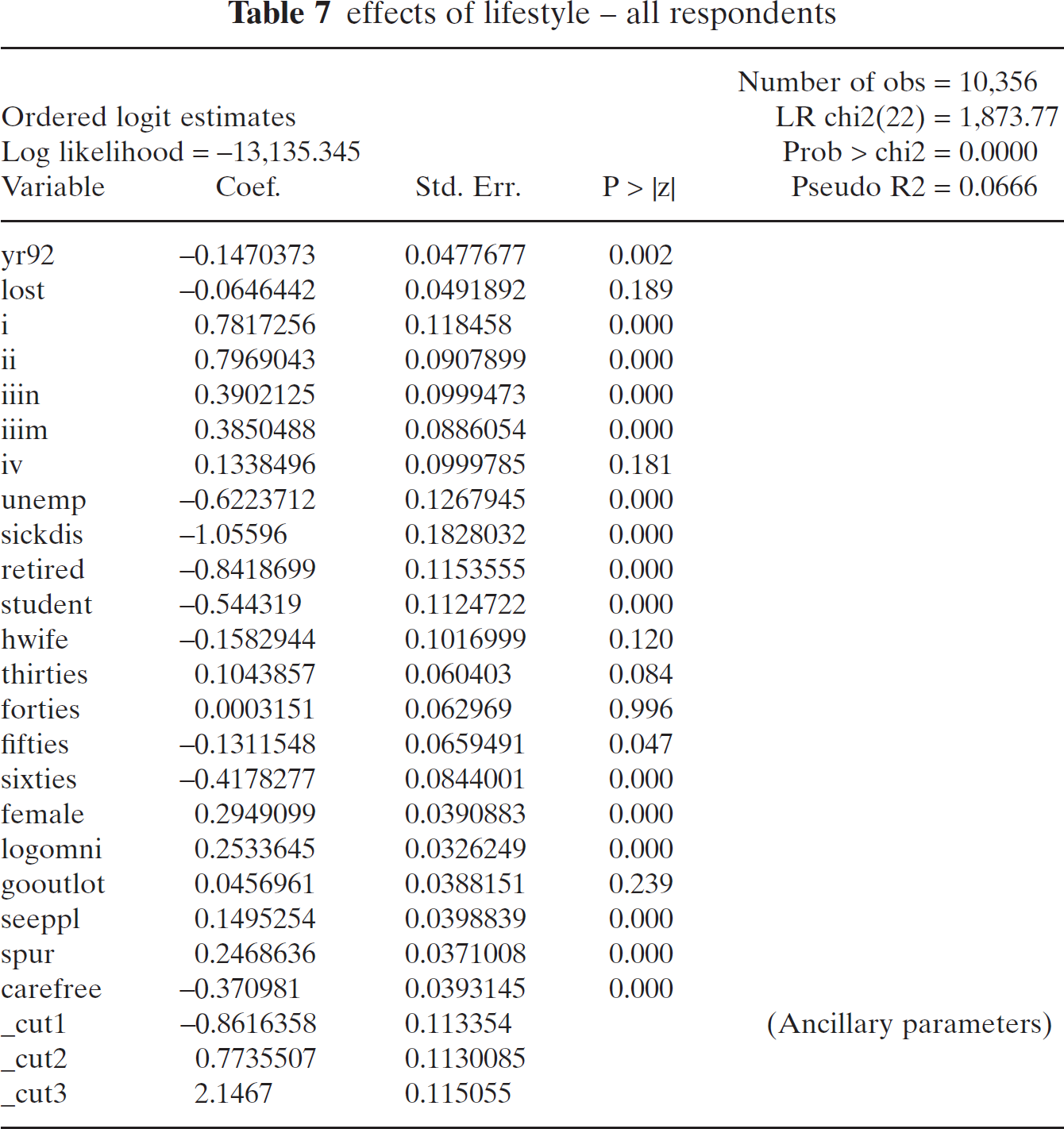
While the Health and Lifestyle survey holds no data on the volume of time respondents devoted to practices of consumption, it does contain variables related to leisure activities. This allows for analysis of ‘omnivorousness’ – a concept that suggests an orientation toward consumption where individuals consume a wide variety of cultural pursuits but do not necessarily devote significant volumes of time or energy to them. Using a measure derived from Warde et al. (2000), where participation in various activities is combined into a score, we were able to construct a variable to measure omnivorousness. Table 7 shows that omnivorousness had a significant impact on degrees of feeling harried. Despite being unable to measure the frequency that cultural activities occurred for each individual, the significance of omnivorousness does suggest that it may be the range of consumption interests rather than the amount of time spent on consumption in total which increases senses of feeling pressed for time. Indications of why this might be the case can be found in variables regarding sociability. As Table 7 also shows, ‘going out’, in itself, makes little difference to feeling pressed for time but going out to ‘see people’ does. It follows that the task of co-ordinating with others and with having temporal deadlines for meeting others enhances senses of being pressed for time. This was a point made by many interviewees:
effects of lifestyle – all respondents
‘Our problem is that when we arrange to go out you can guarantee that whatever time we need to leave by Karen will not be ready and that makes things difficult because we are late and then we have to try and make up time to get there on time and it's not really a very good start to an evening out.’ (Steven)
‘it's okay if you're going out alone or down the pub but if you're going to the cinema and you're late and you've arranged to meet friends then you do rush more because of the thought of them sitting around waiting for you’ (Kathryn)
Hypothetically, being omnivorous is likely to increase the range of people with whom sociability occurs by arrangement because it will potentially expand social networks, and together this might further exacerbate senses of being pressed for time. More prosaically, consumption and sociability have direct implications for how time is experienced, although the survey data is not extensive enough to conclusively tie this either to Schor's (1992) ‘work-spend’ cycle nor Linder's ‘harried leisure class’.
Mechanisms generating ‘harriedness’: substantive overload, disorganised rhythms and temporal density
The survey data is instructive in identifying variables that effected senses of feeling ‘pressed for time’ and for highlighting which social groups felt relatively more ‘pressed’ than others. However, isolating variables and comparing groups tells us little about the mechanisms that make ‘harriedness’ appear so widespread. While analysis in relation to interview data and other empirical accounts helps interpretation of why specific variables might affect experiences of time, these accounts remain fragmented and connections between variables remain inadequately explained. Identifying the mechanisms that generate senses of being harried is, therefore, necessary if analysis is to move beyond a description of the problem and towards an explanation of processes. As it stands, the survey only tests isolated causal models of why occupation, gender, age and consumption were significant.
Three mechanisms can be isolated from the data to explain senses of feeling pressed for time. First is the volume of time required to complete sets of tasks regarded as ‘necessary’, and refers to the changing distribution of practices in time. This is a straightforward process identified in rational action theories of time use (Becker, 1965) where, for example, working long hours reduces the amount of time available to spend on other sets of tasks, such as domestic work, time with family and friends, consumption and leisure. This raises issues of what constitutes ‘need’ and whether some groups are ‘pressed for time’ because they place greater value on certain practices that other groups regard as less ‘necessary’. For example, some professionals might work longer hours in order to gain advantage over others in the advancement of their career, or younger people might work longer hours in order to consume more, or spend more time devoted to consumption because it is regarded as a ‘need’ rather than a ‘want’. Regardless, volume of time devoted to work and/or consumption practices is one mechanism that increased senses of ‘harriedness’.
The second mechanism is co-ordination, which refers to the difficulties of co-ordinating social practices with others in a society where collectively organised temporalities have been eroded. In a similar sense to the process of flexibilization discussed by Garhammer and Breedveld's de-routinization, this mechanism points to the challenges of co-ordinating collective social practices in circumstances where institutionally derived and relatively stable temporal rhythms are undermined by the individualised scheduling of practices. The impact of flexible working hours on degrees of feeling ‘pressed for time’ serves as a good example of this process. Omnivorous orientations toward consumption are also associated with the mechanisms of co-ordination. This is because practices of consumption often involve interaction within social networks (Warde and Tampubolon, 2002), and accounts of network formation suggest that individuals develop network ties based around specific cultural practices (Bellah et al., 1985; Fischer, 1982). Consequently, those who are more omnivorous in their consumption orientations are likely to have a greater range of networks in which issues of co-ordination will be central to the organisation of those consumption practices. Allan (1989) demonstrates that, when socialising, the working classes use public spaces where there is a strong likelihood of meeting network members by chance rather than arrangement. For the middle classes, such network meetings are pre-arranged. In both cases, co-ordination becomes increasingly problematic in circumstances where collective temporalities are eroded. It means that ‘turning up’ in public spaces is less likely to reveal ‘known others’ because networks might, for example, work at different times of the day, thus undermining normative meeting times. In terms of meeting by arrangement, increasing fragmentation of collective temporal rhythms is likely to make common agreement on suitable times to meet more difficult. In this way, co-ordination is a mechanism which explains why flexible working hours, omnivorousness and socialising with others were significant variables that increased senses of feeling pressed for time.
The third mechanism refers to the allocation of practices within time. Rather than suggest actual increases in volume of practices, allocation refers to certain practices being located within temporal rhythms that create a sense of intensity in the conduct of those practices. Allocation is not a mechanism revealed by the survey data and this is important because it indicates how experiences of time can be evaluated according to multiple criteria. For example, narratives of juggling practices and multi-tasking that are found in accounts of the lives of working women (Hochschild, 1997; Sullivan, 1997; Thompson, 1996) all concern the challenges of allocating practices within particular parts of the day. Allocation is also linked to a notion of the boundaries that separate practices. Hochschild's account of domestic work suggests that what were once task-oriented practices have now become time-oriented, meaning that the boundaries between domestic tasks are no longer driven by completion of those tasks in a sequential manner but according to principles of time-related efficiency. Consequently, the boundaries between tasks are eroded in the course of generating more efficient means of completing those tasks (see also O'Malley, 1992). Importantly, the allocation of practices, which no longer have clearly defined boundaries, into particular parts of the day can generate senses of being harried, irrespective of whether the bulk of that day is experienced as being ‘pressed for time’. This mechanism is not restricted to the home and can also be found in work-place practices where the allocation of tasks is subject to personal management and where multiple tasks are conducted simultaneously.
Isolating these three mechanisms reveals that ‘harriedness’ is not a one-dimensional experience. Indeed, the three mechanisms seem to generate three distinct senses of ‘harriedness’. The mechanism of ‘volume’ can be held as the basis for substantive senses of being harried. Bradley summarised what being substantively harried means:
‘between my working 5 days a week and then taking Alex [his daughter] places at the weekend and then in the summer you have to come home and cut the grass every week and you just have, the household management is just like almost a day gone … But most of the time I leave for work at 7, get home about 6, 6.30, do household management, sit down at 10 and if I've got the energy read for 20 minutes.’
A second form of harriedness refers to temporal dis-organisation and is the outcome of the mechanism of co-ordination. This sense of harriedness is less conspicuous than the substantive form because it accounts for experiences that are not obviously connected with an absolute shortage of time. Temporal dis-organisation takes many forms. For example, Charlotte described being ‘rushed’:
‘This morning was typical, first Mike rushes about to get out the door by quarter to seven, then I get the girls up, dash about getting them ready and then myself. Then it's out the door, rush to school and I have to drop them at ten to nine or I am late for work. I do my cleaning [paid work] and get home about two, have something to eat and then get the girls from school and generally from then on it's plain sailing.’
Senses of ‘rush’ always related to the difficulty of meeting co-ordination points within the day, such as to collect children from school or meet with friends or work colleagues. As Charlotte illustrated, this was caused by the problem of co-ordinating between her personal schedule and the schedule of her daughter. However, dis-organisation was also expressed in terms of an inability to competently organise one's own time. As Cindy explained:
‘I do find that I get easily distracted, you know going to the school in the morning, and it's like I've got to come back and I must do this and I must do that. At the school I'll chat to friends, chat, chat, chat, chat, chat, chat, chat, and then it's ‘oh no’, come back, ‘oh no, I was gonna do that at that time’ you know.’
In other cases, temporal dis-organisation was presented as the outcome of ‘obligations’ to others:
‘because he [his brother] works typical hours he thinks I can meet up for a drink at 5. If I don't he thinks I'm avoiding him, that my job's more important than he is … So I will try and meet up and I either rush everything to get it finished before I leave or know it's waiting for me the next morning.’ (Ashley)
Ashley, who worked flexible hours, neatly illustrates the difficulty of aligning personal schedules in conditions where others work fixed (shift) hours. It also illustrates how senses of harriedness were exacerbated by senses of obligation to overcome temporal dis-organisation and create time for significant others. Normative expectations surrounding obligation was also found in statements such as ‘quality time’, ‘chill time’ and ‘bonding time’.
Finally, density of practices allocated within time frames acts as a third sense of harriedness. Temporal density accounts for experiences of time that can be described as ‘juggling’ and ‘multi-tasking’. As Sarah and Cindy illustrated when describing their day, it suggests an uneven experience of temporalities in which parts of the day are packed with activities while other parts are relatively ‘empty’. Take Chloe's description of times when she felt harried:
‘Some mornings are chaos, after getting them off to school I'll have a cup of tea and a sit down, then I'll try and get all the housework done so that I can get off to work for 12.00 and that's as busy as getting the kids off, you know, start the washing, do some ironing, make the beds, then the washing finishes, so I stop what I'm doing and peg it out … Work is easy, the most relaxing part of the day because I only have to do one thing … Tuesdays and Thursdays are not so bad because I don't do housework, I'll meet friends or go swimming or shopping’.
For Chloe, temporal dis-organisation is apparent in that she rushes to meet an institutionally defined meeting point (school), but the multi-tasking of housework is equally an experience of harried because of the density of tasks. However, when asked if she felt ‘generally pushed for time’ she answered: ‘no, I'm busy some of the time but not others’. This helps explain why having small children did not necessarily register as significant in relation to reporting feeling ‘usually pressed for time’ in the survey. Interviewees such as Sarah, Cindy and Chloe did describe being harried but were always quick to point out the partiality of that experience, and in doing so avoided describing the emotional work of childcare as being substantively harried. Isolating mechanisms that explain why people might feel harried or pressed for time and distinguishing between different forms of harriedness is instructive in accounting for multiple experiences of time. It suggests that when analysing time it is important to account for the mechanisms that impact on experiences of time, recognising that different methodological approaches offer insights into particular experiences. In this case, the survey data generated understandings of the factors that led to outcomes of being pressed for time while qualitative data shed light on the mechanisms that generated multiple experiences of being harried. Moreover, while scope for analysing which mechanisms and forms of ‘harriedness’ were most applicable to specified social groups was beyond the scope of this article, the identification of multiple experiences does offer a framework for exploring the (changing) socio-structural circumstances that lead to particular senses and experiences of the ‘time squeeze’.
Conclusion
Approaches to the analysis of a ‘time squeeze’ tend to account for ‘experiences’ of time through one-dimensional processes that explore the changing distribution of time spent on certain practices to the detriment of others. This has produced valuable insights into changing time use and provided indications as to why particular social groups might feel increasingly harried. However, such accounts are limited in their capacity to either generalise their findings beyond specific groups or to provide sufficiently nuanced accounts of differential experiences of time. Consequently, while insight is gained into many social changes that might generate substantive shifts in the distribution of practices within time for many social groups, little progress has been made in the identification of key mechanisms that generate senses of ‘harriedness’ nor of distinguishing between different senses of ‘being harried’.
Analysis of the HALS data and in-depth household interviews offered the opportunity to bring together the many theoretical and empirical accounts of the ‘time squeeze’ and to reveal underlying mechanisms that effect multiple experiences of harriedness. Occupation in relation to the number of hours worked, whether respondents worked flexible hours, supervised others and degree of ambition all had significant independent effects on degrees of feeling pressed for time. Socio-economic status was also important, as was gender, age, consumption orientations, and socialising with others. The mechanisms which contributed towards how and why these variables impacted on senses of being harried all related to the organisation of personal and collective social practices within time and according to the temporalities of everyday life. Consequently, the volume, co-ordination and allocation of social practices were the key mechanisms that generated harriedness and each mechanism was associated with different experiences of time. This demonstrates that when investigating the ‘time squeeze’ it is important not to conflate experiences related to being ‘pressed for time’ to factors concerning only ‘lack of time’ for the conduct of particular activities (such as domestic work or sociability with friends and family).
By identifying different mechanisms that generate, and different forms of, harriedness, this research also suggests a framework for future investigations of the ‘time squeeze’. Of particular importance is analysis of which forms of harriedness are most closely associated with specific social groups, and under what conditions are the mechanisms that generate harriedness produced (for example, is the mechanism of allocation most pertinent to housewives or does it also have general currency in, say, the workplace). Further understanding of the mechanisms of co-ordination and allocation is also required, and analysis of the organisation or sequencing of practices is one potentially instructive approach. This would not only provide insights into how temporalities, or the rhythms of daily life, are changing, but also further demonstrate how it is the relationship between the conduct (and particularly the temporal challenges of collective conduct) of different types of practices (rather than increases of time spent on one set of practices at the expense of another) that is crucial in accounting for the significance of these two mechanisms in contemporary experiences of time.
Footnotes
1
Many time use diary surveys contain a survey component that enquire into subjective experiences of being time pressured. HALS data is not superior in quality to these other data sets but is longitudinal and therefore allows for pooled analysis of two points in historical time.
2
Data were supplied by the Data Archive, Colchester, Essex and the interpretation of the data is solely our responsibility.
3
The pooling of the cases means that the 1992 responses are all 7 years older than the 1985, and since there is no replacement of cases this means that there are a lot fewer respondents in their twenties in 1992 and a lot more aged over 59. As a result, and given that over 59 year olds reported feeling less time pressured, it is likely that the marginal decline in overall senses of feeling ‘pressed for time’ is a consequence of the panel survey sample. Secondly, further analysis that uses the panel, rather than pooled, data is possible. This would allow us to answer questions such as whether changed individual circumstances over the seven year period lead to changes in degrees of feeling pressed for time. While these is not scope within this article to consider panel data analysis, such an approach would provide an opportunity to model changes in ‘harriedness’ in terms of the mechanisms that generate harriedness as identified by pooled data.
4
The term ‘respondent’ refers to those responses from the HALS data, ‘interviewee’ for those from the qualitative interviews.
5
One may interpret these coefficients as one would interpret binary logistic regression coefficients except here the dependent variable has more than two values. In other words a positive coefficient indicates an increased chance that a subject with a higher score on the independent variable will be observed in a higher category of being pressed for time. A negative coefficient indicates that the chances that a subject with a higher score on the independent variable will be observed in a lower category of being pressed for time.
6
Base class is class V (unskilled).
7
Base age is under 30.
8
Base hours worked is less than 10.