






Abstract
In contrast to other forms of family caregiving, becoming the parent or carer of a child with an intellectual disability (ID) implies an ongoing responsibility beyond the attainment of chronological adulthood (Meyers et al., 1985; Todd and Shearn, 1996). At the same time, a discourse of self-determination pervades policy around transition to adult services in ID in England (Valuing People, 2001). In this paper we present a subset of data from a project which aimed to examine how the process of transition from child to adult services in ID is managed. Using data from 8 tape-recorded meetings in which transitions were planned and discussed, we examine what happens when the views of the parent/carer and the young adult are in apparent conflict. Drawing on the growing body of interactional work in the field (eg Rapley, 2004; Finlay, Antaki and Walton, 2008), we use conversation analysis to examine how professionals manage and negotiate this conflict and how some points of view or courses of action ultimately prevail over others. While the discourse of self-determination may prevail in English policy terms, we show how the fact that parents or carers ultimately have a key role in enabling the choices of the young person has a significant impact on these interactions.
Introduction
In contrast to other forms of family caregiving, being the parent or carer of a child with an intellectual disability 1 implies an ongoing responsibility beyond the attainment of age-related adulthood (Meyers et al., 1985; Todd and Shearn, 1996; Murphy et al., 2011). In addition, for young people with intellectual disabilities (ID) and their carers, transition from children's to adult services has long been identified as a challenge. The young people and their parents have to leave behind the package of care with which they have become familiar, and a new package has to be negotiated. Moreover, at the very time when parents of young people without disabilities experience a reduction in their caring responsibilities, parents of young people with ID may find that the opposite is the case. Leaving school may also mean leaving behind the predictability of the full-time caring that was available during school hours, leading to an increased burden and decreased freedom for parents of young people who need constant supervision. The 2001 White Paper, 2 Valuing People, specifically addresses problems with transition to adult services in England in its recommended service changes. The data presented in this paper are drawn from a wider project which aimed to examine the impact of the changes brought about by the 2001 White Paper in England, and to study how users, carers, professionals and service providers negotiate access to services for young adults with ID.
Background
It is well recognised that a discourse of self-determination pervades policy around transition to adult services in intellectual disability (Burton and Kagan, 2006; Cumella, 2008). Notably, the White Paper referred to above (Valuing People, 2001) contains no suggestion that impaired capacity should constrain self-determination (Murphy et al., 2011). Such a philosophy, as Schelly (2008) notes, is based on an idea that people with ID should be offered ‘the same factors and relationships that have been shown to be important to persons without disabilities’ (Goode, 1990: 54). Best practice in the delivery of care services is seen to be achieved when the service user achieves optimum independence by making rational autonomous decisions about the care and support they require, and thereby being ‘in control’ of their own lives (Department of Health, 2005; 2006). The underpinning assumption is that quality of life will be improved if the barriers which prevent people from being ‘independent’ and making their own ‘choices’ are removed.
There is a growing body of interactional research into ID to support this assumption. Authors such as Mark Rapley (2004) and Charles Antaki (1999, 2001) have been key figures in providing a critique of the mainstream psychological literature on ID. As we have previously noted (Pilnick et al., 2010), Rapley (2004) argues that much of this psychological literature represents an attempt to account for the conduct of people with ID in terms of individual or dispositional characteristics rather than contingent ones in other words that the conduct is attached to the person, rather than the circumstance. By contrast, Rapley's stance that ID is largely a social construct rests on an argument that what might at first glance be taken as ‘inappropriate’ interaction by individuals with ID can often, through more detailed examination, be understood as responsive to the specific interactional circumstances in which it occurs.
Whilst other authors writing from an interactional perspective have not necessarily assimilated Rapley's social constructionist stance on ID, they too have highlighted the importance of a detailed analysis of interactional context. For example, as Maynard and Marlaire (1992) point out, many of the tools and tests used to assess persons with ID are talk-based, and, in some cases the results of these may be as much dependent on the way in which questions are asked as on the person answering them. In a similar vein, Jingree et al. (2006) present an analysis of residents’ meetings in a group home for people with ID. Though these meetings were introduced with the intention of empowering residents and allowing them to express their views on the services they received, the authors show how the use of particular verbal patterns (eg the use of rhetorical questions, or providing clues) had the effect of shepherding residents towards particular responses.
Clearly, there is a tension between the commitment to choice expressed in ID policy, and the creation of interactional contexts, either knowingly or unknowingly, in which the responses of people with ID are detrimentally restricted. However, this does not tell the whole story. Increasingly, there is a recognition that professionals working with people with ID have a practical need to form judgements about the legitimacy of choices which are expressed in some contexts. In previous work (Pilnick et al., 2010), we have examined how the choices of young people with regard to future work, training or educational aspirations may ultimately come to be treated as legitimate or non-legitimate. In addressing this practical dilemma more broadly, Schelly (2008), based on his experiences as a personal assistant to a young man with ID, suggests there is a gap between research and practice in the field. While researchers suggest that personal choice enhances quality of life, he argues that some individuals with ID ‘cannot think in the ways necessary to make choices that would improve … subjective quality of life’ (ibid: 719). This is echoed by authors such as Fyson and Kitson (2007: 434), who suggest that ‘if people were able to be fully independent and to make important life choices without support then they would not be receiving state-funded services in the first place’. The argument here then, is that ID is more than a social construct; it is also an embodied reality, which affects the ability of individuals to make rational autonomous decisions.
Alongside this debate on choice and self-determination, there is also a body of sociological work examining parents’ views of the effect of having a child with a disability on family life. Voysey's (1975 [2006]) groundbreaking study, republished as Voysey Paun (2006), was the first to counter the then prevailing view that the presence of such a child constituted a problem, and that parents’ responses could be read as indicators of the family's psychological adjustment to this ‘reality’. Voysey argued instead that what parents said should be understood as socially constructed accounts of ‘normal parenting’, produced so that they could be seen as properly fulfilling their responsibilities as good parents. As she states of interview data, ‘Parents’ responses tell us nothing about what it is like to have a disabled child in the family, but a lot about other people's ideas of what it ought to be like’ (Voysey Paun, 2006: 2). More recently, there is a body of work on the way in which parents of young adults with intellectual disabilities struggle to maintain a set of aspirations for a typical life, against common stereotypes of ‘eternal children’ and ‘perpetual parenthood’ which represent parental experience as unchanging (eg Todd and Shearn, 1996; Kittay, 1999; Murphy et al., 2011). This struggle has not only practical, but also moral implications. In their research on families and step families with non-disabled children, Ribbens McCarthy et al. (2000) note that family lives are an area where people's moral identities are crucially at stake. They identify an overall moral imperative amongst their respondents, that ‘adults must take responsibility for children in their care and therefore seek to put the needs of children first’ (Ribbens McCarthy et al., 2000: 789). This imperative reflects their respondents’ interpretations of what is the ‘right’ thing to do, and they conclude that this may be one of the few remaining unquestionable moral assertions. However, since their sample does not contain parents of young people with ID, the issue of for how long this moral imperative is to be upheld is assumed to be unproblematic; it ceases when adulthood is reached.
In this paper we examine an interactional dilemma which draws on all of these issues: How do professionals manage interactionally when parents or carers express different views or wishes to those of the young adults they care for about a suitable future course of action?
Sample and methods
The study cohort comprises young people (aged 18/19) leaving special schools 3 in 2004/5 within two adjacent English local authorities. The project had a longitudinal design involving repeat interviews with family carers, Transition Co-ordinators, Disabled Persons Act workers, Connexions Personal Advisers, teachers and other service providers where relevant (for example specialist autism services). Transition Co-ordinators are employed by local authority social services departments, while at the time of the study Connexions Personal Advisers were employed by Connexions, which is a centrally funded agency that evolved from the Careers Guidance Service. The research also included individual interviews or group discussions with the young people (where possible), and observation of interactions during meetings. Transition staff identified eligible families for participation. Of the 44 young people leaving school in the period and supported by specialist staff, 28 participated, and 4 declined to take part. It is not known whether the remaining 12 did not respond or whether they were excluded by staff as ineligible, as this information remained confidential. Approval from a National Health Service Research Ethics Committee was obtained, and families who did respond were visited by the researchers who explained the project in detail and negotiated consent. The project was funded by the Big Lottery Fund, which awards National Lottery money to community groups and projects in the UK that improve health, education and the environment. It was carried out in association with the Nottingham branch of the charity Mencap, which is a leading UK charity supporting people with an intellectual disability and their families.
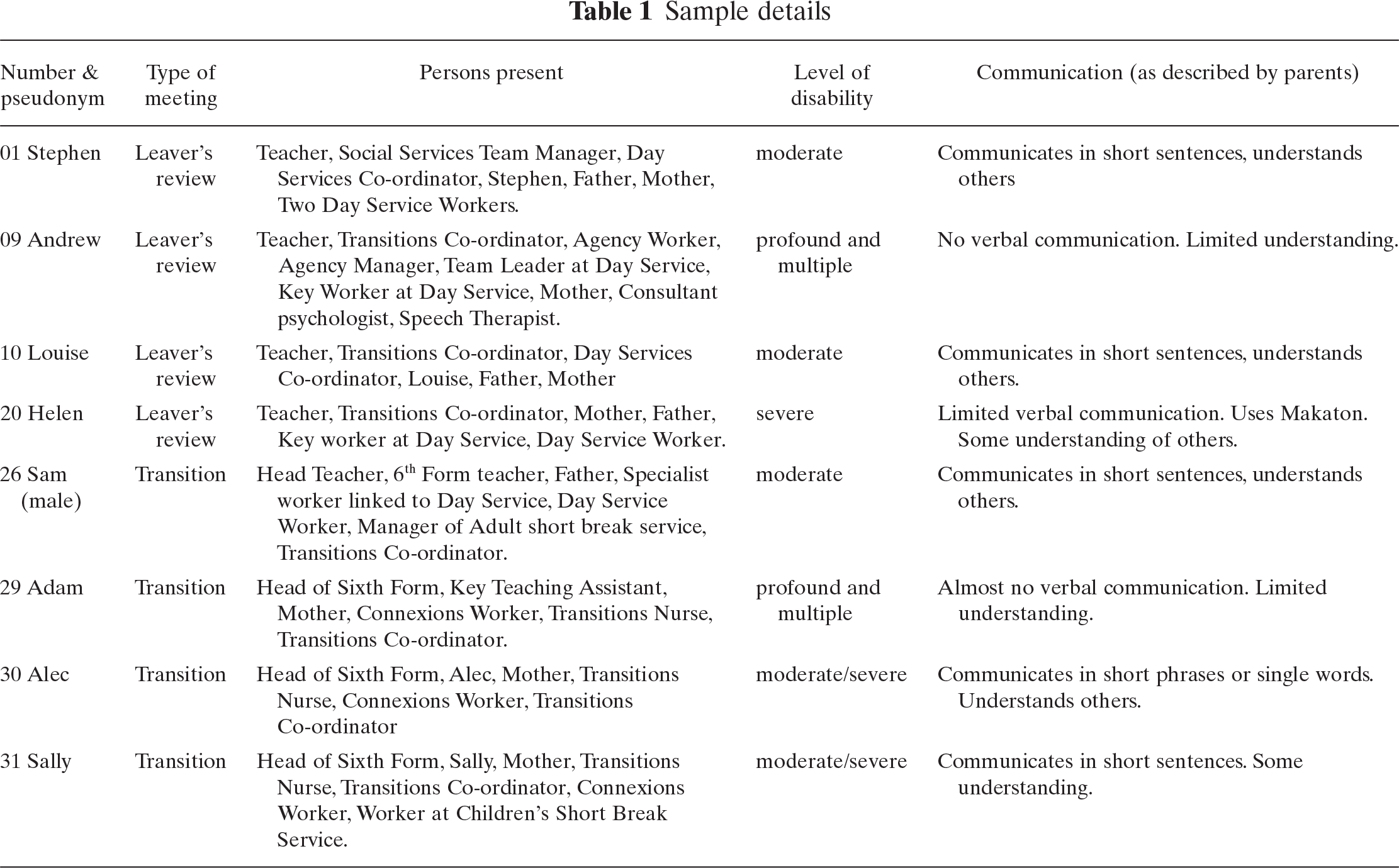
This paper focuses on audio-tape recorded data collected from 8 multiparty meetings: 4 Transition Review Meetings where the topic of Transitions is formally discussed and where the available possibilities for adult services are considered, and 4 Leaver's 3 Month Review Meetings, where the initial arrangements that have been agreed for Transition are reviewed. These meetings took place in the educational setting that the young person was currently attending, and in all cases except one were chaired by a teacher involved in the young person's education. In the remaining case, a teacher asked a Social Services team manager who was in attendance to act as chair. A sample table detailing the type of meeting, the persons present, and information about the young person involved is given below.
Much of the previous interactional work on ID has been carried out in very specific interactional settings, involving test questions, formal surveys etc, where what is considered to be an appropriate response must often take a very specific form (as in the case of ‘sometimes’, ‘always’ or ‘never’ rather than ‘yes’ or ‘no’). Rapley (2004) explores the transferability of some of his findings in less formal settings, but until recently, there has been little detailed work on the interaction of people with ID in mundane settings. Recent work by Finlay et al., has addressed this, by examining day to day interactions between people with ID and care staff, looking at for example how games are played (Finlay, Antaki, Walton and Stribling, 2008) or how refusals (for example in the context of food choices) are achieved (Finlay, Antaki and Walton, 2008). However, as we have noted in previous work (Pilnick et al., 2010), the data presented here differ from previous data in two important respects. The first is in the level of disability of the participants in the study. With the exception of the very recent work described above, many of the studies described above examine interaction involving people with mild to moderate ID. In order to participate in verbal tests, survey interviews etc, they must have a relatively high level of verbal communication skills. The young people in the study sample here were judged to have moderate to severe ID. The second issue is that the context here is neither mundane (as in many care home interactions) nor fixed (as in survey administration) but falls somewhere in between. Transition Meetings and Review Meetings are more open in format than the administration of a standard list of questions, but they nonetheless have agendas that must be covered and endpoints that must be reached, which differentiates them from many more casual interactions with care staff.
Sample details
The data presented here are analysed using Conversation Analysis (CA). CA follows an inductive approach and does not impose predetermined codes upon data. It is distinctive in providing the opportunity to focus on members’ own displayed orientations to social action (ten Have, 2007). It uses naturally occurring, audio or video recorded data, and transcribes these data according to a detailed transcription system (Jefferson, as reproduced in Atkinson and Heritage (1984)) that aims to preserve as much detail as possible about not only what was said but how it was said. Details such as pauses, hesitations, emphasis or speech overlap that might ordinarily be ‘cleaned up’ in the process of transcription are not only retained but seen as potential resources for analysis. These features are represented in the transcripts, so that, for example, figures in brackets indicate pauses, timed to tenths of a second, and square brackets represent overlapping speech. The use of these transcripts in published work means that other analysts can also examine the data. Analysis proceeds in a sequential fashion, generally starting by identifying the beginning and end of particular sequences of activity (eg questioning/answering) within an interaction. Analysts then examine the relationship of each utterance in that sequence to both the previous and the subsequent utterance, on the basis that contributions to an interaction are both shaped by the previous context, and themselves renew the context for the next contribution. For a more detailed discussion of the approach, see Clayman and Gill (2004) and ten Have (2007). CA's overriding interest is in identifying what the participants themselves are orienting to during the course of interaction, and in describing communication patterns which do not arise from or depend upon participants’ idiosyncratic styles, particular personalities, or other individual or psychological dispositions (Drew et al., 2001). Schelly (2008: 720) argues that we should ‘narrow the gap between research and practice [in ID] by shifting the focus from outcomes to processes’, and we aim in this paper to shed light on some of the interactional processes through which conflict of wishes between parents and young people is managed in this setting.
Analysis
1) Professionals seeking parental involvement
One of the most obvious findings on examining these data is that professionals are at pains to include parents/carers in these meetings, as in the example below. In this instance the initial purpose of the Leaver's Review Meeting is expressed very informally, but the Transitions Co-ordinator (TC-7) moves on from this by using prior knowledge to involve the parents in more specific, collaborative agenda setting:
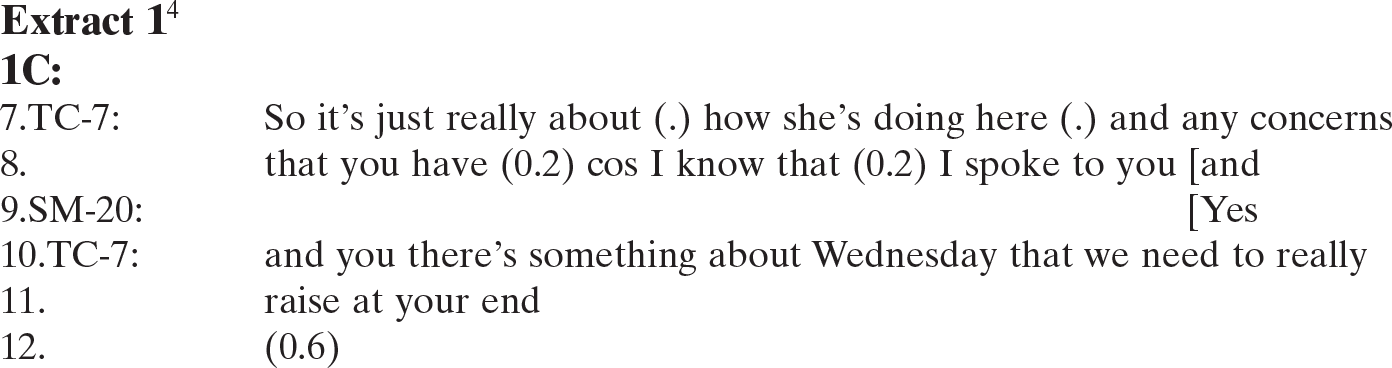
In this case, then, in opening the meeting, TC-7 moves beyond a general vague statement (‘So it's really just how she's doing here and any concerns that you have …’) to indicate the specifics of something that could form a topic for discussion –‘something about Wednesday’. The parents here have, prior to the meeting, expressed a concern that their daughter has been coming home with bite marks on her arm following her Wednesday activities. This way of highlighting an item for the agenda both signals to the parent that this is an entirely appropriate issue for discussion but also leaves control of this agenda item with the parent, in terms of preserving for them the opportunity to raise it themselves. In addition, by alluding to the general issue rather than describing it, the parent is subsequently able to describe and frame it in their own terms.
Parental involvement is also actively sought in other scenarios. In the extract below, the young person's tendency to stare at women in social situations is being discussed.

In this instance the teacher reports his/her own noticings of this occurrence, but also engages the parent through use of a direct question seeking confirmation of these noticings.
2) Parents participating freely
In addition, parents seem comfortable in these meetings, so that even where their input is not explicitly sought they nevertheless make requests, put forward assertions, etc. The extract below is one such example of a mother's request which is concerned with the route which the bus will take in transporting her son from home to the Day Centre.
a) Making requests:
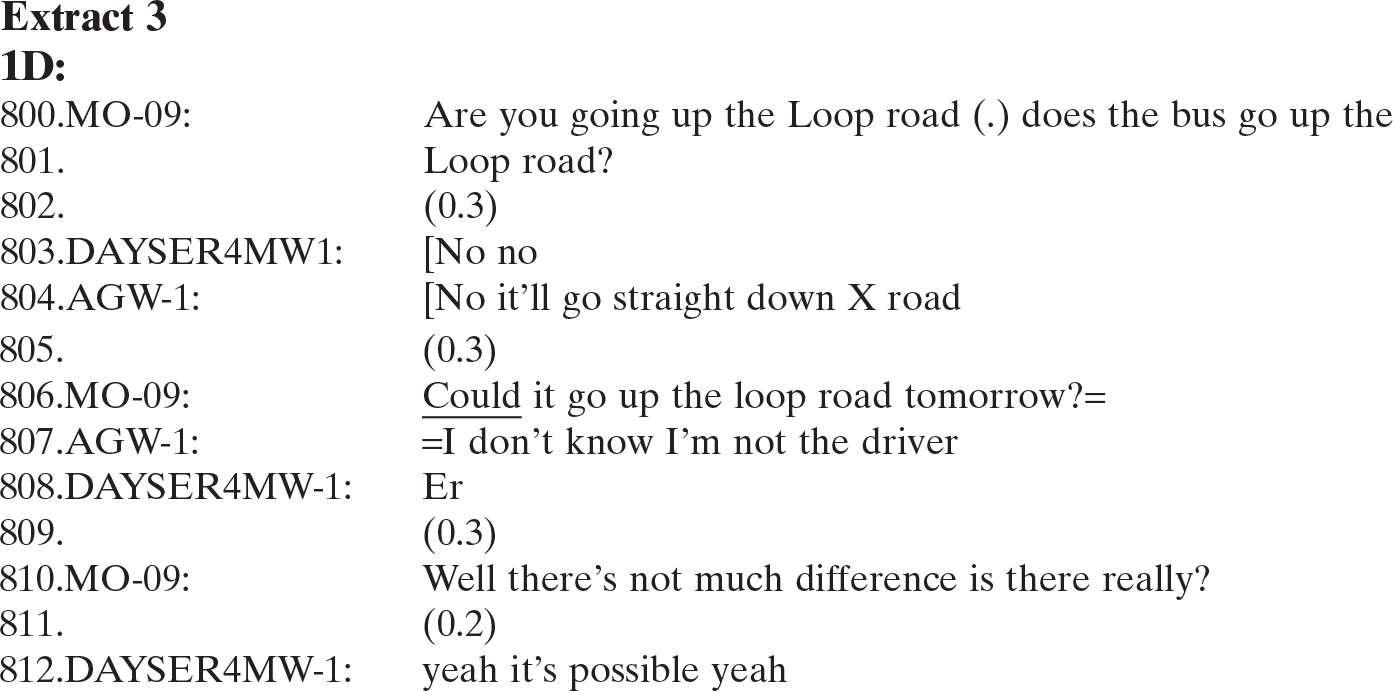
The mother's request in this instance is designed to avoid her son recognising that he is passing the doctor's surgery, and thus avoid any distress associated with this. Whilst the request
b) Challenging professional viewpoints
Parents’ or carers’ readiness to participate in these meetings is also demonstrated by their willingness to express different opinions to those of the professionals involved. In the extract below the mother raises the view that her son may be spending too much time on the computer as part of his daycentre activities. However, in contrast to Extract 3 above, in this instance the view is more delicately expressed.
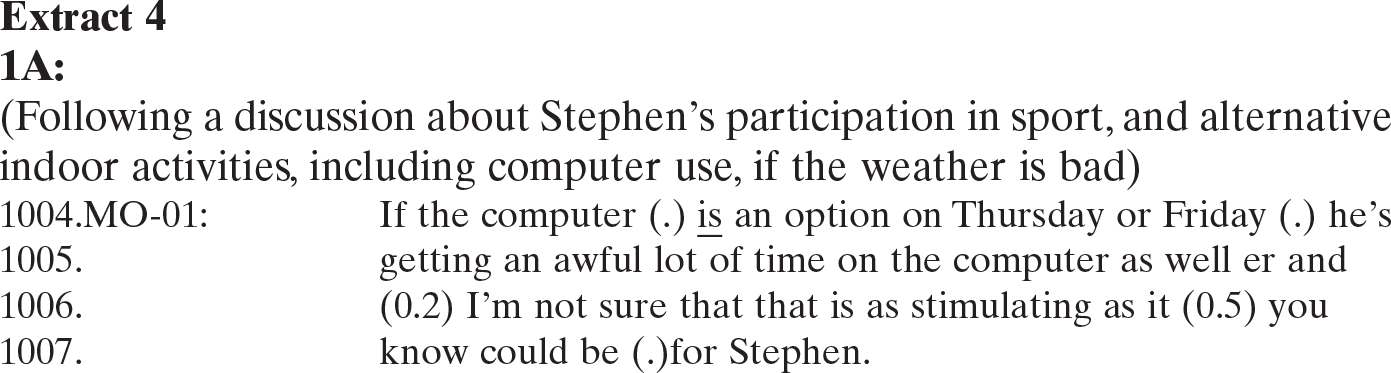
The mother here expresses her view indirectly: rather than saying he is spending too much time she describes it as ‘an awful lot of time’, and after some hesitation provides a rationale for her view- that it is not as stimulating as it could be. This rationale is tentatively expressed, beginning ‘I'm not sure’ and containing pauses, again marking possible delicacy. As such, it is consistent with the findings of other CA research in professional/client settings, which demonstrate that clients frame alternative viewpoints in these ways to avoid apparent undermining of the authority and expertise of the professional (Heath, 1992; Gill, 1998). Nevertheless, the fact that this topic is initiated by the mother at all, given the implied criticism it contains of her son's educational programme, is evidence of a level of ease within this encounter.
c) Self-identifying as appropriate respondents to questions
Another noteworthy phenomenon related to parent/carer participation occurs in responding to questions. Conversation analytic work examining the participation of children in settings such as family therapy (Hutchby and O'Reilly, 2010) and paediatric medicine (Stivers, 2001) shows how parents frequently self select as respondents to questions that are audibly directed at children. In this setting, however, whilst a similar phenomenon does sometimes occur, parents and carers also commonly identify themselves as appropriate respondents to questions that might be seen at face value as intended for other professionals. The extract below is from meeting 2C, where a day service place seems to be assumed as appropriate from the outset by all parties, though it is not clear whether this is on the basis of prior discussion. Discussion within the meeting focuses on which day service is the most appropriate, and the mother is actively involved in this, asking questions and responding freely to them:
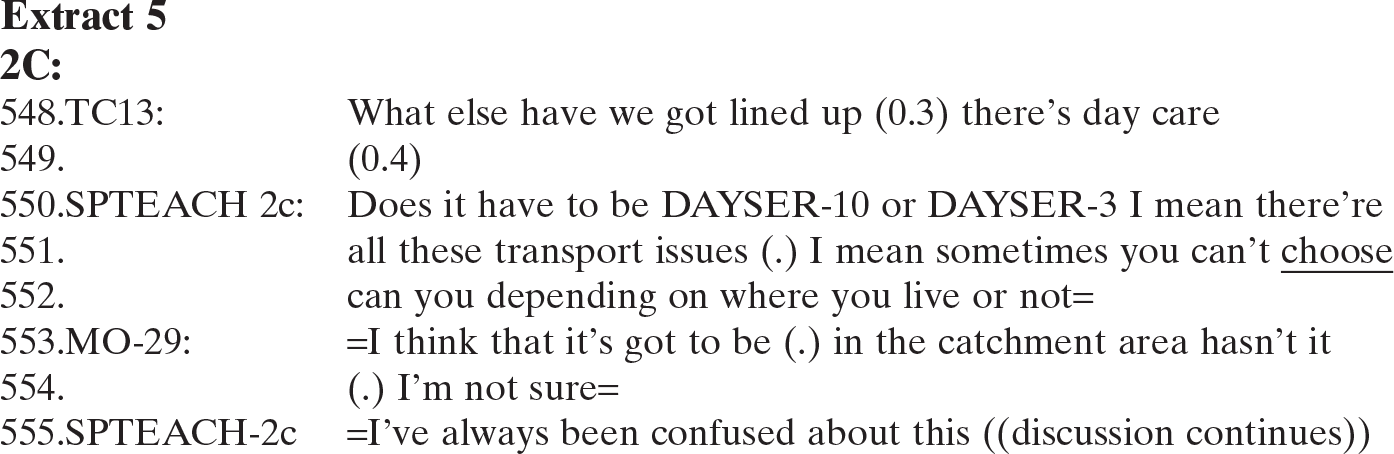
In this instance, although the question asked by SPTEACH2c in lines 550–552 here might on the face of it be seen to be addressed to another professional, (TC13) the mother in this case treats the question as addressed at her, or at least at a number of possible recipients of which she is one. This kind of self-selection as respondent is also seen in interactions between long term patients and healthcare staff (Pilnick, 1998), where it is argued that this reflects the level of knowledge patients come to attain both about their condition and about the organisation of their treatment, over months or years of involvement with a service.
Overall then, analysis along this theme suggests that parents/carers have little hesitation in contributing freely to these encounters, especially, though not exclusively, where this involves drawing on personal knowledge or experience. In some cases, this is because contributions are offered unsolicited by parents. In others, parental involvement is actively and explicitly sought by professionals. Housley (2003: 8) in his work on multidisciplinary social/care work team practice, describes how the ‘process of collaboration and communication is seen to be of prime importance to the decision making process within teams’. Through his analysis, he illustrates how multidisciplinary teams present an opportunity to observe situated displays of different modes of expertise, roles and opinion. Such observations can clearly be applied to the data extracts presented above. However, what is particularly noteworthy for this paper is that Housley's own analysis is restricted to ‘internal’ team meetings, where only staff are present and where there is no interaction with clients. The fact that his observations appear equally relevant here demonstrates the extent of parental involvement in this setting. This high level of parental involvement is clearly desirable on many levels. However, it also raises an interesting question with regard to the focus of this paper, in terms of what happens when the views of young people and their parents/carers conflict: Does this active seeking of parental engagement make it difficult for professionals to disagree with them subsequently, and to suggest that, in line with the principle of self determination, the views of the young person should be afforded more importance? In order to address this analytically, we will now move to examine some cases where such conflicts occur.
3) Views of parents vs views of young person
The issue of how the competing views or needs of the young people and their parent/carer(s) are solicited and dealt with is crucial in understanding how and to what extent the principle of self-determination can be upheld in this setting. Despite the apparent placing of the young person at the centre of these meetings (see also Pilnick et al., 2010), in some cases parents make explicit their own agendas, and we will now examine how professionals deal with this. In review 1A (below) Stephen's father has expressed repeated concern that his son plays too much football as part of his day centre activities. This father clearly knows his way around the possibilities that are open to his son, referring to possible alternative services by name, time and location. This echoes Barton's (2000) work in healthcare settings, where she describes how experienced parents routinely orient to the domain of the specialty, contributing detailed and specifically named observations or issues. The chair (in this case a Social Services Team Manager) gives an extended and thorough response to this:
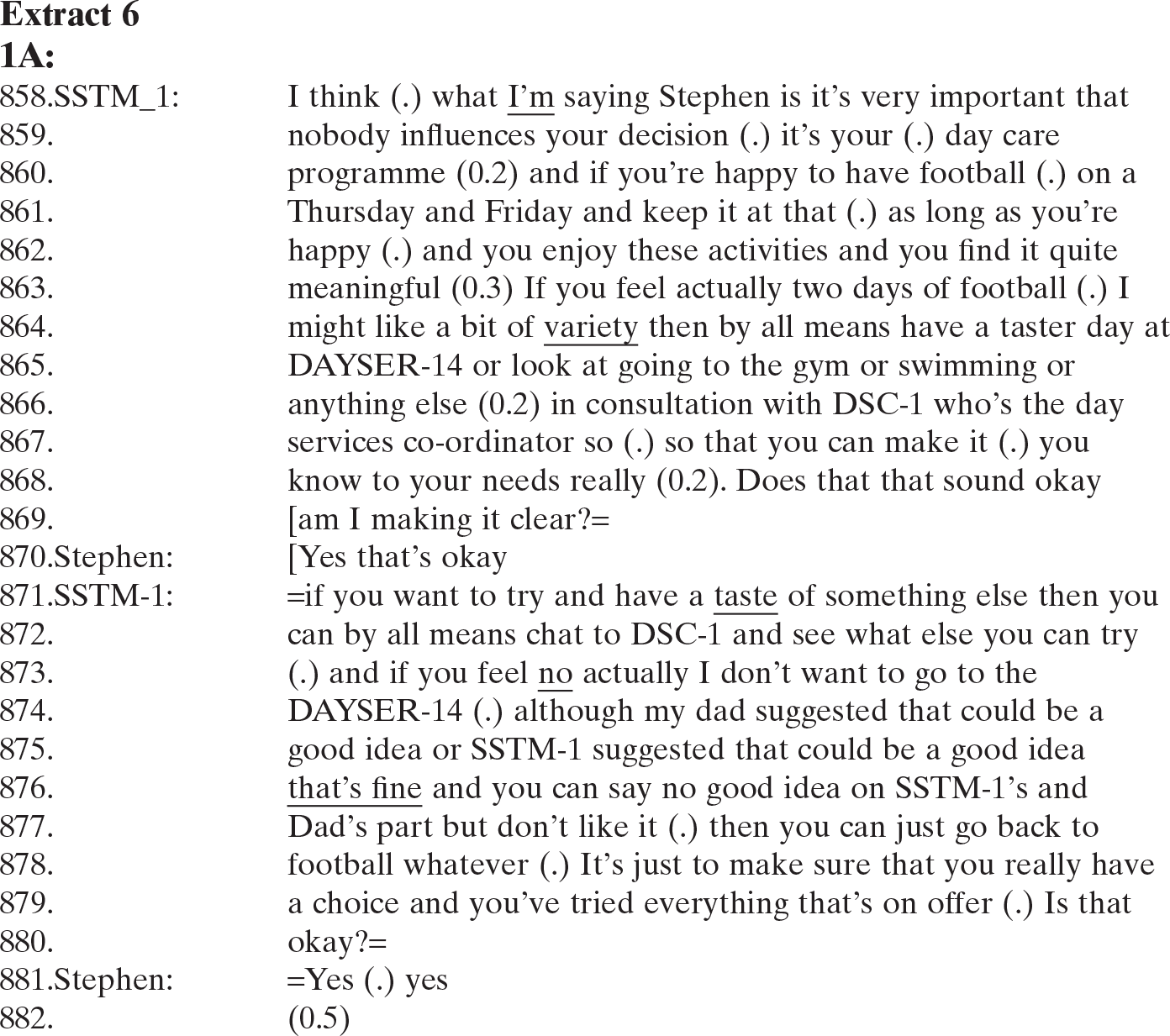
The chair of this meeting, then, is very explicit about the amount of football played being a decision for the young person to make regardless of the parental view, and states this directly in lines 858–9 (‥it's very important that nobody influences your decision). However, he also goes beyond this, by providing a rationale for the young person to reject his father's input in lines 873–875 (‘no actually I don't want to go to the DAYSER-14 although my dad suggested it could be a good idea’) and thus emphasises that the young person does not have to agree with his father. This is achieved with delicacy – the Social Services Team Manager's view is tentatively expressed, eg ‘I think (.) what I'm saying …’. He also associates himself with the father as someone whose view the young person could legitimately reject: ‘‥or SSTM-1 suggested that could be a good idea’ in lines 874–877.
This extract, then, is an example of attempting to ensure that self-determination is the guiding principle of decisions made in these meetings. However, it is not always clear in other meetings that the service user's voice is being privileged, or that they are being assisted to operationalise their own choices, in the same way. The extract below is an example of a rather different scenario. In this extract the participants are talking about college and work possibilities, and the young person has attended most of the meeting but has just left the room to rejoin a lesson:
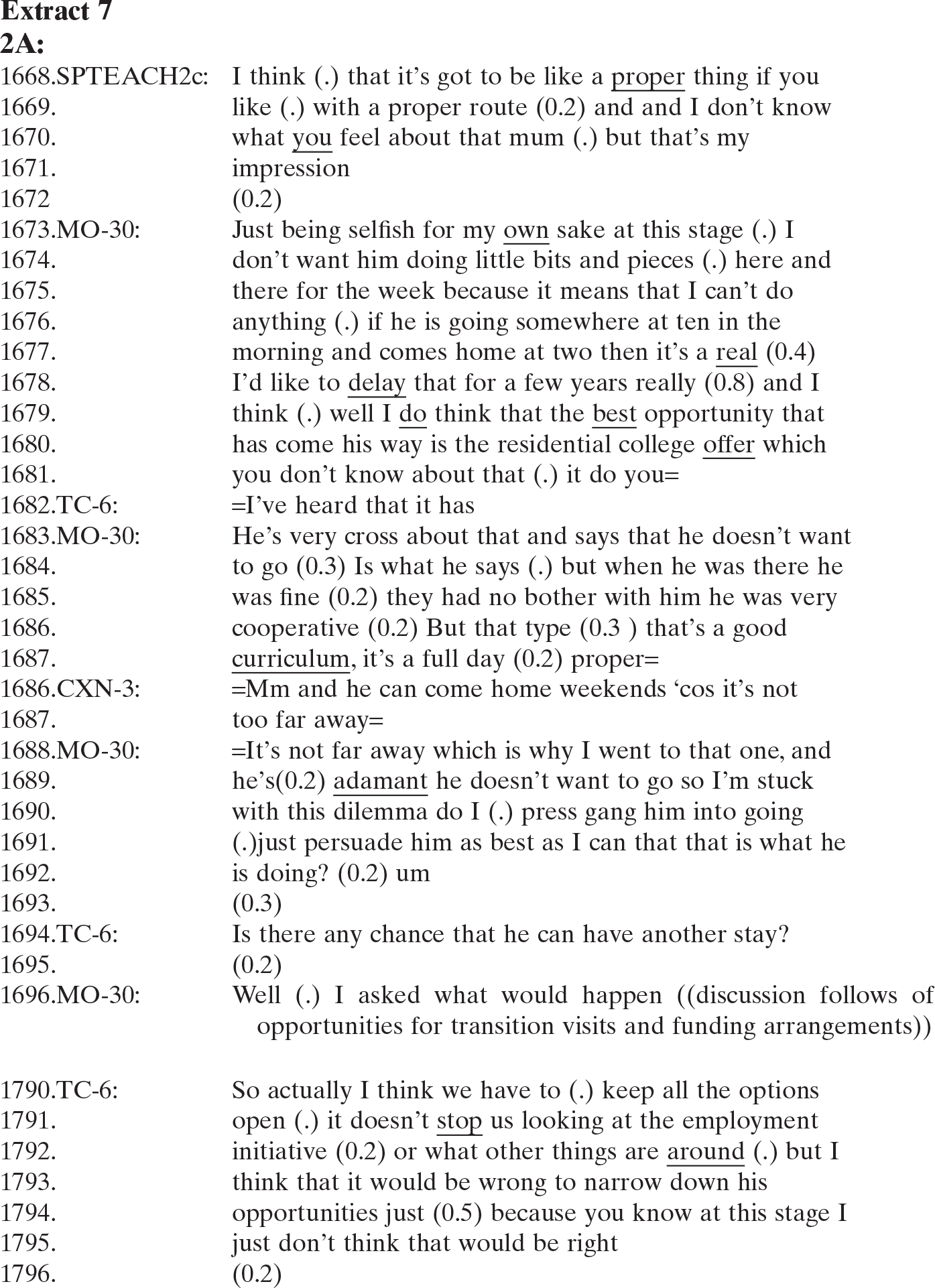
In this case the student has expressed from the outset of the meeting a clear desire for work rather than a college course, and been overtly resistant to suggestions of college. However, after he has left the room, the teacher attempts to draw together a plan. It is not entirely clear from the opening utterance of this extract which possibilities she is or is not discarding as not ‘proper’ (there has been a previous suggestion, instigated by the student, of some kind of voluntary work or placement related to the police force), and she attends to the potential delicacy of this judgement, downgrading her knowledge claims with ‘I think’ (Perakyla and Silverman, 1991; Gill, 1998). However, in response to this his mother raises the possibility of residential college (though this has not been raised with the student present or before now in this meeting), with her utterance ‘I
A further example of parents pressing an agenda where it is not clear that this corresponds with the wishes of the young person occurs in the 3 month review meeting below. The discussion here is around service provision when colleges are closed at holiday times, and the parents are asking what alternative services would be available to send their daughter to. This discussion has continued for some time before there is any attempt to involve the young person directly in the conversation, so that it might be argued she has already been constructed as a ‘half-member’ of the interaction (Shakespeare, 1998). The mother's opening utterance in this extract then explicitly addresses her daughter:
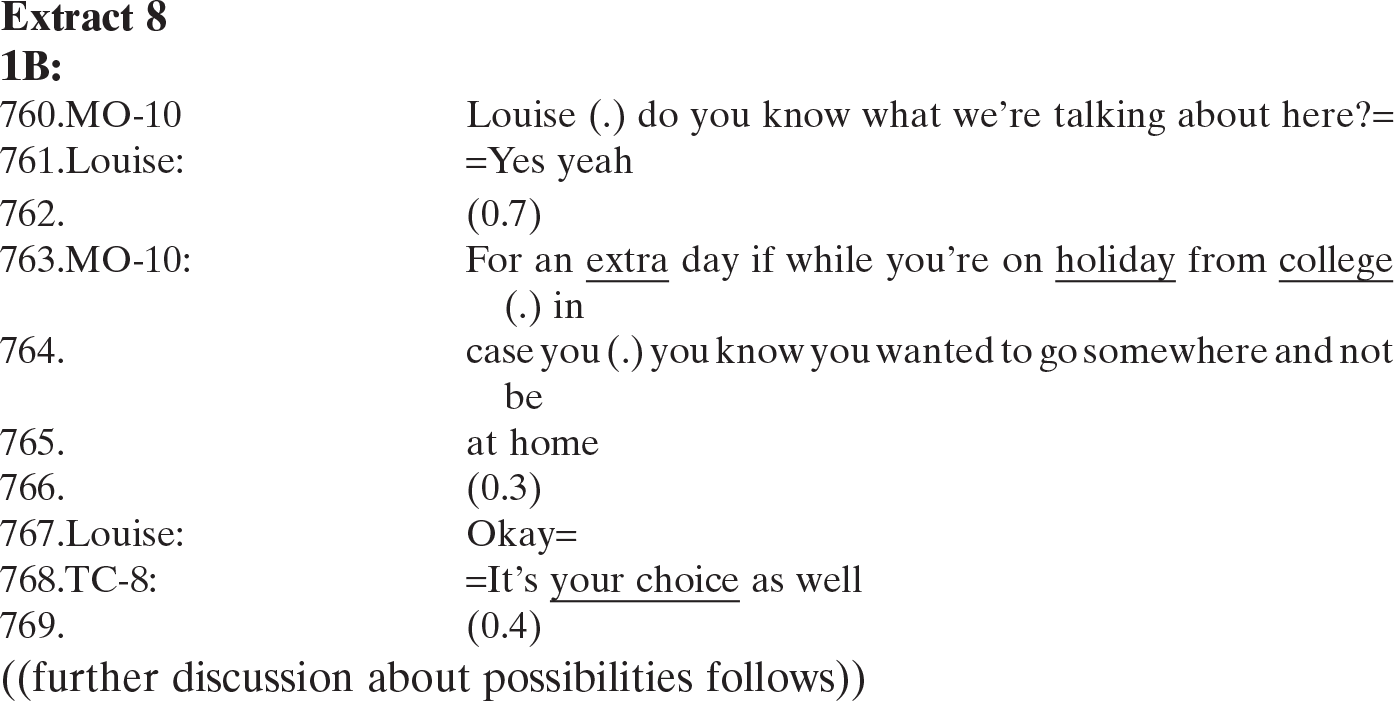
Following an attempt to clarify that her daughter is clear about the purpose of the discussion, the way the mother frames this is in terms of her daughter's choice: ‘in case you (.) you know you wanted to go somewhere‥’. However, there has been no indication up until this point that it is the daughter's agenda driving this request. The daughter's response token, ‘okay’ is non-committal, and followed immediately by TC-8's utterance ‘It's
Further discussion around the possibilities for alternative day care during holiday periods continues before the extract below, where in her turn the mother once again ostensibly addresses the young person:
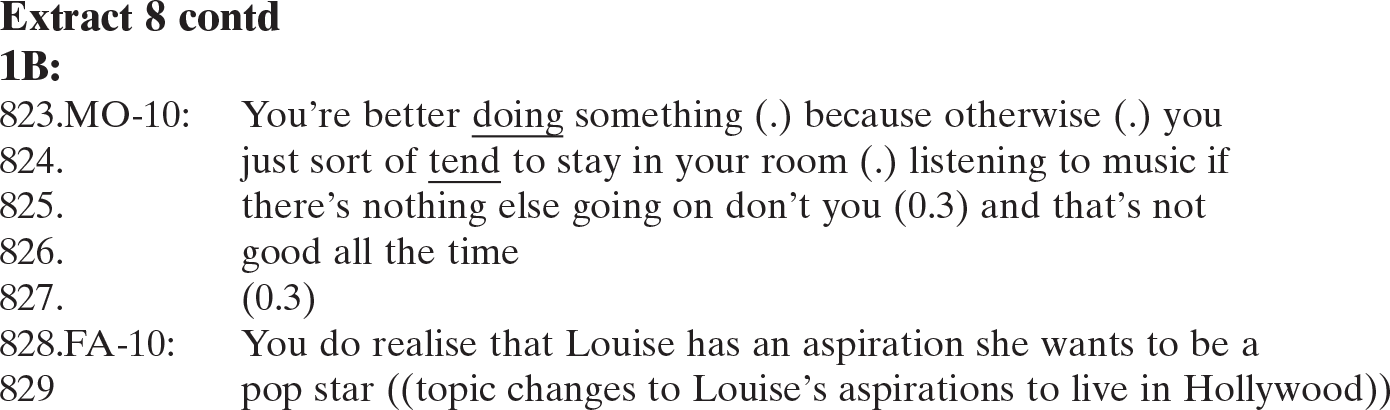
However, the mother's utterance here is not answered by the young person in line 827, and addressing her is not its only possible purpose, since it also provides a post hoc rationale for pushing for an agenda which has never been expressed by the young person – that left to her own devices she will just stay in her room. Schelly (2008), based on his own practical work in the field of ID, identifies similar parental concern that time should preferably be spent doing something active. Louise does not reply, and her father's subsequent utterance refers to her in the third person tense (‘she wants to be a pop star’). Hutchby and O'Reilly (2010), in their work on family therapy, describe how such ‘speaking about’ turns may be used to foreground a child's unreasonableness, often in contrast to the reasonableness of the parent, and a similar purpose can be discerned here; this is part of the case for why Louise cannot simply be allowed to make her own choice. Whilst never explicitly acknowledged, it appears that the parental agenda has been implicitly accepted, because at the end of the meeting, without any further discussion, an arrangement for alternative activities is offered by the Transition Co-ordinator:
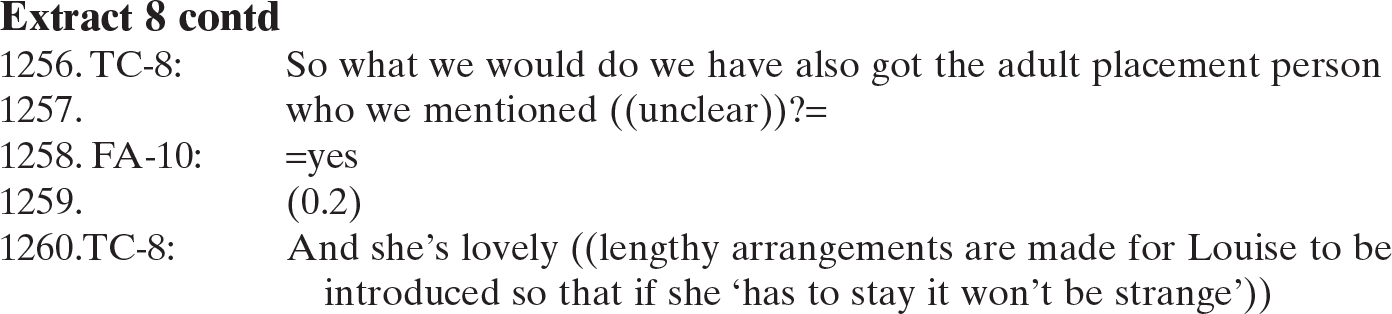
In this extract, TC-8 uses ‘So’ as a topic modifier, placing it before a formulation of a summary of what will happen next (Heritage and Watson, 1979) which includes an introduction to a person who can provide occasional alternative day care. She also invokes the ‘mantle of the institution’ (Maynard, 2003) by describing this in line 1256 as ‘what we would do’ (emphasis added).
Though we can show only a very few data extracts here, more of all of the types of instance we have identified are to be found in the wider corpus. It is interesting to reflect on why it might be that in some instances, the principle of self determination is so prominent, while in others it appears to be more easily undermined. One key practical factor is the requirement for parental support or commitment in achieving the young person's expressed wishes. In extract 6, the parental view is that the young person is playing too much football at their daycentre. What is at issue is whether there are other activities that could be accessed instead. However, all of these activities occur at daycentres, and as such there is no requirement for any parental support or assistance in carrying them out, beyond the already existing requirement to support the transport arrangements. In extracts 7 and 8, by contrast, the expressed choice of the young person potentially has a much greater impact on requirements for parental care giving. What is described by the mother in extract 7 as ‘little bits and pieces’ would mean that her own day would need to be structured around this. Likewise, in extract 8, the lack of a replacement service when college is closed for holidays, combined with the young person's need for constant supervision, creates a requirement for parents to substitute their own caregiving labour for that provided by the services in term time. What is particularly noteworthy here is that in all of the cases where parental enablement becomes an issue, it is ultimately the parent's desired outcome which is pursued.
What is also interesting here is the way in which parents orient, in building their cases, both to the ideal of self-determination and to providing a moral justification for why it is not workable in these instances. In extract 7, the mother describes herself as ‘being selfish’, echoing Ribbens McCarthy et al.'s (2000) moral imperative that the needs of children will ordinarily (and preferably) be put first. In extract 8 the parents present a kind of worst case scenario of what will happen if their daughter's voice is the only one taken into account- that she will in effect choose to do nothing. This worst case scenario acts to counter the otherwise negative moral implications of over-ruling their daughter. This rationale – of preventing Louise from choosing to do nothing – then provides for the legitimacy of an intervention in the (acceptable) terms of advocacy.
Conclusions: Managing parental involvement within a discourse of self-determination
The data presented here then, point to a considerable practical problem for staff. While the discourse of self-determination pervades transitions policy in England, and while Valuing People (2001) makes no suggestion that impaired capacity should affect this right, in practice parents/carers ultimately have to enable many of the choices of the young person. After the completion of this project, in 2009 the UK government launched Valuing People Now, a three year cross government strategy for learning disabilities in England which followed a national consultation process. This strategy document does make a distinction in some areas between the needs of those with profound disabilities and those who are more moderately disabled, for example by reversing the decision made in Valuing People (2001) to take those with profound disabilities out of specialist health services. However, it still continues to promote a similar policy agenda, so that one of its key policy objectives is that ‘All people with learning disabilities and their families will have greater choice and control over their lives and have support to develop person centred plans’ (Valuing People Now (2009) Executive Summary: 12). The focus, then, is on better ways to achieve similar objectives, rather than a significant change in these objectives. However, the reference to ‘all people with learning disabilities and their families’ is particularly salient in the context of this paper, since as we have seen, these views do not always coincide. In several of the instances we have outlined above, greater choice for the young person would mean less choice for other family members, and vice versa.
One way to address this is theoretically, as Young (2001) has done, arguing that what is problematic is the way in which we conceptualise self-determination. She suggests that there are two different ways of conceptualising self-determination – as independence and separation, but also as relationship and connection, in the sense that it necessarily involves engagement with and responsibility to others. If the former concept is used, then what counts as freedom is non-interference. However, that does not properly take account of social relationships. As she points out, agents are embedded in institutional relations that make them interdependent in many ways. The interdependence of young people in this sample is particularly marked because they depend to a greater degree on others to enable their choices. In terms of Young's model, however, this does not necessarily mean they have less freedom of choice. She states that ‘Freedom, then, means regulating and negotiating relationships so that all persons are able to be secure in the knowledge that their interests, opinions and desires for action are taken into account’ (2001: 35). From this theoretical perspective, then, self determination is a process rather than an outcome, and ‘Insofar as … activities … may adversely affect others, or generate conflict, self determination entails the rights of those others to make claims on the group, negotiate the terms of their relationships, and mutually adjust their effects’ (2001: 38).
However, this kind of theoretical debate will not in the short term make it any easier for transitions staff, who find themselves caught between the policy ideal of self-determination and the practical imperative to put in place a workable transitions package which will receive the necessary support from parents or carers. We have noted that, in all of the examples we have presented here which require parental input, it is the views of the parents or carers which ultimately prevail, and in pragmatic terms it is easy to understand why staff do not resist this. A theoretical debate also does little to help those parents who, in attempting to assert their own viewpoints, can only currently do so by categorising themselves as selfish. As Gillies (2008: 112) argues ‘… there is a need for a much greater appreciation of the varied and situated roles that parents play in caring for their children’; we would add that this appreciation needs to encompass not just those who are on an ‘ordinary’ parenting trajectory. Todd and Shearn (1996) suggest that up until relatively recently, too little attention has been paid to examining parenting an individual with ID over the life course, as opposed to focusing on adjustment during the early stages of a child's life. We would suggest that focusing on transitions, as we have done here, is particularly important for two related reasons: firstly that generally speaking, when young adults leave school and take up employment or further training, parenting responsibilities are viewed as decreasing, so that the parental role comes to occupy less life space. For parents of adult offspring with ID, particularly those who require constant supervision, however, this time can paradoxically result in an increased parental role, with the possibility that their young adult may move from the structured and time-predictable environment of school to the ‘bits and pieces’ so feared by one of the mothers in this study. Secondly, and consequentially, the ‘normality’ many parents have sought to approximate up until this point is under threat. While a discourse of self-determination continues to be unassailable in policy terms, a solution to this conflict is unlikely to be found.
Footnotes
Acknowledgements
The authors are grateful to the young people, families, and staff who allowed us to accompany their transitions; the special schools that supported the research; Nottingham Mencap steering group, Val Leyland, Anna Harvey and Jenny Lapish. Thanks are also due to Nick Stevenson for his helpful comments on this work, and to the two anonymous referees.
1
In this article we use the international term ‘Intellectual Disability’ (ID) to refer to young people either born with significant cognitive impairments or who acquire these during childhood, a group of conditions previously referred to as ‘mentally retarded’ in the USA and ‘learning disabled’ in the UK. Exceptions are references to specific UK policies that use the term ‘learning disability’.
2
In the UK, a White paper is an official paper outlining the government's policy on a matter to be brought before parliament. In the case of Valuing People, this policy applies only to services in England.
3
In the UK, a special school is the common term for a school catering exclusively for students who have specific educational needs, due to moderate, severe or complex learning difficulties and/or physical disabilities. For a more detailed explanation, and an analysis of the debate in the UK over inclusive vs special schooling, see  .
.
4
To preserve anonymity, the following abbreviations are used: TC = Transitions Co-ordinator, SM = Stepmother, Mo = Mother, Fa = Father, SPTeach = Special School teacher, SSTM = Social Services Team Manager, DAYSER = Dayservice worker, TC = Transitions Co-ordinator, AGW = Agency worker.