







Abstract
Relationship satisfaction, affect, and stress were examined in 313 same-sex couples who had had civil unions in Vermont during the first year of this legislation. Similarity between partners on age and on positive/negative affectivity was related to relationship satisfaction whereas there was no association with similarity in income, education, and outness. Lesbian couples (n = 199), compared to gay male couples, reported experiencing more stress related to family reaction to their sexuality, whereas gay male couples (n = 114) reported more stress surrounding the issues of HIV/AIDS and violence/harassment than did lesbian couples. This study is the first to examine within-couple factors among same-sex couples with legalized relationships.
Despite increasing research on gay and lesbian couples, knowledge is scarce in comparison to the abundance of information on heterosexual relationships. Reasons for this discrepancy are multiple and can be attributed to issues that are unique to lesbian and gay male populations. For example, in the absence of legal marriage, few studies clearly distinguished between the casual dating/noncommitted cohabiting couples and those with long-term involvement in a relationship. Furthermore, many lesbians and gay men are not open about their sexual orientation and may be reluctant to take part in research projects. Thus, in recruiting their participants, researchers have relied primarily on convenience samples or friendship circles of same-sex couples (for a review, see Peplau & Spalding, 2000).
On July 1, 2000, Vermont became the first state in the United States to grant the same legal state benefits, civil rights, and protections to same-sex couples with civil unions as to married couples who live in that state. However, this legislation is still limited—it is not marriage, is not legal outside of Vermont, and affects only statewide benefits. Because civil unions in Vermont are a matter of public record, it was possible to identify lesbian and gay couples who have decided to legalize their relationship. Furthermore, civil union certificates contain some demographic information, so that the representativeness of the sample could be compared to the civil union population on a few variables. The current study was unique among same-sex couples research because it was not a convenience sample.
Several years ago, we (Solomon, Rothblum, & Balsam, 2004) surveyed same-sex couples who had had civil unions in Vermont during the first year of this new legislation (2000 to 2001). Although civil union legislation covers only statewide benefits for residents of Vermont, 79% of the same-sex couples who took advantage of this legislation during its first year were from other states (this study took place before same-sex marriage existed in Massachusetts or Canada and before domestic partnerships were legal in other U.S. states). We contacted all 2,475 couples who had had civil unions in Vermont during the first year of the legislation about participation in our questionnaire study. We received reply forms from 947 couples (42%) indicating willingness to participate in the study. The funding for that original study was limited to 400 civil union couples.
That prior study used a between-groups design to compare same-sex couples in civil unions with same-sex couples in their friendship circles who had not had civil unions, and also with their married heterosexual siblings and spouses. The current study focused on a within-couple design among same-sex couples in legal relationships. Specifically, we were interested in how the degree of similarity within couples related to a variety of characteristics and to relationship satisfaction. The three main goals of the study are reviewed below.
Connection Between Relationship Satisfaction and Degree of Similarity on Demographic Factors and Level of Outness
A review of the literature on heterosexual couples reveals that many authors consider mate selection to be a function of perceived similarities in demographic variables between partners (Adams, 1979). Consequently, demographic similarity is seen as an important component of relationship satisfaction in married heterosexual couples. Kurdek (2003) has argued that lesbian and gay male couples also engage in assortative mating. So far, little research has explored this issue in lesbian and gay couples, and the results have been mixed. Peplau, Padesky, and Hamilton (1982) proposed that demographic similarity between lesbian partners would predict greater satisfaction. Contrary to expectations, the results showed that relationship satisfaction was not significantly related to similarity on age, number of previous lesbian relationships, level of education, and/or the degree of religiousness. Kurdek and Schmitt (1987) explored the relationship of partner homogamy on demographic factors and relationship satisfaction among 44 heterosexual married, 35 heterosexual cohabiting, 56 lesbian, and 50 gay male couples. Even though gay male couples showed greater discrepancies between partners in age, income, and education than the other three types of couples, no significant correlation was found between similarity on demographic factors and relationship quality.
Unlike some oppressed groups for which group membership is obvious (e.g., women, some racial and ethnic minority groups), lesbians and gay men can often decide on the degree to which they want to be out versus closeted as members of a sexual minority. Given the mixed results on demographic similarity and relationship satisfaction among same-sex couples, it is possible that couple similarity in level of outness may be more important for relationship satisfaction than couple similarity on demographic variables. For example, similarity on actual age (a demographic variable) may be less important than developmental stage in the coming out process (including level of disclosure to others). Couples who are discrepant on outness may have conflict around such issues as where to live (e.g., in an obvious gay neighborhood), whether to bring a partner to work-related social events, and how to introduce their partner to family members. In one of the few studies on this topic, Jordan and Deluty (2000) investigated the correlation between outness and relationship quality in 305 lesbians in committed relationships. Their results indicated that the degree of openness regarding sexual orientation was positively correlated with relationship satisfaction and that discrepancy in outness between partners was negatively correlated with relationship satisfaction. In contrast, using data from 784 lesbian couples surveyed in 1979 for the American Couples Study by Blumstein and Schwartz (1983), Beals and Peplau (2001) found that discrepancy in outness among partners was not predictive of relationship quality.
Although the results of prior studies on same-sex couples have been mixed, the fact that we limited our sample to same-sex couples in legal relationships led us to predict that greater similarity on demographic factors (age, education, and income) and similarity on level of outness would be positively correlated with relationship satisfaction in lesbian and gay couples.
Correspondence Between Relationship Satisfaction and Affectivity
The general literature on relationship satisfaction shows that heterosexual individuals who report more negative affectivity tend to report less satisfaction with their relationships. For example, in their 45-year-long prospective study of marital stability and marital satisfaction in 300 heterosexual couples, Kelly and Conely (1987) found that negative affectivity (e.g., depression, anxiety, fear, anger, guilt, sadness, neuroticism) in both sexes was negatively related to reported relationship satisfaction. So far only two studies involving lesbian and gay couples addressed this issue, with conflicting results. Kurdek (1994) found that relationship satisfaction was negatively correlated with negative affectivity in 39 lesbian and gay and 39 heterosexual married couples. In contrast, Jordan and Deluty's (2000) study of 305 lesbians in committed relationships did not find a significant correlation between either positive or negative affectivity and relationship satisfaction. Although the results of prior studies on same-sex couples have been mixed, our sample consisted of same-sex couples in legal relationships, which led us to predict that positive affectivity would be positively correlated with relationship satisfaction and negative affectivity with relationship dissatisfaction.
Types of Stressors Related to Being Lesbian or Gay
Stress has been extensively researched among heterosexuals, including married couples, but there has been no research on these factors among same-sex couples. Many authors speak of “minority stress” when referring to distressing experiences of lesbians and gay men in heterosexist societies (for a review, see Meyer, 2003). The only empirical study of lesbian and gay-specific stressors was conducted by Lewis, Derlega, Berndt, Morris, and Rose (2001), who developed a 70-item stressor questionnaire that was administered to 557 gay and bisexual men and 421 lesbian and bisexual women. This study indicated 10 stress factors. Gay men reported more stress associated with two factors, HIV/AIDS and violence/harassment, than did lesbians. Lesbians reported more stressors than did gay men regarding family reactions to one's partner. There has been no empirical research on lesbian and gay-specific stressors within same-sex couples. We predicted that, relative to gay male couples, lesbian couples would report more stress related to family and partner issues and less stress related to HIV/AIDS and violence issues.
Comparison of Percentages by Lesbian and Gay Couples
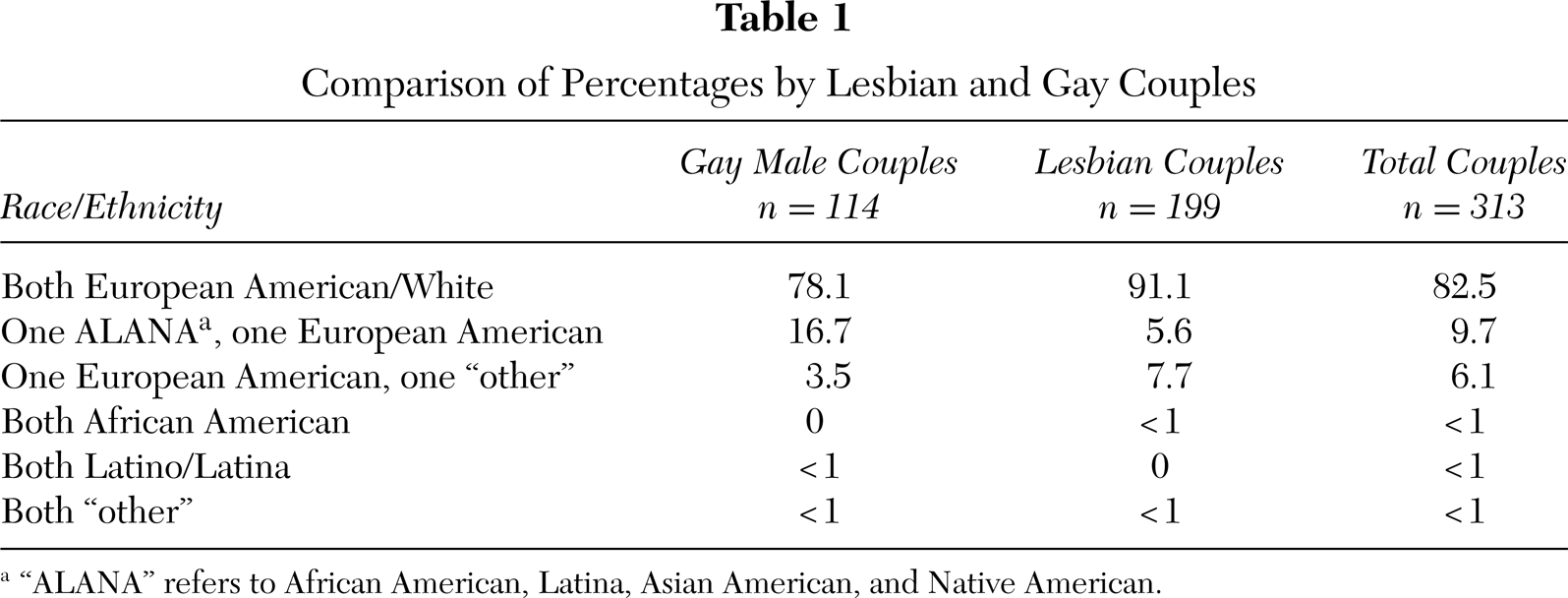
“ALANA” refers to African American, Latina, Asian American, and Native American.
METHOD
Participants and Procedure
Participants for this study consisted of lesbian and gay male couples who had had civil unions in Vermont during the first year this legislation was available (July 1, 2000 to June 30, 2001). Based on information on civil union certificates, 2,475 couples had civil unions during this first year, of which about 80% were from out of state, two-thirds were female, and 10% were members of racial/ethnic minority groups (Solomon et al., 2004).
In early 2002, a letter was sent to all couples who had civil unions during the first year of the legislation, inviting them to participate in an earlier study on demographic factors, social support, and contact with family of origin (Solomon et al., 2004). Of the 2,475 civil union couples who were sent letters, 165 addresses (7%) were incorrect, 5 individuals indicated that their partner had died, 28 indicated that their relationship had ended, and 8 couples were friends or students of members of the research team and thus were not included in the study. This resulted in an actual pool of 2,269 possible civil union couples. Reply forms were received from 947 couples (42%) indicating willingness to participate in the study. The funding for that original study was limited to 400 civil union couples.
The remaining 447 couples not included in the Solomon and colleagues (2004) database make up the sample for the present study. The current sample included 295 lesbian (66%) and 152 gay male (34%) couples. The majority of the couples contacted for the current study were out-of-Vermont residents (79%) and 2% were from outside of the United States. The largest state sample was that of Vermont (19%), followed by New York (11%), California (7%), Massachusetts (6%), and Florida (5%). There were no couples from Alaska, Arkansas, Montana, New Mexico, North Dakota, or South Dakota.
Of the 894 surveys that were sent to 447 couples in the present study, 646 were returned, representing an overall response rate of 72%. The number of couples in which both partners responded was 313, indicating a 70% response rate. The race/ethnicity of the 313 couples is shown in Table 1. The number of couples in which only one partner sent in the response was 20 (4.5%), and these questionnaires were excluded from further analyses. Out of 295 lesbian couples to whom the surveys were sent, 199 (67%) returned both completed questionnaires, and out of 152 gay male couples, 114 (75%) returned both questionnaires. After the questionnaires were mailed, three lesbian couples requested to be excluded from the study, two lesbian couples had separated since consenting to participate in the study, and one lesbian couple could not be reached due to an incorrect address.
Measures
Demographic information. The demographic questionnaire contained items about age, gender, race/ethnicity (African American/Black, Asian American/Pacific Islander, Latino/Latina, Native American/American Indian, European/White, and other), education (number of years in school from 1 to over 17), and annual income. Participants were also asked the year when they and their partner first met, began “going out together,” and began living together. This questionnaire was replicated from Solomon et al. (2004) and was constructed so that the current sample could be compared with information available on civil union certificates.
Relationship satisfaction. Relationship satisfaction was assessed using the Dyadic Adjustment Scale (DAS; Spanier, 1976). This is a 32-item scale designed to measure agreement between partners on important issues, satisfaction with demonstrated levels of affection and sexual relations, degree of harmony, and amount of shared activity between the partners (e.g., “Do you confide in your partner?”). Response format for the items varies. For ratings of agreement respondents were asked to choose between 0 (always disagree) and 5 (always agree), for ratings of frequency respondents were asked to choose between 0 (all the time) and 5 (never), and for dichotomous ratings, respondents were asked to choose between 0 (yes) and 1 (no). The score ranges from 0 to 151 and is calculated by averaging responses to all items. Higher scores reflect higher levels of relationship satisfaction. To determine relationship satisfaction scores for the couples, the mean values of partners' responses were calculated. The DAS has been widely used and has demonstrated high reliability and stable structure with both heterosexual and same-sex couples. Internal consistency for the overall relationship satisfaction in the present study was .93. Similar to Jordan and Deluty (2000), some DAS items in this study were reworded to make them more appropriate for same-sex couples (e.g., changing mate to partner).
Outness. The degree to which participants had made their sexual identity known to others was assessed using the Outness Inventory (Mohr & Fassinger, 2000). This 11-item self-report questionnaire was designed to measure the degree to which lesbians and gay men are open about their sexual orientation to various people (e.g., “my work supervisors”). Items are scored from 1 (person definitely does not know about your sexual orientation status) to 7 (person definitely knows about your sexual orientation status, and it is openly talked about). The internal consistency in the present study was .92.
Affectivity. Affect was assessed with the Positive and Negative Affect Scales (PANAS; Watson, Clark, & Tellegen, 1988). This is a 20-item self-report measure specifically designed to assess the distinct dimensions of positive and negative affect (e.g., “hostile,” “enthusiastic”). Respondents are asked to indicate on 5-point Likert-type scales the extent to which they feel or have felt a list of adjectives over a specific time from 1 (very slightly) to 5 (extremely). Participants rated how characteristic each item was of them in general. Internal consistency in the present study was .89 for the positive affect scale, and .91 for the negative affect scale. Responses were averaged to derive scores for positive affect (PA) and negative affect (NA).
Lesbian- and gay-specific stressors. Stressors that are specific to lesbians and gay men were assessed with the Measure of Gay-Related Stressors (MOGS; Lewis et al., 2001). This questionnaire lists 70 empirically derived lesbian- and gay-specific stressors (e.g., “Introducing my partner to my family,” “Housing discrimination because of my sexual orientation”), developed by asking gay men and lesbians to report on the stressors in their lives that were related to being lesbian or gay. Respondents are asked to rate how stressful a particular event was on a Likert-type scale ranging from 0 (has not occurred/not stressful) to 3 (severe stress). The internal consistency of the MOGS in the present study was .89. Stressors are clustered in 10 groups that include (with internal consistencies from the present study in parentheses): Family Reaction (.89), Family Reactions to My Partner (.54), Visibility With Family and Friends (.85), Visibility with Work and Public (.75), Violence and Harassment (.93), Misunderstanding (.79), Discrimination at Work (.88), General Discrimination (.75), HIV/AIDS (.84), and Sexual Orientation Conflict (.71).
RESULTS
Comparison of Civil Union Sample to Other Samples
Table 2 provides data from the civil union population, the Solomon et al. (2004) sample and the current sample. The demographic profile of the participants in this study corresponds highly to that of the civil union population on gender, race/ethnicity, and geographic location based on information on the civil union certificates. Furthermore, the current sample is demographically similar to findings of Solomon and colleagues in that lesbians and gay men who participated in this study were on average in their forties, of European American descent, and well-educated. Mean income was also comparable in both studies for lesbians and gay men.
Similarity on Demographic Factors, Outness, and Affectivity Among Same-Sex Couples
A multivariate analysis of variance (MANOVA) revealed a significant effect for gender when comparing the demographics, relationship data, and affectivity of participating lesbian and gay male couples, F (14, 249) = 3.18, p < .001. Average couple means and the univariate results are presented in Table 3. Lesbian couples had higher mean levels of education than did gay male couples, F (1, 262) = 4.96, p < .05), whereas gay male couples had higher mean incomes, F(1, 262) = 10.68, p < .01. Gay male couples had greater differences between partners on education, F(1, 262) = 11.38, p < .01, and income than did lesbian couples, F(1, 262) = 8.08, p < .01. There were no significant gender differences on age or on reported average affectivity. On average, both types of couples had met over a decade ago.
The mean age, income, and education differences between partners were correlated with mean relationship satisfaction. The results are shown in Table 4. There were no significant correlations between these variables for couples in general. However, separate correlations for lesbian and gay couples indicated a significant correlation between age difference in couples and relationship satisfaction—negative for gay men, positive for lesbians. Partners' similarities on education and income were not significantly correlated with relationship satisfaction in either group. The correlation between partners' similarity in degree of outness and mean relationship satisfaction was not statistically significant.
Comparison of Demographic Characteristics of Civil Union Population, Solomon et al. (2004) Study, and the Current Sample
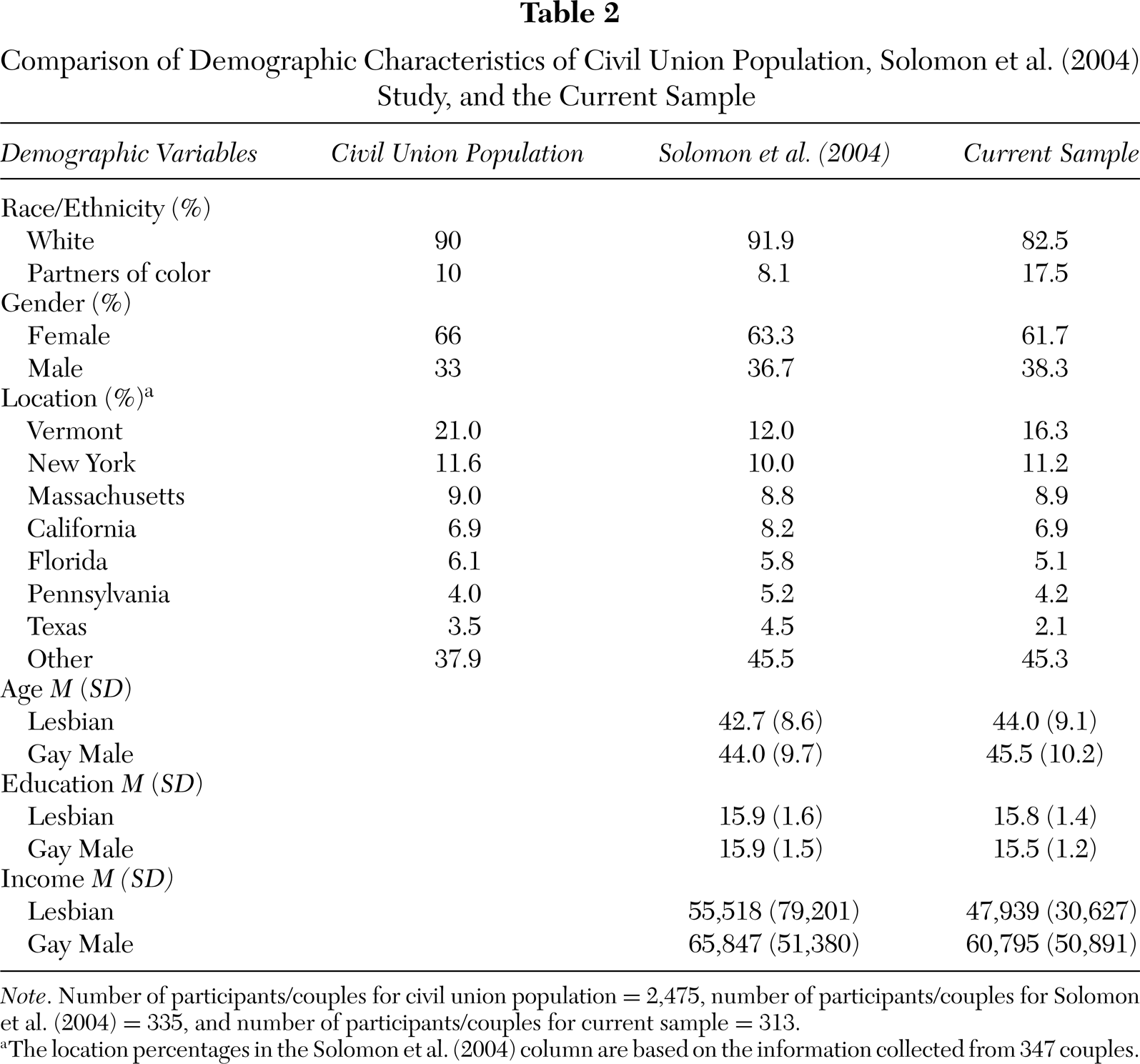
Note. Number of participants/couples for civil union population = 2,475, number of participants/couples for Solomon et al. (2004) = 335, and number of participants/couples for current sample = 313.
The location percentages in the Solomon et al. (2004) column are based on the information collected from 347 couples.
Results of the correlation of couples' average positive and negative affectivity with relationship satisfaction indicate a strong correlation between the variables in both types of couples (see Table 4). Among the couples in general, as well as for lesbian and gay male couples separately, relationship satisfaction was positively correlated with positive affectivity and negatively correlated with negative affectivity.
Comparison of Mean Values of Lesbian and Gay Couples
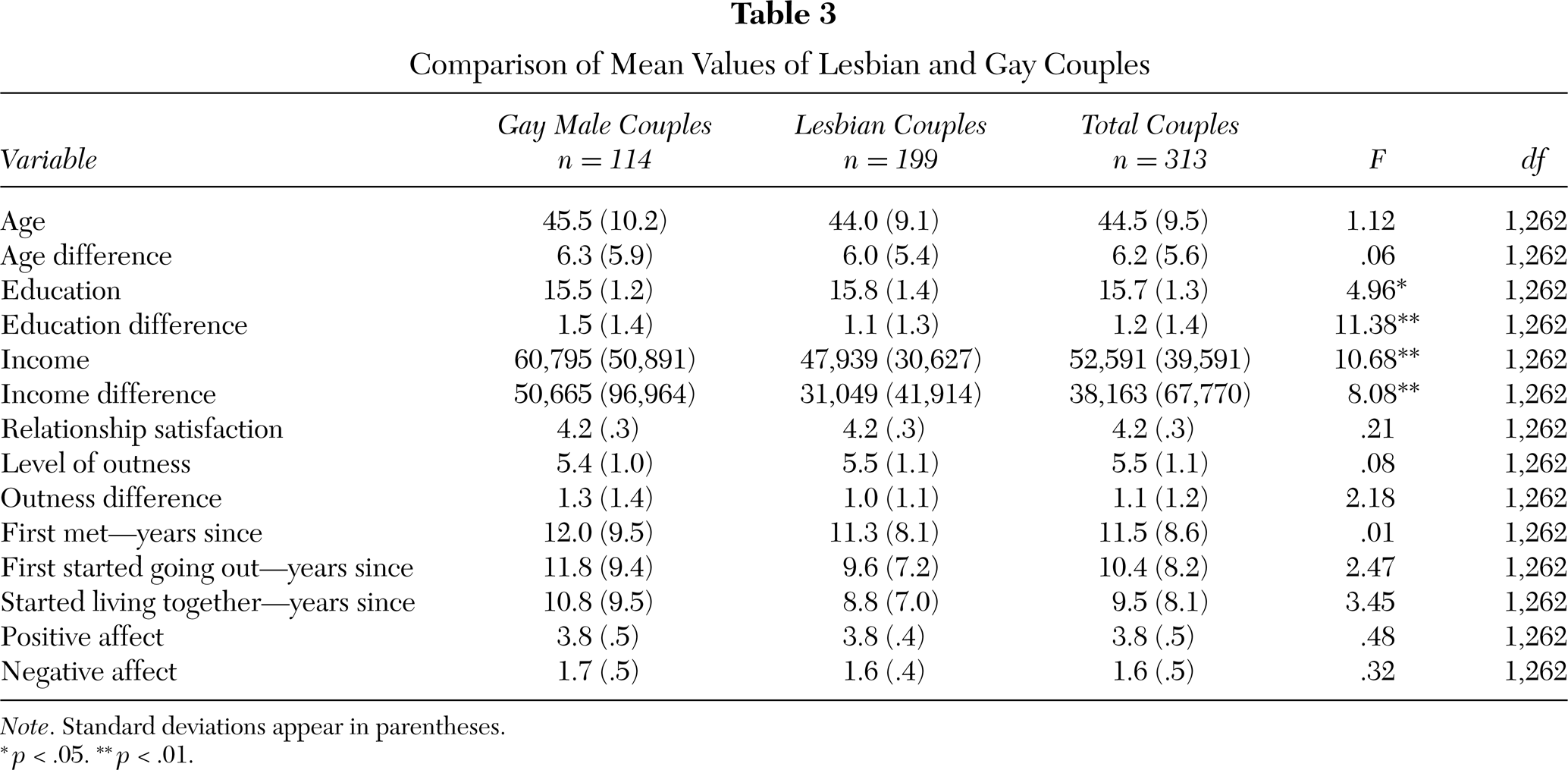
Note. Standard deviations appear in parentheses.
∗ p < .05. ∗∗p < .01.
Intercorrelations Between Relationship Satisfaction and Similarity on Demographic Data, Similarity on Partners' Degree of Outness, and Affect
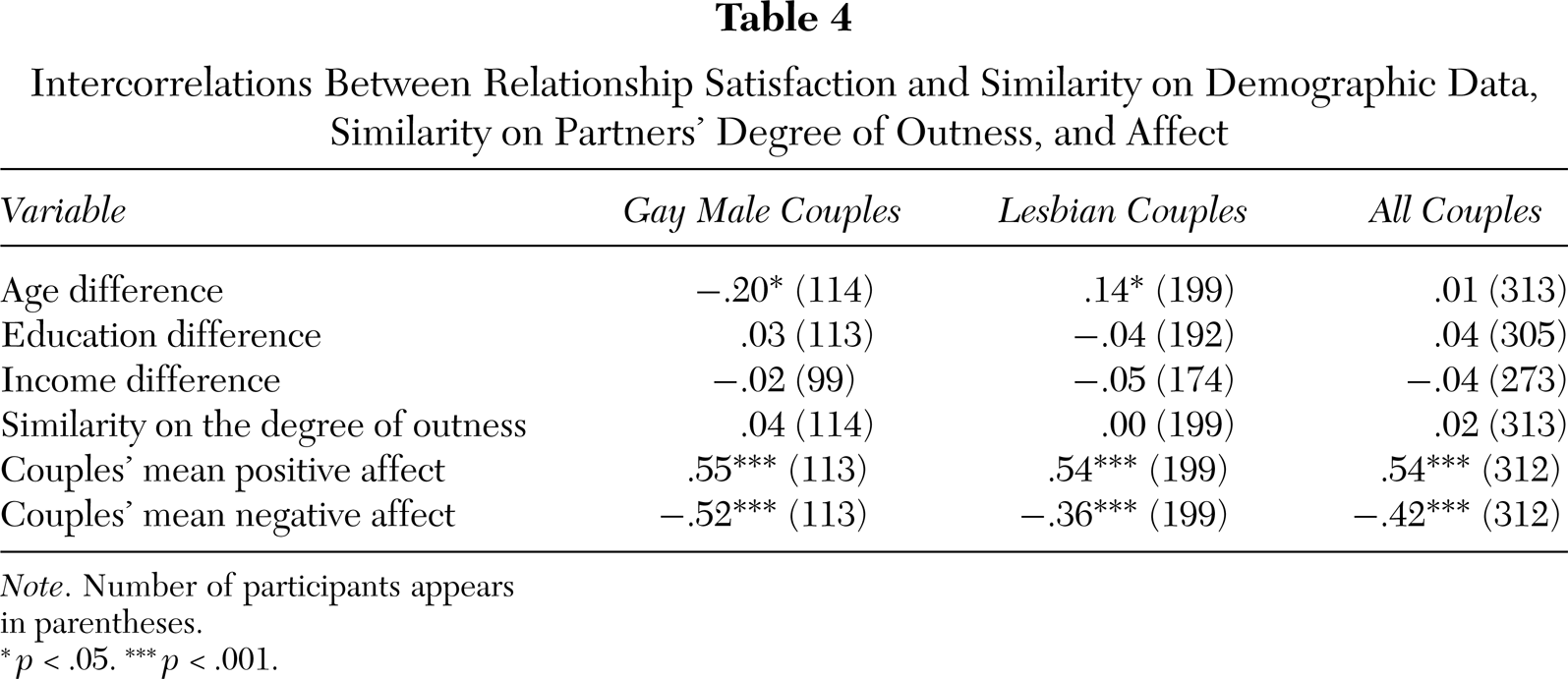
Note. Number of participants appears in parentheses.
∗p < .05. ∗∗∗p < .001.
Stressors Specific to Being Lesbian or Gay
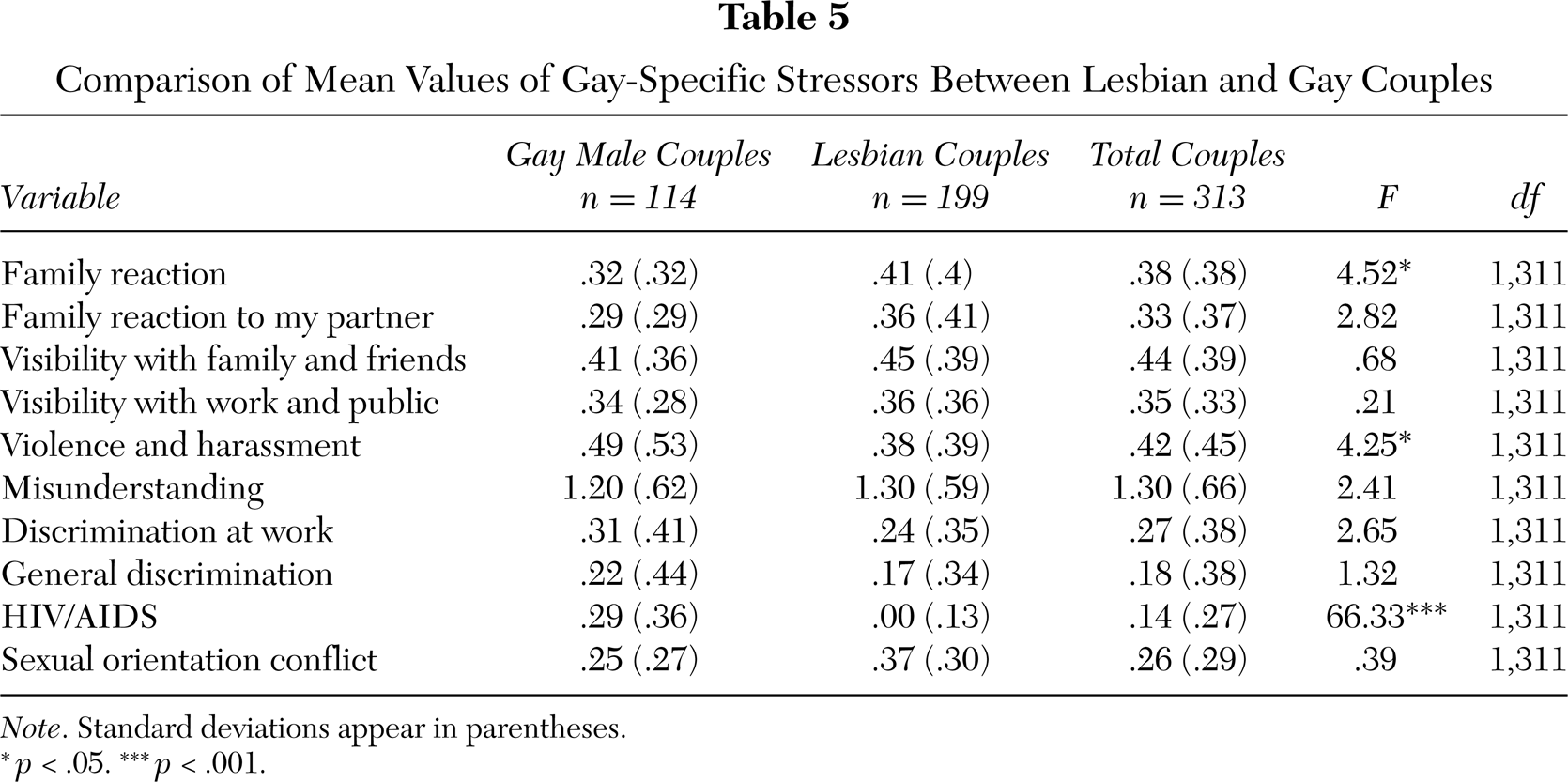
As per Lewis and colleagues (2001), after calculating individual scores for the 10 stress factors for each partner, the average values of the factors were calculated for each couple and compared using MANOVA with gender as an independent variable. The average results for lesbian and gay male couples are presented in Table 5. A significant effect for gender was found, F(10, 302) = 9.1, p < .01. Gay male couples reported experiencing more stress surrounding HIV/AIDS-related issues and violence and harassment than lesbian couples, F(1, 311) = 66.33, p < .001. Lesbian couples reported experiencing more stress connected to family reaction to their sexuality than did male couples, F(1, 311) = 4.52, p < .05. No significant differences were found between the two types of couples on other factors of the MOGS.
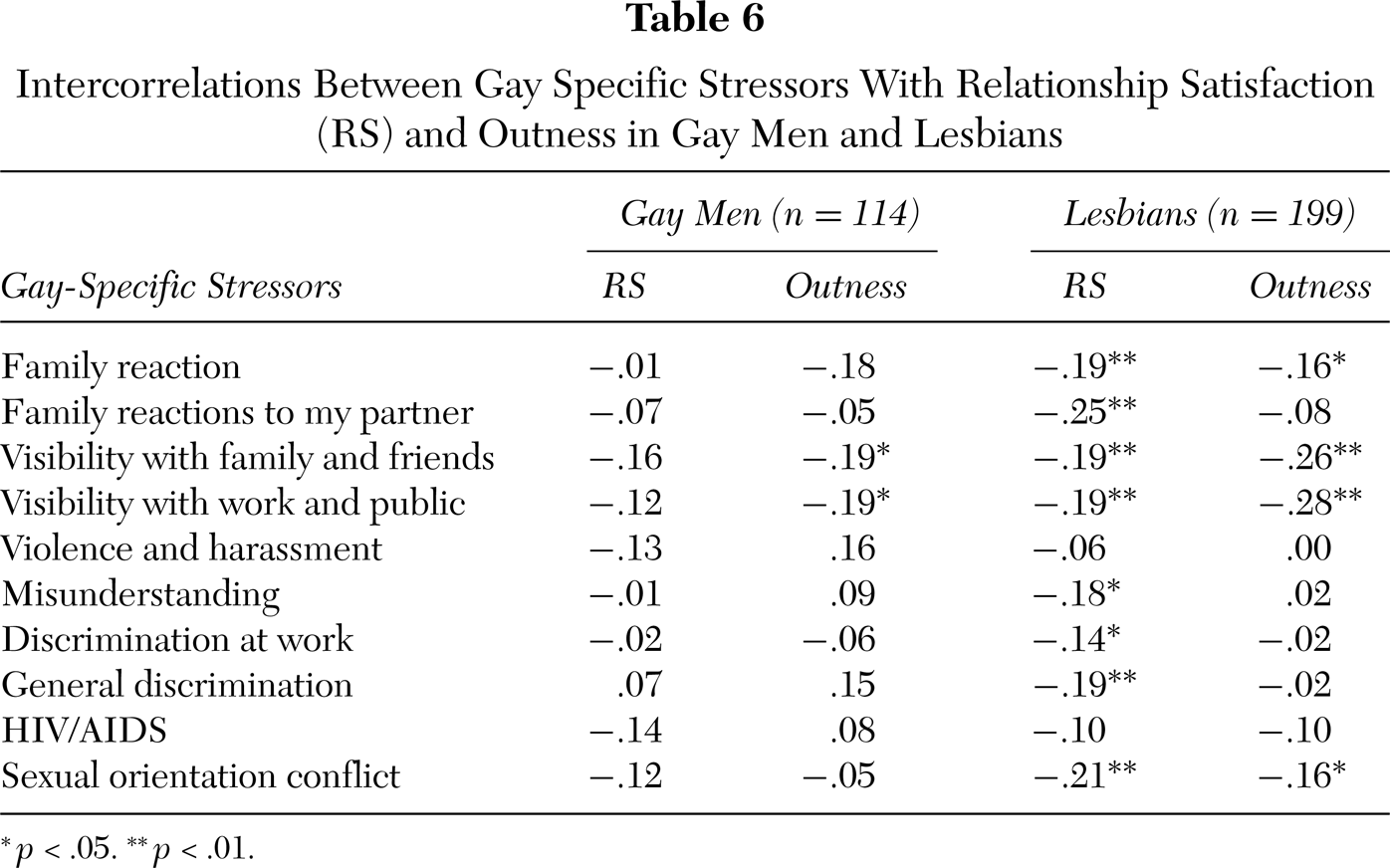
Although not specifically part of the hypotheses, the 10 factors of the MOGS were also correlated with relationship satisfaction and with outness. The results are shown in Table 6. None of the factors were significantly correlated with relationship satisfaction for gay male couples. In contrast, among lesbian couples, 8 out of 10 factors (all factors except HIV/AIDS and violence/harassment) were significantly negatively correlated with relationship satisfaction. Among gay male couples, two factors of the MOGS were significantly negatively correlated with outness: visibility with family and friends and visibility with work and public. Among lesbian couples, four factors of the MOGS—family reaction, visibility with family and friends, visibility with work and public, and sexual orientation conflict—were significantly negatively correlated with outness. Given that subscales related to visibility on the MOGS are synonymous with outness, these correlations were expected.
DISCUSSION
Despite the growing social visibility of lesbians and gay men in the United States, knowledge about same-sex couple-related issues is still limited. This is partly due to the many obstacles in recruiting large numbers of lesbian and gay male couples who are in committed relationships. Given this lack of lesbian and gay couple-specific research, heterosexual families remain a widely adopted model of optimal functioning in a relationship. As a result of the relatively recent introduction of the civil union law in Vermont, it is possible to reliably identify same-sex couples who are in legal relationships.
Comparison of Mean Values of Gay-Specific Stressors Between Lesbian and Gay Couples
Note. Standard deviations appear in parentheses.
∗p < .05. ∗∗∗p < .001.
Intercorrelations Between Gay Specific Stressors With Relationship Satisfaction (RS) and Outness in Gay Men and Lesbians
∗p < .05. ∗∗p < .01.
This study of same-sex couples is one of the first that permits comparison to a population. Furthermore, the demographic characteristics of the participants in this study are highly comparable to the lesbians and gay men who participated in the civil union study by Solomon et al. (2004). The characteristics of these two samples indicate that both groups of participants are representative of the civil union population.
The Connection Between Relationship Satisfaction and Degree of Similarity on Demographic Factors and Level of Outness
The hypothesis that relationship satisfaction would be positively correlated with greater similarity between partners on demographic factors was only partially supported by the results. Similar to Kurdek and Schmitt's (1987) study, gay male couples in the present study had greater discrepancies between partners on education and income than did lesbian couples. Nevertheless, neither education nor income was significantly associated with the quality of the relationship for either lesbians or gay men. Age proved to be the only demographic factor that was related to couples' satisfaction with their unions. However, the direction of the correlation differed for lesbians and for gay men. While greater age similarity among gay men was predictive of higher satisfaction, a greater age difference between lesbian partners was associated with greater relationship satisfaction.
Research on sexual attraction has found that middle-aged and older gay men, much like their heterosexual counterparts, show a preference for younger sexual partners (Harry, 1984). One could speculate that lack of age difference between partners in gay male couples with civil unions may be optimal for the partnership. Because gay men are more likely than lesbians to value physical appearance in their partners (Rothblum, 2002), it is possible that being near the same age minimizes the possibility that one of the partners would look significantly older, and thus less desirable, than the other partner.
The finding that difference in age is related to higher relationship satisfaction in lesbian couples was somewhat surprising. There are at least two possible explanations for this finding. The first one relies on the previous finding that, although women of both sexual orientations express equal interest in older partners, lesbians also show preferences for younger partners as they age (Silverthorne & Quinsey, 2000). With this in mind, lesbians with preferences for older partners may have partnered with more mature lesbians who preferred younger partners. Another possibility is that lesbian couples in which the partners differ in age may be better equipped to resist difficulties of overinvolvement (also called fusion or merging). The phenomenon of merging has been defined as an extreme degree of intimacy in lesbian couples, resulting in a near complete loss of individual identity (Krestan & Bepko, 1980). Because merging may be less likely to occur in heterogeneous couples, it is possible that lesbian partners who differ in age exhibit higher levels of discordance regarding preferred activities and general interests, and thus are more likely to maintain a healthy balance between closeness and distance. However, the concept of merger is based more on anecdotal than empirical evidence. Clearly, further research is needed to provide more insight into the effect of age difference between lesbian partners and relationship satisfaction.
The hypothesis that couples with civil unions, similar to heterosexual married couples, would seek partners that are more similar to themselves on income and education, was not supported. The lack of association of relationship satisfaction with income and education in this population is consistent with some earlier studies on relationship satisfaction predictors in lesbian and gay couples (Kurdek & Schmitt, 1987; Peplau et al., 1982). Peplau and colleagues have proposed that similarity between partners may play a greater role during the initial stages of the relationship than after the relationship is formed. Given that these civil union couples had known each other for an average of over a decade, they were no longer new couples. Although similarity on income and education has been consistently associated with greater relationship satisfaction in heterosexual couples, lesbian and gay male couples may find other issues, such as age, physical appearance, and attitudinal similarities, to be more important in forming satisfactory and fulfilling relationships.
The hypothesis that relationship satisfaction would be positively correlated with partners' similarity on degree of outness was not supported by the results. It is possible that limited variability in the outness measure precluded statistical significance. Also, same-sex couples may be part of a lesbian or gay community in which they are quite out, yet one partner may be completely closeted at work or to his/her family without this affecting the couple's relationship.
Relationship Satisfaction and Affectivity
The hypothesis that positive affectivity would be positively correlated and negative affectivity negatively correlated with couples' relationship satisfaction was confirmed by the results of this study for both types of couples. These findings are not surprising because affectivity is one of the most consistent predictors of relationship quality in heterosexual couples. The results suggest that same-sex couples that are prone to experiencing negative feelings (e.g., depression, anxiety, fear, anger, guilt, neuroticism, sadness) may tend to hang on to negative personal or environmental attributes and are likely to amplify the significance of negative events in their relationships. In contrast, partners who show more positive affectivity (e.g., interested, excited, strong, proud) can help maintain each other's well-being “by providing support and minimizing the frequency of unresolved relationship conflict” (Kurdek, 2003, p. 428).
This knowledge may have important implications for theory and research on same-sex couples. Given that lesbian and gay dyads are frequently exposed to heterosexism, interventions that would increase couples' positive affectivity and reduce negative affectivity could contribute to improving couples' resiliency and quality of their relationships. Thus, our findings have positive implications for improving relationship satisfaction among same-sex couples.
Lesbian- and Gay-Specific Stress
The present attempt to replicate the results of the only existing empirical study of lesbian- and gay-specific stressors (Lewis et al., 2001) was partially successful. As expected, gay male couples did report more stress surrounding HIV/AIDS and violence-related issues than their lesbian counterparts. Because gay men are at significantly more risk than lesbians of contracting HIV/AIDS, it is logical to expect that they would be more concerned about this issue. Their higher concern about violence and harassment supports the research of Herek, Gillis, and Cogan (1999). These researchers reported that hate crimes and intimidation against gay men have included verbal harassment, threats, being chased or followed, having objects thrown at them, and being spat upon.
Lesbian couples, contrary to the initial prediction, did not report experiencing significantly more stress than their gay counterparts in relation to family reaction to their partners. Instead, relative to men, they reported being subjected to more stress pertaining to family reaction to their sexuality. This stress includes experiencing rejection, lack of support, and lack of understanding by the family due to their sexual orientation. There are at least two possible explanations for these results. One is that lesbians are more relational than men. Both Kurdek and Schmitt (1987) and Peplau and colleagues (1982) have discussed lesbians' socialization to be relational and gay men's socialization to value autonomy in couple relationships. In other words, families of lesbians and gay men may be equally rejecting, but lesbians may perceive this rejection as more stressful. The other possibility is that families do in fact reject lesbians more than gay men. The results of our prior research (Solomon et al., 2004) found that gay men in civil unions reported more closeness to family of origin than did lesbians, which supports this possibility.
Strengths and Limitations of This Study
By focusing on same-sex couples with civil unions, this study was the first to explore characteristics of same-sex couples in legal relationships. By examining partner similarities in demographics and affectivity, this study provides data on same-sex couples to add to the large literature on partner characteristics among heterosexual couples. It also provides empirical evidence of the types of stressors characteristic of same-sex couples with civil unions. A clear strength is that lesbian and gay male couples were distinguished and compared rather than assuming similarity between the groups, as has occurred in previous research.
In interpreting the results of this study, several methodological limitations must be considered. First, civil union legislation had only been in place for a year when this study was conducted. Thus, this was a descriptive study of those who chose to have a civil union rather than a study of the effect of civil unions on couples' relationships. In addition, given the newness of civil union legislation, this study included only couples who had their civil unions during the first year the legislation was available. It is quite possible that these couples will differ from the subsequent “generations” of lesbians and gay men who enter into civil unions. Although the same-sex couples who participated in this study and also those who were in the study by Solomon and colleagues (2004) can be considered newlyweds in a legal sense, they are far from being new couples. Because there were no opportunities in the past for these couples to legalize their relationships, the 10-year span between meeting their partners and joining in civil unions cannot be assumed to have been chosen. Couples who choose to have civil unions in the future will likely be younger and have been together for a significantly shorter time than these “pioneers.” We plan to follow up the couples in our study and examine relationship satisfaction in subsequent years. This follow-up would allow us to determine variables at Time 1 that predict relationship satisfaction in future years, as well as the reliability and validity of our measures. We also plan to compare our sample with a future cohort of civil unions when the legislation has been in place for some years.
Another limitation of this study is a potential bias in the profile of the participants. Given that participating in this study was voluntary and both partners were required to contribute, it is possible that only couples who were getting along relatively well chose to participate. However, we expect that most couples in the civil union population were getting along well, given that they had just chosen to legalize their relationship. Our follow-up research with civil union couples should have a wider range of relationship satisfaction, especially as some civil unions have terminated in the past 3 years.
Although representative of the entire civil union population, the fact that there were so few couples of color, including few couples who differed from each other in race or ethnicity, may represent the fact that Vermont has only a tiny percentage of ethnic and racial minorities. In addition, some lesbians and gay men of color from out of state may have fewer financial resources relative to their European American counterparts that would affect their ability to afford a trip to Vermont. Finally, a civil union may not be as important to couples of color and Vermont may not be the place they want to go to legalize their relationship. Future studies need to start addressing this obvious gap in the lesbian and gay male literature.
Finally, since many of the analyses are cross-sectional, the ability to draw causal conclusions between variables is clearly limited. Thus, it is not possible to state with confidence if, for example, partners' affectivity has an effect on the quality of their civil unions or whether it is the quality of the relationship that determines the valence of partners' affectivity. Longitudinal research would shed some light on the sequencing of these variables.