







Abstract
This article argues that adolescent dating violence should be considered within a social ecological model that embeds the individual within the context of adolescent friendships and romantic relationships, as well as family and other social institutions that shape a young person's sense of self. Two additions to the model are recommended. First, gender is considered in the model at the individual, interactional and structural levels. Second, identity is treated as a metaconstruct, affecting and being affected by all levels of the social ecology. Examples from research are presented and recommendations for future research are offered.
Dating during adolescence allows young people an opportunity to explore who they are and to learn roles for adulthood. Because conflict in dating relationships is common and may be resolved amicably or may escalate into violence (i.e., has a “dark side”; Miller & Benson, 1999), this article argues that adolescent dating violence should be considered within the broader context of adolescent friendships and romantic relationships as they change across time. Additionally, the influence of family, peers, and various social institutions should be explored. This context offers adolescents multiple occasions to reinforce or challenge gender-role expectations, such as who should take active or passive roles in dating relationships. This perspective leads to a gender-centered analysis of adolescent dating. A phrase from Fisher, Butryn, and Roper (2003) describing sport applies equally well as a description of dating: “a contested terrain where larger social struggles are played out and social injustices can be either challenged or reinforced” (p. 395). Additionally, an examination of adolescent dating violence provides an opportunity to integrate theories and research on child abuse, childhood peer aggression, and adult intimate partner violence (IPV), including psychological, sexual, and physical violence.
The goal of this article is to focus on conceptual issues related to understanding the context and processes whereby one chooses, or feels compelled to use, violence or becomes the target of violence in adolescent dating relationships. The article is organized into three parts. The first section focuses on defining terms and exploring why adolescent dating violence is important to study. The second highlights key research findings that underscore a number of conceptual issues. The third section examines these issues and offers suggestions for further theoretical and methodological development.
WHY FOCUS ON ADOLESCENT DATING VIOLENCE?
Definition of Terms
Adolescence. This term emerged as a construct in the 20th century to identify a period of transition from childhood to adulthood (Fasick, 1994). Typically, it is seen as beginning with the onset of puberty, with the time of termination up for debate (Burt, Resnick, & Novick, 1998). However, different researchers use different ages to demark this period in a person's life. According to Burt et al. (1998) in their review, the age range can begin as young as 10 years old and extend into the early 20s, and many researchers distinguish between early adolescence (including middle and junior high school, that is, ages 10-15) and late adolescence (including high school, that is, ages 16-19). In general, adolescence is characterized by certain developmental milestones: puberty and transitions from elementary to middle to junior to high school, each associated with increased independence from parents and greater dependence on peer groups. It is also during this period that issues of sexuality and identity formation become quite important, as first theorized by Erickson (1968).
Dating. Dating is typically conceptualized in terms of scripts that define what is expected of females and males in dyadic social interactions that hold the potential for romantic involvement and are aligned with gender roles and sexual scripts (Rose & Frieze, 1993); hence it is viewed through the lens of heterosexuality (see Collins & Stroufe, 1999 for a brief history of intimacy and romantic relationships in adolescence). Surprisingly, in spite of the fact that many young people now reject the term “dating” in favor of terms such as “hooking up” or “going with,” there have been remarkably few changes in the traditional script in the last two decades (Bartoli & Clark, 2006; Laner & Ventrone, 2000). Although dating or hooking up begins in middle and high school, children as young as kindergartners talk about having boyfriends and girlfriends, and adults frequently tease young children with questions such as “Do you have a girlfriend (or boyfriend) yet?” Children's playing house and subsequent dating are assumed to provide practice for later roles, including those of spouse, lover, and confidante (Rice, 1984). Dating offers opportunities for companionship, status, sexual experimentation, and conflict resolution.
Theories of adolescent romantic relationships suggest that adolescents go through stages, with the early stages focusing primarily on the partner as a companion and friend, and only in later adolescence and young adulthood does the partner become more central (Furman & Wehner, 1997). Brown (1999) describes this process in terms of four phases: initiation, status, affection, and bonding. The first stage has primarily a self-focus—that is, learning about one's ability to relate to potential partners. In the next phase, peer approval of one's partner becomes central; here there are concerns about one's reputation in the group. The last two phases see a shift from concern with self and peer group to the personal, relational, and affectional. Simultaneously, as adolescents move through these stages, the duration of romantic relationships increases. Additionally, relationship development is integrally related to opportunities for sexual experiences (O'Sullivan, Cheng, Harris, & Brooks-Gunn, 2007). Hence, for purposes of this article, dating is broadly construed to include a variety of dyadic interactions that hold potential for sexual and/or romantic interactions.
Violence. Violence has been variously defined. Most researchers use operational definitions of aggression to define their empirical work; simultaneously, they, as well as practitioners, policy makers, and the public, often use the terms “violence” and “abuse” loosely in discussions of aggression in interpersonal relationships. Phrases such as “domestic violence” and “spouse abuse” tend to encompass a broad range of events. White, Smith, Koss, & Figueredo (2000), critiquing a meta-analysis of IPV research conduced by Archer (2000), noted the tendency of some researchers to equate all forms of force with the term “aggression” and to reserve “violence” for only those acts that result in physical harm, ignoring myriad other harmful consequences that are psychological, health related, or economic in nature. There has also been a tendency for programs of research on interpersonal violence to focus on one type of aggression to the exclusion of others, such as psychological, sexual, or physical (White, McMullin, Swartout, Sechrist, & Gollehon, 2008). However, more recently the scope of partner violence has been expanded to include behaviors on a continuum of abuse (Hickman, Jaycox, & Arnoff, 2004).
Adolescent dating violence. The Centers for Disease Control (2006) defines dating violence as actual or threatened physical or sexual violence or psychological or emotional abuse directed toward a current or former boyfriend, girlfriend, or dating partner. For purposes of this article, a broad, comprehensive definition of adolescent dating violence was adopted such that research on a wide variety of harm-doing behaviors among adolescents, typically defined as teenagers, in dyadic interactions was considered. According to WomensLaw.org (n.d.), adolescent dating violence is similar to adult domestic violence in that both affect “people from all socioeconomic, racial/ethnic, and religious groups”; it may occur in heterosexual, gay, and lesbian relationships …[;] tend to show patterns of repeated violence which escalate over time …[;] tend to display violent and abusive behavior interchanged with apologies and promises to change …[; and] tend to show increased danger for the victim when the victim [female] is trying to terminate the abusive relationship (WomensLaw.org, n.d.).
However, because of the developmental issues that demark the adolescent period, dating violence often leads to isolation that interferes with the development of “personal values and beliefs” as well as “new and mature relationships with peers of both sexes.” Adolescents also find it more difficult to develop emotional independence and to “stay focused on school and get good grades” (WomensLaw.org, n.d.).
How Pervasive and Serious Is Adolescent Dating Violence?
Estimates of the percentage of girls and boys with adolescent dating violence experiences, either as victims or perpetrators or both, are wildly disparate, ranging from 30% to 80% (Hickman et al., 2004). The broad range is due primarily to the operational definitions used in various studies as well as the time frame under investigation. For example, Smith, White, and Holland (2003) reported that 80% of a sample of college women had experienced at least one instance of physical aggression or sexual coercion/assault by a male acquaintance from age 14 to age 23. In a sample of adolescent boys (ages 14-18), 32% reported engaging in some form of partner aggression, sexual or physical (White et al., 2008). Other estimates suggest that, among high school students, approximately 22-38% of girls and boys have been victims and/or perpetrators of physical aggression (Cascardi, Avery-Leaf, O'Leary, & Smith Slep, 1999). Although data indicate that similar percentages of girls and boys engage in dating violence, the outcomes are different, with girls more likely to experience injury (Frieze, 2005) and psychological distress (Williams & Fireze, 2005). When focusing on sexual assault, girls are more likely to be victims than boys, and the nature of the sexual coercion is different as well (Swan & Snow, 2002). Importantly, similar prevalence rates are not indicative of women's and men's partner violence being the same. The meaning and motives are different for women and men (Swan & Snow, 2006). According to a Bureau of Justice Special Report (Rennison & Welchans, 2000), women ages 16 to 24 experience the highest per capita rates of intimate violence—nearly 20 per 1,000 women. In spite of the wide range of numbers reported, as Wolitzky-Taylor et al. (2008) concluded, based on telephone interviews of a nationally representative sample of adolescents, age 12 to 17, “dating violence is a significant public health problem” (p. 755). Evidence is abundant that adolescent dating violence is a major risk factor for subsequent, possibly more severe, young adult IPV (Himelein, 1995; Rich, Gidycz, Warkentin, Loh, & Weiland, 2005; Smith et al., 2003).
MAJOR RESEARCH FINDINGS
A comprehensive review of the research on adolescent dating violence is beyond the scope of this article. Instead, three major themes will be highlighted and their implications for further theory development and research will be noted. The first theme deals with covariation across time. Evidence is accumulating that an individual may experience, or commit, multiple forms of IPV, such as sexual and physical, on the same or different occasions. Additionally, victimization and perpetration often co-occur, that is, the same person may be a victim as well as a perpetrator on the same or difference occasions. Furthermore, patterns of covariation change across time. Such evidence calls for theories that integrate across varieties of experiences. The second theme focuses on the impact of abusive childhood experiences. Examination of the relationship between abusive childhood experiences and subsequent involvement with partner violence leads to adopting a developmental psychopathology perspective (DeBellis, 2001). The third theme deals with gendered comparisons. Conducting between- and within-sex analyses enriches an understanding of findings related to gendered patterns of interpersonal violence and provides insight into the “gender symmetry” debate (see Anderson, 2005 for an overview of the debate). These major themes are highlighted below primarily with selected findings from a 5-year longitudinal study examining experiences with sexual and physical partner violence from adolescence (age 14) through the fourth year of college, in the context of childhood experiences (before age 14) with witnessing domestic violence, parental physical punishment, and sexual abuse (see White & Humphrey, 1997 for the conceptual underpinnings of this project). The project included two incoming classes of university women (N = 1,569; 25.3% African American; 70.9% Caucasian; 3.8% other ethnic groups) and three incoming classes of university men (N = 835, 9.3% African American; 87.4% Caucasian; 3.3% other ethnic groups). Only students who graduated from high school the previous year were included. They completed a survey during the first day of student orientation or, if they did not attend orientation, were contacted by telephone or mail and invited to participate. Approximately 85% of all eligible students enrolled in the study. Follow-up surveys were administered at the end of each of four subsequent spring semesters. Surveys asked questions about demographics, family history, victimization/perpetration experiences, the context of the victimization/perpetration, and various intrapersonal characteristics (attitudes, personality, substance use, etc).
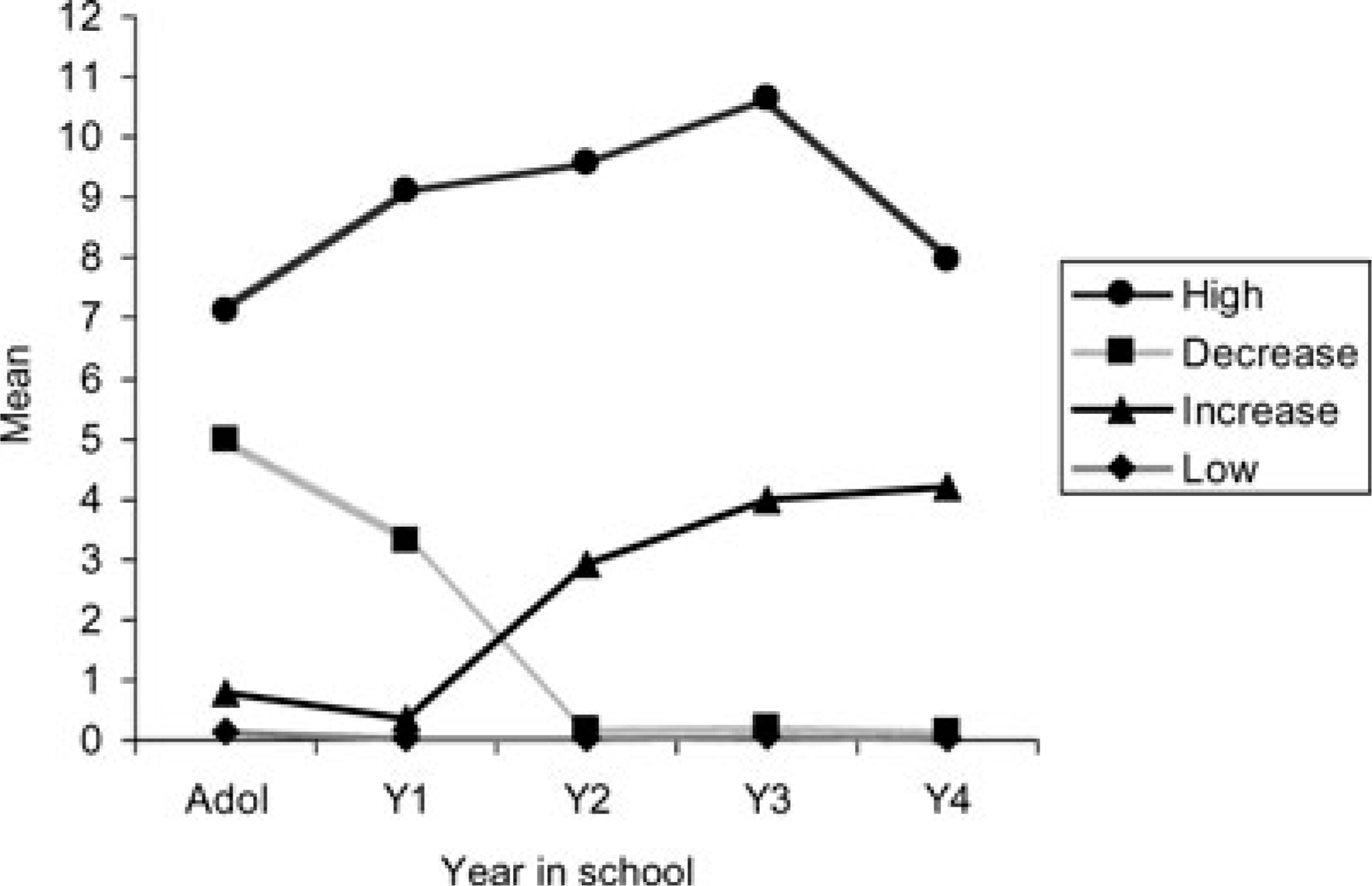
Mean frequency of sexual victimization across time by latent group.
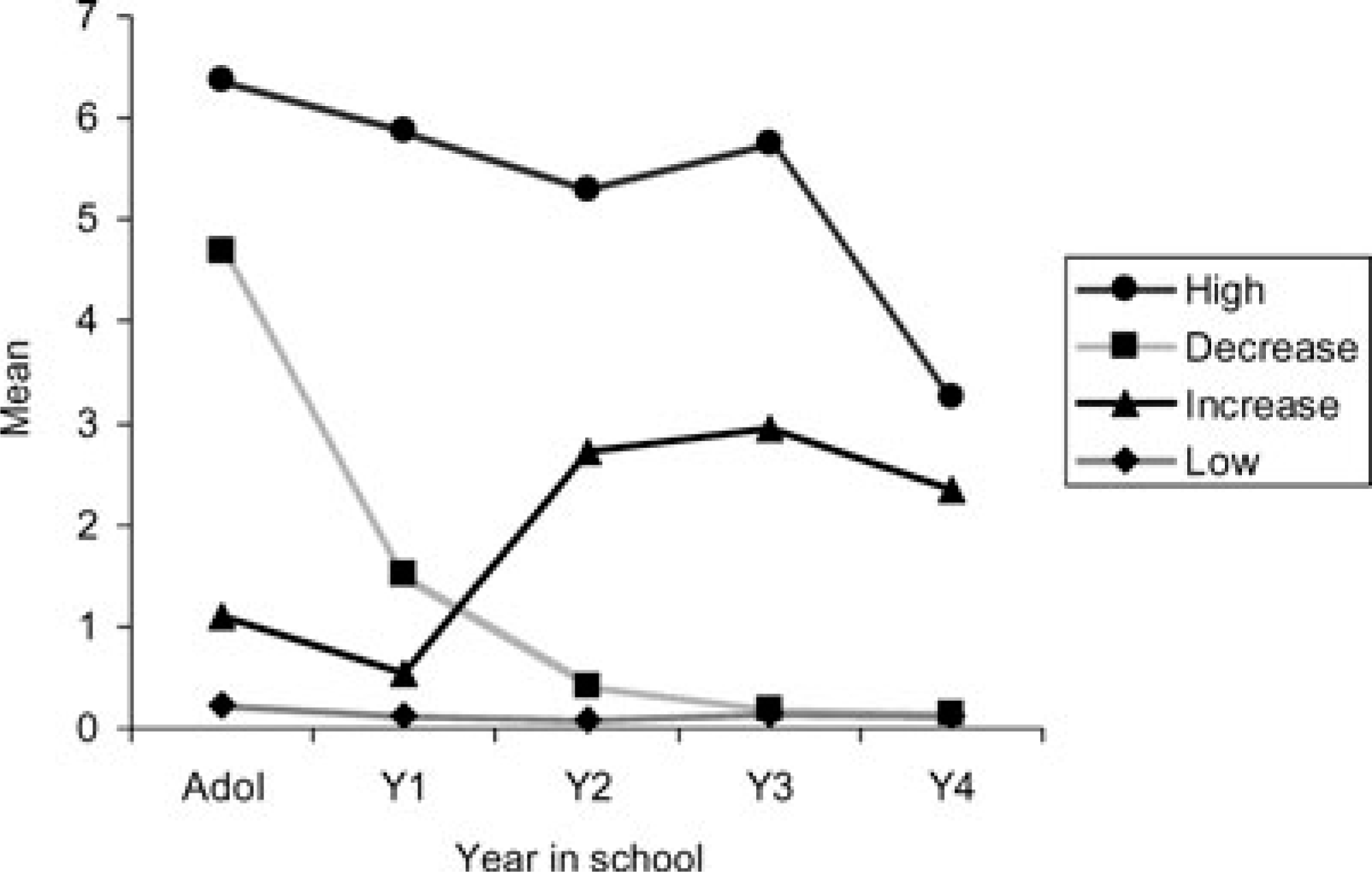
Mean frequency of physical victimization across time by latent group.
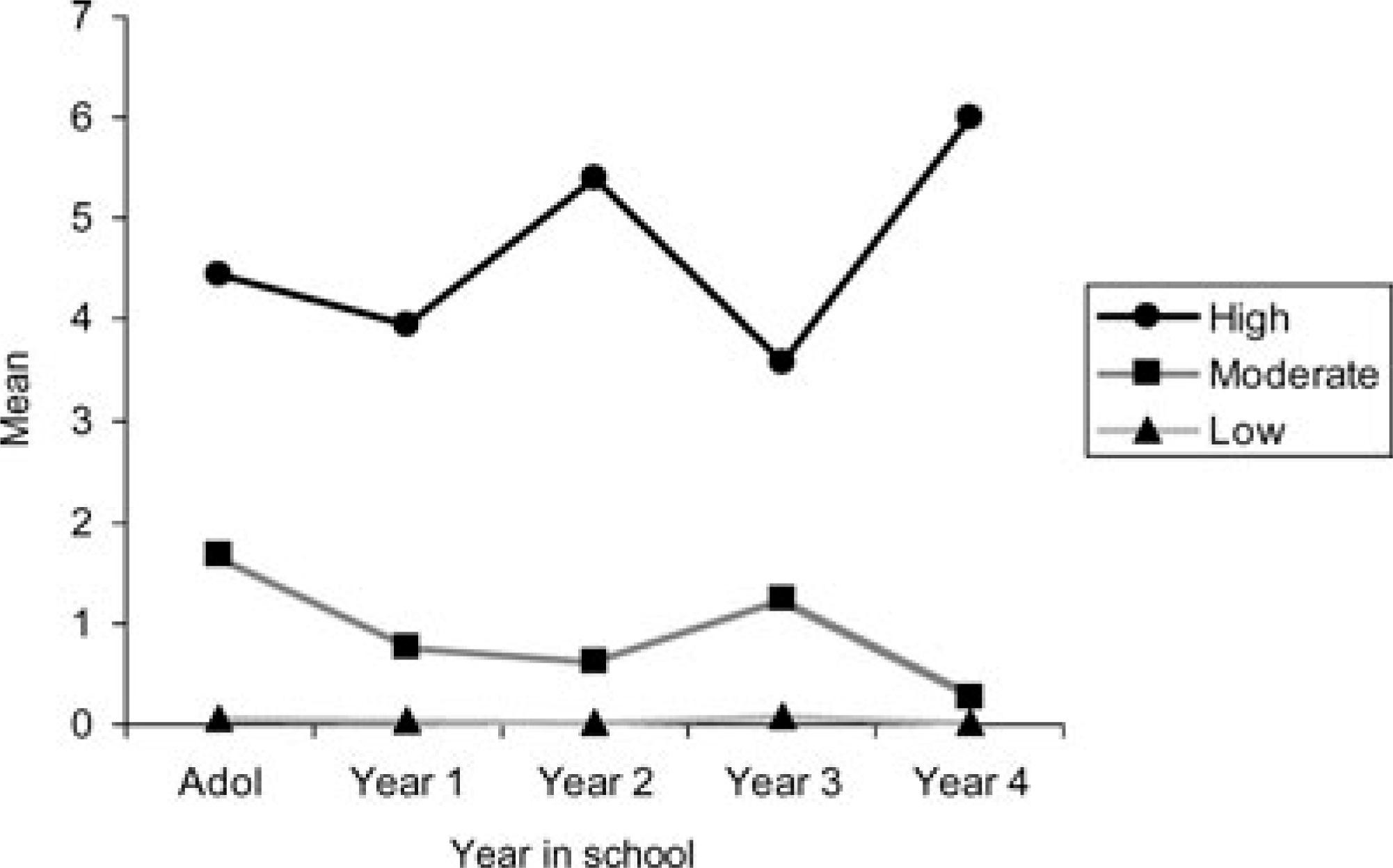
Sexual perpetration trajectories.
Covariation
Sexual and physical victimization often co-occur. As Smith et al. (2003) reported, a substantial number of women experience both sexual and physical victimization and these numbers decrease across time, from 26.1% in adolescence to 7.2% by the fourth year of college. Of the total sample, 63.5% of the women had experienced at least one act of physical aggression and one sexually coercive act from adolescence through the fourth year of college. Furthermore, they reported that victimization (physical or sexual) at one point in time increased the relative risk of victimization (physical or sexual) at the next time point and that women who experienced both sexual and physical victimization at one point in time were at increased risk to experience both again. However, these analyses focused only on the percentage of women experiencing at least one victimization. The frequency or severity of victimization was not examined. Thus, we (White, Swartout, & Gollehon, in preparation) are using latent class growth analysis (LCGA) with M-plus Version 5.1 (Muthén & Muthén, 2007), to address three questions. First, does the frequency of physical and sexual victimization over time coalesce into latent classes of victims? Second, if latent classes (defined by different trajectories) are found, what is the relationship between physical and sexual victimization trajectories within the sample? Finally, do negative childhood experiences differ on average among members of different physical and sexual victimization trajectories?
LCGA yielded class structures with four distinct and corresponding trajectories—low, increasing, decreasing, and high frequencies of sexual victimization. The four-class solution fit the data significantly better than other models (see Figure 1). High levels of sexual victimization during adolescence were reported by 5.6% of the sample and the mean frequency of victimization remained higher than the means for the other latent classes throughout the collegiate years (nonsignificant slope). Another 15.2% of the women reported a pattern of decline in mean frequency of victimization (significant negative slope), and another 9.7% reported an increase (significant positive slope). Approximately 69.5% began with a low frequency of victimization in adolescence that declined further during the collegiate years (significant negative slope). Furthermore, a follow-up analysis of variance (ANOVA) revealed significantly higher mean levels of sexual victimization for the high class than for the other three classes across time. A separate LCGA analysis revealed a similar four-group solution for physical victimization (see Figure 2: 7.6% was in the high class (nonsignificant slope), 18.7% in the declining class (significant negative slope)), 11.3% in the increasing class (significant positive slope), and 62.5% in the low class (nonsignificant slope). Overall, 48% of the sample could be assigned to both the low sexual victimization and low physical victimization trajectories, with only 1.7% assigned to the high sexual victimization and high physical victimization trajectories. The correlation between likelihood of being assigned to the same trajectories for physical and sexual victimization was .145, p < .001, n = 1,575.
Sexual and physical perpetration often co-occur. White and Smith (2009) reported evidence for the co-occurrence of sexual and physical perpetration. We found that the minority of men (10.9%) engage in both sexual and physical perpetration, with the percentage declining across time, from 9.2% in adolescence to 2.1% in the fourth year of college; follow-up analyses indicated that this decline was not due to perpetrators' withdrawal from the study. LCGA analyses using the mean frequency of sexually aggressive behaviors indicated three distinct trajectories (Swartout & White, 2009; see Figure 3). One group of men (75.9%) engaged in very little to no perpetration of sexual aggression (low group); the frequency of perpetration remained low and did not change across time for this group (no significant slope). Approximately 20% (20.3%) of the men engaged in a significantly higher frequency of sexual aggression than the low group across time, with no significant change in slope (moderate group). Finally, a third latent class was identified; this group (3.8%) consistently engaged in more frequent sexual aggression across time than the other two, with no significant change in slope. Similarly, three patterns were found for physical aggression: a low group (69.3%), a moderate group (24.8%), and a high group (5.9%). See Figure 4. Each group was consistent in the mean frequency of perpetration across time (i.e., no significant change in slope). The correlation between trajectories was .45, p < .001, n = 843, with 61.8% of the men classified on both the low physical and low sexual trajectories and 2.1% of men on both the high physical and high sexual trajectories.
The Effects of Childhood Experiences
Childhood experiences include childhood sexual abuse (CSA), witnessing domestic violence, and experiencing parental physical punishment. Some studies look at the effects of each of these separately and some combine them into an overall composite childhood victimization score. Humphrey and White (2000) showed that CSA increased the probability of women's sexual victimization, whereas Smith et al. (2003) showed that a composite measure of childhood victimization increased the likelihood of physical victimization, as well, as co-victimization experiences (Smith et al., 2003). Also, using a composite measure of childhood victimization, Graves, Sechrist, White, and Paradise (2005) found that childhood victimization increased the likelihood of women's perpetration of physical aggression toward a male partner in adolescence, but that this relationship was mediated by adolescent victimization by a male partner. Additionally, White et al. (in preparation) have found that each type of childhood experience is significantly related to an increased likelihood of assignment to the high sexual victimization and high physical victimization trajectories, but does not discriminate significantly between the remaining trajectories.
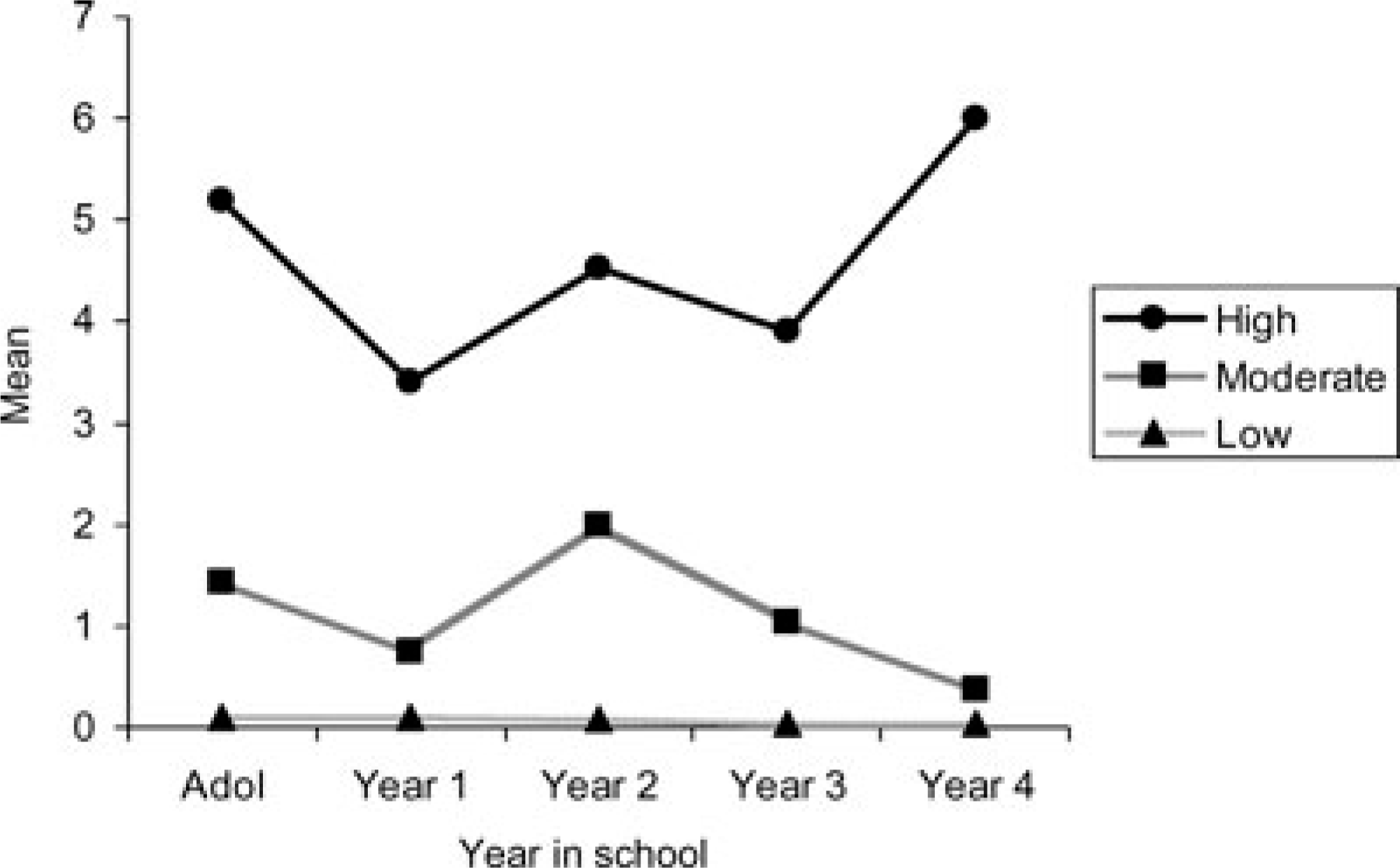
Physical perpetration trajectories.
For men, childhood experiences also affected the likelihood of sexual and physical perpetration (White & Smith, 2004; White & Smith, 2009). White and Smith (2004) found that the relative risk of CSA for adolescent sexual perpetration was 1.6; the comparable figure for witnessing domestic violence was 2.5 and for experiencing parental physical punishment, 1.9. However, they also found that, because parental physical punishment was the most common of the three forms of childhood experiences, it has an attributable risk of 19.9%, compared to 8.7% for witnessing domestic violence and 5.7% for CSA (attributable risk is an estimate of the percentage of cases that could be eliminated if the risk factor were eliminated). Similarly, White and Smith (2009) found that witnessing domestic violence and parental physical punishment, but not CA, increased the relative risk for physical perpetration, as well as co-perpetration (i.e., both physical and sexual perpetration), in adolescence. Those men with no childhood experiences of witnessing domestic violence, parental physical punishment, or CSA had relatively low rates of co-perpetration in adolescence (5.1%) and reported 0% perpetration in the fourth year of college. Comparable numbers for those with any type of childhood victimization declined from adolescence to the last year of college from a high of 18.4% to 7.5%. Additionally, Swartout and White (2009) found that the mean frequency of the various childhood experiences affected both the sexual and physical perpetration trajectories to which men were most likely to be assigned. For sexual aggression, the three trajectory groups had significantly different frequencies of witnessing domestic violence, experiencing parental physical punishment, and CSA, with the high group consistently having the highest mean level of perpetration and the low group consistently having the lowest mean. For physical aggression, men on the high trajectory had significantly higher mean frequencies for witnessing domestic violence, experiencing parental physical punishment, and CSA than either the low or moderate group, which were not significantly different from each other.
Within- and between-Sex Comparisons
Consideration of both within- and between-sex comparisons allows for identifying similarities and differences in women's and men's experiences. This can be illustrated by examining patterns of abusive childhood experiences and the impact of these experiences on the use and receipt of physical aggression in adolescent dating experiences. Whereas similar percentages of women and men experienced parental physical punishment (25.8% and 28.2%, respectively) and witnessed domestic violence (9.2% and 7.7%, respectively), significantly more women (18.7%) than men (5.0%) experienced CSA. Importantly, these childhood experiences differentially affected the use and receipt of physical aggression during adolescence. Although more women than men reported engaging in physical aggression, this difference was moderated by childhood experiences. More women (49.4%) reported directing at least one act of physical aggression (as measured by the Conflict Tactics Scale; Straus, 1979) toward a romantic partner than did men (29.8%), with similar percentages of women (42.9%) and men (45.1%) reporting being the target of at least one act of physical aggression (see Graves et al., 2005; White & Smith, 2009). However, the mean levels of each were differentially affected by childhood experiences for women and men. Results of structural equation modeling indicated that witnessing domestic violence contributed significantly to both girls and boys being involved in adolescent dating violence as victims and as perpetrators. However, only among boys did parental physical punishment significantly increase the likelihood of being a victim and a perpetrator of dating violence. Finally, CSA was associated with an increased likelihood of boys being the perpetrators of adolescent dating violence and with an increased likelihood of girls being the victims of adolescent dating violence. Thus, in spite of the common finding that girls report more acts of physical dating violence than boys, the differential impact of specific experiences with childhood violence on girls and boys indicates that dating violence is a gendered phenomenon, as discussed in more detail below.
BEYOND DATA: RELEVANT THEORETICAL ISSUES
This brief glimpse of results from my program of research raises the question of what theory would best integrate the array of phenomena observed. I suggest that such a theory should have at least four elements. The theory should be based on a more thorough conceptualization of gender as well as other dimensions of status and power (i.e., intersectionality; Warner, 2008). The theory should address issues of identity and development and should allow for integration of various types of experiences, such as the cooccurrence of multiple types of victimization and perpetration. Taken together, I suggest that a social ecological model be adopted, one in which gender is incorporated at all levels of the social ecology and identity is incorporated as a meta-construct. First, let me explain what I see as critical in an understanding of gender and of identity.
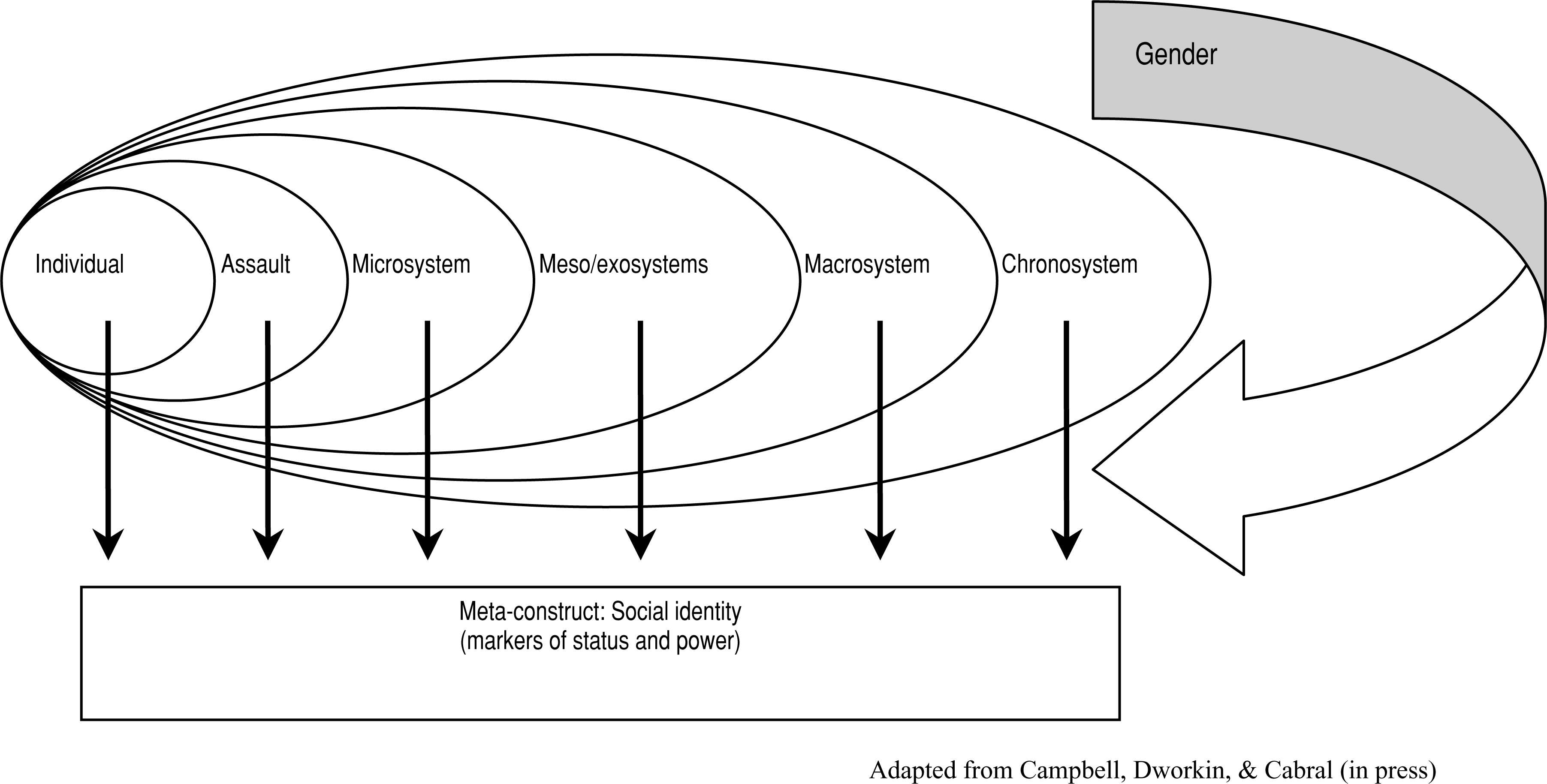
Proposed gender-centered social ecological model.
Theorizing Gender in the Context of Violence
The two prevailing theories in the IPV literature are family conflict theory and feminist theories. These are often pitted against each other (Archer, 2000). Family conflict theory argues for gender symmetry in partner violence because of the finding of no sex differences in percentages of women and men who report engaging in partner violence (called “mutual combat”). This perspective argues that gender norms are not important theoretically (Feld & Felson, 2008). Rather, other individual factors, such as dominance, are more important (Straus, 2008). In contrast, feminist theories focus on the role of patriarchy and societal gender inequality and principles of social learning theory to explain how sociocultural values are transmitted and learned at the individual level (Hunnicutt, in press). Feminist approaches predict gender differences, but also elaborate on how individual women may come to behave in gender-atypical ways (Graves et al., 2005; Smith, White, & Morroco, 2009; Swan & Snow, 2006). These theories, however, may not be contradictory (White, Kowalski, Lyndon, & Valentine, 2000). In part, the theorists may differ because of the samples they each tend to use—family theorists rely on community samples whereas feminists theorists rely on clinical or domestic violence shelter samples. The theories also differ in the measures they use: Family theorists use the Conflict Tactics Scale whereas feminist theorists tend to use clinical, emergency room, and criminal justice system data. They also differ in the breadth of experiences classified as partner violence and whether sexual victimization is included: Family theorists tend to focus only on physical aggression and injury and exclude sexual victimization. In contract, feminist theorists include a broad range of victimization that includes sexual victimization, power, control, and intimidation. However, the dispute between family conflict and feminist theorists is also due in large measure to the way in which gender is theorized (Anderson, 2005).
In a compelling analysis of how gender is (not) theorized in the IPV literature, Anderson (2005) draws clear distinctions between individualistic, interactionist, and structuralist assumptions and how they can be applied to a theory of gender and violence. Most notably, she demonstrates how family conflict theorists uncritically rely on individualistic assumptions whereas feminist theorists rely on the assumptions of the interactionist and structuralist approaches.
Both the individualistic approach and family conflict theories treat sex as an independent variable. Sex is an attribute of the person and, as such, “masculine” and “feminine” traits are assumed to be part of one's identity and “cause” aggression. Anderson (2005) notes that these assumptions foster stereotypic and essentialist views of women and men and reduce gender to the behavior of individuals. Furthermore, she argues that they neither offer an explanation as to why sex differences exist nor explain differences within groups of women or men.
Rather than assuming that gender causes aggression, the interactionist approach suggests that aggression produces gender. This approach assumes that gender is a characteristic of social interactions, that is, individuals “do gender.” Thus, gender is a product of social practices. Masculine and feminine attributes do not cause behavior; rather, behavior defines gender. It is assumed that, in certain social contexts such as one's peer group, behaviors may be a compensatory method to construct one's identity in response to a threat to that identity; for example, an adolescent boy may engage in a sexually aggressive behavior to avoid being called gay. Several lines of research suggest that the meaning of violence depends on the context as well as the sex of perpetrator and victim. Male violence is seen as instrumental whereas women's is seen as emotional (Campbell, 1993). Violence is a way to be a “real man,” to show authority (Totten, 2003). This is supported by the fact that violence is higher among men who lack other markers of masculinity (i.e., resources; Kaukinen, 2004; Totten, 2003). Violence also may be a way for women to defend femininity (a slap in a man's face when her virtue is questioned) or resist male domination (female victims are more likely to report a victimization by a man to the authorities than male victims are to report victimization by a female). In spite of the interactionist approach drawing attention to context, it does not fully account for variations in social interactions as a function of broader social inequalities. It is silent on the role of race, class, ethnicity, sexual orientation, gender identity, and other dimensions of power and control, dimensions that are central to structuralist assumptions.
The structural approach attends to the cultural context of gender inequality as well as recognizing the oftenracialized nature of violence (i.e., Black men are to be feared; Women of Color cannot be victims) and the conflation of gender with heterosexuality. The structural approach argues that gender is a social structure that shapes social institutions as well as identities and interactions. Gender is a system of stratification that is quite apparent in institutions such as dating/marriage, sports, the military, and the media. As such, women and men find themselves in unequal categories, and these gendered structures operate “independently of individual wishes or desires” (Anderson, 2005, p. 858) and yet shape one's identity. As a result, the opportunities and rewards for violence are different for women and men. Men are more likely to be situated in contexts of domination relative to women. Typically, men receive more instruction in the use of violence than women; although as women enter masculine domains, such as sports and the military, they too receive masculine instruction (Zurbriggen, 2008). Nevertheless, there are differential consequences for women and men: Women suffer greater long-term physical and psychological health impairment and reduced economic well-being, especially due to abuse (Coker, Williams, Follingstad, & Jordan, in press; Martin, Macy, & Young, in press). Masculine gender roles can lead to negative consequences for men as well, including greater risk for substance use, greater likelihood of engaging in risky behaviors, and greater victimization due to violent stranger crimes (Fisher et al., 2003; New, 2001; Lohan, 2007). However, the structuralist assumptions are oftentimes difficult to translate into empirically testable hypotheses. It is difficult to define a phenomenon that captures the various ways that gender can organize social relationships and it is difficult to find measures that assess the impact of gender on the organization of social relationships (see Anderson, 2007 and Schwartz, DeKeseredy, Tait, & Alvi, 2001 for notable exceptions).
A new model of adolescent dating violence could address these challenges by taking lessons from critical studies and feminist theories as well as research on intersectionality (see special 2008 issue of Sex Roles). The model would place gender and other indicators of power within social relations at the center; it would assume that gender is socially constructed, thereby challenging hegemonic masculinity and femininity. The model would address power in gender relations. While recognizing that power is fundamentally asymmetrical at the structural level, it would acknowledge that power is fluid within and between gender relations. Additionally, the model would address intersections of multiple lines of social differences, including race, class, sex, sexuality, and gender identity, which should be viewed not as categories but as relations of power and sites for negotiating agency (Fisher et al., 2003). Identities are intersectional rather than additive, that is, mutually constitutive (Bowleg, 2008). However, in adopting such a stance, the theory must be prepared to deal with issues of role incongruence; that is, individuals experience multiple, complex, and often contradictory forms of reality (implications for methodology are discussed below). The result may be “fragmented or fractured identities” (Przybylowicz, Hartsock, & McCullum, 1989). Thus, how does the adolescent girl make sense out of being raped by the football star she had so long dreamed of dating? Everybody likes her; she's so popular; he's considered “hot” and quite a catch. How does she make sense of this terrible thing that just happened? She wonders if she did something to “lead him on.” Does she dare to tell anyone? Who? And he's equally puzzled: Isn't this what all the girls want? Don't girls mean “yes” even if they say “no”? The guys were sure impressed by his “scoring.” What if she is Black and he is White or vice versa? (see Warshaw, 1994 for additional examples). What if a young man is assaulted by another male in the context of a romantic encounter? His experience will be different from that of a young woman because of their different situated realities.
Other markers of status and power can be theorized similarly at the individual, interactionist, and structural levels, but it is beyond the scope of this article to do so. Although I would suggest that theorizing gender in particular is most central to understanding dating violence, a complete model should incorporate all markers of status and power. Attention to identity may help address these complicated issues, a construct already mentioned multiple times in this article.
Identity
Within social psychology, several theories make a distinction between personal identity (based on attitudes, values, preferences) and social identity (based on group membership) and suggest that the salience of one or the other depends on the context. Self-categorization theory (Turner, 1999) proposes that people self-categorize on the basis of the meta-contrast principle: Which is more salient in a situation, the person or the group? Personal identity prevails when individual differences within the in-group are greater than in-group/out-group differences (i.e., group differences are not salient) whereas a social identity is adopted when in-group/out group distinctions are greater than within-group differences (i.e., group membership is salient). When people see themselves in terms of their social identity, they see themselves “more as interchangeable exemplars of their shared social category memberships than as unique persons defined by individual differences from others” (Turner & Oaks, 1989, p. 239). Thus, identity is context dependent. Recently, the impact of culture on identity has been receiving greater attention. Thorne and Nam (2007) have argued that one's sense of self is located in community life, and although personal identity is unique, it is also “contoured by macrocultural values and more proximally by people to whom we tell our own stories” (p. 120). Thus, theories of identity connect social structural variables (e.g., ethnicity, gender, class, etc.) to the intrapersonal level. Social structural factors become incorporated into, and are an integral part of, identity.
How might this view of social identity be assessed? Two recent lines of research offer suggestions, one from cultural psychology and one from intersectionality research.
Hammack (2008) adopts a cultural psychology framework and proposes a tripartite model of identity as having cognitive, social, and cultural components. He assesses identity via narratives and social process (or practice). An individual's narrative has two parts: the individual narrative, or personal story, and the master narrative, or the story/history of one's people. The resultant social identity comes about by telling our stories to others, as well as their reactions to these stories, and reveals the relationship between “master” narrative and personal narrative. Thus, the self and society become linked. This linkage “provides direct access to the process of social reproduction and change” in one's identity (p. 224). Telling our stories consolidates the psychological and social self. For example, Hammack uses Bamberg's (2004) study of “slut-bashing” among adolescent boys to illustrate that boys' gendered narratives both reproduced the social category of gender and contributed to the boys' personal identities. Similarly, Thorne and McLean (2003) found that gender was a master narrative in adolescents' descriptions of traumatic events. Whereas boys' stories were more likely to have a John Wayne theme (action and fortitude), girls' stories reflected Vulnerable (fear and sadness) and Florence Nightingale (concern for others) themes. Analyses of gay teenager narratives reflect historical changes in gay and lesbian identity development (Cohler & Hammack, 2007; Kitzinger & Wilkinson, 1995). Whereas narratives of gay teens that came of age in the 1980s and 1990s reflect themes of struggle and success, themes of emancipation are found in more recent narratives.
A second line of research on intersectionality also finds value in narratives. For example, Bowleg (2008, p. 318) describes how a young Black lesbian's multiple violence victimizations, by a White female romantic partner and Black men cannot be analyzed in terms of her being just female, just a lesbian, or just Black or even in terms of one type of victimization. Rather, the intersection of racism, sexism, and heterosexism is central to understanding her experiences. The young woman's quotation captures the sense of despair over the accumulation of victimization experiences related to her multiple, intersecting identities:
There came a point when I decided I would no longer date White Women because they attract too much negativity to me…[and]…so there's something about the disappointment that happened and the sadness that happens when I know I have put my life on the line for Black men.
Bowleg also reminds us of Deaux's (1993) early work on social identify, in which she emphasizes that multiple dimensions are the rule, not the exception, of identity.
ELEMENTS OF A NEW THEORY OF ADOLESCENT DATING VIOLENCE
In collaboration with Paige Smith, I have been working on a person-centered model of Gendered Adolescent Interpersonal Aggression (GAIA) that has its foundation in the social ecological model (we suggest dropping the phrase “adolescent dating violence” in favor of GAIA; see Smith et al., 2009). See Figure 5. We propose two additions to usual conceptualizations of the model. First, as elaborated below, we argue, in accord with Anderson's model, that gender exists at all levels of the social ecology. It is a system of stratification, a system of interactions, and is experienced at the individual level. Gender influences and is influenced by each level of the social ecology in an ongoing and dynamic interaction. Second, we argue that identity be added to the social ecological model as a meta-construct (defined below). We acknowledge that dimensions of social identity cannot be disentangled from one's lived experiences or from the various levels of one's social ecology. The model we propose is intersectional rather than additive (Bowleg, 2008; Warner, 2008). Incorporation of identity into the social ecological model offers a theoretical and empirical way to integrate across levels of the social ecology, deal with incongruent experiences, and acknowledge the ongoing social construction of the meaning of one's experience. The argument is that development and experiences are context-bound dynamic social processes.
The Social Ecological Model and Meta-Constructs
The social ecological model lends itself well to the ideas presented here. It is fundamentally developmental and acknowledges the embedded nature of experiences. The model, first proposed by Bronfenbrenner (1979), has been widely adopted in the field of psychology and human development (see McLaren & Hawe, 2005) as well as by the World Health Organization in its World Report on Violence and Health (Krug, Dahlberg, Mercy, Zwi, & Lozano, 2002). The model proposes that the social ecology of individuals consists of constantly interacting levels that are embedded in each other. These levels have been variously labeled, but are called typically the individual (intrapersonal), microsystem (or interpersonal or dyadic), situational, mesosystem (or social network), and the exosystem (or macrolevel, community, sociocultural, including norms and customs). The model has been heralded as a useful framework for understanding violence against women (Heise, 1998; Koss & Harvey, 1991; Neville & Heppner, 1999; White & Kowalski, 1998) and applied widely (see Grauerholz, 2000 for an application to revictimization; White & Post, 2003 for an application to rape; White et al., 2000 for an application to stalking; White, Kadlec, & Sechrist, 2005 for an application to adolescent male perpetration of sexual assault).
In the most recent iteration of the model, Campbell, Dworkin, and Cabral (in press) make several additional important contributions that influenced our thinking. First, they incorporate the chronosystem, which had been missing in previous models. This system consists of the ongoing changes and cumulative effects that occur over time as persons and their multiple environments interact. History of childhood victimization would be one example, in that it increases the likelihood of further victimization and its effects are amplified by further victimization. Second, they suggest that some variables are meta-constructs. A meta-construct transcends any one level and is the result of interactions across all levels of the social ecology. Race/ethnicity is one such example, that is, although usually treated as an individual-level variable, race/ethnicity cannot be fully understood without acknowledgement of sociocultural identity, calling for an analysis of racial/ethnic attitudes at the macro level (Neville & Heppner, 1999). Campbell et al. (in press) introduce self-blame as another example of a meta-construct. Although individual victims may blame themselves for a sexual assault, society's victim-blaming attitudes, as a macrolevel variable, contribute to self-blame at the individual level.
Smith and I propose that we adopt a social ecological model that acknowledges not only the embedded and interactive nature of all levels of the social ecology, but also recognizes the embedded nature of dominance hierarchies in all social relations. These dominance hierarchies, defined in Western culture, include gender, race/ethnicity, age, social class, sexual orientation, and other markers of status that help shape one's identity. By focusing on identity as an ongoing social construction, the role of identity as a meta-construct becomes evident. Influenced by Hammack (2008), we suggest that personal narratives of GAIA are shaped by master narratives regarding sexuality and violence associated with gender, race/ethnicity, class, sexual orientation, and other markers of status and power.
Our proposed model addresses all levels of the social ecology. We suggest that adolescents' subjective socioemotional interpretations of themselves (i.e., identity), their partner, and the situation are the key factors that influence GAIA. Extensive research in psychology and the cognitive sciences provides insight into how people process social information. Most revealing in this body of work is the power of past experiences and associated emotions in defining the meaning of the current situation (Baumeister, Vohs, DeWall, & Zhang, 2007). In dyadic social interactions, such as adolescent heterosexual interactions in which GAIA may occur, one's understanding of self, the other, and the relationship becomes paramount to understanding the outcome. Thus, to the extent that a database of memories, schemas, scripts, expectations, knowledge, and associated emotions shapes the dynamics of the processing of information, it becomes essential to examine the forces that create, contribute to, and provide constant feedback to this database. Our proposed person-centered model of GAIA is designed to do that. Our goal is to explicate factors at various levels of adolescents' social ecology, the sociocultural, social network, and dyadic levels and their interactions (i.e., the chronosystem) that provide input to the processing of information that increases the likelihood of aggressive behavior. How these gendered norms come to be instantiated or resisted provides the key to understanding why and how GAIA occurs. Smith et al. (2009) elaborate on the social networks and community levels of the model. Hence, I focus here on the dyadic and intrapersonal levels, remaining mindful of the impact of the social networks and community level.
Dyadic relationships. The many different heterosexual dyadic relationships that adolescents have are the locations where they have the opportunity to learn firsthand about companionship, sexuality, and love (Brown, 1999; Wolfe & Wekerle, 1997); practice gender rules; refine interpersonal skills; and evaluate and cultivate resources (status, love, service, goods, money, and information) needed for negotiating relationships (Laursen & Jensen-Campbell, 1999).
To the extent that adolescents have absorbed the messages of gender inequality from their social networks, many young women and young men enter romantic relationships with different motives, expectations, and behavioral scripts. See Underwood and Rosen (2009) for a discussion of the impact of peer culture on developing heterosexual romantic relationships in adolescence. A core issue is the gendered meaning of being in a relationship. Gendered norms traditionally associate masculinity with power and authority and femininity with interpersonal sensitivity and caring for others. This often leads girls to have a more interpersonal or relational orientation whereas boys' orientation is more independence and strength focused (Furman & Simon, 2006). Whereas for men this may involve themes of staying in control, for women themes involve dependence on the relationship (Lloyd, 1991). Girls are more likely to rely on their emerging sexuality to attract attention, which too often is modeled after images objectifying women, while boys may act out masculine images of power (Citrin, Roberts, & Fredrickson, 2004). These differences set a stage for conflicts over critical issues related to sexuality, intimacy, and authority.
The epidemiology of GAIA suggests that, after an initial experience of interpersonal aggression as victim or perpetrator, some young people reject it and move on whereas, for others, the aggression becomes more patterned and severe (data reviewed above; Lischick, 2005). However, more research is needed on the processes involved in how cessation of victimization or perpetration happens. In addition, and perhaps related, we need to know more about adolescents' help seeking for GAIA. Studies suggest that most young people, whether as a victim or a perpetrator, do not seek help. It is unlikely that young women or men recognize perpetration as a problem. Young men would be unlikely to acknowledge victimization by a female because of the challenges to the male role that such admission would incur. For females, although more likely than males to admit victimization, those who do are most likely to turn to their social networks, especially family and friends; however, the quality of the help often is not good (O'Campo, Shelley, & Jaycox, 2007; Ashley & Foushee, 2005). Unfortunately, for many young women romantic relationships may become destructive traps, especially when they feel they must put maintenance of the relationship above their own self-interests (Carey & Mongeau, 1996). Furthermore, women who are more emotionally committed to their partner are more likely to tolerate being victimized and are less likely to end an abusive relationship. These women also report more traditional attitudes toward women's roles, justify their abuse, and tend to romanticize relationships and love (Follingstad, Rutledge, McNeill-Hawkins, & Polek, 1999). Our model would further suggest that those young women and men who are not able to find good help, for either victimization or perpetration, when they need it and those for whom there are limited opportunities outside the relationship for personal fulfillment and esteem are most likely to become entrapped in destructive patterns of relationships.
Intrapersonal. An individual's biology, personality, attitudes, values, beliefs, emotions, and motivations are shaped over time by one's past history with various social networks as well as by (in)experience in previous dyadic relationships (i.e., the chronosystem). The extent to which these attributes influence GAIA ultimately depends on the degree to which cultural norms and the influence of social networks affect individual mental representations of self, partner, and the relationship and the emotions associated with each.
Theories of social information processing articulate how the past dynamically defines the current situation. These theories have been applied to habitual aggressive behavior (Huesmann, 1998), child abuse (Milner, 1993), sexual assault (Craig, 1990), and spouse abuse (Dutton & Holtzworth-Munroe, 1997). Essentially, the decision to be aggressive results from a series of prior decisions occurring at each stage of information processing, often occurring in milliseconds below the level of conscious awareness. A decision at each stage is the foundation for a decision at the next. Decisions at each stage are also influenced by one's affective state, which serves as a reminder of one's past and contributes to biased cognitions (Baumeister et al., 2007). Furthermore, maltreatment, particularly in early childhood, can result in neurological impairment in the ability to attend to and process social information and to regulate emotions (Diamond, 2001), thereby making theories of developmental traumatology (DeBellis, 2001) and developmental psychopathology (March & Susser, 2008) relevant to an analysis of GAIA. See Wolfe, Crooks, Chiodo, and Jaffe (2009) for a discussion of the impact of child maltreatment, bullying, and gender-based harassment on adolescent dating violence.
The first stage of social information processing includes the encoding of internal and external cues. One's history of witnessing and/or experiencing aggression, whether in the home, the peer group, or the media, increases the likelihood of biases in the interpretation of the current situation as one that is inviting or threatening. Given differential and gendered socialization histories, women and men come to interpret the same objective situation differently (Nurius, Norris, Young, Graham, & Gaylord, 2000). For example, one person, typically the male, may perceive a heterosexual interaction as an opportunity for sex, while the other, typically the female, sees it as an opportunity for companionship. Or, one person, typically the male, may judge a conflict over whether to have sex as a threat to his ego while the other person, the female, sees it as dangerous or a threat to the relationship. At the second stage of information processing, the interpretation of cues and attributions of cause and intent occur. For example, a male might interpret a tight shirt as a cue for sex or believe that a particular statement was a put-down. In the third stage, a clarification of goals occurs. One may decide “I need to show her who is boss” or “he can't get away with that” or “I want to save this relationship.” The fourth stage involves the identification of possible responses: “What are my options?” Here responses can take a “fight-or-flight” form. In the final two stages an action is selected and enacted (“What should I do?”), based on expected outcomes (“What will happen if I do this?”). Different emotions may propel women and men to see a different array of possible actions and outcomes. Whereas anger, revenge, and desire for control have been cited as motivations for both women and men, fear is a dominate motivator for women (Graham-Kevin & Archer, 2005) and shame for men (Harper, Austin, Cercone, & Arias, 2005). It is also possible that both women and men yield to the pressure to engage in sex, that is, consent to unwanted sex (Impett & Peplau, 2002).
Implications for Methods
Our model calls for longitudinal research that is both person centered (between-group comparisons, such as profile analysis, class analysis, and ANOVA) and variable centered (within person analyses, such as correlations, regression, structural equation modeling, growth curve modeling; Laursen & Hoff, 2006). Our model also recognizes the need for qualitative research, particularly the use of narratives (Warner, 2008; Hammack, 2008). Narrative analyses of identity, as discussed above, would permit examination of how various levels of the social ecology affect the phenomenal experience of self. The role of master narratives about rape and abuse, for example, would be revealed in victims' and perpetrators' personal understandings of what happened to them or what they did. Qualitative and quantitative analyses need not be mutually exclusive, although the positivistic assumptions of quantitative methods do not lend themselves well to the study of intersectionality (Bowleg, 2008). Rather, multimethod approaches are recommended (Creswell, 1998). Narrative analysis could be used to inform quantitative measures and methods and vice versa.
Some variables would need to be assessed at various levels of the social ecology. Serious attention to the social ecological model would result in greater interest in aggregatelevel variables (family, peer, neighborhood, culture). Thus, it would not be sufficient to assess one's sex, race/ethnicity, class, sexual orientation, or religion as just individual-level variables. It would be essential to also assess, for example, peer, family, and cultural attitudes about these various markers of identity as well as cultural practices related to these dimensions. For example, what services are available to victims of same sex abuse? Is the 18-year-old who recently joined the military unable to seek help for a samesex sexual assault because of the “don't ask, don't tell” policy? How do religious practices affect the seeking/offering of medical services to abuse victims? Do rape victims have to pay for their own rape examination kit at the emergency room? What are the features of a young person's neighborhood (unemployment level, literacy rate, crime, rate, etc.) or the school (availability of after school activities, counseling services, programs on healthy relationships, etc.) that might affect the likelihood of interpersonal aggression and responses to it?
Ultimately, it is probably not the particular research methods used but how the data are interpreted. Warner (2008) argues that careful attention must be paid to the choices/decisions a researcher makes at each step of the process, to be explicit about the why of our choices. Bowleg (2008) has stated, “Interpretation becomes one of the most substantial tools in the intersectionality researcher's methodological toolbox” (p. 312). She advocates for a “contextualized scientific method,” one in which “in addition to possessing the ability to analyze data systematically and thoroughly, the intersectionality analyst must be able to analyze research findings with a maro sociohistorical context that transcends the observed data” (p. 320).
There are numerous examples in the literature of research conducted at various levels of the social ecology that could inform future research endeavors. A few are offered here for illustrative purposes.
Dyadic level. Furman and Simon's (2006) examination of actor and partner effects is a good example of a study at the dyadic level. They observed the interactions of 65 adolescent heterosexual couples engaging in seven 6-minute discussions. Based on observational coding of the videotapes, individual “romantic interviews,” and questionnaires, they developed the actor-partner interdependence model. Essentially they concluded that views of self, of partner, and the interactions of these views predicted interactional style and dyadic positivity. Central to the current discussion was their finding of both gender differences and within-gender variability in interactional style and working models of romantic relationships. They suggested that
[b]ecause adolescent boys' friendships are characterized by less intimate disclosure than girls' friendships…, they may have less of a foundation for forming expectations and representations of this newly emerging type of intimate relationship … females think more about relationships … and may be more sensitive barometers of the quality of the relationships … for girls [there is] an interpersonal or relational orientation, whereas for boys independence and strength are often stressed (pp. 601-602)
Social network level. Research by Schwartz et al. (2001) offers an excellent example of study at the social network level within the framework of a feminist routine activities theory. Their project focused on male peer support and sexual assault on a college campus. Using survey methodology, they developed two indices of peer influence, informational support and attachment to abuse peers. Results indicated that abusive peers encourage men to assault dating partners. Schwartz et al.'s (2001) data also provided evidence that factors at the dyadic level, specifically men interacting with women who drink, influenced the likelihood of sexual assault.
Structural level. Anderson's (2007) study of marital dissolution in violent relationships conceptualizes gender at the structural level. She hypothesized that, because of gender inequalities, the connection between partner violence and divorce would be different for women and men. In particular, economic dependence (the operational definition of inequality in her study), type of partner violence (symmetrical [respondent reported that both partners were abusive] or asymmetrical [only partner was abusive]), and severity (minor or severe), as well as number of children, affected the odds of a woman or man leaving an abusive relationship. For women, each additional child increased the odds of divorce when the abuse was severe and asymmetrical whereas for men in severely abusive relationships the odds declined. However, for minor symmetrical abuse, economic independence increased the likelihood of relationship termination for women but decreased it for men; additionally, the presence of young children increased the likelihood of divorce for both women and men in relationships with minor symmetrical abuse (partners who reported being abusive but their partners were not were excluded from the analyses).
Research on men's health also provides examples of research at the structural/cultural level (Lohan, 2007) as does research on the relationship between health and socioeconomic status (Adler & Snibbe, 2003). See Fauth, Leventhal, and Brooks-Gunn (2008) for an example of how to assess neighborhood characteristics (collective efficacy, disorder, danger, social ties).
SUMMARY AND CONCLUSIONS
The existing evidence suggests that GAIA is an unfortunately common experience for young people. Dynamic cognitive processes, the mechanisms that bring the past into the present, help to guide and define adolescent behavior within a gendered context whereby they learn about themselves, the other, and their relative place in community. As young people negotiate myriad social relationships, social practices help shape identities; this process can reinforce or challenge cultural constructions for individuals as well as those in their social networks (Hammack, 2008). Gendered aggression is least likely to emerge when both young women and young men engage in practices that equalize the importance of each person's needs; do not objective or reify female or male sexuality; have a broad set of emotional and behavioral responses to sexuality, intimacy, and problem-solving; view aggression and coercive control as an unacceptable means to an end; live and learn in social networks that affirm gender equality and the worth and dignity of all individuals; and have access to a range of opportunities and resources for personal fulfillment and role enhancement. To paraphrase Kimmel and Messner (1998, p xvi), we may be born male(s) or female(s) but we become violent and aggressive men and women in a cultural context.
This article has argued that adolescent dating violence should be considered within a social ecological model that embeds the individual within the context of adolescent friendships and romantic relationships as well as family and other social institutions that shape a young person's sense of self. A social ecological model is proposed in which gender is considered a factor at each level of the social ecology. The model also proposes that identity be considered a meta-construct, affecting and being affected by all levels of the social ecology. In this regard, gender occupies a unique position in the model. Gender is an interactional and structural reality that transcends the individual while at the same time shaping personal identity, making it an intrapersonal-level variable as well.
This article also calls for a new approach to research. Although it would be beyond the scope of any individual project to encompass all the suggestions offered, I would argue that the proposed model presents a meta-theoretical framework within which individual projects could be considered. The research process, from question formulation to implementation to data interpretation, would be akin to using a telephoto lens to zoom in on one aspect of a picture, remaining fully cognizant of the entirety. Over the course of a program of research, a comprehensive understanding of the phenomenon of adolescent dating violence would emerge. Ultimately, the key lies in the interpretation of data within a socio historical context that recognizes the long history of gender inequalities, and how they intersect with other dimensions of identity, to shape the meanings, motives, and consequences of adolescent gendered aggression.