






Abstract
Although vocabulary plays an important role in literacy and content instruction, there is a paucity of research identifying effective methods for teaching vocabulary. One promising strategy is morphemic analysis, which involves breaking words into morphemes, the smallest meaningful parts of words, and teaching students the meanings of those parts. The current study used a multiple probe across morphemes experimental design to determine the effects of an intervention package, GO FASTER (
Reading is a vital skill for acquiring new knowledge both in and out of school (National Reading Panel [NRP], 2000). Vocabulary is particularly important as there is a strong relationship between vocabulary size and comprehension (Snow, Porche, Tabors, & Harris, 2007), which is the ultimate goal of reading. Other researchers have associated inadequate vocabulary development with academic failure (Becker, 1977) and strong vocabularies with academic success (Beck, McKeown, & Kucan, 2002).
Traditional methods of vocabulary development commonly involve either looking up unknown words in a dictionary or using context clues to derive meaning. Dictionary definitions tend to be overly complicated, often offering multiple meanings and limiting students’ abilities to decipher the correct definition (Beck et al., 2002). When students rely on context clues, they may struggle with the surrounding text and in the process become confused, frustrated, and defeated. This strategy is often ineffective. A more promising approach appears to be morphemic analysis.
The English language is made up of many morphemes, and each morpheme can be found in multiple words. Morphemes are the smallest parts of words that hold meaning. Morphemes can come in the form of prefixes, suffixes, or what many refer to as root words or bases. For example, the word unlikely has three morphemes, un, like, and ly, all of which contribute meaning the word.
Morphemic analysis is a strategy students can use to break unknown words into their smaller, meaningful parts. For example, the word transport is made of two morphemes, trans (i.e., “across” or “through”) and port (i.e., “move”). Students can use morphemic analysis to define transport as to move across or through. According to Nagy and Anderson (1984), the meanings of roughly 60 percent of words used in English in grades 4–9 may be predicted through analysis of their morphemes. Also, more than 82 percent of the terms in the “Academic Word List” (Coxhead, 2000) derive from Greek and Latin roots. Therefore, it seems that teaching morphemes and the morphemic analysis strategy holds promise as an efficient way to improve students’ vocabularies.
Students who acquire root word knowledge and familiarity can better read and understand more complex words (Ebbers & Denton, 2008; Nagy, Berninger, & Abbot, 2006). This is more efficient than teaching the definition of each individual term. With morphemic analysis, students can independently approximate definitions of novel words. Teaching morphemic analysis has been found to be effective in increasing high schoolers’ abilities to identify meanings of novel words in text (Carnine & Carnine, 2004; Graves & Hammond, 1980; Wysocki & Jenkins, 1987). This strategy has been more effective than textbook vocabulary instruction (Baumann, Edwards, Boland, Olejnik, & Kame'enui, 2003) and context–only vocabulary instruction (Baumann, 2005; Edwards, Font, Baumann, & Boland, 2004) and has been shown to be most effective with struggling students (Bowers, Kirby, & Deacon, 2010). One study (Baumann et al., 2003) compared the effects of morphemic and contextual analysis instruction to textbook vocabulary instruction on fifth–grade vocabulary knowledge. One group received a combination of contextual and strategy instruction, and the other group received direct instruction alone. Results revealed that the group receiving direct instruction was more successful at learning textbook vocabulary, whereas the group that learned to use morphemic and contextual analysis was better able to infer meanings of novel words. These results support the use of direct instruction, morphemic analysis, and contextual analysis to provide students with multiple strategies for learning new vocabulary.
Current research on morphemic analysis focuses on teaching students to be “word detectives.” For instance, Bowers and Kirby (2010) found significant effects on vocabulary after teaching students a “structured word inquiry approach” to break words apart into their morphemes. However, vocabulary growth was limited to words that contained morphemes that were either directly taught or morphemes related to those directly taught.
Two recent literature reviews on morphemic analysis and morphological instruction identified teaching morphology as a strategy that can lead to improvements in reading, spelling, writing, and oral language (Bowers, Kirby, & Deacon, 2010; Carlisle, 2010). Morphemic analysis is a strategy that allows for spelling generalization, unlike whole–word study (Dixon, 1991). Dixon (1991) draws the conclusion that when taught morphemic patterns in the context of spelling lessons, knowledge can transfer to written expression tasks. Because the research base on morphemic analysis is not well developed, it is interesting to consider the possibility of transfer from morpheme definition study to the spelling of morphemes. Additionally, the number of studies identified for each of these reviews further illustrates that this is a rather understudied area of research. The authors of each review agreed that morphological instruction is a promising area of literacy instruction that should be further investigated to identify the best methods of teaching the skills
Effective Instruction
Direct Teaching with Repeated Practice
Although many researchers agree that morphemic analysis is a worthwhile skill for vocabulary development, few studies outline how to teach students this skill. Given that direct instruction is recommended for teaching word study, vocabulary, and comprehension (Roberts, Torgesen, Boardman, & Scammacca, 2008), it seems to be a viable approach for teaching morphemic analysis. Direct instruction in word study involves directly showing students how to segment words into known word parts, definitions of each word part, letter patterns, and structural features of words (Roberts et al., 2008). Direct instruction of vocabulary may involve (1) giving students vocabulary definitions, examples, and nonexamples; and (2) using graphic organizers for each word.
A component typically included in direct instruction is repeated practice, which according to Heward (2003), is important for helping students develop fluency and will likely contribute to students’ comprehension. These multiple exposures to words help students to better understand and comprehend their meanings (Stahl & Fairbanks, 1986). Repetition is especially important for students with disabilities (Cooper, Heron, & Heward, 2007; Swanson & Hoskyn, 1998; Swanson & Hoskyn, 2001; Swanson & Sachse–Lee, 2000) as they may need up to 40 exposures to a new word in order to learn it (McCormick, 1999).
Self–Monitoring
Another research–based practice is self–monitoring, which has been shown to be effective for improving a variety of skills, including on–task behavior (e.g., Wolfe, Heron, & Goddard, 2000) and academic skills (Gunter, Miller, & Venn, 2003; Kasper–Ferguson & Moxley, 2002). One commonly used self–monitoring strategy is self–graphing, which can be easily adapted to many classroom activities and is recommended for addressing student motivation (Moxley, 2007).
Graphic Organizers
Graphic organizers are visual displays (Wolgemuth, Trujillo, Cobb, and Alwell, 2007) or “graphic arrangements of words, phrases, and sentences that can include graphic elements such as arrows and boxes” (Ives, 2007, p. 111) and are often used in classrooms to supplement various types of instruction. Wolgemuth et al. (2007) found that visual displays were effective for improving comprehension, content learning, and problem solving of youth with disabilities, especially when the students completed them and when accompanied by other effective strategies, such as direct instruction, praise, and guided practice. Fore, Boon, and Lowrie (2007) compared a definition–based model of vocabulary instruction to a concept model, in which students learned new vocabulary by using a graphic organizer. Results showed that students were better able to match the words to their definitions on weekly quizzes after using concept models.
Because there is little experimental research on the direct teaching of morphemes/roots, this study investigated the effects of teaching technique, GO FASTER, a researcher–developed package that included elements of effective instruction (i.e., direct teaching, repeated practice, self–graphing, graphic organizers) and emphasis on morphemic analysis. Specifically, this package was designed to teach morphemes with a graphic organizer (GO) and a flashcard fluency procedure, FASTER (Flashcards Added up and Self–graphed to Track progress; Errors Reviewed).
Reed's (2008) analysis of morphology–based interventions found that only three of the studies in the analysis included participants with reading deficits, and no research on morphological interventions has been done with students in grades 9–12. Given the increased reading demands in high school, it is important to identify effective teaching methods that target this understudied population. Thus, this research included high school students with documented disabilities and addressed the following research questions:
What are the effects of GO FASTER training on morpheme definition fluency? Will students apply newly acquired morpheme definitions to state correct definitions of unknown words? Will students maintain their fluency over time? Will students generalize morpheme knowledge to the spelling of targeted morphemes? What are teachers’ and students’ reported opinions of this intervention?
Method
Participants and Setting
The participants in this study included three female high school students identified with high–incidence disabilities. A high school special education (i.e., resource) English teacher volunteered to participate, and consent forms were sent home with all of her students. Three students returned signed consent forms. These participants had reading objectives in their individualized education programs (IEPs) and participated in “learning center” (i.e., study hall for students with IEPs) for 50 minutes each day. We used pseudonyms in place of students’ names.
Na–Chae was a 15–year–old African American sophomore with a specific learning disability who also received speech/language services. Her full–scale IQ score, as measured by the Weschler Intelligence Scale for Children (WISC–III), was 77. Her standard scores on the Weschler Individual Achievement Test (WIAT–2) were 75 and 86 for Word Reading and Reading Comprehension, respectively.
Rachel was a 16–year–old white, non–Hispanic sophomore with a specific learning disability. Her WISC–III full–scale IQ was 76. Her standard scores on the WIAT–2 were 76 and 89 for Word Reading and Reading Comprehension, respectively.
Savannah was an 18–year–old white, non–Hispanic senior with attention deficit/hyperactivity disorder who also received speech/language services. Her full–scale IQ score on the WISC–III was 84. Her standard scores on the WIAT–2 were 80 and 79 for Word Reading and Reading Comprehension, respectively.
The study took place in a suburban public high school outside of a large Midwestern city. Intervention sessions occurred in a room in the library. The room contained one small table with two chairs, 10 student desks with chairs, and bookshelves along the walls. One wall was made entirely of windows that looked out into the library. When meeting with the researcher, the students sat with their back to the windows to minimize distractions.
Dependent Measures
The primary dependent variable was the number of correctly stated morpheme definitions in 30 seconds. Three decks of 15 morphemes were written on flashcards, the morpheme on one side and the definition on the other. Three copies of each morpheme were included in each deck so that each deck consisted of 45 cards, reducing the likelihood of imposing an artificial ceiling for the 30–second timings. Before each timing, cards were shuffled for unpredictable presentation order. Participants were instructed to look at the morpheme printed on the first card, state the definition (or say “pass” if they did not know the definition), and place the card on the table to reveal the next card. They repeated this process as many times as they could in 30 seconds.
The interventionist timed and observed each student's probes and recorded responses as either correct or incorrect on a data sheet as the student proceeded through the cards. A response was recorded as correct only if it matched exactly the definition provided on the card.
Experimental Design
A multiple probe across morpheme decks design was used. Three morpheme decks were taught, and each deck included 15 morphemes (repeated three times to yield a 45–card deck). Participants received a minimum of three baseline probes, and the morpheme deck with the most stable baseline went into intervention first. If baselines were identical, the participants’ English teacher was asked to recommend which deck to begin with (based on which morphemes most supported vocabulary she was targeting in class). When participants met mastery criterion of correctly identifying 25 morphemes in 30 seconds for two consecutive sessions, that deck was moved into the maintenance condition, and intervention on the next morpheme deck began.
Because there are no established norms for morpheme definition fluency, we estimated an appropriate goal by first examining Kubina's (2002) performance standards of approximately 100 words per minute. Because our timings were 30 seconds, we divided that in half and then further reduced the number to take into account that (1) many of the morpheme definitions consisted of more than one word, (2) the students had never participated in this type of fluency drill, and (3) this was a higher level skill than simply reading words. Each intervention session lasted approximately 15 minutes, so each student received approximately 1 hour of instruction per deck, or 3 hours total.
Procedures
Prebaseline
Before collecting baseline data, the interventionist probed students’ current morpheme knowledge with 100 morphemes. Morphemes were collected from the books Greek and Latin Roots: Keys to Building Vocabulary (Rasinski, Padak, & Newton, 2008), Words on the Vine (Vurnakes, 1998), and Red Hot Root Words (Draze, 2005). Given that more than 45 unknown morphemes were identified for each student, teachers were consulted about the 45 morphemes most commonly used in class, and those were targeted for intervention. Students did not have identical lists of targeted morphemes, as lists were made up of 45 morphemes that were unknown to each individual.
Baseline
During baseline, students continued to participate in their regular English classes where vocabulary instruction consisted of students looking up dictionary definitions and discussing words as they appeared in the novels they were reading in class. Students were tested on this vocabulary knowledge on multiple–choice and matching unit tests. Each baseline session consisted of the student participating in a 30–second timing with any 45–card deck that was still in baseline. Students did not receive any feedback about the accuracy of their responses.
Intervention Phase 1: Graphic Organizers
The first phase of the intervention consisted of a scripted teaching procedure with graphic organizers to help students learn the meanings of the morphemes. Specifically, each of the first three intervention sessions consisted of the interventionist introducing five morphemes using a graphic organizer (see Figure 1) on which students recorded the target morpheme, its definition, two sample words containing the morpheme, definitions for the sample words, and a sentence that included one of the sample words. Additionally, the flashcard containing the morpheme was placed next to the organizer. All sections of the graphic organizer were dictated to the participant following the script, using a completed graphic organizer as a model. Upon completion of each graphic organizer, students read aloud the morpheme, its definition, both sample words, and the sample sentence. The interventionist removed the graphic organizer, pointed to the flashcard, and asked for the definition. After completing graphic organizers for the session's five target morphemes, all five flashcards from that session were placed in front of the student. The researcher then pointed to each card, in random order, and directed the student to state the definition. If the student made an incorrect response, corrective feedback was delivered (i.e., she was told the correct definition and was directed to repeat it).
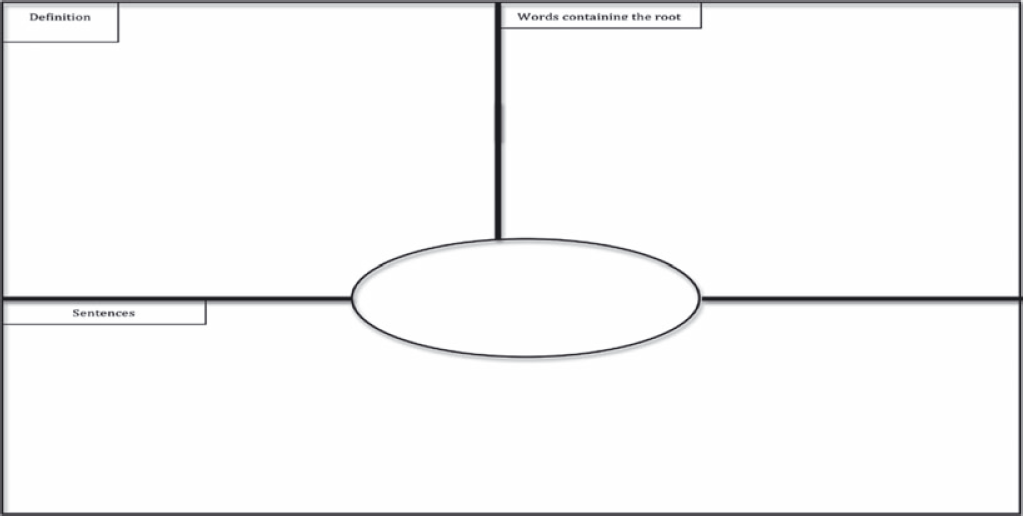
Sample graphic organizer used during the first phase of intervention.
Each instructional session ended with two 30–second timings with all 45 flashcards. Beginning with session 2, the interventionist reminded the student of her previous score to encourage a better performance. At the conclusion of each 30–second timing, the interventionist told the participant the number of corrects and incorrects (“Flashcards Added up”), and participants reviewed the incorrect morphemes before the next timing (“Errors Reviewed”). After two timings, the participant graphed (“Self–graphed to Track progress”) the highest number of corrects on the “30–second timings” graph. Incorrects (including skipped cards) for that deck were also graphed. The interventionist discussed with the participants their previous scores and how many more were needed to meet the aim (“GO FASTER!”).
The fourth intervention session consisted of just the “FASTER” portion of the intervention. That is, the students participated in two 30–second timings and self–graphed their performance.
Intervention Phase 2: Sprint Training
If the participant did not reach mastery criteria (i.e., 25 corrects/30 seconds for two consecutive sessions) after four sessions, sprint training was implemented. Sprint sessions consisted of 15–second timings with 15 flashcards (one of each of the 15 morphemes in the target deck). The interventionist explicitly reviewed all 15 morphemes in the current deck by stating the morpheme and its definition and asking the student to state the definition while looking at the card. After reviewing each morpheme, the student began 15–second sprint timings until she correctly identified all 15 morpheme definitions for three consecutive “sprints.” The student then graphed each of her sprints. After the sprints, the participant completed two 30–second timings, self–graphing the best of the two. Upon meeting the aim of 25 corrects in 30 seconds, the deck was moved into the maintenance condition. This process was repeated for all three decks of morphemes. Once aim was met for all three decks, intervention concluded.
Generalization
A pre– and posttest for generalization was administered; 45 untaught words were dictated to the students, each containing a morpheme targeted during intervention. Students were asked to spell each word and then state its definition. For example, one of the targeted morphemes was bio; its generalization word was biography, a word not taught during intervention.
Spelling of the dictated words was scored in two different ways. Scores were given for the correct spelling of the targeted morphemes within the dictated words and for the correct spelling of the entire dictated word. Spelling was included as a generalization task in order to examine whether repeated practice with using morphemes and their definitions would contribute to an increase in spelling accuracy of targeted morphemes, in absence of direct instruction in spelling.
Each student–generated definition was also evaluated and assigned two points if the definition was accurate and included the morpheme definition. It was assigned only one point if the definition included the morpheme definition but did not accurately define the word. It was assigned no points if the morpheme definition was not provided.
Maintenance
The maintenance condition was similar to baseline conditions, and morpheme decks moved into this condition once they were mastered. Due to student absences and the school calendar, maintenance data were collected on different schedules: 2 and 4 weeks (Rachel and Savannah) and 3 and 6 weeks (Na–Chae) after intervention was completed for each deck.
Procedural Integrity
To ensure the interventionist's consistent implementation of procedures, the fourth author observed 38 percent of the sessions for Rachel and Na–Chae and 31 percent of the sessions for Savannah. The observer used a checklist of intervention steps and recorded whether the interventionist followed each of them. Procedural integrity scores were 100 percent for all sessions.
Interobserver Agreement
An item–by–item analysis was used to score interobserver agreement (IOA). The fourth author collected data on the dependent variable for 38 percent of the sessions for Rachel and Na–Chae and 31 percent of the sessions for Savannah. These data were compared to the interventionist's data. Total agreements were divided by the total of agreements plus disagreements and multiplied by 100. Mean IOA was 99 percent with scores ranging from 97 percent to 100 percent.
Generalization IOA of correctly defined untaught words (containing targeted morphemes) for Na–Chae, Rachel, and Savannah was 98 percent, 98 percent, and 99 percent respectively. Levels of IOA were similar for the pre– and posttest.
Social Validity
To measure consumer satisfaction of GO FASTER training, a questionnaire was given to the participants’ English teacher and the speech–language pathologist, as well as to the participants themselves. The Likert–scale questionnaire consisted of seven statements designed to evaluate consumers’ perceptions of the goals, procedures, and effects of GO FASTER training. The following are sample items from the teacher questionnaire: (1) Based on my observations of the teaching sessions, I will use methods similar to what I observed in the future, and (2) I feel students will be better readers, spellers, and writers with this knowledge. The following are sample items from student questionnaire: (1) Learning about morphemes is important for learning new vocabulary, and (2) I feel this intervention has helped me improve my vocabulary.
Results
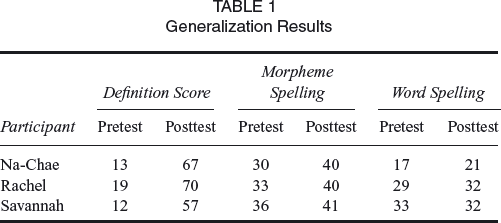
Results are presented in Figures 2–4 and in Table 1.
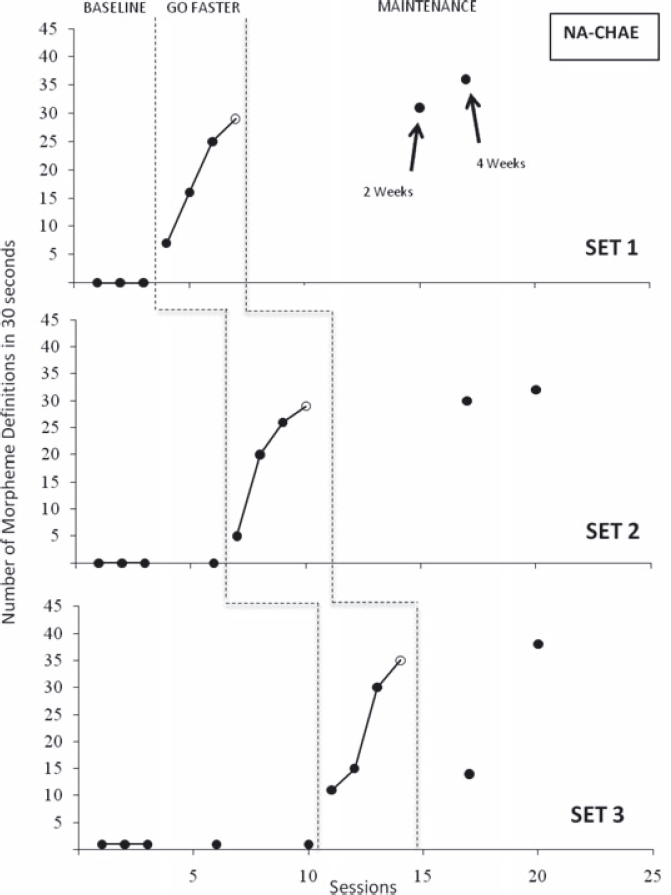
Number of morpheme definitions identified by Na–Chae in 30 seconds.
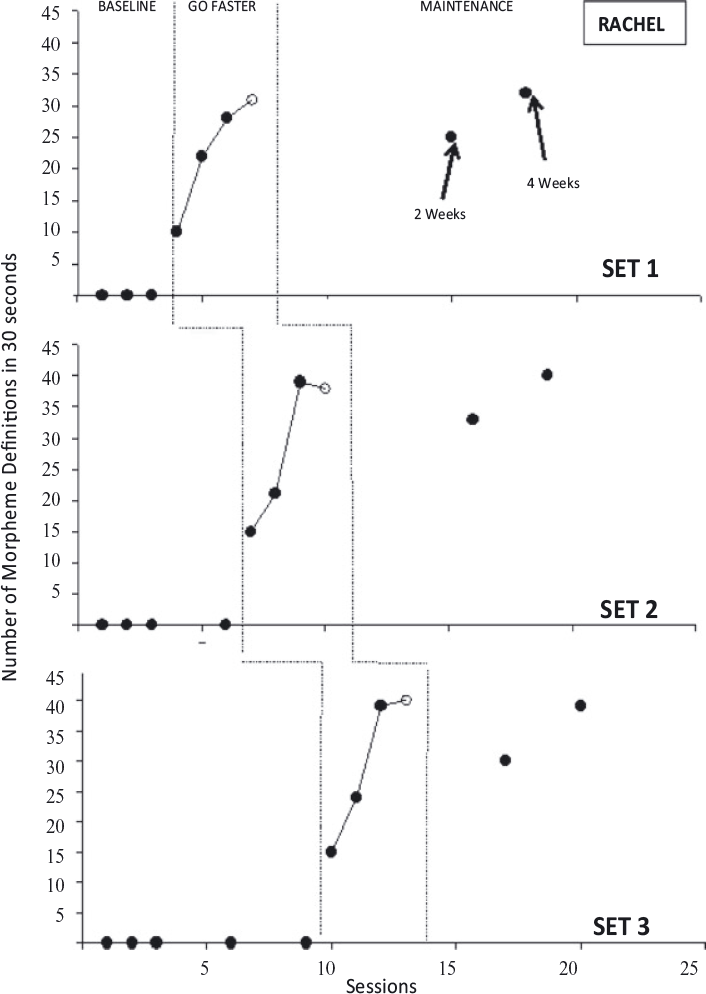
Number of morpheme definitions identified by Rachel in 30 seconds.
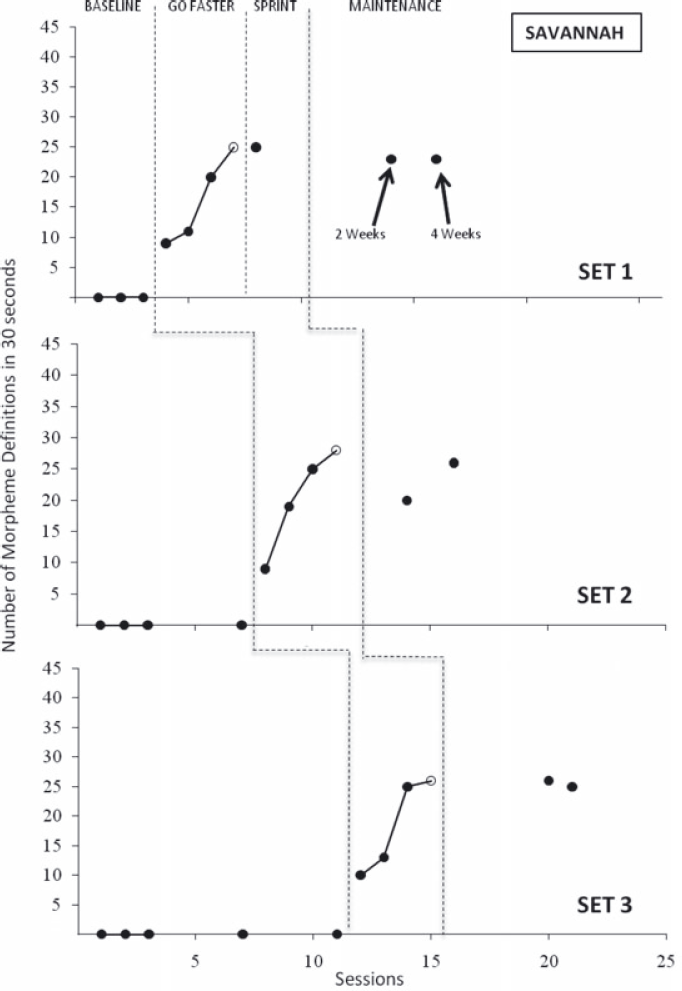
Number of morpheme definitions identified by Savannah in 30 seconds.
Generalization Results
Na–Chae
Figure 2 shows NaChae's morpheme fluency scores across decks. During baseline, NaChae was not able to state any definitions for morphemes in deck one and two and was able to state one correct for deck three. Na–Chae's mean scores for intervention were 19.3 (range: 7–29) for deck one, 20.0 (range: 5–29) for deck two, and 22.8 (range 11–35) for deck three. Na–Chae was able to meet aim for each deck without sprint training. Na–Chae's results show an immediate increase in all word decks once intervention was introduced. Trends continued to ascend throughout intervention.
Two– and four–week maintenance checks were 31 and 36 for deck one, 30 and 32 for deck two, and 14 and 38 for deck three. Maintenance data continued to trend upwards, surpassing intervention levels, with the exception of the 2–week maintenance check in deck three; that data point was still higher than any point in baseline.
Na–Chae's scores on generalization pre– and posttests are presented in Table 1. Of the 45 words presented in the pre– and posttests, she improved (i.e., increased from 0 to 1, 0 to 2, or 1 to 2) on 38. On the posttest, there were only four items that were scored as “0,” compared to 32 zeros on the pretest. Na–Chae's spelling of the untaught words containing taught morphemes also improved following intervention, although not as dramatically as improvements noticed in the definition measure.
Rachel
Figure 3 shows Rachel's morpheme fluency scores across decks. During baseline, she did not state any correct morpheme definitions for any of the decks. During intervention, Rachel's mean scores were 22.8 (range: 10–31) for deck one, 28.3 (range: 15–39) for deck two, and 29.8 (range: 15–40) for deck three. Rachel met aim within 4 days for each deck and thus did not need sprint training. Rachel's results show a clear upward trend immediately upon introduction of the intervention. There is an especially noticeable improvement in performance between the second and third intervention sessions for morpheme decks two and three, and scores level off by session four.
Rachel's 3– and 6–week maintenance scores were 25 and 32 for deck one, 33 and 40 for deck two, and 30 and 39 for deck three. In maintenance, initial scores fall just below the final intervention data point, but jump at the 4–week maintenance check.
Rachel's generalization pre– and posttest results are presented in Table 1. Of the 45 words, she improved (i.e., increased from 0 to 1, 0 to 2, or 1 to 2) on 42. On the posttest, there was only one item that was scored as “0,” compared to 25 zeros on the pretest. Rachel's spelling of the untaught words containing taught morphemes also improved following intervention, again not as dramatically as improvements noticed in the definition measure.
Savannah
Figure 4 shows Savannah's morpheme fluency scores across decks. During baseline, she did not state any correct morpheme definitions for any of the decks. Her mean intervention scores were 18.0 (range: 9–26) for deck one, 21.3 (range: 9–32) for deck two, and 18.5 (range 10–26) for deck three. Savannah needed one sprint training session to meet aim (for deck one). Results show a steady increasing trend during intervention.
Savannah's 3– and 6–week maintenance scores were 23 and 26 for deck one, 20 and 26 for deck two, and 26 and 25 for deck three. Maintenance data were comparable to the final intervention data points in all decks with the exception of the 2–week maintenance check in deck two, which was slightly lower but noticeably higher than baseline.
Savannah's generalization pre– and posttest results are presented in Table 1. Of the 45 words tested, she improved (i.e., increased from 0 to 1, 0 to 2, or 1 to 2) on 32. On the posttest, there were only seven items that were scored as “0,” compared to 34 zeros on the pretest. Spelling measures improved slightly for morphemes and decreased by one for word spelling.
Social Validity
The students’ English teacher and the speech/language pathologist both indicated, by selecting “agree” or “somewhat agree” for all seven items on the social validity questionnaire, that (1) the intervention goals and procedures were appropriate, (2) the intervention itself was effective, and (3) students’ vocabularies improved. The English teacher commented, “I was amazed at how interested and motivated the students were to learn vocabulary! The graphic organizer was a great visual for the kids. The repetition seemed to be very effective. The student I observed really learned!” Additionally, both she and the speech/language pathologist requested copies of the materials in order to incorporate the intervention into instruction.
Results of participant consumer satisfaction questionnaires were also positive. All agreed that vocabulary was important for their learning. Na–Chae and Rachel reported they would use flashcards in the future and would like for their teachers to use graphic organizers. Savannah reported that she did not plan to use flashcards in the future as she is a senior and is not going on to college.
Anecdotally, Rachel and Na–Chae commented throughout the study on the various ways they were using this knowledge each day in school (e.g., using the number–related terms in math class), at home (e.g., Na–Chae reported using spacious in a conversation with her mother), and at work (e.g., Rachel reported using new words in conversations with her coworkers).
Discussion
The purpose of this study was to investigate the effects of GO FASTER on the acquisition, maintenance, and generalization of morpheme definitions for high school students with high–incidence disabilities. Results indicated that this intervention was an effective method for increasing students’ morpheme definition fluency. Additionally, students maintained their gains and generalized morpheme definitions enabling them to define and use untaught words. Similar to Katz and Carlisle's (2009) case study outcomes, we found that students benefit from instruction targeting morphemes. The results also support research on the use of graphic organizers (Fore, Boon, & Lowrie, 2007; Wolgemuth et al., 2007) and self–graphing (Gunter et al., 2003; Kasper–Ferguson & Moxley, 2002; Moxley, 2007) to acquire academic skills.
Although all students reached predetermined fluency goals for morpheme definition fluency, it is worth noting one anomaly. In word deck one, Savannah did not reach the aim of 25 corrects per 30 seconds until the fourth intervention session; thus, sprint training was implemented and she met mastery during the fifth session. During this deck, Savannah missed 3 days between sessions and later missed 2 days following a weekend. These absences may have interfered with her momentum. In contrast, for her second and third decks, where school absences were not a factor, she was able to meet the predetermined aim of 25 words correct per 30–second mastery during her third and fourth sessions, thereby never needing sprint training to meet the mastery criterion.
Na–Chae's 2–week maintenance score in deck three also warrants explanation. Her 2–week maintenance score of 14 was well below her previous intervention high of 35. Na–Chae often focused on making sure she did not “pass” on any cards or get any incorrect; on the day of her maintenance score of 14, she did not make any errors, but she did flip through the cards very slowly. At her 4–week maintenance check, she was reminded of her previous score of 14 and appeared disappointed. Her next and final maintenance score was 38. With the exception of the one lower maintenance data point, all other maintenance data points were higher than any in intervention.
All students showed that after mastering morpheme definitions, they could apply this knowledge to untaught words to formulate accurate word definitions. However, although learning common morphemes appeared to be an effective method for improving students’ abilities to define new words containing targeted morphemes, there seemed to be no significant improvement in their spelling of words containing those morphemes. Na–Chae and Rachel did slightly better on the spelling measure from pre– to posttest, and Savannah did slightly worse, albeit only by one word. It is not surprising that improvements in spelling were minimal given that the spelling patterns were never targeted in instruction. Given that such morphemes appear frequently, focusing on morpheme acquisition may be one way for teachers to maximize efficiency in vocabulary instruction, but more research is needed to identify ways to help students generalize morpheme knowledge to spelling.
Limitations
Despite the robust findings, several limitations must be discussed. First, the generalization measure was somewhat limited and subjective. A whole–word spelling measure is likely not a valid measure of generalization for this study. In retrospect, it is not surprising that the participants’ whole–word spelling scores did not improve. And had they improved, we would not be able to attribute that improvement to instruction in morphology when orthographical and phonological awareness also contribute to accurate spelling. Finally, the measure included open–ended items, and we could not anticipate the full range of student responses. We attempted to minimize this limitation by having a second scorer evaluate students’ responses, and fortunately, we were able to reach a high level of agreement between scorers.
It is likely that the fluency aim of 25 correctly identified morpheme definitions in 30 seconds was set too low. Existing literature does not provide clear fluency aims for this skill and at this level; therefore, we wanted to err on the side of student success. Also, given that some of the correct responses consisted of more than one word (i.e., —ology = study of), we wanted to be sure we gave students ample time to make such responses. In addition, students had to recognize the morpheme and interpret its meaning before stating the definition. Given how quickly students met aims in this study, we are fairly certain that these students would have been able to reach much higher aims than we set for them.
A third limitation to this study is that we used an intervention package. Because multiple elements were included, it is not possible to identify which specific components contributed to the change in behavior. For example, perhaps self–graphing alone would have produced gains. Evidence of this was the fact that at the beginning of each session, all participants requested to see their graphs first to see how they had done to that point and would often set spontaneous personal goals before starting their timings. They appeared strongly motivated by not having to put any Xs on their graphs (indicating incorrect responses) and connecting their “dots,” which represented their correct responses. Additionally, Na–Chae and Rachel asked how their data compared to those of the other participants, and they requested copies of their graphs to take home to show their parents.
Future Directions
It is important to note that even with such robust results as found in this study, it is difficult to say that the strategy utilized with just three participants would be effective with any student with a high–incidence disability. The outcomes are so promising, however, that replications of this study are clearly warranted. In addition, a large randomized controlled treatment study would allow researchers to draw conclusion regarding external validity.
A larger scale study would allow comparisons to other similar interventions. GO FASTER was effective in increasing morpheme definition fluency, but it is not clear if it is the most effective or efficient approach. Other interventions should be compared to GO FASTER in terms of instructional efficiency, maintenance, and broader outcome measures.
Future research should focus on further developing generalization measures to give a more complete picture of how teaching morphemes can affect vocabulary growth and other literacy skills. One suggestion is to include a measure in which a student reads passages containing taught morphemes and then answers questions about or summarizes that passage. Data on comprehension and decoding skills could be collected. Additionally, the generalization of this knowledge to other content areas and settings could be investigated (e.g., assessing science vocabulary containing taught morphemes in a biology class). Further, given that students typically encounter unknown terms in sentences with context clues to aid in deciphering definitions, replications of this study could assess ability to define untaught words containing taught morphemes within sentences instead of in isolation (as was done in this study). Future investigations should also examine the effect of GO FASTER instruction on vocabulary usage and spelling in students’ written work.
When teaching students specific skills and knowledge such as morpheme definitions, a larger goal would be for the students to be able to generalize that knowledge to other tasks and tests. For this reason, it would be beneficial to use standardized measures of reading and/or vocabulary to get a clearer picture of the overall growth of student knowledge. These assessments should be used pre– and postintervention to assess changes in performance due to the intervention.
Finally, this intervention was implemented under clinical conditions between the interventionist and a single participant. Because the goal of this intervention was to give teachers a “ready–to–go” package to use in their classrooms, it would be beneficial to investigate the effects of this intervention in a small–group or whole–class setting.
Implications for Practice
Although research suggests that spending more time in vocabulary instruction leads to improved levels of comprehension, spending 15 minutes on vocabulary each day may not be practical for classroom teachers. The activities in this study (i.e., the graphic organizer and the timings) could be done on different days to shorten this time. It is important to note, however, that when participants missed sessions, it took them longer to reach fluency goals. To save valuable classroom time in remediation, incentives could be utilized to encourage independent study until mastery criteria are reached.
When using GO FASTER in the classroom, the morphemes that are being targeted should also be studied in context. The current study taught morpheme definitions with word parts and whole words, in isolation, rather than looking at full sentences and paragraphs. To move students toward using this knowledge to analyze morphemes, it is important to provide them with practice identifying morphemes and their meanings in context. Classroom teachers can accomplish this by providing students with paragraphs that contain the targeted morphemes and asking students to (1) identify those morphemes and their meanings, (2) use morpheme knowledge to construct a whole–word definition, and (3) consider surrounding text to refine the definitions. Another way teachers can integrate this intervention into classroom instruction is to look to current textbook chapters to identify morphemes that are used in key terms within those chapters.
Conclusion
There is a continued need for experimental research on effective instructional strategies for teaching vocabulary to high school students. Although most would agree that vocabulary instruction is vital in high school, and that it is important to incorporate a variety of skills and strategies for working with vocabulary terms, well–defined interventions have not been outlined. In this investigation, the GO FASTER strategy provides practitioners with a more explicit example of how to teach vocabulary via morpheme definitions. In addition, it is important for high school students who are performing below grade–level to be educated in the most efficient ways, and this strategy shows that students can reach predetermined mastery levels in just a few sessions. The teaching of morphemes, particularly with this strategy, appears to be a promising and efficient strategy with potential for generalization and long–term maintenance.