






Abstract

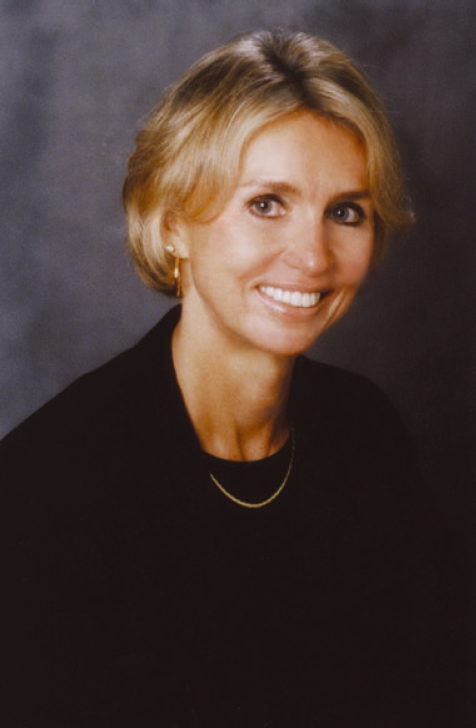
Marjorie Montague, a professor in the Department of Teaching and Learning in the School of Education at the University of Miami, passed away on May 13 this year. In this tribute to Marjorie, we share with you her achievements and contributions to the field of special education and to the larger community as well as our personal memoirs of her as a scholar, colleague, friend, teacher, mentor, and advocate.
Marjorie Montague's record in research and scholarly activity has been underscored by her interest in serving her students and the special education community. While she has been an author or coauthor of over 90 publications in refereed journals, chapters, books, and curricular materials, she also chaired more than 20 doctoral dissertations and served on the editorial boards of several journals (e.g., Learning Disabilities Research and Practice, Learning Disability Quarterly). During her career, she held several leadership positions. She chaired the Special Education grant competition panel for the Institute of Education Sciences, USDOE, served as President of the Council for Exceptional Children's Division for Research, Chair of the Special Interest Group – Special Education Research, American Educational Research Association, and Chair of the Division for Learning Disabilities’ (DLD) research committee. At the same time, she was a global citizen and served for many years on the Executive Board of the International Academy for Research in Learning Disabilities (IARLD).
As a scholar, Marjorie was a visionary who developed the cognitive and metacognitive strategies instruction approach for mathematical problem solving. This approach not only incorporated principles from cognitive psychology to promote the development of conceptual understanding, but also included explicit and systematic instruction to better address the instructional needs of children and adolescents with learning disabilities (LD). Several researchers have found her intervention (Solve it!) to be inspiring and used the approach as the basis for modifying or developing interventions to enhance the problem–solving performance of students with LD. Marjorie's research in the area of math problem solving had an impact beyond the field of special education. Ferdinand Rivera, a professor of mathematics at San Jose State University, recently commented, “I have followed Marjorie's work over the years.” Ironically, a co–authored, invited article by Marjorie was published shortly after her death in Prof. Rivera's co–edited book, Towards Equity in Mathematics Education: Gender, Culture, and Diversity. Marjorie also conducted research that examined the longitudinal trajectories of youth at risk for learning disabilities/emotional behavioral disorders and mathematical disabilities. She procured almost 10 million dollars for both research and personnel preparation grants from the USDOE. In 2009, Marjorie was awarded the University of Miami's Provost’ Research Award in recognition of her excellent research contributions.
As a colleague, she was collaborative and shared her knowledge graciously. During the editing of the book, Teaching Mathematics To Middle School Students With Learning Difficulties, Marjorie was always kind and respectful with her thought–provoking feedback to the contributing authors. As a friend, she was loving, caring, and generous. Marjorie also had a unique sense of humor that was quite captivating. She was passionate about traveling and meeting people from other countries, which was evident as she prepared to go on the next exciting trip abroad to present at a conference or for leisure.
As a teacher and mentor, Marjorie was very knowledgeable, dedicated, and encouraging. Her knowledge of special education and, in particular, mathematics instruction for students with LD was impressive. Her depth of insight and comprehension about the topic of focus was unparalleled; class discussions and debates about issues relevant to the field of special education were always stimulating. Marjorie's dedication to her work was motivated by her genuine desire for improved outcomes for students with special needs. She was generous with her time and support in mentoring doctoral students. In addition, she co–authored several publications with her current and former doctoral students and served as an advisor on a number of student–initiated grants. Marjorie always offered excellent and personalized advice to her students. Delinda, one of Marjorie's former doctoral students, articulated how Marjorie helped shape her research: “She encouraged me to focus on visualization as a strategy for solving word problems, which I followed and found to be one of the most fruitful avenues of research. Her theoretical perspective has influenced my work in many ways, including the emphasis on using diagrams as a tool in strategy instruction to solve mathematical word problems. I am truly indebted to her. Without her, I would not be in the position that I am now.”
As an advocate in the field of LD, Marjorie was a long time member of DLD and had most recently served as the liaison between DLD and CEC's Division for Research. In that role, she worked to select topics for the jointly developed “Current Practice Alerts” that identifies practices with sufficient evidence to implement, or in some cases, insufficient evidence. Marjorie also worked with her DLD subcommittee to select honorees for the annual DLD dissertation award. Given her outstanding contributions as a mentor, this was a perfect fit for her! One of our cherished memories of Marjorie was her passion and commitment to special educators and the field of LD through her participation in discussions we had regarding where the field was headed. She was committed to making certain that we did not lose sight of the true meaning and intent of the field of LD. It was in recognition of this passion for LD, and commitment to the field that last winter, prior to learning of her illness, DLD's Professional Development, Standards, and Ethics Committee identified Professor Montague as the recipient of the Jeannette E. Fleischner Award for her lifetime contributions to advancement of LD.
The special education field will miss a dedicated, brilliant colleague, and we will miss our interactions with Marjorie at both a professional and personal level. She has touched so many lives—students, teachers, researchers, colleagues, friends, and family—and her legacy in the area of LD will live on through those that she positively affected.