







Abstract
Massachusetts Institute of Technology environmental engineer and social entrepreneur Susan Murcott has worked for more than two decades to deliver clean drinking water to the world's poorest citizens. The stakes are high: polluted water is one of the world's leading causes of disease and death, particularly for children under the age of five. In this case, Murcott launches a new social enterprise in the West African nation of Ghana. The demanding leadership role of the entrepreneur is highlighted as Murcott and her team face many standard start–up challenges around venture mission, market definition, and product pricing and quality within a culturally rich, global setting.
Susan Murcott and Pure Home Water (PHW)
Engineers in my field of water and waste are trained in design and construction of large, centralized treatment plants—basically, the solutions that brought safe water to people like my grandmother so they wouldn't get polio anymore. These 19th century solutions that continue to this day are central systems. The problem is that the one billion plus people in the world who lack access to safe water are now off the grid. They're in rural areas and they're in urban slums. Engineers traditionally have not been trained to develop systems for this population. (Susan Murcott)
In a faculty office tucked away in the engineering building of the Massachusetts Institute of Technology (MIT), Susan Murcott welcomed Jen Christian–Murtie on a cold afternoon in January 2008. Murcott had engaged Christian–Murtie as a consultant to advise her on the problems bedeviling her fledgling nonprofit organization, PHW, and Christian–Murtie had just spent a month in Tamale, Ghana on the organization's behalf. For more than 3 hours, the women discussed the conditions Christian–Murtie had found, comparing them with those Murcott had encountered herself while there 7 months earlier. They considered the devastating floods that had just occurred in the northern regions of Ghana as well as the continuing challenges and opportunities that faced the small, growth–oriented organization.
Ghana, a peaceful and economically strengthening African nation, was struggling to provide clean water and basic sanitation to its citizens. PHW sold a ceramic filter that Murcott and her students had researched, manufactured, and promoted specifically to sanitize home drinking water supplies for the Ghanaian market. The design of the filter mimicked the look of the clay pots that local women created and used to store water. The filter was surrounded by a sealed plastic container with a faucet and lid, which ensured the water stayed free from contaminants. While demand for the product was strong, PHW had been beset with production and distribution problems. The high cost of the filters made it impossible for PHW to be self–sustaining while selling the filters at a price that rural villagers could afford. In addition, it was difficult to predict when shipments would arrive and even harder for PHW to control quality, particularly since the long trip on bumpy dirt roads from the factory often caused breakage.
Since its inception in mid–2005, PHW sold fewer than 6,000 filters, and many of those were in cities, not the rural areas that needed them most. Discouraged by the results after more than 2 years of effort, Murcott had begun her trip to Ghana in June 2007 thinking seriously about shutting down PHW. While there, however, she had hired a part–time managing director and four new staff members. Now, she was interested in hearing Christian–Murtie's views on a range of critical business and operations issues that concerned the sustainability of her venture. Had she hired the right staff to further the company's mission, and would the new employees—all with different religions, backgrounds, and dialects—sell enough filters to improve water quality in rural northern Ghana while keeping the organization afloat? Did PHW need to manufacture the filters itself to control its supply, ensure high quality, and keep the price affordable? Could she generate or secure enough funding to sustain the company through its difficult formative years?
As they considered PHW's future, Murcott and Christian–Murtie identified many problems and stumbling blocks. However, they also confirmed the crucial fact that a near limitless market did exist for PHW filters. As Christian–Murtie reported:
There is absolutely no doubt in my mind that there is a HUGE demand for this product, as I was asked for filters everywhere we went. If we had more filters to sell, we could sell them—and we could save many lives.
It was difficult to contemplate giving up on a cause that could bring such important health benefits to the people of Ghana and potentially others far beyond.
Ghana: Key Facts
At the time of the case, Ghana, one of 54 African nations, was located on the western coast of Africa and shared borders with Burkina Faso in the north, Cote d'Ivoire in the west, and Togo in the east. During British colonial rule, Ghana was formed from the merger of the British colony of the Gold Coast and the Togoland trust territory. In 1957, Ghana became the first sub–Saharan country in colonial Africa to gain independence from Great Britain (see Figure 1).
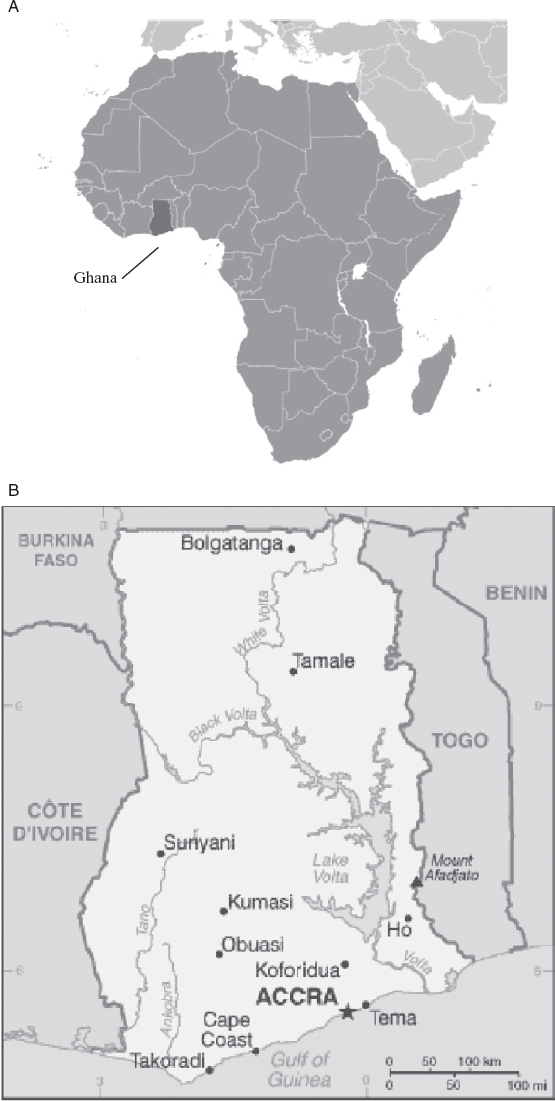
Maps of (A) Africa and (B) Ghana
Ghana was a land of great diversity in religion and languages. Almost two thirds of its population of roughly 24 million was Christian (mostly in the south), 16% were Muslim (mostly in the north), and 23% followed traditional indigenous beliefs. Although Ghana's official language was English, its people spoke almost 80 other local languages, including Dagbani, the primary language in the Northern Region.
Ghana was a constitutional democracy in which the president filled the roles of chief of state and head of government. There were two primary political parties, and sanitation and water quality often were important election issues. Ghana heavily depended on international financial and technical assistance with 90% of funding for the water/sanitation sector routinely being derived from such aid. With the support of millions in aid through the Poverty Reduction and Growth Facility grant programs of the International Monetary Fund in 2002, Ghana sought to have tighter monetary and fiscal policies, accelerate privatization, and improve social services.
Due to its natural resources, Ghana had approximately twice the per capita output of the poorest countries in West Africa. Gold, timber, and cocoa production were its major sources of foreign exchange. The domestic economy centered on subsistence agriculture, which accounted for 37% of GDP and employed 60% of the work force, mainly small landholders.
Extreme income inequality existed in Ghana, from the great wealth of some in the southern capital city of Accra to the poor who struggled daily for their livelihoods. Of Ghana's poor people, 70% lived in rural areas, primarily in the Northern Region of the country, where they had limited access to basic social services, safe water, all–year roads, electricity, and telephone services. Overall, the poverty rate in Ghana was declining, but drought and disease continued to be major inhibitors to human welfare and economic growth in the north.
The Northern Region of Ghana was a dusty, hot area with sprawling countryside scattered with huts made of mud and thatch. The Dagbani people living in this area walked, rode motorcycles, or took a local tro tro (small bus) to get from one place to another. Women primarily walked to get water for their families every day, some for hours. For some fortunate villagers, international nonprofits, religious organizations, or the government had installed boreholes or dugwells either within a village or no more than 1 or 2 miles away. While this was a critical step toward creating sources of clean water, it only addressed water at the source. Household drinking water treatment and safe storage, on the other hand, dealt with water at another critical point: consumption.
A Global Public Health Crisis: Water Quality
Water and sanitation [are] the primary drivers of public health. I often refer to it as “Health 101,” which means that once we can secure access to clean water and to adequate sanitation facilities for all people, irrespective of the difference in their living conditions, a huge battle against all kinds of diseases will be won. (Dr Lee Jong–wook, Director–General, World Health Organization [WHO]; [WHO, 2004])
According to the WHO, one billion people globally lacked access to safe water and 2.6 billion had no form of modern sanitation in 2010. The majority of these people live in Asia and Africa. Every year, unsafe water, coupled with a lack of basic sanitation, kills at least two million people: 90% of these are children under the age of five. In sub–Saharan Africa, 42% of the population is still without safe drinking water. Water–borne microorganisms frequently cause diarrhea and diseases such as schistosomiasis, malaria, legionellosis, and guinea worm. These sicknesses cripple communities as residents’ poor health hinders the economic development of a village. Guinea worm particularly plagues people living in northern Ghana. Materials distributed by The Carter Center, one of the world's leading expert organizations on the disease, explained that:
Guinea worm is contracted when stagnant water, contaminated with microscopic water fleas carrying infective larvae, is consumed. Inside a human's abdomen, Guinea worm larvae mature and grow, some as long as 3 feet. After a year, the Guinea worm slowly emerges through an agonizingly painful blister it creates in the skin. Guinea worms can take up to two months to be completely removed, and even then, secondary infections may occur. Victims often immerse their limbs in water, seeking relief from the burning sensation caused by emerging Guinea worms, and thus re–contaminate drinking water. (The Carter Center, 2010)
Due to the Carter Center's efforts in partnership with local ministries of health, the guinea worm had been eradicated in all but three African countries: Sudan, Mali, and Ghana.
Water Filtration: From Systems to Households
Many international organizations focused on improving water supplies, sanitation systems, and/or hygiene education in order to create and sustain sources of healthy drinking water. Such improvement entails construction or other types of intervention that protects water from contamination. Examples include directly piping water into a dwelling or yard, introducing a public tap or standpipe, and drilling a borehole and installing a tubewell.
There are few concentrated efforts to exploit recent innovations in the design and development of household water treatment and safe storage systems at the point of consumption (WHO, n.d.). Engineers have developed microbial, physical, and chemical technologies to improve the quality of household water and reduce waterborne diseases. Studies show that improving the quality of household water by on–site or point–of–use treatment and safe storage reduced diarrhea and other waterborne diseases in communities by 6% to 50% (Nath, Bloomfield, & Jones, 2006). According to the WHO, the most promising and accessible technologies for household water treatment are filtration with ceramic filters or other filters, chlorination with storage in an improved vessel, solar disinfection, thermal disinfection (pasteurization), and combination systems.
Susan Murcott: Background and Work at MIT
Susan Murcott is a leader in the emerging global field of household drinking water treatment and safe storage. Her business, Ecosystems Engineering, specializes in projects involving innovative and cost–effective technologies for creating sustainable sources of clean water. Murcott is committed personally as well as professionally to the United Nations Development Program's Millennium Development Goal to halve the proportion of people without sustainable access to safe drinking water by 2015.
A world traveler, free spirit, and nontraditional student, Murcott received a Bachelor of Arts degree from Wellesley College, and a Bachelor of Science degree and a Master of Science in Civil Engineering (at the age of 40) from MIT. After graduate school, Murcott remained in contact with her professor and mentor at MIT, Don Harleman, with whom she collaborated for a decade developing wastewater treatment for megacities (see Appendix A).
In 1999, Murcott became a lecturer at MIT, which was a rare teaching appointment at that institution for a person without a doctoral degree. She began leading month–long projects for students who wanted to be part of her work in developing countries:
I came back from an International Women in Water conference and told the MIT administration that I wanted to lead practicums dealing with rural drinking water. MIT responded that they didn't think anybody would be interested—MIT did high tech. My best trait is perseverance, so I came back a year later and said, “I want to do rural drinking water.” They gave me permission to present it in the first two weeks of the semester as a potential project. That year, there were about twenty water track projects to choose from, but still sixteen students signed up for my practicum as their first choice.
Each practicum included 1 month of field study in a developing country and gave students real–world experiences. Many participants were international students whose homelands were struggling with similar water safety issues. Funded by grants and through cash competitions, Murcott regarded her work at MIT as “fairly self–sustaining.”
Launching PHW
In 2004, Murcott received a grant from the Conrad Hilton Foundation to attend its second annual West African Water Initiative (WAWI) conference held that year in Ghana (see Appendix B). During her 12 days there, she also met with officials from World Vision, a global Christian organization that worked closely with the Hilton Foundation. World Vision's Ghana Rural Water Project focused on safe water provision through borehole well–drilling. Since 1985, it had drilled more than 1,900 wells, supplying water to approximately 500,000 people. With more than 15 years of experience in the country, World Vision had developed a strong reputation with the Ghanaian people as the country's leading nongovernmental organization (NGO). 1
World Vision's website: http://www.worldvision.org/content.nsf/learn/world-vision-ghana?Open&lpos=lft_txt_Ghana.
After the conference, Murcott returned to MIT inspired to build on the efforts of World Vision in Ghana. She knew that technologies from the developed world usually did not transfer to the developing world either because of their high cost or the technical expertise needed to operate them. Murcott and her teams of students had developed various filters to purify the water in poor regions of Nepal, Kenya, Haiti, Nicaragua, Peru, Brazil, and the Dominican Republic. Each country she had worked in required different types of filters due to local contamination issues and access to the raw materials needed to make the filters. Murcott was passionate about bringing to Ghana technology that had been shown to reduce diarrhea, guinea worm, and other water–related diseases in an inexpensive and easy–to–use way.
Murcott submitted to the Hilton Foundation a proposal for a demonstration project that would apply her approach to household drinking water treatment in Ghana (see Table 1). The Foundation awarded a $150,000 grant in 2005 to implement what became the PHW project. She and her team had designed three different types of water filters to address the contaminated water issue in Ghana but decided to focus on producing and selling only one of them, the Kosim filter. 2 Murcott described the product:
Kosim is a Dagbani word meaning “water from a ceramic pot” and “the best water.” It is the drinking water that is served to guests.
Hilton Foundation Grant Proposed Budget
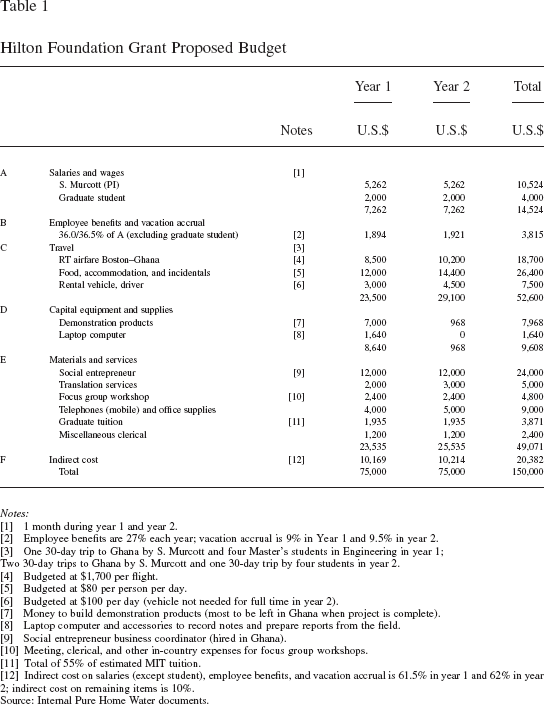
Notes:
1 month during year 1 and year 2.
Employee benefits are 27% each year; vacation accrual is 9% in Year 1 and 9.5% in year 2.
One 30–day trip to Ghana by S. Murcott and four Master's students in Engineering in year 1; Two 30–day trips to Ghana by S. Murcott and one 30–day trip by four students in year 2.
Budgeted at $1,700 per flight.
Budgeted at $80 per person per day.
Budgeted at $100 per day (vehicle not needed for full time in year 2).
Money to build demonstration products (most to be left in Ghana when project is complete).
Laptop computer and accessories to record notes and prepare reports from the field.
Social entrepreneur business coordinator (hired in Ghana).
Meeting, clerical, and other in–country expenses for focus group workshops.
Total of 55% of estimated MIT tuition.
Indirect cost on salaries (except student), employee benefits, and vacation accrual is 61.5% in year 1 and 62% in year 2; indirect cost on remaining items is 10%.
Source: Internal Pure Home Water documents.
(The Kosim filter)…is the technology that best responds to the particular water challenges of the area and is the most socially acceptable to the people of the region…These [ceramic] filters are simple, user friendly, socially acceptable, inexpensive, culturally compatible and can be manufactured locally.
To start, Murcott opted to sell the filters in northern Ghana since the water problems there were most urgent.
Although she was committed to providing the means to filter water in Ghana, Murcott did not want simply to give the filters away. She aimed to build a self–sustaining NGO that could eventually employ a significant number of Ghanaians. Thus, her goal for PHW was to source, market, and sell water filters at or above cost. Murcott explained:
While our vision/dream was to be a self–sustaining business, our definition of self–sustaining was to break even. In other words, to be a self–sustaining Ghanaian business, not with outside inputs like my international technical advice, but to be able to grow a social enterprise that was run by Ghanaians, for Ghanaians and that sustained Ghanaians financially but also brought safe water to people.
She had budgeted that the Hilton Foundation grant would run out by mid–2007. Until the company became economically self–sustaining, Murcott knew she would continually have to seek enough supplemental funding to keep the organization afloat.
PHW—The First Year: Mid–2005 to Mid–2006
Early in its first year of operation in Ghana, the PHW team secured free office and lab space as well as Internet access from World Vision. As a supporter, World Vision provided these helpful and welcomed resources, but no true operational or political collaboration developed between the two organizations. Although their respective technical approaches (i.e., borehole drilling and household treatment) were complementary, there was limited practical ability or managerial interest on the part of either organization to expand its attention beyond its core competence.
PHW's two attached offices were located in a building near the back of the World Vision complex in Tamale. PHW used one for office space and the other for storage for the filters. The PHW staff maintained a Kosim filter in the corner of the office for themselves as well as for serving visitors who came to their office. The office offered one of the few air–conditioned spaces in town—an absolute necessity for visitors from the West who were unaccustomed to the heat and dryness of this region of the world.
With the Hilton Foundation money, Murcott was able to contract with ceramic manufacturer Ceramica Tamakloe Ltd (http://www.ceramicatamakloe.com/). Its factory was located a 14–hour drive to the south of Tamale in Accra. Although Murcott sought a manufacturer closer to the north, Ceramica Tamakloe was the only manufacturer in Ghana capable of producing the filters. They agreed to supply PHW at $12.22 per filter for order quantities of 500 or greater, a 37% reduction from the standard price. 3 Additional expenses included transportation, a cleaning brush, and educational materials that PHW provided with the filters. Altogether, Murcott figured the cost of goods sold equaled $15.44.
Figures converted from Ghanaian Cedis (GH¢); during 2006, the exchange rate was approximately 1 U.S. Dollar = 9,000 Ghanaian Cedis.
In August 2005, Murcott hired Hamdiyah Alhassan, a civil and environmental engineer, and Wahabu Salifu, a development planner, as salaried, full–time PHW staff. Both were Ghanaians with college bachelor's degrees. With Murcott based back at MIT, the two employees helped launch PHW and managed the relationship with World Vision. Alhassan's primary role was to handle office administration and urban sales (this was somewhat determined by Ghanaian gendered roles, requiring women to stay in the office), while Salifu, a man, was responsible for rural sales in the villages. In addition, PHW had many Ghanaian volunteers and interns who assisted with the organization's efforts.
Alhassan and Salifu began to spread the PHW name throughout the communities of the Northern Region by holding events on market day and by distributing posters and other advertisements. Initially, Alhassan and Salifu struggled with promoting the product since no one had heard of PHW. They learned by trial and error, adjusting the sales pitch and improving their approach to educating potential customers about the product.
PHW had rather arbitrarily set the original retail price at $16.88 per filter, somewhat using cost structure as a guide. Based on the first 5 months of sales of 153 units, one of Murcott's MIT teams did a cost analysis and recommended that the price be increased to $20.00 immediately. As shown in Table 2, the resulting average contribution margin of $3.44 (28% of the average purchase price) would create a breakeven point of 567 units per month.
Breakeven Analysis (U.S.$)
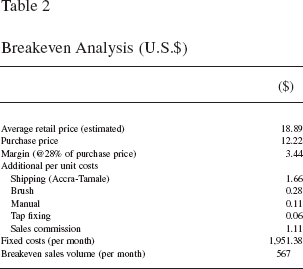
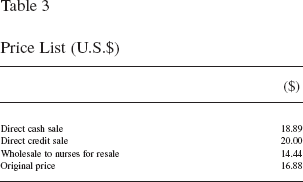
Subsequently, the actual sale price of the filters varied according to the seller and the sale type. The staff began offering the filters for sale at $20 (as aforementioned) for credit purchases (i.e., paid over a 3–month period) and at $18.89 with a cash discount. Discounts were also given to nurses at three hospitals who purchased filter systems in larger quantities to resell to their patients. Table 3 summarizes all prices for the filters. Over the remainder of the first year, the staff sold 406 additional filters to, largely, middle–class customers.
Price List (U.S.$)
PHW—The Second Year: Mid–2006 to Mid–2007
PHW had produced mixed results in its first year of operation (see Figures 2 and 3 and Table 4). MIT graduate students interviewed customers as part of their practicum field experience during the second year and found the following:
93% of Kosim filters were still in use after 1 year.
80% believed that their water had improved.
87% perceived positive health effects.
100% said they would recommend the technology to others.
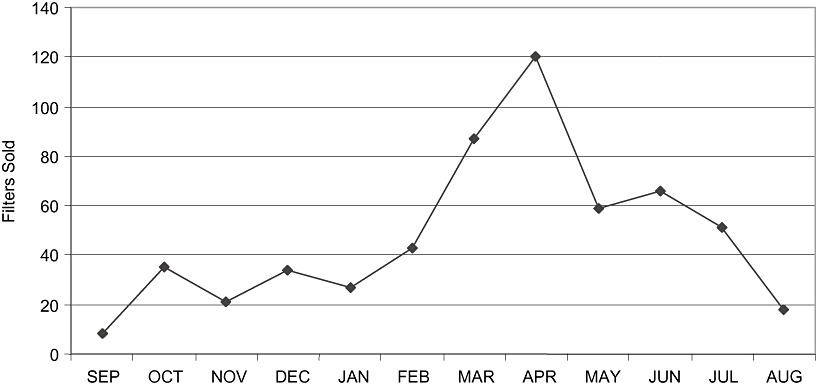
PHW Year 1 Filter Sales (by Month)
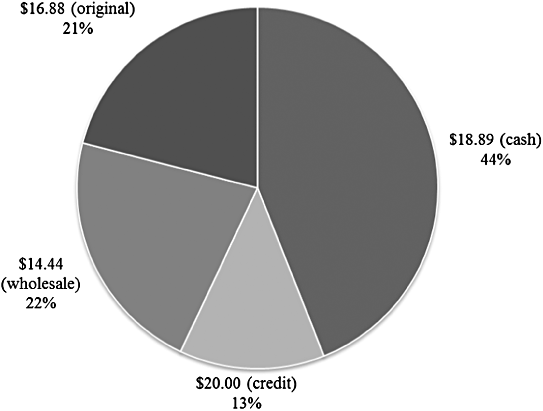
PHW Year 1 Filter Sales (by Price)
Pure Home Water Financial Statements
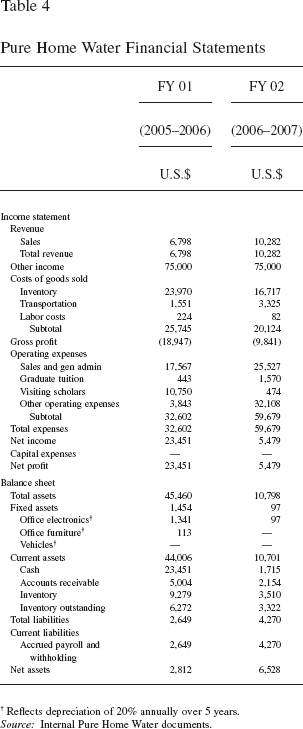
Reflects depreciation of 20% annually over 5 years.
Source: Internal Pure Home Water documents.
While these statistics were encouraging, Murcott had largely failed to achieve her vision to sell filters to the very poor people in the rural areas of northern Ghana. In its first 12 months of operation, PHW sold just 569 filter systems—just slightly over the monthly breakeven volume target of 567.
New Pricing and Promotion
While the prices seemed somewhat high even for city dwellers, Murcott and her team concluded that for rural villagers, they simply were unaffordable no matter how highly valued the filter. They decided to try to generate more demand by dramatically lowering prices to $6.00 for rural areas and $12.00 for urban areas.
Murcott also directed the team to start four outreach programs to generate more demand: urban, hospital, school, and rural. In the urban areas, PHW focused on training retailers in filter use and maintenance. PHW provided both hospitals and school leaders with free training and filters for use in their institutions. Nurses, caregivers, and teachers volunteered to be responsible for maintaining the products in the hospitals and schools along with selling filters, disseminating and answering questions about household water treatment and safe storage and PHW educational materials, and collecting and transmitting user feedback. The staff also refined their price structure for the different market segments (see Table 5).
Outreach Pricing Scale (U.S.$)
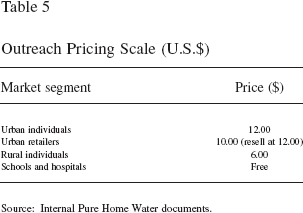
Source: Internal Pure Home Water documents.
In order to implement the rural outreach strategy in northern Ghana, Murcott's team met in July 2006 with partner NGOs to target specific communities, gave free filters to opinion leaders in the villages, and made presentations to villagers. PHW developed a liaison in each community who organized presentations, answered in–field questions, facilitated distribution, monitored use, transmitted user feedback, and attended bimonthly meetings with PHW staff. These efforts led to a 57% sales increase during year two. Strong demand from poor rural customers drove this increase: that market segment accounted for 58% of all sales, while 32% were in urban/periurban areas and only 10% were outside of Ghana (i.e., international).
Operations
The success of the lower prices and the outreach, however, revealed some critical underlying operational weaknesses. PHW was only able to supply half of the filters ordered each month. Contributing factors included persistent problems in the production facility in Accra, disruptions in the distribution system including transportation obstacles, and cash flow issues arising from the combination of high inventory costs and slow to nonexistent customer credit collections. Attempts to renegotiate the unit cost of the filters with Tamakloe were unsuccessful. Murcott was particularly galled by the knowledge that others manufactured and sold the same product at about half that price in Nicaragua and Cambodia. She continued to pursue ways to get funding to purchase more filters or to defray costs. To that end, PHW reached out to important stakeholders including local and regional government agencies, the United Nations Children's Fund (UNICEF)–Ghana, and the Ghana School of Hygiene.
Murcott was also concerned about an underlying lack of motivation, leadership, and self–direction among her two full–time staff. Alhassan and Salifu were well–educated and therefore considered themselves above tasks such as selling the filters in the market (a job for “petty traders”) and visiting villages (a job for men only and of course, only for those who spoke the local dialects, which neither did). Murcott also realized that the diligence and effort she expected of them was out of sync with Ghana's more relaxed culture. As she explained:
One of the difficulties in northern Ghana is that in contrast to other projects that I've worked in successfully, the work ethic is not strong, and that's an understatement. It's a hot country; it's a malarial country; and those two conditions in and of themselves, might contribute to people being not too motivated to do a whole lot of work. But I have a hard time with that particular cultural trait.
Murcott asked Elizabeth Wood, one of the MIT students she had taken to Ghana, to stay on to act as project manager. She thought that Wood would be able to provide leadership and motivation her staffers so sorely needed:
Alhassan and Salifu were not able to work well without regular management. I had never seen my role as the program manager or project manager, but rather as an advisor to the project. I had wrongly conceived that Alhassan and Salifu, as college graduates and technical people, would think independently, work independently, and kind of interface with me. But that was not so. They needed management, and there wasn't enough accountability built into their contracts.
However, during the 9 months that Wood was in Ghana, she came down with malaria five times and was unable to continue. She eventually needed to leave Ghana permanently, and PHW was without leadership on the ground once more.
Murcott's 2007 Visit
In June of 2007, Murcott scheduled a month–long trip to Ghana in order to assess the organization and to determine whether PHW could sustain itself in the long term. With just one remaining month of Hilton Foundation funding, Murcott focused her efforts on finding additional resources. She also tried to tackle the high cost of the filters and associated production and distribution issues. Murcott decided to explore setting up a manufacturing plant in or around Tamale. She reasoned that PHW had or could acquire the know–how to make the filters and manage the supply and delivery of other components without Tamakloe. Having its own supply could allow PHW to decrease sourcing costs, improve order fulfillment, reduce breakage of pots during transportation, decrease delivery time, and most importantly, satisfy demand and increase sales.
After looking at several options, she pursued government–owned land and buildings as the best site for a new ceramics factory. However, she failed in the end to get permission from the local officials to proceed with the purchase of the land. Murcott explained what happened:
The reason we didn't get the land is because the ministers got very excited about our filter. We gave them the presentation and told them all about it.…We were offering an interesting, innovative, and proven solution. The minister and his district directors said that if we wanted the land, they wanted an equity share in our business. It was strongly advised by UNICEF and by World Vision senior staff not to agree to it. They told us to let the minister know that we were a nonprofit, that we were losing money, and that at best we would be breaking even in five years.
Although she did not get the site, the experience did generate interest from UNICEF for future funding. Indeed, by the time she headed home, Murcott had succeeded in securing a small grant from a foundation that was just getting involved in water quality issues.
Murcott believed the Ghanaian operation greatly needed on–site management, but she was only able to visit Ghana twice a year. She was almost despairing of finding a program manager until she met Mary Kay Jackson, an American water engineer with 25 years of experience in engineering consulting and management. Jackson was also a Methodist missionary with a commitment to work in Ghana for 5 years with The Mission Society. She agreed to spend 25% of her time assisting PHW on a pro bono basis, to be reimbursed only for her travel expenses to Tamale, and to help PHW eventually transition to a full–time Ghanaian program manager.
This time, Murcott deliberately hired younger, less–educated employees to replace Alhassan, who had won a grant to study in the United States, and Salifu, whom she had fired. Murcott interviewed and selected four new staff, including two Ghanaian full–timers, Abaazan Peter Adagwine and Suma Kassim. In addition, Murcott promoted Shakool (Shak) Ibrahim, a part–time driver/translator from the Northern Region, to a full–time position responsible for rural sales and education programs. Murcott was impressed that “Shak showed remarkable commitment and learned very quickly how to sell the filters and connect with the customers.” She also hired Enyonam Grebu, a woman from the Volta region of Ghana who had started as an intern in April 2007, to handle administration, including inventory and petty cash, and to oversee urban sales. With a team of four Ghanaian staff plus a program manager, PHW was at a critical inflection point in its development.
In addition to firing and hiring staff during her June trip, Murcott met with the PHW Board of Directors, which was composed of Murcott, Edward Abrokwah, and Ernest Ansah. Both Abrokwah and Ansah were young, overseas–educated Ghanaians who were committed to improving the lives of fellow Ghanaians. PHW had needed a board of directors to fulfill requirements of becoming an official Ghanaian NGO, which the organization achieved in March 2007.
Challenges and Opportunities: Fall 2007
Unfortunately, two of the four newly hired employees stayed with PHW only for 1 month and were gone by August 2007. The two remaining employees were inexperienced and needed significant amounts of supervision and training, as Christian–Murtie observed:
Both Shak and Enyonam appear to be excellent fits for the organization. But while they both have a serious commitment and passion for the work they are doing, they still need mentoring. Mary Kay believes that it is important for them to have someone make the organization feel safe and organized. She plans to define their roles and responsibilities since they do not seem empowered to make decisions without her or Susan's guidance. In fact, during my month in Ghana, they repeatedly asked me to make decisions or handle things that they felt weren't their responsibility. I asked how they would have handled these things without me being there and they said they would have called Mary Kay or waited for the next time she was in Tamale (she travels there once a month). Ghanaian culture is steeped in hierarchy and therefore it is very difficult for these young employees to understand the concept of empowerment. While they…handle their responsibilities well, they are very careful not to step outside those bounds. Mary Kay will be working with them to further expand their responsibilities and to explain how they should deal with questions when they arise.
Another problem arose when World Vision asked PHW to begin paying $300 USD per month rent. Christian–Murtie recounted that the relationship had been problematic recently:
The offices at World Vision seem less ideal than they originally were. There has been no Internet [access] since July, light bulbs are out and not replaced, and there's a general feeling that we are in the way of World Vision employees.
The cost and supply of filters continued to be a major issue. PHW employees felt that their sales efforts were undercut by slow order fulfillment and excessive filter breakages during shipping. The PHW team also realized that the slow process of delivering just one or two purchased filters into villages by motorbikes, bus, or taxis was not economically tenable. They wondered if it made sense to buy a truck to use for deliveries. In the city, they explored the possibility of setting up a PHW–owned shop as a retail outlet for the filters.
In order to determine how the cost of goods sold might be reduced, Murcott and her team assessed the ceramic factory contract, manufacturing process, and means of distribution. Repeated efforts to renegotiate with Tamakloe to lower its prices proved to be futile; on the contrary, Tamakloe indicated that the company was planning to raise the price of the filters by 9% on future orders.
Flooding in Ghana
In September 2007, floods devastated the northernmost areas of Ghana and southern areas of Burkina Faso. By the end of the month, international development and relief organizations poured into the area with food, supplies, and health–care services. More than 200,000 people lost homes and were living in schools and hospitals. Water in the flooded areas became contaminated and undrinkable. In mid–October, UNICEF asked PHW to supply 5,000 Kosim filters for distribution among different communities. Later that month Oxfam International similarly requisitioned 500 filters. The size and urgency of these orders required PHW and its supply chain to produce and deliver more filters than ever—and at an extremely fast pace.
Tamakloe's factory was only able to produce 1,000 filters per month for PHW. By the end of January 2008, just 3,000 filters had been trucked from Accra to Tamale to the PHW office and then delivered to UNICEF and the local governments further north. PHW staff convinced Tamakloe to halt production for other customers to meet this new urgent demand. Although the post–flood period created great pressure on the organization, NGOs such as Oxfam and UNICEF demonstrated they would easily pay full price for the filters. As Christian–Murtie recalled:
When Oxfam called to say they wanted 500 filters, Enyonam told them the price was $12.00. When Rabi from Oxfam arrived at the office a few days later, I spoke with Mary Kay and we decided that because Tamakloe was raising the price on the filters and Oxfam wanted the filters immediately, we should charge a higher price. I told Rabi that the price was $18.00 and without hesitating, she said that was fine. She didn't even blink. I think that NGO's would support a price as high as $20.00, which could be the full retail price and PHW could offer urban and rural discounts off that price—to $12.00 and $6.00, respectively.
Due to these large NGO orders, all other rural sales were put on hold since there were no extra filters to go around. In early 2008, PHW struggled with how to restock its storage room and begin meeting the demands from individual customers. Moreover, officials in some of the countries surrounding Ghana had heard about its filter and had contacted PHW to inquire about making purchases.
While the flood and its aftermath validated Murcott's vision for PHW, the increased demand severely strained the organization's capabilities. Expanding sales to other countries would create the need to develop additional production and distribution capacity. In a moment of frustration, Murcott wondered:
I've been knocking myself out for three years to sell the first 500 and then 6,000 and here I'm talking about clean water for a billion people, but I'll be four trillion years old before I get there! So what's wrong with what I'm doing?
Should Murcott once again turn her attention to building PHW's own factory or was there another way to reform distribution? Was continued work to refine pricing schedules and target customer outreach efforts a way forward? Were there other alternatives that would more quickly lead PHW to economic sustainability? What else could be done to build a sustainable Ghanaian workforce? How should she address the emerging organization's many other needs, and how should they be prioritized?
Footnotes
Appendix A: Biographical Sketch
Susan Murcottt's work focused on innovative and low–cost water and wastewater treatment technologies for developing countries. She was a pioneer in the emerging field of household drinking water treatment and safe storage (HWTS) to reach the over one billion people in the world that lack access to safe drinking water and the 2.6 billion who lack access to adequate sanitation. She established a program, “Safe Water for 1 Billion People (H2O–1B!),” in the MIT Department of Civil and Environmental Engineering and worked collaboratively with other MIT departments—Sloan Business School, Urban Studies and Planning, Mechanical Engineering, Materials Science, and universities (Tufts; Harvard School of Public Health; Brandeis; UC–Berkeley; Lulea University of Technology, Sweden), leading multidisciplinary student teams. Her teams conducted field work in Nepal, Brazil, Haiti, Dominican Republic, Nicaragua, Peru, Kenya, and Ghana addressing a wide range of safe water and sanitation issues, including microbiologically and/or chemically (arsenic, fluoride) contaminated drinking water supplies, ecological sanitation, and wastewater treatment.
The purpose of Murcott's work was to bring safe water to vulnerable populations, especially those living in rural areas and peri–urban slums, and to educate students as global citizens. Household drinking water treatment, a major focus of her work, was a solution meant to complement programs in water supply, sanitation, and hygiene. The application of these kinds of decentralized solutions could not occur without the partnerships in host countries that Murcott fostered. Scale–up took place both through the application of household drinking water treatment innovations in the specific research field sites and also through Murcott's work with the World Health Organization “International Network to Promote Household Drinking Water Treatment and Safe Storage,” through her work as co–chair of the Implementation Working Group (see http://www.who.int/household_water).
The first decade of Murcott's engineering career focused on an innovative and low–cost wastewater treatment technology, chemically enhanced primary treatment (CEPT), which is particularly appropriate for developing countries. In collaboration with her MIT professor and colleague, Donald Harleman, Ford Professor of Civil and Environmental Engineering Emeritus, Murcott conducted laboratory, pilot, and full–scale demonstrations of CEPT during the 1990s in Mexico City, Sao Paulo, Rio de Janeiro, Beijing, Budapest and a number of smaller cities in Eastern Europe. In 1993 she received the Peccei Award for excellence in scientific research from the International Institute of Applied Systems Analysis in Laxenburg, Austria for her work in upgrading wastewater treatment plants in Eastern Europe. A related focus has been the application of the natural polymer chitosan, a product derived from waste crustacean shells, in water treatment, for which she has been awarded a U.S. patent.
In 1998, Murcott was a keynote speaker at the 2nd International Women and Water Conference in Kathmandu, Nepal, which engaged not only educated professionals but also peasant women in the clean water dialogue. The arsenic crisis in South Asia was brought to international attention at this conference, as well the desire of women to control their own access to safe water. As a result of that experience, Murcott founded the “H2O–1B!” program. Her work emphasized collaborative design and implementation. In Nepal, she and her MIT teams worked in partnership with the Environment and Public Health Organization (ENPHO), the Rural Water Supply and Sanitation Support Network, and the International Buddhist Society, among others.
Murcott and her students have won numerous prizes for their innovations in HWTS, including the MIT IDEAS competition in 2002, 2002, and 2003, and the 2005 Wall Street Journal Technology Innovation Award—Environment category. After conducting the first tests and remediation activities in Nepal to address arsenic contaminated groundwater supplies, and after evaluation of eight different arsenic remediation systems, a proposal by the MIT/ENPHO/RWSSSP partnership to implement the best of these systems, the KanchanTM Arsenic Filter, won the World Bank 2003 Development Marketplace Competition (one of 45 prize winners selected from more than 2,700 submissions from 130 countries). At the time of the award, more than 3,000 KanchanTM systems were providing about 25,000 people with safe drinking water in Nepal. Concurrently, her projects investigated a number of other household treatment systems designs that address microbially and/or chemically contaminated drinking water, including ceramic water filters, household scale slow sand filters, coagulation/flocculation systems, the Centers for Disease Control “Safe Water System,” and others.
Murcott was a leading voice for sustainability, both at MIT and beyond. In 1994, she was a visiting fellow at the Salzburg Seminar session on “Environment and Diplomacy.” There, she teamed up with Salzburg Seminar faculty member Saburo Kato, president of Japan Association for Environment and Society for the 21st Century, Kawasaki City, Japan. Following the Salzburg Seminar model, Kato and Murcott co–organized six biennial “Japan–US Seminars on Sustainable Living—How Do We Get There?” in Honolulu, Hawaii in 1996, 1998, 2000, 2002, 2004, and 2006.
Murcott taught two courses at MIT: “Water and Sanitation in Developing Countries” and “Development Lab III—Implementing Innovations for the Common Good.” From 2002–06 she also co–taught two courses at Cambridge University: “Sustainable Development for Large Infrastructure Projects” with Peter Guthrie (Cambridge University) and Carl Martland (MIT) and “Design for Developing Countries,” with MacArthur fellow Amy Smith (MIT). These courses were among the offerings in a new Engineering for Sustainable Development program leading to a master's degree (M. Phil.). Murcott was the author of more than 50 professional papers (see: http://web.mit.edu/watsanhttp://cee.mit.edu/index.pl?id=2700).
Appendix B: West Africa Water Initiative (WAWI)
Since 1990, the Conrad N. Hilton Foundation and Fund have committed $62 million USD to provide clean, sustainable sources of water in Africa in order to eradicate Guinea worm and decrease the prevalence of trachoma and diarrheal disease. After spearheading its formation in 2002, the Foundation launched the West Africa Water Initiative (WAWI) to provide potable water, sanitation, and hygiene to rural villages in Ghana, Mali, and Niger. WAWI has become a $52 million public–private partnership of more than a dozen organizations, each having a complementary role that takes advantage of their unique strengths. They include the Cornell International Institute for Food, Agriculture, and Development; Desert Research Institute; Helen Keller International; Lions Clubs International Foundation; The Carter Center; UNICEF; United States Agency for International Development; WaterAid; Winrock International; World Chlorine Council; and World Vision. A unique feature of the Initiative is the fact that each Hilton Foundation grantee is matching, for the most part, a minimum of 1:1 for each Foundation dollar. WAWI is playing a vital part in helping to reach the United Nations Millennium Development Goal to halve, by 2015, the proportion of people without sustainable access to safe drinking water (see: http://www.hiltonfoundation.org).