Abstract
This is the first edition post Barcelona ESC, which I'm sure all of you enjoyed immensely. At the time of writing, this event is just about to happen and the location and program are both outstanding. A key piece of information that has emerged is the presentation and publication of the CREST results; we published the protocol for this important trial in our February edition. Tom Brott presented the CREST results in February this year at the International Stroke Conference in Antonio Texas. This trial adds to the body of evidence on the comparison between carotid endarterectomy and angioplasty with or without stenting, and produces consistent results. In essence, the CREST investigators found there was no significant difference for the primary outcome measures of stroke and myocardial infarction even during the 30-day perioperative period. However, many would argue that the increased stroke rate seen with angioplasty is a more serious health outcome than the counter balancing increase in myocardial infarction with endarterectomy. In other words, endarterectomy may still be the favoured option although individual choice must come into this decision. Interestingly, during the follow up period of about 4-years, there was no significant difference in vascular outcome events, so the decision to use revolves primarily around the perioperative period of increased vascular risk.
The International Stroke Conference also held a most important ‘Synergium’ under the chair-ship of Vladimir Hachinski during which priorities were established for a number of categories’, ranging from the basic sciences through to stroke education. As we did for a previous article requiring global reach, this has been simultaneously published in International Journal of Stroke, Stroke and Cerebrovascular Disease. We hope that this article acts as a template for global initiatives to reduce the unacceptable burden of stroke.
In this edition we have our usual array of interesting research articles and topical reviews. Including a unique report on the burden of stroke in Fiji, which continues our important agenda, drawing attention to the problems faced by developing countries in managing this increasingly difficult condition. Interestingly, stroke education is an important issue in Fiji as it is in Sri Lanka; burdens such as traditional medicines and practices are factors that can complicate disease management in a modern world. Sri Lanka was also the Gold Award winner for World Stroke Day 2009, and were very deserving as can be gleaned from listening to the podcast with Dr Padma Gunaratne linked online with her article in this edition. The podcast is available in both English and Singhalese emphasising the truly global vision of our journal. The podcast is available via iTunes.
Remember that World Stroke Day is always the 29th of October and countries around the world should be planning for this year's world event, and the World Stroke Congress is coming up in Korea. As always there's plenty to look forward to.
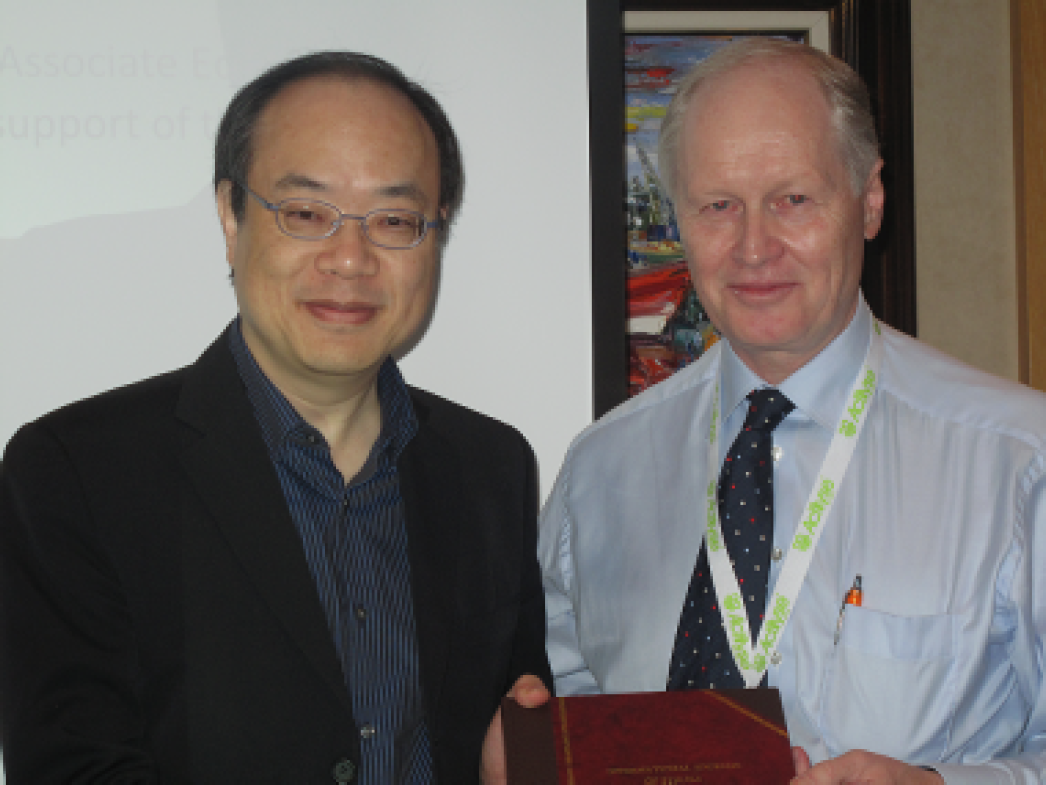
Prof. Geoffrey Donnan thanks Prof. Lawrence Wong for five years of dedicated, innovative and dynamic service as Associate Editor at the International Journal of Stroke Editorial Board Meeting, European Stroke Conference 2010. Prof. Wong will now take up a position at Stroke; the team from IJS wishes him all the best.