






Abstract

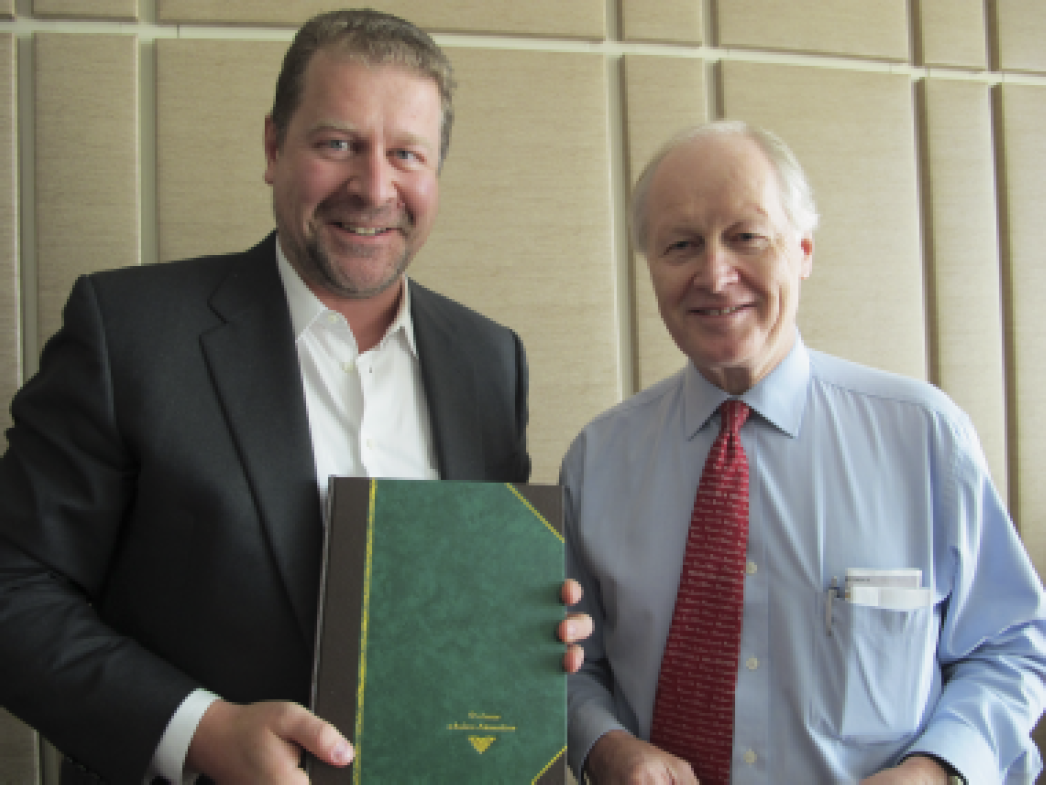
As a part of the maturation process of IJS we are constantly evolving in format, style, content and expert support. In this edition, we bid farewell to Associate Editor Andrei Alexandrov, a founding member of our editorial staff who has made an outstanding contribution, to making the journal what it is today.
As has become an almost tradition, we are again in the position of having a star member of our editorial team approached by other journals, who clearly recognize our talent pool. In this case, Andrei has been asked to lead an online access journal within the Wiley publishing family. Those of you who know Andrei or his work will appreciate that he is ideally suited to this challenge. We at IJS thank him enormously for his erstwhile contributions, generosity of spirit and dedication to IJS. Fortunately, Andrei will remain a member of our editorial board and will continue in this role, we wish him well in this future endeavor.
As one door closes another opens and in this we are extremely delighted to announce that Patrick Lyden has accepted the position of Associate Editor with IJS. Patrick is one of the worlds leading stroke researchers and is well known for being one of the key members of the team that brought us tPA as the first proven and approved drug for acute stroke therapy. He is one of a rare breed of clinicians who is also an expert in basic science research and has published numerous articles in both areas. His wisdom and knowledge will compliment our editorial team and will be a key part of the next phase of our development.
Many of us have just returned from the European Stroke Congress in Hamburg, which was, as usual, filled with interesting presentations and was an ideal opportunity for networking in an increasing collaborative stroke world.
Two presentations caught my eye particularly, both from Newcastle Australia; Mark Parsons, our Imaging Section Editor presented some intriguing phase two clinical trial data, clearly suggesting that tenectaplase may be superior to tPA in it's ability to repurfuse tissue and recanalize large arteries; clinical outcomes were also improved. Obviously, this would need to be more clearly established in a phase three trial; although it does raise the intriguing possibility that a more effective thrombolytic agent than tPA may exist. Sandra Middleton, a Professor of Nursing, presented the results of a large phase three-cluster randomized control trial in which she demonstrated that control of physiological variables plus early swallowing management significantly improved mortality and functional outcome. This is a very important first step in unraveling the ‘black box’ effect of patient management in a stroke unit. Other studies must follow so that we can identify practices within the stroke unit structure that should be enhanced while others may be less emphasized.
Each edition we feel that the quality of our original contributions, leading opinions and reviews continue to rise. Reaction to the unique findings of the FLAME trial (selective serotonin reuptake inhibitor Fluoxetine) and its positive effects on stroke recovery are nicely commented upon by Steven Cramer. Similarly, Lawrence Wong gives a quite personal insight into the issue of angioplasty and stenting of intracranial stenosis following the unexpected halting of the SAMPARIS trial due to unfavorable outcomes in the treatment arm; you can also find this article in podcast interview format on iTunes.
The next IJS is our regular World Stroke Day edition with important messages from world stroke leaders. We look forward to publishing the results of the World Stroke Day competitions around the globe. Enjoy.