






Abstract
This article studies a three‐layer supply chain where a manufacturer sells a product through a reseller who then relies on its own salesperson to sell to the end market. The reseller has superior capability in demand forecasting relative to the manufacturer. We explore the main trade‐offs between the risk‐reduction effect and the information–asymmetry–aggravation effect of the improved forecasting accuracy. We show that under the optimal wholesale price contract, both the manufacturer and the reseller are always better off as the reseller's forecasting accuracy improves. Nevertheless, under the menu of two‐part tariffs, the manufacturer prefers the reseller to be either uninformed or perfectly informed about the market condition. We further find that the improved forecasting accuracy is beneficial for the reseller if its current forecasting system is either very poor or very good.
Introduction
Because of their closer contact with the market and their adoption of advanced forecasting systems, the resellers are often at a superior position in demand forecasting relative to their manufacturers. Different resellers may differ in their forecasting accuracy, perhaps due to a wide variety of choices for their forecasting systems. Further, any given reseller's forecasting accuracy may change over time as it invests or disinvests in its forecasting system. While the resellers' forecasting capability obviously impacts their own performance, anecdotal evidence suggests that the upstream manufacturers care very much about their resellers' forecasting capability. Consequently, an important question emerges: How does the reseller's forecasting accuracy impact the performance of members in the supply chain?
Several recent contributions in the supply chain literature have studied this question and obtained several interesting insights. All these studies, however, are limited to two‐layer supply chains where a manufacturer sells to a single reseller (e.g., Taylor and Xiao 2010) or to multiple competing resellers (e.g., Shin and Tunca 2010). In supply chains such as auto, computer hardware, and retailing, manufacturers often sell products to resellers who then rely on their own salespeople to sell to the end consumers. Clearly, a three‐layer supply chain setting is needed to model these supply chains. How does the reseller's forecasting accuracy impact the performance of members in such a three‐layer supply chain? How do the insights obtained from the three‐layer model differ from those in the two‐layer models? These are the questions we study in this article.
We consider a three‐layer model including a manufacturer, a reseller, and a (risk averse) salesperson. The market demand is determined by a random market condition and the sales effort privately exerted by the salesperson. The reseller's forecasting system generates a demand signal that contains imperfect information about the market condition. The signal is privately observed by the reseller and its salesperson but unknown to the manufacturer. By using the normal/normal conjugate pair to model the demand signal, we identify a model parameter that measures the reseller's forecasting accuracy. We study two scenarios. In the first, the manufacturer offers to the reseller a single wholesale price contract (i.e., charging the reseller a fixed wholesale price for every unit sold). In the second, the manufacturer offers a menu of two‐part tariffs and lets the reseller self‐select. In both scenarios, the reseller offers a linear compensation scheme (i.e., fixed transfer plus commissions) to its salesperson.
We identify two main effects (drivers) that are useful in understanding the impact of the reseller's improved forecasting accuracy on the performance of supply chain members. On one hand, when a better‐forecasting reseller obtains more accurate information about the market condition, it can choose a more effective compensation plan that rewards the salesperson mainly for his sales effort and less for his luck (Gonik 1978). Specifically, to provide incentives for the salesperson to work hard, the salesperson's compensation must be linked to the final sales, which subjects the salesperson to risks due to the demand uncertainty. Consequently, the reseller must compensate the risk‐averse salesperson risk premiums for him to bear risks. These costly risk premiums result in the reseller's under‐provision of incentives for sales efforts and thus lower sales efforts. Improved forecasting accuracy provides a more accurate estimation about the uncertain market condition, thereby reducing the risks borne by the salesperson and mitigating inefficiency caused by the moral hazard problem. Such a risk‐reduction effect directly benefits the reseller because it makes sales‐effort‐incentive‐provision less costly for the reseller. It also indirectly benefits the manufacturer by boosting the sales effort level and thus the final sales volume. On the other hand, improved forecasting accuracy puts the manufacturer at a more severe strategic disadvantage relative to the reseller; consequently, the manufacturer distorts the contract terms further away from those desired by the entire supply chain. Specifically, the uninformed manufacturer, in designing the contract terms, must sacrifice operational efficiency to restrict information rents paid to the informed reseller. This adverse selection problem is aggravated when the reseller's forecasting accuracy gets improved, and it leads to a bigger loss in operational efficiency. Such an information–asymmetry–aggravation effect not only is detrimental to the manufacturer by giving up more profit share to the more informed reseller, but also may hurt the reseller because the total supply chain profit is reduced.
It is the trade‐off between the risk‐reduction effect and the information–asymmetry–aggravation effect that determines the impact of the reseller's forecasting accuracy on the performance of supply chain members. Our main results are summarized as follows. First, we show that under the optimal wholesale price contract, both the manufacturer and the reseller are always better off as the reseller's forecasting accuracy improves. Second, under the menu of two‐part tariffs, the manufacturer prefers the reseller to be either uninformed (i.e., the signal contains no information about the market condition) or perfectly informed (i.e., the signal completely reveals the market condition). In other words, contracting with any partially informed reseller is suboptimal for the manufacturer. Further, the manufacturer is better off as the reseller's forecasting accuracy improves if the reseller is already good at forecasting, but the opposite is true if the reseller's current forecasting accuracy is poor. Notably, we find that in the special case where the salesperson is risk neutral, the risk‐reduction effect no longer exists and therefore the reseller's improved forecasting accuracy unambiguously hurts the manufacturer.
Our results manifest the similarities and differences between the traditional two‐tier setting and our three‐tier one. Specifically, our first result is distinct from the finding by Taylor and Xiao (2010) that under the optimal wholesale price contract, both the manufacturer and the reseller can be hurt as the reseller's forecasting accuracy improves. The difference can be explained as follows: Taylor and Xiao (2010) focus on how the reseller's improved forecasting accuracy reduces the cost of supply/demand mismatch in a two‐layer supply chain, a more accurate demand forecast may actually reduce the reseller's order quantity via the safety‐stock argument. Thus, the improvement on supply chain efficiency does not necessarily translate to a higher profit share for the manufacturer under the wholesale price contract. In contrast, in our three‐tier setting, risk reduction leads to a higher sales outcome, and the manufacturer unambiguously benefits through the proportional profit sharing. This effect is much stronger in our setting and it turns out to dominate the information–asymmetry–aggravation effect under the wholesale price contract, leading to a monotone preference that differs from the finding by Taylor and Xiao (2010). Our second result shows that the quasi‐convexity (U‐shaped feature) identified by Taylor and Xiao (2010) carries over to the three‐layer setting under the menu of two‐part tariffs, demonstrating the robustness of this result. However, the impact of the reseller's improved forecasting accuracy on the reseller's performance is distinct from that in Taylor and Xiao (2010). In particular, the reseller's improved forecasting accuracy is beneficial for the reseller if its current forecasting system is either very poor or very good. In contrast, Taylor and Xiao (2010) show that the improved forecasting accuracy is beneficial for the reseller only if its current forecasting system is very poor.
Our finding that the reseller can be hurt by its improved forecasting accuracy is similar to the well‐documented “accuracy trap,” as forecasting accuracy improvement does not necessarily lead to increased profitability for the reseller (Laucka 2005). Interestingly, while Shin and Tunca (2010) show that this puzzling phenomenon can be explained by horizontal competition, our analysis indicates that such an issue may arise in a decentralized three‐layer vertical relationship without horizontal competition. Collectively, our results suggest that the strategic concerns regarding the forecasting accuracy crucially depend on the contract form, and highlight the similarities and differences that arise from the three‐layer setting.
The rest of this article is organized as follows. Section 2 reviews some relevant literature. We introduce the model in section 3. In section 4, we study the scenario where the manufacturer offers a single wholesale price contract to the reseller. In section 5, we study the scenario where the menu of two‐part tariffs is employed. Section 6 concludes. All proofs are in the Online Appendix.
Literature Review
Our article belongs to a research stream that looks at decentralized systems with superior performance due to incentives particularly for forecasting accuracy. In an early contribution, Celikbas et al. (1999) study the coordination issue between the manufacturing and marketing departments that operate in the decentralized manner. They show that when the marketing department provides the demand forecast to manufacturing, a meticulously designed penalty scheme can bypass the incentive misalignment problem and restore the centralized supply chain performance. See also Freeland (1980) for why imperfect information may result in suboptimal pricing and marketing promotions in the decentralized system. In a similar vein, various researchers have investigated the supply chain settings wherein different parties have distinct demand information, see, for example, Cachon and Fisher (2000), Gavirneni et al. (1999), and Lee et al. (2000). A central topic among these article is whether or not truthful information sharing can be facilitated, how it is implemented via practical schemes, and what factors drive the profitability of such information sharing. In these article, improved forecasting accuracy is unambiguously beneficial, whereas we demonstrate that this may be detrimental to the manufacturer or the retailer. A recent article by Taylor and Xiao (2009) investigates the retailer's incentive to invest on forecasting under the returns and rebates contracts that are mirror images of each other; see also Miyaoka and Hausman (2008) for a similar setup where the upstream party makes the capacity decision. The three‐layer structure is absent in their setting, and the retailer in their model is either perfectly informed (after investment) or completely uninformed, whereas we allow for imperfectly informed resellers.
There is substantial literature that studies supply chains in which firms have distinct information about the random market demand (see Cachon 2003, Chen 2003 for surveys). Information sharing can be achieved by two approaches. In the first approach, the firms need to make an explicit decision to share or not, for example, by deciding whether or not to participate in a collaborative forecasting process. In this case, the interesting questions include how to use the shared information to improve channel profits and what factors are crucial in affecting the magnitude of the improved profits (He et al. 2008). See also Ha et al. (2011), Jain et al. (2011), Li (2002), and Li and Zhang (2008) for the information sharing articles where the retailers may indirectly disclose their private information through the transactions with the upstream supplier. In the second approach, incentive contracts (often in the menu form) are designed so that firms implicitly reveal their private information from their contract choice (e.g., Deshpande et al. 2011, Iyer et al. 2005). Our work follows the second approach. But our article differs from this stream of literature in two dimensions. First, we allow the party with superior information to be partially informed, while most of the articles in this field assume that the informed party is perfectly informed. Second, by taking the salesperson's effort incentives into account, we consider a three‐layer supply chain, where the reseller is not only a contract follower (for the manufacturer) but also a contract designer (for the salesperson).
The salesforce compensation has long been a central topic in the marketing literature, see, for example, Chen (2005), Gonik (1978), Mantrala and Raman (1990), Raju and Srinivasan (1996), and Rao (1990). Their main focus is on how the firm should design compensation plans to extract accurate demand forecasts from sales personnel and to compensate them appropriately. We have a distinct focus that is to examine the impact of the reseller's forecasting accuracy on the performance of the supply chain. There have been some recent papers that investigate different formats of incentive structures such as the stair‐step (threshold) sales incentive used in the automotive industry. For example, Sohoni et al. (2011) consider the scenario in which the dealer is paid on a per unit basis when the total sales exceeds a threshold value; a fixed bonus may also be offered. In a dynamic setting, Sohoni et al. (2010) show that the stair‐step sales incentive may give rise to an intrinsic incentive for the dealer to exert a large effort at the end period in order to boost the sales and meet the threshold. Chen et al. (2007) study the optimal contracting mechanism when the manufacturer faces multiple dealers under general correlation structure of demand signals. They show that full surplus extraction can be achieved when other dealers' signals are sufficiently informative. The three‐layer supply chain structure studied in our article is not explored in the aforementioned articles. Furthermore, our results show that different contract forms could significantly affect the manufacturer's preference over resellers. This observation has no counterpart in the aforementioned articles.
The Model
In our model, a manufacturer sells a product through a reseller, who then relies on its own salesperson to sell to the end market at a fixed price p in a single selling season. The market demand x in the selling season is determined by a random market condition θ and the sales effort a privately exerted by the salesperson, via the following additive form:


Forecasting Accuracy
An important feature of our model is that the reseller installs an information system which generates, prior to the selling season, a demand signal η containing valuable information about the market condition θ. In particular, we assume that η is an unbiased estimator of θ with the observational error ɛ being normally distributed, that is, η = θ + ε, where


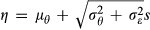
It follows from the conjugate property of normal distribution that the posterior distribution of θ given the signal s is also normal, that is,


Information Structure
We incorporate the information asymmetry specifically in two aspects. First, we allow the reseller to privately observe the demand signal, which creates the adverse selection problem between the manufacturer and the reseller. Second, because the third layer is crucial for the supply chain performance, we introduce the unobservable sales effort exerted by the salesperson, which creates the moral hazard problem between the reseller and the salesperson. The less relevant components are assumed to be common knowledge, including the demand distribution, the salesperson's risk aversion magnitude, and the reseller's and manufacturer's objective functions. The assumption that the manufacturer knows the reseller's forecasting accuracy is appropriate when such knowledge can be perceived from the reseller's historical forecasting performance or the evaluation of the reseller's information system. We assume both the manufacturer and reseller are risk neutral, but the salesperson is risk averse and his goal is to maximize his expected utility. The salesperson's risk preference is given by a negative exponential utility function:

Regarding the possibility that the salesperson ends up with zero utility, this is certainly made for ease of exposition. We can allow the salesperson to have a non‐degenerate outside option, which gives rise to a positive reservation payoff. In this case, the reseller needs to ensure that the salesperson receives at least his reservation payoff to induce participation. All our qualitative results are unaltered, except that now the reseller pays the salesperson a higher fixed payment accordingly. We could also allow the outside option to be random in nature and account for the salesperson's certainty equivalent upon opting for this outside option. Again the result will be qualitatively identical.
Contracts
Because the reseller has superior information about the market condition, the manufacturer's best strategy is to offer the reseller a menu of contracts (see e.g., Laffont and Martimort 2002). From the revelation principle,2 we can without loss of generality restrict the menu to the payment scheme T(s,x), which is a function of the reseller's reported signal s and x is the realized quantity that type‐s reseller procures from the manufacturer. In principle, one would have liked to study the optimal contract design in this three‐layer setting. Nevertheless, characterizing the optimal contract in the presence of moral hazard and risk aversion has been known as an open question even in the two‐layer setting (see Mishra and Prasad 2004 and a recent survey by Mantrala et al. 2010). Our article imposes, on top of this contract design problem, the three‐layer structure with a cascade of upstream and downstream interactions.
Thus, we follow the route laid out by Sohoni et al. (2011) and Sohoni et al. (2010) to study the practical contracts and how they influence the channel members' preferences on the forecasting accuracy. In section 4, we consider the commonly used wholesale price contract; under our MTO assumption, this means that the manufacturer charges a fixed wholesale price ɷ from the reseller for every unit of sales to consumers. In section 5, we restrict the payment scheme to be linear in the sales x, that is, T(s,x) = ɷ(s)x + t(s), where the manufacturer specifies the wholesale price ɷ(s) and fixed payment t(s) each as a function of the reseller's report s. For a given report s, the payment scheme between the manufacturer and the reseller becomes a two‐part tariff. These contracts are commonly used in the multi‐layer supply chains. Notably, the comparison of these two contract forms is also adopted in a recent article by Shin and Tunca (2010), where they study the investment of forecasting accuracy in a supply chain setting.
Timing
The sequence of events is as follows: (i) The manufacturer announces a contract (or a menu of contracts) to the reseller; (ii) The reseller and its salesperson observe the signal s, based on which the reseller decides whether or not to accept this contract (chooses a contract if there is a menu of contracts). If the reseller rejects the contract, then the game is over and every channel member gets zero profit; (iii) Based on the signal s and the chosen contract, the reseller announces a compensation scheme to its salesperson; and (iv) The selling season starts, the salesperson exerts sales effort, and the sales are then realized. The sales revenue goes to the reseller, the payment is made by the reseller to the manufacturer according to the chosen contract, and the salesperson receives his compensation from the reseller. Throughout the article, the salesperson's compensation scheme is restricted to be linear in the sales volume x, that is, α + βx, where α is the fixed transfer and β is the commission rate. Since the compensation scheme is completely specified by these two parameters, we can conveniently denote the salesperson's compensation scheme by (α,β). The linear scheme is widely used in practice for salesforce compensation.
The Wholesale Price Contract
Under the wholesale price contract, the manufacturer charges the reseller a wholesale price ɷ for every unit of sales. After observing the signal s, the reseller determines the compensation scheme (α,β) for its salesperson. The analysis proceeds in two steps. First, we characterize for any given wholesale price ɷ the reseller's optimal choice of the salesforce compensation scheme. Second, we derive the optimal wholesale price that maximizes the manufacturer's expected profits.
The Reseller's Problem
Define the type‐s reseller to be the reseller who observes the signal s, where s ∼ N(0,1). The type‐s reseller's problem is to determine the fixed transfer α and commission rate β for its salesperson.
Under the compensation scheme (α,β), the salesperson's net income by exerting effort a is


Thus, the salesperson's expected utility given the signal s takes the following certainty equivalent form:



Given that the salesperson exerts his optimal effort level a = β, the reseller's expected profit under the compensation scheme (α,β) is

Thus the reseller's problem of designing the optimal linear compensation scheme for the salesperson is:
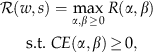
We can solve the optimization problem above in closed‐form. First note that the constraint should be binding at the optimal solution, by which we can express α as a quadratic function of β. Plugging this expression in the objective function, the reseller's problem reduces to an unconstrained optimization problem with a concave quadratic function of β, which is straightforward to solve. The optimal solution is given in the following proposition.
Under any wholesale price contract ɷ, the type‐s reseller's optimal linear compensation scheme for its salesperson, denoted by Under this compensation scheme, the salesperson exerts sales effort


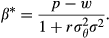


Several observations are noteworthy. First, if we consider the centralized system in which a single decision maker decides the sales effort to maximize the system's expected profits, then the optimal sales effort (called the first‐best sales effort) is equal to the profit margin p. However, in the decentralized system with a wholesale price contract, the reseller induces the salesperson to exert sales effort that is lower than the first‐best sales effort (see Equation (4)). This downward distortion is caused by two factors: (i) The reseller faces a profit margin p−ɷ that is less than the system's profit margin p. This means that the reseller values less from each incremental sales relative to the centralized system and thus offers less incentive for inducing sales effort. This is reminiscent of double marginalization; and (ii) Because the sales efforts are not enforceable, the reseller has to offer commissions to induce the salesperson to exert sales effort. But the commissions also subject the salesperson's net income to risks resulting from the uncertain sales. This is costly for the reseller because the reseller has to compensate the risk‐averse salesperson risk premiums for bearing risks. Thus, the reseller has to further distort the commission rate downward to limit the risk premiums. This is the standard moral hazard problem. Combining these two factors, the extent of downward distortion in sales effort is greater when the wholesale price ɷ is higher, the agent is more risk averse (larger r), or the sales are more volatile (larger

Second, from Equation (5), the reseller's expected profits include two parts: the profit gains from sales due to the market condition and from sales resulting from the salesperson's sales efforts. Taking the expectation over s, the first part is independent of forecasting accuracy parameter σ. However, the second part decreases in σ. This can be explained as follows: The higher the forecasting accuracy (i.e., lower σ), the less risky the sales. This risk‐reduction effect mitigates the moral hazard problem, and thus is beneficial for the reseller.
We now characterize the optimal wholesale price from the manufacturer's perspective. Because R(ɷ,s) increases in s, the type‐s reseller accepts the wholesale price contract ɷ if and only if



The objective function can be further rewritten as:
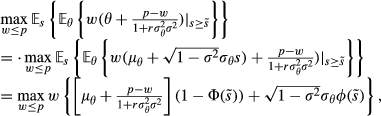




The probability that the signal s is less than the cutoff value


By Lemma 1, together with our assumption that P(θ<0) is sufficiently small, we can simplify the manufacturer's problem as follows:
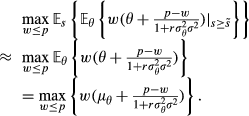
Because the objective function is a concave quadratic function of ɷ, it is straightforward to solve the above problem. We summarize the results in the following proposition.
The manufacturer's optimal wholesale price is



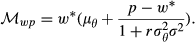
Recall that r measures the salesperson's risk attitude and




In determining the wholesale price to maximize its expected profit, the manufacturer faces a trade‐off between two forces that work in opposite directions: pushing the wholesale price up to enjoy a higher profit margin and lowering the wholesale price to enjoy more sales resulting from the increased sales effort. The trade‐off is crystallized by Equation (6), which suggests that the manufacturer should go for a higher wholesale price when either the base demand


To evaluate the impact of forecasting accuracy on the reseller's performance, we should consider the reseller's expected profit before observing the signal, denoted by


The following corollary summarizes the impacts of the reseller's forecasting accuracy on the performance of the manufacturer and reseller.
Under the manufacturer's optimal wholesale price contract, both the manufacturer and reseller are better off as the reseller improves its forecasting accuracy, that is, both


By improving its forecasting accuracy (reducing σ), the reseller reduces the sales volatility (i.e.,

In this section, we study the scenario where the manufacturer offers a menu of two‐part tariffs to the reseller. Under the menu of two‐part tariffs T(s,x) = ɷ(s)x + t(s), the reseller truthfully reports the signal s, which determines the wholesale price ɷ(s) and fixed payment t(s). The reseller then determines the compensation scheme (α,β) for the salesperson. Based on the signal s and the compensation scheme (α,β), the salesperson then exerts sales effort to maximize his expected utility. In this section, we characterize the optimal form of {ɷ(·),t(·)} that maximizes the manufacturer's expected profits under the self‐interested responses from the reseller and its salesperson. In section 5.1, we carry out the optimal menu of two‐part tariffs, and articulate the two critical economic drivers. Following this, we discuss the interplay between these drivers in section 5.2. Finally, in section 5.3 we examine the impact of reseller's forecasting accuracy.
Characterization of the Optimal Menu
Because the two‐part tariff adds only a fixed payment to the wholesale price contract, the reseller and its salesperson's optimal responses under the two‐part tariff {ɷ,t} are identical to those under the wholesale price contract ɷ, which are characterized in Proposition 1. To save notation, let



Let


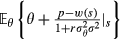
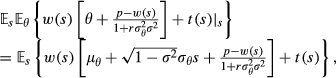



To characterize the solution to the manufacturer's contract design problem (OBJ)‐(IR), the following notation is useful. Recall that





The manufacturer's optimal menu of two‐part tariffs is
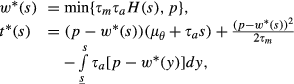

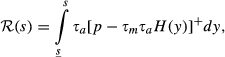


Intuitively, if the reseller has no informational advantage over the manufacturer (



The above equation shows that the lower the wholesale price


In our setting, adverse selection exists between the manufacturer and the reseller, and moral hazard exists between the reseller and its salesperson. The equation (10) reveals how the extent of adverse selection and moral hazard (measured by


We should also emphasize that the asymmetric information and unobservable efforts significantly affect the individual parties as well as the entire channel. To see this, note that the ultimate channel performance is determined solely by the sales effort exerted by the salesperson, and under the optimal contract it takes the following form:




Next, we examine how the extent of adverse selection (


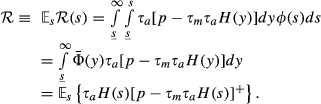
This, together with Equation (12), leads to the total system's expected profit

The following corollary follows directly from Equations (12), (14), and (15)
(i)


A larger extent of moral hazard (


Recalling that



Moreover, we can also articulate the impact of the forecasting accuracy on these coefficients. Specifically, improving the reseller's forecasting accuracy (decreasing σ) mitigates the moral hazard (i.e., decreases



To examine the impact of forecasting accuracy σ on the performance of the manufacturer (




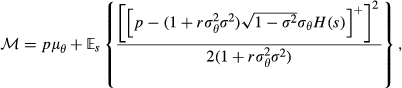

In the following section we separately discuss the impacts on the manufacturer and the reseller.
The Manufacturer's Preference
We start with the manufacturer's preference. The result is summarized in the following proposition.


Proposition 4 conveys several intriguing messages. First, it is optimal for the manufacturer to work with either an uninformed reseller (σ = 1) or a perfectly informed reseller (σ = 0); contracting with any partially informed reseller is suboptimal. This provides a useful guideline for the manufacturing practitioners when they face the partner selection problem while expanding their territories to other regions, countries, or continents. Second, Proposition 4 shows that there exist two forecasting regimes (


To understand these results, the following intuitive arguments may be helpful. On the one hand, improving forecasting accuracy decreases the reseller's cost of inducing sales effort by reducing the sales volatility faced by the salesperson. This is the risk‐reduction effect, a bright side of improved forecasting accuracy. On the other hand, the reseller's improved forecasting accuracy aggravates the extent of information asymmetry between the reseller and the manufacturer. This is detrimental to the manufacturer for two reasons. First, the greater distortion in contractual terms reduces the total supply chain profits. Second, the manufacturer must leave a bigger share of the total supply chain profits to the more informed reseller. This constitutes the information–asymmetry–aggravation effect, a dark side of improved forecasting accuracy.
The above two conflicting forces are perhaps best illustrated if we consider two extreme scenarios. First, suppose that the manufacturer observes directly the reseller's signal and therefore the adverse selection problem vanishes. In this case, it is verifiable that the corresponding manufacturer's expected payoff is
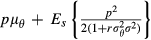
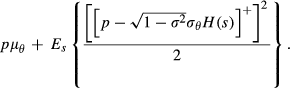
A higher forecasting accuracy thus leads to a more severe adverse selection problem, and the manufacturer has to leave more information rent for the reseller (indicated by the term

We further observe that, when the reseller's forecasting accuracy is very poor (σ is close to 1), improvement on forecasting accuracy gives rise to a significant increase in the reseller's informational advantage. Thus, the information rent that the manufacturer must pay to the reseller increases dramatically.3 Consequently, the dark side (information–asymmetry–aggravation effect) becomes more pronounced, and the manufacturer is worse off as the reseller's forecasting becomes more accurate. On the other hand, when the reseller's forecasting accuracy is very good, improvement of forecasting accuracy leads to an insignificant increase of informational advantage for the reseller. In this regime, the benefit of risk premiums saving becomes dominant; thus, the manufacturer also benefits from a more accurate forecasting. This intuitive argument then gives rise to a “U‐shaped” (quasi‐convex) function for the manufacturer's expected profit in the reseller's forecasting accuracy. It is worth mentioning that this result is in strict contrast with a recent contribution by Taylor and Xiao (2010), where they show that in a standard two‐layer setting, the manufacturer's preference over the forecasting accuracy exhibit similar features when either a wholesale price contract or a menu of two‐part tariffs is adopted. Thus, it crystallizes the unique feature of the three‐layer problem, and the primary driver is precisely the moral hazard problem brought by the third‐layer salesperson.
Next we turn to address the manufacturer's preference between the uninformed reseller (σ = 1) and the perfectly informed reseller (σ = 0). Let



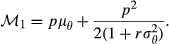
The perfectly informed reseller gets rid of the sales volatility faced by its salesperson, thereby eliminating the moral hazard problem. Therefore, with the perfectly informed reseller, the manufacturer faces a pure adverse selection problem, under which the manufacturer has to leave positive profits (information rents) for the reseller. In contrast, the manufacturer is able to extract all the surplus from the uninformed reseller. However, risk premiums are necessary for the risk‐averse salesperson to bear sales risks, and those risk premiums are essentially borne by the manufacturer. Therefore, with the uninformed reseller, the manufacturer faces a pure moral hazard problem.
Comparing Equations (18) and (19) reveals that there exists a threshold


One may conjecture that the reseller should be better off by improving its forecasting accuracy because this not only alleviates the moral hazard problem faced by the reseller but also strengthens the reseller's ability to extract profit from the total pie. Nevertheless, this is only partially true as suggested by the following proposition.
There exists


Proposition 5 shows that the reseller is better off by improving its forecasting accuracy when its current forecasting accuracy is either very poor or very good. However, this conjecture may not be true when the reseller's forecasting accuracy is moderate, as illustrated by the following numerical example. In the example, we fix the parameters

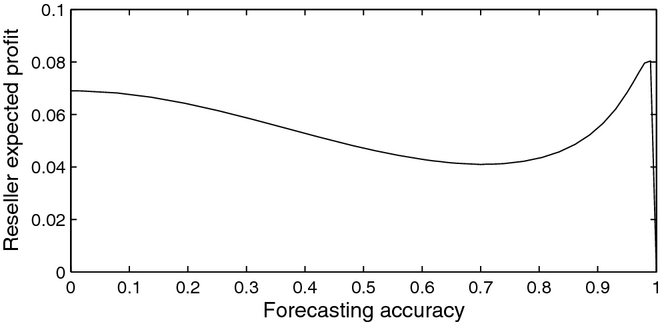
The Reseller's Expected Profit vs. the Forecasting Accuracy
The figure shows that the reseller is worse off by improving its forecasting accuracy for moderate forecasting accuracy. The intuition as to why the reseller can be worse off is that a higher forecasting accuracy forces the manufacturer to distort the wholesale prices further away from the ideal level, thereby aggravating the double marginalization problem. This may reduce the size of the total pie when the effect of alleviating moral hazard is not so strong. The shrunk total pie can make the reseller worse off even if improving forecasting accuracy allows the reseller to extract a larger portion from the total pie due to the enhanced informational advantage. This result is in contrast with Taylor and Xiao (2010), who show that the improved forecasting accuracy is beneficial for the reseller only if its current forecasting system is very poor. In addition, this provides another rationale of the well‐documented “accuracy trap,” as forecasting accuracy improvement does not necessarily lead to increased profitability (Laucka 2005). Incidentally, although Shin and Tunca (2010) show that this puzzling phenomenon can be explained by horizontal competition, our analysis indicates that such an issue may arise in a decentralized vertical relationship alone. An implication of the above finding is that if the reseller's investment in improving forecasting accuracy is costly, then such an investment may not be a wise decision for the reseller whose current forecasting accuracy is moderate. However, it might be a profitable investment if the reseller's current forecasting accuracy is either very poor or very good.
In this article, we examine the impact of the reseller's forecasting accuracy on the performance of a three‐tier supply chain in two scenarios. We show that the manufacturer should not blindly encourage the reseller to improve its forecasting accuracy, and we characterize the precise regime in which this is profitable. The reseller is better off by improving its forecasting accuracy if its current forecasting accuracy is either very poor or very good, but it can be hurt if its current forecasting accuracy is moderate. This result is different from that documented in the two‐layer setting, and it provides a theoretical ground on the well‐documented accuracy trap phenomenon. Our results also demonstrate that the reseller's forecasting accuracy significantly affects the supply chain performance, even if it does not directly contribute to the production process. Furthermore, different contract forms could significantly affect the manufacturer's preference over resellers with different forecasting accuracies, and this discrepancy arises precisely because of the three‐layer interactions.
Several extensions are in order. In this article we restrict to the make‐to‐order setting. This allows us to focus on the impact of forecasting accuracy on the adverse selection and the moral hazard. Another important setting is the “make‐to‐stock” setting in which the reseller has to make an ordering decision before demand is realized. The main trade‐off between “forecasting mitigates moral hazard” and “forecasting aggravates adverse selection” persists in the make‐to‐stock setting. In addition, a new driving force “forecasting alleviates supply/demand mismatch” arises when the ordering decision must be made before the selling season.
Second, there are situations in which the manufacturer sells through multiple resellers in different territories. If there is no linkage across different resellers, our results can be directly applied to this more general scenario because we can essentially decompose the problems into subproblems, each of which corresponds to a specific manufacturer–reseller–salesperson contractual relationship. In this sense, individual contracts that use exclusively the reports and sales outcomes within each relationship suffice. However, if the demand signals of different resellers are correlated, the manufacturer may reduce the information rents left for the resellers if a more sophisticated contract form is adopted. Specifically, the manufacturer can exploit the correlation between the resellers' signals and make contingent contracts that depend on the report profile of all the resellers (following a similar argument by Chen et al. 2007). Under mild technical conditions, it is possible that the manufacturer achieves the first‐best outcome and leaves no information rent for any reseller—known as the full surplus extraction result in the mechanism design literature. While this may be useful when local demands are commonly affected by changes in general economic conditions (i.e., business cycle, seasonality) or marketing factors (customers' preference shift, introduction of competing products), it is substantially different from the main purpose of our article and therefore is left unexplored.
Third, in our setting we abstract away the reseller's cost of improving upon the forecasting accuracy, and the forecasting accuracy is assumed to be publicly observable by the manufacturer. If the forecasting accuracy cost is not verifiable by the manufacturer, then this addition will change the adverse selection problem in our current setting to the so‐called endogenous adverse selection, because now the reseller can select her own “type” in the ex ante stage by choosing the costly accuracy improvement. This largely changes the structure of the problem (see Taylor and Xiao 2009 for a recent demonstration of the complexity of a related problem). In addition, it would also be intriguing to introduce various types of resellers that differ in their forecasting accuracies and see how the manufacturer utilizes menus of contracts to distinguish them.
Fourth, we concentrate on the wholesale price contract and a menu of two‐part tariffs. In reality, transactions between manufacturers and resellers may go beyond these two popular contract forms, and apparently the impact of reseller's forecasting accuracy is significantly influenced by the choice of contract form (as 1 of the primary messages we convey in this article). As aforementioned, the most general contract form should specify the payment scheme T(s,x), which is a function of the reseller's reported signal s and x is the realized quantity that type‐s reseller procures from the manufacturer. The characterization of the optimal contract design in this three‐layer setting is theoretically challenging. In addition, studying other restrictive contract forms may be of practical interest as well.
Finally, it is worth mentioning that our results are largely built upon the different risk attitudes of supply chain parties—the manufacturer and the reseller are both risk neutral, whereas the salesperson is risk averse. This assumption is suitable for the situation wherein the manufacturer and the reseller are both large‐scale companies and therefore are less prone to the temporary fluctuations of cash flows. Nevertheless, when either their firm sizes are moderate or they lack various sources for financial hedging, the associated financial risks may become a primary concern even for the manufacturer and the reseller. In such a scenario, it might be appropriate to incorporate risk aversion not only at the salesperson level but also along the entire supply chain. Extending along this direction is fruitful and will certainly lead to novel managerial implications.
Footnotes
Acknowledgments
We thank Jay Swaminathan (the department editor), the senior editor, and the reviewers for their detailed comments and many valuable suggestions that have significantly improved the quality of the article. We have also benefited from the discussions with Argon Chen, Mingcherng Deng, Florian Ederer, Lu Hsiao, Ke‐Wei Huang, Ganesh Iyer, Miguel Villas‐Boas, Chi‐Cheng Wu, Xiaojian Zhao, and seminar participants in UC Berkeley, Chinese University of Hong Kong, National University of Singapore, National Taiwan University, and Academia Sinica. All remaining errors are our own.
1
Fraser (2003) reports on a survey of 120 companies on collaborative planning, forecasting, and replenishment initiatives and puts “improvements in trading partner forecasting accuracy” at the top of the list of benefits anticipated by survey respondents. The benefits from this improved accuracy include reduced out‐of‐stocks, improved service levels, and increased sales. Sony reports that efforts that have improved its retailers' forecasting accuracy have translated into reduced out‐of‐stocks, better use of capital, and improved competitiveness and performance for Sony (Stoller 2004). For Hewlett‐Packard (HP), the forecasting accuracy of its distributors is sufficiently important that it assesses the performance of its distributors in this dimension and recognizes the top performer with an award. HP recognized its distributor Pinacor as ranking number one for “supply chain planning and forecasting accuracy.” As with the examples of other suppliers above, HP views the forecasting accuracy of its distribution partners as impacting customer satisfaction and the profits of both the distributor and HP (Newswire  ).
).
2
The revelation principle is indeed applicable in our context because the only source of adverse selection problem arises between the manufacturer and the reseller. Consequently, the direct revelation or agent's reporting occurs only in the upstream contracting stage. In this sense, our model follows the classical application of revelation principle with one source of adverse selection. Our three‐layer setting creates further complication in the incentive alignment due to the downstream moral hazard issue. However, this only requires the optimal sales effort choice by the salesperson, whereas the truthful reporting of one's own type is absent in the downstream.
3
In our context, the information rent of a type‐s reseller can be conveniently defined as