






Abstract
Pakistan's frontier insurgency and porous borders are blamed for the floundering military mission in Afghanistan. However, as
No nation has ever made a frank avowal of its real imperial motives. It always claims to be primarily concerned with the peace and prosperity of the people whom it subjugates.
(Reinhold Niebuhr).
Afghanistan may well become Obama's Vietnam, but his diversion is not Cambodia, or Laos, it is nuclear-armed Pakistan. History sometimes repeats itself both as tragedy and farce.
Weeks before Obama described al-Qaeda as a threat on a par with Nazi Germany, national security adviser, General James Jones, told CNN that the organisation had fewer than a hundred men in Afghanistan. Driven by institutional inertia and vulnerable to the charge of weakness, Obama appears unable to disengage. Instead he has borrowed Bush's rhetoric of good and evil and joined the fear factory. He has subsumed al-Qaeda and the Taliban into a singular threat of global proportions whose defeat he pronounced ‘fundamental to the defense of our people’. Afghanistan, he argued, will not be pacified until the Taliban's allies in Pakistan are vanquished. Precipitated withdrawal will restore the Taliban to power, and create a safe haven for al-Qaeda to plan more terrorist attacks on the west.
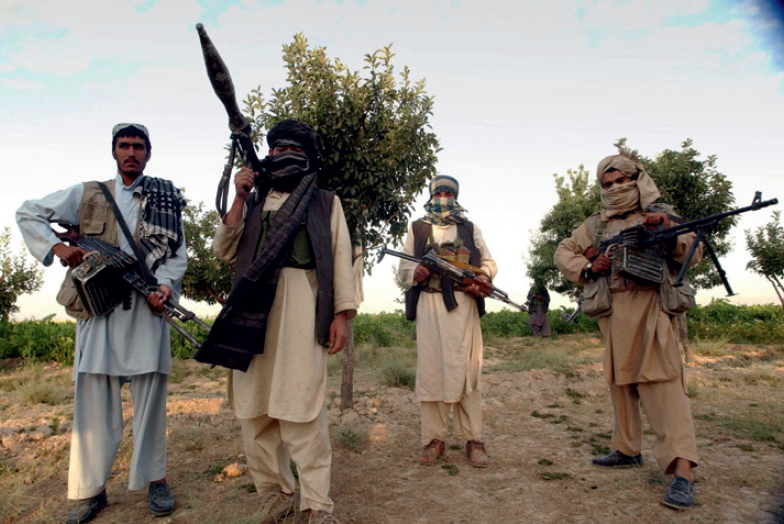
Like ‘al-Qaeda’, the very label ‘Taliban Movement’ suggests an organisational coherence that in fact does not exist. The Afghan Taliban is a diffuse, indigenous, rural insurgency resisting the US occupation. The Pakistani Taliban's concerns on the other hand are local to the country's north-west frontier. Al-Qaeda is a transnational jihadist movement, a nominal umbrella that both groups tolerate only to the extent that their goals converge. It is a marriage of convenience — and it has not prevented Taliban leaders from blaming al-Qaeda for inviting the US attack on their respective homelands. Defeating the Taliban would not necessarily eliminate al-Qaeda, and the Taliban could return to power without bringing back foreign jihadis. They have every reason not to. The last thing a restored Taliban would want is to present the US with an excuse to reoccupy its country.
In Pakistan, the naming of the Tehreeke-Taliban Pakistan (TTP) is indicative of a movement that sees itself as a local insurgency rather than a transnational jihadist movement. Founded on 14 December 2007 as an umbrella organisation of Pashtun Islamists, the TTP presented a set of demands, all of which reflected local concerns. Moreover, the TTP has factions whose interests do not always accord with its broader goals. The movement is no doubt broadly sympathetic to the efforts of the Afghan Taliban and it resents Pakistani participation in the US war on terror; however, it possesses neither the intent nor the capacity to attack the US on its own soil.
The year 2009 was pivotal in the evolution of the insurgency in Pakistan: in it the last peace agreement between the TTP and the Pakistani government collapsed under US pressure. The military has since launched two major offensives against the insurgents in Malakand and the semi-autonomous Federally Administered Tribal Areas (FATA). The rebel leader Baitullah Mehsud was assassinated in a US drone strike. The violence has been relentless since: thousands killed, millions displaced. In response, a merciless terrorist campaign has hit Pakistan's major cities.
Towards the end of 2009, I returned to Peshawar. The same night I arrived in the city, the quiet suburb where I grew up was hit by nine rockets. In the months since, Peshawar has sustained near-daily bomb and mortar attacks, including suicide bombings. In another ominous development, the Taliban, hitherto an exclusively Pashtun phenomenon, has now been joined by a new force: the Punjabi Taliban. The militant attacks have grown increasingly audacious, even reaching the heart of Pakistan's military establishment.
Although Pakistan's US-mandated military policy has had no discernible impact on the situation in Afghanistan, its own security has progressively deteriorated. The insurgents have developed into a more potent threat with each new military incursion, their attacks becoming increasingly indiscriminate.
This spiral into chaos began in 2002 when, following their rout, many Afghan militants crossed the porous border to regroup in Pakistan's tribal areas. Veteran anti-Soviet commander Jalaluddin Haqqani's network was headquartered in North Waziristan, and Gulbuddin Hikmatyar's Hizb-e-Islami in Bajaur. Further south, most of the former Taliban leadership took sanctuary in Baluchistan where Afghanistan's one-time ruler Mullah Omer retains overall command of the Afghan insurgency. Like most of the people along Pakistan's western border, these groups are all ethnic Pashtuns, with long-standing ties to Pakistan's military. Both the Peshawar Shura (actually based in North Waziristan) and the Quetta Shura (based in Baluchistan) are careful not to carry out any operations inside Pakistan. In turn Pakistan sees these groups as bulwarks against the growing Indian influence in Afghanistan. They are also the only effective political-military organisation representing the majority Pashtuns in Afghanistan.
As US pressure mounted, the Pakistan army marched in to apprehend ‘foreign fighters’ in the tribal areas, mainly Uzbeks, Chechens and Arabs. When the tribes refused to surrender their ‘guests’, they were subjected to collective punishment, uniting them against the government. Local grievances such as under-investment in infrastructure have long been a cause of resentment against the government. These came to a head when disparate militant groups coalesced to form the Pakistani Taliban, distinct from and less disciplined than its Afghan counterpart. The increasingly ineffectual tribal elders were replaced by individuals such as Nek Muhammad, a charismatic, 27-year-old veteran of the Afghan war and sworn enemy of the US presence in Afghanistan.
In 2004, after two attempts on Pervez Musharraf's life, the government ordered 5,000 troops into South Waziristan. The offensive, supported by helicopter gunships, was repulsed and the government cut its losses by signing a peace treaty with Nek Muhammad.
The ceasefire broke on 18 June 2004, when Muhammad was assassinated in a US drone strike. In the first of many such incidents, the government claimed responsibility to avoid the embarrassing admission that its sovereignty had been breached. Two more peace deals suffered similar fates after the US engineered their collapse with further drone strikes, including one that killed 80 children at a seminary in Bajaur in October 2006. Days later a suicide bomber walked into a military facility and killed 42 soldiers. All remaining agreements ended in August 2007 after Pakistani forces stormed a mosque in Islamabad held by militants sympathetic to the Taliban, killing many innocents. By now the violence had spilled over into the mainland, with Malakand's Swat valley the new flashpoint.
In Swat the Tehreek Nifaz-e-Shariat-e-Muhammadi (TNSM) had long campaigned for the restoration of the old legal order which had not been adequately replaced since the region acceded to Pakistan in 1969. Following two insurrections in the 1990s, both of which were resolved peacefully, the movement had lost much of its support by 2002 and its leader Sufi Muhammad was in prison. In 2005 the group re-emerged under the leadership of Muhammad's son-in-law Mullah Fazlullah, albeit with a more radical edge, strengthened by militants fleeing drone attacks in the tribal areas. With its populist rhetoric, swift justice and opposition to the old feudal elite, the movement found favour with the underclasses and the disaffected youths. It also attracted petty criminals who were soon terrorising rivals and ordinary people alike. The insurgents banned female education and bombed schools. Whatever initial support they had enjoyed soon evaporated; even the TTP dissented, its spokesman urging Fazlullah to reconsider the decision to ban girls' education.
In April 2009, the government brokered a peace deal which brought temporary calm to the valleys. However, both sides reneged on commitments and, under US pressure, the military embarked on a major offensive to drive out the militants.
The operation succeeded, but at a high cost. It precipitated the worst refugee crisis since Rwanda: nearly 3 million citizens were displaced; many were killed. The government failed to provide relief 80 per cent of the refugees were sheltered by families or friends; the rest languished in squalid refugee camps. Meanwhile, the unaffected eastern provinces of Sindh and Punjab restricted entry to refugees, highlighting the ethnic dimension of the conflict.
The military then turned its attention to South Waziristan. Months of aerial bombing and artillery shelling preceded an incursion that resulted in the displacement of a third of the total population and an increase in insurgent violence. An Associated Press crew saw refugees expressing their anger with the government by chanting ‘Long live the Taliban’. Once the operation was launched, terrorist attacks grew more audacious and indiscriminate. The military declared victory as it captured key towns — but the Taliban had melted away long in advance. The operation achieved little more than temporary disruption. However, in the process the military alienated the very people whose hearts and minds it must win to succeed.
In an attempt to walk a fine line between its own national interest and US diktats, Pakistan has created its own enemy. Despite the best efforts of sections of the country's elite to take ownership, the view persists that Pakistan is fighting an American war. That the military operation in South Waziristan followed an inducement of $1.5 billion from the US government, and is supported by US drone surveillance, does little to dispel scepticism. Pakistanis are acutely aware that before 2002 there was no terrorist threat, and they remain equally convinced that the threat will vanish once US forces withdraw from the region.
While an overwhelming majority of Pakistanis remain committed to fighting extremism, in a recent poll only 13 per cent listed political violence as the biggest problem they face. Indeed, on the streets of Peshawar, I found people concerned more with spiralling inflation and their declining purchasing power than the Taliban threat. A Gallup poll conducted in the last week of October found 66 per cent of respondents blaming the government or the US for the growing insecurity. Only a quarter of those polled blamed the Taliban. The recent transfer of advanced military and nuclear technology from the US to arch-rival India has done little to ease suspicions. As the veteran journalist, Graham Usher, notes, US policy-makers forget that ‘the road out of Kabul goes through Kashmir’.
For Obama, Afghanistan is no more a ‘war of necessity’ than Iraq was for Bush. Although the neo-conservatives were quick to hail Obama's Niebuhrian realism, they will be quicker to blame him once he fails to deliver on his quixotic promises. The solution to the Afghan problem is regional and Obama has a better chance of success as a facilitator of compromise than as a warlord. There cannot be an Afghan solution that does not include all major factions, including the Taliban.
‘God give us the grace’, Niebuhr famously prayed, ‘to accept with serenity the things that cannot be changed, courage to change the things that should be changed, and the wisdom to distinguish the one from the other’. If Obama chooses to act on this principle, and accepts the limits of American power, he will be less susceptible to the charges of hypocrisy levelled at Roosevelt and Kissinger.