Abstract

GM Crops Sow Discord in Europe
Europe is set for a stand-off over a European Commission proposal to allow individual member states to permit the cultivation of genetically modified (GM) crops, writes Political Insight's Brussels correspondent Fabrizio Pack.
The EC and some member states, backed by international biotechnology firms, argue that Europe must embrace GM agriculture to remain competitive in the global market.
‘Moving to authorisations by each country could take us to the beginning of re-nationalisation’
But many in Europe remain opposed to the growing of GM crops. Farmers and environmental groups accuse the European Food Safety Authority – which assesses food safety in the European Union – of failing to heed requests from the European Council for more rigorous assessment of the potential risks posed by GM food.
In July, the Commission passed a proposal giving each of the 27 member states the freedom to allow, restrict or ban the growth of GM crops. This proposal was widely crticised.
‘Moving to authorisations by each country could take us to the beginning of re-nationalisation, something we have never supported in Spain,’ said Elena Espinosa, the Spanish Agriculture Minister.
Green groups in Brussels described the proposal as a ‘dubious bargain’, while EuropaBio, which represents the biotech industry, said the proposed rules ‘give carte blanche to ban safe and approved GM crops in any country or region regardless of the needs or wishes of their farmers.’
European agriculture and environment ministers are due to debate the issue on September 27 and October 14, respectively.
Whatever the result of the debate, with Europe teetering on a political and economic brink due to a lack of cohesion and integration in policy making, it certainly seems like a strange time to sow seeds of discord, be they GM or not.
Lib Dem Conference Looks Back
This year's party conference season promises to be one of the most intriguing in decades. In late September, in Manchester, Labour delegates will gather to elect the party's new leader, while David Cameron addresses his first Conservative conference as Prime Minister, in Birmingham, this October.
But arguably the most interesting annual conference of all will be September's Liberal Democrats conference, in Liverpool, where a special session will look back at one of strangest elections in the history of the UK's ‘third party’.

Britain's first-ever television debates saw the Lib Dems catapulted into the front rank of news coverage. Yet after successive opinion polls regularly showed the Lib Dems in at least second place, the result was a crashing disappointment: although the party gained almost a million votes, it lost five seats.
Nevertheless, the Lib Dems were also among the big winners of the 2010 general election, gaining five cabinet seats as they joined the Conservatives in Britain's first coalition government for 65 years (See John Curtice's election analysis on page 42).
But how do these events fit into the historical narrative of British Liberalism? At this year's party conference, the Liberal Democrat History Group is hosting a fringe meeting on the 2010 election in historical perspective. Speakers include John Curtice from the University of Strathclyde, Phil Cowley from the University of Nottingham, and John Sharkey, chair of the Liberal Democrat election campaign.
‘Our equivalent meeting after the 2005 election was one of the best attended of the conference’, said Duncan Brack, editor of the Journal of Liberal History, the quarterly journal of the Group. ‘It gave many of those who participated in the campaign, as candidates, agents or other party workers, the chance to step back and analyse what happened in the company of distinguished academics and party insiders. We fully expect this meeting will be just as interesting.’
The session takes place on Sunday 19 September, at 20.00, in the Hilton Hotel, Liverpool. Although it is a fringe meeting, it is not closed to party members, and anyone interested can attend. For more details, see www.liberalhistory.org.uk.
A Year in the Life
Have you ever wondered what life is like for a new MP at Westminster? How they manage to juggle their constituency and parliamentary affairs? How their lives change once they enter Parliament? A major new research study conducted by the Hansard Society promises to answer all these questions, and more.
A Year in the Life 2010 will – through survey work and interviews with new MPs – chart what happens when members of the public become Members of Parliament. It will follow their experiences during their first 12 months in office, analysing how new MPs determine their priorities and organise their workload, monitoring and assessing their changing attitudes to and expectations of the different aspects of their role as a legislator and constituency representative.
Hansard Society Research Fellow, Matt Korris said, ‘out of a population of more than 60 million just 650 people have the letters MP after their name. On their election, life changes rapidly for these new MPs. But what really happens to them?
‘This study will shed light on what happens to new MPs after the attention of the election campaign has died away and they get down to their new role at Westminster. Hansard's annual Audit of Political Engagement demonstrates that there is a significant gulf between what the public think their MPs do and what they actually do. We hope this study will make an important contribution to the ongoing public and media debate about the role and function of MPs and will help portray a more rounded picture of who MPs are, what they do, and why they do it.’
The Society plans to use the research to provide information and advice to practitioners, particularly House of Commons officials, the political parties, and individual MPs and potential future candidates about the challenges faced by newly elected members. Upon completion of the study the dataset will be made available to other researchers for further study and comparative analysis.
The Society has also had discussions with officials in the Scottish Parliament and the National Assembly for Wales about extending the study to look at the first year experience of new members at Holyrood and Cardiff following the 2011 elections.
Chinese Democracy
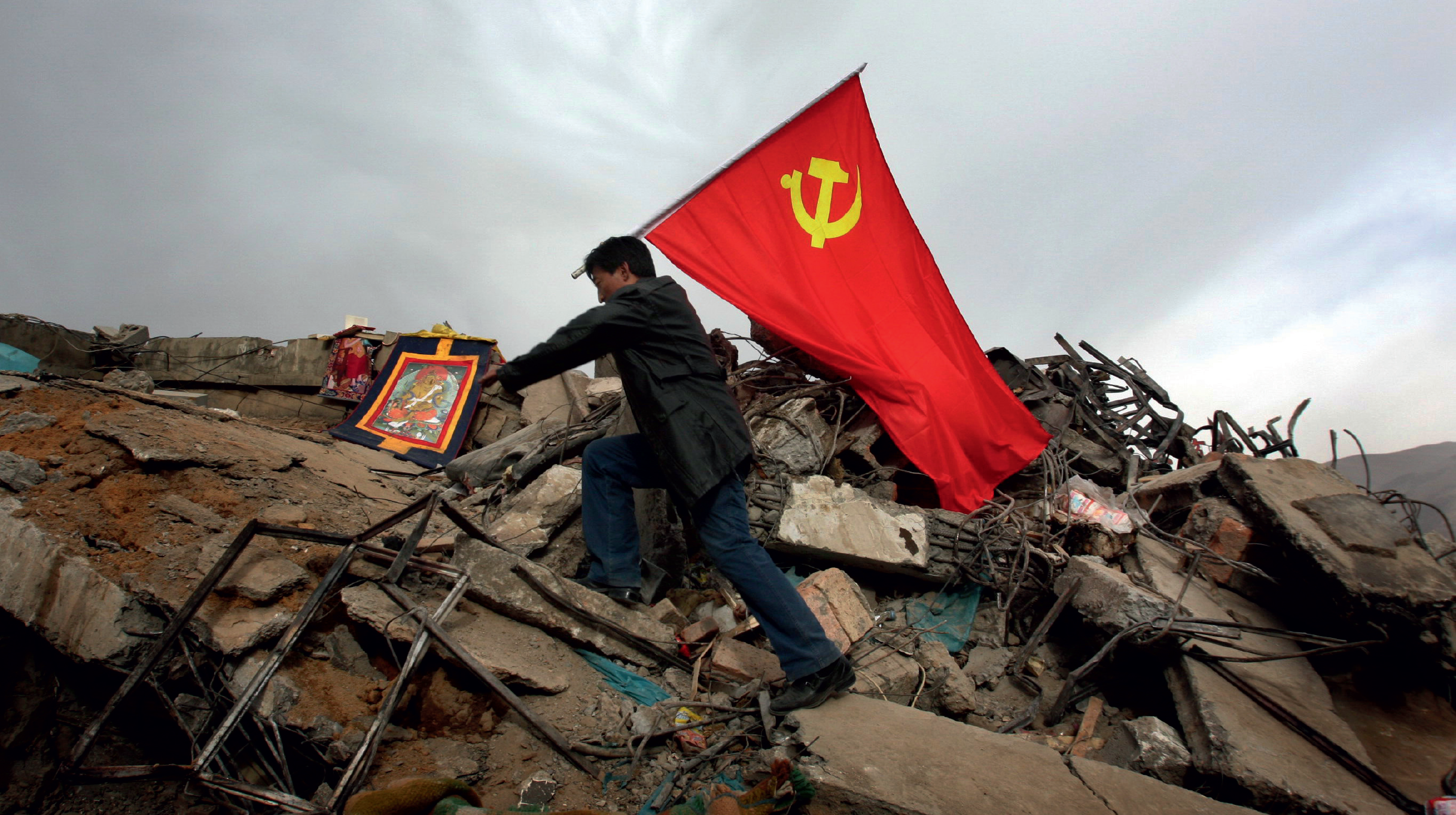
The Chinese Communist Party (CCP) is facing serious questions over its legitimacy as the country's post-reform generation shows signs of losing trust in the prevailing political system, says Dr Zhengxu Wang, a senior research fellow at the University of Nottingham's China Policy Institute.
Thirty years of rapid socio-economic development have given rise to a generation of more liberally minded citizens, who value human rights, equality, freedom of expression and political participation far more than their elders, according to research carried out by Dr Wang.
Drawing on surveys of some 3,500 Chinese citizens, conducted between 2007 and 2008, Dr Wang found that a ‘generational shift’ had taken place in political opinion, with citizens born after 1980 displaying a ‘significantly lower level of political support’ for CCP rule.
Of those citizens born after the market-oriented reforms of the 1980s, 21 per cent described themselves as ‘not very satisfied’ or ‘not at all satisfied’ with democracy in China, compared to just 12 per cent of the pre-reform generation. A third of those born after 1980 believed that China is a democracy ‘with many problems or not a democracy at all’ compared with just 22 per cent of their elders.
However, the vast majority of Chinese citizens, regardless of age, still perceive the Chinese political system as the one that is best suited to managing Chinese affairs, saying that mimicking western democracy would be an error.
While a crisis of legitimacy is not imminent, the survey data does reveal an inter-generational thought change that poses challenges for the long-term development of the CCP.
‘These post-reform citizens have become China's pro-democratic generation,’ Dr Wang said.
‘The demand and pressure for institutional changes can only grow. The Party's ability to maintain a discourse in favour of one-party rule will be the key to whether or not it is able to continue its hold on power.’