






Abstract

New Labour's malignant culture of spin undermined and devalued British politics. In the wake of the expenses scandal and the Con-Lib coalition, the media needs to stop blindly following government spin doctors and start putting politicians under serious and repeated scrutiny, writes
Although I never realised it at the time, I was one of the first foot soldiers in the media management war. It was 1987, a few days after the general election had been called, and the Labour party had just set up the first-ever media monitoring unit, in its Walworth Road head office, under the leadership of the then director of communications, Peter Mandelson. I was in my early 20s, one of many young, hungry political volunteers occupying unglamorous roles in the new unit.
My ‘job’ consisted of monitoring all TV and radio output, along with others on the shift. Stopwatches in hand, we watched, recorded and scribbled notes of questions asked, details of interviewers and interviewees and recorded stars for political bias.
As time went on it became increasingly clear that the real value of what was presented as a number-crunching exercise was in understanding the presentation – the pictures chosen, the words used, the tone of voice and body language of the presenter or interviewer, not to mention the interpretation or comment put on the different reports. This was more significant than air time alone. Looking back it was formative training in understanding what we now call ‘political spin’.
A Culture of Spin
Fast forward to 2010, a year that marks the end not just of New Labour, but also, it seems, an end to the age of spin. The televised leaders' debates have just finished and Peter Mandelson, New Labour's Spin Doctor in Chief, is consigned to a backseat role, commenting (and spinning his version of events) after the fact. It was as if during the election campaign itself power passed from spin doctors as change agents (directing and manipulating news and events) to media institutions themselves as they put political leaders in direct debate in front of millions of viewers and potential voters. On the surface at least, 2010 could be read as the moment when spin was decisively outflanked, alongside the outgoing Labour government – an administration synonymous with spin.
The culture of spin is, of course, an American import. It is no accident that the architects of New Labour -particularly the core coterie of advisers, pollsters and consultants, spent their formative years in the late 1980s and early 1990s studying Clinton and the Democrats' successful pursuit of power, ‘cherry picking’ the best ideas to render their party electable after a generation in opposition.
Making Labour electable was not just about political repositioning; it was a project of professional media and brand management. Labour needed skilled media managers to control against a hostile, politically partisan press. The architects of New Labour suffered the dark years of opposition. They imbibed a defensive bunker mentality as a result of Labour's slaughter at the hands of a hostile press. Many swore never to suffer the same fate again. It was in these years that the strategic role of media management was understood and a more professional culture of media management was embedded. The media monitoring unit was a temporary affair – but the battle to woo, cajole and control the media became a full-time occupation for many. The ‘New Labour’ brand was as much a media as a political construct.
The Architects of Spin
Fast forward to 1997. New Labour swept to power in a landslide electoral victory after a charm offensive with the press, who turned one by one to back the winner as it approached the finishing line. After gaining power a vital strategic rethink was needed, but the opportunity was lost. The defensive culture born in the dark years of opposition embedded itself in government decisively from the outset like an early-stage malignant cancer. Many of the team in government were fearful of failure, yet intensely ambitious, skilled at public relations and spin, but less confident on delivery. Their first port of call was to manage media reaction. They would worry about other constituencies or delivery on the ground later.
I had an intuition early on of the price Labour might pay if this culture of spin was not addressed at source. Late in the summer of 1998, after a brief visit to the UK (I was living in the US at the time) I wrote a controversial article for the New Statesman. In it I argued that the command and control culture Labour used to secure power would not be the tactics to take the party forward in government. I lambasted the defensive bunker mentality, attacked what I characterised as an insidious laddish culture at the heart of New Labour which undermined the party's professed feminisation, and criticised the control-freakery of the high command who wooed and courted the opinions and support of the media more than bringing their own MPs or party members with them.
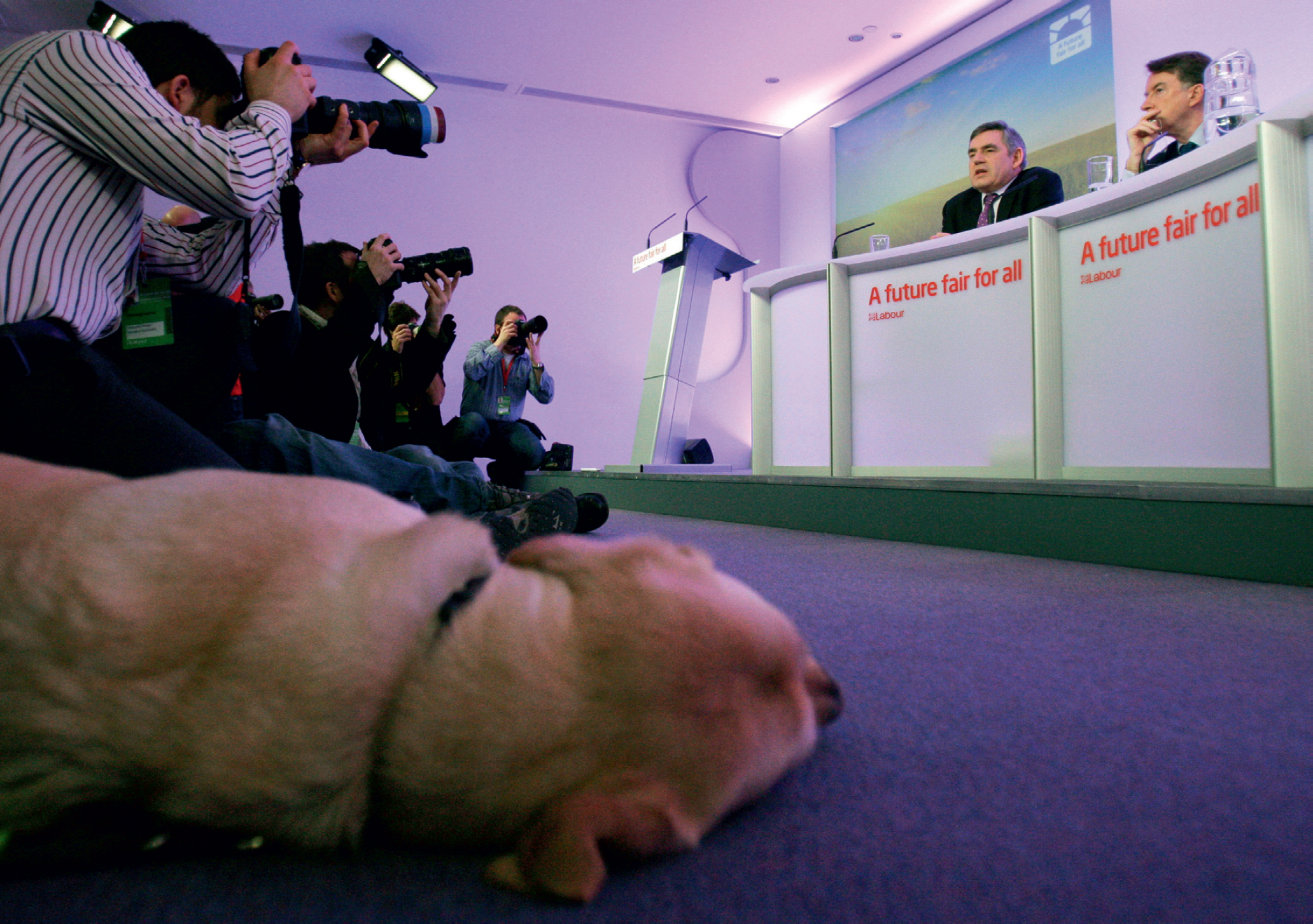
Under New Labour spin came to be associated with abuses of power
The varied techniques of spin – selectively presenting facts and quotes that support one's position, non-denial denials, anonymous briefings by friends of a third party to attack or undermine another, phrasing in a way that assumes unproven truths (think here of Iraq) and, of course, the age-old tactic of ‘burying bad news’, announcing something damaging in the hope that the eyes of the media will be diverted by the big news story of the day – were all deployed.
Spin under New Labour came to be associated with abuses of power: abuse of the machinery and processes of government, eroding public trust and confidence in the body politic itself. Remember Jo Moore's infamous email – ‘It's now a very good day to get out anything we want to bury’ – sent on 11 September 2001 to a rather wider list than she had intended? It resulted first in an apology and then a belated resignation, after it was claimed that this was not the first time Moore had proposed using a big news story, in the other case the death of Princess Margaret, to bury bad news. Such events allowed the government's critics to paint a picture of a government culture of spin and control that was manipulative, and ultimately against the public interest.
By the time of the Moore gaffe, New Labour was being attacked by the commentariat and even by its own friendly fire critics (myself included) for its reliance on spin rather than public persuasion and engagement. But the government was to suffer an even more terminal problem of trust – summed up in three words – ‘David Kelly’ and ‘Iraq’. By this time, any attempt to shift the government in the direction of a more open, more transparent approach to media management and a more relaxed culture of debate and tolerance of dissent within the party was almost impossible. Spin become part of popular culture, the stuff of satirical drama – with New Labour characters finding their fictional counterparts in the guise of Number 10 enforcer Malcolm Tucker in the BBC satire The Thick of It and the spin-off feature film, In the Loop. Leadership tensions at the party's high command were mounting and by then individual careers – of spin doctors, advisers and politicians – outside and inside government were on the line, requiring their own spin and self-justification.
This torrid state of affairs was, in a way, foreshadowed during New Labour's honeymoon period. If, back in the heady days of 1998, the Labour elite lacked the confidence to engage in open and constructive dialogue with party activists, the electorate and even their critics, they were hardly going to change their defensive approach in the worst of times, as criticism or attacks (an inevitable part of the political cycle) escalated.
When the expenses scandal hit, the collapse of the public's trust in politicians was complete. Yet the collateral damage for Labour was greater – many members of the public assumed that Conservatives would milk the system, but they found it harder to accept Labour ministers and MPs justifying flipping their houses or their expense claims based on ‘the rules’ when they were themselves struggling to make ends meet.
No amount of spinning could save the political class. Overnight, the tactics of spin floundered. Politicians could not escape the uncomfortable reality that voters judged them culpable. Selective presentation of facts and non-denial denials would not wash with a public incandescent with rage.
As politicians became ‘unspun’, media scrutiny came of age. The expenses scandal was important for this reason alone. It represented a triumph for old-fashioned investigative, non-partisan political journalism, in the unlikely guise of The Daily Telegraph, which suddenly found that explosive political investigation sells as effectively as political gossip. For the print media especially it marked a moment of assertion, highlighting its capacity to educate, and inform, and hold politicians to account through first-class investigative reporting.
When agreement was reached for Britain to host its first televised leadership debates the broadcast media also moved centre stage.
In many ways, the 2010 general election campaign was the antithesis of the stage-managed elections of the past. First and foremost there were the leadership debates. Then there were other ‘electric’ television moments when members of the public were caught on camera holding politicians and their foibles to account – most notably the infamous ‘Bigotgate’, when Gillian Duffy took the bounce out of Brown's step in the latter days of the campaign just as he had begun to find his stride.
And then there were the election results themselves, which no amount of spin could easily explain. The electorate had voted against any majority party – ‘None of the Above’ – and they had voted for a hung parliament, as Clegg mania proved as ephemeral as the TV debate that made his name.
The Future of Spin
Looking ahead, the future of spin in our political culture is still unclear. Far from signalling the end of spin, 2010 may simply mark a new era for it. Personality politics, slick media presentation and presidential-style campaigning were certainly reaffirmed as masters over policy, campaigns of substance and grassroots connection. This culture – of politics-lite – is now deeply rooted and embedded across the political spectrum and marks the continued Americanisation and personalisation of our body politic, where image is more important than substance, where leaders are revered over parties, where media management is prioritised over grassroots engagement, where power is brokered behind closed doors and public explanation mediated through a media complicit with – and often seduced by – spin doctors. The most telling image of the campaign, for me, was the scene of the two coalition suitors wooing a hungry press at the first televised press conference in the Downing Street tea garden once Cameron had finally crossed the threshold into Number 10. The mood music was important. The ‘spin room’ was dispensed with. Our leaders stood in open fresh air heralding a new era – a ‘new politics’. Their body language relaxed, they mirrored each other with sideways glances, playful, almost flirtatious, as they finished each other's sentences like a loved-up gay couple. It was a convincing partnership commitment ceremony – and the media spin afterwards was positive. The ‘new politics’ was off to a good start.
But within weeks, this new politics was becoming unspun. Just days into coalition government, Clegg admitted that he had actually begged Brown to stay on longer in Downing Street after the election as he brokered the deal with the Conservatives, throwing fresh light on his election campaign spin that Brown could not ‘squat’ in Number 10 if his party did not win the most votes. As the Lib Dems transformed themselves overnight into public service cutters, Newsnight's Jeremy Paxman, with a note of irony in his tone, asked Vince Cable to outline the precise moment when he realised that public expenditure cuts now, not later, were essential – in direct contradiction of his and his party's position during the general election campaign. Then the expenses scandal claimed the scalp of David Laws, a high-profile coalition partner. Meanwhile the rose-tinted scene in the Downing Street gardens jars with regular reports of tensions in the rank and file of both coalition parties.
We don't yet have a political X Factor-though it may not be far off
Can the coalition couple – CamClegg – spin their way out of grassroots discontent? Will the media let them? Or will the media step in and play the role of ‘Spin Controller’, a guardian of democratic oversight, scrutinising our politicians on behalf of the public? Such a role is needed now more than ever – if not we may end up with a bastardisation of the media and political culture that was so skilfully satirised in the American film, Wag the Dog.
Thankfully we have not yet arrived at the political X Factor, though we may not be far off. This year the media have put our political leaders in the spotlight – and on the spot – in a way we have never witnessed before. But this is not an end in and of itself. It remains to be seen whether the media will now rise to the challenge of putting our leaders, the government and the political class itself under repeated scrutiny.
Will the media play its role in preventing spin doctors from reasserting themselves or will they remain in unhealthy co-dependence? Can the media work to undermine the culture of spin which for a political generation (if not more) they have co-created, in the interests of more transparent and more accountable governance? Or will they remain like Pavlov's dog – obedient to their masters, hungry for spin, spin and more spin?