






Abstract

A decade after entering Afghanistan, British and American forces are still trying to extricate themselves from Central Asia.
In December 1979, the Soviet Union invaded Afghanistan. The Russians went in reluctantly: not to further the cause of Communist empire, as Western propaganda had it, but to support and stabilise a friendly country on their vulnerable Southern border, which they feared might be taken over by Cold War enemies. They withdrew nine years later, undefeated on the battlefield, but demoralised by years of futile fighting.
At the time of the Soviet invasion, a senior official is said to have expressed his doubts to his boss, foreign minister Andrei Gromyko: British soldiers had been in Afghanistan too, he remarked, and they had not prospered. ‘Are you comparing the lackeys of Imperialism,’ Gromyko responded furiously, ‘to our gallant warriors who are bringing stability, democracy, and prosperity to our Afghan brothers?’ ‘No, of course not,’ the official hastened to reply. ‘The soldiers are quite different. But the mountains are the same.’
The Americans and their allies were equally dismissive of history when they went into Afghanistan in 2001. As one American Special Forces trooper put it when reminded of the Soviet experience: ‘We don't want to hear any of that Commie rubbish from you about a lot of sad asses who lost their war to monkeys.’
Absence of Strategy
These were historical lessons that could have been learned but weren't. But there is also the opposite: those lessons from history that we think we have learned that turn out to be irrelevant, or just plain wrong.
The UK came to Afghanistan in 2001 and to Iraq in 2003, believing that they were uniquely qualified to deal with the situation they found there by virtue of the experience of their fathers and grandfathers in quelling earlier insurgencies in Malaya and Northern Ireland. But there was a crucial difference. The soldiers in Malaya and Northern Ireland knew what they were there for: to stabilise Malaya in preparation for independence and to restore order to an integral part of the UK, respectively. These objectives may have been difficult to achieve but they were clear, simple and unwavering.
In Afghanistan, by contrast, UK politicians — and their US allies — produced one extravagant and unattainable strategic objective after another.
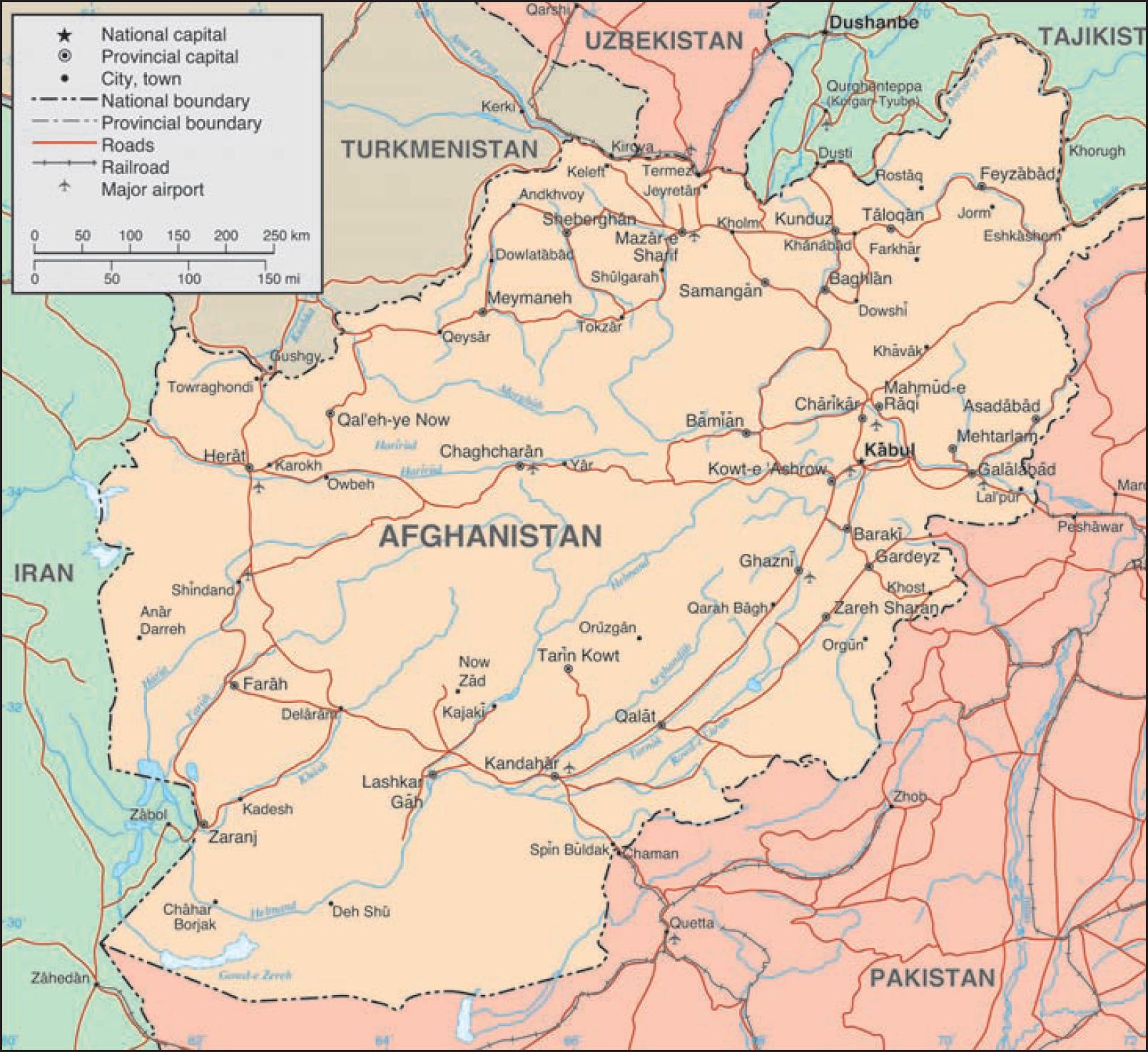
The original aim was twofold: to destroy the al-Qaeda leadership and training camps in Afghanistan where the attack on New York had been launched on 9/11 and replace the terrorist-supporting Taliban regime with a secure, stable and friendly Afghan government. The first half of this objective was largely achieved by the end of the year. The al-Qaeda leadership was expelled from Afghanistan, its training camps destroyed.
Western leaders have invested vast sums in Afghanistan but returns have been minimal
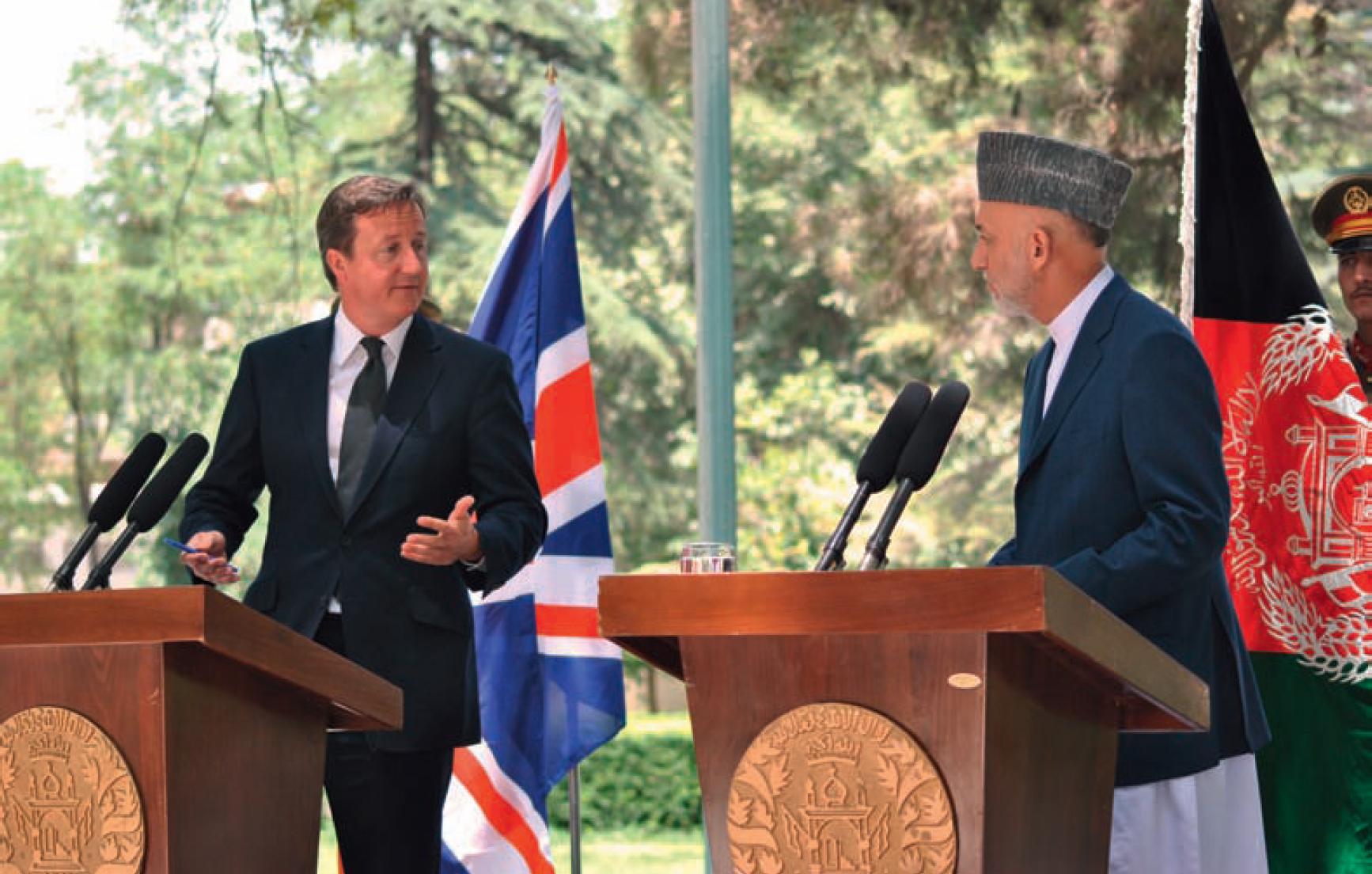
The second objective did not go nearly so well. What followed the overthrow of the Taliban was a classic example of mission creep. The coalition's aims were greatly expanded to include the creation of Western-style democracy and the full range of human rights, especially for women; universal education; the eradication of the narcotics trade; and the elimination of corruption and nepotism to ensure ‘good governance’. The motivations were partly generous and partly political. Our public opinion believed that it would be wrong to leave the Afghans, and especially Afghan women, in the lurch. Successive UK Prime Ministers argued that unless we reengineered the Afghan state and society, the terrorists would return to the streets of London. As Gordon Brown put it in 2009: ‘Our progress … must be measured in the progress made each season in improving the quality of life of Afghan citizens, the quality of governance, and the capability of the Afghans to protect themselves — as we slowly but surely make it more and more difficult for the Taleban and al-Qaeda to rebuild their base in Afghanistan and the wider region.’
Foreign governments devoted vast sums to promoting these admirable objectives, although much of the money ended up in the wrong pockets. Official spokespeople reeled off strings of figures about numbers of insurgents killed, villages reclaimed for law and order, elections conducted, schools opened, poppies eradicated, Afghan soldiers and policemen trained, and overall progress made. Anyone familiar with the complacent statements issue by US military spokesmen in Saigon in the late 1960s would recognise the tone, and was not convinced.
All failed to appreciate that changing the realities of Afghan history and culture on such a scale was entirely beyond our capability, even if we had been willing to devote the decades of substantial financial and practical support that would have been the minimum requirement.
Thus we ignored the simple rules that have been successfully applied by statesmen and generals throughout the ages: that to win a campaign you need clear objectives, a viable strategy, good tactics, effective armed forces that are properly resourced, reliable intelligence and relevant experience. And you must never forget that the ultimate end of all military action is political: it is no good winning the military campaign if you then lose the peace. What we proclaimed as a strategy for Afghanistan was no more than a collection of pious aspirations.
COIN Illusions
It was not only the strategy that was an illusion; the tactics were misconceived too, and they too were based on a misunderstanding of historical lessons. In Malaya and Northern Ireland, the British controlled the local administration, had large numbers of highly competent soldiers and police at their disposal, had a great deal of accurate intelligence built up over many decades, had a substantial proportion of the population on their side, and, in Ireland, spoke the language. None of this was true of Afghanistan. Generations of Indian political officers had amassed an intimate knowledge of the languages, customs, politics and sociology of the Pushtun areas of southern Afghanistan, the heartland of what was to be the Taliban insurgency. But all that know-how was dispersed when the UK left India in 1947. By the time UK forces returned to Afghanistan in 2001, they no longer knew very much about the country or the people among whom they were preparing to fight.
UK forces were scornful of the crude tactics of the Americans who went in looking like Martians in their flak jackets and Ray-Bans, kicking down the doors of innocent villagers, guns blazing, calling in murderous airstrikes on the slightest excuse. In Afghanistan the UK began by adopting a low profile wherever possible, using only minimal force, patrolling in open vehicles, wearing no helmets, looking improbably benign. Thus, they hoped, the cooperation of the people would be quickly secured. The local physical, political and social infrastructure, shattered by a quarter of a century of war, could then be rebuilt in peace.
These complacent hopes were soon undone by Afghan reality. All Afghans remember what the UK forces had forgotten: that Helmand was the scene of one of the British empire's most humiliating defeats, at Maiwand in 1882. When the British turned up again, the locals were itching to have another go. As the fighting intensified, isolated packets of UK soldiers, courageous and highly trained though they were, found themselves calling in air strikes just to survive. Local civilians inevitably suffered.
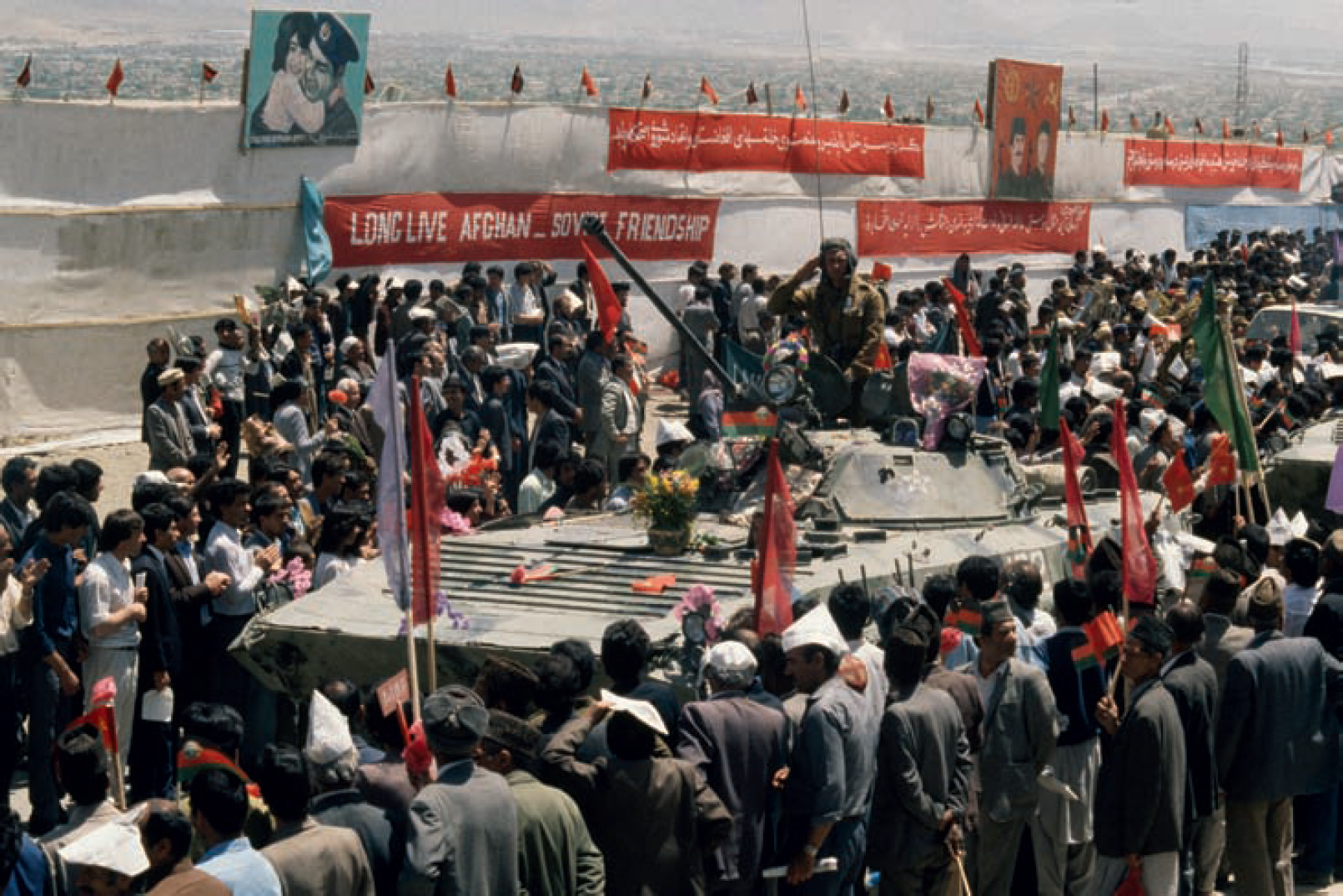
Soviet troops leave Afghanistan in 1988, the country collapsed into civil war soon after
Deeply irritated by UK claims of superior expertise, the Americans devoted a great deal of thought to the problem of fighting a ‘war among the people’. In 2006, the US published a thick volume simply entitled Counterinsurgency — FM 3–24 (COIN for short). COIN states clearly that you need to show the ordinary people that you are on their side; that soldiers are there to give locals the security they need to carry on their lives in peace. Once you have cleared the ground of the enemy and secured it, you can build up the local administration and restore the markets and schools. You can bring in ‘government in a box’, a ready-made administration that will ensure that thereafter the people are honestly governed and policed. So the main aim is no longer to kill the terrorists, but divide them from the people on whom they have relied for their support. In this way the insurgency will fizzle out.
These ideas were much hyped around the American establishment. In fact they were little different from the theories of the British, or indeed the French, or most other countries that have tried to suppress an insurgency. The trouble is that the theories do not often work. For every success — in Malaya and Northern Ireland — there have been many failures. The French failed in Indochina and Algeria. The Americans failed in Vietnam and the Russians failed in Afghanistan. The British failed in Palestine and in Yemen. The Portuguese failed in Africa and the Dutch failed in Indonesia.
The reasons for these failures are rarely mysterious. However well prepared it is, an intervening force is unlikely ever to understand the full complexity of the politics and customs of the people among whom it is fighting. Whether they want to or not, they inevitably kill innocent civilians. Counterarguments that the insurgents kill even more civilians cut no ice. Hearts and minds remain unwon. Sooner or later the foreigners give up the whole unsatisfactory business and go home. The locals are left to sort things out for themselves: usually a bloody business.
The Russian Example
Western governments may have taken no note of the Russian precedent when they decided to invade Afghanistan in 2001. But there is still something to be gained from looking at the Russian experience as the coalition forces now seek to extricate themselves from an unsatisfactory war.
The Russians already knew a great deal about Afghanistan when they invaded in 1979. They spoke the languages: some of their soldiers were native to the Soviet Central Asian republics. They had hundreds of advisers throughout Afghan government, industry, education and the military. Afghanistan had a comparatively coherent state apparatus, a well-armed and officered military, and an economy that, though very backward, was beginning to develop thanks to American and, above all, Soviet aid.
So the Russians had something to work with: they did not have to set up a government and an economy in the middle of a war, as we have tried to do. Their belief that they would not have to fight and could leave within months, though mistaken, was not entirely unreasonable. On discovering they were wrong, they tried all the familiar COIN tricks. They too brought ‘government in a box’ to the villages they cleared — only to see the insurgents return as they withdrew. They too tried to win hearts and minds. It got them nowhere.
Faced with the same dilemma we face today, Gorbachev finally cut the Gordian knot on coming to power in 1985. As he told the Politburo:
We could leave quickly, without worrying about the consequences, and blame everything on our predecessors. But that we cannot do. We have not given an account of ourselves to the people. A million of our soldiers have passed through Afghanistan. And it looks as if they did so in vain. So why did those people die?
Gorbachev was supported by his generals, who did not claim that victory was just a matter of more troops or more time. Nevertheless it took another three years before the Soviets finally extricated themselves. They left behind a friendly government under a man of their choice, sufficiently armed to defend itself against its enemies. Even so, the country collapsed into a civil war bloodier even than what had gone before, only ended by the Taliban's eventual victory.
We are now where the Russians were in the late 1980s. We have abandoned our ambitious plans to transform Afghanistan. We cannot of course be defeated on the battlefield. But unlike their Soviet counterparts, our generals still talk about some ill-defined ‘success'. Yet it is clear enough, despite the tired reassurances of our official spokespeople, that we are merely holding our own against the insurgents, and that we are not making much progress in improving standards of government, or building up a convincing Afghan army or national police. The best we can hope for is that, like the Russians, we leave in good order, and that the Karzai government — or an acceptable successor — can sustain itself when we are gone.