






Abstract

Almost overnight Ireland went from being an economic success story to the brink of bankruptcy. Reflecting on changes in Irish social, economic and political life,
In the space of one generation, Ireland has experienced remarkable social and economic readjustment. The attitudes of a relatively homogeneous Catholic nation, characterised by a broad consensus congregating around conservative social attitudes, have undergone sweltering change. There has been a significant liberalisation in attitudes toward religious and moral issues, notably abortion, divorce and homosexuality. Regular mass attendance has collapsed from an astonishingly high 91 per cent in 1974 to 55 per cent in 2005, and even smaller percentages are reported in the working class areas of Dublin and the other main cities.
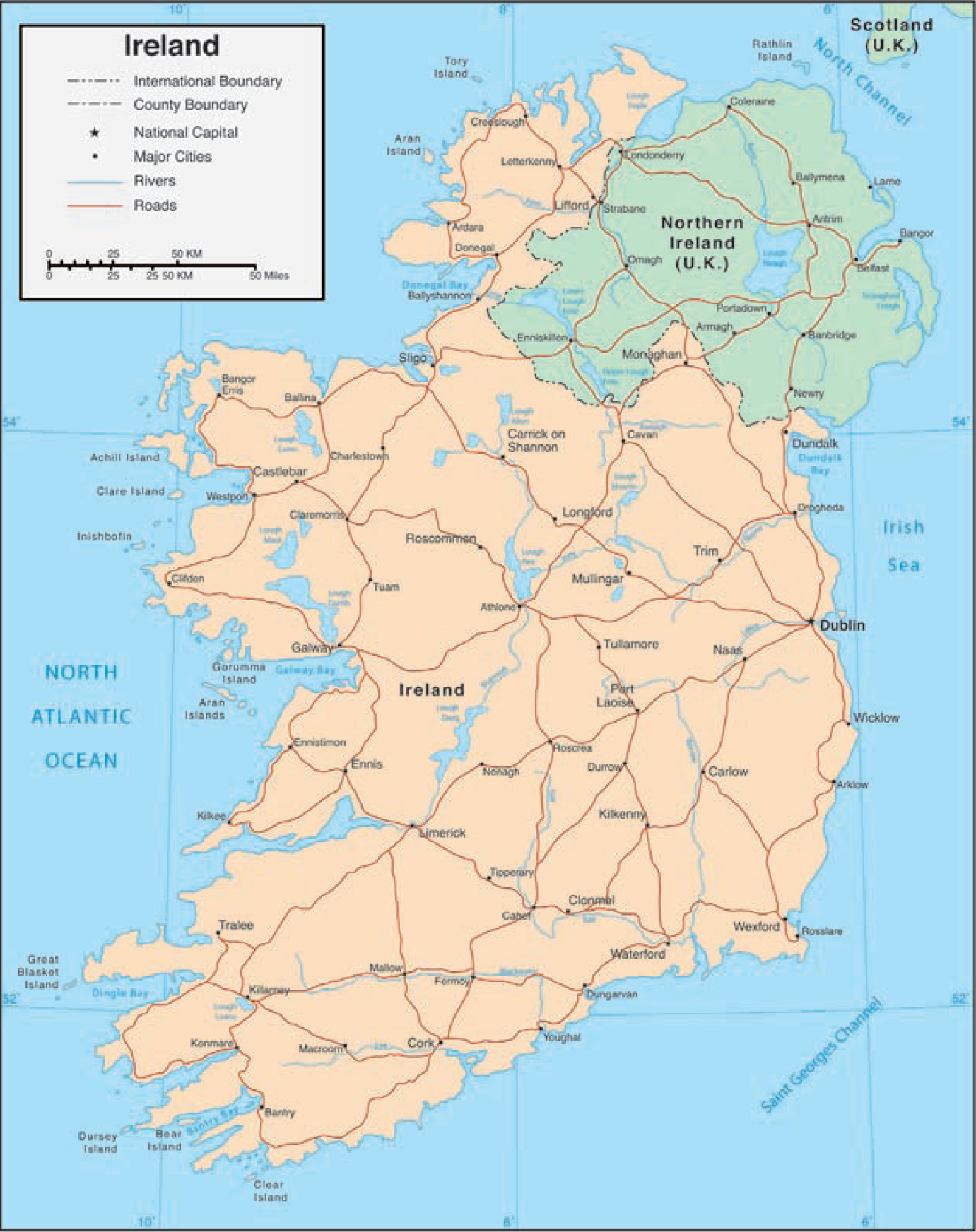
A liberal emphasis on individual moral responsibility, equality rather than hierarchy and participation rather than submission to authority has occurred. A series of scandals erupted in the 1990s and placed the Church in a permanent crisis of authority. The horrific revelation of decades of clerical child sexual and physical abuse, as revealed in the Murphy and Ryan Reports, has accentuated a fundamental shift in the relationship between the Irish people and the Catholic Church.
Irish public life has witnessed a permanent process of institutional self-scrutiny since 1990. In the 20-year period between 1990 and 2010, 32 public inquiries were initiated to examine matters of ethical concern within politics, business, the Church, police, finance, public service, professions and health. These inquiries publicly questioned the character of authority. Self-regulated institutional authority has been comprehensively challenged and a sea change in attitudes towards the integrity of power has occurred. This marks an overdue and positive development in Irish public life. Traditional values of blind deference, misguided loyalty and the fear of asking questions have undergone an electrifying process of clarification.
Politics
Despite these social changes, Ireland has not witnessed fundamental political transformation. The Anglo-Irish Treaty, which was signed on 6 December 1921 and formally ended Ireland's War of Independence with the United Kingdom, remains the key political moment in the history of the state. The Treaty proved divisive on three grounds:
It demanded that Irish parliamentarians take an oath of allegiance to the British monarch. It gave Britain control over Irish ports. Most controversially, it conferred the six counties in the north-east of the country the right to decide their own fate – this ultimately meant partition of the island between North and South.
The Irish Parliament, Dáil Éireann, ratified the Treaty with 64 votes in favour and 57 against in January 1922. The Irish party system is derived from this Treaty split between the Pro-Treaty and Anti-Treaty fractions of the Sinn Fein party. Fine Gael's political ancestry is traced to the pro-treaty fraction, while Fianna Fáil claims its from the anti-treaty side.
The Irish party system has been characterised by stability and hegemony, and has witnessed extended periods when the same political party experienced long periods in power. Fianna Fáil has been one of the most successful parties in Western Europe, holding two 16-year periods of uninterrupted government from 1932 to 1948 and 1957 to 1973. The decision by Fianna Fáil to enter into coalition for the first time in 1989 warranted the perception of permanent Fianna Fáil government. With the brief exception of an unanticipated Rainbow government between 1994 and 1997, Fianna Fáil was in power for 21 years from 1987 to 2011.
Economics
Ireland enjoyed enormous growth at the end of the twentieth century, in stark contrast to the underdevelopment of the economy since independence. The project of Irish independence was severely undermined by the late 1950s. The 1961 census recorded Ireland's lowest recorded population figures of fewer than three million people. More than one million people had emigrated since independence, numbers not seen since the immediate aftermath of the Famine.
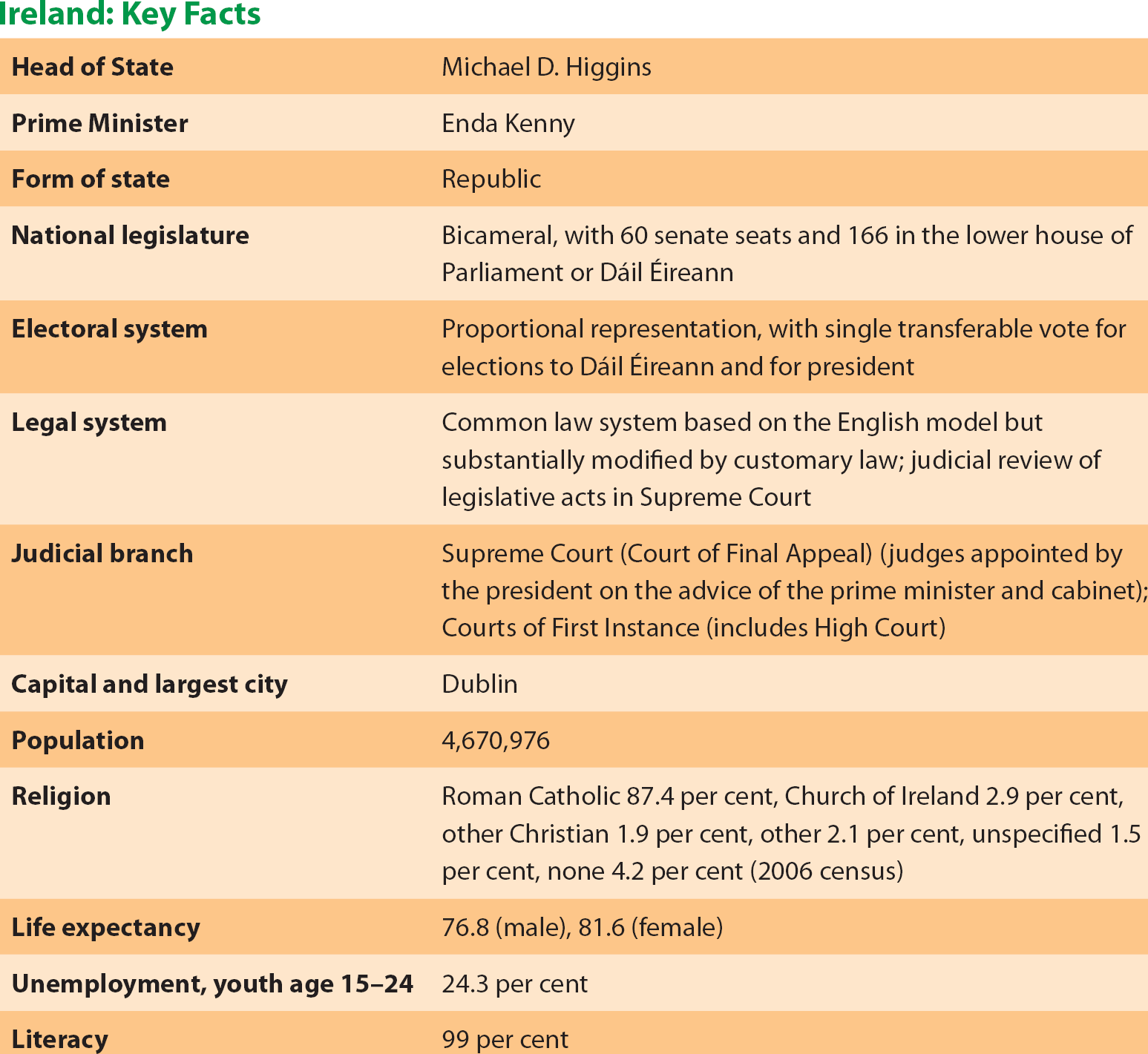
Ireland: Key Facts
The rapid economic growth from the 1990s on was, in part, fuelled by a large expansion of Irish financial institutions, competitive corporation taxes, membership of the European Union, a focus on foreign direct investment and greater access to third level education. Unemployment fell from 17 per cent to 4 per cent between 1987 and 2003, while growth averaged more than 5 per cent per year. A housing bubble, an immense increase in purchasing power and excessive lending to companies and households also occurred. The regulatory powers of supervisory authorities were relaxed because the market was regarded as adequately self-regulating. Taxes on capital gains, corporate tax and high income were lowered because they were thought to discourage growth in the economy.
Within the space of a few years, Ireland's ‘Celtic Tiger’ dramatically transformed from one of the world's fastest-growing economies to a recipient of an 85 billion rescue package. The terms of this ‘bailout’ to recapitalise the banks and meet the budgetary requirements of the State were agreed by the troika of the ECB, the IMF and the EU in late 2008. The OECD reckons that the total direct fiscal costs of the recent financial crisis amount to about 49 per cent of GDP, the highest in the world. Ireland had lowered its public debt during the boom years to about 25 per cent of GDP in 2006 – but by the end of 2010, public debt had reached approximately 95 per cent.
Electoral Change
The February 2011 election was characterised by an electorate that was deeply angry at the perceived mismanagement of the economy by the outgoing Fianna Fáil-Green government. Fianna Fáil – the party that has dominated Irish politics for almost 80 years – saw its share of the vote fall from 41.5 per cent in 2007 to just 17.4 per cent at the 2011 election. The Green Party, the junior partner, suffered a wipe-out. Fianna Fáil is now primarily a rural political party. In local government, the party is fourth behind Labour, Fine Gael and independents, holding fewer than 12 of Dublin City Council's 52 seats. Fianna Fáil held only one of the 46 seats in Dublin after the 2011 general election.
The Taoiseach, Enda Kenny (Fine Gael) is the thirteenth person to hold Ireland's highest political office in the 88 years since independence. Like the Tánaiste, Eamon Gilmore (Labour), Kenny is from the west of Ireland and has had long years of political experience punctuated with only a brief two-year spell in ministerial office. Fine Gael has always depended on partnership with Labour to enter government.
The 2011 election has shown that although the dynamics of Irish politics have changed, the fundamentals have remained the same. Despite the collapse of the banking system, economic ruin and Ireland's participation within an International Monetary Fund, European Central Bank and European Commission programme, no fundamental realignment of the party system has occurred. Although Fine Gael has replaced Fianna Fáil as the dominant political force in Irish politics, both parties share broadly the same centralist policy outlooks. Surprisingly, no new political parties have emerged.
Political Volatility
An analysis of the Irish National Election Study 2007–2011 helps explain the shifting dynamics of Irish politics. At least half of the electorate are floating voters. The volatility of the political landscape has been in place over the last 20 years but it was masked, perhaps, by the economic boom times during the 1990s and 2000s. Indeed, the most common transfer pattern in the 2002 general election was between Fianna Fáil and Fine Gael, and vice versa.
That volatility and declining party loyalty was also witnessed with regard to the high number of independent candidates who contested the 2011 election. Of the 564 candidates who put their name forward, 233 ran as independents – the highest number of independent candidates to ever stand in an Irish election, more than double the number that ran in the previous election in 2007. The Irish electorate has channelled its anger through selecting independent candidates.
The Fine Gael-Labour government has the largest majority in the history of the State. The current Dáil is characterised by a sizeable and assertive Sinn Fein party and a vocal group of left-wing independent TDs.
The Lansdowne/RTÉ exit poll at the 2011 election asked people to express their feelings about how the country was being run. The strongest emotion was anger, followed by outrage, then worry and fear. Professor Michael Marsh, of Trinity College Dublin, believes that:
This is the clearest message of the election. The policy mandates are much less decisive, and there is little enough evidence in the exit poll that people voting for most parties had concrete policy objectives in mind. Certainly ‘change’ was the message voiced by newly elected candidates from Fine Gael, from Labour, from Sinn Fein and the United Left Alliance. But the definition of that change varied, as we might expect, from party to party.
The unfinished headquarters of the failed Anglo Irish Bank, in Dublin, has become a monument to Ireland's economic collapse
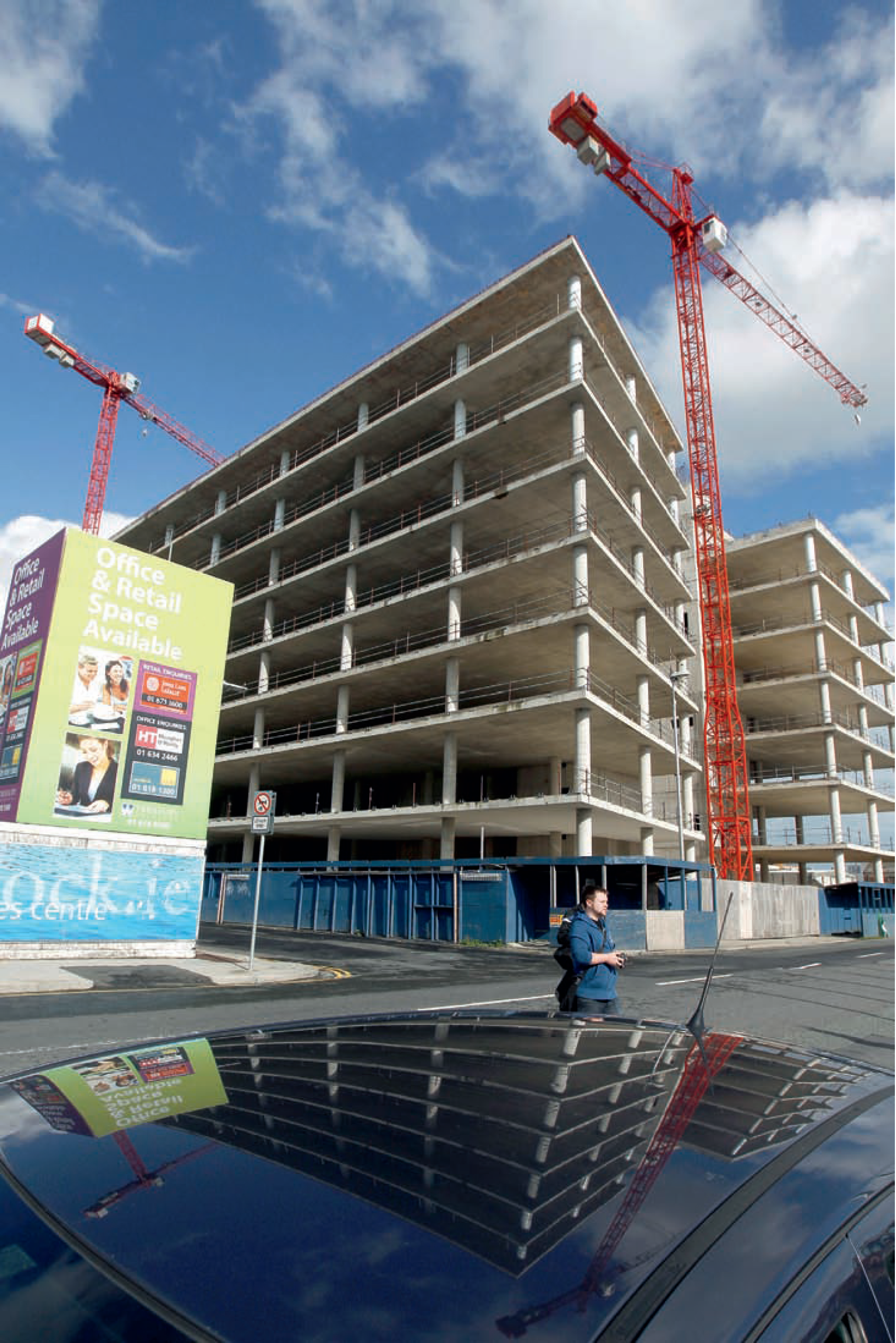
Ireland's next election is scheduled for 2016, although – as was the case in 2011 – circumstances may intervene for an earlier election. The long-term consequences, if any, of the traumatic financial crisis on the party system may only then be understood.