






Abstract

International security, once the domain of nation states, is increasingly dominated by threats from non-state actors. Here, biologist turned political scientist
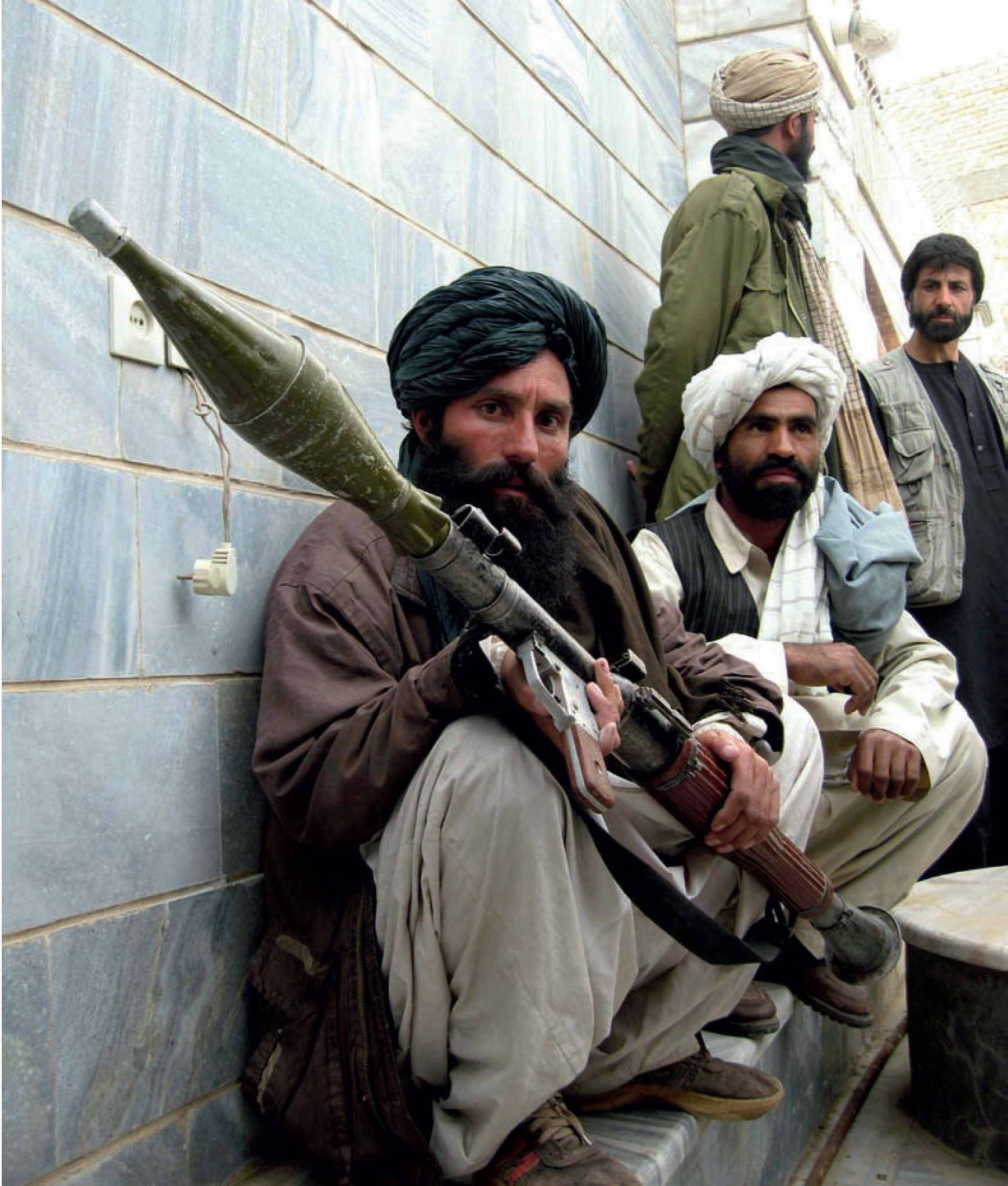
Despite the overwhelming military power of NATO, in Afghanistan the Taliban can often appear one step ahead
The theory and practice of international security has traditionally been dominated by the interactions of clearly defined nation states, focusing on strategy and military power. In stark contrast, international security in the 21st century is characterised by a range of novel threats from non-state actors, including terrorism, insurgency, ethnic violence, the proliferation of weapons of mass destruction (WMD), cyber attacks, natural disasters, pandemic diseases and climate change.
We lack a unifying theoretical framework with which to study or address these threats. Though diverse, they share some common features – not least that they are rapidly changing and demand swift responses. In this article I argue that a powerful framework for studying all such rapidly changing threats is provided by evolution: the study of how organisms change and interact with their environment over time.
Counter-insurgency efforts, such as those in Iraq (pictured), exemplify the new security landscape.

New Security Landscape
The new security landscape has perhaps been most strikingly exemplified by the counter-terrorism and counter-insurgency efforts in Iraq and Afghanistan. General Anthony Zinni, former commander of US forces in the Middle East, identified the key problem as a failure to adapt. As he observed early on in the Iraq conflict: ‘This is the first war where we've faced an enemy that's adapted better than we have at a tactical and operational level. We had IEDs [improvised explosive devices] from day 1. … What have we done to adapt? Nothing.’
Many other military and political commentators also highlighted the growing importance of adaptation in counter-insurgency and counter-terrorism campaigns around the world, notably John Nagl, David Kilcullen, General David Petraeus and US Secretary of Defense Robert Gates, who remarked at a congressional hearing in March 2007 that ‘as soon as we … find one way of trying to thwart their efforts, [the insurgents] find a technology or a new way of going about their business’. As insurgent and terrorist tactics, organisational methods, and weapons adapt and spread over time, the failure to counter-adapt to deal with them is measured every day in lives.
Although numerous factors are important in understanding counter-insurgency and counter-terrorism – not least political, economic and social ones – a strong sense has developed that the efforts in Iraq and Afghanistan have become primarily wars of adaptation. And adaptation is a great leveller: despite the overwhelming military power of the US in Iraq or NATO in Afghanistan, insurgents often appear to stay one step ahead, reminiscent of the Red Queen in Through the Looking Glass – Alice finds that however fast she runs, she always stays in the same place. If adaptation has become so important, where can we turn to find models and tools to study and improve it?
The Natural Security Project
In 2005 marine biologist Rafe Sagarin had the simple but powerful idea of asking whether we can draw lessons from the 3.5 billion year history of life on Earth for improving homeland and international security. Teaming up with the founder of IISS in Washington, DC and former UN weapons inspector, Terry Taylor, the ‘Natural Security’ project was born, exploring if and how we can derive insights from nature to help tackle problems of international security in the 21st century (Sagarin & Taylor, 2008; Sagarin et al., 2010).
While unpredictable and rapidly changing threats from diverse actors may seem a novelty in the realm of security today, they have been a recurrent challenge for biological organisms since the dawn of life. Since then, around 100 million species have evolved (and many millions gone extinct), all of which faced lethal threats to their security – such as competition, conflict, predation, resource scarcity, extreme environments and natural disasters. Evolution has responded with a stunning array of (billions of) adaptations for survival and reproduction. These adaptations include both physiological and behavioral strategies ranging from armour and immunity to complex nervous systems and remarkable organisational behavior.
Of course, interactions among biological organisms have many differences when compared to interactions among humans in the modern world. However, there are also many similarities. The guiding idea is that 3.5 billion years of life on Earth reveals fundamental behavioural, organisational and mathematical patterns that underlie competition and conflict – including among humans. The Natural Security project seeks to identify, explore and test these patterns in contemporary conflicts, as well as developing ways to improve strategic decision-making and combat effectiveness.
The project involves an interdisciplinary team of collaborators in Europe and the United States representing the diverse disciplines of anthropology, animal behavior, biology, ecology, evolution, paleontology and psychology, as well as engaging with a range of political scientists, policy professionals and practitioners. My own role in the project, as a biologist turned political scientist, has been to draw on evolutionary principles to explore adaptive behavior in decision-making and conflict.
From Insurgency to International Relations Theory
The project so far has focused on the pressing problems of operational adaptation. However, our current and future work extends evolutionary principles to the level of grand strategy and international politics. The way states interact with each other in the international system has many differences, but also many parallels, with interacting organisms. One can therefore rethink international relations theory as an evolutionary arena in which state power, strategy and ideology are not just consequences of social, economic or political factors, but also the result of a process of evolutionary selection over long time periods. This may give rise to some unexpected results: for example, work from our group explored evolutionary lessons for when and how we should transmit signals to other actors (Blumstein et al., 2012), and the conditions under which actors that overestimate their capabilities may outcompete unbiased ones (Johnson & Fowler, 2011).
Evolution may seem to be too simplistic a paradigm to apply to the complex world of international relations, especially multifaceted issues such as human conflict. However, its simplicity is its power. Natural systems are incredibly complex as well, if not more so, and yet evolution provides the fundamental laws that generate and govern them. The power of evolution is being increasingly recognised in other fields, such as evolutionary game theory in economics and mathematical ecology in global finance. It is also worth noting that simple theories have often had the greatest impact in academic disciplines – not least in international relations. Neorealism, for example, is an incredibly simplistic theory and yet has had a deeper impact on the discipline than perhaps any other. As H. Allen Orr noted, ‘Darwinism was revolutionary not because it made arcane claims about biology but because it suggested that nature's underlying logic might be surprisingly simple’.
Applying Evolution to Security
So how might the principles of evolution lend insight into modern security threats? First, humans are biological organisms themselves, so our evolutionary history is essential to our understanding of human physiology, psychology and behavior – especially to explain ‘mismatches’ where evolved mechanisms cause costly behaviour in modern environments. For this reason, a new and expanding area of research on international security has begun to focus on the role of human biology, with exciting new experimental and empirical research on how human judgment and decision-making is influenced by genetics, endocrinology, neuroscience and psychology (see Anthony Lopez's blog, Evolutionary Politics). Within our own group, we have explored the evolutionary psychology of terrorism and the role of cognitive biases in the way we react (or fail to react) to novel security threats (Sagarin & Taylor, 2008; Sagarin et al., 2010).
Second, the power of Darwin's theory is that the process of adaptation by natural selection can apply to any interacting agents, biological or not. Natural selection occurs whenever there are three simple features in place:
variation in characteristics selection of some characteristics over others replication of surviving characteristics.
Such features are present in a wide variety of domains, including competition among states, firms, machines and ideas, as well as among individuals.
The wide applicability of natural selection is already utilised in, for example, engineering and organisational design. Darwinian ‘genetic algorithms’ are used by engineers to design ship hulls, because testing many thousands of variations in an evolutionary process of trial and error can lead to better designs than a human designer. Our group has explored the implications of evolutionary selection effects for security. For example, an evolutionary perspective suggests that, counter-intuitively, smaller and weaker sides in a conflict (such as terrorists and insurgents) may actually enjoy an advantage: by being under stronger selection pressure, they are able to adapt faster than the conventional forces opposing them (Johnson, 2009). This may help to explain the vexing problem of poor adaptation identified by General Zinni and Secretary Gates.
A third powerful way in which nature offers lessons for security derives from the principles of ecology. The way that organisms interact with each other and their environment generates hugely entangled ecosystems that are in constant flux. Yet despite the complexity and multiple interacting factors, there are fundamental biological principles at work that allow us to understand and predict patterns of change. Our group has pioneered the use of simple ecological models to track the insurgency in Iraq; they require few variables as inputs but can generate forecasts of future trends and estimate tricky variables such as recruitment rates (Sagarin & Taylor, 2008; Sagarin et al., 2010). Other recent work has identified common ecological patterns that recur among insurgencies from entirely different regions around the world (Bohorquez et al., 2009).
The Future of Evolution
A common criticism that we encounter is that evolution is just an analogy: human interactions may look Darwinian at times, but are actually fundamentally different. However, biology offers a range of hypotheses and tools that allow us to empirically test these ideas and compare them with the performance of alternative models. Thus, rather than arguing about the utility of the approach, we can go out and test it with data.
Evolution is not expected to apply to every aspect of human affairs, and will not always offer any (or any practicable) solutions to the challenges of the 21st century. But the idea behind the Natural Security project is to explore what many or few lessons there are in the ‘open access library’ of 100 million or so species alive today, and the 3.5 billion years of the evolution of life on Earth before that. Evolution offers a vast natural experiment in competition, conflict and security, and has come up with a stunning array of solutions that we ignore (or do not investigate) at our peril.