






Abstract

Citizens are often cynical and mistrustful of local democracy. While there have been missed opportunities to transform local politics in the past, local councillors are learning to share power with their communities and can reap big rewards as a result, writes
A few years ago, a chain email went round the local government community poking fun at attempts to modernise the public sector. It was called Tribal strategies for dead horses' and suggested ways to revive a lifeless horse, including changing riders, appointing a committee to study the horse, hiring outside contractors to ride the dead horse and harnessing several dead horses together to increase speed.
The dead horse quip is the public administrator scholar's version of the sign saying ‘You don't have to be mad to work here, but it helps’. I was reminded of the email recently when presenting evidence at the CLG Select Committee Inquiry on ‘councillors and the community’. The Inquiry is focusing on how to transform the nature and quality of local politics.
Persistent low turnouts in local elections and a ‘pale, male and stale’ profile of older, white and male councillors are obvious challenges to improving local government. Less immediately clear but equally damaging are where local democratic representatives are unresponsive, and where local decisions over how resources are allocated lack transparency. Americans talk about ‘pork barrel politics’; research I have conducted in north-west England suggests residents in neighbourhoods can be equally cynical about local politicians when they feel that public resources are being directed with ulterior political motives.
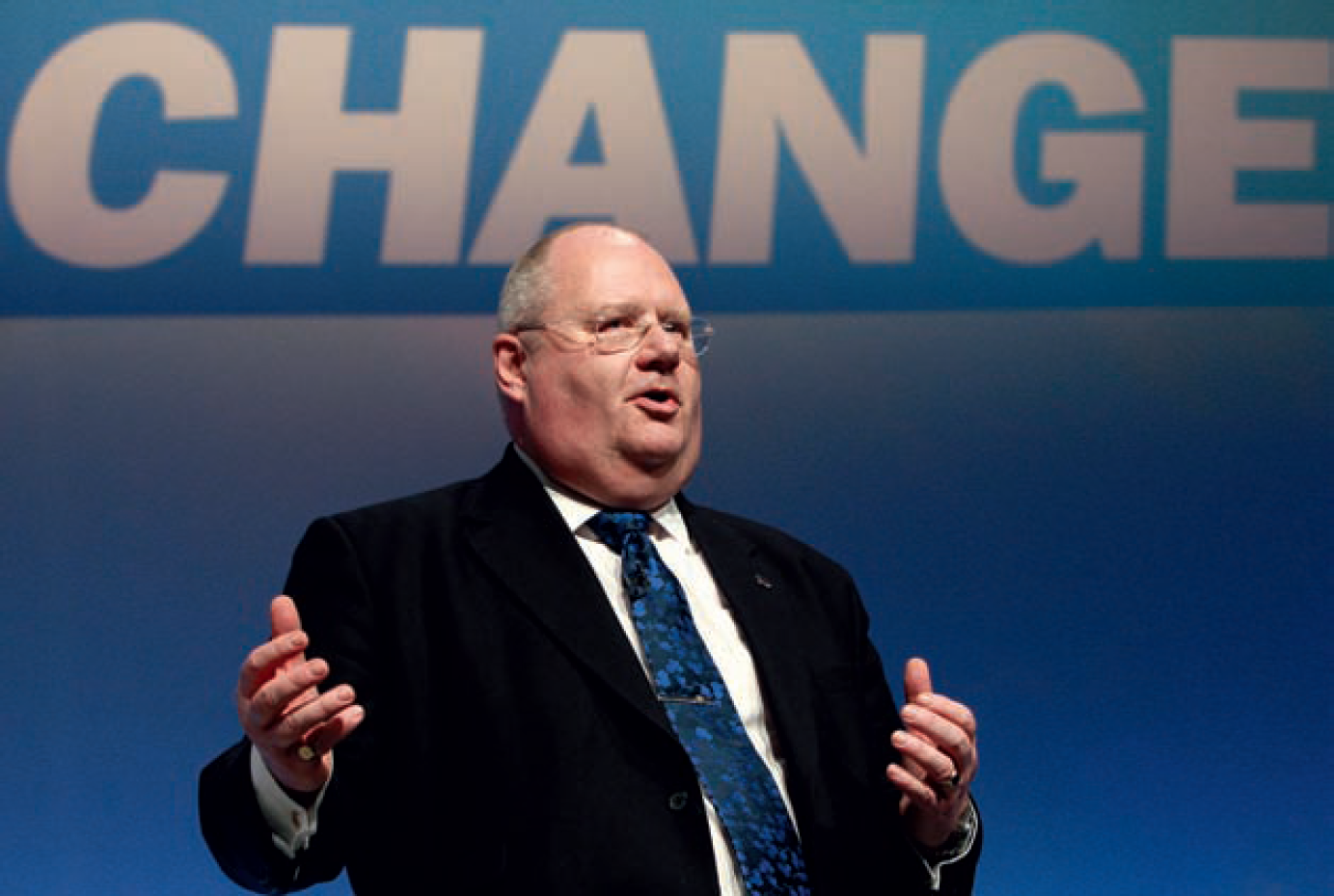
Conservative MP Eric Pickles, Secretary of State for Communities and Local Government, is in charge of the localism agenda.
Democracy in Inaction
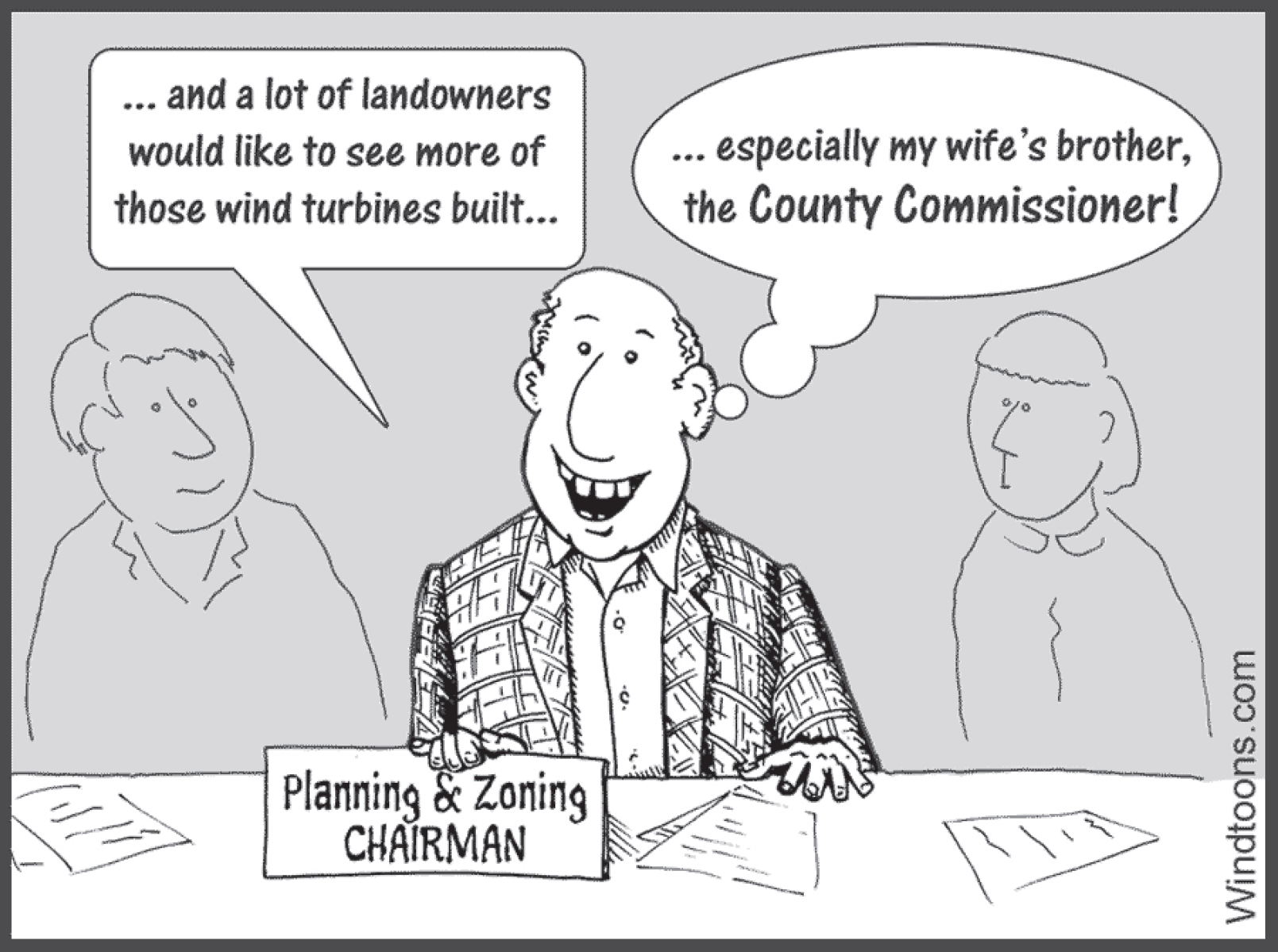
In research for the Joseph Rowntree Foundation on neighbourhood working, local politicians recognised that constituents' perceptions of ‘money for votes’ were a real risk when budgets are handed over to councillors in wards. Communities trying to do more for themselves can come up against resistance from local councils. One reason for local government reluctance to hand over the reins to communities is that power is seen as indivisible and a zero-sum game. Therefore, to hand over more control is perceived as taking power away from democratically accountable representatives.
Current ways of thinking also mistakenly assume that community preferences are fixed and unsophisticated; that a groundswell of feeling against the closure of a swimming pool, or the proposed location of a landfill site, cannot be shifted. In this interpretation, the role of the local councillor is to either accommodate an opinion or go against it.
Councillors are more likely to feel their role is to make the ultimate decision and communicate this to citizens; whereas citizens are more likely to feel councillors should agree with their views. One result of this divergence is that local politicians do not truly engage with or respond to citizens' views and lobbies. In other research, one complaint was that consultation was being conducted even though citizens suspected that a decision had already been taken behind closed doors. There were question marks about who held real power locally – for example, where people said that developers had paid the local authority to allow them to build new housing, or where decisions were perceived to be linked to favours or ‘backhanders’ between politicians and vested interests.
Deep-rooted issues around trust and confidence in the quality of local democracy are often brushed over by local officials and councillors who insist that their democratic mandate is unassailable. Repeated assertions of the unchallengeable primacy of democratic accountability serve to block attempts to resolve these problems in local politics. One example is growing excitement about how social enterprise and mutuals, such as co-operatives, could create greater community control and innovation in public services.
At a recent conference on mutuals, one organisation presented evidence of reduced staff sickness and turnover, and more varied and tailored care services for older people. The audience's main concern was that their local elected members would be reluctant or unwilling to water down their accountability for direct control over adult social care by transferring responsibility for it to a mutual. Other attempts to transfer assets, decisions and services to community-based organisations have been undermined, either deliberately or inadvertently, or stymied by too much caution.
Local Changes
Of course, there are many local authorities and local councillors that are keen to work more closely with communities, and to be more open, innovative and responsive. Alongside the more well-publicised and sometimes excellent projects in big metropolitan areas such as Bradford, examples from unexpected places – such as South Lakeland, Rossendale, Fylde, Hyndburn or St Helens – show how much effort local councils are making to change. For example, in Fylde, councillors are having two-way conversations with residents about major local decisions using social media. In Hyndburn, councillors are physically going back out into neighbourhoods and tackling housing problems with previously little-used legal powers. In Rossendale, joint work changed the direction of a review of leisure services. But our research suggests much more is needed.
So what is to be done? My submission to the Inquiry on councillors and the community looked at whether a new type of local politician would better guarantee full representation of voters' interests. Younger candidates, more women, people with disabilities, with different sexual orientations and from a wide range of ethnic backgrounds would be a positive move towards having representatives that at least looked more like the population.
But arguments for better descriptive representation can only take local politics so far. A new type of local politics has the potential to transform relationships between communities and councillors into a vibrant civic culture. This could involve more use of deliberation and joint problem-solving. Councillors could share risk and responsibility with communities for tricky decisions by welcoming the challenge that comes with a more mobilised citizenry. For example, at the moment, citizens are too frequently given mixed messages about their involvement: it is welcome when it is on local government's terms, but ignored or suppressed when uninvited. But the challenge that comes with a petition against a new landfill site or wind farm also offers opportunities for debate. How can we as a society handle increasing demands for energy and resources? What potential is there for community-led energy schemes? How can we make our neighbourhood more resilient against the pressures of climate change? There are many examples of community projects that attempt to strengthen community resilience, or ‘ready for anything’ communities, which local councillors could take advantage of.
Risk Aversion
With the current localism policy, decentralising public resources and decisions to ward and neighbourhood level could offer much more potential for local councillors and communities to make a difference. Localising decisions and encouraging more community contributions can mean transferring more control to communities. This spreads accountability in new ways, and demands different methods of oversight and facilitation than are used when activities are in authorities' direct control. It is understandable that local councils and their elected members are cautious about transferring power to communities and neighbourhoods where they feel this would present a high level of risk; the local authority and its members have overall responsibility, and are answerable to citizens. But responses to this are too often to avoid risk, or even more narrowly to avoid legal liabilities.
Across local councils, current ways of assessing risk levels are too often biased towards the worst-case scenario, and often do not take the true costs, benefits and risks for neighbourhoods into account in a more rounded way. However, some councils are creating conditions for more community action by creatively managing risk, for example through Community Pre-Qualification Questionnaires, and other approaches that could be adopted further. Where accountability for services and community outcomes is shared with other partners, such as commissioned third sector organisations or other public sector bodies, there are some innovations taking place that allow members to become more effective at ‘being in charge when you're not in charge’.
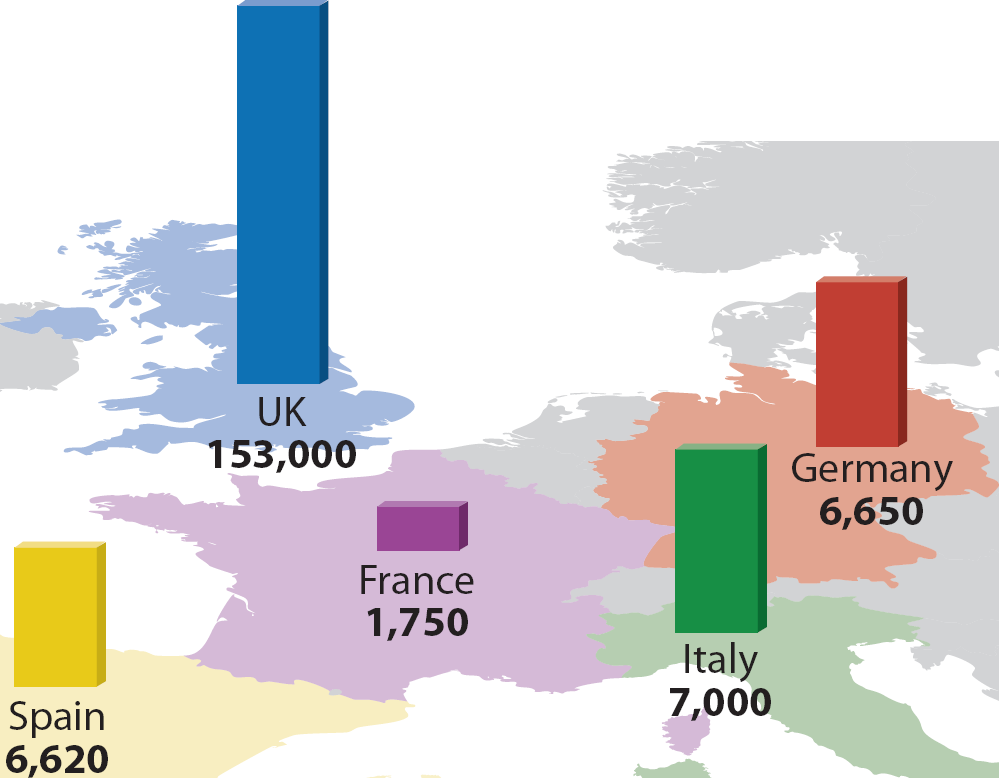
European local government by average population per municipality in selected countries. (Credit: Karin Bottom and Chris Game)
Localism suggests not everything will be the same everywhere, but who gets what, and what is fairest between and within places, would be good conversations to have. The worst-case scenario is that decentralisation or devolution runs the risks of neighbourhood interests being prioritised at the expense of wider area needs. People worry that unhealthy competition between places and groups is exacerbated, community tensions worsen, and strategic interests are undermined.
However, research suggests that how far devolution leads to greater inclusion within and between neighbourhoods depends on facilitation, deliberation, brokering and greater transparency. If the criteria for where resources go were more transparent, it is possible to imagine accusations of vote-gaining decisions would diminish. Some councils are starting to address this by agreeing resource allocation criteria jointly with communities and making the criteria for allocation more transparent. There were emerging examples such as in Tameside Metropolitan Borough Council, where there was a significant shift in how members saw their role, resulting in sharing power with communities. But sharing power requires councillors to see power as a ‘positive-sum’ game. And as the respondents put it so neatly: ‘you get more power by giving it away’.
Community Leaders
There was one big issue not on the agenda in the recent Inquiry: given that the majority of local councillors are now not involved in strategic decision-making, is the current localism model simply obsolete? The change in how local government functions is the deliberate and successful result of reforms to decision-making introduced from 2000. Decision-making has been centralised and streamlined into council executives composed of a small number of senior councillors. Other councillors were rebranded as back-bench or frontline councillors. Their role was to be ‘community leaders’, working on the ground in their wards.
A key part of the community leadership role is to broker tensions and controversial conflicts between sections of communities. Some lessons from where this has happened are that difficult or controversial issues need to be challenged head-on, using tried and tested techniques such as:
mediation
residents appreciating local councillors being honest about what is possible, or acceptable
councillors sometimes needing to resist demands from minority interest groups for special treatment, regardless of the electoral consequences
councillors helping to mobilise the community to respond to critical situations, with support from community networks such as faith organisations, voluntary groups, women's groups and community elders
member learning and development helping elected members play a vital and strong community leadership role.
Nevertheless, what a ‘community leader’ actually is or does has remained frustratingly vague, in spite of numerous attempts to define the role, or provide training and toolkits. Moreover, the community leadership role has not been refined through practice or councillors occupying the role. If, after more than a decade, the execution of a community leadership role is stubbornly out of reach, then perhaps we are flogging a dead horse. If alternative roles for local members are not working, then one answer would be to have fewer members.
Conclusion
Academics have rightly pointed to the curious English structure of local government that has some of the largest administrative and electoral units in Europe. Surely the logic would be for more councillors rather than fewer? However, the flaw in this logic is the same as the ‘democratic accountability’ mantra heard from local government. It presumes that the job of leading, listening, brokering between competing interests and mobilising community action can only be done by elected representatives. A contrasting vision for local representation was put best in my recent research by a mixed group of councillors, community volunteers and public sector staff: ‘No single body can hope to represent the full range of interests in a neighbourhood, so you can't devolve to one single body. We need other forms of representation, particularly for powerless groups.’
As Robert Scott and his crew found out in the Antarctic, sometimes horses are not the best solution. The early British Antarctic expeditions failed partly because of their reliance in horses, instead of alternative means of transport, such as dogs, better suited to the conditions. Perhaps the way forward for local government is to welcome a wider range of forms of representation. The solution to failing or dead horses is to not to flog them, but for horses to learn to ride with all the other animals.