







Abstract
The use of virtual reality (VR) in interior design has increased dramatically. Its interactive and visualization benefits are undeniable. Designers, clients, developers, and stakeholders can immerse themselves in future or existing design projects without the need to be physically there. Thanks to more immersive and realistic experiences, the boundaries that separate the physical and the virtual world are becoming nonexistent. Nonetheless, research has focused on the visual characteristics of the virtual space, undermining the consequences for individuals engaged within it. In this study, we assessed the effects on mental workload caused by how individuals visualize themselves in VR using a virtual body (VB). The VB is typically represented by the use of avatars. An experimental setup was carried out with a convenience sample of 72 individuals. Participants interacted in an immersive VR interface with three different conditions of the VB. They were randomly assigned to one of the three conditions and engaged for a period of approximately 20 minutes in tackling a design-like activity. Data were collected through self-report questionnaires in addition to a psychophysiological device accounting for the cognitive load (CL) and task difficulty. The statistical analysis supported differences in CL between conditions. A more detailed visual representation of the VB increased the sensation of being there but contributed extraneous CL that can hinder the task at hand. The findings of this study can guide interior designers in selecting the type of VB they should use for their immersive VR experiences.
Interior design is a human-centered discipline that supports the human experience by developing interior environments. The interior designer’s task is to manipulate multiple characteristics such as lighting, color, ergonomics, and spatial features to enhance behavior. Research in the built environment frequently focuses on assessing physical attributes of the space at hand by the manipulation of physical characteristics, such as color (De Korte et al., 2011; Singh, 2006), openness of space (Minas et al., 2016), or saturation (Ceylan et al., 2008). Nonetheless, the use of virtual reality (VR) in design practice allows designers to transcend the physical boundaries of space. The virtual-physical continuum of VR permits the exploration of novel relationships between individuals and spaces, ultimately moving forward the effective implementation of VR within the discipline.
VR emulates the real world as an effective medium for spatial visualization, variable manipulation, and human behavior assessment concerning the built environment from an interior design standpoint. VR gives designers and stakeholders the possibility to foresee design outcomes, comprehend spatial characteristics, and acknowledge design decisions before anything is built. A good example of this is current modeling software frequently used to visualize design ideas through 360° images or immersive models. Furthermore, new applications are bridging the gap to incorporate embodied modeling interfaces in immersive VR (Tran et al., 2021). Within these new possible applications of VR in interior design practice, the way individuals perceive themselves within those virtual environments gains relevance.
This self-perception is recurrently done through the use of avatars. The study by Pan and Steed (2019) used a sample of 32 participants to support how full-body avatars had increased memory performance versus no avatar. Surprisingly, hand-only avatars were not significantly different from full-body avatars. Kim et al. (2020) explored three different types of avatars in three consecutive studies. Their results showed how different setups affected the embodiment and arousal of participants in VR. Moreover, additional studies suggest that these self-perceptions, if not manipulated appropriately, may hinder the performance of the task at hand (e.g., Rettinger et al., 2022; Steed et al., 2016). Unlike Pan and Steed and Kim et al., however, we addressed how individuals perceived themselves in immersive environments and how that influenced their mental workload.
For interior design, the use of VR for visualization and design development is increasing, as is the user’s acceptance and usability (Li & Xie, 2022). The type of avatars used can vary depending on the intention, software, or interface. For visual interactions in which users are immersed in the VR environments solely for spatial perception, the most common avatar setup is not having a visible avatar or having hands-only avatars. Examples of this setup are those found in Enscape or Twinmotion (Pickersgill, 2021). However, full-body avatars benefit from more interactive endeavors in which direct object manipulation is done inside the VR environment (Falloon, 2010). Since full-body avatars have increased memory performance, these could be easily transferable to design interfaces like Sketch VR, Tilt Brush, or Gravity Sketch, in which designers can model while immersed in the VR environment. Finally, another type of avatar common in the gaming industry is the third-person point-of-view (Salamin et al., 2006). This setup allows the user to see their body immersed in VR from an out-of-body perspective. When users can see their avatar from an outside perspective, performance features such as motivation are influenced, enhancing engagement (Hudson & Hurter, 2016). Engagement also plays a critical role in Flow (i.e., complete immersion in an activity), which ultimately can enhance creativity (Csikszentmihalyi et al., 2014).
Likewise, a critical component of VR is embodiment allowing individuals to feel present in immersive environments (Kilteni et al., 2012). Embodiment is a strategy to generate meaning from the surrounding world on the basis of the foundations of ontology, intersubjectivity, and intentionality (Dourish, 2001). Embodiment improves cognitive processes (DeSutter & Stieff, 2017) and emphasizes the awareness of the individual in the role of the main character performing a given activity (Anderson, 2003). Therefore, the manipulation of self-representations inside VR will ultimately affect immersion. Aiming to contribute to developing more interactive experiences in which interior designers can use immersive VR beyond visualization purposes, it is relevant to better understand the impacts of avatar selection.
Aiming to contribute to developing more interactive experiences in which interior designers can use immersive VR beyond visualization purposes, it is relevant to better understand the impacts of avatar selection.
Background and Motivation
In VR environments, avatars are embodied versions of the virtual body (VB) and can be divided into online and offline representations (Carruthers, 2008). The former is when individuals can see their VB within the environment, while in the latter, they do not, but they feel present. Similar to a phantom limb effect, where individuals feel a missing limb, the offline representation allows individuals to be aware of the existence of their body without seeing it. These online and offline representations will ultimately affect the sense of embodiment (SoE), defined as “the ensemble of sensations that arise in conjunction with being inside, having and controlling a body” (Kilteni et al., 2012, p. 374). SoE comprises three subcomponents: the sense of self-location, the sense of agency, and the sense of body ownership (Carruthers, 2008; Kilteni et al., 2012; Slater et al., 2010). The sense of self-location contains an individual’s spatial attributes with the environment. The sense of agency relates to how individuals perceive their bodies and how they acknowledge that body as their own. Finally, the sense of body ownership refers to the compliance of the body to the mind’s intentions (see Figure 1).
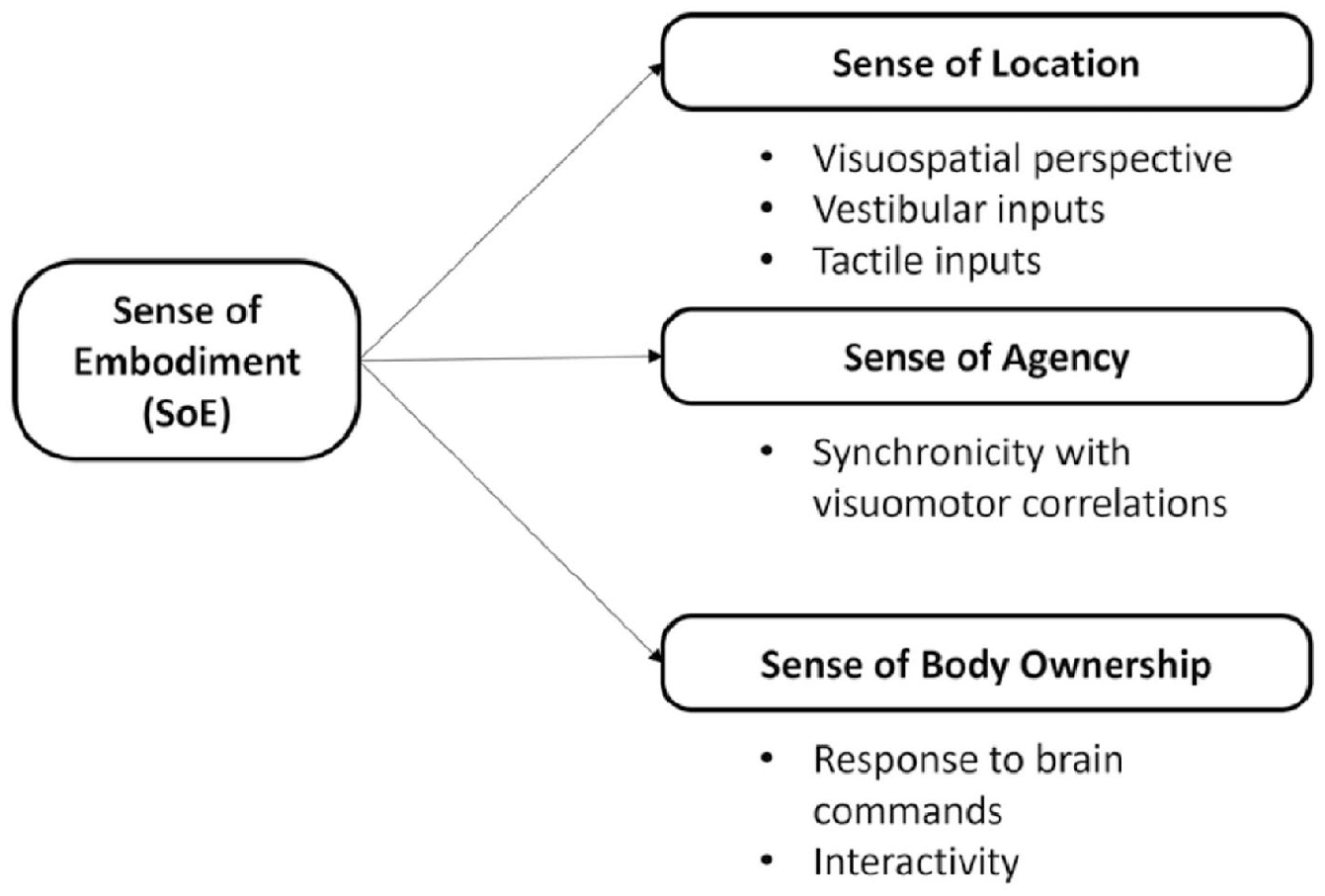
Sense of embodiment.
A key element when researching embodiment in VR is presence. Presence was defined by Minsky (1980) as the sensation of “being there” in a different space through the use of technology. For Slater and Wilbur (1997), presence is critical in virtual environments because the higher the participants’ sense of presence, the more likely they are to behave as in real life. For them, presence is a state of consciousness occurring in both subjective and objective manners, understood as the way participants feel in the virtual environment and the way they behave, respectively.
Furthermore, the way individuals see themselves, feel present, and interact with their surroundings becomes a critical aspect of cognition. Individuals interact using their bodies with the world to generate an understanding of it. This idea has been widely discussed in the past, starting with Descartes’s notion that the mind and body are distinct (Kenny, 1985). Descartes acknowledged a difference between body and soul from an ontological perspective, but he also understood that they formed an empirical unity (Anderson, 2003). Although Descartes thought of the mind and body as separate entities, he realized that the way the mind acquired knowledge was by the mediation of the senses; hence, the body within Cartesian philosophy was instead a conundrum between the notion of being necessary to acquire knowledge yet independent from the mind.
Cognition is situated and time-pressured, whereby there is an off-load of cognitive work in the environment, and the environment is part of the cognitive system (Henning, 2004; Wilson, 2002). Cognition is about action, depending on the environment and the actions developed in that environment (Wilson, 2002). Offline cognition is body-based, where the generation of knowledge is grounded on previous body experiences (DeSutter & Stieff, 2017). Cognition is time-pressured since, in a given activity (e.g., driving a car), decisions must be made in a specific time window (Wilson, 2002). Finally, cognitive load (CL) can be off-loaded in the environment using epistemic actions (Kirsh & Maglio, 1994). Such is the case in the game Tetris, where the players manipulate the pieces without thinking about the manipulations, just to see which position best suits the required space.
Beyond philosophical discussions, multiple empirical studies have supported the connection between mind and body in diverse disciplines. From the design discipline’s perspective, Poulsen and Thøgersen (2011) used Buur’s model of focus, reflect, and reframe for conversation analysis to research embodiment as a critical factor for problem evaluation and idea generation in the design process. Similarly, the study by Chandrasekera and Yoon (2015) displayed an increase in mental rotation ability by the use of multiple instructional modalities, which varied in level of embodiment. Using a convenience sample of design students, they were able to support the benefit of using VR for the development of spatial abilities. The extension of the body through avatars in VR is not only an individual’s self-representation but can increase engagement while interacting with others (Fribourg et al., 2018). Within the field of science, technology, engineering, and mathematics (STEM), DeSutter and Stieff (2017) studied embodied actions, using them to appraise the cognition of molecular structures in biology students.
Moving forward in understanding human cognition, cognitive load theory (CLT) has focused, since the 1980s, on the cognitive architecture of the brain. When referring to cognitive architecture, two main components are found: long-term and working memory. Long-term memory is where knowledge is located under the form of schemas (Paas et al., 2003; Sweller et al., 1998). A schema is a categorization of several information chunks concerning future use. They are crucial for cognition because they not only store information but, through automation, reduce the load on the working memory (Sweller et al., 1998). Working memory constitutes the second component, and it is capable of maintaining only around seven chunks of information (Baddeley, 1992; Miller, 1956). Moreover, humans can probably deal with only two or three of those chunks simultaneously (Sweller et al., 1998).
Cognitive Load
CL is a concept that refers to the amount of charge a given task enforces over the cognitive system; more specifically, the working memory (Paas & Van Merriënboer, 1994; Sweller, 1994, 2010). Mental load and mental effort are two dimensions that comprise CL and ultimately affect performance. The first relates directly to the task, whereas the second relates to the learner (Sweller et al., 1998). Moreover, CL falls into three different classifications: intrinsic, extraneous, and germane. Intrinsic CL refers to the specific complexity of the activity at hand, while extraneous CL relates to external characteristics while performing the task that do not contribute to learning. The last, germane CL, is the mental activities that directly relate to learning and building schemas (Renkl & Atkinson, 2003; Sweller et al., 1998). Moreover, capacity can be re-allocated, meaning that reducing extraneous CL can increase intrinsic and germane CL capacity.
Embodied actions in VR can liberate CL in the virtual environment but, above all, develop spatial skills. This aspect is critical for interior designers in developing design intelligence. Design intelligence is a holistic intelligence that requires the advancement of visuo-spatial skills among others (D’Souza, 2006). Spatial ability relies on motor skills, and as such, it can be affected by neural plasticity (i.e., the changes occurring in short periods of time in the brain, more specifically in gray and white matter associated with motor skills) (Dayan & Cohen, 2011). Multiple studies suggest that a digital environment may help users develop spatial skills (Chang et al., 2017; Gómez-Tone et al., 2021; Molina-Carmona et al., 2018). Further, investigations in different disciplines have provided an empirical and theoretical foundation on how VR technologies can positively affect neuroplasticity (e.g., Cheung et al., 2014; Coco-Martin et al., 2020; Levin, 2011). More importantly, the study by Lin et al. (2020) displayed how VR has an overall positive effect on design processes, but to increase the effect, more hands-on interaction is needed.
In summary, the use of VR in design practice and discipline is increasing with more immersiveness and interaction. Advances in design software not only allow designers to use VR environments for visualization and modeling purposes, but open the opportunity to develop simulations shared with clients and stakeholders. These simulations use representations of the VB with different points of view, either for immersion of the individuals performing the task or as entourage. Research has supported how VR can liberate CL, increase spatial skills, and positively affect the design process. Still, few have examined how different VB conditions may affect CL, ultimately influencing task performance through the lens of a design activity.
. . .few have examined how different VB conditions may affect CL, ultimately influencing task performance through the lens of a design activity.
Aims
With the increasing possibilities to use VR in interactive design practice and education beyond visualization, the purpose of this study was to explore multiple conditions of the VB and assess their impact on CL. Considering the previously discussed online and offline characteristics of the VB, robust presence attributes, and influence on CL, the researchers selected three conditions (see Table 1). The three conditions represented the VB in the VR environments through avatars. Avatars are humanized representations of the body widely used in different applications for human-computer and human-human interactions (Etemad-Sajadi, 2016).
Virtual conditions characteristics.
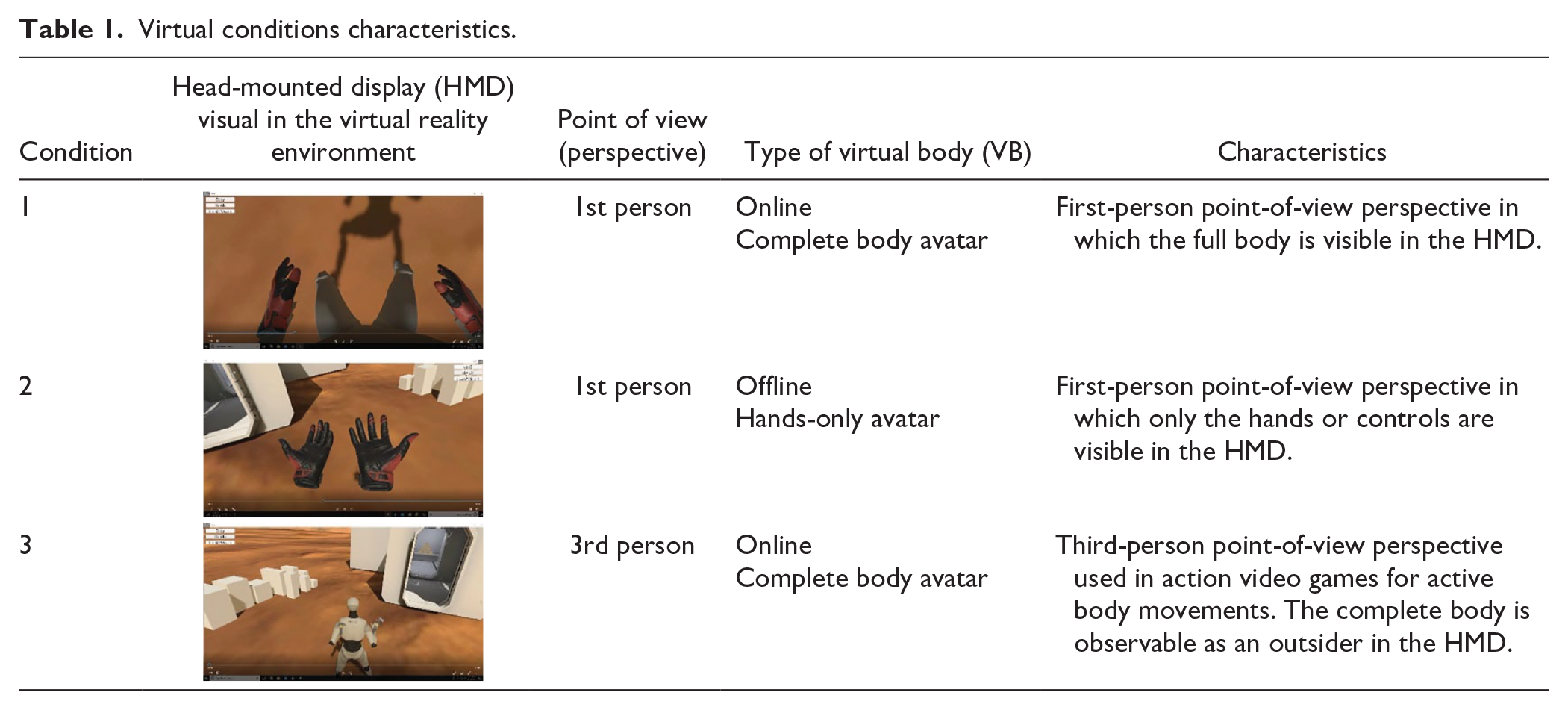
The first condition was a first-person perspective with a VB. In this scenario, participants were actively engaged in the activities they performed and saw a VB represented by an avatar that moved according to their movements. The second condition was again a first-person perspective in which participants were actively engaged, but there was no representation of their bodies. This setup is typical for scenarios in which user’s can wayfind inside the virtual environment, but they have only the presence of their virtual hands in that environment. An example of this setup is that used by Enscape, in which participants can realize virtual tours of virtual spaces (Pickersgill, 2021). The third condition setup was a third-person perspective whereby the participants were able to see their avatar through an outside-body experience. This type of setup is commonly used for action movements in video games in which the players manipulate the avatars as if they were outside viewers of the physical interactions (Salamin et al., 2006). This setup, while not commonly used in design software, can provide the flying function or include avatars as entourage in Lumion or Twinmotion. The first and second setups are most commonly used for fine motor skills (Salamin et al., 2006). It is of relevance for this study to acknowledge that both the first- and third-person points of view permit the illusion of body ownership (Galvan Debarba et al., 2017).
In summary, we explored how the aforementioned three conditions of the VB for self-representation in immersive VR environments affected mental workload, more specifically, CL. We also explored the use of psychophysiological tools for design research. This approach can be used to better understand how individuals react to the built environment beyond the retrievable data from self-reported questionnaires. An overarching research question guided this study. How does the VB affect the CL? From existing literature (Pan & Steed, 2019; Rettinger et al., 2022; Slater et al., 2010), the researchers hypothesized that a more embodied VB (higher SoE) would off-load more CL in the immersive VR environment increasing cognition of the task at hand. In summary, condition 1 should have a lower CL than the remaining two conditions.
Methods
Data Collection
Psychometric and physiologic tools are commonly used to assess CL (Wierwille & Eggemeier, 1993). One of the more frequently used tools to measure CL is the NASA-TLX questionnaire from the psychometric standpoint. This questionnaire uses a 5-point Likert scale that measures CL (1 = very low, 5 = very high) in 6 different aspects of task performance for a maximum score of 30 (Hart & Staveland, 1988). These aspects are: how mentally demanding was the task, how physically demanding was the task, how hurried was the pace of the task, how successful were you in accomplishing the task, how hard did you work to accomplish the task, and how insecure, discouraged, irritated, stressed, and annoyed did you feel with the task. More importantly, its reliability has been evaluated over time (i.e., split-half reliability and Cronbach’s α were more than .80), strengthening its acceptance as a testing method (Hart, 2006; Hoonakker et al., 2011; Xiao et al., 2005). An overall question regarding activity difficulty was also included using a 9-point scale where 1 corresponded to very, very low mental effort, and 9 to very, very high mental effort.
From a physiological perspective, measuring cognitive tasks in the brain can be achieved by the use of neuroimaging tools such as functional magnetic resonance imaging (fMRI), which can monitor neural activity in the entire brain. While functional near-infrared spectroscopy (fNIR) only delves into the prefrontal lobe, these devices are a more flexible and less expensive research method for brain activity and cognitive tasks (Ferrari & Quaresima, 2012). Furthermore, these permit researchers to register brain activity while physical tasks are being performed in natural environments (Kaimal et al., 2017). To be portable and noninvasive, fNIR uses light to measure oxygenation and deoxygenation levels in the blood to quantify brain activity (Ayaz et al., 2013). Major levels of oxygenation demand in the blood correlate to higher brain activity, hence major CL (Ayaz et al., 2013; Kaimal et al., 2017). Moreover, the study conducted by Szulewski et al. (2017) was able to correlate the relationship between psychometric and physiologic tools as empirical indicators for CL.
To measure presence within the three conditions, questions based on the presence questionnaire compendium (Baren & IJsselsteijn, 2004) and the presence survey by Witmer and Singer (1998) were added to the post-experiment questionnaire. The questionnaire totaled 15 items that used a 5-point Likert scale. Higher scores accounted for higher levels of overall presence. The 15 questions were divided among presence, appearance, and interaction, with 5 questions for each dimension. Factor analysis was calculated to corroborate the consistency of these dimensions with Cronbach’s α of .72, .75, and .73, respectively.
Sample Selection and Experimental Design
A convenience sample of participants were selected from a midwestern university located in the United States. Recruitment included class invitations, open flyers, and snowballing until a robust sample size was attained. Participants were randomly assigned to one of the three conditions. No restrictions were made on the available time for the testing, but slots of 1-hour were assigned per participant. Participants were over 18 years old and not limited to being design students. Prior to collecting data, Institutional Review Board (IRB) approval was obtained from the research team’s university.
Upon arrival, participants completed a pre-experiment questionnaire consisting of basic demographic questions. Following the pre-experiment questionnaire, participants were handed a brief (see Appendix 1) that contained the instructions for the activity they were to perform in the VR environment.
Once the brief was read and questions were answered on behalf of the investigator, participants interacted in the VR environment to become familiar with the actions and movements. In this small interaction, participants did not engage in designing, and the main purpose was to control for any bias that may occur due to participants’ unfamiliarity with the environment. Afterward, a psychophysiological device was attached to the participants.
The psychophysiological equipment was a Biopac F2000 series fNIR device, with an 18-optode headband RXFNIR-2000-18 located on the participants’ forehead. The software to collect the fNIR data was CobiModern, provided by Biopac. fNIRSOFT was used for data processing and analysis. The intensity of the ambient light was controlled for the experimental environment. Data collection started with the baseline taken for a minimum of 1 minute in a relaxed seated position with the eyes shut, a common procedure used in fNIR studies (e.g., Ayaz et al., 2013; Hill et al., 2013). Afterward, participants opened their eyes, stood up, and engaged in the VR interaction. Markers were generated along the data collection process to pinpoint specific events such as baseline and VR interaction boundaries.
The fNIR quantitative data was collected in the Cobi software in the form of lightgraphs, which were filtered using the 2-Hz low-pass filter predetermined by fNIRSOFT (Ayaz, 2010). After this first filter was applied, data were processed through a sliding-window motion artifact rejection (SMAR) filter (Ayaz et al., 2010). Artifacts are defined as involuntary movements that can contaminate the data. Processed lightgraphs were used to generate oxygraphs and brain topography through fNIRSOFT. The collected baseline was used to calculate the oxygraph.
After the intervention, participants completed a post-experiment questionnaire containing a NASA-TLX to assess self-reported CL and the presence questionnaire. Quantitative data resulting from this survey were statistically analyzed through a one-way analysis of variance (ANOVA), and bivariate correlation using SPSS software, version 24. Post hoc analyses were completed using Tukey pairwise comparisons. The assumption of normality of variances was accounted for through Levene’s test of normality. Mean comparisons for the fNIR data were made using the software SPSS, version 24. All statistical analyses used an α level of significance of .05.
Study Setup
The study setup used three computers. The first computer recorded all the activity through a Biopac fNIR 2000 model device connected to an 18-optode sensor band headpiece RXFNIR-2000-18 composed of light sources and photodetectors. The Cobi Modern software was used for data capture, and the fNIRSOFT software was used for data visualization and processing. The second computer used for the VR experience included an high tech computer (HTC) Vive HMD. This computer was equipped with Steam VR software, and the intervention was an executable file that, once opened, projected automatically in the head-mounted display (HMD). The third computer did not require any specific characteristics and was solely used to complete the online questionnaires through Google Forms (see Figure 2).
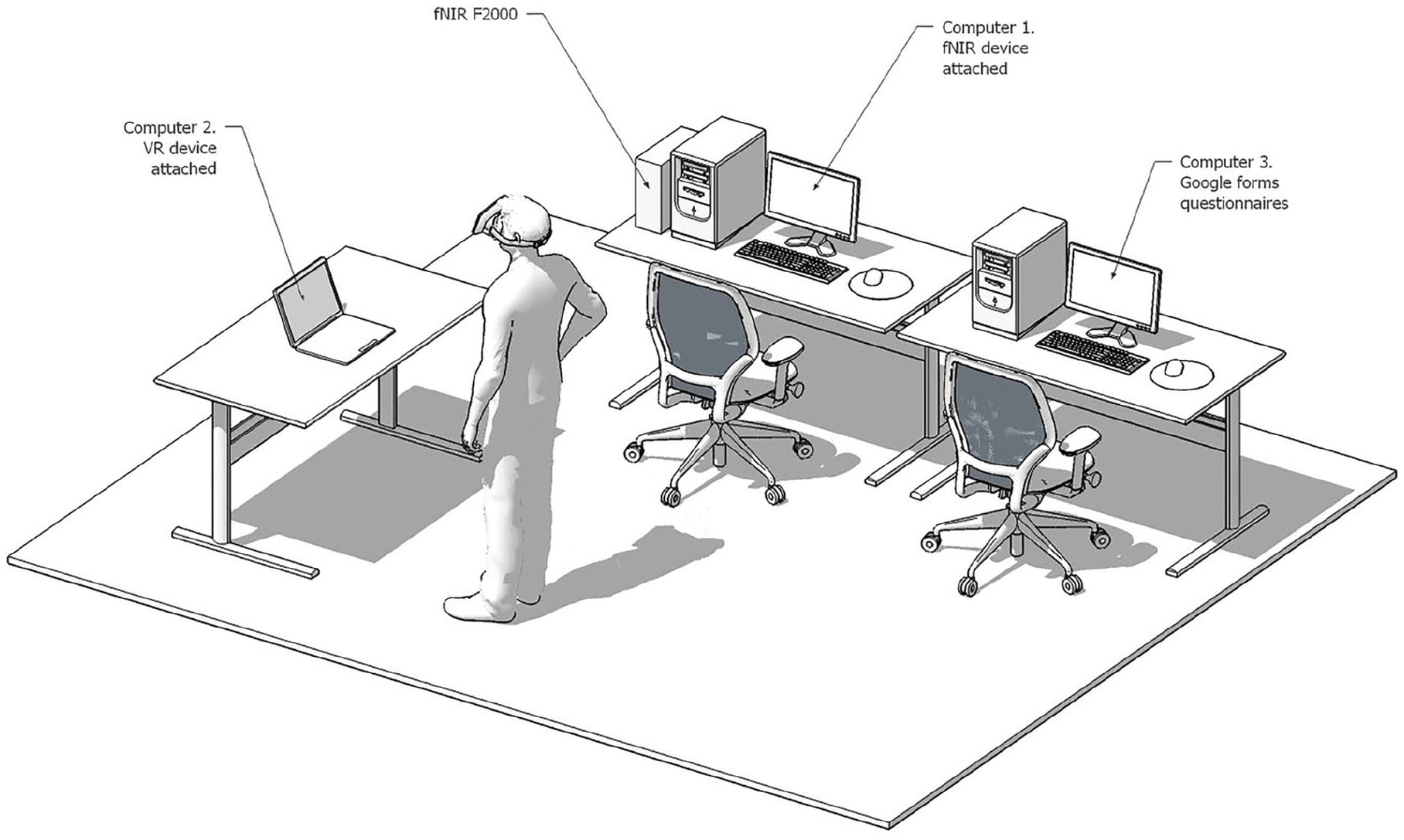
Study setup.
Task in Hand
The problem to be solved was carefully thought to be design-related and was based on the nine-square grid problem frequently used in architectural and interior design studio courses (Hopfenblatt & Balakrishnan, 2018). Participants worked on a design brief that engaged spatial ability and required creative problem-solving skills. Based on Rowena Reed Kostellow’s compositional theory that split form and structural elements into three categories: dominant, subdominant, and subordinate elements (Hannah, 2002), participants had to arrange multiple containers/modules within a small (12′ × 8′) space station room. These modules comprised a system of nine different volumes manufactured in three different materials. Variation in size and shape allowed the use of multiple axes to create compelling compositions (Hannah, 2002). Also, three different contents were to be stored in the containers. The logic behind these constraints was to provide participants with a complex problem that needed logical thinking to propose a design solution. To maintain the complexity of the problem, a physical virtual space was assigned to arrange the modules within and included a window with a view and two entrances for people to move throughout the space.
Participants worked on a design brief that engaged spatial ability and required creative problem-solving skills.
Participants chose as many modules as they wanted from the available sizes in any of the three proposed materials. In each container, they stored one of the available contents. Participants were encouraged, but not limited, to generate a sculpture-like distribution of the modules that could have some alternative use besides storage (see Appendix 1).
From an operational standpoint, the task in hand needed to be complex enough for participants to use logical thinking, yet simple to interact with and, above all, not strenuous. The main consideration was that the concentration on the task had to be high. In other words, intrinsic CL must be high; otherwise, variations in extraneous load will not be noticeable due to existing working memory capacity (Sweller, 2011). The selected task also required creative problem-solving skills and spatial abilities. Previous research supports that these aspects engage the brain’s frontal lobes and right hemisphere (Feist, 2004).
To develop the VR intervention, this study used Unity 2019.2.14f1 software and addressed participants’ interaction through an HTC Vive HMD plus two HTC 2018 controllers (see Figure 3). The virtual setup consisted of a Mars-like physical landscape with a space station building placed in front of the participants and the containers to the side. Participants were able to walk outside and inside the determined space for the interaction.
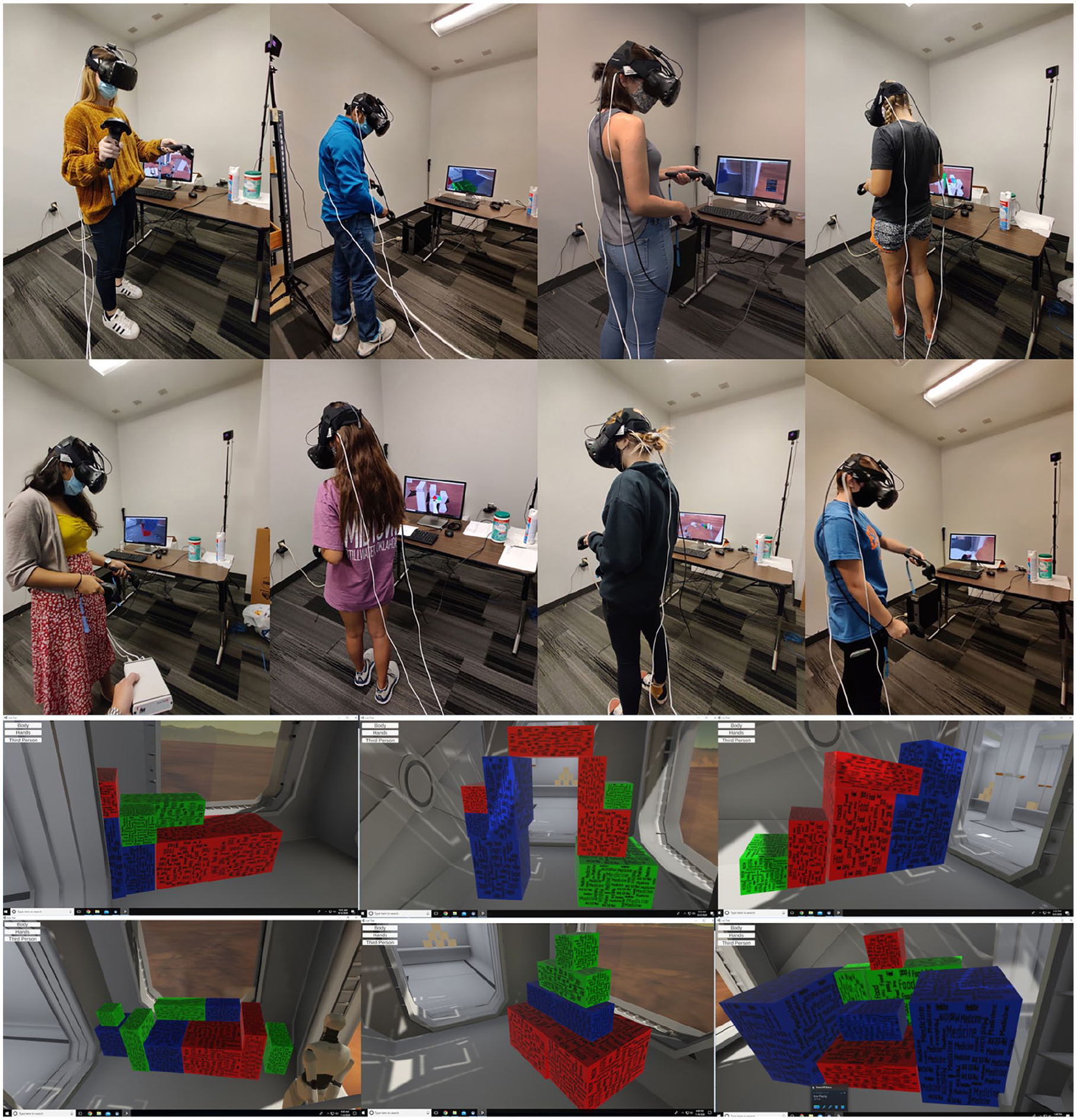
Participants and outcomes.
Two HTC controllers permitted the manipulation of the container modules in the virtual space. For this purpose, the trigger buttons in both controllers enabled participants to grab and release the modules. The left controller’s trackpad allowed the function of teleporting around the space. The right controller’s trackpad had a radial menu that facilitated the selection of material and content for each module.
Results
All participants were adult students at the undergraduate or graduate level at a midwestern university located in the United States. A sample size of N = 72 was obtained, composed of 81.9% women and 18.1% men. Of the overall sample size, 56% were design students. Ages were distributed as follows: 84.7% from 18 to 24 years; 8.3% from 25 to 30 years; and 6.9% from 31 to 40 years. Most of the sample was composed of junior-level students (30.6%), followed by senior level (20.8%), graduate (19.4%), and finally sophomore and freshmen levels (15.3% and 13.9%, respectively; see Table 2).
Demographics of the sample.
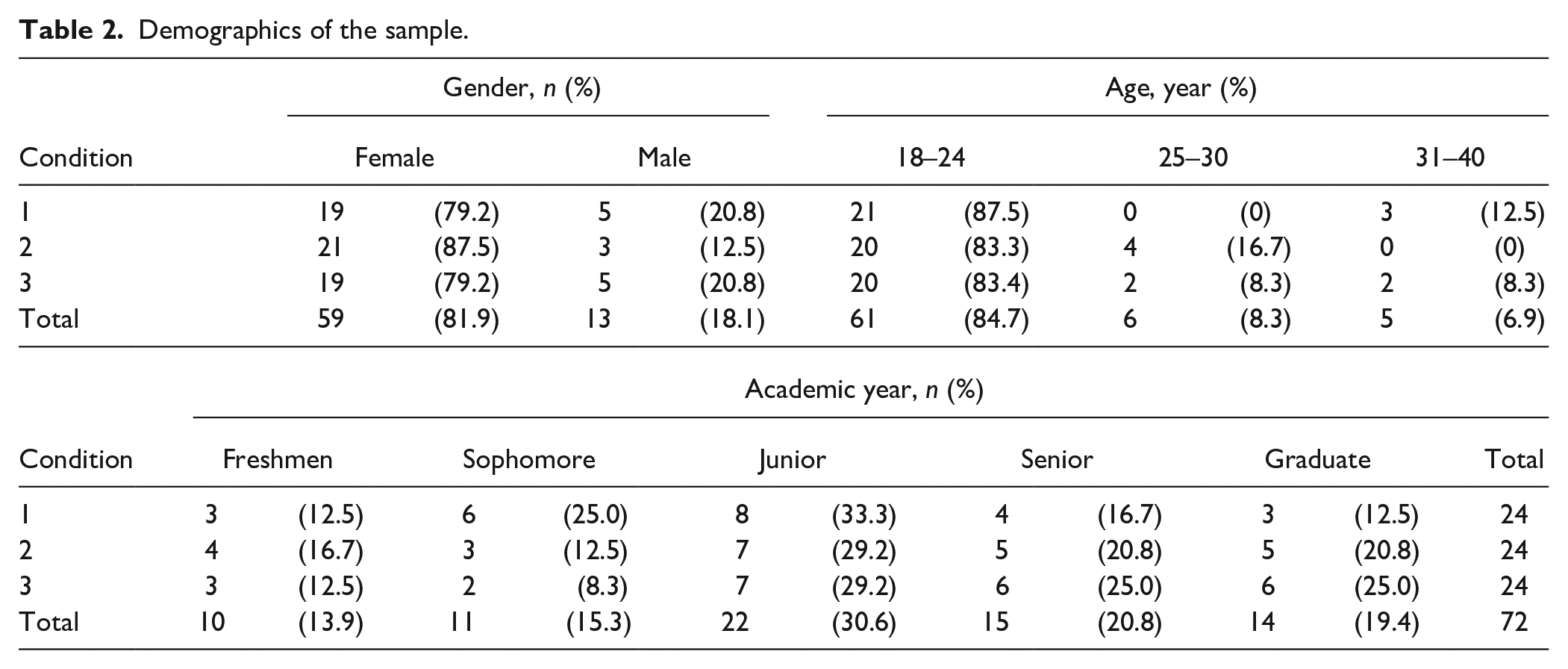
All participants were summoned for a 1-hour time frame to conduct the experiment without time constrictions. This time was established through a pilot test run with two participants before starting the data collection process. These two participants’ data were not included in the data analysis presented here.
During the experiment, in the VR-interaction data collection process, four markers were generated to further define data blocks for analysis. The first two markers corresponded to the beginning and end of the baseline; the remaining two were to the start and finish of the VR activity (tackling the design brief). These markers were used afterward in fNIRSOFT to identify two blocks of information. The first block (baseline) was used to calculate the oxygraphs, and the latter block delimited the experiment’s boundaries for further analysis. The average time participants spent in the experiment block was 20.67 minutes (SD = 10.52 minutes; see Table 3).
Time distribution.

Recall that the NASA-TLX was used in the post-experiment questionnaire as an instrument to measure CL after performing the task in the VR environment, along with a question regarding activity difficulty. We also measured overall presence in three dimensions (presence, appearance, and interaction) (see Table 4).
Post-experiment questionnaire data.
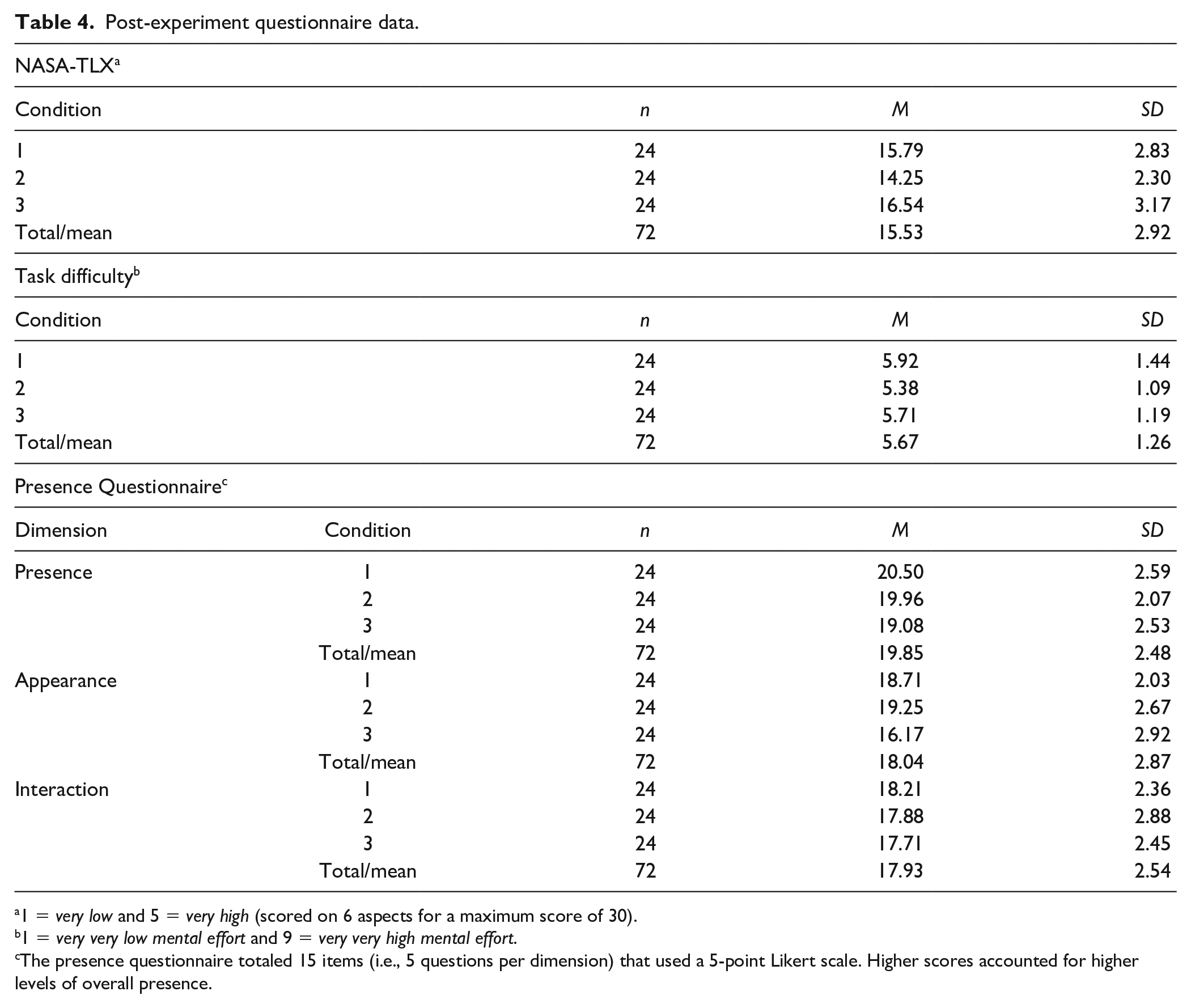
1 = very low and 5 = very high (scored on 6 aspects for a maximum score of 30).
1 = very very low mental effort and 9 = very very high mental effort.
The presence questionnaire totaled 15 items (i.e., 5 questions per dimension) that used a 5-point Likert scale. Higher scores accounted for higher levels of overall presence.
To support that differences in VBs do affect CL, an ANOVA was carried out for the NASA-TLX between the three conditions with statistically significant results, F(2,69) = 4.18, p = .02. Post hoc analysis using a Tukey pairwise comparison elicited that Condition-3 (M = 16.54) had significant differences with Condition-2 (M = 14.25) (p = .01), but not with Condition-1 (M = 15.79) (p = .62). No statistically significant difference was found between Condition-1 and Condition-2 (p = .14). A moderate effect size (.46) and high power (1 − β = .94) were obtained. An ANOVA was also conducted between the perceived task difficulty by participants and the three conditions, with no statistically significant results, F(2,69) = 1.14, p = .32.
Ultimately, the scores of task difficulty and NASA-TLX were added together to evaluate an overall appraisal of CL. The mean scores were 21.71 (SD = 3.39), 19.63 (SD = 3.14), and 22.25 (SD = 3.86), for Condition-1, Condition-2, and Condition-3, respectively. An ANOVA revealed statistical significance between means, F(2,69) = 3.81, p = .02. Tukey’s pairwise comparison showed that Condition-3 had significant differences with Condition-2 (p = .03), but not with Condition-1 (p = .85). No statistically significant differences were found between Condition-1 and Condition-2 (p = .10). A moderate effect size (0.34) and high power (1 − β = .72) were obtained.
To corroborate and expand on the data gathered from the NASA-TLX, this study used an fNIR device to account for oxygenation levels in the brain’s prefrontal lobe (Ayaz et al., 2013; Kaimal et al., 2017). Oxygraphs were calculated on the basis of the lightgraphs collected through the Cobi software. Oxigraphs were visually inspected, and those corrupted were deleted and not considered for analysis. Corrupted oxygraphs result from external light, most possibly from the movement of the HMD that affects the light receptors at the moment of data collection.
The first step in fNIR data analysis was to create bar graphs using the fNIRSOFT for visual inspection. After visually inspecting the graph, Condition-1 displayed higher levels in optodes OP2, OP4, and OP7–OP10, for a total of 6 optodes from the available 16 (43.8%). Condition-2 did not display higher levels in any of the 16 optodes (0%). Condition-3 displayed higher levels in optodes OP1, OP3, OP5, OP6, and OP11–OP16, for a total of 10 of the available 16 optodes (62.5%). Optodes OP17 and OP18 were used as a control for the device and were not accounted for in the data analysis (see Figure 4).
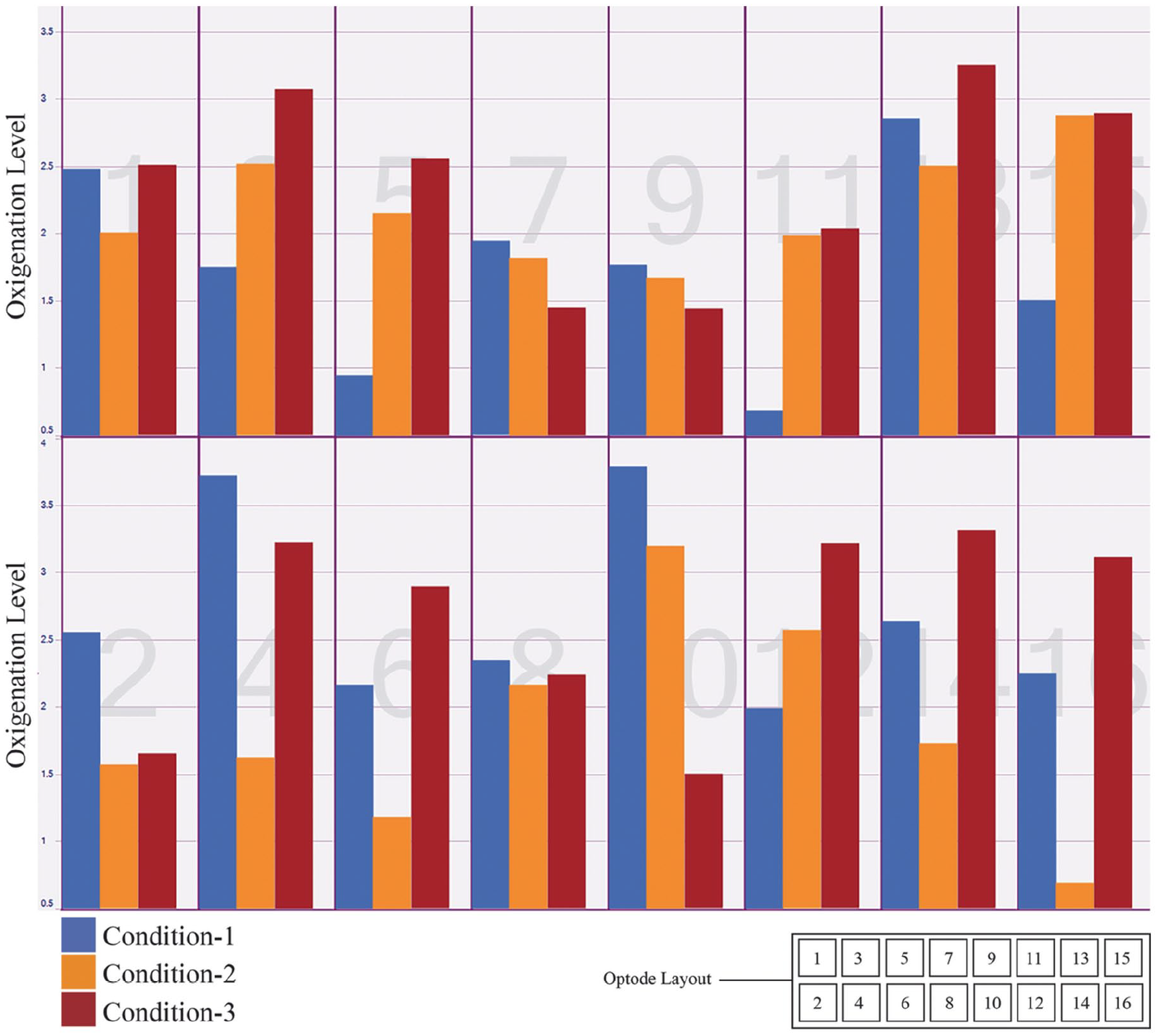
fNIRSOFT data bar graph.
To enable further analysis, the average of the 16 optodes was calculated for each participant for statistical comparison in SPSS. An ANOVA was conducted between these averages and the three conditions. No statistical significance between conditions was found, F(2,62) = 1.72, p = .16. Nonetheless, the scatterplot for the means was consistent with the information visualized in the fNIRSOFT bar graphs used for visual inspection. Furthermore, a correlation analysis was conducted between the post-experiment NASA-TLX questionnaire and the optodes data. A weak positive linear correlation between the two variables was found with no statistical significance, r(62) = 0.18, p = .23.
Temporal analysis was conducted using the fNIRSOFT to visualize the evolution of optode activity throughout the VR interaction. A temporal graph discerning the data between the optodes was generated to compare the three environments as an overlay. Data variation was seen in the lower optodes as a result of the proximity between the headband and the HMD. Moreover, temporal data from each optode on the three conditions were exported for further analysis. Scatterplots were generated, and lines of best fit were added to observe the tendencies of each optode within each environment over time. For Condition-1, all optodes displayed an increasing tendency through time (100%). For Condition-2, optodes OP4, OP6, OP8, OP9, OP10, OP12, and OP16 displayed a decreasing tendency through time, and the remaining optodes displayed an increasing tendency (56.3%). For Condition-3, a total of 12 optodes presented an increasing tendency through time (81.3%); the exceptions were optodes OP6, OP8, OP10, and OP14 (see Figure 5).

Temporal scatterplots and lines of best fit.
Finally, data were processed through fNIRSOFT to create a brain topography for each of the conditions for visualization. Through brain topography, it was observed that Condition-1 and Condition-3 highly activated both brain hemispheres, whereas Condition-2 mainly increased the right hemisphere. Also, different levels of CL can be seen through the color scale, in which yellow stands for high activation and red represents diminished activation (see Figure 6).
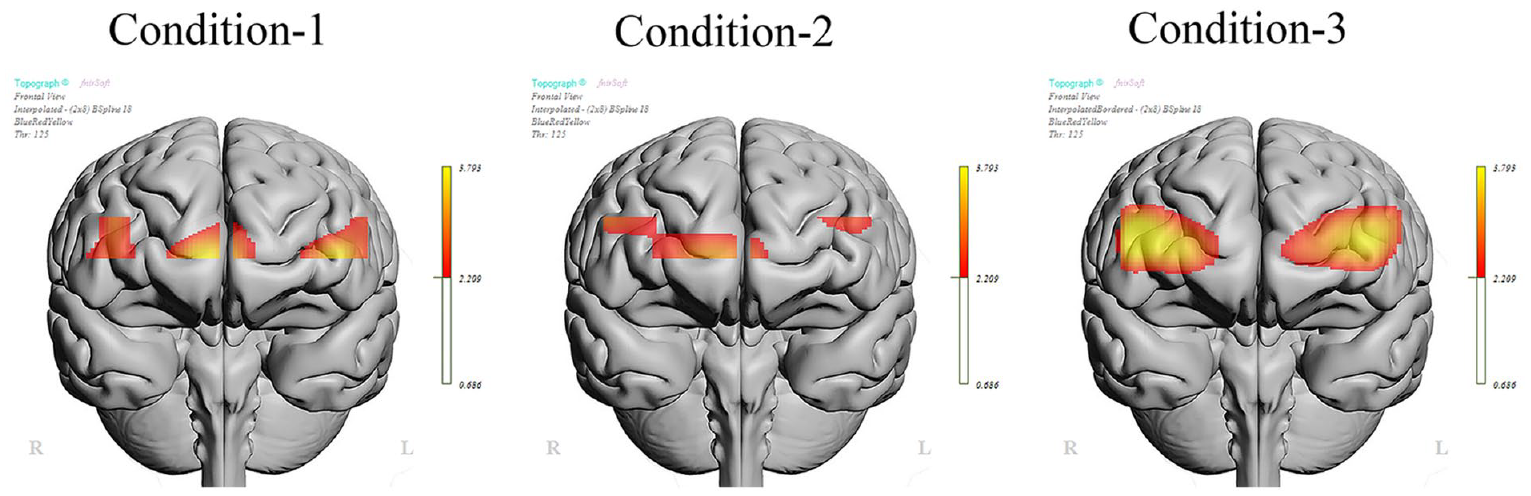
Brain topographs of the three conditions.
After complete analysis, it was supported that differences in the selection of the VB will affect CL differently. Even though all conditions affected CL, Condition-2 displayed lower levels of CL and was the only one that diminished in time in comparison to the remaining two conditions. Interestingly, these results do not support our original hypothesis that Condition-1 will have a lower CL.
Last, multiple ANOVAs were calculated to analyze the presence between the three conditions. The presence dimension had no statistical significance between conditions, F(2,69) = 2.11, p = .12. The dimension of appearance had statistical significance between conditions, F(2,69) = 9.82, p = .00. Tukey’s pairwise comparison found that Condition-3 (M = 16.17) had significant differences with Condition-1 (M = 18.71) (p = .00) and Condition-2 (M = 19.25) (p = .00), but no differences were found between Condition-1 and Condition-2 (p = .74). A moderate effect size (.48) and high power (1 − β = .95) were obtained. The dimension of interaction displayed no statistical significance between conditions, F(2,69) = .24, p = .79.
Analysis and Discussion
Results from the NASA-TLX questions included in the post-experiment questionnaire supported a statistical difference for CL between conditions. Of the three conditions, Condition-2 was the one that had the lowest level of CL, and it had a statistically significant difference with Condition-3. No statistically significant differences were found between Condition-1 and Condition-2. These differences obtained from the NASA-TLX were consistent with the data captured with the fNIR device. Yet no statistical significance was obtained when contrasting the fNIR optodes’ data between conditions. Overall, Condition-3 reported the highest amount of CL, followed by Condition-1 and Condition-2 in both the NASA-TLX and fNIR data. This finding suggests that using online representations of the VB rather than reducing CL may positively affect the extraneous CL. It is important to recall that working memory is limited, and CL must be allocated among the three different types of CL (Sweller et al., 1998). Further, the results from this study contradict those of Pan and Steed (2019), who found no difference between hand-only avatars versus full-body avatars in terms of memory performance. In our investigation, the hands-only avatar reduced CL in comparison to the full body avatars. Moreover, this study expands on the findings of Kim et al. (2020), providing empirical evidence on how avatar manipulation not only affects SoE but also CL in a given task.
In our investigation, the hands-only avatar reduced CL in comparison to the full body avatars.
It is essential to remember that this study used fNIR data to support and expand on the CL data collected through the NASA-TLX. The fNIR data aimed not to discern between the activation of different brain regions or activation patterns. The right hemisphere has been traditionally linked to creative tasks, including spatial visualizations (MacNeilage et al., 2009). Nonetheless, this tendency to lateralize the brain between the left and right hemispheres has been debated, and more unifying theories of the brain’s working collectively have arisen (Nielsen et al., 2013). From inspection of the fNIR data (bar graphs and brain topography), it appears that all three conditions had complete brain activation between the left and right hemispheres. Only Condition-2 displayed a slight tendency to activate the right hemisphere. Beyond the activation of different brain regions, fNIR revealed insights into CL in the spatiotemporal factor. Analyzing the intervention in contrast to the variable of time, the condition that required more time for participants to complete the task was Condition-3, followed by Condition-1 and Condition-2.
Moreover, when optode activity was analyzed throughout the intervention, Condition-1 was the only condition in which CL increased in all optodes. Condition-3 displayed increasing CL in 12 of the 16 optodes, whereas in Condition-2, only 9 of the 16 optodes increased. This finding may suggest that visualizing a VB can increase CL in time, similar to that proposed by Winograd and Flores (1986) when they discussed the concepts of ready-to-hand and present-at-hand. It seems that having a VB that aims to be an extension of the individual’s body in VR ends up being an increasing cognitive factor of which the individual must be aware. Once again, this discussion points out that a VB helps increase the extraneous CL in VR environments.
No statistically significant differences were found when looking solely at task difficulty as perceived by participants. This finding suggests that the overall perception of the task’s complexity was unified between conditions (intrinsic CL). When comparing Condition-1 and Condition-2, the only difference between these two conditions was the inclusion of the online representation of the VB for the former, in contrast to the offline representation for the latter. This finding supports once more the inference that the inclusion of an online VB avatar for Condition-1 may have increased the extraneous CL. Because CL is limited, it must be allocated mostly between extraneous and germane if intrinsic remains stable (Sweller et al., 1998).
Finally, when overall presence was compared between conditions, only one of the three dimensions displayed statistically significant differences. This dimension was that of appearance between Condition-3 and the remaining two conditions. With this said, all conditions were able to make the participant feel present in the virtual space, but using a third-person point-of-view negatively affected the appearance dimension.
Overall, one independent variable (IV) and two dependent variables (DV) were considered in this study. The IV was the VB with three different conditions. The two DVs were CL and overall presence. CL was assessed through psychometric and physiological instruments. When looking at the different conditions of the VB, we found that using an online representation increases extraneous CL. This is supported by the fact that all conditions displayed a similar level of task difficulty directly related to intrinsic CL. Only then can variations in extraneous CL be noticeable (Sweller, 2010). On the contrary, these online representations positively affect presence and may positively influence engagement. This finding is of relevance to interior designers if they want to develop interactive spatial solutions or interfaces to explore design ideas. However, while the online VB in Condition-3 has been noted in the literature to positively affect engagement (Hudson & Hurter, 2016), this study found that it has a diminished appearance in comparison to the other two conditions. Finally, having a hands-only VB presented lesser levels of CL that furthermore diminished in time and might suggest that also not having an online VB will negatively affect engagement, like that found by Steed et al. (2016). These results are of critical relevance to interior design practice since it is the most common setup found for spatial visualization usage in VR (Pickersgill, 2021).
Conclusions
Variations in VB type and iterations between online and offline representations have repercussions on CL demand. Working memory is limited, and the way the VB is represented within VR environments may affect extraneous CL by providing unnecessary information to the users. According to CLT, if intrinsic CL is constant, resources destined to tackle extraneous CL will diminish germane CL used to build schemas. Ultimately, these redistributions between the diverse types of CL will affect the expected learning outcome. Thus, VBs must be carefully controlled because even though they can increase the sensation of presence, they can negatively affect task performance due to extraneous information.
Working memory is limited, and the way the VB is represented within VR environments may affect extraneous CL by providing unnecessary information to the users.
Of particular importance is the exploration of the evolution of CL throughout time. This aspect is of critical relevance because previous psychometric tools to measure CL only allow the capture of data at one specific moment. By combining the characteristics of fNIR with psychometric measures to deepen the understanding of CL in a specific task, fNIR data were analyzed throughout the time dimension to better comprehend the progression of CL during the intervention.
The results of this study offer multiple implications from theoretical, methodological, and practical standpoints and provide insights to researchers, designers, and design educators on how the VB in VR environments can be manipulated according to their specific interests. Furthermore, the findings give information to developers of instructional media using VR environments.
Limitations
For the current study, we deliberately selected valid and reliable instruments for data collection. In addition, the VR intervention was designed to control for external variables that isolated the IV (VB) as much as possible. As in all research of an experimental nature, however, some inescapable limitations were present.
First, this study used a convenience sample of undergraduate and graduate students of a midwestern university in the United States. All participants were from the same campus and probably lived in the same region with very similar cultural influences. Furthermore, the participants were not evenly distributed in gender classification; most of the sample were females between 18 and 24 years old. This limitation is interesting because while we allowed participants to walk in the first person or teleport, due to the fNIR’s wiring requirements, teleportation was frequent. This is relevant since females tend to use more egocentric strategies, such as walking, which could have influenced CL. Also, since fNIR data was only used to corroborate the NASA-TLX, no distinction was made for participants being left- or right-handed. We randomly assigned individuals to the three conditions, yet the mean age was slightly higher in Condition-1 and Condition-3 as individuals in the 31–40 age group were assigned to these two groups, which could have also impacted CL.
Another limitation was the interaction between the fNIR device and the VR HMD. The fNIR must be placed on the foreheads of participants, and the external light must be controlled so it cannot affect the internal readings. The VR HMD was placed above the fNIR headband. This condition sometimes permitted the light of the HMD to enter the lower central optodes of the fNIR device (OP6, OP8, OP10, OP12). These data were later cleaned using the filtering process, but data loss for these specific optodes is a possibility.
Last, participants were asked to arrange multiple containers within a small space station room. The design brief limited them to as many modules as they wanted from the available sizes and proposed materials. Participants were encouraged, but not limited, to generate sculpture-like modules that could have alternative uses. Some participants may have embraced this challenge, which ultimately may have influenced their CL.
Future Directions
For this investigation, we used novel methodologies for design research in the realms of cognitive science. Future studies can focus on spatial attributes within the design environment to better understand their influence on CL. Also, different interactive features can be researched, such as object manipulation and wayfinding within VR environments, to understand how individuals react to them. Moreover, new VR headsets and psychophysiological devices with wireless features can permit seamless data collection processes. As VR becomes more effective in emulating the real world, interior designers will be able to better foresee design outcomes, increasingly understand spatial elements, and study design decisions before anything is built (Li & Xie, 2022; Tran et al., 2021). Thus, the implications of this study illustrate the importance of how designers perceive themselves within these virtual environments and how this perception can influence CL and sense of presence. Ultimately, the future manipulation of self-representations inside VR will affect immersion.
