






Abstract
Lateral transshipments are a method of responding to shortages of stock in a network of inventory‐holding locations. Conventional reactive approaches only seek to meet immediate shortages. The study proposes hybrid transshipments which exploit economies of scale by moving additional stock between locations to prevent future shortages in addition to meeting immediate ones. The setting considered is motivated by retailers who operate networks of outlets supplying car parts via a system of periodic replenishment. It is novel in allowing non‐stationary stochastic demand and general patterns of dependence between multiple item types. The generality of our work makes it widely applicable. We develop an easy‐to‐compute quasi‐myopic heuristic for determining how hybrid transshipments should be made. We obtain simple characterizations of the heuristic and demonstrate its strong cost performance in both small and large networks in an extensive numerical study.
Introduction
Increased information in modern inventory networks offers managers the opportunity to pool risk through cooperation between replenishment points. Lateral transshipments are stock movements between locations in the same echelon of an inventory system. This transportation of goods can be used to rebalance stock proactively across the system or to meet shortages reactively as they occur.
When a reactive transshipment is triggered, conventional policies only meet the immediate shortfall. Stock is moved from a location with a surplus to the one experiencing the shortage. However, in many practical scenarios a large proportion of the associated vehicle, fuel and labor costs are independent of the amount transshipped. In such cases conventional reactive approaches ignore the economies of scale and the risk of future shortages which may make it beneficial to transship more than is required to meet the immediate shortfall. Proactive approaches to transshipment have conventionally rebalanced stock through the logistically complex and costly device of reallocating the entire network's inventory at isolated time points. The hybrid approach proposed here exploits the above potential for cost savings by rebalancing stock between pairs of locations when a shortage occurs at one of them. It thus has the same triggering mechanism as conventional reactive transshipments and minimal additional implementation overhead.
A scenario of particular interest to this study is the sale of car parts including tyres and exhaust systems from networks of depots which typically fit new parts and conduct repairs. Common features of such networks include the following: stock for replenishment is from a central store from which large trucks conduct tours to resupply parts of the network. The determination of such tours is outside of the scope of this work and we shall suppose that the periodicity of each location's replenishment is fixed. Depots are often in centers of population where rents are high and space for inventory is limited. This may force inventory levels lower than an (unconstrained) economic analysis might indicate and will fuel the need for the pooling of stock. Demand for items is likely non‐stationary as well as stochastic. For example, the demand pattern at weekends may well be different from that during the working week. Further, individual customers are unlikely to require a single item. Individual demands will typically be for one or more of each of several item types.
The model considered in the study assumes the periodic review and replenishment of stock. It develops the reactive transshipment model of Archibald et al. (2010) in a way which captures the features mentioned in the preceding paragraph. It is novel in the literature in the generality of its characterization of demand. Demand instances are assumed to occur in a non‐stationary manner, while individual customer requirements (how many of each item type) are drawn from a general joint distribution. This is a huge advance over the customary assumption of a stationary Poisson process of singleton demands for one item type only. Hence the work not only delivers significant cost savings over current proposals but is also relevant to a wider range of practical scenarios.
Following a review of the existing literature in section 2, a detailed description of the model is given in section 3. Section 4 is the analytical heart of the study and is where the hybrid transshipment heuristic is developed. Key contributions include a characterization of policy structure, analytical insight into the setting of replenishment levels and the development of an easily computed numerical lower bound for the cost rate achievable in some cases where locations are replenished simultaneously. Section 5 contains an account of an extensive numerical study designed to evaluate the performance of the new policy. Results elucidate the considerable performance gain achieved over existing approaches and suggest that the hybrid proposal closes a large part of the suboptimality gap left by them.
Literature
Research on transshipments in inventory networks has primarily focussed on their use in the context of stationary demand for a single item type. The broad approach taken to transshipping has been reactive, proactive, or a hybrid of the two. We now consider these approaches in turn.
Much of the literature on reactive transshipments assumes periodic replenishment. Krishnan and Rao (1965) assume demand is met at the end of each review period, so transshipments can be arranged after all demand for the period has been observed. Taking a similar approach to the modeling of demand, Robinson (1990) shows that an order‐up‐to policy is optimal while Lien et al. (2011) explore optimal network configurations. In many situations customers require, or at least value, immediate service. An assumption that demand for a period can be observed before transshipments are planned is plainly not always appropriate. Archibald et al. (1997) allow multiple transshipments in each review period. A location makes a transshipment request whenever a shortage occurs, but transshipment requests are not always met (a situation known as partial pooling). The form of an optimal replenishment and transshipment policy is established for networks with two locations. Çömez et al. (2012) characterize an optimal transshipment policy for two locations in a similar setting with positive replenishment and transshipment lead times. Archibald (2007) and Archibald et al. (2010) also consider reactive transshipments whenever a shortage occurs, but develop heuristic policies that can be applied to networks of any size. The current work extends the latter inter alia by introducing a proactive element into the transshipment policies considered and through its much more general setting of non‐stationary demand for many item types.
Other inventory problems related to reactive approaches arise in a multi‐product setting where substitution with products of higher specification (Rao et al. 2004, Xu et al. 2011) and allocation of stocks of unfinished products (Swaminathan and Tayur 1998) or common components (Gerchak and Henig 1986) serve a similar purpose to transshipments. However, products in this stream of work correspond to our locations and so when these problems are viewed as transshipment problems they concern single items only and are hence less general than our multiple item scenarios. These problems also contrast with ours in offering no incentive for proactive action and decisions about which items to “transship” and in what quantity are purely reactive.
Research on proactive transshipment focuses predominantly on periodic replenishment. It is possible to think of proactive transshipments as including an element of reactive transshipment in the sense that they aim to rebalance inventory to best satisfy existing shortages and future demand (Lee et al. 2007). However in most cases, transshipment is only allowed at fixed points in each review period (Gross 1963, Lee et al. 2007). The approach of Agrawal et al. (2004) is closest in spirit to the current work as the timings of transshipments are determined dynamically. However, in contrast to the current work, only one proactive transshipment is allowed per period and inventory is redistributed across all locations. These studies all demonstrate some benefit from stock rebalancing which purely reactive approaches do not exploit.
Reactive and proactive transshipments have also been considered in the context of continuous review replenishment, but this is of less relevance to the current work which focuses on periodic review. For a more detailed review of the literature, the reader is referred to Paterson et al. (2010).
Zhao et al. (2008) consider reactive and proactive transshipments together. Their production based model uses a conventional reactive transshipment when shortages occur but also separately allocates new stock when it is produced. To the authors' knowledge, hybrid transshipments of the type considered in this study have previously only been considered by Paterson et al. (2012). That study develops heuristics for continuous replenishment review under compound Poisson demand for a single item. The methods used are very different from those in the current work.
We are unaware of any contributions in the literature which match the generality of our modeling of demand. Few consider either non‐stationary demand or many item types. Herer and Tzur (2001, 2003) do consider time‐varying demand but it is deterministic. Hence they can plan for known future demand in a manner which is not possible in a stochastic setting. In Archibald et al. (1997), replenishment decisions for many item types are linked via a storage space constraint while in Wong et al. (2005) and Kranenburg and van Houtum (2009) there is a linking constraint on average service time. Our stochastic non‐stationary model for multi‐item demand is a huge advance in generality on previous work and has great relevance for applications.
Inventory System Model
We consider a network with N locations, each of which carries an inventory of X distinct item types. Locations are replenished periodically from a central depot. The review period for location i is T
i
and hence all item types at i are replenished at times




Customers arrive at location i according to a non‐homogeneous Poisson process independently of arrivals at other locations, with rate at time t given by λ
i
(t). We assume that successive demands at location i are independent and identically distributed. We shall use





A consequence of allowing composite multivariate demand is that shortages may be of more than one piece of inventory and/or of multiple item types. However, in the description of our methodology in the next section, we shall assume that transshipments come from a single location. This common constraint derives principally from practice as coordinating movements from more than one location can considerably complicate operating the policy. Further, we shall allow transshipments which meet only part of a current shortage. However, an indication will be given in section 4 of how our methodology may be extended to allow transshipments of a more complex structure and/or meet an “all or nothing” demand requirement.
Several costs are involved in the operation of an inventory network and most influence the potential benefit of transshipment. The only cost assumed exogenous is the initial cost to purchase a piece of inventory. Holding costs are incurred at location i for items of type x at a rate h
ix
per unit of stock and per unit of time. Further, penalty costs are incurred whenever demand cannot be met immediately. Two methods of penalizing unmet demand are considered. A one‐off cost of L
ix
per unit of unmet demand of item type x is incurred if it is lost from the system. Alternatively, the demand can be backordered with a penalty cost b
ix
which is incurred per unit of item type x and per unit of time the item remains out of stock. We are able to address both cost structures. Finally, the cost associated with each transshipment from location j to location i has two elements: a fixed cost per transshipment


Development and Analysis of the Hybrid Transshipment Heuristic
To develop a heuristic for transshipment decisions (from where and how much), we broadly follow Axsäter (2003) and Paterson et al. (2012) in their espousal of a quasi‐myopic approach to an otherwise intractable problem. Under this approach, all decisions are taken in the light of an assumed future for the system which has no transshipments. Expressed technically, the dynamic transshipment policy produced is obtained by performing a single dynamic programming policy improvement step from a no transshipment policy.
We proceed to give computations of the expected costs incurred under an assumption that no future transshipments are made. In what follows, we use IL
ix
for the inventory level of item type x at location i at some arbitrary time

Before continuing we note that, notwithstanding the fact that demands across distinct item types may well be correlated, the expectation operator is linear so we can give an additive decomposition of total costs at location i which give contributions from individual item types. Hence,



To compute v
ix
{IL
ix
,t,s;hold}, we further disaggregate into a sum with a contribution from each of the IL
ix
units of stock of type x present at location i at time t, considered in the order in which they are demanded. If κ
ijx
is the holding cost of the jth unit of type x stock at i and







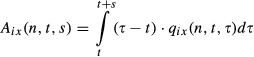
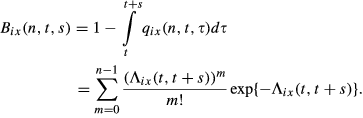
Substituting into Equation 4 we now have that


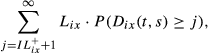



Development of the Hybrid Heuristic Via DP Policy Improvement
We consider a scenario in which the system has inventory levels {(IL
jx
), 1 ≤ x ≤ X, 1 ≤ j ≤ N} at some time

Our approach to decision‐making is to choose the sending location and inventory‐type quantities (if any) for the transshipment to minimize the expected costs incurred over any large horizon H under an assumption that no transshipments are made following the current decision. We fix horizon H to be any real number in excess of







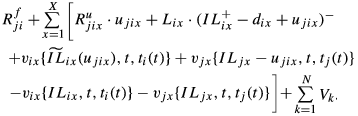

Our decision will be taken to secure the smallest possible value of the costs in Equations 17 or 18. To express this more succinctly, we develop the index

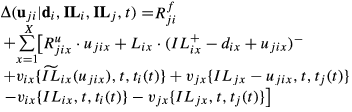





The above approach is flexible and can accommodate a range of important model variants. We can, for example, easily extend the above to allow transshipments from more than a single location while in sections 4.2 and 4.4 we shall suppose that transshipments may be additionally constrained by the number or weight of items which may be included. Further, the possible “all or nothing” nature of demand mentioned in section 3 may be easily incorporated into the above by modifying costs in the analysis to reflect the fact that the demand
In practice, the above heuristic can be obtained with modest computational effort, especially so when X, the number of item types, is small. We recommend an online implementation of the minimization in Equation 21 which computes the key quantities












Characterizations of the Hybrid Heuristic
In a setup as complex as considered here, it is perhaps unsurprising that simple characterizations of effective heuristics are challenging to develop. This subsection gives a brief account of some simple and intuitive features of the hybrid heuristic which are reasonably straightforward to establish.
Theorem 1 states that our hybrid rule is monotone in the sending location's stock levels. Hence, if the rule mandates a transshipment summarized by the pair


The index If the minimization in Equation 21 is achieved by the pair






It is possible to develop this result further as follows: Suppose now that we enhance the constraint set Equation 22 by adding a linear constraint of the form
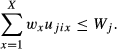


It is also of interest to ask how decisions made by the hybrid heuristic change as the time to the next replenishment increases. The situation is complex but suppose we simplify matters by taking X = 1 and by supposing that all individual demands are for single items. Now consider how the transshipment decision made as a result of a shortage at i might change as the time to the next replenishment at location j increases from t
j
(t) to t
j
(t) + δ. The j‐term in an appropriate form of the expression in Equation 19 now changes from v
j
{IL
j
− u
ji
,t,t
j
(t)} − v
j
{IL
j
,t,t
j
(t)} to v
j
{IL
j
− u
ji
,t,t
j
(t) + δ} − v
j
{IL
j
,t,t
j
(t) + δ}. For small δ, this change in the value of the index

On the Setting of Replenishment Levels
In the discussion above, replenishment levels are assumed given. In this subsection, we first give a brief account of the economically optimal setting of replenishment levels when locations operate independently and there is no pooling of inventory between them. The reason we begin a discussion of replenishment levels under a “no pooling” assumption is (a) because analytical progress is possible, and (b) to establish upper bounds on the search space for optimal replenishment levels for policies operating transshipments. Further, from our global assumption in section 3, we have a free choice of replenishment level at the start of each review period. From these considerations, we conclude that for the optimal setting of replenishment levels under no pooling it is sufficient to myopically consider how best to replenish a single location to minimize expected inventory costs incurred over a single review period. At the end of the subsection, we then describe how we deploy this analysis to establish an approach to the setting of replenishment levels in the context of the numerical study of our hybrid transshipment heuristic in section 5.
We can without loss of generality consider the optimal replenishment under no pooling of a single item x at a single location i and drop the identifier ix from the notation. In particular, we consider the choice of replenishment level S to minimize expected inventory costs v{S, 0, T}. We write S* for the optimal S‐value, satisfying




The optimal replenishment level S* in the absence of transshipments is given by
S* is bounded above as follows: If L > hT > 0 then S* is bounded below as follows:


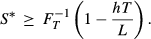
We shall refer to the upper and lower bounds on S* given in the above result as S and

We can use the central limit theorem to develop a normal approximation to the distribution of the total demand D
T
under the condition that the expectation E(D
T
) is moderately large. Recall that we use μ
d
and



We now restore the item/location identifier ix. Features which will be present in the numerical examples in section 5 are a repeating demand pattern on a weekly cycle for all items at all locations and a review period equal to an integer number of weeks. These assumptions simplify things considerably. Replenishment levels S
ix
, 1 ≤ i ≤ N, 1 ≤ x ≤ X, now need to be tailored to individual locations i and item types x but not to the times at which the replenishments are made. From the above analysis, a natural approach to the determination of replenishment levels would be to conduct an appropriate search using the above upper bounds for no pooling as a starting point. We would certainly expect that optimal replenishment levels under inventory pooling via transshipments to be somewhat lower than for no transshipments. Our numerical studies confirm this. Further, it is not unreasonable to assume common characteristics for inventory costs and for the nature of individual demands across locations. We can then suppose that replenishment levels take the form

The above discussion notwithstanding, our envisaged application domain frequently features city center locations where rents are high and space is limited. Hence it may not be possible to replenish at the levels suggested by the analysis of the cost model, as above. In light of this, it will be important to consider the impact of our heuristic transshipment policies when replenishment levels are set lower than cost optimal. In section 5, we shall consider the performance of our hybrid heuristic for both cases when replenishment levels are set in a cost minimizing fashion and when rather lower levels are assumed because of space constraints.
A Lower Bound on Achievable Costs When All Locations Replenish simultaneously
The intractability of our decision problem means that it is only possible to compare the cost performance of our heuristic directly with optimal in small problems. For certain cases, we are able to further strengthen our analyses by developing lower bounds on the expected cost rate achievable under any policy. Such is the complexity of our setup that we can only achieve simple and effective bounds for cases in which (i) all locations are replenished simultaneously, (ii) all locations share a common holding cost rate for each item type, namely h x , 1 ≤ x ≤ X, and (iii) a constraint of the form in Equation 23 delimits transshipments from each location. To illustrate the approach simply, we shall take X = 1 and drop the item identifier x in what follows. We shall also focus on the lost sales model. Extensions to X > 1 and/or to backorder costs are straightforward.
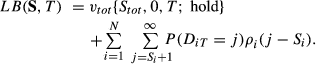
We shall obtain a lower bound LB(
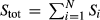


To obtain a lower bound on shortage costs, we first use




A lower bound on the network costs incurred over a review period of length T and with replenishment levels
Experimentation
To test the performance of the new hybrid policy an extensive simulation study has been carried out. We first explore how different heuristic approaches perform compared to optimal for small problems. Given the complexity of the decision problem, this analysis is restricted to a single item in a network with three locations. Alongside the new hybrid policy (H), we test the performance of no pooling (NP) in which no transshipments occur and complete pooling (CP) in which transshipments to meet shortages are designed on a minimum immediate cost basis. We also study a standard reactive policy (R) which was adapted from Archibald et al. (2010). All policies were applied under the same conditions using common random numbers. For the optimal policy, the cost rate was determined via dynamic programming. Table 2 summarizes the optimality gaps obtained for the above policies and highlights how policy H closes the gap to optimal considerably.
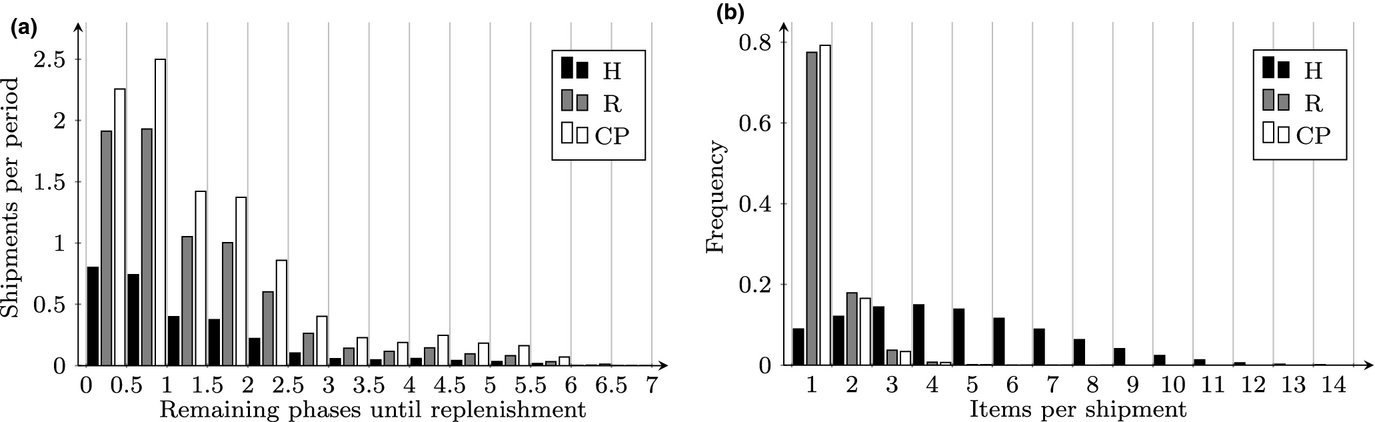
In addition to the evaluation of the hybrid policy H via comparisons to optimal we use Monte Carlo simulation to study its performance in larger networks with 10 and 50 locations and two distinct item types. In Tables 3–7, the cost rate performances of the policies mentioned above are compared in these larger networks along with that of an artificial policy (Hpar) which runs the decision rule H for each item type separately before aggregating costs. Comparing H to Hpar shows the improvement achieved by modeling item types together and allowing coordinated proactive transshipments of multiple item types at each decision epoch. In Table 8, the cost rates incurred by NP, CP, R, and H are compared with the lower bound established in section 4.4 for problems with 10 locations which are replenished simultaneously. Subsequent studies aim to assess the benefits offered by our demand modeling generality (Table 9) and to characterize competing transshipment heuristics in terms of the size, frequency, and timing of transshipments (Figure 1).
Timing and Size of Transshipments for Different Policies
In all of the numerical studies reported in this section, we shall take the unit of time to be one day and shall assume that stock is replenished on a weekly basis (T
i
= 7,∀i). Successive replenishments at location i occur at

In our numerical studies, we assign each location to one of three similarly sized groups. Locations within group g have a common customer arrival rate



Overview of Demand and Phase Patterns Used
In all experiments reported in this section, excepting only those in Table 5, we assume that holding and lost sales cost rates do not vary with location and item type. When this is the case, we also take the holding cost rate to be the unit in which all costs are measured. Hence, we have h
ix
= 1 and L
ix
= L for all choices of i,x. For these cases, we assume from the discussion in section 4.3 leading to (29) that replenishment levels take the form 
Table 2 summarizes results obtained for different heuristic policies expressed as the deviation (percentage excess) from the optimal cost rate. These are all three location problems with replenishment levels set by taking α = 1 in a suitable form of Equation 29. Experiments were carried out for all combinations of the demand and phase patterns in Table 1 and three levels of both lost sales penalties and transshipment costs. This yields 108 problem configurations in all. We present average figures for the results obtained for different cost levels as well as the worst case. Please note that the hybrid heuristic H closes the greater part of the suboptimality gap left by other heuristics.
Suboptimality Gap Results for a Three Location Network Using α = 1
The 10 location experiments whose results are given in Tables 3 and 4 were conducted on 10 randomly generated maps. The experiments were as described above and the relevant model parameters are given in the tables. We include results for just one phase/demand pattern since we found that varying P‐Pat and D‐Pat had little impact on the relative performance of the heuristic policies. The tables give values of the cost per week incurred under different policies and for a variety of problem contexts also record the percentage cost reduction achieved by H in comparison to other policies. Table 3 considers contexts in which limited storage space dictates low replenishment levels (α set to 1 in a suitable form of Equation 29) while in Table 4, the value of α has been chosen to achieve a minimum cost rate for each policy. This optimal value lies in the range [1.3,1.6] for CP, [1.2,1.6] for R and [0.9,1.1] for H, with larger optimizing α obtained when lost sales penalties and/or transshipments costs are high. For policy NP, optimal values of α were obtained from Equation 24. We can infer that the new hybrid policy allows for considerably lower levels of safety stock compared to other policies, thus keeping holding costs low. This is especially important for inventory systems where holding costs constitute a major part of the operating costs.
Lost Sales Results for 10 Locations Using α = 1 (D‐Pat 3, P‐Pat 2)
We also observe that the relative performance of the hybrid policy is particularly strong for higher shortage costs which is also very important for industries where high penalties apply for unmet customer demand. For high levels of shortage costs, it is notable that for non‐simultaneous replenishments, as is the case here, the myopic policy CP in some cases outperforms policy R. This is due to the fact that the purely reactive quasi‐myopic approach overestimates future shortage costs at locations where the remaining time until the next replenishment is long and thus produces inferior decisions. This deficiency is completely removed by the hybrid approach.
Lost Sales Results for 10 Locations Using Respective Optimal Values of α (D‐Pat 3, P‐Pat 2)
Table 5 shows results from a set of experiments in which we have introduced item cost heterogeneity and set h
i1 = 0.5, h
i2 = 1.5, L
i1 = L, L
i2 = 2L, 

Lost Sales Results for 10 Locations With Heterogeneous Item Types Using α = 1 (D‐Pat 3, P‐Pat 2)
To evaluate how the benefits of the hybrid policy scale with the size of the network, experiments were conducted using a network with 50 locations. Here, geographical data on 50 branches of a car parts dealer were used. Tables 6 and 7 report a set of results equivalent to those for 10 locations in Tables 3 and 4. In the determination of replenishment levels, the parameter α was both set to be 1 (Table 6) and optimized (Table 7). The larger number of locations means that the chance of a suitable sending location when a shortage occurs is enhanced. Hence, it is true for all transshipment policies that safety stock levels, as reflected by the optimal α values computed for Table 7 were significantly reduced compared to those for the 10 location problems of Table 4. Optimal α are now in the range [1.0,1.3] for CP, [0.9,1.3] for R and [0.6,1.0] for H. We can see that with regard to choosing α optimally the benefit of H observed earlier is increased. The importance of transshipments per se is seen in the dominance of all transshipment policies over NP.
Lost Sales results for a 50 Location Network Using α = 1 (D‐Pat 3, P‐Pat 2)
It is clear from the results obtained in Tables 2–7 that the hybrid policy improves significantly upon the competing heuristics. For networks larger than three locations, the full potential of applying the hybrid approach remains unknown as an optimal solution cannot be determined for use as a comparator. Section 4.4 introduced a lower bound for the cost per period achievable under any policy. For this setup, an assumption of simultaneous replenishment of all locations is required. The results presented in Table 8 use the same underlying parameters as before with the exception that the offset r i of the weekly repeating replenishment pattern is set to zero for all i. To allow a common lower bound for all policies a fixed value of α is used. This was set at level α = 1.5 to achieve a reasonably strongly performing set of replenishment levels for all the policies. The evidence of Table 8 is that the hybrid policy is close to optimal for the cases considered. The deviation from the lower bound ranges from roughly 1.5% to 3.5% for the hybrid policy. As was the case in Table 2, Table 8 again makes clear that the hybrid heuristic H closes the major part of the suboptimality gap left by the competing heuristics in these larger problems. Further, upon close inspection, the reader should observe that the lower bound developed in section 4.4 applies to all approaches to stock rebalancing between (simultaneous) replenishments, not simply those triggered by shortages of the kind considered here. Hence, for the problems in Table 8, heuristic H is competitive with a wide range of possible approaches including those which take a different approach to proactive transshipment and/or which allow simultaneous transshipments from more than a single location.
Lost Sales Results for a 50 Location Network Using Respective Optimal Values of α (D‐Pat 3, P‐Pat 2)
To assess the contribution made to the results by our incorporation of non‐homogeneous demand, we designed a hybrid heuristic (Ave) on the basis of a false assumption of homogeneous demand at a suitable weekly rate when in fact phase patterns 1–3 apply. In Table 9, find cost rates which compare H with Ave over a set of cases similar to those used in Tables 3 and 4, but for a single‐item model and with replenishment levels set by taking α = 1 and α = 1.5. From our entire set of results, we note that a cost rate benefit of up to 3% can be achieved by correctly incorporating demand seasonality in the model. In an unreported study available from the authors, they demonstrate the superiority of H over competing heuristics even in the case of pure Poisson demand which has been a standard assumption in the literature hitherto.
Performance Analysis for 10 Locations Using the Derived Lower Bound and α = 1.5 (D‐Pat 3, P‐Pat2)
We finally analyze the nature of the policies for the set of experiments reported in Table 3. The left hand plot of Figure 1 shows how often transshipments were made under the policies CP, R, and H and the phases remaining until the next replenishment at the receiving location. We can see that under the hybrid policy, transshipments are much less frequent than for policies CP and R. Particularly striking is the extent to which H mitigates the spike in the frequency of transshipments which occurs for CP and R at the end of a review period. This is reflected in our cost‐benefit analyses as fixed costs for transshipments increase. We can also see that CP has an increased transshipment frequency compared to R due to its myopic nature. The right hand plot of Figure 1 reports the size of transshipments made under each policy. While in the majority of cases CP and R ship only one item to meet a shortage, policy H makes significantly larger transshipments. This not only prevents future transshipments due to the reduced chance of stockouts, it also makes efficient use of the capacity of vehicles and exploits the dominance of fixed over variable costs.
Non‐homogeneous Benefit Analysis for 10 Locations in a Single Item Network (D‐Pat 3, P‐Pat 3)
Conclusion
The hybrid policy improves significantly upon a reactive policy and other heuristics when a substantial part of the transshipment cost is fixed. This is particularly relevant for networks which are spread over a wide geographic area where the cost of transshipping will be predominantly determined by distance and time travelled rather than the amount transported. The main improvement lies in the fact that fewer transshipments of larger size are made thus making efficient use of the resources involved. Not only will reducing the frequency of transshipments reduce costs, it also reflects a more strategic approach to stock rebalancing and will reduce the extent to which stock is shuffled repeatedly between locations. It has also emerged that deployment of the hybrid policy permits major savings in inventory costs through reductions in the levels of safety stock required. We have provided evidence that our hybrid heuristic not only improves upon previous proposals but also comes close to optimal. In particular, we have provided evidence that this policy achieves most of the benefits available from the pooling of inventory without the need to consider rebalancing across all locations simultaneously, with all of the organisational difficulties that entails.
In addition to considerable cost savings, our approach also enables a much greener business operation as the capacity of transport vehicles is used more efficiently with fewer journeys. Allowing compound non‐homogeneous demand provides further performance gains and greater precision in the policy's application. Our approach enables a very general setting allowing multiple item types where demand is drawn from a general multivariate distribution. Further, a more flexible modeling of shortage costs is offered. This increased generality allows the hybrid policy to exploit the benefits offered by economies of scale in a wide range of practical settings.